
Rice Science ›› 2023, Vol. 30 ›› Issue (6): 537-551.DOI: 10.1016/j.rsci.2023.07.002
收稿日期:2023-04-27
接受日期:2023-07-15
出版日期:2023-11-28
发布日期:2023-08-10
. [J]. Rice Science, 2023, 30(6): 537-551.
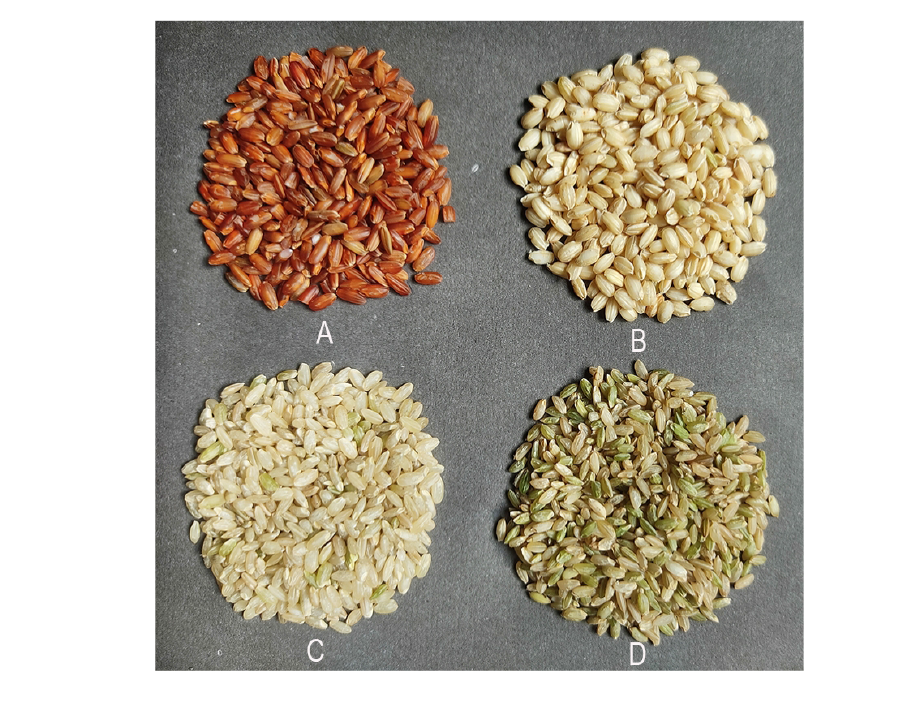
Fig. 1. Traditional unpolished pigmented (A) and non-pigmented (B, C, and D) rice.
| Rice variety | Country | Reference |
|---|---|---|
| Surkha Zerati, Sarda Behsoodi, Kormaki Ghati, Sarda Barah, Lawangi, Garma Behsoodi, Nezam Ghati, Manjoti, Super Basmati | Afghanistan | Noori et al, |
| Kalijira, Kataribhog, Chinigura, Badshabhog, Tulsimala, Khirshaboti, Sakkorkhora | Bangladesh | Mannan et al, |
| Milagrosa, Manumbaeay, Kutsiyam, Kinaures, Bagoean, Karaya | the Philippines | Frei et al, |
| Bario | Malaysia | Thomas et al, |
| Adan, Mayas, Ciherang, Pandan wangi, Rojolele | Indonesia | Saragih et al, |
| Jasmine, Yamuechaebia Morchor, Kum Doi Saket | Thailand | Srikaeo and Sopade, |
| Suwandel, Madathawalu, Kaluheenati, Suduheenati, Kuruluthuda, Pachchaperumal, Ma wee, Hatadaa wee, Rathdel, Kahamala, Kahawanu | Sri Lanka | Disanayake and Ginigaddara, |
| Basmati, Kaiviral samba, Karuppu kavuni, Kattuyanam, Palakkadan, Kala namak, Mapillai samba, Iluppai poo samba, Poongar, Seeraga sambha, Karnal, Kuzhiyadichan, Madumuzhungi, Salem sannam, Kitchili samba | India | Rajendran et al, |
Table 1. List of popular traditional rice varieties in South and Southeast Asia.
| Rice variety | Country | Reference |
|---|---|---|
| Surkha Zerati, Sarda Behsoodi, Kormaki Ghati, Sarda Barah, Lawangi, Garma Behsoodi, Nezam Ghati, Manjoti, Super Basmati | Afghanistan | Noori et al, |
| Kalijira, Kataribhog, Chinigura, Badshabhog, Tulsimala, Khirshaboti, Sakkorkhora | Bangladesh | Mannan et al, |
| Milagrosa, Manumbaeay, Kutsiyam, Kinaures, Bagoean, Karaya | the Philippines | Frei et al, |
| Bario | Malaysia | Thomas et al, |
| Adan, Mayas, Ciherang, Pandan wangi, Rojolele | Indonesia | Saragih et al, |
| Jasmine, Yamuechaebia Morchor, Kum Doi Saket | Thailand | Srikaeo and Sopade, |
| Suwandel, Madathawalu, Kaluheenati, Suduheenati, Kuruluthuda, Pachchaperumal, Ma wee, Hatadaa wee, Rathdel, Kahamala, Kahawanu | Sri Lanka | Disanayake and Ginigaddara, |
| Basmati, Kaiviral samba, Karuppu kavuni, Kattuyanam, Palakkadan, Kala namak, Mapillai samba, Iluppai poo samba, Poongar, Seeraga sambha, Karnal, Kuzhiyadichan, Madumuzhungi, Salem sannam, Kitchili samba | India | Rajendran et al, |

Fig. 2. Schematic representation of types of important bioactive compounds and their distributions.
| Pigment in indigenous rice | Total anthocyanin content | Reference |
|---|---|---|
| Red | 79.00-94.00 mg/g a | Maisuthisakul and Changchub, |
| 3.88-31.07 mg/g a | Bhat and Riar, | |
| 111.20-432.10 mg/kg b | Rajendran et al, | |
| 19.10-110.40 mg/kg a | Wongsa et al, | |
| 776.10-1 552.60 μg/kg c | Mudoi and Das, | |
| 15.52-60.43 mg/L a | Devraj et al, | |
| White | 33.00-69.00 mg/g a | Maisuthisakul and Changchub, |
| 9.80 mg/kg a | Pathak et al, | |
| 280.00-110.00 mg/kg b | Rajendran et al, | |
| 9.45-36.48 mg/L a | Devraj et al, | |
| 2.82 mg/g d | Agustin et al, | |
| Black | 4.35-7.16 mg/g | Somsana et al, |
| 145.00-441.00 mg/g a | Maisuthisakul and Changchub, | |
| 83.31 mg/g a | Bhat and Riar, | |
| 340.10 mg/kg b | Rajendran et al, | |
| 162.50-773.70 mg/kg a | Wongsa et al, | |
| 49.11 mg/g d | Agustin et al, | |
| 1.00-806.17 mg/kg a | Shozib et al, | |
| Purple | 10.00-1 170.00 mg/kg a | Jaksomsak et al, |
| Purple and red | 18.10-358.70 mg/kg a | Saikia et al, |
| Non-pigmented | 7.30-8.90 mg/kg a | Saikia et al, |
Table 2. Total anthocyanin contents in different traditional rice varieties.
| Pigment in indigenous rice | Total anthocyanin content | Reference |
|---|---|---|
| Red | 79.00-94.00 mg/g a | Maisuthisakul and Changchub, |
| 3.88-31.07 mg/g a | Bhat and Riar, | |
| 111.20-432.10 mg/kg b | Rajendran et al, | |
| 19.10-110.40 mg/kg a | Wongsa et al, | |
| 776.10-1 552.60 μg/kg c | Mudoi and Das, | |
| 15.52-60.43 mg/L a | Devraj et al, | |
| White | 33.00-69.00 mg/g a | Maisuthisakul and Changchub, |
| 9.80 mg/kg a | Pathak et al, | |
| 280.00-110.00 mg/kg b | Rajendran et al, | |
| 9.45-36.48 mg/L a | Devraj et al, | |
| 2.82 mg/g d | Agustin et al, | |
| Black | 4.35-7.16 mg/g | Somsana et al, |
| 145.00-441.00 mg/g a | Maisuthisakul and Changchub, | |
| 83.31 mg/g a | Bhat and Riar, | |
| 340.10 mg/kg b | Rajendran et al, | |
| 162.50-773.70 mg/kg a | Wongsa et al, | |
| 49.11 mg/g d | Agustin et al, | |
| 1.00-806.17 mg/kg a | Shozib et al, | |
| Purple | 10.00-1 170.00 mg/kg a | Jaksomsak et al, |
| Purple and red | 18.10-358.70 mg/kg a | Saikia et al, |
| Non-pigmented | 7.30-8.90 mg/kg a | Saikia et al, |
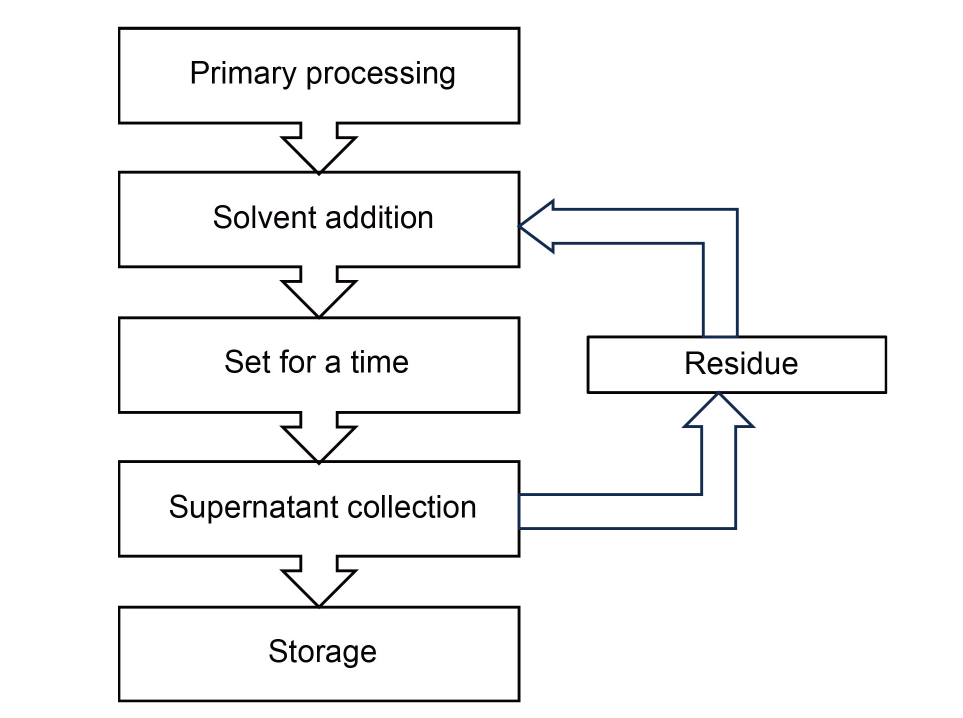
Fig. 3. Basic steps of solvent extraction for traditional rice.
| Rice type | Percentage of inhibition/IC50/EC50 | Reference | |||
|---|---|---|---|---|---|
| DPPH | FRAP | TAC | ABTS | ||
| Traditional pigmented rice | |||||
| Pigmented | 94.19%-96.43% | 25.90-54.50 mmol/kg | Saikia et al, | ||
| Pigmented (brown) | 7.10-17.30 mmol/kg a | Gunaratne et al, | |||
| Pigmented (polished) | 0.00-1.30 mmol/kg a | Gunaratne et al, | |||
| Pigmented | 130.20 μg/mL | Mannan et al, | |||
| Pigmented | 54.19%-99.74% | Maisuthisakul and Changchub, | |||
| Pigmented | 1.90-3.40 μg/mL | Valarmathi et al, | |||
| Pigmented | 59.02%-72.52% | Chanu et al, | |||
| Pigmented | 5.06-17.44 mg/g a | 0.97-10.30 mmol/g b | Shin et al, | ||
| Pigmented | 65.74%-77.94% | 1.26-1.73 mmol/mL c | Bhat and Riar, | ||
| Pigmented | 19.56%-29.29% | Pathak et al, | |||
| Pigmented | 67.50%-89.01% | 1.65-2.31 mmol/kg c | 2.60-8.97 mmol/kg c | Rajendran et al, | |
| Pigmented | 1.67-4.52 μg/mL | 2.18-5.18 μg/mL | 3.38-7.45 μg/mL | Balakrishnan et al, | |
| Pigmented (brown) | 81.54%-96.00% | Mudoi and Das, | |||
| Pigmented (polished) | 59.65%-86.35% | Mudoi and Das, | |||
| Pigmented | 20.90%-24.32% | Devraj et al, | |||
| Pigmented | 84.32-391.85 μg/mL a | Lichanporn et al, | |||
| Pigmented | 6.65-34.00 μg/mL | Agustin et al, | |||
| Pigmented | 88.00%-93.00% | 2.60-3.50 g/kg c | Nayeem et al, | ||
| Traditional rice | |||||
| Non-pigmented | 29.02%-31.13% | 5.60-9.60 mmol/kg | Saikia et al, | ||
| Non-pigmented | 410.30-420.30 μg/mL | Mannan et al, | |||
| Aromatic (milled and polished) | 6.51-13.95 mg/mL | 1.04-1.82 mmol/kgc | 3.22-5.52 mmol/kg c | Dutta et al, | |
| Non-pigmented | 56.21%-91.90% | Maisuthisakul and Changchub, | |||
| Aromatic | 81.45 μg/mL | Rahman et al, | |||
| Non-pigmented | 16.38% | Chanu et al, | |||
| Pigmented and non-pigmented | 5.60-25.80 mmol/kg a | 3.83-13.14 mmol/g a | Kariyawasam et al, | ||
| Non-pigmented | 3.56-5.58 mg/g a | 0.34-1.68 mmol/g b | Shin et al, | ||
| Non-pigmented | 51.00%-64.00% | 1.12-2.00 mmol/g c | 2.85-6.78 mmol/kg c | Rajendran et al, | |
| White | 55.48%-72.96% | Devraj et al, | |||
| Milled | 2.58-8.00 mmol/kg c | Muttagi and Ravindra, | |||
| Non-pigmented | 43.02 μg/mL | Agustin et al, | |||
| Aromatic | 314.72-3241.72 μg/mL | Mondal et al, | |||
| Non-pigmented | 54.00%-57.00% | 1.80-2.35 g/kg c | Nayeem et al, | ||
| Pigmented and non-pigmented | 1.46-58.91 mg/mL | Ray et al, | |||
| Raw | 47.00-62.00 mg/kg c | 69.00-185.00 mg/kg c | 1.70-2.30 mg/g a | Thennakoon and Ekanayake, | |
| Raw polished | 43.00-46.00 mg/kg c | 51.00-144.00 mg/kg c | 1.00-1.90 mg/g a | Thennakoon and Ekanayake, | |
| Parboiled | 45.00-51.00 mg/kg c | 59.00-152.00 mg/kg c | 1.50-2.10 mg/g a | Thennakoon and Ekanayake, | |
| Pigmented and non-pigmented | 47.00-69.00 mg/kg c | 35.00-42.00 mg/kg c | Wimalarathne and Ekanayake, | ||
Table 3. DPPH, FRAP, TAC and ABTS antioxidant potential of traditional rice and traditional pigmented rice varieties.
| Rice type | Percentage of inhibition/IC50/EC50 | Reference | |||
|---|---|---|---|---|---|
| DPPH | FRAP | TAC | ABTS | ||
| Traditional pigmented rice | |||||
| Pigmented | 94.19%-96.43% | 25.90-54.50 mmol/kg | Saikia et al, | ||
| Pigmented (brown) | 7.10-17.30 mmol/kg a | Gunaratne et al, | |||
| Pigmented (polished) | 0.00-1.30 mmol/kg a | Gunaratne et al, | |||
| Pigmented | 130.20 μg/mL | Mannan et al, | |||
| Pigmented | 54.19%-99.74% | Maisuthisakul and Changchub, | |||
| Pigmented | 1.90-3.40 μg/mL | Valarmathi et al, | |||
| Pigmented | 59.02%-72.52% | Chanu et al, | |||
| Pigmented | 5.06-17.44 mg/g a | 0.97-10.30 mmol/g b | Shin et al, | ||
| Pigmented | 65.74%-77.94% | 1.26-1.73 mmol/mL c | Bhat and Riar, | ||
| Pigmented | 19.56%-29.29% | Pathak et al, | |||
| Pigmented | 67.50%-89.01% | 1.65-2.31 mmol/kg c | 2.60-8.97 mmol/kg c | Rajendran et al, | |
| Pigmented | 1.67-4.52 μg/mL | 2.18-5.18 μg/mL | 3.38-7.45 μg/mL | Balakrishnan et al, | |
| Pigmented (brown) | 81.54%-96.00% | Mudoi and Das, | |||
| Pigmented (polished) | 59.65%-86.35% | Mudoi and Das, | |||
| Pigmented | 20.90%-24.32% | Devraj et al, | |||
| Pigmented | 84.32-391.85 μg/mL a | Lichanporn et al, | |||
| Pigmented | 6.65-34.00 μg/mL | Agustin et al, | |||
| Pigmented | 88.00%-93.00% | 2.60-3.50 g/kg c | Nayeem et al, | ||
| Traditional rice | |||||
| Non-pigmented | 29.02%-31.13% | 5.60-9.60 mmol/kg | Saikia et al, | ||
| Non-pigmented | 410.30-420.30 μg/mL | Mannan et al, | |||
| Aromatic (milled and polished) | 6.51-13.95 mg/mL | 1.04-1.82 mmol/kgc | 3.22-5.52 mmol/kg c | Dutta et al, | |
| Non-pigmented | 56.21%-91.90% | Maisuthisakul and Changchub, | |||
| Aromatic | 81.45 μg/mL | Rahman et al, | |||
| Non-pigmented | 16.38% | Chanu et al, | |||
| Pigmented and non-pigmented | 5.60-25.80 mmol/kg a | 3.83-13.14 mmol/g a | Kariyawasam et al, | ||
| Non-pigmented | 3.56-5.58 mg/g a | 0.34-1.68 mmol/g b | Shin et al, | ||
| Non-pigmented | 51.00%-64.00% | 1.12-2.00 mmol/g c | 2.85-6.78 mmol/kg c | Rajendran et al, | |
| White | 55.48%-72.96% | Devraj et al, | |||
| Milled | 2.58-8.00 mmol/kg c | Muttagi and Ravindra, | |||
| Non-pigmented | 43.02 μg/mL | Agustin et al, | |||
| Aromatic | 314.72-3241.72 μg/mL | Mondal et al, | |||
| Non-pigmented | 54.00%-57.00% | 1.80-2.35 g/kg c | Nayeem et al, | ||
| Pigmented and non-pigmented | 1.46-58.91 mg/mL | Ray et al, | |||
| Raw | 47.00-62.00 mg/kg c | 69.00-185.00 mg/kg c | 1.70-2.30 mg/g a | Thennakoon and Ekanayake, | |
| Raw polished | 43.00-46.00 mg/kg c | 51.00-144.00 mg/kg c | 1.00-1.90 mg/g a | Thennakoon and Ekanayake, | |
| Parboiled | 45.00-51.00 mg/kg c | 59.00-152.00 mg/kg c | 1.50-2.10 mg/g a | Thennakoon and Ekanayake, | |
| Pigmented and non-pigmented | 47.00-69.00 mg/kg c | 35.00-42.00 mg/kg c | Wimalarathne and Ekanayake, | ||
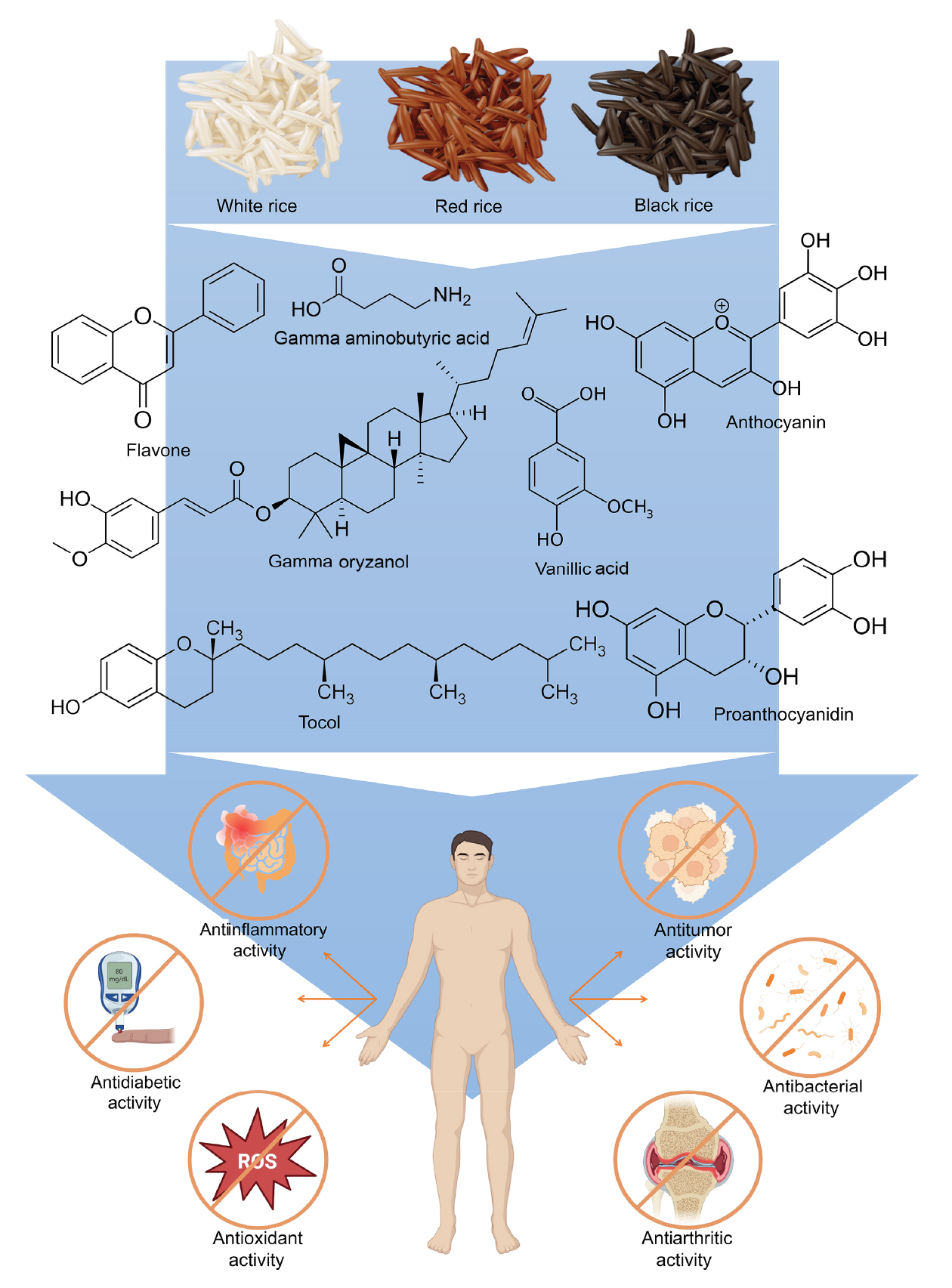
Fig. 4. Effects of traditional rice bioactive compounds on human body.
| Rice type | Total phenolic content | Total flavonoid content | Reference |
|---|---|---|---|
| Traditional pigmented rice | |||
| Pigmented | 24.50-57.90 g/kg a | 1.24-2.20 g/kg b | Saikia et al, |
| Pigmented (polished) | 0.00-100.00 mg/kg a | Gunaratne et al, | |
| Pigmented (unpolished) | 560.00-1 580.00 mg/kg a | Gunaratne et al, | |
| Pigmented | 138.00-1 570.00 mg/g c | Maisuthisakul and Changchub, | |
| Pigmented | 288.00 ± 0.10 μg/kg a | Valarmathi et al, | |
| Pigmented | 82.80-623.30 mg/kg a | Chanu et al, | |
| Pigmented | 0.29-6.92 mg/g a | Shin et al, | |
| Pigmented | 1.19-4.62 mg/g a | 2.90-8.92 mg/g d | Bhat and Riar, |
| Pigmented | 678.90-894.30 mg/kg a | 577.50-787.40 mg/kg b | Pathak et al, |
| Pigmented | 150.00-431.90 mg/kg a | 30.00-71.80 mg/kg b | Rajendran et al, |
| Pigmented | 13.00-44.00 mg/g a | Anuprialashmi et al, | |
| Pigmented | 93.20-358.20 μg/g a | 99.54-151.20 μg/g d | Balakrishnan et al, |
| Pigmented (brown) | 7.53-2.22 g/kg e | 2.52-10.00 g/kg b | Mudoi and Das, |
| Pigmented (polished) | 765.10-14 031.30 mg/kg e | 320.90-3 744.60 mg/kg b | Mudoi and Das, |
| Pigmented | 16.70-166.70 μg/g a | Ashokkumar et al, | |
| Pigmented | 220.11-290.70 mg/g a | 31.62-73.20 mg/g b | Devraj et al, |
| Pigmented | 22.94-29.75 mg/kg a | 450.50-483.10 mg/kg | Dhaliwal et al, |
| Pigmented | 42.65-212.42 μg/mL a | Lichanporn et al, | |
| Pigmented | 3.00-4.50 g/kg a | 8.50-17.50 g/kg b | Nayeem et al, |
| Traditional rice | |||
| Non-pigmented | 390.00-410.00 mg/kg a | 265.00-277.50 mg/kg b | Saikia et al, |
| Aromatic | 3.15-4.25 g/kg a | 116.00-128.00 g/kg d | Asaduzzaman et al, |
| Aromatic (milled and polished) | 110.00-190.00 mg/kg a | Dutta et al, | |
| Non-pigmented | 98.00-878.00 mg/g c | Maisuthisakul and Changchub, | |
| Aromatic | 74.86 mg/g a | 1.91 g/kg b | Rahman et al, |
| Non-pigmented | 117.40 mg/kg a | Chanu et al, | |
| Pigmented and non-pigmented | 1.66-7.66 mg/g a | Kariyawasam et al, | |
| Non-pigmented | 0.09-1.78 mg/g a | Shin et al, | |
| Non-pigmented | 332.30 mg/kg a | 245.80 mg/kg b | Pathak et al, |
| Non-pigmented | 102.30-346.10 mg/kg a | 22.00-60.00 mg/kg b | Rajendran et al, |
| Non-pigmented | 14.00-20.00 mg/g a | Anuprialashmi et al, | |
| Non-pigmented | 0.00 μg/g a | Ashokkumar et al, | |
| White | 36.48-126.78 mg/g a | 389.00-504.30 mg/g b | Devraj et al, |
| Milled | 478.20-1 523.30 mg/kg a | Muttagi and Ravindra, | |
| Non-pigmented | 1.00-1.12 g/kg a | 5.20-7.10 g/kg b | Nayeem et al, |
| Pigmented and non-pigmented | 3.90-6.80 mg/g a | Wimalarathne and Ekanayake, | |
| Raw | 5.80-6.70 mg/g a | Thennakoon and Ekanayake, | |
| Raw polished | 5.10-6.10 mg/g a | Thennakoon and Ekanayake, | |
| Parboiled | 5.20-6.10 mg/g a | Thennakoon and Ekanayake, | |
Table 4. Total phenolic and flavonoid contents of tradition rice and traditional pigmented rice varieties.
| Rice type | Total phenolic content | Total flavonoid content | Reference |
|---|---|---|---|
| Traditional pigmented rice | |||
| Pigmented | 24.50-57.90 g/kg a | 1.24-2.20 g/kg b | Saikia et al, |
| Pigmented (polished) | 0.00-100.00 mg/kg a | Gunaratne et al, | |
| Pigmented (unpolished) | 560.00-1 580.00 mg/kg a | Gunaratne et al, | |
| Pigmented | 138.00-1 570.00 mg/g c | Maisuthisakul and Changchub, | |
| Pigmented | 288.00 ± 0.10 μg/kg a | Valarmathi et al, | |
| Pigmented | 82.80-623.30 mg/kg a | Chanu et al, | |
| Pigmented | 0.29-6.92 mg/g a | Shin et al, | |
| Pigmented | 1.19-4.62 mg/g a | 2.90-8.92 mg/g d | Bhat and Riar, |
| Pigmented | 678.90-894.30 mg/kg a | 577.50-787.40 mg/kg b | Pathak et al, |
| Pigmented | 150.00-431.90 mg/kg a | 30.00-71.80 mg/kg b | Rajendran et al, |
| Pigmented | 13.00-44.00 mg/g a | Anuprialashmi et al, | |
| Pigmented | 93.20-358.20 μg/g a | 99.54-151.20 μg/g d | Balakrishnan et al, |
| Pigmented (brown) | 7.53-2.22 g/kg e | 2.52-10.00 g/kg b | Mudoi and Das, |
| Pigmented (polished) | 765.10-14 031.30 mg/kg e | 320.90-3 744.60 mg/kg b | Mudoi and Das, |
| Pigmented | 16.70-166.70 μg/g a | Ashokkumar et al, | |
| Pigmented | 220.11-290.70 mg/g a | 31.62-73.20 mg/g b | Devraj et al, |
| Pigmented | 22.94-29.75 mg/kg a | 450.50-483.10 mg/kg | Dhaliwal et al, |
| Pigmented | 42.65-212.42 μg/mL a | Lichanporn et al, | |
| Pigmented | 3.00-4.50 g/kg a | 8.50-17.50 g/kg b | Nayeem et al, |
| Traditional rice | |||
| Non-pigmented | 390.00-410.00 mg/kg a | 265.00-277.50 mg/kg b | Saikia et al, |
| Aromatic | 3.15-4.25 g/kg a | 116.00-128.00 g/kg d | Asaduzzaman et al, |
| Aromatic (milled and polished) | 110.00-190.00 mg/kg a | Dutta et al, | |
| Non-pigmented | 98.00-878.00 mg/g c | Maisuthisakul and Changchub, | |
| Aromatic | 74.86 mg/g a | 1.91 g/kg b | Rahman et al, |
| Non-pigmented | 117.40 mg/kg a | Chanu et al, | |
| Pigmented and non-pigmented | 1.66-7.66 mg/g a | Kariyawasam et al, | |
| Non-pigmented | 0.09-1.78 mg/g a | Shin et al, | |
| Non-pigmented | 332.30 mg/kg a | 245.80 mg/kg b | Pathak et al, |
| Non-pigmented | 102.30-346.10 mg/kg a | 22.00-60.00 mg/kg b | Rajendran et al, |
| Non-pigmented | 14.00-20.00 mg/g a | Anuprialashmi et al, | |
| Non-pigmented | 0.00 μg/g a | Ashokkumar et al, | |
| White | 36.48-126.78 mg/g a | 389.00-504.30 mg/g b | Devraj et al, |
| Milled | 478.20-1 523.30 mg/kg a | Muttagi and Ravindra, | |
| Non-pigmented | 1.00-1.12 g/kg a | 5.20-7.10 g/kg b | Nayeem et al, |
| Pigmented and non-pigmented | 3.90-6.80 mg/g a | Wimalarathne and Ekanayake, | |
| Raw | 5.80-6.70 mg/g a | Thennakoon and Ekanayake, | |
| Raw polished | 5.10-6.10 mg/g a | Thennakoon and Ekanayake, | |
| Parboiled | 5.20-6.10 mg/g a | Thennakoon and Ekanayake, | |
| [1] | Abeysekera W K S M, Arachchige S P G, James S, Sotheeswaran S, Thavarajah D, Thavarajah P. 2018. Resistant starch content of thirty eight selected rice (Oryza sativa L.) varieties of Sri Lanka. J Agric Crop, 4(9): 93-98. |
| [2] | Agustin A T, Safitri A, Fatchiyah F. 2021. Java red rice (Oryza sativa L.) nutritional value and anthocyanin profiles and its potential role as antioxidant and anti-diabetic. Indones J Chem, 21(4): 968-978. |
| [3] | Anuprialashmi K, Malarmathy M, Priya P, Loganathan K, Mohamed N M, Shivashakthivel T, Yuvaraj S, Yenugula P, Theradimani M, Kanimoli M M. 2019. Studies on biochemical characterization of traditional rice varieties. Pharma Innov J, 8(5): 314-316. |
| [4] | Aryal S, Baniya M K, Danekhu K, Kunwar P, Gurung R, Koirala N. 2019. Total phenolic content, flavonoid content and antioxidant potential of wild vegetables from western Nepal. Plants, 8(4): 96. |
| [5] | Asaduzzaman M, Haque M E, Rahman J, Hasan S M K, Ali M A, Akter M S, Ahmed M. 2013. Comparisons of physiochemical, total phenol, flavanoid content and functional properties in six cultivars of aromatic rice in Bangladesh. Afr J Food Sci, 7(8): 198-203. |
| [6] | Ashokkumar K, Govindaraj M, Vellaikumar S, Shobhana V G, Karthikeyan A, Akilan M, Sathishkumar J. 2020. Comparative profiling of volatile compounds in popular South Indian traditional and modern rice varieties by gas chromatography- mass spectrometry analysis. Front Nutr, 7: 599119. |
| [7] | Astley S, Finglas P. 2016. Nutrition and health. In: Akers R M, Capuco A V. Reference Module in Food Science. Amsterdam, the Netherland: Elsevier. |
| [8] | Azam M S, Islam M N, Wahiduzzaman M, Alam M, Dhrubo A A K. 2023. Antiviral foods in the battle against viral infections: Understanding the molecular mechanism. Food Sci Nutr, 2023: 1-16. |
| [9] | Babu P V A, Liu D M. 2009. Flavonoids and cardiovascular health. In: Watson R R. Complementary and Alternative Therapies and the Aging Population. San Diego, CA, USA: Academic Press: 371-392. |
| [10] | Balakrishnan J, Thamilarasan S K, Ravi M S, Pugazhendhi A, Perumal V, Padikasan I A. 2019. Comparison of phytochemicals, antioxidant and hypoglycemic activity of four different brown rice varieties. Biocatal Agric Biotechnol, 21: 101351. |
| [11] | Bhat F M, Riar C S. 2015. Health benefits of traditional rice varieties of temperate regions. Med Aromat Plants, 4(3): 198. |
| [12] | Bhat F M, Riar C S. 2017. Characterizing the pigmented traditional rice cultivars grown in temperate regions of Kashmir (India) for free and bound phenolics compounds and in vitro antioxidant properties. J Cereal Sci, 76: 253-262. |
| [13] | Bhat F M, Sommano S R, Riar C S, Seesuriyachan P, Chaiyaso T, Prom-u-Thai C. 2020. Status of bioactive compounds from bran of pigmented traditional rice varieties and their scope in production of medicinal food with nutraceutical importance. Agronomy, 10(11): 1817. |
| [14] | Bignold L P. 2015. Introduction. In: Bignold L P. Principles of Tumors: A Translational Approach to Foundations. San Diego, CA, USA: Academic Press: 1-31. |
| [15] | Bone K, Mills S. 2013. Principles of herbal pharmacology. In: Bone K, Mills S. Principles and Practice of Phytotherapy: Modern Herbal Medicine. 2nd ed. Orlando, FL, USA: Churchill Livingstone: 17-82. |
| [16] | Boominathan M, Bakiyalakshmi S V. 2016. In vitro anti arthritic activity of Njavara rice. Asian J Pharmac Res, 6(4): 250-252. |
| [17] | Cabanting R M F, Perez L M. 2016. An ethnobotanical study of traditional rice landraces (Oryza sativa L.) used for medical treatment in selected local communities of the Philippines. J Ethnopharmacol, 194: 767-773. |
| [18] | Cai Y Z, Sun M, Xing J, Luo Q, Corke H. 2006. Structure-radical scavenging activity relationships of phenolic compounds from traditional Chinese medicinal plants. Life Sci, 78(25): 2872-2888. |
| [19] | Callcott E T, Blanchard C L, Snell P, Santhakumar A B. 2019. The anti-inflammatory and antioxidant effects of acute consumption of pigmented rice in humans. Food Funct, 10(12): 8230-8239. |
| [20] | Chakuton K, Puangpronpitag D, Nakornriab M. 2012. Phytochemical content and antioxidant activity of colored and non-colored Thai rice cultivars. Asian J Plant Sci, 11(6): 285-293. |
| [21] | Chanu C S, Yenagi N B, Math K K. 2016. Nutritional and functional evaluation of black rice genotypes. J Farm Sci, 29(1): 61-64. |
| [22] | Chaudhari P R, Tamrakar N, Singh L, Tandon A, Sharma D. 2018. Rice nutritional and medicinal properties: A review article. J Pharmacogn Phytochem, 7(2): 150-156. |
| [23] | Deng G F, Xu X R, Zhang Y, Li D, Gan R Y, Li H B. 2013. Phenolic compounds and bioactivities of pigmented rice. Crit Rev Food Sci Nutr, 53(3): 296-306. |
| [24] | Devraj L, Panoth A, Kashampur K, Kumar A, Natarajan V. 2020. Study on physicochemical, phytochemical, and antioxidant properties of selected traditional and white rice varieties. J Food Process Eng, 43(3): e13330. |
| [25] | Dhaliwal Y S, Pandit A, Verma A K, Gupta A. 2020. Physical properties and food value of rice varieties of Western Himalaya. Indian J Nat Prod Resour, 11(4): 340-349. |
| [26] | Disanayake S P, Ginigaddara G A S. 2018. Farmers’ willingness to cultivate traditional rice in Sri Lanka: A case study in Anuradhapura District. In: Shah F, Khan Z H, Iqbal A. Rice Crop: Current Developments. London, UK: IntechOpen: 229-240. |
| [27] | Dutta A, Gope P, Banik S, Rahman M, Makhnoon S, Siddiquee M, Kabir Y. 2013. Physicochemical, cooking and antioxidant properties of nine aromatic rice cultivars of Bangladesh. Acta Aliment, 42(4): 552-564. |
| [28] | Frei M, Siddhuraju P, Becker K. 2003. Studies on the in vitro starch digestibility and the glycemic index of six different indigenous rice cultivars from the Philippines. Food Chem, 83(3): 395-402. |
| [29] | Gentili A, Caretti F. 2017. Analysis of vitamins by liquid chromatography. In: Fanali S, Haddad P R, Poole C F, Riekkola M. Liquid Chromatography: Applications. 2nd edn. Amsterdam, the Netherland: Elsevier: 571-615. |
| [30] | Ghanghas N, Mukilan M T, Sharma S, Prabhakar P K. 2020. Classification, composition, extraction, functional modification and application of rice (Oryza sativa) seed protein: A comprehensive review. Food Rev Int, 38(4): 354-383. |
| [31] | Ghosh P, Roychoudhury A. 2018. Differential levels of metabolites and enzymes related to aroma formation in aromatic indica rice varieties: Comparison with non-aromatic varieties. 3 Biotech, 8(1): 25. |
| [32] | Godakumbura P I, Kariyawasam T I, Arachchi P M, Fernando N, Premakumara S. 2017. In-vitro antibacterial activity of Sri Lankan traditional rice (Oryza sativa L.) extracts against bacteria causing skin and soft tissue infections. J Pharm Res, 11(2): 156-161. |
| [33] | Goufo P, Trindade H. 2014. Rice antioxidants: Phenolic acids, flavonoids, anthocyanins, proanthocyanidins, tocopherols, tocotrienols, γ-oryzanol, and phytic acid. Food Sci Nutr, 2(2): 75-104. |
| [34] | Goufo P, Pereira J, Moutinho-Pereira J, Correia C M, Figueiredo N, Carranca C, Rosa E A S, Trindade H. 2014. Rice (Oryza sativa L.) phenolic compounds under elevated carbon dioxide (CO2) concentration. Environ Exp Bot, 99: 28-37. |
| [35] | Guha M, Sreerama Y N, Malleshi N G. 2015. Influence of processing on nutraceuticals of little millet (Panicum sumatrense). In: Preedy V. Processing and Impact on Active Components in Food. Amsterdam, the Netherland: Elsevier: 353-360. |
| [36] | Gunaratne A, Wu K, Li D Q, Bentota A, Corke H, Cai Y Z. 2013. Antioxidant activity and nutritional quality of traditional red- grained rice varieties containing proanthocyanidins. Food Chem, 138(2/3): 1153-1161. |
| [37] | Hu X Q, Lu L, Guo Z L, Zhu Z W. 2020. Volatile compounds, affecting factors and evaluation methods for rice aroma: A review. Trends Food Sci Technol, 97: 136-146. |
| [38] | Huang Y P, Lai H M. 2016. Bioactive compounds and antioxidative activity of colored rice bran. J Food Drug Anal, 24(3): 564-574. |
| [39] | Ito V C, Lacerda L G. 2019. Black rice (Oryza sativa L.): A review of its historical aspects, chemical composition, nutritional and functional properties, and applications and processing technologies. Food Chem, 301: 125304. |
| [40] | Jaime L, Santoyo S. 2021. The health benefits of the bioactive compounds in foods. Foods, 10(2): 325. |
| [41] | Jaksomsak P, Rerkasem B, Prom-U-Thai C. 2021. Variation in nutritional quality of pigmented rice varieties under different water regimes. Plant Prod Sci, 24(2): 244-255. |
| [42] | Kakar K, Xuan T D, Haqani M I, Rayee R, Wafa I K, Abdiani S, Tran H D. 2019. Current situation and sustainable development of rice cultivation and production in Afghanistan. Agriculture, 9(3): 49. |
| [43] | Kariyawasam T I, Godakumbura P I, Prashantha M A B, Premakumara G A S, Abcysekera W K S M. 2016a. Antioxidant properties of selected traditional rice varieties in Sri Lanka. In: Proceedings of the Peradeniya University International Research Sessions, 4-5 November 2016, Sri Lanka: 20. |
| [44] | Kariyawasam T I, Godakumbura P I, Prashantha M A B, Premakumara G A S. 2016b. Proximate composition, calorie content and heavy metals (As, Cd, Pb) of selected Sri Lankan traditional rice (Oryza sativa L.) varieties. Proced Food Sci, 6: 253-256. |
| [45] | Karladee D, Suriyong S. 2012. γ-Aminobutyric acid (GABA) content in different varieties of brown rice during germination. ScienceAsia, 38(1): 13-17. |
| [46] | Khan M A I, Bhuiyan M R, Hossain M S, Sen P P, Ara A, Siddique M A, Ali M A. 2014. Neck blast disease influences grain yield and quality traits of aromatic rice. C R Biol, 337(11): 635-641. |
| [47] | Khatoon S, Gopalakrishna A G. 2004. Fat-soluble nutraceuticals and fatty acid composition of selected Indian rice varieties. J Amer Oil Chem Soc, 81(10): 939-943. |
| [48] | Ki V, Rotstein C. 2008. Bacterial skin and soft tissue infections in adults: A review of their epidemiology, pathogenesis, diagnosis, treatment and site of care. Can J Infect Dis Med Microbiol, 19(2): 173-184. |
| [49] | Kotamreddy J N R, Barman M, Sharma L, Mitra A. 2020. Grain size and shape reflects variability in metabolite and elemental composition in traditional rice varieties. J Food Meas Charact, 14(1): 114-124. |
| [50] | Lee S. 2017. Strategic design of delivery systems for nutraceuticals. In: Oprea A E, Grumezescu A M. Nanotechnology Applications in Food: Flavor, Stability, Nutrition and Safety. San Diego, CA, USA: Academic Press: 65-86. |
| [51] | Lichanporn I, Nantachai N, Tunganurat P, Akkarakultron P. 2020. Vitamin and mineral content of six native varieties of rice in Thailand. Int J GEOMATE, 18(67): 51-56. |
| [52] | Limtrakul (Dejkriengkraikul) P, Semmarath W, Mapoung S. 2020. Anthocyanins and proanthocyanidins in natural pigmented rice and their bioactivities. In: Rao V, Mans D, Rao L. Phytochemicals in Human Health. London, UK: IntechOpen: 1-24. |
| [53] | Liyanaarachchi G V V, Mahanama K R R, Somasiri H P P S, Punyasiri P A N, Wijesena K A K, Kottawa-Arachchi J D. 2021. Profiling of amino acids in traditional and improved rice (Oryza sativa L.) varieties of Sri Lanka and their health promoting aspects. Cereal Res Commun, 49(3): 441-448. |
| [54] | Lum M S, Chong P L. 2012. Potential antioxidant properties of pigmented rice from Sabah, Malaysia. Int J Appl Nat Sci, 1(2): 29-38. |
| [55] | Maisuthisakul P, Changchub L. 2014. Effect of extraction on phenolic antioxidant of different Thai rice (Oryza sativa L.) genotypes. Int J Food Prop, 17(4): 855-865. |
| [56] | Mannan M A, Bhuiya M S U, Akhand M I M, Rana M M. 2012. Influence of date of planting on the growth and yield of locally popular traditional aromatic rice varieties in boro season. J Sci Found, 10(1): 20-28. |
| [57] | Mannan M A, Sarker T C, Rahman M M, Alam M F. 2013. Screening of phytochemical compounds and antioxidant properties in local and HYV of Bangladeshi rice (Oryza sativa L.). Int J Biosci, 3(4): 151-160. |
| [58] | Mannan M A, Sarker T C, Kabir A H, Rahman M, Alam M F. 2014. Antitumor properties of two traditional aromatic rice genotypes (Kalijira and Chinigura). Avicenna J Phytomed, 4(1): 31-42. |
| [59] | Mbanjo E G N, Kretzschmar T, Jones H, Ereful N, Blanchard C, Boyd L A, Sreenivasulu N. 2020. The genetic basis and nutritional benefits of pigmented rice grain. Front Genet, 11: 229. |
| [60] | Mondal D, Kantamraju P, Jha S, Sundarrao G S, Bhowmik A, Chakdar H, Mandal S, Sahana N, Roy B, Bhattacharya P M, Chowdhury A K, Choudhury A. 2021. Evaluation of indigenous aromatic rice cultivars from sub-Himalayan Terai region of India for nutritional attributes and blast resistance. Sci Rep, 11: 4786. |
| [61] | Mudoi T, Das P. 2019. A study on phytochemicals and mineral content of indigenous red rice of Assam, India. Int J Curr Microbiol App Sci, 8(4): 1-12. |
| [62] | Muttagi G C, Ravindra U. 2020. Phytochemical and antioxidant capacity of traditional rice varieties of Karnataka, India. Int J Curr Microbiol App Sci, 9(5): 67-75. |
| [63] | Nadini Thushara P A, Godakumbura P I, Prashantha M A B. 2019. Importance, health benefits and bioactivities of Sri Lankan traditional rice (Oryza sativa L.) varieties: A review. Int J Agric Environ Biores, 4(3): 119-128. |
| [64] | Nayeem S, Sundararajan S, Ashok A K, Abusaliya A, Ramalingam S. 2021. Effects of cooking on phytochemical and antioxidant properties of pigmented and non-pigmented rare Indian rice landraces. Biocatal Agric Biotechnol, 32: 101928. |
| [65] | Neeland I J, Patel K V. 2019. Diabetes: Key markers of injury and prognosis. In: Nambi V. Biomarkers in Cardiovascular Disease. Amsterdam, the Netherland: Elsevier: 41-51. |
| [66] | Nicholas D, Hazila K K, Chua H P, Rosniyana A. 2014. Nutritional value and glycemic index of Bario rice varieties. J Trop Agric Food Sci, 42: 1-8. |
| [67] | Noori Z, Mujadidi M W, Amin M W. 2018. Physicochemical properties and morphological observations of selected local rice varieties in northern Afghanistan. Int J Agric Environ Food Sci, 2(3): 99-103. |
| [68] | Obermuller-Jevic U C, Packer L. 2004. Vitamin E. In: Lennarz W J, Lane M D. Encyclopedia of Biological Chemistry. Amsterdam, the Netherland: Elsevier: 384-388. |
| [69] | Pathak K, Rahman S W, Bhagawati S, Gogoi B. 2017. Assessment of nutritive and antioxidant properties of some indigenous pigmented hill rice (Oryza sativa L.) cultivars of Assam. Indian J Agric Res, 51(3): 214-220. |
| [70] | Peumans W J, van Damme E J M. 1995. Lectins as plant defense proteins. Plant Physiol, 109(2): 347-352. |
| [71] | Phusrisom S, Senggunprai L, Prawan A, Kongpetch S, Kukongviriyapan U, Thawornchinsombut S, Siriamornpun S, Chumroenphat T, Changsri R, Kukongviriyapan V. 2021. Anti-tumor activity of rice bran hydrolysates on migration, invasion and angiogenesis. Asian Pac J Trop Biomed, 11(7): 317-326. |
| [72] | Prasad V S S, Hymavathi A, Babu V R, Longvah T. 2018. Nutritional composition in relation to glycemic potential of popular Indian rice varieties. Food Chem, 238: 29-34. |
| [73] | Ragaee S, Seetharaman K, Abdel-Aal E S M. 2014. The impact of milling and thermal processing on phenolic compounds in cereal grains. Crit Rev Food Sci Nutr, 54(7): 837-849. |
| [74] | Rahman H, Eswaraiah M C, Dutta A M. 2015a. Joha rice: An aromatic indigenous rice of Assam, India contains flavanoids and phenolic substances and shows good antioxidant activities. Der Pharm Lett, 7(1): 212-217. |
| [75] | Rahman H, Eswaraiah M C, Dutta A M. 2015b. In-vitro anti- inflammatory and anti-arthritic activity of Oryza sativa var. Joha rice (an aromatic indigenous rice of Assam). Am-Eurasian J Agric Environ Sci, 15(1): 115-121. |
| [76] | Rajendran M, Chandran K R. 2020. Grain dimension, nutrition and nutraceutical properties of black and red varieties of rice in India. Curr Res Nutr Food Sci, 8(3): 903-923. |
| [77] | Rajendran V, Sivakumar H P, Marichamy I, Sundararajan S, Ramalingam S. 2018. Phytonutrients analysis in ten popular traditional Indian rice landraces (Oryza sativa L.). J Food Meas Charact, 12(4): 2598-2606. |
| [78] | Rathna Priya T S, Eliazer Nelson A R L, Ravichandran K, Antony U. 2019. Nutritional and functional properties of coloured rice varieties of South India: A review. J Ethn Foods, 6(1): 1-11. |
| [79] | Ray S, Deb D, Sarkar M P. 2021. Colour based nutraceutical potential of some traditional rice (Oryza sativa L. ssp. indica) varieties of India. Indian J Nat Prod Resour, 12(1): 153-157. |
| [80] | Reginster J Y. 2002. The prevalence and burden of arthritis. Rheumatology, 41(suppl_1): 3-6. |
| [81] | Rohitha Prasantha B D. 2018. Glycemic index of four traditional red pigmented rice. Integr Food Nutr Metab, 5(5): 1-3. |
| [82] | Saikia S, Dutta H, Saikia D, Mahanta C L. 2012. Quality characterisation and estimation of phytochemicals content and antioxidant capacity of aromatic pigmented and non-pigmented rice varieties. Food Res Int, 46(1): 334-340. |
| [83] | Samtiya M, Aluko R E, Dhewa T. 2020. Plant food anti-nutritional factors and their reduction strategies: An overview. Food Prod Process Nutr, 2(1): 6. |
| [84] | Saragih B, Naibaho N M, Saragih B,. 2019. Nutritional, functional properties, glycemic index and glycemic load of indigenous rice from North and East Borneo. Food Res, 3(5): 537-545. |
| [85] | Shin S Y, Ahmad M A, Abd Rashid M R, Bakar N T A, Machap C, Abidin R A Z, Kuang A L C, Kamaruzaman R, Yusof M N M, Simoh S. 2016. Antioxidant activities, macro- and micro- element composition of selected Malaysian local rice varieties. Trans Genet Soc Malaysia, 3: 205-212. |
| [86] | Shozib H B, Jahan S, Bhowmick S, Hoque F, Chakma D, Hosain M, Faruque M O, Rahman M S, Siddiquee M A. 2015. Dietary administration of rice in improving the antioxidant status in Long-Evans Rat. Biojournal Sci Technol, 2: M150004. |
| [87] | Shozib H B, Islam M M, Abu Saleh Mahmud S, Bari M N, Akter N, Jahan S, Hosen S, Hossain M N, Nabi A H M N, Ali Siddiquee M, Haque M M. 2021. Application of cyanidin-3- glucosides as a functional food ingredient in rice-based bakery products. Saudi J Biol Sci, 28(12): 7472-7480. |
| [88] | Siddiquee M A, Jahan S, Kabir Y, Shozib H B. 2017. BRRI dhan31 generate elevated level of bioactive component, γ-aminobutyric acid (GABA) at pre-germinated brown rice condition. Int J Sci Res, 6(7): 4-6. |
| [89] | Siriwardhana N, Kalupahana N S, Cekanova M, LeMieux M, Greer B, Moustaid-Moussa N. 2013. Modulation of adipose tissue inflammation by bioactive food compounds. J Nutr Biochem, 24(4): 613-623. |
| [90] | Sivamaruthi B S, Kesika P, Chaiyasut C. 2018. Anthocyanins in Thai rice varieties: Distribution and pharmacological significance. Int Food Res J, 25(5): 2024-2032. |
| [91] | Somsana P, Wattana P, Suriharn B, Sanitchon J. 2013. Stability and genotype by environment interactions for grain anthocyanin content of Thai black glutinous upland rice (Oryza sativa). SABRAO J Breed Genet, 45: 523-532. |
| [92] | Srikaeo K. 2014. Organic rice bran oils in health. In: Watson R R, Preedy V R, Zibadi S. Wheat and Rice in Disease Prevention and Health: Benefits, Risks and Mechanisms of Whole Grains in Health Promotion. San Diego, CA, USA: Academic Press: 453-465. |
| [93] | Srikaeo K, Sopade P A. 2010. Functional properties and starch digestibility of instant Jasmine rice porridges. Carbohydr Polym, 82(3): 952-957. |
| [94] | Sudtasarn G, Homsombat W, Chotechuen S, Chamarerk V. 2019. Quantification of tocopherols, tocotrienols and γ-oryzanol contents of local rice varieties in northeastern Thailand. J Nutr Sci Vitaminol, 65(Suppl): S125-S128. |
| [95] | Sui X N, Zhang Y, Zhou W B. 2016. In vitro and in silico studies of the inhibition activity of anthocyanins against porcine pancreatic α-amylase. J Funct Foods, 21: 50-57. |
| [96] | Sukumaran V, Senanayake S. 2016. Bacterial skin and soft tissue infections. Aust Prescr, 39(5): 159-163. |
| [97] | Susiyanti, Rusmana, Maryani Y, Sjaifuddin,Krisdianto N, Syabana M A. 2020. The physicochemical properties of several Indonesian rice varieties. Biotropla, 27(1): 41-50. |
| [98] | Thennakoon T P A U, Ekanayake S. 2021. Does antioxidant potential of traditional rice varieties vary with processing? Int J Multi Stud, 8(2): 117-130. |
| [99] | Thomas R, Bhat R, Kuang Y T, Abdullah W N W. 2014. Functional and pasting properties of locally grown and imported exotic rice varieties of Malaysia. Food Sci Technol Res, 20(2): 469-477. |
| [100] | Thompson L U. 1993. Potential health benefits and problems associated with antinutrients in foods. Food Res Int, 26(2): 131-149. |
| [101] | Tuncel N B, Yılmaz N. 2011. Gamma-oryzanol content, phenolic acid profiles and antioxidant activity of rice milling fractions. Eur Food Res Technol, 233(4): 577-585. |
| [102] | Umukoro S, Ashorobi R B. 2006. Evaluation of anti-inflammatory and membrane stabilizing property of aqueous leaf extract of Momordica charantia in rats. Afr J Biomed Res, 9(2): 119-124. |
| [103] | Uttra A M, Alamgeer. 2017. Assessment of anti-arthritic potential of Ephedra gerardiana by in vitro and in vivo methods. Bangladesh J Pharmacol, 12(4): 403-409. |
| [104] | Vadivelan R, Bhadra S, Ravi A V S, Shanish K S A, Elango K, Suresh B. 2009. Evaluation of anti-inflammatory and membrane stabilizing property of ethanol root extract of Rubus ellipticus Smith in albino rats. J Nat Remed, 9: 74-78. |
| [105] | Valarmathi R, Raveendran M, Robin S, Senthil N. 2015. Unraveling the nutritional and therapeutic properties of ‘Kavuni’ a traditional rice variety of Tamil Nadu. J Plant Biochem Biotechnol, 24(3): 305-315. |
| [106] | Vane J R, Botting R M. 1995. New insights into the mode of action of anti-inflammatory drugs. Inflamm Res, 44(1): 1-10. |
| [107] | Verma D K, Srivastav P P. 2020. Bioactive compounds of rice (Oryza sativa L.): Review on paradigm and its potential benefit in human health. Trends Food Sci Technol, 97: 355-365. |
| [108] | Wimalarathne B A L C, Ekanayake S. 2021. Effect of cooking on antioxidant properties of selected traditional rice varieties. Tri-Annual Publ Inst Chem Ceylon, 38(2): 39-40. |
| [109] | Wongsa P, Landberg R, Rattanapanone N. 2018. Chemical compositions and metabolite profiling of rice varieties from Chiang Rai Province, Thailand. Chiang Mai J Sci, 45(7): 2703-2714. |
| [110] | Zhang Y J, Gan R Y, Li S, Zhou Y, Li A N, Xu D P, Li H B. 2015. Antioxidant phytochemicals for the prevention and treatment of chronic diseases. Molecules, 20(12): 21138-21156. |
| [111] | Zhou Z K, Robards K, Helliwell S, Blanchard C. 2004. The distribution of phenolic acids in rice. Food Chem, 87(3): 401-406. |
| No related articles found! |
| 阅读次数 | ||||||
|
全文 |
|
|||||
|
摘要 |
|
|||||
