
Rice Science ›› 2026, Vol. 33 ›› Issue (4): 514-530.DOI: 10.1016/j.rsci.2026.04.010
收稿日期:2026-01-11
接受日期:2026-04-01
出版日期:2026-07-28
发布日期:2026-08-06
. [J]. Rice Science, 2026, 33(4): 514-530.
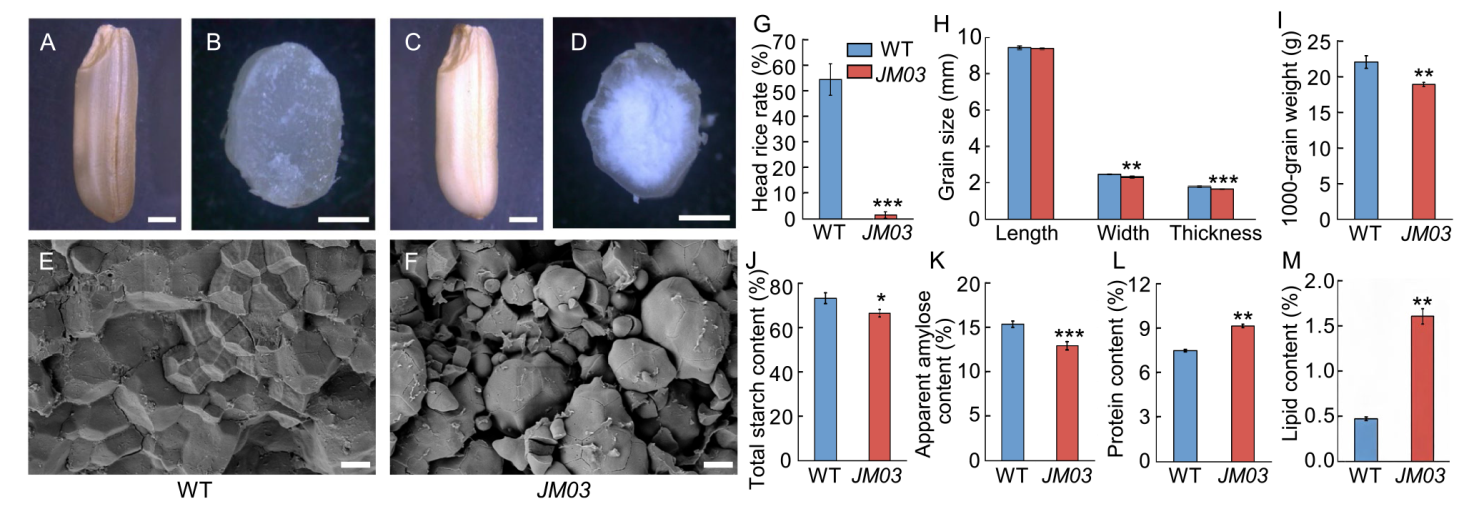
Fig. 1. Phenotype of wild type (WT) and mutant JM03. A and C, Appearance of brown rice of WT (A) and JM03 (C). Scale bars, 1 mm. B and D, Seed cross section of WT (B) and JM03 (D). Scale bars, 1 mm. E and F, Scanning electron microscopy observation of the central portion of WT (E) and JM03 (F) seeds. Scale bars, 3 μm. G-M, Head rice rate (G), grain length, width, and thickness (H), 1000-grain weight (I), total starch content (J), apparent amylose content (K), protein content (L), and lipid content (M) of WT and JM03. The asterisks indicate statistical significance between WT and JM03, as determined by the Student’s t-test (*, P < 0.05; **, P < 0.01; ***, P < 0.001).
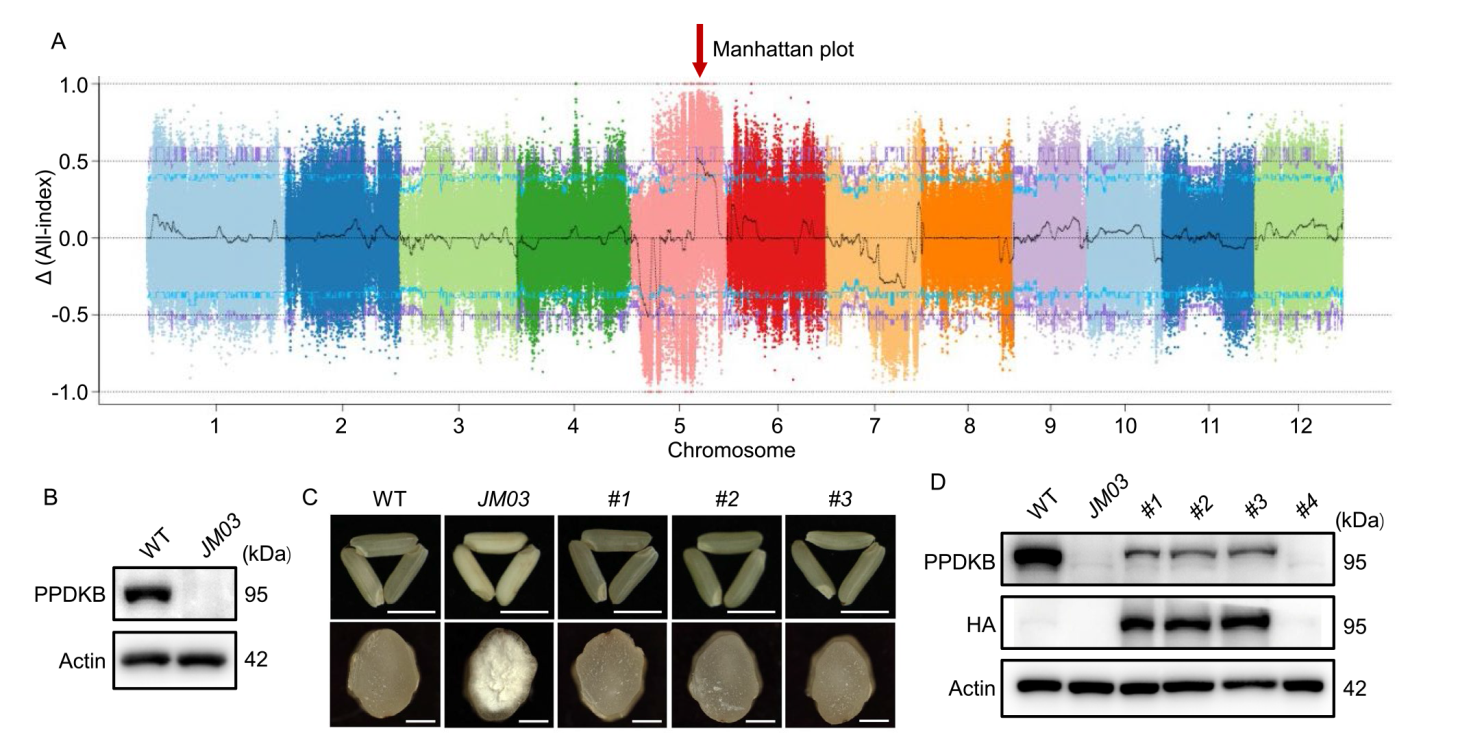
Fig. 2. Identification of causal gene for chalky endosperm of mutant JM03. A, Bulked segregant analysis sequencing revealed a significant peak nearly to 1.0 with high probability on chromosome 5. B, Western blotting of PPDKB in developing endosperm (10 d after flowering) of wild type (WT) and JM03. Anti-actin was used as the loading control. C, Grain (top) and cross-sections (bottom) appearance of WT, JM03, and complementation lines (#1-#3). Scale bars, 5 mm (top) and 1 mm (bottom), respectively. D, Immunoblot detection of PPDKB and 3× hemagglutinin (HA) in mature seed of WT, JM03, and complementation lines (#1-#4). Line #4 was a negative control in which the transgene was not successfully introduced. Anti-actin was used as the loading control.
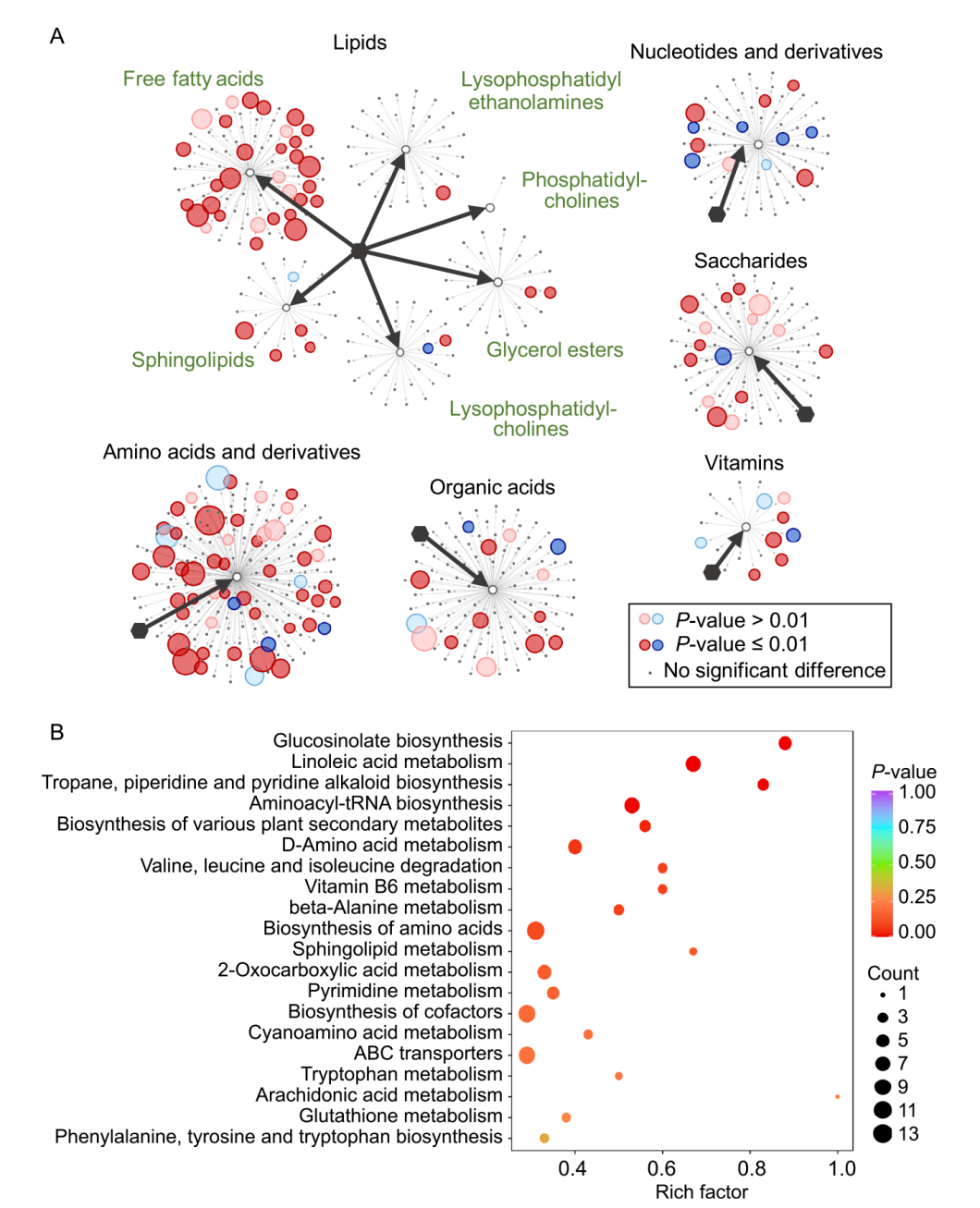
Fig. 3. Summary of primary metabolome and differentially accumulated metabolites in wild type (WT) and mutant JM03. A, Class-based clustering of identified metabolites (649 total) using Cytoscape (version 3.9.1). Each circle represents a metabolite. Circle size represents fold change in abundance. Red denotes higher abundance in JM03, and blue denotes higher abundance in WT. B, Kyoto Encyclopedia of Genes and Genomes (KEGG) pathway enrichment between WT and JM03.
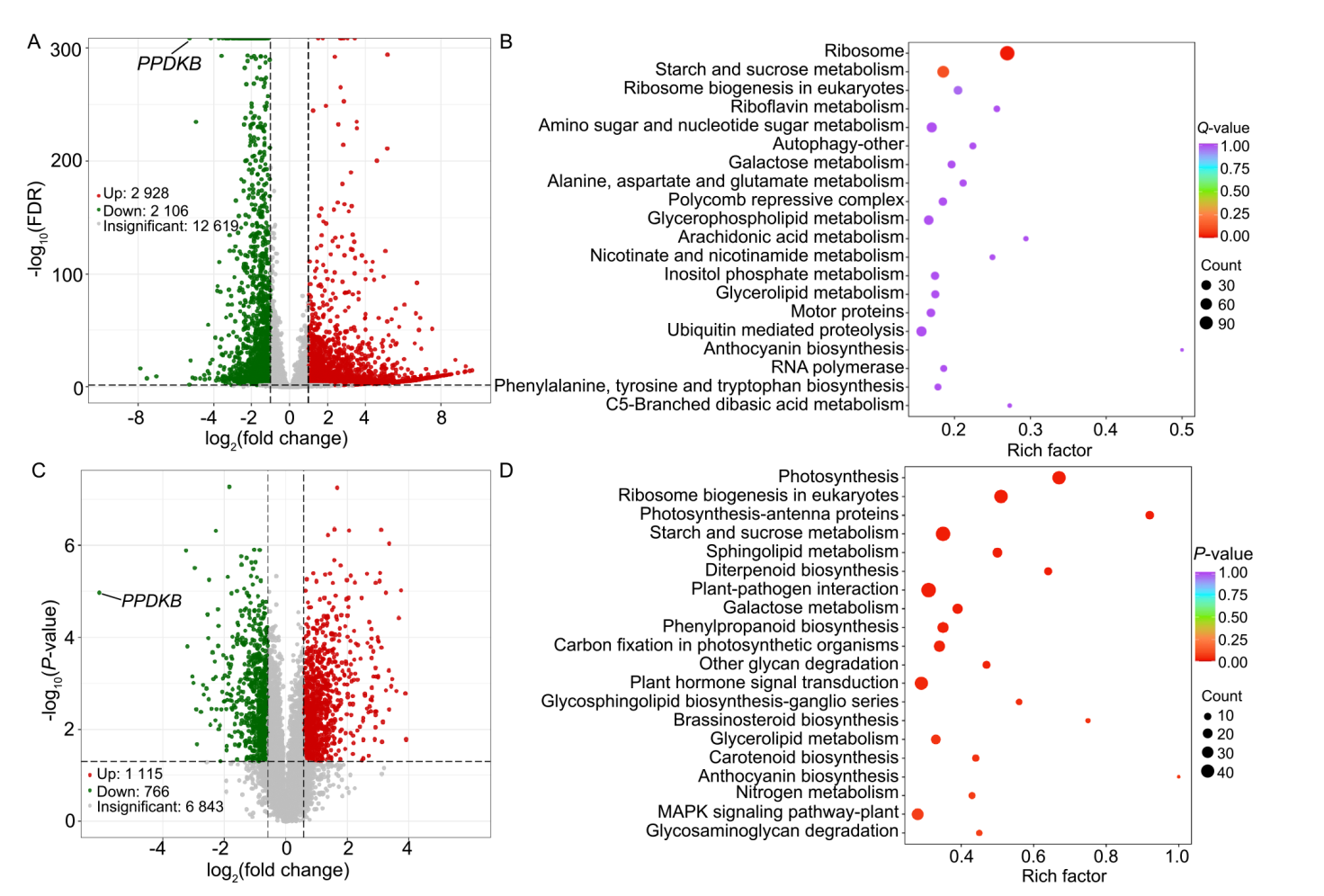
Fig. 4. Identification and functional enrichment of differentially expressed genes (DEGs) and proteins (DEPs) between wild type (WT) and mutant JM03. A and C, Volcano plot of DEGs (A) and DEPs (C) between WT and JM03. FDR, False discovery rate. B and D, Kyoto Encyclopedia of Genes and Genomes (KEGG) pathway enrichment of DEGs (B) and DEPs (D) between WT and JM03.
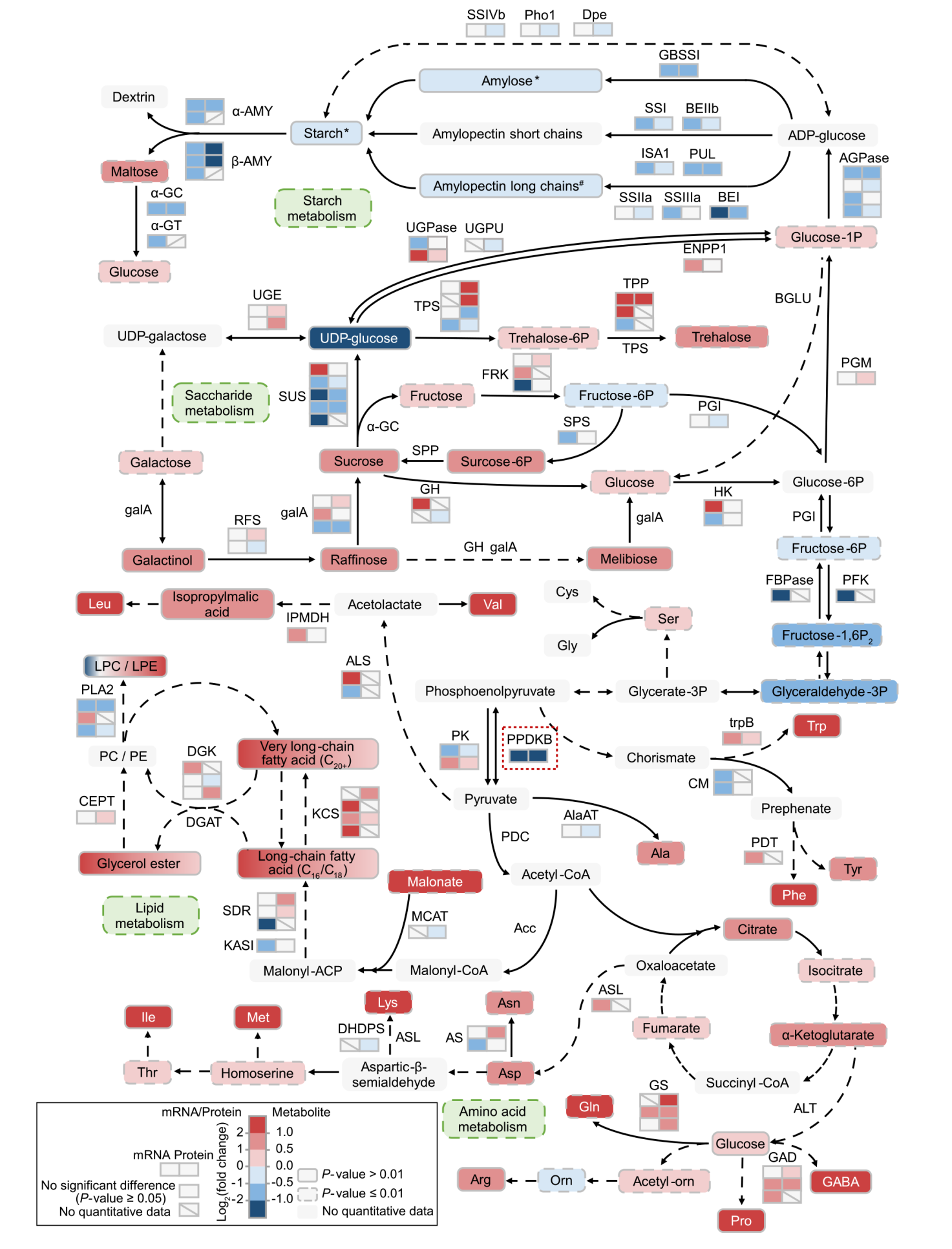
Fig. 5. Simplified metabolic pathways related to carbon and amino acid metabolism in JM03 endosperm. mRNAs and proteins are shown in the left and right rectangles, respectively. Metabolites are shown in rounded rectangles. Red and blue indicate upregulated and downregulated mRNAs, proteins, or metabolites, respectively. Solid lines represent one-step reactions, and dashed lines represent multi-step reactions. * refers to the results from mature seed. # refers to the results reported by Bao et al (2020b). α-AMY, α-Amylase; β-AMY, β-Amylase; GBSSI, Granule-bound starch synthase I; SSI, SSIIa, SSIIIa, and SSIVb, Soluble starch synthase I, IIa, IIIa, and IVb; BEI, and BEIIb, Starch branching enzyme I and IIb; ISA1, Isoamylase 1; PUL, Pullulanase, Pho1, Plastidial phosphorylase; Dpe, Disproportionating enzyme; AGPase, ADP-glucose pyrophosphorylase; UGPase, UDP-glucose pyrophosphorylase; UGPU, UTP-glucose-1-phosphate uridylyltransferase; ENPP1, Ectonucleotide pyrophosphatase/phosphodiesterase family member 1; α-GT, α-glucanotransferase; α-GC, α-glucosidase; UGE, UDP-glucose 4-epimerase; TPS, Trehalose-6-phosphate synthase; TPP, Trehalose-6-phosphate phosphatase; BGLU, β-Glucosidase; PGM, Phosphoglucomutase; SUS, Sucrose synthase; FRK, Fructokinase; PGI, Phosphoglucose isomerase; SPS, Sucrose phosphate synthase; galA, α-Galactosidase; SPP, Sucrose phosphatase; HK, Hexokinase; RFS, Glycosyltransferase; GH, Glycosyl hydrolases; FBPase, Fructose-1,6-bisphosphatase; PFK, 6-Phosphofructokinase; PK, Pyruvate kinase; PPDKB, Pyruvate orthophosphate dikinase, PDC, Pyruvate dehydrogenase complex; Acc, Acetyl-CoA carboxylase; MCAT, Malonyl CoA-(acyl carrier protein) transacylase; KASI, β-Ketoacyl-(acyl carrier protein) synthase; SDR, Short chain dehydrogenase/reductase; KCS, 3-Ketoacyl-CoA synthase; DGK, Diacylglycerol kinase; DGAT, Diacylglycerol acyltransferase; CEPT, Choline/ethanolamine phosphotransferase; PLA2, Phospholipase A2; ALS, Acetolactate synthase; IPMDH, 3-Isopropylmalate dehydratase; trpB, Tryptophan synthase beta chain 2; CM, Chorismate mutase; PDT, Prephenate dehydratase; AlaAT (FLO12), Alanine aminotransferase; ASL, Argininosuccinate lyase; AS, Asparagine synthase; DHDPS, Dihydrodipicolinate synthase; ALT, Alanine transaminase; GS, Glutamine synthetase, GAD, Glutamate decarboxylase; LPC, Lysophosphatidylcholine; LPE, Lysophosphatidyl ethanolamines; PC, Phosphatidylcholine; PE, Phosphatidylethanolamine. Glucose-1P, Glucose-1-phosphate; Glucose-6P, Glucose-6-phosphate; Glycerate-3P, Glycerate-3-phosphate; Frluctose-1, 6P2, Fructose-1,6-biphosphate; Glyceraldehyde-3P, Glyceraldehyde-3-phosphate; Trehalose-6P, Trehalose-6-phosphate; GABA, Gama-aminobutyric acid. Energy and reducing power (e.g., ATP, NADPH, PPi) were omitted from the figure.
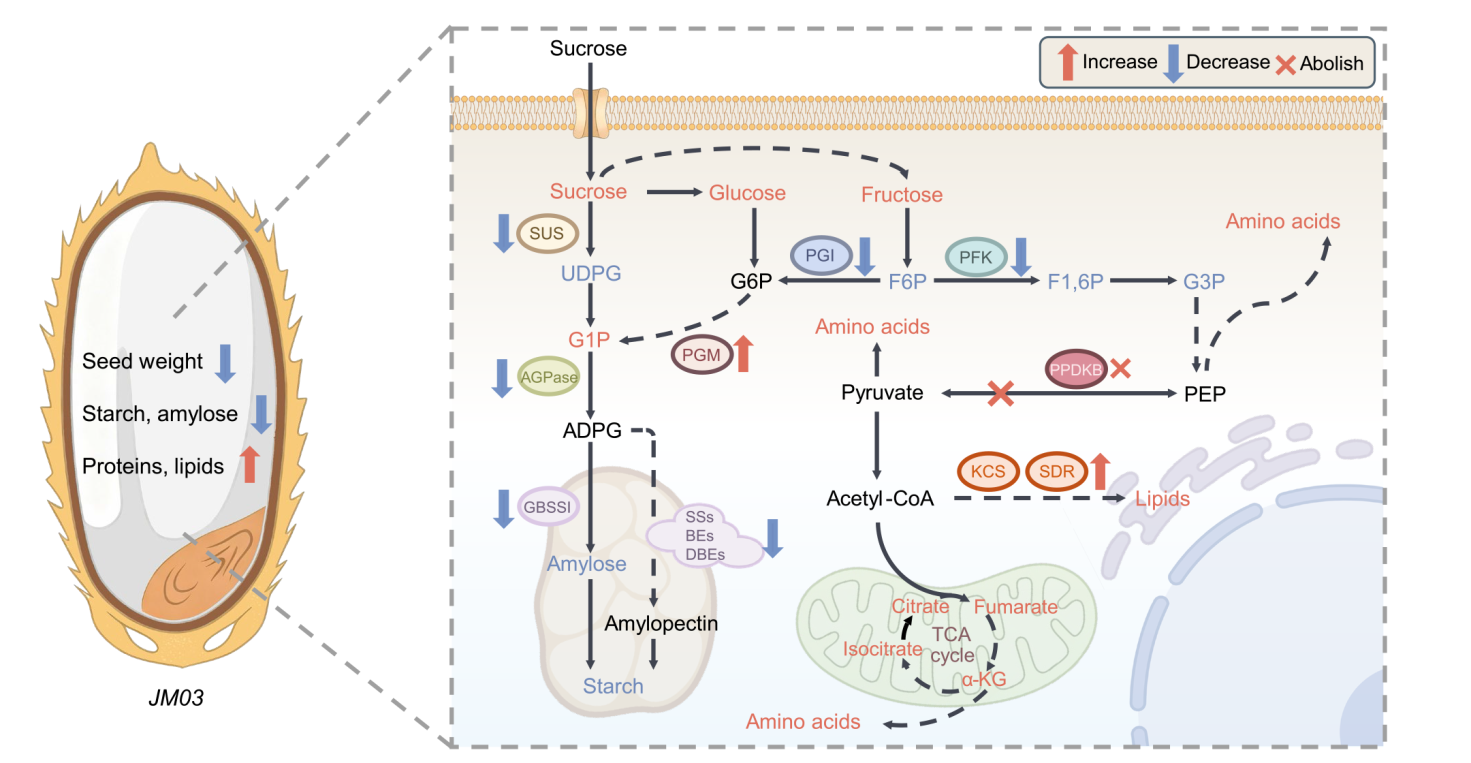
Fig. 6. Overview of main component changes in rice endosperm mediated by key metabolic pathways and enzymes in PPDKB mutant JM03. Solid lines represent one-step reactions, and dashed lines represent multi-step reactions. SUS, Sucrose synthase; UDPG, UDP-glucose; G1P, Glucose-1-phosphate; AGPase, ADP-glucose pyrophosphorylase; ADPG, ADP-glucose; GBSSI, Granule-bound starch synthase I; SS, Soluble starch synthase; BE, Starch branching enzyme; DBE, Starch debranching enzyme; F6P, Fructose-6-phosphate; G6P, Glucose-6-phosphate; PGI, Phosphoglucose isomerase; PGM, Phosphoglucomutase; PEP, Phosphoenolpyruvate; PFK, 6-Phosphofructokinase; F1,6P, Fructose-1,6-phosphate; G3P, Glucose-3-phosphate; KCS, 3-Ketoacyl-CoA synthase; SDR, Short chain dehydrogenase/reductase; TCA, Tricarboxylic acid; α-KG, α-Ketoglutarate.
| [1] | Bao J S, Shen S Q, Sun M, et al. 2006. Analysis of genotypic diversity in the starch physicochemical properties of nonwaxy rice: Apparent amylose content, pasting viscosity and gel texture. Starch-Stärke, 58(6): 259-267. |
| [2] | Bao J S, Ying Y N, Xu Y J, et al. 2020a. Variation in physicochemical properties and nutritional quality in chalky mutants derived from an indica rice. J Cereal Sci, 91: 102899. |
| [3] | Bao J S, Ying Y N, Zhou X, et al. 2020b. Relationships among starch biosynthesizing protein content, fine structure and functionality in rice. Carbohydr Polym, 237: 116118. |
| [4] | Baysal C, He W S, Drapal M, et al. 2020. Inactivation of rice starch branching enzyme IIb triggers broad and unexpected changes in metabolism by transcriptional reprogramming. Proc Natl Acad Sci USA, 117(42): 26503-26512. |
| [5] | Cai Y, Zhang W W, Jin J, et al. 2018. OsPKpα1 encodes a plastidic pyruvate kinase that affects starch biosynthesis in the rice endosperm. J Integr Plant Biol, 60(11): 1097-1118. |
| [6] | Chee F L, Iqbal S, Ismail M. 2013. Effects of supercritical fluid extraction conditions on yield of protein from defatted rice bran. J Chem Soc Pak, 35(1): 192-197. |
| [7] | Chen W, Gong L, Guo Z L, et al. 2013. A novel integrated method for large-scale detection, identification, and quantification of widely targeted metabolites: Application in the study of rice metabolomics. Mol Plant, 6(6): 1769-1780. |
| [8] | Chen X L, Ji Y, Zhao W Y, et al. 2023. Fructose-6-phosphate-2-kinase/fructose-2, 6-bisphosphatase regulates energy metabolism and synthesis of storage products in developing rice endosperm. Plant Sci, 326: 111503. |
| [9] | Chen Y L, Luo L L, Xu F F, et al. 2022. Carbohydrate repartitioning in the rice Starch branching enzyme IIb mutant stimulates higher resistant starch content and lower seed weight revealed by multiomics analysis. J Agric Food Chem, 70(31): 9802-9816. |
| [10] | Crofts N, Abe K, Aihara S, et al. 2012. Lack of starch synthase IIIa and high expression of granule-bound starch synthase I synergistically increase the apparent amylose content in rice endosperm. Plant Sci, 193: 62-69. |
| [11] | Crofts N, Abe N, Oitome N F, et al. 2015. Amylopectin biosynthetic enzymes from developing rice seed form enzymatically active protein complexes. J Exp Bot, 66(15): 4469-4482. |
| [12] | Crooke W M, Simpson W E. 1971. Determination of ammonium in Kjeldahl digests of crops by an automated procedure. J Sci Food Agric, 22(1): 9-10. |
| [13] | Dong N N, Jiao G A, Cao R J, et al. 2024. OsLESV and OsESV1 promote transitory and storage starch biosynthesis to determine rice grain quality and yield. Plant Commun, 5(7): 100893. |
| [14] | Doyle J. 1991. DNA protocols for plants. In: Hewitt G M, Johnston A W B, Young J P W. Molecular Techniques in Taxonomy. Berlin, Germann: Springer Berlin Heidelberg: 283-293. |
| [15] | Emes M J, Bowsher C G, Hedley C, et al. 2003. Starch synthesis and carbon partitioning in developing endosperm. J Exp Bot, 54: 569-575. |
| [16] | Feng Z M, Wu C Y, Wang C M, et al. 2016. SLG controls grain size and leaf angle by modulating brassinosteroid homeostasis in rice. J Exp Bot, 67(14): 4241-4253. |
| [17] | Ha S K, Lee H S, Lee S Y, et al. 2023. Characterization of flo4-6, a novel cyOsPPDKB allele conferring floury endosperm characteristics suitable for dry-milled rice flour production. Agronomy, 13(5): 1306. |
| [18] | Hao Y Y, Wang Y L, Wu M M, et al. 2019. The nuclear-localized PPR protein OsNPPR1 is important for mitochondrial function and endosperm development in rice. J Exp Bot, 70(18): 4705-4720. |
| [19] | Hennen-Bierwagen T A, Lin Q H, Grimaud F, et al. 2009. Proteins from multiple metabolic pathways associate with starch biosynthetic enzymes in high molecular weight complexes: A model for regulation of carbon allocation in maize amyloplasts. Plant Physiol, 149(3): 1541-1559. |
| [20] | Hu B L, Xie J K, Bao J S, et al. 2006. Isolation and characterization of mutants from indica rice 9311 (Oryza sativa L.) induced by gamma irradiation. Mol Plant Breed, 4(2): 181-188. (in Chinese) |
| [21] | Hu Y X, Liu J J, Lin Y, et al. 2022. Sucrose nonfermenting-1-related protein kinase 1 regulates sheath-to-panicle transport of nonstructural carbohydrates during rice grain filling. Plant Physiol, 189(3): 1694-1714. |
| [22] | Hwang S K, Koper K, Satoh H, et al. 2016. Rice endosperm starch phosphorylase (Pho1) assembles with disproportionating enzyme (Dpe1) to form a protein complex that enhances synthesis of malto-oligosaccharides. J Biol Chem, 291(38): 19994-20007. |
| [23] | Imaizumi N, Ku M S, Ishihara K, et al. 1997. Characterization of the gene for pyruvate, orthophosphate dikinase from rice, a C 3 plant, and a comparison of structure and expression between C3 and C4 genes for this protein. Plant Mol Biol, 34(5): 701-716. |
| [24] | Jha V, Narjala A, Basu D, et al. 2021. Essential role of γ-clade RNA-dependent RNA polymerases in rice development and yield-related traits is linked to their atypical polymerase activities regulating specific genomic regions. New Phytol, 232(4): 1674-1691. |
| [25] | Kang H G, Park S, Matsuoka M, et al. 2005. White-core endosperm floury endosperm-4 in rice is generated by knockout mutations in the C4-type pyruvate orthophosphate dikinase gene (OsPPDKB). Plant J, 42(6): 901-911. |
| [26] | Kumari M, Asthir B. 2016. Transformation of sucrose to starch and protein in rice leaves and grains under two establishment methods. Rice Sci, 23(5): 255-265. |
| [27] | Lee S K, Jeon J S. 2020. Review: Crucial role of inorganic pyrophosphate in integrating carbon metabolism from sucrose breakdown to starch synthesis in rice endosperm. Plant Sci, 298: 110572. |
| [28] | Lei J, Teng X, Wang Y F, et al. 2022. Plastidic pyruvate dehydrogenase complex E1 component subunit Alpha1 is involved in galactolipid biosynthesis required for amyloplast development in rice. Plant Biotechnol J, 20(3): 437-453. |
| [29] | Li F, Liu Y, Zhang X H, et al. 2022. Transcriptome and metabolome analyses reveals the pathway and metabolites of grain quality under phytochrome B in rice (Oryza sativa L.). Rice, 15(1): 52. |
| [30] | Li H, Durbin R. 2009. Fast and accurate short read alignment with Burrows-Wheeler transform. Bioinformatics, 25(14): 1754-1760. |
| [31] | Li H, Handsaker B, Wysoker A, et al. 2009. The sequence alignment/ map format and SAMtools. Bioinformatics, 25(16): 2078-2079. |
| [32] | Li P Q, Ruan Z, Fei Z X, et al. 2021. Integrated transcriptome and metabolome analysis revealed that flavonoid biosynthesis may dominate the resistance of Zanthoxylum bungeanum against stem canker. J Agric Food Chem, 69(22): 6360-6378. |
| [33] | Liu L, Tong C, Bao J S, et al. 2014. Determination of starch lysophospholipids in rice using liquid chromatography-mass spectrometry (LC-MS). J Agric Food Chem, 62(28): 6600-6607. |
| [34] | Liu S, Wu J M, Mawia A M, et al. 2025. A novel transcription factor OsMYB73 affects grain size and chalkiness by regulating endosperm storage substances’ accumulation-mediated auxin biosynthesis signalling pathway in rice. Plant Biotechnol J, 23(4): 1021-1038. |
| [35] | Liu S Y, Hua L, Dong S J, et al. 2015. OsMAPK6, a mitogen-activated protein kinase, influences rice grain size and biomass production. Plant J, 84(4): 672-681. |
| [36] | Liu Z B, Bhandari B, Prakash S, et al. 2019. Linking rheology and printability of a multicomponent gel system of carrageenan-xanthan-starch in extrusion based additive manufacturing. Food Hydrocoll, 87: 413-424. |
| [37] | Long W H, Wang Y L, Zhu S S, et al. 2018. FLOURY SHRUNKEN ENDOSPERM1 connects phospholipid metabolism and amyloplast development in rice. Plant Physiol, 177(2): 698-712. |
| [38] | Lou G M, Chen P L, Zhou H, et al. 2021. FLOURY ENDOSPERM19 encoding a class I glutamine amidotransferase affects grain quality in rice. Mol Breed, 41(5): 36. |
| [39] | Lv J H, Zheng T, Song Z L, et al. 2022. Strawberry proteome responses to controlled hot and cold stress partly mimic post-harvest storage temperature effects on fruit quality. Front Nutr, 8: 812666. |
| [40] | Matesanz S, Gianoli E, Valladares F. 2010. Global change and the evolution of phenotypic plasticity in plants. Ann N Y Acad Sci, 1206(1): 35-55. |
| [41] | Matsuba S, Maruyama-Funatsuki W, Umemoto T, et al. 2022. The induced mutant allele flo4-303 confers floury characteristics on the japonica rice cultivar ‘Hoshinoko’. Breed Sci, 72(5): 383-388. |
| [42] | McCleary B V, Charmier L M J, McKie V A. 2019. Measurement of starch: Critical evaluation of current methodology. Starch-Stärke, 71(1/2): 1800146. |
| [43] | Mo Y, Jeung J U. 2020. The use of floury endosperm mutants to develop rice cultivars suitable for dry milling. Plant Biotechnol Rep, 14(2): 185-191. |
| [44] | Moummou H, Kallberg Y, Tonfack L B, et al. 2012. The Plant Short-Chain Dehydrogenase (SDR) superfamily: Genome-wide inventory and diversification patterns. BMC Plant Biol, 12(1): 219. |
| [45] | Muroyama R, Ito H, Takahashi S, et al. 2022. Biochemical analysis of a novel allele of the OsPPDKB gene associated with floury endosperm. J Cereal Sci, 107: 103529. |
| [46] | Pérez L, Soto E, Villorbina G, et al. 2018. CRISPR/Cas9-induced monoallelic mutations in the cytosolic AGPase large subunit gene APL2 induce the ectopic expression of APL2 and the corresponding small subunit gene APS2b in rice leaves. Transgenic Res, 27(5): 423-439. |
| [47] | Pérez L, Soto E, Farré G, et al. 2019. CRISPR/Cas9 mutations in the rice Waxy/GBSSI gene induce allele-specific and zygosity-dependent feedback effects on endosperm starch biosynthesis. Plant Cell Rep, 38(3): 417-433. |
| [48] | Purhagen J, Loosme R, Wihlborg N, et al. 2018. PaddyCheck: An instrument for rice quality determination. Instruments, 2(3): 11. |
| [49] | Ryoo N, Yu C, Park C S, et al. 2007. Knockout of a starch synthase gene OsSSIIIa/Flo5 causes white-core floury endosperm in rice (Oryza sativa L.). Plant Cell Rep, 26(7): 1083-1095. |
| [50] | Tang X J, Peng C, Zhang J, et al. 2016. ADP-glucose pyrophosphorylase large subunit 2 is essential for storage substance accumulation and subunit interactions in rice endosperm. Plant Sci, 249: 70-83. |
| [51] | Wada H, Hatakeyama Y, Onda Y, et al. 2019. Multiple strategies for heat adaptation to prevent chalkiness in the rice endosperm. J Exp Bot, 70(4): 1299-1311. |
| [52] | Wang H, Mo Y J, Im D E, et al. 2018. A new SNP in cyOsPPDK gene is associated with floury endosperm in Suweon 542. Mol Genet Genom, 293(5): 1151-1158. |
| [53] | Wang H, Ham T H, Im D E, et al. 2020. A new SNP in rice gene encoding pyruvate phosphate dikinase (PPDK) associated with floury endosperm. Genes, 11(4): 465. |
| [54] | Wang X C, Guan Y Y, Zhang D, et al. 2017. A β-ketoacyl-CoA synthase is involved in rice leaf cuticular wax synthesis and requires a CER2-LIKE protein as a cofactor. Plant Physiol, 173(2): 944-955. |
| [55] | Wang Y, Zhang X F, Yang S L, et al. 2018. Lignin involvement in programmed changes in peach-fruit texture indicated by metabolite and transcriptome analyses. J Agric Food Chem, 66(48): 12627-12640. |
| [56] | Wiśniewski J R, Zougman A, Nagaraj N, et al. 2009. Universal sample preparation method for proteome analysis. Nat Methods, 6(5): 359-362. |
| [57] | Xie Q, Xu J K, Huang K, et al. 2021. Dynamic formation and transcriptional regulation mediated by phytohormones during chalkiness formation in rice. BMC Plant Biol, 21(1): 308. |
| [58] | Xing Y Z, Zhang Q F. 2010. Genetic and molecular bases of rice yield. Annu Rev Plant Biol, 61: 421-442. |
| [59] | Xu F F, Zhang Y N, Li X Y, et al. 2026. The role of α-globulin accumulation in seed storage protein reprogramming and grain quality in rice. J Exp Bot, 77(2): 379-391. |
| [60] | Xu X Y, Vanhercke T, Shrestha P, et al. 2019. Upregulated lipid biosynthesis at the expense of starch production in potato (Solanum tuberosum) vegetative tissues via simultaneous downregulation of ADP-glucose pyrophosphorylase and sugar Dependent1 expressions. Front Plant Sci, 10: 1444. |
| [61] | Yang H, Wang Y L, Tian Y L, et al. 2023. Rice FLOURY ENDOSPERM22, encoding a pentatricopeptide repeat protein, is involved in both mitochondrial RNA splicing and editing and is crucial for endosperm development. J Integr Plant Biol, 65(3): 755-771. |
| [62] | Ying Y N, Xu F F, Zhang Z W, et al. 2022a. Dynamic change in starch biosynthetic enzymes complexes during grain-filling stages in BEIIb active and deficient rice. Int J Mol Sci, 23(18): 10714. |
| [63] | Ying Y N, Zhang Z W, Tappiban P, et al. 2022b. Starch fine structure and functional properties during seed development in BEIIb active and deficient rice. Carbohydr Polym, 292: 119640. |
| [64] | Ying Y N, Hu Y Q, Zhang Y N, et al. 2023. Identification of a new allele of soluble starch synthase IIIa involved in the elongation of amylopectin long chains in a chalky rice mutant. Plant Sci, 328: 111567. |
| [65] | Ying Y N, Deng B W, Zhang L, et al. 2025. Multi-omics analyses reveal mechanism for high resistant starch formation in an indica rice SSIIIa mutant. Carbohydr Polym, 347: 122708. |
| [66] | Yu L H, Fan J L, Yan C S, et al. 2018. Starch deficiency enhances lipid biosynthesis and turnover in leaves. Plant Physiol, 178(1): 118-129. |
| [67] | Yu M Z, Wu M M, Ren Y L, et al. 2020. Rice FLOURY ENDOSPERM 18 encodes a pentatricopeptide repeat protein required for 5′ processing of mitochondrial nad 5 mRNA and endosperm development. J Integr Plant Biol, 63(5): 834-847. |
| [68] | Yu M Z, Wu M M, Ren Y L, et al. 2021. Rice FLOURY ENDOSPERM 18 encodes a pentatricopeptide repeat protein required for 5’ processing of mitochondrial nad5 messenger RNA and endosperm development. J Integr Plant Biol, 63(5): 834-847. |
| [69] | Zhang L, Zhao L L, Lin L S, et al. 2018. A novel mutation of OsPPDKB, encoding pyruvate orthophosphate dikinase, affects metabolism and structure of starch in the rice endosperm. Int J Mol Sci, 19(8): 2268. |
| [70] | Zhou H, Xia D, Li P B, et al. 2021. Genetic architecture and key genes controlling the diversity of oil composition in rice grains. Mol Plant, 14(3): 456-469. |
| [71] | Zhou W, Wang X, Zhou D, et al. 2017. Overexpression of the 16-kDa α-amylase/trypsin inhibitor RAG 2 improves grain yield and quality of rice. Plant Biotechnol J, 15(5): 568-580. |
| [72] | Zhou X, Ying Y N, Hu B L, et al. 2018. Physicochemical properties and digestibility of endosperm starches in four indica rice mutants. Carbohydr Polym, 195: 1-8. |
| [73] | Zhou Z K. 2002. Composition and functional properties of rice. Int J Food Sci Technol, 37(8): 849-868. |
| [74] | Zhu X P, Teng X, Wang Y L, et al. 2018. FLOURY ENDOSPERM11 encoding a plastid heat shock protein 70 is essential for amyloplast development in rice. Plant Sci, 277: 89-99. |
| No related articles found! |
| 阅读次数 | ||||||
|
全文 |
|
|||||
|
摘要 |
|
|||||
