
Rice Science ›› 2026, Vol. 33 ›› Issue (4): 438-448.DOI: 10.1016/j.rsci.2026.04.003
• Reviews • Previous Articles Next Articles
Zhang Xinxin, Chen Guoqing( ), Feng Guozhong()
Received:2025-12-22
Accepted:2026-04-03
Online:2026-07-28
Published:2026-08-06
Contact:
FENG Guozhong (fengguozhong@caas.cn);
CHEN Guoqing (chenguoqing@caas.cn)Zhang Xinxin, Chen Guoqing, Feng Guozhong. Microbial Insecticides for Rice Insect Pest Management[J]. Rice Science, 2026, 33(4): 438-448.
Add to citation manager EndNote|Ris|BibTeX
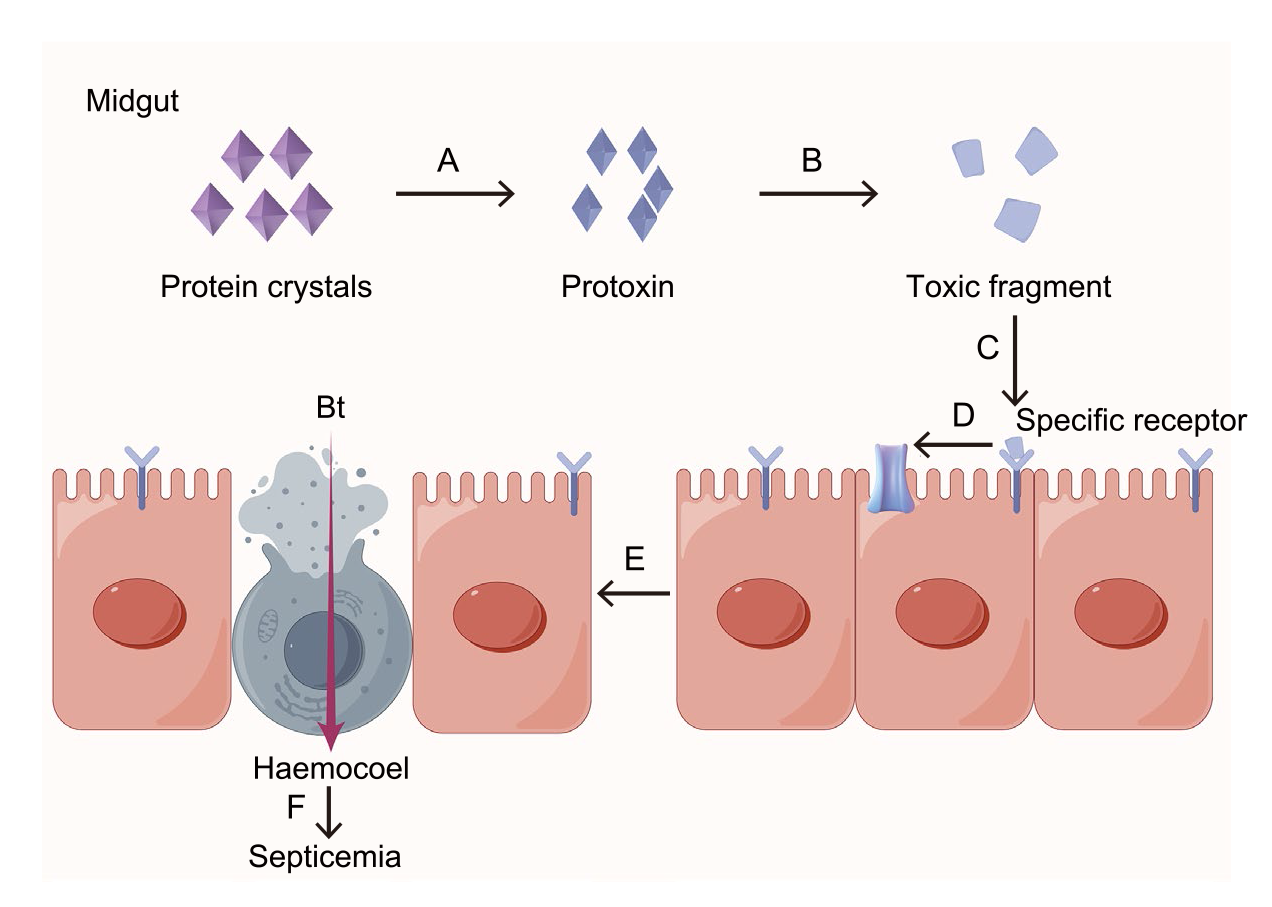
Fig. 1. Insecticidal mechanism of Bacillus thuringiensis (Bt) crystal toxins (δ-endotoxins). A, Ingestion and dissolution. Following ingestion by the insect, the alkaline midgut dissolves the protein crystals, releasing soluble protoxins. B, Proteolytic activation. Midgut proteases cleave protoxins, converting them into active toxin fragments. C, Target recognition and binding. The active toxin binds with high specificity to receptor molecules on the surface of midgut epithelial cells. D, Membrane attack and host mortality. Receptor-bound toxin monomers assemble into pores, disrupting osmotic balance. E, Cell lysis. The intestinal barrier is compromised, allowing bacterial spores to invade the hemolymph. F, Trigger lethal septicemia.
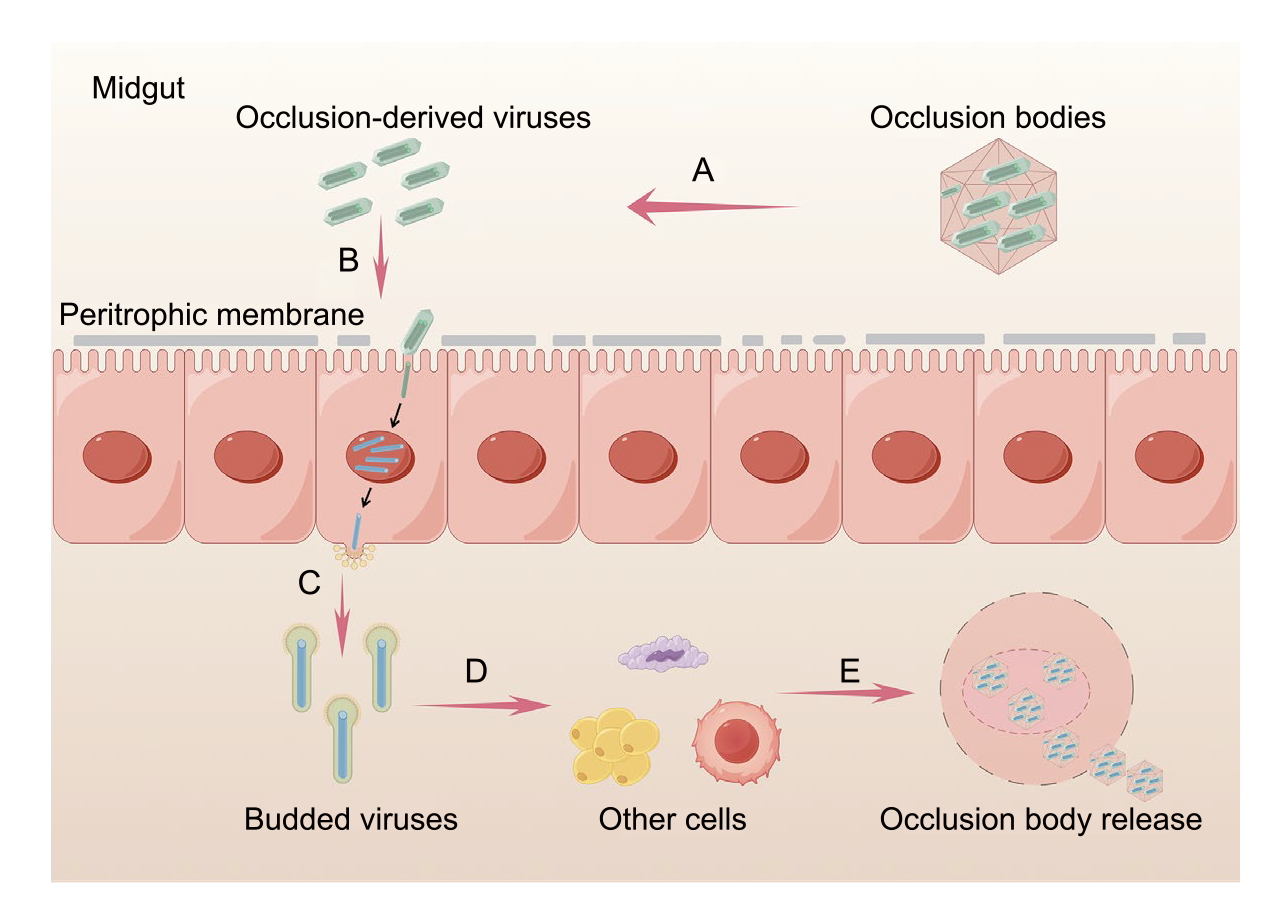
Fig. 2. Baculovirus infection cycle. A, Occlusion bodies (OBs) ingestion and occlusion-derived viruses (ODVs) release. Insect larvae ingest OBs, which dissolve in the alkaline midgut, releasing ODVs. B, Midgut infection and viral replication. ODVs traverse the peritrophic membrane and bind to receptors on midgut epithelial cells, followed by viral replication and nucleocapsid assembly within the nucleus. C, Budded virion (BV) production. The virus forms BVs via a budding mechanism. D, Systemic dissemination. BVs enter the hemolymph and disseminate systemically, establishing infection in various tissues. E, OB formation and environmental transmission. During the very late phase of infection, new OBs are formed and packaged within the nucleus. Host death and cuticular liquefaction release billions of new OBs into the environment.
| [1] | Andreazza F, Bernardi D, Baronio C A, et al. 2017. Toxicities and effects of insecticidal toxic baits to control Drosophila suzukii and Zaprionus indianus (Diptera: Drosophilidae). Pest Manag Sci, 73(1): 146-152. |
| [2] | Atta B, Rizwan M, Sabir A M, et al. 2020. Efficacy of entomopathogenic fungi against brown planthopper Nilaparvata Lugens (Stål) (Homoptera: Delphacidae) under controlled conditions. Gesunde Pflanz, 72: 101-112. |
| [3] | Barragry T B. 1987. A review of the pharmacology and clinical uses of ivermectin. Can Vet J, 28(8): 512-517. |
| [4] | Bunsap P, Senarat S, Niyomdecha S, et al. 2024. Histopathological alterations in Nilaparvata lugens (Hemiptera: Delphacidae) after exposure to Cordyceps javanica. Insects, 15(8): 565. |
| [5] | Castagnola A, Stock S P. 2014. Common virulence factors and tissue targets of entomopathogenic bacteria for biological control of lepidopteran pests. Insects, 5(1): 139-166. |
| [6] | Chandler D, Bailey A S, Tatchell G M, et al. 2011. The development, regulation and use of biopesticides for integrated pest management. Philos Trans R Soc Lond B Biol Sci, 366: 1987-1998. |
| [7] | Chen B D, Zuo Y C, Lv Y R, et al. 2025. Revealing the potential transmission route of Cnaphalocrocis medinalis granulovirus capable of persistently causing granulosis epidemics. Virus Evol, 11(1): veaf055. |
| [8] | Chio E H, Li Q X. 2022. Pesticide research and development: General discussion and spinosad case. J Agric Food Chem, 70: 8913-8919. |
| [9] | Clem R J, Passarelli A L. 2013. Baculoviruses: Sophisticated pathogens of insects. PLoS Pathog, 9(11): e1003729. |
| [10] | Commare R R, Nandakumar R, Kandan A, et al. 2002. Pseudomonas fluorescens based bio-formulation for the management of sheath blight disease and leaffolder insect in rice. Crop Prot, 21(8): 671-677. |
| [11] | Crump A, Ōmura S. 2011. Ivermectin, ‘wonder drug’ from Japan: The human use perspective. Proc Jpn Acad Ser B Phys Biol Sci, 87(2): 13-28. |
| [12] | Dahiya D, Sharma H, Rai A K, et al. 2022. Application of biological systems and processes employing microbes and algae to Reduce, Recycle, Reuse (3Rs) for the sustainability of circular bioeconomy. AIMS Microbiol, 8(1): 83-102. |
| [13] | Dangar T K. 2008. Infectivity and ecology of Pseudomonas spp. from natural epizootics in the rice leaf folder, Cnaphalocrocis medinalis (Lepidoptera: Pyralidae) in India. Biocontrol Sci Technol, 18(3): 241-253. |
| [14] | Das J, Sahoo B, Panigrahy M, et al. 2023. Genetic polymorphism and plant growth promotion traits of potent fungal entomopathogens of rice leaf folder. Arch Microbiol, 205(5): 216. |
| [15] | de Maagd R A, Bravo A, Crickmore N. 2001. How Bacillus thuringiensis has evolved specific toxins to colonize the insect world. Trends Genet, 17(4): 193-199. |
| [16] | Deb L, Dutta P, Tombisana Devi R K, et al. 2022. Endophytic Beauveria bassiana can protect the rice plant from sheath blight of rice caused by Rhizoctonia solani and enhance plant growth parameters. Arch Microbiol, 204(9): 587. |
| [17] | Du G Z, Yang W Q, Zhou Y N, et al. 2015. Virulence of Metarhizium flavoviride strain KM1104 against Laodelphax striatellus (fallén). Plant Prot, 41(5): 207-211/224. (in Chinese with English abstract) |
| [18] | Elert E. 2014. Rice by the numbers: A good grain. Nature, 514: S50-S51. |
| [19] | Galm U, Sparks T C. 2016. Natural product derived insecticides: Discovery and development of spinetoram. J Ind Microbiol Biotechnol, 43(2/3): 185-193. |
| [20] | Gao Q, Jin K, Ying S H, et al. 2011. Genome sequencing and comparative transcriptomics of the model entomopathogenic fungi Metarhizium anisopliae and M. acridum. PLoS Genet, 7(1): e1001264. |
| [21] | Gao X W, Wu M X, Sun J H, et al. 2012. Empedobacter brevis on insecticidal effect and technology for Cnaphalocrocis medinalis Guenee. Pestic Sci Adm, 33: 43-50. |
| [22] | Ghosh T S, Chatterjee S, Azmi S A, et al. 2017. Virulence assay and role of Bacillus thuringiensis TS110 as biocontrol agent against the larval stages of rice leaffolder Cnaphalocrocis medinalis. J Parasit Dis, 41(2): 491-495. |
| [23] | Glare T, Caradus J, Gelernter W, et al. 2012. Have biopesticides come of age? Trends Biotechnol, 30(5): 250-258. |
| [24] | Guo J W, Cheng Y S, Zhao X Y, et al. 2023. Host-plant switching impacts susceptibility and biochemical responses of Cnaphalocrocis medinalis to abamectin and chlorpyrifos. Agronomy, 13(5): 1245. |
| [25] | Haase S, Sciocco-Cap A, Romanowski V. 2015. Baculovirus insecticides in Latin America: Historical overview, current status and future perspectives. Viruses, 7(5): 2230-2267. |
| [26] | Hajjar M J, Ahmed N, Alhudaib K A, et al. 2023. Integrated insect pest management techniques for rice. Sustainability, 15(5): 4499. |
| [27] | Hamm R L, Tolley M P, Chin-Heady E, et al. 2015. Toxicity of selected insecticides (spinosad, spinetoram, and isoclast active [sulfoxaflor]) to bed bugs, 2005 and 2009. Arthropod Manag Tests, 40(1): J1. |
| [28] | Hanif K, Zubair M, Hussain D, et al. 2022. Biopesticides and insect pest management. Int J Trop Insect Sc, 42(6): 3631-3637. |
| [29] | Harrison R L, Herniou E A, Jehle J A, et al. 2018. ICTV virus taxonomy profile: Baculoviridae. J Gen Virol, 99(9): 1185-1186. |
| [30] | Hoover K, Grove M, Gardner M, et al. 2011. A gene for an extended phenotype. Science, 333: 1401. |
| [31] | Horgan F G. 2023. The structure of rice stemborer assemblages: A review of species’ distributions, host ranges, and interspecific interactions. Insects, 14(12): 921. |
| [32] | Horikoshi R, Goto K, Mitomi M, et al. 2018. Insecticidal properties of pyripyropene A, a microbial secondary metabolite, against agricultural pests. J Pestic Sci, 43(4): 266-271. |
| [33] | Huber J. 1986. Use of baculoviruses in pest management programs. In: The Biology of Baculoviruses: Practical Application for Insect Control. FL, USA: CRC Press: 181-202. |
| [34] | Inceoglu A B, Kamita S G, Hinton A C, et al. 2001. Recombinant baculoviruses for insect control. Pest Manag Sci, 57(10): 981-987. |
| [35] | Jaber L R, Ownley B H. 2018. Can we use entomopathogenic fungi as endophytes for dual biological control of insect pests and plant pathogens? Biol Control, 116: 36-45. |
| [36] | Janaki M, Sivadasan Unni P K, Stanley-Raja V, et al. 2024. Biocontrol effect of Bacillus subtilis against Cnaphalocrocis medinalis (Guenèe) (Lepidoptera: Pyralidae): A sustainable approach to rice pest management. Agronomy, 14(2): 310. |
| [37] | Jin S F, Feng M G, Chen J Q. 2008. Metarhizium isolates for the control of the rice pest Nilaparvata lugens (Homoptera: Delphacidae). Pest Manag Sci, 64(10): 1008-1014. |
| [38] | Jouzani G S, Seifinejad A, Saeedizadeh A, et al. 2008a. Molecular detection of nematicidal crystalliferous Bacillus thuringiensis strains of Iran and evaluation of their toxicity on free-living and plant-parasitic nematodes. Can J Microbiol, 54(10): 812-822. |
| [39] | Jouzani G S, Abad A P, Seifinejad A, et al. 2008b. Distribution and diversity of dipteran-specific cry and cyt genes in native Bacillus thuringiensis strains obtained from different ecosystems of Iran. J Ind Microbiol Biotechnol, 35(2): 83-94. |
| [40] | Jouzani G S, Valijanian E, Sharafi R. 2017. Bacillus thuringiensis: A successful insecticide with new environmental features and tidings. Appl Microbiol Biotechnol, 101(7): 2691-2711. |
| [41] | Karthiba L, Saveetha K, Suresh S, et al. 2010. PGPR and entomopathogenic fungus bioformulation for the synchronous management of leaffolder pest and sheath blight disease of rice. Pest Manag Sci, 66(5): 555-564. |
| [42] | Kaur R, Sharma D I, Saini C. 2024. Smart farming: Empowering organic agriculture with AI. Int J Res Appl Sci Eng Technol, 12(3): 805-809. |
| [43] | Khansai N, Sawangkaew N, Kobmoo N, et al. 2025. A comparative analysis of efficacy of Metarhizium species for controlling brown planthopper (Nilaparvata lugens) from different provinces in Thailand using survival and susceptible infected models. WSEAS Trans Biol Biomed, 22: 305-324. |
| [44] | Kirubakaran S A, Abdel-Megeed A, Senthil-Nathan S. 2018. Virulence of selected indigenous Metarhizium pingshaense (Ascomycota: Hypocreales) isolates against the rice leaffolder, Cnaphalocrocis medinalis (Guenèe) (Lepidoptera: Pyralidae). Physiol Mol Plant Pathol, 101: 105-115. |
| [45] | Lacey L A, Liu T X, Buchman J L, et al. 2011. Entomopathogenic fungi (Hypocreales) for control of potato psyllid, Bactericera cockerelli (Šulc) (Hemiptera: Triozidae) in an area endemic for Zebra chip disease of potato. Biol Control, 56(3): 271-278. |
| [46] | Lacey L A, Grzywacz D, Shapiro-Ilan D I, et al. 2015. Insect pathogens as biological control agents: Back to the future. J Invertebr Pathol, 132: 1-41. |
| [47] | Lasota J A, Dybas R A. 1991. Avermectins, a novel class of compounds: Implications for use in arthropod pest control. Annu Rev Entomol, 36: 91-117. |
| [48] | Lee S J, Yu J S, Nai Y S, et al. 2015. Beauveria bassiana sensu lato granules for management of brown planthopper, Nilaparvata lugens in rice. BioControl, 60(2): 263-270. |
| [49] | Li J H, Yang W Y, Lin X. 2024. Advances in research on mosquito population suppression using wolbachia-induced cytoplasmic incompatibility. J Public Health Environ, 8(1): 1-21. |
| [50] | Li L D, Wang D F, Wu G Y. 2020. Effects of Empedobacter brevis on midgut cell morphology and hemolymph enzyme activity in Ectropis obliqua Prout (Lepidoptera: Geometridae). Acta Tea Sin, 61(1): 15-19. (in Chinese with English abstract) |
| [51] | Li M Y, Lin H F, Li S G, et al. 2012a. Efficiency of entomopathogenic fungi in the control of eggs of the brown planthopper Nilaparvata lugens Stål (Homopera: Delphacidae). Afr J Microbiol Res, 6: 7162-7167. |
| [52] | Li M Y, Lin H F, Li S G, et al. 2012b. Virulence of entomopathogenic fungi to adults and eggs of Nilaparvata lugens Stal (Homopera: Delphacidae). Afr J Agr Res, 7(14): 2183-2190. |
| [53] | Li M Y, Li S G, Xu A M, et al. 2014. Selection of Beauveria isolates pathogenic to adults of Nilaparvata lugens. J Insect Sci, 14: 32. |
| [54] | Li X L, Liu Y, Huai Y H. 2015. Isolation, identification and insecticidal activity of endophytes from Pongamia pinnata. J Shenyang Agric Univ, 46(5): 608-612. (in Chinese with English abstract) |
| [55] | Lisi F, Siscaro G, Biondi A, et al. 2025. Non-target effects of bioinsecticides on natural enemies of arthropod pests. Curr Opin Environ Sci Health, 45: 100624. |
| [56] | Litwin A, Nowak M, Różalska S. 2020. Entomopathogenic fungi: Unconventional applications. Rev Environ Sci Bio-Technol, 19(1): 23-42. |
| [57] | Liu D D, Smagghe G, Liu T X. 2023. Interactions between entomopathogenic fungi and insects and prospects with glycans. J Fungi, 9(5): 575. |
| [58] | Lou Y G, Zhang G R, Zhang W Q, et al. 2013. Biological control of rice insect pests in China. Biol Control, 67(1): 8-20. |
| [59] | Luan H N, Zhang Y, Qiu W H, et al. 2025. Research progress on microbial pesticides. Pestic Biochem Physiol, 213: 106512. |
| [60] | Matsui T, Sato H, Shimazu M. 1998. Isolation of an entomogenous fungus, Erynia delphacis (Entomophthorales: Entomophthoraceae), from migratory planthoppers collected over the Pacific Ocean. Appl Entomol Zool, 33(4): 545-549. |
| [61] | Mertz F P, Yao R C. 1990. Saccharopolyspora spinosa sp. nov. isolated from soil collected in a sugar mill rum still. Int J Syst Bacteriol, 40(1): 34-39. |
| [62] | Molligan J, Pérez-López E. 2025. Microbial alternatives for sustainable insecticide use, a Canadian perspective. Sustain Microbiol, 2(3): qvaf014. |
| [63] | Mukawa S, Goto C. 2006. In vivo characterization of a group II nucleopolyhedrovirus isolated from Mamestra brassicae (Lepidoptera: Noctuidae) in Japan. J Gen Virol, 87(6): 1491-1500. |
| [64] | Mudgal S, de Toni A, Tostivint C, et al. 2013. Scientific support, literature review and data collection and analysis for risk assessment on microbial organisms used as active substance in plant protection products: Lot 1 Environmental Risk characterisation. EFSA Support Publ, 10(12): 518E. |
| [65] | Nam N N, Do H D K, Loan Trinh K T, et al. 2023. Metagenomics: An effective approach for exploring microbial diversity and functions. Foods, 12(11): 2140. |
| [66] | Niu H T, Guo H F, Li Y T, et al. 2015. Isolation and identification of an entomopathogenic bacterium from aphids and preliminary study of its efficacy against Nilaparvata lugens. Chin J Pestic Sci, 17(5): 538-543. (in Chinese with English abstract) |
| [67] | Ofori A D, Su W, Zheng T D, et al. 2025. Jasmonic acid (JA) signaling pathway in rice defense against Chilo suppressalis infestation. Rice, 18(1): 7. |
| [68] | Otuka A. 2013. Migration of rice planthoppers and their vectored re-emerging and novel rice viruses in East Asia. Front Microbiol, 4: 309. |
| [69] | Palma L, Muñoz D, Berry C, et al. 2014. Bacillus thuringiensis toxins: An overview of their biocidal activity. Toxins, 6(12): 3296-3325. |
| [70] | Pang Y, Lai Y L, Liu J, et al. 1981. Rice leaf roller larva granulosis virus. Microbiology, 8(3): 103-104. (in Chinese) |
| [71] | Panneerselvam P, Kumar U, Sahu S, et al. 2018. Larvicidal potential of Skermanella sp. against rice leaf folder (Cnaphalocrosis medinalis Guenee) and pink stem borer (Sesamia inferens Walker). J Invertebr Pathol, 157: 74-79. |
| [72] | Parthasarathy R, Narayanaswamy P. 1998. Virulence of Zoophthora radicans (Brefeld) Batko against rice leaf folder Cnaphalocrocis medinalis (Guenee). Insect Environment, 4(3): 102-103. |
| [73] | Patel N B, Dodia J F, Gohil D P, et al. 2018. Evaluation of microbial insecticides against leaf folder, Cnaphalocrocis medinalis Guen. infesting paddy. J Pharmacogn Phytochemy, 7(1): 1320-1323. |
| [74] | Peng G X, Xie J Q, Guo R, et al. 2021. Long-term field evaluation and large-scale application of a Metarhizium anisopliae strain for controlling major rice pests. J Pest Sci, 94(3): 969-980. |
| [75] | Peng Y F, Tang J F, Hong M S, et al. 2020. Suppression of rice planthopper populations by the entomopathogenic fungus Metarhizium anisopliae without affecting the rice microbiota. Appl Environ Microbiol, 86(21): e01337-20. |
| [76] | Qayyum M A, Saeed S, Wakil W, et al. 2024. Entomopathogenic fungi:Prospects and challenges. In: Deshmukh S K, Sridhar K R. Entomopathogenic Fungi. Singapore: Springer: 57-79. |
| [77] | Rishad K S, Rebello S, Shabanamol P S, et al. 2017. Biocontrol potential of halotolerant bacterial chitinase from high yielding novel Bacillus pumilus MCB-7 autochthonous to mangrove ecosystem. Pestic Biochem Physiol, 137: 36-41. |
| [78] | Ruiu L. 2018. Microbial biopesticides in agroecosystems. Agronomy, 8(11): 235. |
| [79] | Salman M, Abbas R Z, Mehmood K, et al. 2022. Assessment of avermectins-induced toxicity in animals. Pharmaceuticals, 15(3): 332. |
| [80] | Sankari Meena K, Annamalai M, Prabhukarthikeyan S R, et al. 2019. Agriculture application of Pseudomonas:A view on the relative antagonistic potential against pests and diseases. In: Kumar A, Meena V. Plant Growth Promoting Rhizobacteria for Agricultural Sustainability. Singapore: Springer: 77-93. |
| [81] | Saravanakumar D, Lavanya N, Muthumeena B, et al. 2008. Pseudomonas fluorescens enhances resistance and natural enemy population in rice plants against leaffolder pest. J Appl Entomol, 132(6): 469-479. |
| [82] | Sawangproh W, Paejaroen P, Afifah L, et al. 2025. Microbial pesticides: A bibliometric analysis of global research trends (1973-2024). Egypt J Biol Pest Control, 35(1): 2. |
| [83] | Seenivasan N, Lakshmanan P L. 2001. Effect of culture filtrates of Pseudomonas fluorescens on rice root nematode, Hirschmanniella gracilis. Pestology, 25: 11-12. |
| [84] | Shah P A, Pell J K. 2003. Entomopathogenic fungi as biological control agents. Appl Microbiol Biotechnol, 61(5/6): 413-423. |
| [85] | Shahriari M, Zibaee A, Khodaparast S A, et al. 2021. Screening and virulence of the entomopathogenic fungi associated with Chilo suppressalis walker. J Fungi, 7(1): 34. |
| [86] | Shimazu M. 1976. Entomophthora delphacis isolated from the brown planthopper, Nilaparvata lugens (Stal). Jpn J Appl Entomol Z, 20( 3): 144-150. |
| [87] | Stenberg J A. 2017. A conceptual framework for integrated pest management. Trends Plant Sci, 22(9): 759-769. |
| [88] | Su T Y, Liu H X. 2025. History and future perspectives of spinosad for mosquito control. Pest Manag Sci, 81(8): 4179-4189. |
| [89] | Swapan C, Mainak B, Deewa B, et al. 2023. Natural pesticides for pest control in agricultural crops: An alternative and eco-friendly method. Plant Sci Today, 11(1): 433-450. |
| [90] | Toscano-Miranda R, Toro M, Aguilar J, et al. 2022. Artificial-intelligence and sensing techniques for the management of insect pests and diseases in cotton: A systematic literature review. J Agric Sci, 160(1/2): 16-31. |
| [91] | Upadhyay A, Hadiya J C, Gharde S K. 2021. Biocontrol: An effective tool for agricultural insect pests management. Pharma Innovation, 10(8S): 284-288. |
| [92] | Vasconcelos S D. 1996. Alternative routes for the horizontal transmission of a nucleopolyhedrovirus. J Invertebr Pathol, 68(3): 269-274. |
| [93] | Vermelho A B, Moreira J V, Akamine I T, et al. 2024. Agricultural pest management: The role of microorganisms in biopesticides and soil bioremediation. Plants, 13(19): 2762. |
| [94] | Wawan W. 2018. Optimization of growth media of entomopathogenic fungus Hirsutella citriformis (speare). In:Proceeding of International Workshop and Seminar: Innovation of Environmental-Friendly Agricultural Technology Supporting Sustainable Food Self-Sufficiency. September 18-20, 2018. Surakarta, Indonesia: 823-831. |
| [95] | Wu H H, Xiang L B, Li W J, et al. 2022. Effects of Empedobacter brevis on insecticidal activity and detoxification enzymes of Spodoptera frugiperda. J South Agric, 53(10): 2904-2910. (in Chinese with English abstract) |
| [96] | Xu J, Liu Q, Li C M, et al. 2019. Field effect of Cnaphalocrocis medinalis granulovirus (CnmeGV) on the pest of rice leaffolder. J Integr Agric, 18(9): 2115-2122. |
| [97] | Xu J H, Feng M G, Xu Q. 1999. The virulence of the entomophthoralean fungus Pandora delphacis to the brown planthopper Nilaparvata lugens. Insect Sci, 6(3): 233-241. |
| [98] | Yang S Y, Wu H H, Xie J C, et al. 2013. Depressed performance and detoxification enzyme activities of Helicoverpa armigera fed with conventional cotton foliage subjected to methyl jasmonate exposure. Entomol Exp Appl, 147(2): 186-195. |
| [99] | Yang Y J, Wu Z H, He X C, et al. 2023. Processing properties and potency of Bacillus thuringiensis Cry toxins in the rice leaffolder Cnaphalocrocis medinalis (Guenée). Toxins, 15(4): 275. |
| [100] | Zhang H, Xu N, Cao L R, et al. 2023. Review on research and utilization of microbial pesticides in China. Chin J Pestic Sci, 25(4): 769-778. (in Chinese with English abstract) |
| [101] | Zhang J F, Chen J M, Shu J P, et al. 2018. Physiological effects of Metarhizium flavoviride on brown planthopper (Nilaparvata lugens Stål). Chin J Biol Control, 34(5): 701-707. (in Chinese with English abstract) |
| [102] | Zhang J F, Chen J M, Li F, et al. 2019. Observations on infection of Nilaparvata lugens (Stål) by Metarhizium flavoviride. Acta Agric Zhejiang, 31(8): 1345-1352. (in Chinese with English abstract) |
| [103] | Zhao L, Chen G, Zhao J, et al. 2015. Degradation kinetics of the insecticide spinetoram in a rice field ecosystem. Chemosphere, 119: 1185-1191. |
| [104] | Zhao Q, Ye L, Wang Z L, et al. 2021. Sustainable control of the rice pest, Nilaparvata lugens, using the entomopathogenic fungus Isaria javanica. Pest Manag Sci, 77(3): 1452-1464. |
| [105] | Zheng J J, Huang L S, Li G J, et al. 2016. Preliminary study on the control effect of cabbage moth nuclear polyhedrosis virus on rice leaf roller. China Plant Prot, 36(11): 39-42. (in Chinese) |
| [106] | Zhou T T, Zhao Q, Li C Z, et al. 2024. Synergistic effects of the entomopathogenic fungus Isaria javanica and low doses of dinotefuran on the efficient control of the rice pest Sogatella furcifera. J Integr Agric, 23(2): 621-638. |
| [107] | Zhou Y, Liu L, Zhang Z X. 2018. Potential use of a group II alphabaculovirus isolated from Mamestra brassicae as a broad-spectrum biological pesticide. Biocontrol Sci Technol, 2018: 1-16. |
| [108] | Zhu P Y, Zheng X S, Johnson A C, et al. 2022. Ecological engineering for rice pest suppression in China: A review. Agron Sustain Dev, 42(4): 69. |
| No related articles found! |
| Viewed | ||||||
|
Full text |
|
|||||
|
Abstract |
|
|||||
