
Rice Science ›› 2026, Vol. 33 ›› Issue (5): 669-686.DOI: 10.1016/j.rsci.2026.05.008
• Research Papers • Previous Articles Next Articles
Tushar K. Dutta1( ), Voodikala S. Akhil1, Utkarsh Chauhan1, Prolay K. Bhowmick2, Soham Ray3, Viswanathan Chinnusamy3, Simon C. Groen4,5,6()
Received:2026-02-04
Accepted:2026-05-15
Online:2026-09-28
Published:2026-09-30
Contact:
Tushar K. Dutta (tkdutta@iari.res.in); Simon C. Groen (simong@ucr.edu)
Tushar K. Dutta, Voodikala S. Akhil, Utkarsh Chauhan, Prolay K. Bhowmick, Soham Ray, Viswanathan Chinnusamy, Simon C. Groen. Knockout of OsHIPP19 Reduces Rice Susceptibility to Root-Knot Nematode Meloidogyne graminicola[J]. Rice Science, 2026, 33(5): 669-686.
Add to citation manager EndNote|Ris|BibTeX
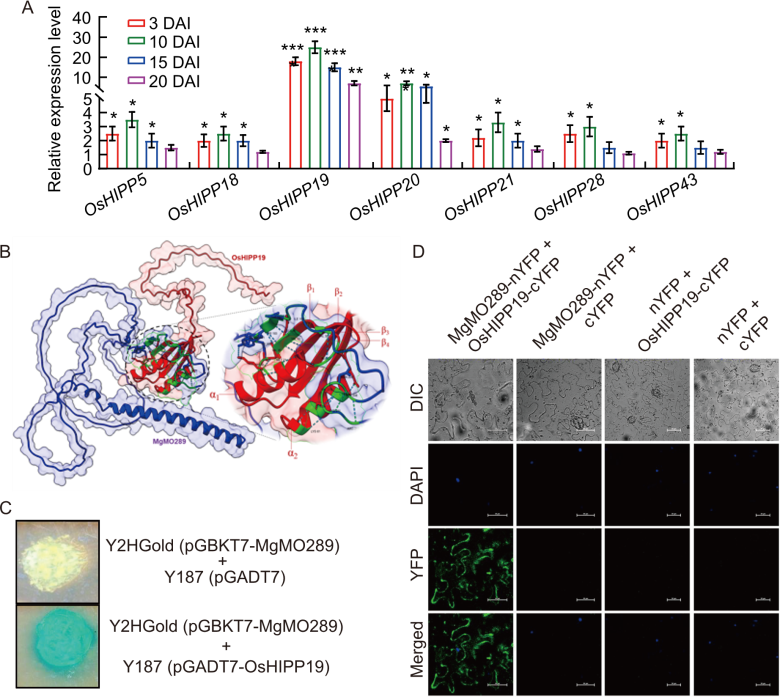
Fig. 1. Meloidogyne graminicola effector MgMO289 interacts with OsHIPP19. A, Comparative expression profiling of OsHIPP5, OsHIPP18, OsHIPP19, OsHIPP20, OsHIPP21, OsHIPP28, and OsHIPP43 in rice cultivar Pusa 2090 upon M. graminicola infection. Root samples were collected at 3, 10, 15, and 20 d after inoculation (DAI) (inoculum level: two second-stage juveniles per gram of soil). Expression in uninfected roots was set to 1, and fold change in expression for infected roots was compared statistically (*, P < 0.05; **, P < 0.01; ***, P < 0.001; Mann-Whitney test). For qRT-PCR data analysis, Os18SrRNA and OsActin were used as internal references. Data are mean ± SE from five biological and three technical replicates. B, Heavy metal-associated (HMA) domain (N-terminal β1α1β2β3α2β4 conformation) of OsHIPP19 may bind to M. graminicola effector protein MgMO289 with high affinity. Green ribbons and dotted lines indicate interacting residues and hydrogen bonds, respectively. C, Pairwise yeast two-hybrid (Y2H) assays validated interaction between MgMO289 and OsHIPP19. Diploid yeasts (Y2HGold and Y187) containing bait (pGBKT7-MgMO289) and prey (pGADT7-OsHIPP19) plasmids were serially diluted and plated at a 1 × 10⁻² dilution in selective medium (medium lacking adenine, histidine, leucine, and tryptophan; supplemented with X-α-Gal and Aureobasidin A). Blue colonies showed positive interaction. D, MgMO289 was cloned into vector pSPYNE expressing N terminus of yellow fluorescent protein (nYFP). OsHIPP19 was cloned into vector pSPYCE expressing C terminus of YFP (cYFP). A strong fluorescence signal was detected in the cytoplasm of tobacco leaf epidermal cells when MgMO289-nYFP and OsHIPP19-cYFP were co-expressed, while no fluorescence was detected when MgMO289-nYFP and cYFP, OsHIPP19-cYFP and nYFP or cYFP and nYFP were co-expressed. Nuclei were stained with 4ʹ,6-diamidino-2-phenylindole (DAPI). DIC, Differential interference contrast. Scale bars, 20 µm.
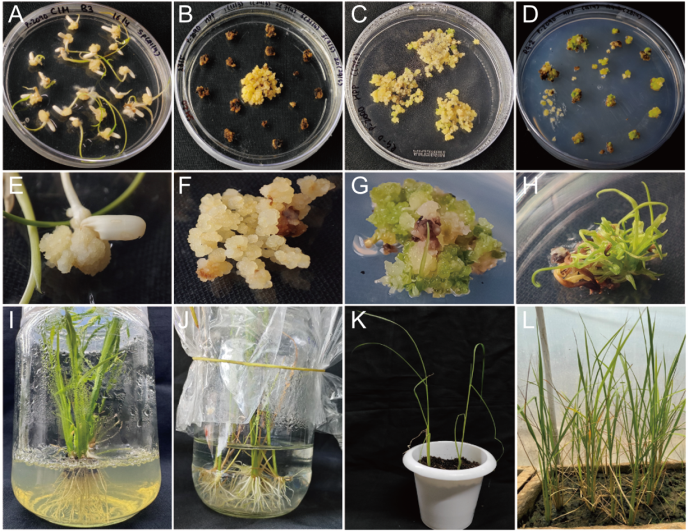
Fig. 2. Transformation of rice cultivar Pusa 2090 with an OsHIPP19 overexpression construct using immature embryo-derived callus culture method. A and E, Growth of embryogenic calli at 7 d post incubation (DPI) in callus induction medium with minimized 6-benzylaminopurine supplementation. B and F, White/yellowish proliferated calli at 10 DPI in selection medium-2 supplemented with 50 µg/mL hygromycin. C and G, Somatic embryo development at 7 DPI in regeneration medium-1 supplemented with 35 µg/mL hygromycin. D and H, Induction of shoot development at 15 DPI in regeneration medium-2 supplemented with 30 µg/mL hygromycin. I, Induction of root development in plantlets at 7 DPI with 0.1 µg/mL naphthalene acetic acid. J, Root hardening in half-strength Hoagland medium for 7 d. K, Acclimatization in Soil Rite. L, Mature plants transplanted to pots. Calli and somatic embryos were induced in the dark while shoots were regenerated under a 16 h light/8 h dark photoperiod.
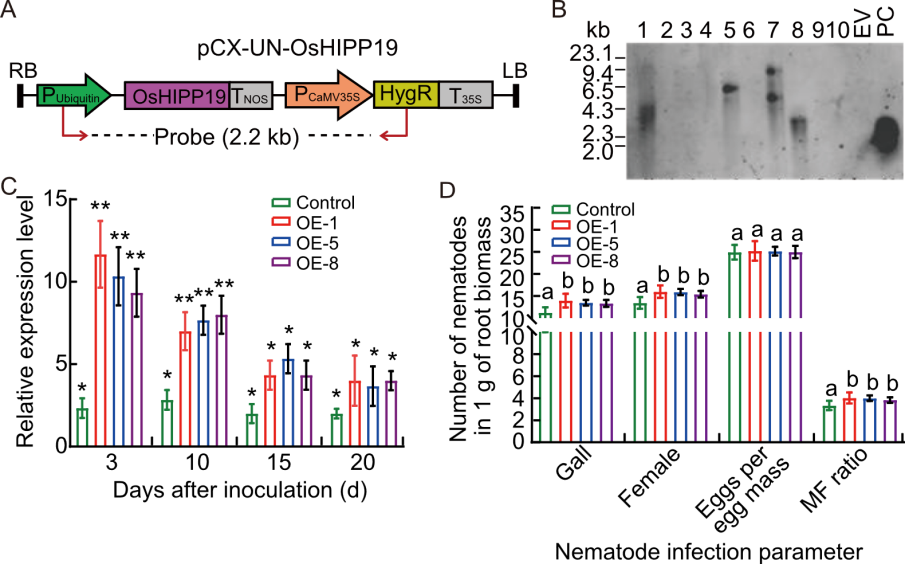
Fig. 3. OsHIPP19 overexpression is correlated with hypersusceptibility of rice cultivar Pusa 2090 to Meloidogyne graminicola. A, Schematic representation of the T-DNA region of overexpression construct (recombinant pCX-UN vector) that was mobilized into Agrobacterium tumefaciens strain GV3101 cells. OsHIPP19 expression is driven by the maize (Zea mays) Ubiquitin-1 promoter, while the CaMV35S promoter drives the expression of a hygromycin resistance-conferring gene (HygR). TNOS and T35S are polyadenylation signals of nopaline synthase and CaMV35S for transcription termination, respectively. LB and RB denote the left and right borders, respectively. A 2.2-kb probe was designed that spanned from the Ubiquitin-1 promoter to HygR. B, T-DNA integration patterns in different T0 lines as revealed by a Southern hybridization assay. The probe for detecting the transgene was labelled with a digoxigenin probe synthesis kit (Roche Diagnostics, Basel, Switzerland). Genomic DNA extracted from plants of independent overexpression lines was doubly digested with BamHI and EcoRI. Single copy insertion of the OsHIPP19 transgene was detected in lines 1, 5, and 8, while double copy integration was observed in line 7. EV, Empty vector; PC, Probe as positive control. C, qRT-PCR-based differential expression analysis of OsHIPP19 in the roots of empty vector control and transgenic overexpression lines (OE-1, OE-5, and OE-8) upon M. graminicola infection at 3, 10, 15, and 20 d after inoculation (DAI) (initial inoculum: two second-stage juveniles per gram of soil). Expression in roots of uninfected control and overexpression lines was set to 1 and fold change in expression for infected roots was compared statistically (*, P < 0.01; **, P < 0.001; Mann-Whitney test). Os18SrRNA and OsActin were used as internal references. Data are mean ± SE from five biological and three technical replicates. D, OsHIPP19 overexpression lines harbored significantly greater numbers of galls and females compared with empty vector control plants at 30 DAI (P < 0.05, two-way ANOVA followed by Tukey’s HSD test). Although the genotypes did not differ significantly (P > 0.05) in the number of eggs per egg mass, the nematode multiplication factor (MF) ratio [final inoculum (number of egg masses × number of eggs per egg mass) / initial inoculum] was higher in overexpression lines compared with the control. Data are mean ± SE (n = 20).
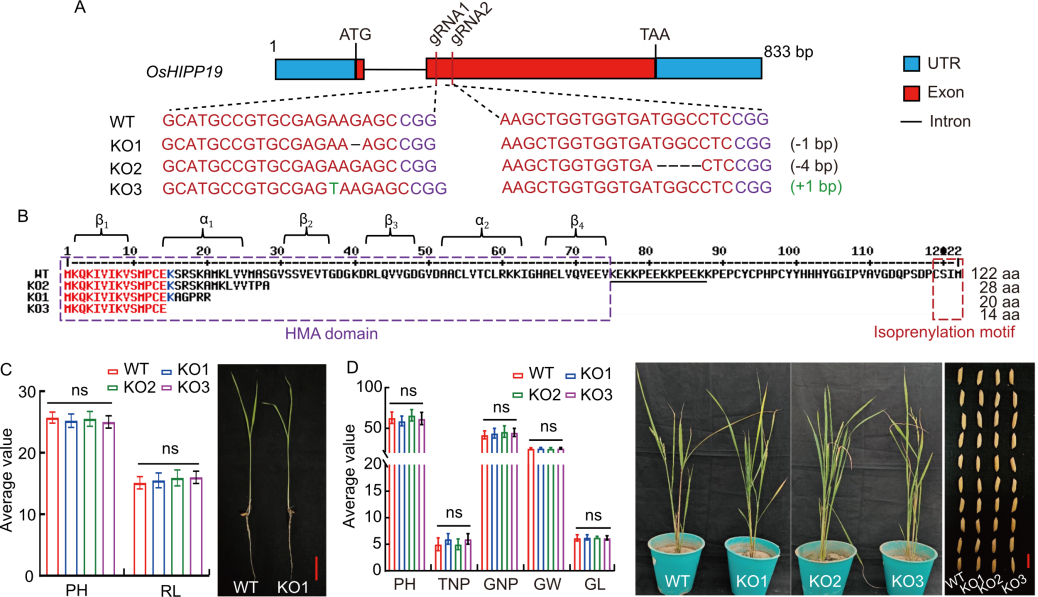
Fig. 4. CRISPR/Cas9-induced knockout of OsHIPP19 in rice cultivar Pusa 2090. A, Three homozygous knockout lines (named KO1, KO2, and KO3) were developed, which harbored a 1-bp deletion at the gRNA1 target site, a 4-bp deletion at the gRNA2 target site, and a 1-bp insertion at the gRNA1 target site, respectively. The protospacer adjacent motif sequence is indicated in purple. WT, Wild type; UTR, Untranslated region. B, Compared with WT OsHIPP19 protein (122 aa in length), events KO1, KO2, and KO3 putatively translate truncated OsHIPP19 peptides that are 20, 28, and 14 aa in length, respectively. These truncated peptides lacked the crucial heavy metal-associated (HMA) domain and isoprenylation motif. Locations of two alpha helices and four beta sheets are indicated for the WT OsHIPP19 protein. The nuclear localization signal (KEKKPEEKKPEEK) is underlined in the WT protein sequence. C, Comparative phenotyping of WT plants with ‘Cas9-free’ T3 lines of KO1, KO2, and KO3 at 15 d after germination in Murashige and Skoog (MS) medium. Scale bar, 5 cm. D, Comparative phenotyping of WT, KO1, KO2, and KO3 lines at 100 d after transplantation into pot soil. Scale bar, 5 mm. Different growth parameters were assessed, including plant height (PH, cm), root length (RL, cm), tiller number per plant (TNP), grain number per panicle (GNP), 1000-grain weight (GW, g), and grain length (GL, mm). Data are mean ± SE (n = 50). According to Tukey’s HSD test, no significant differences (ns) were observed among different genotypes (P > 0.05).
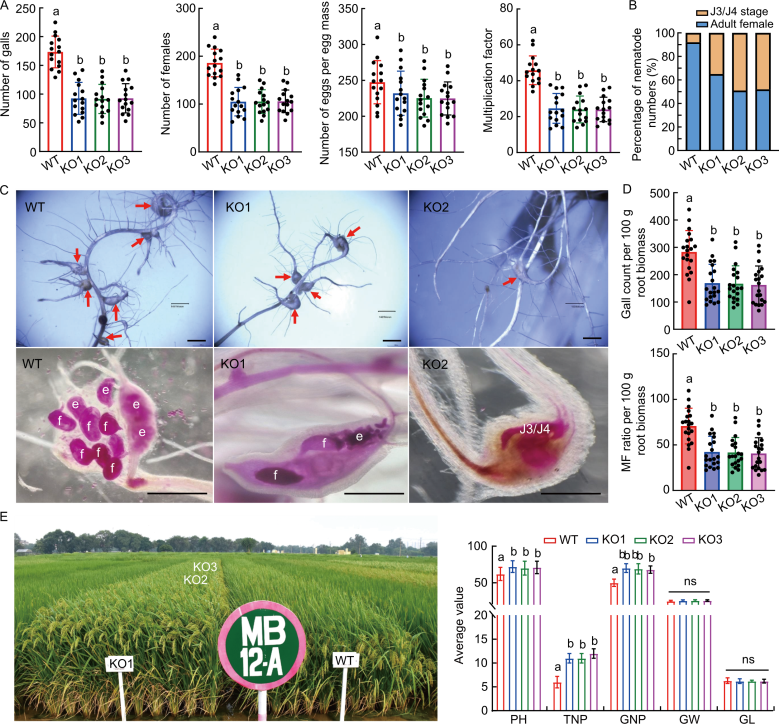
Fig. 5. Loss of OsHIPP19 function confers reduced Meloidogyne graminicola susceptibility to rice cultivar Pusa 2090 in greenhouse and field microplot trials. A, Multiplication factor (MF) ratio and mean numbers of root galls, females, and eggs per egg mass in root systems were significantly reduced in the knockout lines (KO1, KO2, and KO3) compared with the wild type (WT) at 30 d after inoculation (DAI). Data are mean ± SE (n = 15). Multiple comparisons among different treatment groups were performed via one-way ANOVA followed by Tukey’s HSD test (P < 0.0001). The initial inoculum was two second-stage juveniles per gram of soil. B, WT galls harbored greater numbers of adult females than swollen juveniles (J3/J4) at 30 DAI, whereas in galls of knockout lines, the swollen juvenile/adult female ratio was considerably increased at this time point, indicating retarded nematode development. Bars represent the percentage of nematode numbers at different developmental stages. C, Qualitative display of greater root galling intensity (individual galls indicated by red arrows) in WT plants compared with knockout lines. The bottom panel shows greater numbers of adult females (f) and egg masses (e) inside the galls of WT plants compared with those of knockout lines. A developmental delay of nematodes was observed in knockout lines relative to WT plants as galls harbored J3/J4-stage nematodes. Nematode endoparasites were stained with acid fuchsin. Scale bars, 1 mm. D, Root gall counts and MF ratios per 100 g root biomass were significantly reduced in the knockout lines (KO1, KO2, and KO3) compared with WT at 100 d post transplantation in field microplot experiment. Data are mean ± SE (n = 20). Multiple comparisons between different treatment groups were performed via two-way ANOVA followed by Tukey’s HSD test (P < 0.0001). Fifteen-day-old seedlings were transplanted to microplots harboring two second-stage juveniles per gram of soil. E, Upon nematode infection, improved crop yield was documented in edited lines (KO1, KO2, and KO3) compared with WT. At 100 d post transplantation, different growth parameters including plant height (PH, cm), tiller number per plant (TNP), grain number per panicle (GNP), 1000-grain weight (GW, g), and grain length (GL, mm) were assessed. Data are mean ± SE (n = 50). Two-way ANOVA followed by Tukey’s HSD test indicated no significant (ns) difference between treatments (P > 0.05) for GW and GL. For PH, TNP, and GNP, a significant difference between treatments (P < 0.05) was observed.
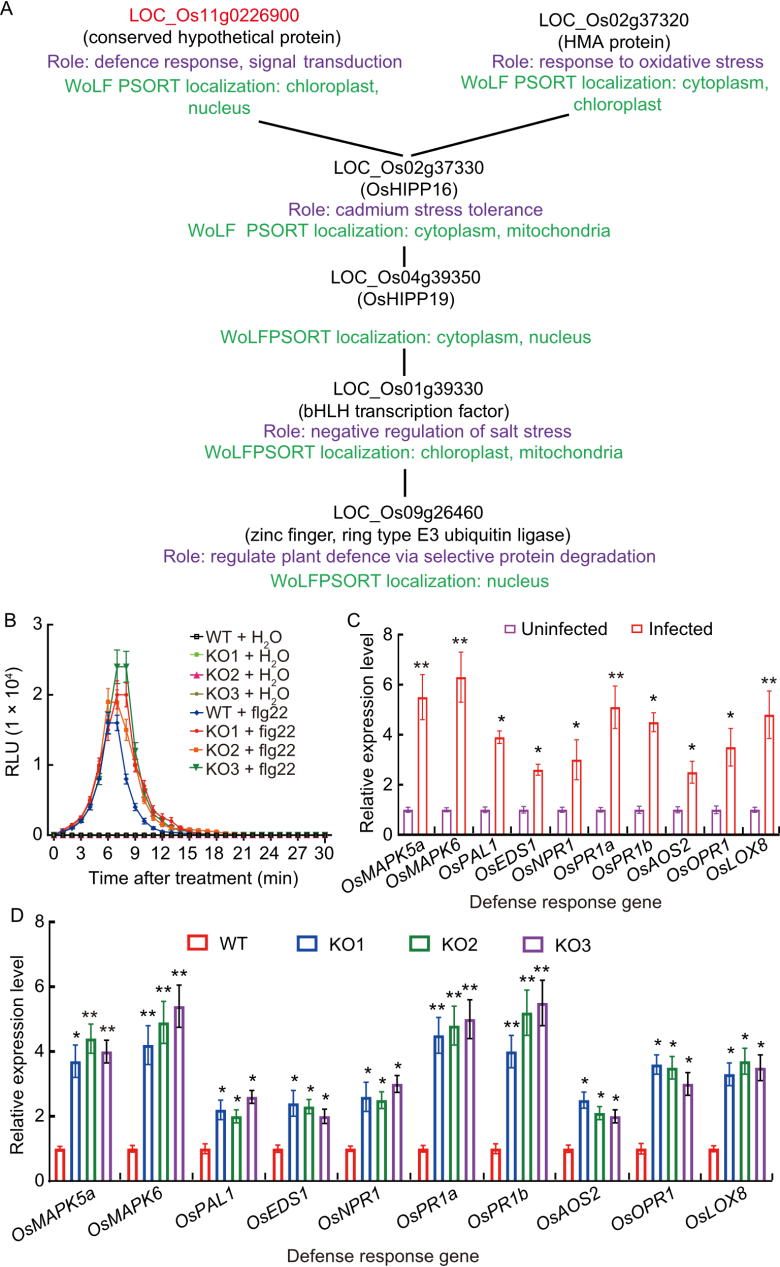
Fig. 6. OsHIPP19 knockout facilitates stronger nematode-induced immune responses in rice cultivar Pusa 2090. A, Visualization of a rice gene co-expression module that included OsHIPP19, generated using STRING database v.12. To detect significantly co-varying expression patterns of genes, correlation coefficients (r) between transcript levels from genes in the network analysis needed to be ≥ 0.8 at a false discovery rate (FDR) threshold ≤ 0.05. Spurious correlations were removed and genes with significant expression correlations were retained to form the network module. Functional enrichment analysis indicated that the module mostly consisted of stress-responsive genes and genes encoding transcription factors. B, Reactive oxygen species (ROS) bursts detected in shoot discs from wild-type (WT) and knockout plants upon treatment with 1 µmol/L flg22. Relative luminescence units (RLUs) were measured using a luminol-based assay at 30 min after treatment. Data are mean ± SE (n = 10). C, Rice defense-related genes involved in the ROS burst (OsMAPK5a, OsMAPK6), salicylic acid-mediated signaling (OsPAL1, OsEDS1, OsNPR1), jasmonic acid-mediated signaling (OsAOS2, OsOPR1, OsLOX8), and production of pathogenesis-related proteins (OsPR1a, OsPR1b) showed significant upregulation of expression in infected WT plants compared with uninfected ones at 2 d after inoculation (inoculum level: two second-stage juveniles per gram of soil). Expression in roots of uninfected plants was set to 1, and fold change in expression for infected roots was compared statistically. D, In nematode-infected knockout line (KO1, KO2, and KO3) plants, expression of defense-related genes was significantly upregulated compared with infected WT plants. Expression in roots of infected WT plants was set to 1, and fold change in expression for infected knockout plant roots was compared statistically in a pairwise manner via Mann-Whitney tests (*, P < 0.01; **, P < 0.001). Gene expression was normalized using two housekeeping genes: Os18SrRNA and OsActin. Each bar represents the mean fold change value ± SE of qRT-PCR runs for five biological and three technical replicates.
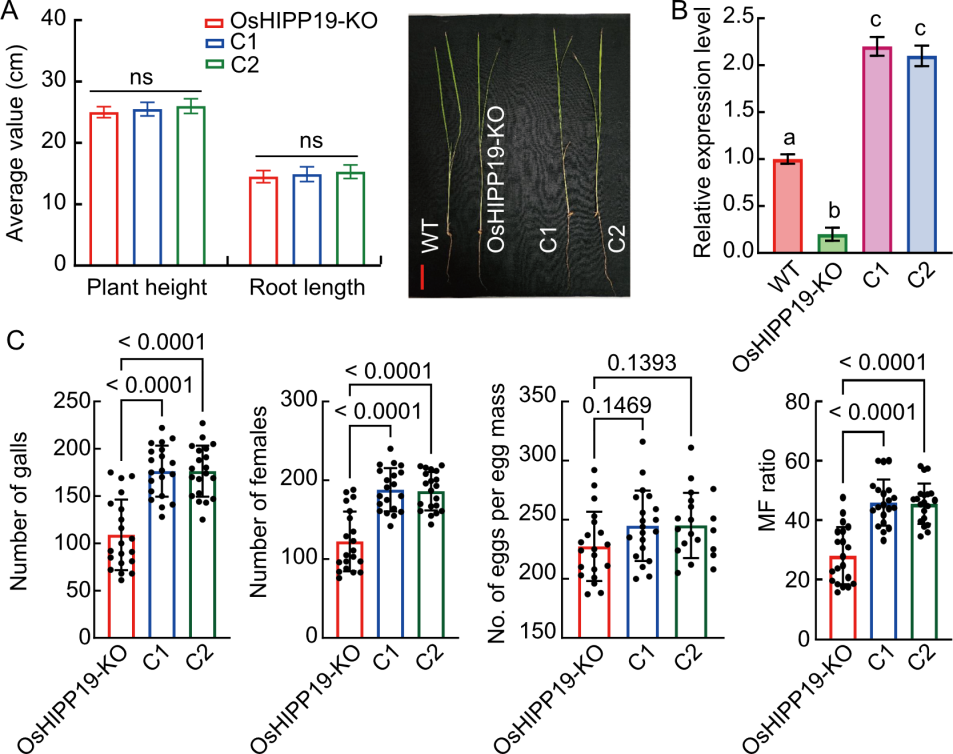
Fig. 7. OsHIPP19 overexpression (OsHIPP19-OE) in an OsHIPP19 knockout line (OsHIPP19- KO) of rice cultivar Pusa 2090 restore susceptibility to Meloidogyne graminicola. A, No apparent growth penalty was observed in two complementation lines OsHIPP19-KOOsHIPP19-OE1 (C1) and OsHIPP19-KOOsHIPP19-OE2 (C2) when compared with the OsHIPP19-KO control at 15 d post germination. WT, Wild type. Scale bar, 5 cm. Data are mean ± SE (n = 50). According to Tukey’s HSD test, no significant difference (ns) was observed among treatment groups (P > 0.05). B, qRT-PCR-based expression quantification of OsHIPP19 gene (primers flanked the targeted gRNA positions) in OsHIPP19-KO and complementation lines. Expression of OsHIPP19 was set to 1 in WT plants, and fold change in expression in the OsHIPP19 knockout and complementation lines was compared statistically. Different lowercase letters above bars indicate significant differences (Tukey’s HSD test, P < 0.01). Gene expression was normalized using Os18SrRNA and OsActin. Each bar represents the mean fold change value ± SE of qRT-PCR runs for five biological and three technical replicates. C, Comparatively greater M. graminicola multiplication factor as well as numbers of galls, females, and eggs per egg mass were observed in the root systems of two complementation lines relative to OsHIPP19-KO roots at 30 d after inoculation (inoculum level: two second-stage juveniles per gram of soil). The P values for comparisons between treatment groups are shown (one-way ANOVA followed by Tukey’s HSD test). Data are mean ± SE (n = 10) from three repeated experiments.
| [1] | Bhowmick P K, Singh A K, Krishnan S G, et al. 2023. Notification and germplasm registration: Rice variety Pusa 2090. Indian J Genet Plant Breed, 84(4): 735-745. |
| [2] | Caillaud M C, Lecomte P, Jammes F, et al. 2008. MAP65-3 microtubule-associated protein is essential for nematode-induced giant cell ontogenesis in Arabidopsis. Plant Cell, 20(2): 423-437. |
| [3] | Chen S B, Songkumarn P, Liu J L, et al. 2009. A versatile zero background T-vector system for gene cloning and functional genomics. Plant Physiol, 150(3): 1111-1121. |
| [4] | Cowan G H, Roberts A G, Jones S, et al. 2018. Potato mop-top virus co-opts the stress sensor HIPP26 for long-distance movement. Plant Physiol, 176(3): 2052-2070. |
| [5] | de Abreu-Neto J B, Turchetto-Zolet A C, de Oliveira L F V, et al. 2013. Heavy metal-associated isoprenylated plant protein (HIPP): Characterization of a family of proteins exclusive to plants. FEBS J, 280(7): 1604-1616. |
| [6] | de Schutter K, Taning C N T, van Daele L, et al. 2022. RNAi-based biocontrol products: Market status, regulatory aspects, and risk assessment. Front Insect Sci, 1: 818037. |
| [7] | de Waele D, Elsen A. 2007. Challenges in tropical plant nematology. Annu Rev Phytopathol, 45: 457-485. |
| [8] | Dutta T K, Akhil V S. 2024. The relative infection potential of Meloidogyne incognita and M. graminicola in the basmati rice cultivar PB1121. Plant Pathol, 73(2): 262-271. |
| [9] | Dutta T K, Papolu P K, Banakar P, et al. 2015. Tomato transgenic plants expressing hairpin construct of a nematode protease gene conferred enhanced resistance to root-knot nematodes. Front Microbiol, 6: 260. |
| [10] | Dutta T K, Papolu P K, Singh D, et al. 2020. Expression interference of a number of Heterodera avenae conserved genes perturbs nematode parasitic success in Triticum aestivum. Plant Sci, 301: 110670. |
| [11] | Dutta T K, Ray S, Phani V. 2023a. The status of the CRISPR/Cas9 research in plant-nematode interactions. Planta, 258(6): 103. |
| [12] | Dutta T K, Vashisth N, Ray S, et al. 2023b. Functional analysis of a susceptibility gene (HIPP27) in the Arabidopsis thaliana-Meloidogyne incognita pathosystem by using a genome editing strategy. BMC Plant Biol, 23(1): 390. |
| [13] | Dutta T K, Akhil V S, Kundu A, et al. 2024. Induced knockdown of Mg-odr-1 and Mg-odr-3 perturbed the host seeking behavior of Meloidogyne graminicola in rice. Heliyon, 10(4): e26384. |
| [14] | Dutta T K, Akhil V S, Gawade B H, et al. 2025. Resources for genetic control of the root-knot nematode Meloidogyne enterolobii, an impending threat to direct-seeded rice agriculture. Plant Stress, 18: 101067. |
| [15] | Fuller V L, Lilley C J, Urwin P E. 2008. Nematode resistance. New Phytol, 180(1): 27-44. |
| [16] | Garcia-Ruiz H, Szurek B, van den Ackerveken G. 2021. Stop helping pathogens: Engineering plant susceptibility genes for durable resistance. Curr Opin Biotechnol, 70: 187-195. |
| [17] | Huang H, Zhao W C, Qiao H, et al. 2022. SlWRKY45 interacts with jasmonate-ZIM domain proteins to negatively regulate defense against the root-knot nematode Meloidogyne incognita in tomato. Hortic Res, 9: uhac197. |
| [18] | Huang Q L, Lin B R, Cao Y Q, et al. 2023. CRISPR/Cas9-mediated mutagenesis of the susceptibility gene OsHPP04 in rice confers enhanced resistance to rice root-knot nematode. Front Plant Sci, 14: 1134653. |
| [19] | Ji T T, Liang M T, Li S H, et al. 2025. CsBZR1-CsCEL1 module regulates the susceptibility of cucumber to Meloidogyne incognita by mediating cellulose metabolism. Plant J, 121(6): e70094. |
| [20] | Kangben F, Kumar S, Xing A Q, et al. 2025. CRISPR-Cas9-mediated knockout of MLO3 confers enhanced resistance to reniform nematode in upland cotton. Plants, 14(22): 3491. |
| [21] | Kumar V V S, Verma R K, Yadav S K, et al. 2020. CRISPR-Cas9 mediated genome editing of drought and salt tolerance (OsDST) gene in indica mega rice cultivar MTU1010. Physiol Mol Biol Plants, 26(6): 1099-1110. |
| [22] | Kunwar V, Guan W J, Zhang L. 2024. Identification and characterization of a virulent Meloidogyne incognita population breaking tomato Mi-1-mediated resistance in Indiana. Horticulturae, 10(6): 583. |
| [23] | Kyndt T, Fernandez D, Gheysen G. 2014. Plant-parasitic nematode infections in rice: Molecular and cellular insights. Annu Rev Phytopathol, 52: 135-153. |
| [24] | Li Z W, Huang Q L, Lin B R, et al. 2022. CRISPR/Cas9-targeted mutagenesis of a representative member of a novel PR10/Bet v1-like protein subfamily significantly reduces rice plant height and defense against Meloidogyne graminicola. Phytopathol Res, 4(1): 38. |
| [25] | Liu J, Zhang J Q, Wei Y, et al. 2024. The nematode effector calreticulin competes with the high mobility group protein OsHMGB1 for binding to the rice calmodulin-like protein OsCML31 to enhance rice susceptibility to Meloidogyne graminicola. Plant Cell Environ, 47(5): 1732-1746. |
| [26] | Maidment J H R, Franceschetti M, Maqbool A, et al. 2021. Multiple variants of the fungal effector AVR-Pik bind the HMA domain of the rice protein OsHIPP19, providing a foundation to engineer plant defense. J Biol Chem, 296: 100371. |
| [27] | Mantelin S, Bellafiore S, Kyndt T. 2017. Meloidogyne graminicola: A major threat to rice agriculture. Mol Plant Pathol, 18(1): 3-15. |
| [28] | Mendy B, Wang’ombe M W, Radakovic Z S, et al. 2017. Arabidopsis leucine-rich repeat receptor-like kinase NILR1 is required for induction of innate immunity to parasitic nematodes. PLoS Pathog, 13(4): e1006284. |
| [29] | Negi P, Rane J, Wagh R S, et al. 2024. Direct-seeded rice: Genetic improvement of game-changing traits for better adaption. Rice Sci, 31(4): 417-433. |
| [30] | Nilusmas S, Mercat M, Perrot T, et al. 2020. Multi-seasonal modelling of plant-nematode interactions reveals efficient plant resistance deployment strategies. Evol Appl, 13(9): 2206-2221. |
| [31] | Noureddine Y, da Rocha M, An J, et al. 2023. AUXIN RESPONSIVE FACTOR8 regulates development of the feeding site induced by root-knot nematodes in tomato. J Exp Bot, 74(18): 5752-5766. |
| [32] | Oikawa K, Fujisaki K, Shimizu M, et al. 2024. The blast pathogen effector AVR-Pik binds and stabilizes rice heavy metal-associated (HMA) proteins to co-opt their function in immunity. PLoS Pathog, 20(11): e1012647. |
| [33] | Papadopoulou N, Devos Y, Álvarez-Alfageme F, et al. 2020. Risk assessment considerations for genetically modified RNAi plants: EFSA’s activities and perspective. Front Plant Sci, 11: 445. |
| [34] | Paul P J, Patil S B, Vipparla A K, et al. 2025. Enhancing crop resilience through elite pre-breeding lines with key traits for dry direct-seeded rice. Plant Genome, 18(4): e70127. |
| [35] | Phani V, Gowda M T, Dutta T K. 2024. Grafting vegetable crops to manage plant-parasitic nematodes: A review. J Pest Sci, 97(2): 539-560. |
| [36] | Ploeg A T, Stoddard C S, Turini T A, et al. 2023. Tomato Mi-gene resistance-breaking populations of Meloidogyne show variable reproduction on susceptible and resistant crop cultivars. J Nematol, 55: 20230043. |
| [37] | Radakovic Z S, Anjam M S, Escobar E, et al. 2018. Arabidopsis HIPP27 is a host susceptibility gene for the beet cyst nematode Heterodera schachtii. Mol Plant Pathol, 19(8): 1917-1928. |
| [38] | Rengasamy B, Manna M, Jonwal S, et al. 2024. A simplified and improved protocol of rice transformation to cater wide range of rice cultivars. Protoplasma, 261(4): 641-654. |
| [39] | Sahoo K K, Tripathi A K, Pareek A, et al. 2011. An improved protocol for efficient transformation and regeneration of diverse indica rice cultivars. Plant Methods, 7(1): 49. |
| [40] | Sikora R A, Helder J, Molendijk L P G, et al. 2023. Integrated nematode management in a world in transition: Constraints, policy, processes, and technologies for the future. Annu Rev Phytopathol, 61: 209-230. |
| [41] | Singh J, Sandhu N, Kumar A, et al. 2025. Deciphering regulatory networks governing seedling emergence in deep-sown direct-seeded rice cultivation. Rice, 18(1): 5. |
| [42] | Song H D, Lin B R, Huang Q L, et al. 2021. The Meloidogyne graminicola effector MgMO289 targets a novel copper metallochaperone to suppress immunity in rice. J Exp Bot, 72(15): 5638-5655. |
| [43] | Thorat Y E, Dutta T K, Jain P K, et al. 2024. A nematode-inducible promoter can effectively drives RNAi construct to confer Meloidogyne incognita resistance in tomato. Plant Cell Rep, 43(1): 3. |
| [44] | Turley E K, Faulkner C. 2026. HIPPs of all trades: Insights from pathogens on the function of HMA proteins at plasmodesmata. J Exp Bot, 77(3): 746-762. |
| [45] | Usovsky M, Gamage V A, Meinhardt C G, et al. 2023. Loss-of-function of an α-SNAP gene confers resistance to soybean cyst nematode. Nat Commun, 14: 7629. |
| [46] | van Schie C C N, Takken F L W. 2014. Susceptibility genes 101: How to be a good host. Annu Rev Phytopathol, 52: 551-581. |
| [47] | Wang C T, Yin X L, Kong X X, et al. 2013. A series of TA-based and zero-background vectors for plant functional genomics. PLoS One, 8(3): e59576. |
| [48] | Wang X M, Cheng R, Xu D C, et al. 2023. MG1 interacts with a protease inhibitor and confers resistance to rice root-knot nematode. Nat Commun, 14: 3354. |
| [49] | Were V M, Yan X, Foster A J, et al. 2025. The Magnaporthe oryzae effector Pwl2 alters HIPP43 localization to suppress host immunity. Plant Cell, 37(6): koaf116. |
| [50] | Xie K B, Minkenberg B, Yang Y N. 2015. Boosting CRISPR/Cas9 multiplex editing capability with the endogenous tRNA-processing system. Proc Natl Acad Sci USA, 112(11): 3570-3575. |
| [51] | Xie X X, Ling J, Dong S Y, et al. 2025. Clade V MLO genes are negative modulators of cucumber defence response to Meloidogyne incognita. Mol Plant Pathol, 26(4): e70078. |
| [52] | Yadav P, Santosh Kumar V V, Priya J, et al. 2023. A versatile protocol for efficient transformation and regeneration in mega indica rice cultivar MTU1010: Optimization through hormonal variables. Meth Protoc, 6(6): 113. |
| [53] | Zaidi S S, Mukhtar M S, Mansoor S. 2018. Genome editing: Targeting susceptibility genes for plant disease resistance. Trends Biotechnol, 36(9): 898-906. |
| [54] | Zhang X, Wang D M, Chen J, et al. 2021. Nematode RALF-like 1 targets soybean malectin-like receptor kinase to facilitate parasitism. Front Plant Sci, 12: 775508. |
| [55] | Zhang X, Li S H, Li X, et al. 2023. Peat-based hairy root transformation using Rhizobium rhizogenes as a rapid and efficient tool for easily exploring potential genes related to root-knot nematode parasitism and host response. Plant Methods, 19(1): 22. |
| [1] | Ting Chen, Zheng Chen, Prakash Sathe Atul, Zhihong Zhang, Liangjian Li, Huihui Shang, Shaoqing Tang, Xiaobo Zhang, Jianli Wu. Characterization of a Novel Gain-of-Function Spotted-Leaf Mutant with Enhanced Disease Resistance in Rice [J]. Rice Science, 2019, 26(6): 372-383. |
| [2] | WANG Zhong-hua, JIA Yu-lin, LIN Hui, Adair INTERN, Barbara VALENT, J. Neil RUTGER . Host Active Defense Responses Occur within 24 Hours after Pathogen Inoculation in the Rice Blast System [J]. RICE SCIENCE, 2007, 14(4): 302-310 . |
| Viewed | ||||||
|
Full text |
|
|||||
|
Abstract |
|
|||||
