
Rice Science ›› 2016, Vol. 23 ›› Issue (4): 165-183.DOI: 10.1016/j.rsci.2016.06.001
• • 下一篇
收稿日期:2015-06-17
接受日期:2015-10-19
出版日期:2016-07-28
发布日期:2016-04-11
. [J]. Rice Science, 2016, 23(4): 165-183.
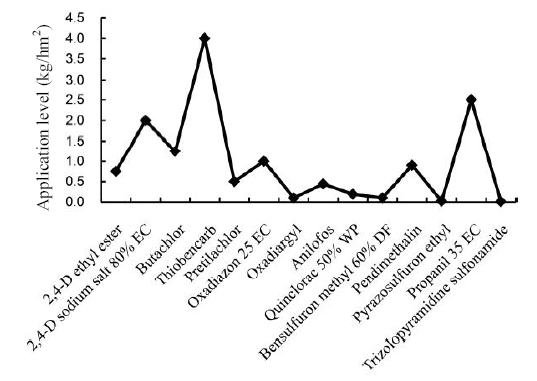
Fig. 1. Herbicides applied for rice cultivation.Data are from Ravi and Mohankumar (2004).
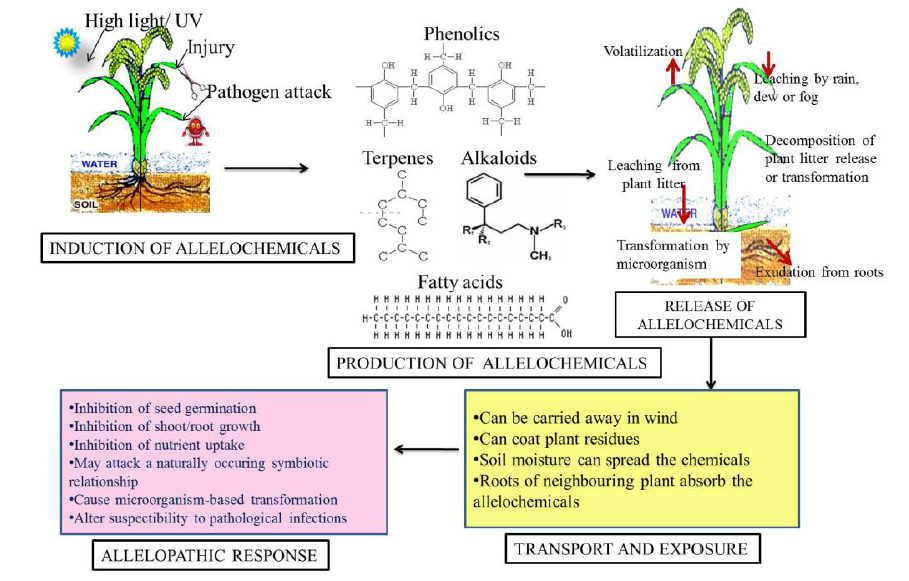
Fig. 2. Induction, production, release and transport of allelochemicals and their effects.
| Source | Allelochemical | Reference |
|---|---|---|
| Root exudate | Momilactone A, 4-hydroxybenzaldehyde, 4-hydroxybenzoic acid, 3-hydroxybenzoic acid, p-coumaric acid, caffeic acid, 3-hydroxy-4-methoxybenzoic acid, valeric acid, tetradecanoic acid, stearic acid, 2-methyl-1,4-benzenediol, 1-ethyl-3,5-dimethylbenzene, 4-ethylbenzaldehyde, cinnamic aldehyde, octadecane, 3-epicosene, 1-eicosanol, 9,12-octadecadienoic acid, 7-hexadecenoic acid methyl ester, 12-octadecenoic acid methyl ester, 12-methyl-tridecanoic acid methyl ester, cis-1-butyl-2-methyl cyclo propane, dehydroabietic acid, cholest-5-en-3(β)-ol, 4-hydroxybenzoic acid, ferulic acid, abietic acid, resorcinol, 2-hydroxyphenylacetic acid, 4-hydroxyphenylacetic acid, 4-phenylbutyric acid, cinnamic acid, vanillic acid, syringic acid, salicylic acid, 5-hydroxyindole-3-acetic acid, indole-5-carboxylic acid, 5-(12-heptadecenyl)-resorcinol, 5,7-4′-trihydroxy 3′,5′-dimethoxyflavone, 3-isopropyl-5-acetoxycyclohexene-2-one-1 | Bouillant et al, 1994; Mattice et al, 1998; Kim and Kim, 2000; Kong et al, 2004b; Seal et al, 2004b |
| Seedling | Momilactone B | Kato-Noguchi and Ino, 2005 |
| Leaf | Momilactones A and B | Cartwright et al, 1977, 1981; Kodama et al, 1988; Lee et al, 1999 |
| Rice straw | Phenolic acids, phenolic aldehyde, aliphatic acids, flavone, cyclohexane, momilactones | Pramaink et al, 2000; Kong et al, 2004a |
| Rice hull | 1-tetratriacontanol and β-sitosterol-3-O-β-D-glucoside, momilactones A and B, dicyclohexanyl orizane, salicylic acid, o-hydroxyphenylacetic acid, syringic acid, ferrulic acide, benzoic acid, p-hydroxybenzoic acid, m-coumaric acid, o-coumaric acid, p-coumaric acid | Chung et al, 2002, 2005; Park et al, 2009 |
| Decomposing rice residue | Phenolic acids, 2-hydroxyphenylacetic acid, 4-hydroxybenzoic acid, vanillic acid, p-coumaric acid, ferulic acid, benzoic acid, protocatechuic acid, gallic acid, syringic acid, salicylic acid, gentisic acid, β-resorcylic acid, caffeic acid, sinapinic acid | Kuwatsuka and Shindo, 1973; Chou and Lin, 1976 |
Table 1 Production of various allelochemicals from rice (Oryza sativa).
| Source | Allelochemical | Reference |
|---|---|---|
| Root exudate | Momilactone A, 4-hydroxybenzaldehyde, 4-hydroxybenzoic acid, 3-hydroxybenzoic acid, p-coumaric acid, caffeic acid, 3-hydroxy-4-methoxybenzoic acid, valeric acid, tetradecanoic acid, stearic acid, 2-methyl-1,4-benzenediol, 1-ethyl-3,5-dimethylbenzene, 4-ethylbenzaldehyde, cinnamic aldehyde, octadecane, 3-epicosene, 1-eicosanol, 9,12-octadecadienoic acid, 7-hexadecenoic acid methyl ester, 12-octadecenoic acid methyl ester, 12-methyl-tridecanoic acid methyl ester, cis-1-butyl-2-methyl cyclo propane, dehydroabietic acid, cholest-5-en-3(β)-ol, 4-hydroxybenzoic acid, ferulic acid, abietic acid, resorcinol, 2-hydroxyphenylacetic acid, 4-hydroxyphenylacetic acid, 4-phenylbutyric acid, cinnamic acid, vanillic acid, syringic acid, salicylic acid, 5-hydroxyindole-3-acetic acid, indole-5-carboxylic acid, 5-(12-heptadecenyl)-resorcinol, 5,7-4′-trihydroxy 3′,5′-dimethoxyflavone, 3-isopropyl-5-acetoxycyclohexene-2-one-1 | Bouillant et al, 1994; Mattice et al, 1998; Kim and Kim, 2000; Kong et al, 2004b; Seal et al, 2004b |
| Seedling | Momilactone B | Kato-Noguchi and Ino, 2005 |
| Leaf | Momilactones A and B | Cartwright et al, 1977, 1981; Kodama et al, 1988; Lee et al, 1999 |
| Rice straw | Phenolic acids, phenolic aldehyde, aliphatic acids, flavone, cyclohexane, momilactones | Pramaink et al, 2000; Kong et al, 2004a |
| Rice hull | 1-tetratriacontanol and β-sitosterol-3-O-β-D-glucoside, momilactones A and B, dicyclohexanyl orizane, salicylic acid, o-hydroxyphenylacetic acid, syringic acid, ferrulic acide, benzoic acid, p-hydroxybenzoic acid, m-coumaric acid, o-coumaric acid, p-coumaric acid | Chung et al, 2002, 2005; Park et al, 2009 |
| Decomposing rice residue | Phenolic acids, 2-hydroxyphenylacetic acid, 4-hydroxybenzoic acid, vanillic acid, p-coumaric acid, ferulic acid, benzoic acid, protocatechuic acid, gallic acid, syringic acid, salicylic acid, gentisic acid, β-resorcylic acid, caffeic acid, sinapinic acid | Kuwatsuka and Shindo, 1973; Chou and Lin, 1976 |
| Allelochemical | Mode of action | Target | Reference |
|---|---|---|---|
| Momilactone B | Inhibits accumulation of subtilisin-like serine protease, amyrin synthase LUP2, β-glucosidase, malate synthase, breakdown of cruciferin 2; induces accumulation of translationally controlled tumor protein, glutathione S-transferase and 1-cysteine peroxiredoxin 1 | Arabidopsis thaliana | Kato-Noguchi and Kitajima, 2015 |
| Momilactones A and B, 1-tetratriacontanol | Inhibit chlorophyll content | Duckweed | Macias et al, 2005 |
| Crude extracts of allelopathic rice cultivars | Inhibit superoxide dismutase and catalase activities | Barnyard grass seedling | Lin et al, 2000 |
| Ferulic acid | Inhibits photosynthesis; reduces stomatal conductance | Several crops | Einhellig, 1996 |
| Ferulic, vanillic and p-coumaric acids | Inhibit phosphorus uptake | Cucumber | Lyu et al, 1990 |
| Salicylate | Inhibits K+ uptake to depolarize membranes and reduce ATP content of roots | - | Balke, 1985 |
| Pelargonic acid (nonanoic acid) | Interferes with membrane functions | - | Irzyk et al, 1997 |
| Tannins, phenolic acid and flavanoids | Inhibit nitrification | Soil | Rice and Pancholy, 1972 |
Table 2 Mode of action of major rice allelochemicals.
| Allelochemical | Mode of action | Target | Reference |
|---|---|---|---|
| Momilactone B | Inhibits accumulation of subtilisin-like serine protease, amyrin synthase LUP2, β-glucosidase, malate synthase, breakdown of cruciferin 2; induces accumulation of translationally controlled tumor protein, glutathione S-transferase and 1-cysteine peroxiredoxin 1 | Arabidopsis thaliana | Kato-Noguchi and Kitajima, 2015 |
| Momilactones A and B, 1-tetratriacontanol | Inhibit chlorophyll content | Duckweed | Macias et al, 2005 |
| Crude extracts of allelopathic rice cultivars | Inhibit superoxide dismutase and catalase activities | Barnyard grass seedling | Lin et al, 2000 |
| Ferulic acid | Inhibits photosynthesis; reduces stomatal conductance | Several crops | Einhellig, 1996 |
| Ferulic, vanillic and p-coumaric acids | Inhibit phosphorus uptake | Cucumber | Lyu et al, 1990 |
| Salicylate | Inhibits K+ uptake to depolarize membranes and reduce ATP content of roots | - | Balke, 1985 |
| Pelargonic acid (nonanoic acid) | Interferes with membrane functions | - | Irzyk et al, 1997 |
| Tannins, phenolic acid and flavanoids | Inhibit nitrification | Soil | Rice and Pancholy, 1972 |
| Gene/Clone | Length (bp) | Accession No. | Best homologue | Rice variety | Reference |
|---|---|---|---|---|---|
| DEG-1 | 561 | AJ296743.1 | S-adenosylmethionine synthetase | Sathi | Junaedi et al, 2008 |
| DEG-2 | 531 | AY522330.1 | Ribulose 1,5-bisphosphate carboxylase large subunit | ||
| DEG-3 | 491 | CT829547.1 | Oxygen evolving complex protein in photosystem II | ||
| DEG-4 | 528 | CT834850.1 | Unknown protein | ||
| DEG-5 | 290 | CT828153.1 | Histone 2B protein | ||
| DEG-6 | 511 | AK243448.1 | Nicotineamine aminotransferase | ||
| DEG-7 | 207 | AC122144.1 | Putative serine/threonine protein kinase | ||
| DEG-8 | 531 | NM_001056236.1 | Putative transposable element oxysterol-binding protein | ||
| OsCPS4 | NA | Os04g0990 | Copalyl diphosphate synthase 4 | Zhonghua 11 | Xu et al, 2012 |
| OsKSL4 | NA | Os0410060 | Kaurene synthase like 4 | Hwayoung | |
| Clone 312 (I) | 619 | ABR25842 | Putative triosephosphate isomerase | PI312777 (under low nitrogen treatment) | Song et al, 2008 |
| Clone 323 (I) | 386 | NM_001057746 | Putative glycine hydroxymethyl transferase | ||
| Clone 403 (I) | 705 | ABR25842 | Putative triosephosphate isomerase | ||
| Clone 891 (I) | 593 | NM_001048551 | Putative triosephosphate isomerase | ||
| Clone 278 (II) | 498 | ABR25322 | Phenylalanine ammonia-lyase | ||
| Clone 547 (II) | 441 | NM_001071389 | Putative o-methyltransferase | ||
| Clone 663 (II) | 542 | BAE45261 | Cytochrome P450 | ||
| Clone 34 (III) | 504 | AAM08829 | Putative SCARECROW gene regulator-like | ||
| Clone 84 (III) | 391 | NM_001051791 | No apical meristem (NAM) protein | ||
| Clone 257 (III) | 544 | ABA98006 | Subitilisin-chymotrypsin inhibitor | ||
| Clone 642 (III) | 572 | NM_001059257 | DNA binding protein S1FA family protein | ||
| Clone 935 (III) | 551 | NM_001060636 | S1/P1 nuclease | ||
| Clone 489 (III) | 552 | BAD81918 | BolA-like protein | ||
| Clone 272 (III) | 290 | NM_001065974 | Putative calcium-dependent lipid binding 1 protein | ||
| Clone 803 (IV) | 384 | NM_001070187 | Putative protein kinase interactor | ||
| Clone 943 (IV) | 623 | A55092 | Catalase 2 (CAT-2) | ||
| Clone 243 (IV) | 621 | NM_001052425 | Myosin-like protein | ||
| Clone 201 (IV) | 232 | AAB70546 | Metallothionein-like protein type 1 | ||
| Clone 120 (IV) | 230 | AAB70546 | Metallothionein-like protein type 1 | ||
| Clone 715 (IV) | 618 | NM_001075076 | Metallothionein-like protein type 1 | ||
| Clone 917 (IV) | 522 | NM_001057541 | Expressed protein | ||
| Clone 177 (V) | 466 | ABR25449 | Putative 40S ribosomal S13 | ||
| Clone 188 (V) | 415 | NM_001056613 | 60S ribosomal protein L22-2 | ||
| Clone 341 (V) | 459 | NM_001056613 | Putative 60S ribosomal protein L22-2 | ||
| Clone 486 (V) | 736 | ABA94602 | Putative 40S ribosomal protein S9 | ||
| Clone 399 (V) | 383 | A2WXX3 | Putative 60S ribosomal protein L5 | ||
| Clone 349 (V) | 507 | BAD36074 | Putative chaperonin 10 | ||
| Clone 640 (V) | 372 | NM_001056613 | 60S ribosomal protein | ||
| Clone 657 (V) | 410 | ABR25449 | Putative 40S ribosomal protein S13 | ||
| Clone 622 (V) | 634 | NM_001062753 | Putative apoptosis-related protein | ||
| Clone 743 (V) | 406 | NM_001056776 | HSP20-like chaperone | ||
| Clone 163 | 449 | CM000126 | Ubiquitin carrier protein | PI312777 (under salicylic acid treatment) | Fang et al, 2009 |
| Clone 171 | 388 | AC131374 | Putative receptor-like protein kinase | ||
| Clone 265 | 295 | AC092263 CM000126 | Putative glutathione S-transferase | ||
| Clone 316 | 323 | AAL34132 | Peptidyl-prolyl cis-trans isomerase | ||
| Clone 438 | 309 | AC13174 | Putative acetyltransferase | ||
| Clone 459 | 347 | ABR25322 | Putative receptor-like protein kinase | ||
| Clone 507 | 303 | AP003734 | Phenylalanine ammonia-lyase | ||
| Clone 512 | 319 | AY224431 | Putative cinnamoyl-CoA reductase | ||
| Clone 557 | 345 | AP005578 | Serine/threonine protein kinase-like protein | ||
| Clone 587 | 200 | AP003263 | Putative endosperm specific protein SC3 | ||
| Clone 593 | 256 | CM000126 | Putative peroxidase | ||
| Clone 617 | 242 | AF200528 | Ubiquitin carrier protein | ||
| Clone 670 | 286 | AP003252 | Cellulose synthase-4 | ||
| Clone 695 | 260 | BAG domain containing protein-like | |||
| Clone 163 | 449 | CM000126 AC131374 AC092263 CM000126 AAL34132 AC13174 ABR25322 AP003734 AY224431 AP005578 | Ubiquitin carrier protein | PI312777 (under salicylic acid treatment) | Fang et al, 2009 |
| Clone 171 | 388 | AP003263 | Putative receptor-like protein kinase | ||
| Clone 265 | 295 | CM000126 AF200528 AP003252 | Putative glutathione S-transferase | ||
| Clone 316 | 323 | Peptidyl-prolyl cis-trans isomerase | |||
| Clone 438 | 309 | Putative acetyltransferase | |||
| Clone 459 | 347 | Putative receptor-like protein kinase | |||
| Clone 507 | 303 | Phenylalanine ammonia-lyase | |||
| Clone 512 | 319 | Putative cinnamoyl-CoA reductase | |||
| Clone 557 | 345 | Serine/threonine protein kinase-like protein | |||
| Clone 587 | 200 | Putative endosperm specific protein SC3 | |||
| Clone 593 | 256 | Putative peroxidase | |||
| Clone 617 | 242 | Ubiquitin carrier protein | |||
| Clone 670 | 286 | Cellulose synthase-4 | |||
| Clone 695 | 260 | BAG domain containing protein-like |
Table 3 Genes and clones responsible for rice allelopathy.
| Gene/Clone | Length (bp) | Accession No. | Best homologue | Rice variety | Reference |
|---|---|---|---|---|---|
| DEG-1 | 561 | AJ296743.1 | S-adenosylmethionine synthetase | Sathi | Junaedi et al, 2008 |
| DEG-2 | 531 | AY522330.1 | Ribulose 1,5-bisphosphate carboxylase large subunit | ||
| DEG-3 | 491 | CT829547.1 | Oxygen evolving complex protein in photosystem II | ||
| DEG-4 | 528 | CT834850.1 | Unknown protein | ||
| DEG-5 | 290 | CT828153.1 | Histone 2B protein | ||
| DEG-6 | 511 | AK243448.1 | Nicotineamine aminotransferase | ||
| DEG-7 | 207 | AC122144.1 | Putative serine/threonine protein kinase | ||
| DEG-8 | 531 | NM_001056236.1 | Putative transposable element oxysterol-binding protein | ||
| OsCPS4 | NA | Os04g0990 | Copalyl diphosphate synthase 4 | Zhonghua 11 | Xu et al, 2012 |
| OsKSL4 | NA | Os0410060 | Kaurene synthase like 4 | Hwayoung | |
| Clone 312 (I) | 619 | ABR25842 | Putative triosephosphate isomerase | PI312777 (under low nitrogen treatment) | Song et al, 2008 |
| Clone 323 (I) | 386 | NM_001057746 | Putative glycine hydroxymethyl transferase | ||
| Clone 403 (I) | 705 | ABR25842 | Putative triosephosphate isomerase | ||
| Clone 891 (I) | 593 | NM_001048551 | Putative triosephosphate isomerase | ||
| Clone 278 (II) | 498 | ABR25322 | Phenylalanine ammonia-lyase | ||
| Clone 547 (II) | 441 | NM_001071389 | Putative o-methyltransferase | ||
| Clone 663 (II) | 542 | BAE45261 | Cytochrome P450 | ||
| Clone 34 (III) | 504 | AAM08829 | Putative SCARECROW gene regulator-like | ||
| Clone 84 (III) | 391 | NM_001051791 | No apical meristem (NAM) protein | ||
| Clone 257 (III) | 544 | ABA98006 | Subitilisin-chymotrypsin inhibitor | ||
| Clone 642 (III) | 572 | NM_001059257 | DNA binding protein S1FA family protein | ||
| Clone 935 (III) | 551 | NM_001060636 | S1/P1 nuclease | ||
| Clone 489 (III) | 552 | BAD81918 | BolA-like protein | ||
| Clone 272 (III) | 290 | NM_001065974 | Putative calcium-dependent lipid binding 1 protein | ||
| Clone 803 (IV) | 384 | NM_001070187 | Putative protein kinase interactor | ||
| Clone 943 (IV) | 623 | A55092 | Catalase 2 (CAT-2) | ||
| Clone 243 (IV) | 621 | NM_001052425 | Myosin-like protein | ||
| Clone 201 (IV) | 232 | AAB70546 | Metallothionein-like protein type 1 | ||
| Clone 120 (IV) | 230 | AAB70546 | Metallothionein-like protein type 1 | ||
| Clone 715 (IV) | 618 | NM_001075076 | Metallothionein-like protein type 1 | ||
| Clone 917 (IV) | 522 | NM_001057541 | Expressed protein | ||
| Clone 177 (V) | 466 | ABR25449 | Putative 40S ribosomal S13 | ||
| Clone 188 (V) | 415 | NM_001056613 | 60S ribosomal protein L22-2 | ||
| Clone 341 (V) | 459 | NM_001056613 | Putative 60S ribosomal protein L22-2 | ||
| Clone 486 (V) | 736 | ABA94602 | Putative 40S ribosomal protein S9 | ||
| Clone 399 (V) | 383 | A2WXX3 | Putative 60S ribosomal protein L5 | ||
| Clone 349 (V) | 507 | BAD36074 | Putative chaperonin 10 | ||
| Clone 640 (V) | 372 | NM_001056613 | 60S ribosomal protein | ||
| Clone 657 (V) | 410 | ABR25449 | Putative 40S ribosomal protein S13 | ||
| Clone 622 (V) | 634 | NM_001062753 | Putative apoptosis-related protein | ||
| Clone 743 (V) | 406 | NM_001056776 | HSP20-like chaperone | ||
| Clone 163 | 449 | CM000126 | Ubiquitin carrier protein | PI312777 (under salicylic acid treatment) | Fang et al, 2009 |
| Clone 171 | 388 | AC131374 | Putative receptor-like protein kinase | ||
| Clone 265 | 295 | AC092263 CM000126 | Putative glutathione S-transferase | ||
| Clone 316 | 323 | AAL34132 | Peptidyl-prolyl cis-trans isomerase | ||
| Clone 438 | 309 | AC13174 | Putative acetyltransferase | ||
| Clone 459 | 347 | ABR25322 | Putative receptor-like protein kinase | ||
| Clone 507 | 303 | AP003734 | Phenylalanine ammonia-lyase | ||
| Clone 512 | 319 | AY224431 | Putative cinnamoyl-CoA reductase | ||
| Clone 557 | 345 | AP005578 | Serine/threonine protein kinase-like protein | ||
| Clone 587 | 200 | AP003263 | Putative endosperm specific protein SC3 | ||
| Clone 593 | 256 | CM000126 | Putative peroxidase | ||
| Clone 617 | 242 | AF200528 | Ubiquitin carrier protein | ||
| Clone 670 | 286 | AP003252 | Cellulose synthase-4 | ||
| Clone 695 | 260 | BAG domain containing protein-like | |||
| Clone 163 | 449 | CM000126 AC131374 AC092263 CM000126 AAL34132 AC13174 ABR25322 AP003734 AY224431 AP005578 | Ubiquitin carrier protein | PI312777 (under salicylic acid treatment) | Fang et al, 2009 |
| Clone 171 | 388 | AP003263 | Putative receptor-like protein kinase | ||
| Clone 265 | 295 | CM000126 AF200528 AP003252 | Putative glutathione S-transferase | ||
| Clone 316 | 323 | Peptidyl-prolyl cis-trans isomerase | |||
| Clone 438 | 309 | Putative acetyltransferase | |||
| Clone 459 | 347 | Putative receptor-like protein kinase | |||
| Clone 507 | 303 | Phenylalanine ammonia-lyase | |||
| Clone 512 | 319 | Putative cinnamoyl-CoA reductase | |||
| Clone 557 | 345 | Serine/threonine protein kinase-like protein | |||
| Clone 587 | 200 | Putative endosperm specific protein SC3 | |||
| Clone 593 | 256 | Putative peroxidase | |||
| Clone 617 | 242 | Ubiquitin carrier protein | |||
| Clone 670 | 286 | Cellulose synthase-4 | |||
| Clone 695 | 260 | BAG domain containing protein-like |
| 1 | Aarino T, Martikainen P J.1994. Mineralization of carbon and nitrogen in acid forest soil treated with forest and slow-release nutrients.Plant Soil, 164(2): 187-193. |
| 2 | Abbassi F, Ghorbani R, Khorramdel S.2013. Allelopathy research in Iran: Experience, challenges, and prospects. In: Cheema Z A, Farooq M, Wahid A. Allelopathy Current Trends and Future Applications. New York, USA: Springer-Verlag: 159-192. |
| 3 | Agrawal G K, Rakwal R, Tamogami S, Yonekura M, Kubo A, Saji H.2002. Chitosan activates defense/stress response(s) in the leaves of Oryza sativa seedlings.Plant Physiol Biochem, 40(12): 1061-1069. |
| 4 | Ahluwalia A S.1998. Allelopathic interactions among algae. In: Kargupta A N, Goyal S K, Verma B N. Advances in Phycology. India: APC Publications: 307-324. |
| 5 | Ahluwalia A S, Ghawana V K.1998. Allelopathic interactions among cyanobacteria and rice and their potential role in biotechnology. In: Subramanian G, Kaushik B D, Venkataraman G S. Cyanobacterial Biotechnology. India: Oxford and IBH Publishing: 403-408. |
| 6 | Ahluwalia A S.2013. Cyanobacterial and algal allelopathy. In: Cheema Z A, Farooq M, Wahid A. Allelopathy Current Trends and Future Applications. New York, USA: Springer-Verlag: 485-509. |
| 7 | Ahn J K, Chung I M.2000. Allelopathic potential of rice hulls on germination and seedling growth of barnyardgrass.Agron J, 92(6): 1162-1167. |
| 8 | Ali M O, Zuber M I, Sarker A.2014. Management practices for lentil as relay crop in the rice based cropping system.J Agric Sci Technol, 4: 126-134. |
| 9 | Ali Z, Malik M A, Cheema M A.2000. Studies on determining a suitable canola-wheat intercropping pattern.Int J Agric Biol, 2: 42-44. |
| 10 | Alsaadawi I S.2001. Allelopathic influence of decomposing wheat residues in agro-ecosystems. J Crop Prod, 4(2): 185-196. |
| 11 | Ambika S R.2013. Multifaceted attributes of allelochemicals and mechanism of allelopathy. In: Cheema Z A, Farooq M, Wahid A. Allelopathy Current Trends and Future Applications. New York, USA: Springer-Verlag: 389-405. |
| 12 | Asaduzzaman M, Islam M M, Sultana S.2010. Allelopathy and alleclochemicals in rice weed management.Bangl Res Pub J, 4(1): 1-14. |
| 13 | Bacilio-Jimenez M, Aguilar-Flores S, Ventura-Zapata E, Perez- Campos E, Bouquelet S, Zenteno E.2003. Chemical characterization of root exudates from rice (Oryza sativa) and their effects on the chemotactic response of endophytic bacteria.Plant Soil, 249(2): 271-277. |
| 14 | Bai Q, Gattinger A, Zelles L.2000. Characterization of microbial consortia in paddy rice soil by phospholipid analysis.Microb Ecol, 39: 273-281. |
| 15 | Bais H P, Park S W, Weir T L, Callaway R M, Vivanco J M.2004. How plants communicate using the underground information superhighway.Trends Plant Sci, 9(1): 26-32. |
| 16 | Bais H P, Weir T L, Perry L G, Gilroy S, Vivanco J M.2006. The role of root exudates in rhizosphere interactions with plants and other organisms.Annu Rev Plant Biol, 57: 233-266. |
| 17 | Balke N E.1985. Effects of Allelochemicals on Mineral Uptake and Associated Physiological. Washington, USA: American Chemical Society. |
| 18 | Bashir K, Hanada K, Shimizu M, Seki M, Nakanishi H, Nishizawa N K.2012. Transcriptomic analysis of rice in response to iron deficiency and excess.Nat Biotechnol, 30: 701-707. |
| 19 | Bertin C, Weston L A, Kaur H.2008. Allelopathic crop development: Molecular and traditional plant breeding approaches. In: Janick J. Plant Breeding Review. Hoboken, USA: John Wiley & Sons: 231-254. |
| 20 | Bi H H, Zeng R S, Su L M, An M, Luo S M.2007. Rice allelopathy induced by methyl jasmonate and methyl salicylate.J Chem Ecol, 35(5): 1089-1103. |
| 21 | Blum U, Shafer S R.1988. Microbial populations and phenolic acids in soil.Soil Biol Biochem, 20(6): 793-800. |
| 22 | Blum U, Rebbeck J.1989. Inhibition and recovery of cucumber roots given multiple treatments of ferulic acid in nutrient culture.J Chem Ecol, 15(3): 917-928. |
| 23 | Blum U.1998. Effects of microbial utilization of phenolic acids and their phenolic acid breakdown products on allelopathic interactions. J Chem Ecol, 24(4): 685-708. |
| 24 | Blum U.1999. Designing laboratory plant debris-soil bioassays: Some reflections. In: Inderjit, Dakshini K M M, Foy C L. Principles and Practices in Plant Ecology: Phytochemicals Interactions. Boca Raton: CRC Press: 17-23. |
| 25 | Blum U, Shafer S R, Lehman M E.1999. Evidence for inhibitory allelopathic interactions involving phenolic acids in field soils: Concepts vs. an experimental model.Crit Rev Plant Sci, 18(5): 673-693. |
| 26 | Bouillant M L, Jacoud C, Zanela I, Favre-Bonvin J, Bally R.1994. Identification of 5-(12-heptadecenyl)-resorcinol in rice root exudates.Phytochemistry, 35(3): 768-771. |
| 27 | Bremner J M, McCarty G W.1988. Effects of terpenoids on nitrification in soil.Soil Sci Soc Am J, 52(6): 1630-1633. |
| 28 | Cai H, Al-Fayez M, Tunstall R G, Platton S, Greaves P, Steward W P, Gescher A J.2005. The rice bran constituent tricin potently inhibits cyclooxygenase enzymes and interferes with intestinal carcinogenesis in Apc (Min) mice.Mol Cancer Ther, 4: 1287-1292. |
| 29 | Cartwright D W, Langcake P, Pryce R J, Leworthy D P, Ride J P.1977. Chemical activation of host defence mechanisms as a basis for cropprotection.Nature, 267: 511-513. |
| 30 | Cartwright D W, Langcake P, Pryce R J, Leworthy D P, Ride J P.1981. Isolation and characterization of two phytoalexins from rice as momilactones A and B.Phytochemistry, 20: 535-537. |
| 31 | Cheng H H.1995. Characterization of the mechanisms of allelopathy: Modeling and experimental approaches. In: Inderjit, Dakshini K M M, Einhellig F A. Allelopathy: Organisms, Processes and Applications. Washington, USA: American Chemical Society: 132-141. |
| 32 | Chou C H, Lin H J.1976. Autoinhibition mechanism of Oryza sativa: 1. Phytotoxic effect of decomposing rice residue in soil.J Chem Ecol, 2(3): 253-367. |
| 33 | Chou C H, Lin T J, Kao C I.1977. Phytotoxins produced during decomposition of rice stubbles in paddy soil and their effect on leachable nitrogen.Bot Bull Acad Sin, 18: 45-60. |
| 34 | Chou C H, Chiang Y C, Cheng H H, Farrow F O.1982. Transformation of 15N-enriched nitrogen fertilizer during rice straw decomposition in submerged soil.Bot Bull Acad Sin, 23: 119-133. |
| 35 | Chou C H.1990. The role of allelopathy in agro-ecosystems: Studies from tropical Taiwan. In: Gliessman S R. Agro-ecology: Researching the Ecological Basis for Sustainable Agriculture. New York, USA: Springer-Verlag: 104-121. |
| 36 | Chou C H, Chang F J, Oka H I.1991. Allelopathic potential of wild rice Oryza perennis.Taiwania, 36: 201-210. |
| 37 | Chou C H.1993. The role of allelopathy in the diversity of plant-communities in Taiwan.Bot Bull Acad Sin, 34: 211-221. |
| 38 | Chou C H.1995. Allelopathy and sustainable agriculture. In: Inderjit, Dakshini K M M, Einhellig F A. Allelopathy: Organisms, Processes and Applications. Washington, USA: American Chemical Society, 582: 211-223. |
| 39 | Chou C H.1999. Roles of allelopathy in plant biodiversity and sustainable agriculture.Crit Rev Plant Sci, 18(5): 609-636. |
| 40 | Chung I M, Kim K H, Ahn J K, Chun S C, Kim C S, Kim J T, Kim S H.2002. Screening of allelochemicals on barnyardgrass (Echinochloa crus-galli) and identification of potentially allelopathic compounds from rice (Oryza sativa) variety hull extracts.Crop Prot, 21: 913-920. |
| 41 | Chung I M, Hahn S J, Ahmad A.2005. Confirmation of potential herbicidal agents in hulls of rice, Oryza sativa. J Chem Ecol, 31(6): 1339-1352. |
| 42 | Chung I M, Kim J T, Kim S H.2006. Evaluation of allelopathic potential and quantification of momilactone A, B from rice hull extracts and assessment of inhibitory bioactivity on paddy field weeds.J Agric Food Chem, 54(7): 2527-2536. |
| 43 | Cipollini D, Rigsby C M, Barto E K.2012. Microbes as targets and mediators of allelopathy in plants.J Chem Ecol, 38(6): 714-727. |
| 44 | Courtis B, Olofsdotter M.1998. Incorporating the allelopathy trait in upland rice breeding programs. In: Olofsdotter M. Allelopathy in Rice. Manila, Philippines: International Rice Research Institute: 57-68. |
| 45 | Culpeper N.1987. Culpeper’s Complete Herbal and English Physician. London: Meyerbooks. |
| 46 | D’Arcy-Lameta A.1986. Study of soybean and lentil root exudates: II. Identification of some polyphenolic compounds, relation with plantlet physiology.Plant Soil, 92(1): 113-123. |
| 47 | Dhyani S K, Samra J S, Handa A, Uma A K.2007. Forestry to support increased agricultural production: Focus on employment generation and rural development.Agric Econ Res Rev, 20: 179-202. |
| 48 | Dilday R H, Lin J, Yan W G.1994. Identification of allelopathy in the Usda-Ars rice germplasm collection.Aust J Exp Agric, 34(7): 907-910. |
| 49 | Dilday R H, Yan W G, Moldenhauer K A K, Gravois K A.1998. Allelopathic activity in rice for controlling major aquatic weeds. In: Olofsdotter M. Allelopathy in Rice. Manila, the Philippines: International Rice Research Institute: 7-26. |
| 50 | Dixon R A, Achnine L, Kota P, Liu C J, Reddy M S S, Wang L J.2002. The phenylpropanoid pathway and plant defense: A genomics perspective.Mol Plant Pathol, 3(5): 371-390. |
| 51 | Ebana K, Yan W G, Dilday R H, Namai H, Okuno K.2001. Analysis of QTL associated with the allelopathic effect of rice using water-soluble extracts.Breeding Sci, 51(1): 47-51. |
| 52 | Einhellig F A.1996. Interactions involving allelopathy in cropping systems.Agron J, 88(6): 886-893. |
| 53 | Fang C X, Xiong J, Qiu L, Wang H B, Song B Q, He H B, Lin R Y, Lin W X.2009. Analysis of gene expressions associated with increased allelopathy in rice (Oryza sativa L.) induced by exogenous salicylic acid.Plant Growth Regul, 57: 163-172. |
| 54 | Fang C X, Zhuang Y E, Xu T C, Li Y Z, Li Y, Lin W X.2013. Changes in rice allelopathy and rhizosphere microflora by inhibiting rice phenylalanine ammonia-lyase gene expression.J Chem Ecol, 39(2): 204-212. |
| 55 | Farrar J, Hawes M, Jones D, Lindow S.2003. How roots control the flux of carbon to the rhizosphere.Ecology, 84: 827-837. |
| 56 | Fernando C H.1995. Rice fields are aquatic, semi-aquatic, terrestrial and agricultural: A complex and questionable limnology. In: Timotius K H, Goltenboth F. Tropical Limnology. Indonesia: Satya Wacana Christian University: 121-148. |
| 57 | He H Q, Lin W X, Liang Y Y, Song B Q, Ke Y Q, Guo Y C, Liang K J.2005. Analyzing the molecular mechanism of crop allelopathy by using differential proteomics.Acta Ecol Sin, 25: 3141-3146. (in Chinese with English abstract) |
| 58 | Hedge R S, Miller D A.1990. Allelopathy and autotoxicity in alfalfa: Characterization and effects of preceding crops and residue incorporation.Crop Sci, 30(6): 1255-1259. |
| 59 | Hiroshi N.2008. Effects of husk extracts of wild rice spp. on seedling growth of lettuce, barnyard grass and Eclipta thermalis.Allelop J, 22(2): 391-396. |
| 60 | Hoagland R E.1990. Microbes and microbial products as herbicides: An overview. In: Hoagland R E. Microbes and Microbial Products as Herbicides. Washington, USA: American Chemical Society, 439: 2-52. |
| 61 | Hobbs P R, Sayre K, Gupta R.2008. The role of conservation agriculture in sustainable agriculture. Philos Trans Roy Soc Biol Sci, 363: 543-555. |
| 62 | Inderjit, Dakshini K M M.1994. Effect of cultivation on allelopathic interference success of the weed, Pluchea lanceolata.J Chem Ecol, 20(5): 1179-1188. |
| 63 | Inderjit, del Moral R.1997. Is separating resource competition from allelopathy realistic?Bot Rev, 63(3): 221-230. |
| 64 | Inderjit, Mallik A U.1997. Effects of phenolic compounds on selected soil properties.Forest Ecol Manage, 92: 11-18. |
| 65 | Inderjit, Dakshini K M M. 1999. Bioassays for allelopathy: Introduction of soil organic and inorganic constituents. In: Inderjit, Dakshini K M M, Foy C L. Principle and Practices in Plant Ecology: Allelochemical Interactions. Boca Raton: CRC Press: 35-44. |
| 66 | Inderjit, Weiner J.2001. Plant allelochemical interference or soil chemical ecology?Persp Plant Ecol Evol Syst, 4(1): 3-12. |
| 67 | Inderjit, Manjit K, Foy C L.2001. On the significance of field studies in allelopathy.Weed Technol, 15(4): 792-797. |
| 68 | Inderjit, Streibig J C, Olofsdotter M.2002. Joint action of phenolic acid mixtures and its significance in allelopathy research.Physiol Plant, 114(3): 422-428. |
| 69 | Inderjit, Weston L A.2003. Root exudation: An overview. In: de Kroon H. Root Ecology. Heidelberg, Germany: Springer-Verlag: 235-255. |
| 70 | Inderjit, Rawat D S, Foy C L.2004. Multifaceted approach to determine rice straw phytotoxicity.Can J Bot, 82: 168-176. |
| 71 | Irzyk G P, Zorner P, Kern A.1997. Scythe herbicide: A new contact herbicide based naturally occurring pelargonic acid.Weed Sci Soc Am Abstr, 37: 103. |
| 72 | Jabran K, Farooq M.2013. Implications of potential allelopathic crops in agricultural systems. In: Cheema Z A, Farooq M, Wahid A. Allelopathy Current Trends and Future Applications. New York: Springer-Verlag: 349-385. |
| 73 | Jensen L B, Courtois B, Shen L, Li Z, Olofsdotter M, Mauleon R P.2001. Locating genes controlling allelopathic effects against barnyardgrass in upland rice.Agron J, 93(1): 21-26. |
| 74 | Jones D L, Darrah P R.1994. Role of root derived organic acids in the mobilization of nutrients from the rhizosphere.Plant Soil, 166(2): 247-257. |
| 75 | Junaedi A, Jung W S, Chung I M, Kim K H.2008. Differentially expressed genes of potentially allelopathic rice in response against barnyardgrass. J Crop Sci Biotechnol, 10(4): 231-236. |
| 76 | Jung W S, Kim K H, Ahn J K, Hahn S J, Chung I M.2004. Allelopathic potential of rice (Oryza sativa L.) residues against Echinochloa crus-galli.Crop Prot, 23(3): 211-218. |
| 77 | Kabir A K M S, Karim S M R, Begum M, Juraimi A S.2010. Allelopathic potential of rice varieties against spinach (Spinacia oleracea).Int J Agric Biol, 12: 809-815. |
| 78 | Karaush G A.1985. Phenol resistance of mixed culture algae.Nauchn Dokl Higher School Biol Sci, 8: 62-65. (in Russian) |
| 79 | Kato-Noguchi H, Ino T.2005. Possible involvement of momilactone B in rice allelopathy.J Plant Physiol, 162(6): 718-721. |
| 80 | Kato-Noguchi H, Ota K, Ino T.2008a. Release of momilactone A and B from rice plants into the rhizosphere and its bioactivities.Allelop J, 22(2): 321-328. |
| 81 | Kato-Noguchi H, Ino T, Ota K.2008b. Secretion of momilactone A from rice roots to the rhizosphere.J Plant Physiol, 165(7): 691-696. |
| 82 | Kato-Noguchi H, Salam M A, Suenaga K.2011. Isolation and identification of potent allelopathic substances in a traditional Bangladeshi rice cultivar Kartikshail.Plant Prod Sci, 14: 128-134. |
| 83 | Kato-Noguchi H, Salam M A.2013. Allelopathy of Bangladeshi Rice. In: Cheema Z A, Farooq M, Wahid A. Allelopathy Current Trends and Future Applications. New York, USA: Springer- Verlag: 193-214. |
| 84 | Kato-Noguchi H, Kitajima S.2015. Momilactone sensitive proteins in Arabidopsis thaliana.Nat Prod Commun, 10(5): 729-732. |
| 85 | Kayode J, Ayeni J M.2009. Allelopathic effects of some crop residues on the germination and growth of maize (Zea mays L.).Pac J Sci Technol, 10: 345-349. |
| 86 | Khalid S, Ahmad T, Shad R A.2002. Use of allelopathy in agriculture.Asian J Plant Sci, 1(3): 292-297. |
| 87 | Khan A H, Vaishya R D.1992. Allelopathic effects of different crop residues on germination and growth of weeds. In: Tauro P, Narwal S S. Proceedings of National Symposium on Allelopathy in Agroecosystem. India: Indian Society of Allelopathy: 59-60. |
| 88 | Khanh T D, Chung M I, Xuan T D, Tawata S.2005a. The exploitation of crop allelopathy in sustainable agricultural production.J Agron Crop Sci, 191(3): 172-184. |
| 89 | Khanh T D, Hong N H, Xuan T D, Chung I M.2005b. Paddy weed control by medical and leguminous plants from Southeast Asia.Crop Prot, 24(5): 421-431. |
| 90 | Khanh T D, Elzaawely A A, Chung I M, Ahn J K, Tawata S, Xuan T D.2007a. Role of allelochemicals for weed management in rice.Allelop J, 19(1): 85-96. |
| 91 | Khanh T D, Xuan T D, Chung I M.2007b. Rice allelopathy and the possibility for weed management.Ann Appl Biol, 151(3): 325-339. |
| 92 | Khanh T D, Linh L H, Linh T H, Ham L H, Xuan T D.2013. Rapid and high-precision marker assisted backcrossing to introgress the SUB1 QTL into the Vietnamese elite rice variety.J Plant Bred Crop Sci, 5(2): 26-33. |
| 93 | Kim K W, Kim K U.2000. Searching for rice allelochemicals. In: Kim K U, Shin D H. Rice Allelopathy. Taegu, Korea: Kyungpook National University: 83-95. |
| 94 | Kim S Y, Lee C H, Gutierrez J, Kim P J.2013. Contribution of winter cover crop amendments on global warming potential in rice paddy soil during cultivation.Plant Soil, 366(1): 273-286. |
| 95 | Kodama O, Suzuki T, Miyakawa J, Akatsuka T.1988. Ultraviolet-induced accumulation of phytoalexins in rice leaves.Agric Biol Chem, 52: 2469-2473. |
| 96 | Kohli R K.1993. Project Report: Allelopathic Impact of Sunflower on Weeds and Crops of Punjab. India: Punjab State Council for Science and Technology. |
| 97 | Kong C H, Liang W J, Xu X H, Hu F, Wang P, Jiang Y.2004a. Release and activity of allelochemicals from allelopathic rice seedlings.J Agric Food Chem, 52(10): 2861-2866. |
| 98 | Kong C H, Xu X H, Zhou B, Hu F, Zhang C X, Zhang M X.2004b. Two compounds from allelopathic rice accession and their inhibitory activity on weeds and fungal pathogens.Phytochemistry, 65(8): 1123-1128. |
| 99 | Kong C H, Li H B, Hu F, Xu X H, Wang P.2006. Allelochemicals released by rice roots and residues in soil.Plant Soil, 288: 47-56. |
| 100 | Kong C H.2008. Rice allelopathy.Allelop J, 22: 267-273. |
| 101 | Kong C H, Wang P, Zhao H, Xu X H, Zhu Y D.2008a. Impact of allelochemical exuded from allelopathic rice on soil microbial community.Soil Biol Biochem, 40(7): 1862-1869. |
| 102 | Kong C H, Wang P, Gu Y, Xu X H, Wang M L.2008b. The fate and impact on microorganisms of rice allelochemicals in paddy soil.J Agric Food Chem, 56(13): 5043-5049. |
| 103 | Kong C H, Xu X H, Zhang M, Zhang S Z.2010. Allelochemical tricin in rice hull and its aurone isomer against rice seedling rot disease.Pest Manag Sci, 66(9): 1018-1024. |
| 104 | Kong C H, Chen X H, Hu F, Zhang S Z.2011. Breeding of commercially acceptable allelopathic rice cultivars in China.Pest Manag Sci, 67(9): 1100-1106. |
| 105 | Kuwatsuka S, Shindo H.1973. Behavior of phenolic substances in the decaying process of plants: I. Identification and quantitative determination of phenolic acids in rice straw and its decayed product by gas chromatography.Soil Sci Plant Nutr, 19: 219-227. |
| 106 | Lee C W, Yoneyama K, Takeuchi Y, Konnai M, Tamogami S, Kodama O.1999. Momilactones A and B in rice straw harvested at different growth stages.Biosci Biotechnol Biochem, 63(7): 1318-1320. |
| 107 | Lin J, Smith R J, Dilday R H.1992. Allelopathic activity of rice germplasm on weed. In: Proceedings in Southern Weed Science Society, 45: 99. |
| 108 | Lin R Y, Wang H B, Guo X K, Ye C Y, He H B, Zhou Y, Lin W X.2011. Impact of applied phenolic acids on the microbes, enzymes and available nutrients in paddy soils.Allelop J, 28(2): 225-236. |
| 109 | Lin W X, He H Q, Chen X X, Xiong J, Song B Q, Liang Y Y, Liang K J.2005. Use of ISSR molecular marker approach to estimate genetic diversity in rice and barley allelopathy. In: Harper J D I, An M, Wu H, Kent J H. Establishing the Scientific Base. Proceedings of the 4th World Congress on Allelopathy. NSW, Australia: Charles Sturt University: 168-174. |
| 110 | Lin W X, He H Q, Shen L H, Chen X X, Ke Y Q, Guo Y C, He H B.2004. A proteomic approach to analysing rice allelopathy on barnyard grass (Echinochloa crus-galli L.). In: Proceedings of the 4th International Crop Science Congress at Brisbane, Australia. |
| 111 | Lin W X, Kim K U, Liang K J, Guo Y.2000. Hybrid rice with allelopathy. In: Kim K U, Shin D H. Proceedings of the International Workshop in Rice Allelopathy. Taegu, Korea: Kyungpook National University: 49-56. |
| 112 | Lu Y, Watanabe A, Kimura M.2002. Contribution of plant-derived carbon to soil microbial biomass dynamics in a paddy rice microcosm.Biol Fertil Soils, 36(2): 136-142. |
| 113 | Lyu S W, Blum U, Gerig T M, O’Brien T E.1990. Effects of mixture of phenolic acid on phosphorous uptake by cucumber seedlings.J Chem Ecol, 16(8): 2559-2567. |
| 114 | Ma Y Q, Zhanga M, Li Y L, Shuib J, Zhou Y J.2014. Allelopathy of rice (Oryza sativa L.) root exudates and its relations with Orobanche cumana Wallr. and Orobanche minor Sm. germination.J Plant Interact, 9: 722-730. |
| 115 | Macías F A, Chinchilla N, Varela R M, Molinillo J M G.2005. Bioactive compounds from Oryza sativa cv. Puntal. In: Proceedings of the 4th world congress on allelopathy, August, 2005. NSW, Australia: Charles Sturt University: 21-26. |
| 116 | Mamolos A P, Kalburtji K L.2001. Significance of allelopathy in crop rotation.J Crop Prod, 4(2): 197-218. |
| 117 | Mann R A, Ramzan M, Munir A.2008. Improving the sustainability of wheat production in irrigated areas of Punjab, Pakistan through conservation tillage technology.Int J Agric Biol, 10: 249-254. |
| 118 | Mari M, Iori R, Leoni O, Archi A.1993. In vitro activity of glucosinolates derived isothiocyanates against post harvest fruit pathogens.Ann Appl Biol, 123(1): 155-164. |
| 119 | Mattice J, Lavy T, Skulman B, Dilday R H.1998. Searching for allelochemicals in rice that control ducksalad. In: Olofsdotter M. Allelopathy in Rice. Manila, Philippines: International Rice Research Institute: 81-98. |
| 120 | Mayton H S, Olivier C, Vaughn S F, Loria R.1996. Correlation of fungicide activity of Brassica species with allyl isothiocyanate production in macerated leaf tissue.Phytopathol, 86(3): 267-271. |
| 121 | Molisch H.1937. The effect of plants on each other. Fischer Jena, 31: 12-16. (in German) |
| 122 | Moyer J R, Huang H C.1997. Effect of aqueous extracts of crop residues on germination and seedling growth of ten weed species.Bot Bull Acad Sin, 38: 131-139. |
| 123 | Na C S, Lee Y H, Hong S H, Jang C S, Kang B H, Lee J K, Kim T H, Kim W.2007. Change of seed quality of Chinese milk vetch (Astragalus sinicus L.) during seed developmental stages.Kor J Crop Sci, 52(4): 363-369. |
| 124 | Narwal S S, Haouala R.2013. Role of allelopathy in weed management for sustainable agriculture. In: Cheema Z A, Farooq M, Wahid A. Allelopathy Current Trends and Future Applications. New York, USA: Springer-Verlag: 217-249. |
| 125 | Narwal S S.2000. Weed management in rice: Wheat rotation by allelopathy.Crit Rev Plant Sci, 19: 249-266. |
| 126 | Nirmal Kumar J I, Amb M K, Bora A.2010. Chronic response of Anabaena fertilissima on growth, metabolites and enzymatic activities by chlorophenoxy herbicide.Pest Biochem Physiol, 98(2): 168-174. |
| 127 | Olofsdotter M, Navarez D, Moody K.1995. Allelopathy potential in rice (Oryza sativa L.) germplasm.Ann Appl Biol, 127(3): 543-560. |
| 128 | Olofsdotter M, Navarez D, Rebulanan M, Streibig J C.1999. Weed-suppressive rice cultivars does allelopathy play a role?Weed Res, 39(6): 441-454. |
| 129 | Olofsdotter M.2001a. Getting closer to breeding for competitive ability and the role of allelopathy: An example from rice (Oryza sativa).Weed Technol, 15(4): 798-806. |
| 130 | Olofsdotter M.2001b. Rice: A step toward use of allelopathy.Agron J, 93(1): 3-8. |
| 131 | Olofsdotter M, Rebulanan M, Madrid A, Dali W, Navarez D, Olk D C.2002a. Why phenolic acids are unlikely primary allelochemicals in rice. J Chem Ecol, 28(1): 229-242. |
| 132 | Olofsdotter M, Jensen L B, Courtois B.2002b. Improving crop competitive ability using allelopathy: An example from rice.Plant Breeding, 121(1): 1-9. |
| 133 | Oyewole O A.2012. Microbial communities and their activities in paddy fields: A Review.J Vet Adv, 2(2): 74-80. |
| 134 | Park M H, Kim B H, Chung I M, Hwang S J.2009. Selective bactericidal potential of rice (Oryza sativa L. var. japonica) hull extract on Microcystis strains in comparison with green algae and zooplankton.Bull Environ Contam Toxicol, 83: 97-101. |
| 135 | Pellissier F, Souto X C.1999. Allelopathy in northern temperate and boreal semi-natural woodland.Crit Rev Plant Sci, 18(5): 637-652. |
| 136 | Pheng S, Olofsdotter M, Jahn G, Adkins S.2010. Use of phytotoxic rice crop residues for weed management.Weed Biol Manag, 10(3): 176-184. |
| 137 | Pramanik M H R, Nagai M, Asao T, Matsui Y.2000. Effects of temperature and photoperiod on phytotoxic root exudates of cucumber (Cucumis sativus) in hydroponic culture.J Chem Ecol, 26(8): 1953-1967. |
| 138 | Putnam A R.1988. Allelochemicals from plants as herbicides.Weed Technol, 2(4): 510-518. |
| 139 | Ravi V, Mohankumar C R.2004. Cassava-based multiple cropping systems. In: Janick J. Horticultural Reviews. New Jersey: John Wiley & Sons: 355-500. |
| 140 | Rice E L, Pancholy S K.1972. Inhibition of nitrification by climax ecosystems.Am J Bot, 59(10): 1033-1040. |
| 141 | Rice E L.1974. Allelopathy. New York, USA: Academic Press. |
| 142 | Rice E L.1984. Allelopathy. 2nd. New York, USA: Academic Press. |
| 143 | Rice E L.1995. Biological Control of Weeds and Plant Diseases: Advances in Applied Allelopathy. Norman: University of Oklahoma Press. |
| 144 | Richardson A E, Barea J M, McNeill A M, Prigent-Combaret C.2009. Acquisition of phosphorous and nitrogen in the rhizosphere and plant growth promotion by microorganism.Plant Soil, 321(1): 305-339. |
| 145 | Rimando A M, Olofsdotter M, Dayan F E, Duke S O.2001. Searching for rice allelochemicals: An example of bioassay- guided isolation.Agron J, 93: 16-20. |
| 146 | Rizvi S J H, Rizvi V.1992. Exploitation of allelochemicals in improving crop productivity. In: Rizvi S J H, Rizvi V. Allelopathy Basic and Applied Aspects. London: Chapman and Hall: 443-472. |
| 147 | Robertson G P, Vitousek P M.1981. Nitrification potentials in primary and secondary succession.Ecology, 63(2): 376-386. |
| 148 | Sanjerehei M M, Jafari M, Mataji A, Meybodi N B, Bihamta M R.2011. Facilitative and competitive interactions between plant species (an example from Nodushan rangelands, Iran).Flora, 206(7): 631-637. |
| 149 | Seal A N, Haig T, Pratley J E.2004a. Evaluation of putative allelochemical in rice root exudates for their role in the suppression of arrowhead root growth.J Chem Ecol, 30(8): 1663-1678. |
| 150 | Seal A N, Pratley J E, Haig T, An M.2004b. Identification and quantification of compounds in a series of allelopathic and non-allelopathic rice root exudates. J Chem Ecol, 30(8): 1647-1662. |
| 151 | Shende N V, Bagde N T.2013. Economic consequences of pesticides use in paddy cultivation.Am Int J Res Hum Arts Soc Sci, 4: 25-33. |
| 152 | Singh A K, Kumar P, Rathore N, Gade R M.2012. Allelopathy: A sustainable alternative and eco-friendly tool for plant disease management.J Plant Dis Sci, 7(2): 127-134. |
| 153 | Singh R N.1961. Role of blue-green algae in nitrogen economy of Indian agriculture. India: Indian Council of Agricultural Research. |
| 154 | Snapp S S, Swinton S M, Labarta R, Mutch D, Black J R, Leep R, Nyiraneza J, O’Neil K.2005. Evaluating cover crops for benefits, costs and performance within cropping system niches.Agron J, 97: 322-332. |
| 155 | Song B, Xiong J, Fang C, Qiu L, Lin R, Liang Y, Lin W.2008. Allelopathic enhancement and diferential gene expression in rice under low nitrogen treatment.J Chem Ecol, 34(5): 688-695. |
| 156 | Song Z Y, McClain C J, Chen T.2004. S-adenosylmethionine protects against acetaminophen-induced hepatotoxicity in mice.Pharmacology, 71(4): 199-208. |
| 157 | Subbarao G V, Ito O, Sahrawat K L, Berry W L, Nakahara K, Ishikawa T, Watanabe T, Suenaga K, Rondon M, Rao I M.2006. Scope and strategies for regulation of nitrification in agricultural systems challenges and opportunities.Crit Rev Plant Sci, 25(4): 303-335. |
| 158 | Subbarao G V, Nakahara K, Hurtado M P, Ono H, Moreta D E, Salcedo A F, Yoshihashi A T, Ishikawa T, Ishitani M, Ohnishi-Kameyama M, Yoshida M, Rondon M, Rao I M, Lascano C E, Berry W L, Ito O.2009. Evidence for biological nitrification inhibition in Brachiaria pastures.Proc Natl Acad Sci USA, 106: 17302-17307. |
| 159 | Takahashi N, Kato T, Tsunagawa M, Sasaki N, Kitahara Y.1976. Mechanisms of dormancy in rice seeds: II. New growth inhibitors, momilactone-A and -B isolated from the hulls of rice seeds.Jpn J Breeding, 26: 91-98. |
| 160 | Tarek A E S.2010. Rice straw as an allelopathic agent for controlling weeds. In: Seventeenth Australasian Weeds Conference, Christchurch, New Zealand. 26-30 September: 143-146. |
| 161 | Tesio F, Ferrero A.2010. Allelopthy, a chance for sustainable weed management. Int J Sust Dev World Ecol, 17(5): 377-389. |
| 162 | Theophrastus (ca 300 B.C.). Enquiry into Plants and Minor Works on Odours and Weather Signs. Vol. 2. Translate to English by Hort A, Heinemann W. London, 1916. |
| 163 | Torres A, Olivia R M, Castellano D, Cross P.1996. A science of the future. In: Proceedings of the 1st World Congress on Allelopathy. Cadiz, Spain: University of Cadiz: 278. |
| 164 | Tuten J H.2010. Low country time and tide: The fall of the South Carolina rice kingdom. In: Changes in Agricultural Practices. Columbia: University of South Carolina Press. |
| 165 | Vaughan S F, Boydston R A.1997. Volatile allelochemicals released by crucifer green manures.J Chem Ecol, 23(9): 2107-2116. |
| 166 | Velusamy P, Immanuel J E, Gnanamanickam S S, Thomashow L.2006. Biological control of rice bacterial blight by plant-associated bacteria producing 2,4-diacetylphloroglucinol.Can J Microbiol, 52(1): 56-65. |
| 167 | Waller G R, Einhellig F A.1999. Overview of allelopathy in agriculture, forestry and ecology. In: Chou C H, Waller G R, Reinhardt C. Biochemistry and Allelopathy: From Organisms to Ecosystems in the Pacific. Taiwan: Academica Sinica: 221-245. |
| 168 | Weston L A.1996. Utilization of allelopathy for weed management in agroecosystems.Agron J, 88(6): 860-866. |
| 169 | White C S.1994. Monoterpenes: Their effects on ecosystem nutrient cycling.J Chem Ecol, 20(6): 1381-1406. |
| 170 | Wu H, Pratley J, Lemerle D, Haig T.1999. Crop cultivars with allelopathic capability.Weed Res, 39: 171-180. |
| 171 | Xu M M, Galhano R, Wiemann P, Bueno E, Tiernan M, Wu W, Chung I M, Gershenzon J, Tudzynski B, Sesma A, Peters R J.2012. Genetic evidence for natural product-mediated plant-plant allelopathy in rice (Oryza sativa).New Phytol, 193: 570-575. |
| 172 | Yang P, Gao B C, Wiscombe W J, Mishchenko M I, Platnick S E, Huang H L, Baum B A, Hu Y X, Winker D M, Tsay S C, Park S K.2002. Inherent and apparent scattering properties of coated or uncoated spheres embedded in an absorbing host medium.Appl Opt, 41: 2740-2759. |
| 173 | Zakir H A K M, Subbarao G V, Pearse S J, Gopalakrishnan S, Ito O, Ishikawa T, Kawano N, Nakahara K, Yoshihashi T, Ono H, Yoshida M.2008. Detection, isolation and characterization of a root-exuded compound, methyl 3-(4-hydroxyphenyl) propionate, responsible for biological nitrification inhibition by sorghum (Sorghum bicolor).New Phytol, 180(2): 442-451. |
| 174 | Zhang Y S, Lee G J, Joo J H, Lee J T, Ahn J H, Park C S.2007. Effect of winter rye cultivation to improve soil fertility and crop production in alpine upland in Korea. Kor J Environ Agric, 26(4): 300-305. |
| No related articles found! |
| 阅读次数 | ||||||
|
全文 |
|
|||||
|
摘要 |
|
|||||
