
Rice Science ›› 2026, Vol. 33 ›› Issue (2): 203-220.DOI: 10.1016/j.rsci.2025.11.002
收稿日期:2025-08-25
接受日期:2025-11-04
出版日期:2026-03-28
发布日期:2026-04-01
. [J]. Rice Science, 2026, 33(2): 203-220.

Fig. 1. Taxonomy of major methanogens and methanotrophs. The phylogenetic tree was constructed using methanogen and methanotroph DNA sequences from Nazaries et al (2013) and Trotsenko and Murrell (2008). The numbers above branches indicate the bootstrap values. The brown color corresponds to methanogens, and the green color corresponds to methanotrophs. Outer legends are the pathways methanogens use for CH4 production. Middle legends are the growth conditions of methanotrophs, i.e. Psychrophiles grow at 5 ºC-10 ºC but not at temperatures above 20 ºC, halophiles grow at 15% NaCl, thermophiles grow at more than 45 ºC, and acidophiles grow at pH of 3.8-5.5. The inner legends indicate the preferred gas ratio of methanotrophs. NA, Not available.
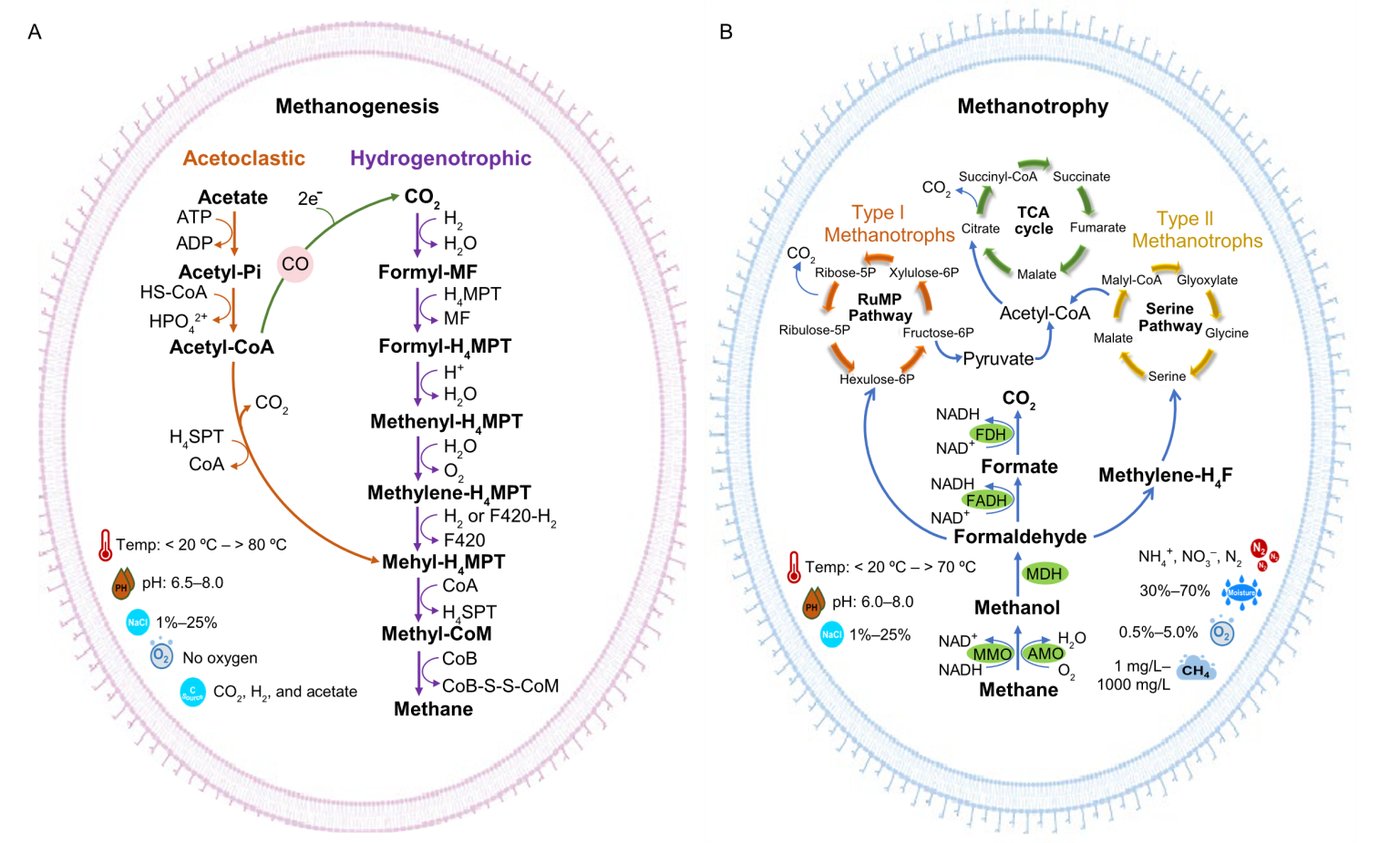
Fig. 2. Mechanisms of methanogenesis and methanotrophy. The acetoclastic and hydrogenotrophic pathways of methanogenesis, illustrating the conversion of acetate and hydrogen/carbon dioxide into CH4 by methanogenic archaea. The methanotrophic pathway is illustrated on the right, wherein CH4 is oxidized to carbon dioxide by methanotrophic microorganisms through enzymatic reactions. Acetyl-Pi, Acetyl phosphate; ADP, Adenosine diphosphate; ATP, Adenosine triphosphate; AMO, Ammonia monooxygenase; CoB, Coenzyme B; CoM, Coenzyme M; F420, Coenzyme F420; FADH, Formaldehyde dehydrogenase; FDH, Formate dehydrogenase; H4F, Tetrahydrofolate; H4MPT, Tetrahydromethanopterin; H4SPT, Tetrahydrosarcinapterin; HS-CoA, HS-coenzyme A; MDH, Methanol dehydrogenase; MF, Methanofuran; MMO, Methane monooxygenase; NAD+, Nicotinamide adenine dinucleotide (oxidized form); NADH, Nicotinamide adenine dinucleotide (reduced form); RuMP pathway, Ribulose monophosphate pathway; TCA cycle, Tricarboxylic acid cycle; Temp, Temperature.
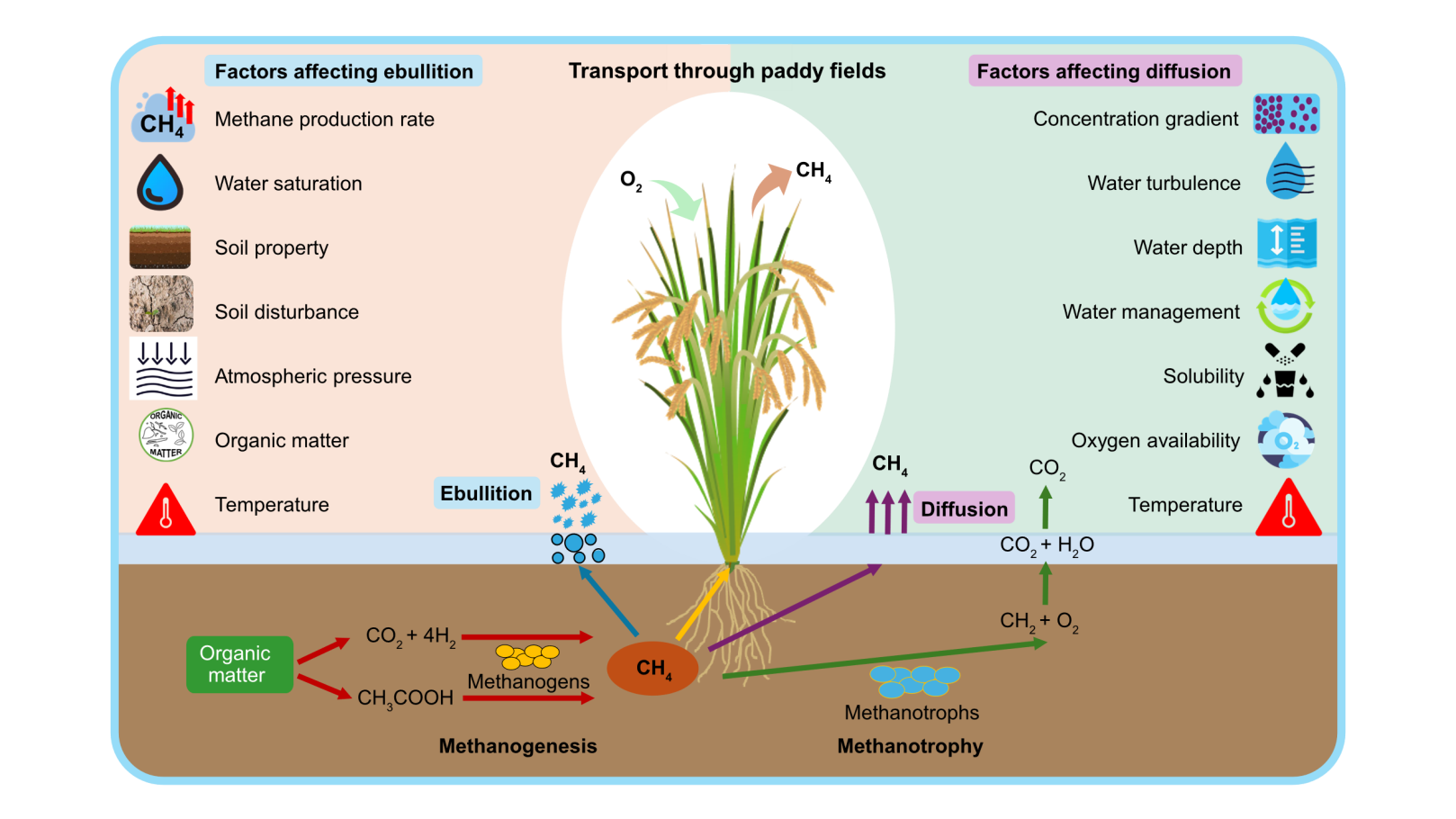
Fig. 3. Schematic representation of methane production and its transport pathways in paddy fields. Methane (CH4) is produced in the anaerobic soil layer by methanogenic archaea and is emitted to the atmosphere via three main pathways: diffusion through the water column (purple arrows), ebullition as CH4 bubbles rising through the water (blue bubble shapes), and plant-mediated transport through rice plants via their aerenchyma. Factors influencing each pathway are listed on both sides.
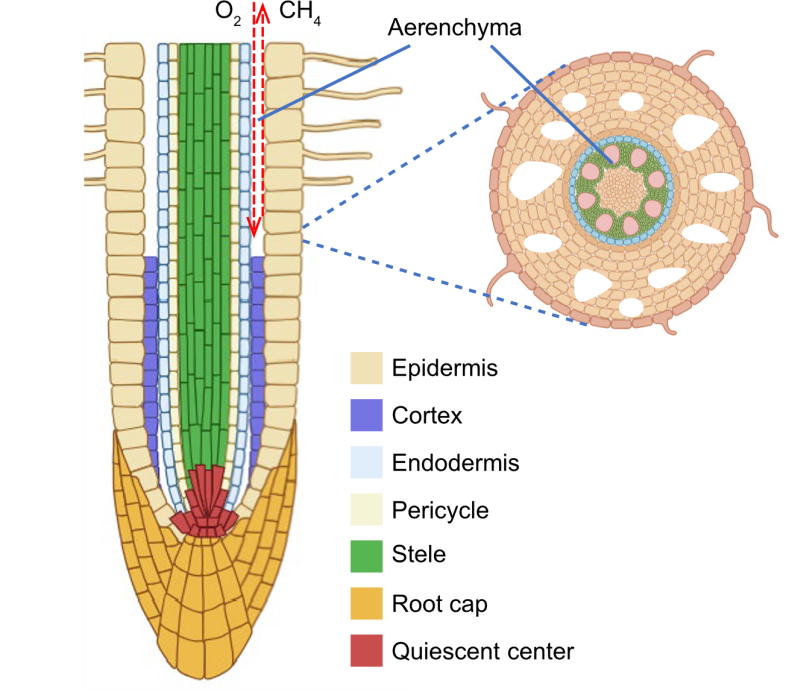
Fig. 4. Model representing aerenchyma formation and gas exchange in rice roots.
| Study location | Soil texture | Water condition | Organic carbon (g/kg) | CH4 emissions (kg/hm2) | Reference |
|---|---|---|---|---|---|
| Bangladesh | Clay loam | IF | 17.8 | 158.00 | Ali et al, |
| Bangladesh | Slit loam | CF | 39.6a | 124.00 | Ali et al, |
| China | Clay loam | CF | 41.3a | 153.50 | Liang et al, |
| China | Sandy loam | IF | 18.4 | 294.00 | Dong et al, |
| China | Sandy loam | IF | 18.4 | 207.87 | Yao et al, |
| China | Silty clay | CF | 18.3 | 440.90 | Ahmad et al, |
| India | Alluvial soil | CF | 8.6 | 18.61 | Adhya et al, |
| India | Loam | IF | 4.5 | 14.10 | Pathak et al, |
| India | Sandy clay loam | CF | 6.6 | 125.34 | Jagadeesh Babu et al, |
| India | Sandy clay loam | CF | 6.6 | 113.39 | Das and Adhya, |
| India | Sandy clay loam | CF | 9.0 | 246.22 | Datta and Adhya, |
| India | Sandy loam | IF | 5.9 | 35.10 | Bhatia et al, |
| India | Sandy loam | IF | 6.9 | 21.50 | Khosa et al, |
| India | Sandy loam | IF | 4.9 | 30.72 | Bhatia et al, |
| India | Sandy loam | CF | 5.6 | 32.33 | Suryavanshi et al, |
| India | Sandy loam | SC | 5.0 | 22.59 | Jain et al, |
| Indonesia | Sandy loam | CF | 23.7 | 1845.34 | Hadi et al, |
| Japan | Sandy loam | CF | 9.0 | 140.00 | Riya et al, |
| Japan | Sandy loam | IF | 36.8 | 146.00 | Ali et al, |
| Korea | Clay loam | IF | 39.6 | 163.00 | Ali et al, |
| Korea | Silt loam | CF | 23.4 | 390.00 | Lee et al, |
| Korea | Silt loam | CF | 20.4a | 205.00 | Haque et al, |
| Myanmar | Alluvial soil | CF | 5.1 | 280.00 | Oo et al, |
| Myanmar | Clay loam | CF | 5.1 | 285.00 | Oo et al, |
| Vietnam | Slit loam | CF | 12.6 | 108.00 | Pandey et al, |
Table 1. Methane emissions from fields in various countries and locations with different soil textures.
| Study location | Soil texture | Water condition | Organic carbon (g/kg) | CH4 emissions (kg/hm2) | Reference |
|---|---|---|---|---|---|
| Bangladesh | Clay loam | IF | 17.8 | 158.00 | Ali et al, |
| Bangladesh | Slit loam | CF | 39.6a | 124.00 | Ali et al, |
| China | Clay loam | CF | 41.3a | 153.50 | Liang et al, |
| China | Sandy loam | IF | 18.4 | 294.00 | Dong et al, |
| China | Sandy loam | IF | 18.4 | 207.87 | Yao et al, |
| China | Silty clay | CF | 18.3 | 440.90 | Ahmad et al, |
| India | Alluvial soil | CF | 8.6 | 18.61 | Adhya et al, |
| India | Loam | IF | 4.5 | 14.10 | Pathak et al, |
| India | Sandy clay loam | CF | 6.6 | 125.34 | Jagadeesh Babu et al, |
| India | Sandy clay loam | CF | 6.6 | 113.39 | Das and Adhya, |
| India | Sandy clay loam | CF | 9.0 | 246.22 | Datta and Adhya, |
| India | Sandy loam | IF | 5.9 | 35.10 | Bhatia et al, |
| India | Sandy loam | IF | 6.9 | 21.50 | Khosa et al, |
| India | Sandy loam | IF | 4.9 | 30.72 | Bhatia et al, |
| India | Sandy loam | CF | 5.6 | 32.33 | Suryavanshi et al, |
| India | Sandy loam | SC | 5.0 | 22.59 | Jain et al, |
| Indonesia | Sandy loam | CF | 23.7 | 1845.34 | Hadi et al, |
| Japan | Sandy loam | CF | 9.0 | 140.00 | Riya et al, |
| Japan | Sandy loam | IF | 36.8 | 146.00 | Ali et al, |
| Korea | Clay loam | IF | 39.6 | 163.00 | Ali et al, |
| Korea | Silt loam | CF | 23.4 | 390.00 | Lee et al, |
| Korea | Silt loam | CF | 20.4a | 205.00 | Haque et al, |
| Myanmar | Alluvial soil | CF | 5.1 | 280.00 | Oo et al, |
| Myanmar | Clay loam | CF | 5.1 | 285.00 | Oo et al, |
| Vietnam | Slit loam | CF | 12.6 | 108.00 | Pandey et al, |
| Characteristic | Gene | Chromosome |
|---|---|---|
| Root cone angle | SOR1 | 4 |
| Root cone angle | DRO1 | 9 |
| Root cone angle | DOCS1 | 2 |
| Overall architecture under nitrogen deficiency | RDWN6XB | 6 |
| Root curling | OsHOS1 | 3 |
| Lateral root development | SPR1 | 1 |
| Crown root development | OsCKX4 | 1 |
Table 2. Genes influencing rice root architecture.
| Characteristic | Gene | Chromosome |
|---|---|---|
| Root cone angle | SOR1 | 4 |
| Root cone angle | DRO1 | 9 |
| Root cone angle | DOCS1 | 2 |
| Overall architecture under nitrogen deficiency | RDWN6XB | 6 |
| Root curling | OsHOS1 | 3 |
| Lateral root development | SPR1 | 1 |
| Crown root development | OsCKX4 | 1 |
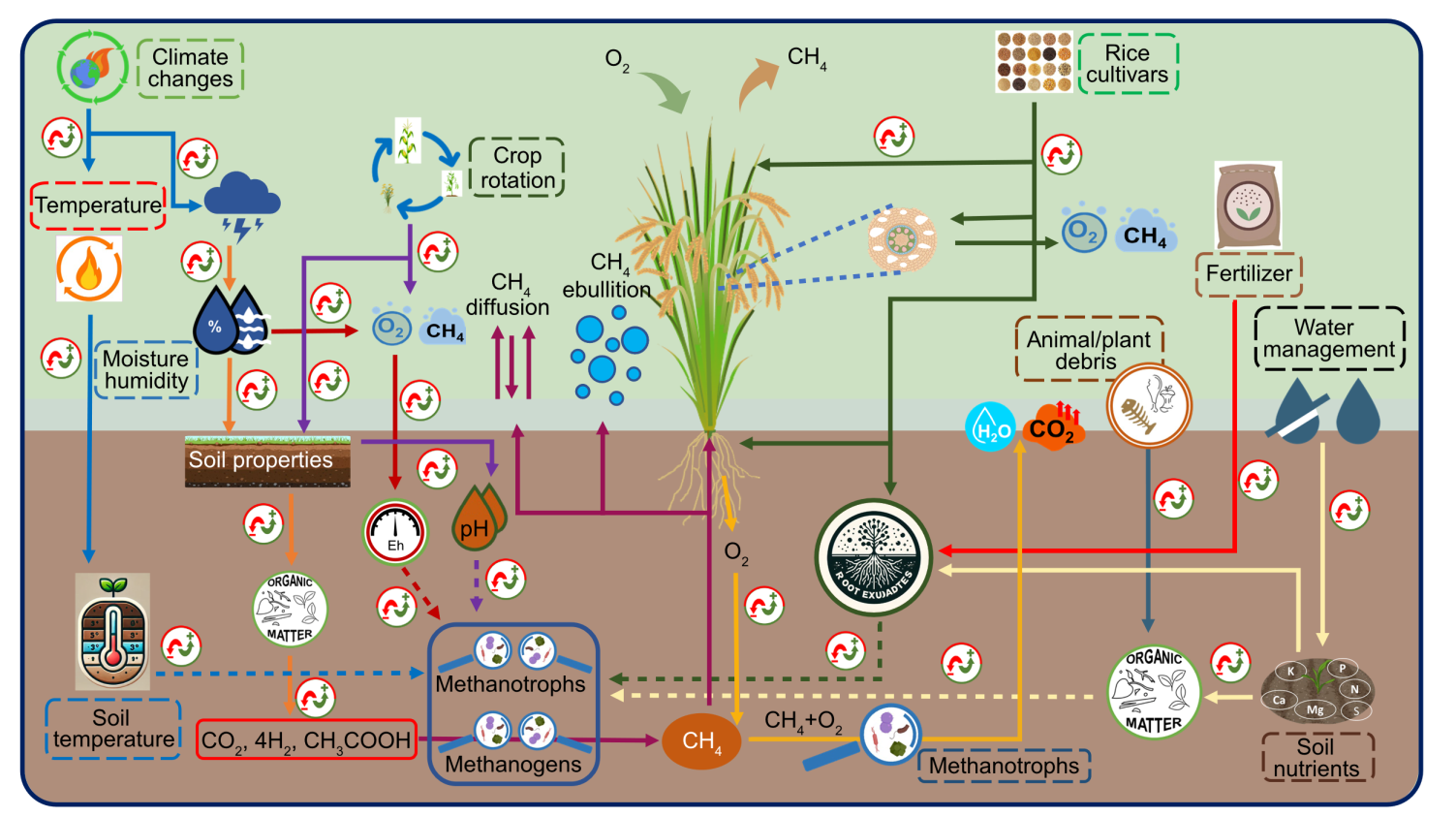
Fig. 5. Schematic diagram of factors affecting CH4 production, emission, and oxidation in paddy fields.
| [1] | Adhya T K, Bharati K, Mohanty S R, et al. 2000. Methane emission from rice fields at Cuttack, India. Nutr Cycl Agrecosys, 58(1/3): 95-105. |
| [2] | Ahmad S, Li C F, Dai G Z, et al. 2009. Greenhouse gas emission from direct seeding paddy field under different rice tillage systems in central China. Soil Tillage Res, 106(1): 54-61. |
| [3] | Alberto M C R, Wassmann R, Buresh R J, et al. 2014. Measuring methane flux from irrigated rice fields by eddy covariance method using open-path gas analyzer. Field Crops Res, 160: 12-21. |
| [4] | Ali M A, Hoque M A, Kim P J. 2013. Mitigating global warming potentials of methane and nitrous oxide gases from rice paddies under different irrigation regimes. Ambio, 42(3): 357-368. |
| [5] | Ali M A, Kim P J, Inubushi K. 2015. Mitigating yield-scaled greenhouse gas emissions through combined application of soil amendments: A comparative study between temperate and subtropical rice paddy soils. Sci Total Environ, 529: 140-148. |
| [6] | Arianti F D, Pertiwi M D, Triastono J, et al. 2022. Study of organic fertilizers and rice varieties on rice production and methane emissions in nutrient-poor irrigated rice fields. Sustainability, 14(10): 5919. |
| [7] | Armstrong W. 1978. Root aeration in the wetland condition. In: Hook DD, Crawford R MM. Plant Life in Anaerobic Environments. Michigan, the United States: Ann Arbor Science Publishers: 269-298. |
| [8] | Aulakh M S, Bodenbender J, Wassmann R, et al. 2000a. Methane transport capacity of rice plants. I. Influence of methane concentration and growth stage analyzed with an automated measuring system. Nutr Cycl Agroecosyst, 58(1): 357-366. |
| [9] | Aulakh M S, Wassmann R, Rennenberg H, et al. 2000b. Pattern and amount of aerenchyma relate to variable methane transport capacity of different rice cultivars. Plant Biol, 2(2): 182-194. |
| [10] | Aulakh M S, Wassmann R, Bueno C, et al. 2001. Impact of root exudates of different cultivars and plant development stages of rice (Oryza sativa L.) on methane production in a paddy soil. Plant Soil, 230(1): 77-86. |
| [11] | Aulakh M S, Wassmann R, Rennenberg H. 2002. Methane transport capacity of twenty-two rice cultivars from five major Asian rice-growing countries. Agric Ecosyst Environ, 91(1/3): 59-71. |
| [12] | Bender M, Conrad R. 1992. Kinetics of CH4 oxidation in oxic soils exposed to ambient air or high CH4 mixing ratios. FEMS Microbiol Lett, 10(4): 261-269. |
| [13] | Bhatia A, Pathak H, Jain N, et al. 2005. Global warming potential of manure amended soils under rice-wheat system in the Indo-Gangetic plains. Atmos Environ, 39: 6976-6984. |
| [14] | Bhatia A, Kumar A, Das T K, et al. 2013. Methane and nitrous oxide emissions from soils under direct seeded rice. Int J Agric Stat Sci, 9(2): 729-736. |
| [15] | Birch Eugenie L. 2014. A Review of ‘Climate Change 2014: Impacts, Adaptation, and Vulner ability’ and ‘Climate Change 2014: Mitigation of Climate Change’. J Am Plan Assoc, 80(2): 184-185. |
| [16] | Biswas T, Kole S C. 2017. Soil organic matter and microbial role in plant productivity and soil fertility. In: Adhya TK, Mishra BB, AnnapurnaK, et al. Advances in Soil Microbiology: Recent Trends and Future Prospects. Singapore: Springer Singapore: 219-238. |
| [17] | Bitew B, Molla E, Tadesse T, et al. 2024. Effects of organic and inorganic fertilizers on soil properties of lowland rice on vertisols of fogera district, northwestern Ethiopia. Am J Appl Chem, 12(3): 64-76. |
| [18] | Breidenbach B, Brenzinger K, Brandt F B, et al. 2017. The effect of crop rotation between wetland rice and upland maize on the microbial communities associated with roots. Plant Soil, 419(1): 435-445. |
| [19] | Chen J X, Xuan J X, Du C L, et al. 1997. Effect of potassium nutrition of rice on rhizosphere redox status. Plant Soil, 188(1): 131-137. |
| [20] | Chen Y, Zhang Y J, Li S Y, et al. 2021. OsRGA1 optimizes photosynthate allocation for roots to reduce methane emissions and improve yield in paddy ecosystems. Soil Biol Biochem, 160: 108344. |
| [21] | Chin K J, Conrad R. 1995. Intermediary metabolism in methanogenic paddy soil and the influence of temperature. FEMS Microbiol Ecol, 18(2): 85-102. |
| [22] | Colmer T D. 2003. Aerenchyma and an inducible barrier to radial oxygen loss facilitate root aeration in upland, paddy and deep-water rice (Oryza sativa L.). Ann Bot, 91(2): 301-309. |
| [23] | Conrad R. 2002. Control of microbial methane production in wetland rice fields. Nutr Cycl Agroecosyst, 64(1): 59-69. |
| [24] | Conrad R. 2007. Microbial ecology of methanogens and methanotrophs. Adv Agron, 96: 1-63. |
| [25] | Conrad R, Lupton F S, Zeikus J G. 1987. Hydrogen metabolism and sulfate-dependent inhibition of methanogenesis in a eutrophic lake sediment (Lake Mendota). FEMS Microbiol Ecol, 3(2): 107-115. |
| [26] | Corton T M, Bajita J B, Grospe F S, et al. 2000. Methane emission from irrigated and intensively managed rice fields in central Luzon (Philippines). Nutr Cycl Agroecosyst, 58(1): 37-53. |
| [27] | Czepiel P M, Crill P M, Harriss R C. 1995. Environmental factors influencing the variability of methane oxidation in temperate zone soils. J Geophys Res Atmos, 100(D5): 9359-9364. |
| [28] | Dakora F D, Phillips D A. 2002. Root exudates as mediators of mineral acquisition in low-nutrient environments. Plant Soil, 245: 35-47. |
| [29] | Das K, Baruah K K. 2008. Methane emission associated with anatomical and morphophysiological characteristics of rice (Oryza sativa) plant. Physiol Plant, 134(2): 303-312. |
| [30] | Das S, Adhya T K. 2014. Effect of combine application of organic manure and inorganic fertilizer on methane and nitrous oxide emissions from a tropical flooded soil planted to rice. Geoderma, 213: 185-192. |
| [31] | Datta A, Adhya T K. 2014. Effects of organic nitrification inhibitors on methane and nitrous oxide emission from tropical rice paddy. Atmos Environ, 92: 533-545. |
| [32] | Datta A, Santra S C, Adhya T K. 2013. Effect of inorganic fertilizers (N, P, K) on methane emission from tropical rice field of India. Atmos Environ, 66: 123-130. |
| [33] | Davamani V, Parameswari E, Arulmani S. 2020. Mitigation of methane gas emissions in flooded paddy soil through the utilization of methanotrophs. Sci Total Environ, 726: 138570. |
| [34] | den van der Gon H A, van Breemen N. 1993. Diffusion-controlled transport of methane from soil to atmosphere as mediated by rice plants. Biogeochemistry, 21(3): 177-190. |
| [35] | Dhaliwal S S, Sharma V, Verma V, et al. 2023. Impact of manures and fertilizers on yield and soil properties in a rice-wheat cropping system. PLoS One, 18(11): e0292602. |
| [36] | Dise N B. 1992. Winter fluxes of methane from Minnesota peatlands. Biogeochemistry, 17(2): 71-83. |
| [37] | Dong H B, Yao Z S, Zheng X H, et al. 2011. Effect of ammonium-based, non-sulfate fertilizers on CH4 emissions from a paddy field with a typical Chinese water management regime. Atmos Environ, 45(5): 1095-1101. |
| [38] | Eggleston H S, Buendia L, Miwa K, et al. 2006. 2006 IPCC guidelines for national greenhouse gas inventories. Hayama, Japan: Institute for Global Environmental Strategies (IGES) for the IPCC. |
| [39] | Ermler U, Grabarse W, Shima S, et al. 1997. Crystal structure of methyl-coenzyme M reductase: The key enzyme of biological methane formation. Science, 278: 1457-1462. |
| [40] | Evans D E. 2004. Aerenchyma formation. New Phytol, 161(1): 35-49. |
| [41] | Fazli P, Che Man H, Md Shah U K, et al. 2013. Characteristics of methanogens and methanotrophs in rice fields: a review. Asia-Pac J Mol Biol Biotech, 21(1): 3-17. |
| [42] | Feng Y Z, Xu Y P, Yu Y C, et al. 2012. Mechanisms of biochar decreasing methane emission from Chinese paddy soils. Soil Biol Biochem, 46: 80-88. |
| [43] | Fetzer S, Conrad R. 1993. Effect of redox potential on methanogenesis by Methanosarcina barkeri. Arch Microbiol, 160(2): 108-113. |
| [44] | Garcia J L, Patel B K C, Ollivier B. 2000. Taxonomic, phylogenetic, and ecological diversity of methanogenic Archaea. Anaerobe, 6(4): 205-226. |
| [45] | Green S M. 2013. Ebullition of methane from rice paddies: The importance of furthering understanding. Plant Soil, 370(1/2): 31-34. |
| [46] | Habib M A, Mofijul Islam S M, Haque M A, et al. 2023. Effects of irrigation regimes and rice varieties on methane emissions and yield of dry season rice in Bangladesh. Soil Syst, 7(2): 41. |
| [47] | Hadi A, Inubushi K, Yagi K. 2010. Effect of water management on greenhouse gas emissions and microbial properties of paddy soils in Japan and Indonesia. Paddy Water Environ, 8(4): 319-324. |
| [48] | Haque M M, Kim S Y, Pramanik P, et al. 2013. Optimum application level of winter cover crop biomass as green manure under considering methane emission and rice productivity in paddy soil. Biol Fertil Soils, 49(4): 487-493. |
| [49] | Hou H J, Peng S Z, Xu J Z, et al. 2012. Seasonal variations of CH4 and N2O emissions in response to water management of paddy fields located in Southeast China. Chemosphere, 89(7): 884-892. |
| [50] | Hu J, Bettembourg M, Moreno S, et al. 2023. Characterisation of a low methane emission rice cultivar suitable for cultivation in high latitude light and temperature conditions. Environ Sci Pollut Res Int, 30: 92950-92962. |
| [51] | Iboko M P, Dossou-Yovo E R, Obalum S E, et al. 2023. Paddy rice yield and greenhouse gas emissions: Any trade-off due to co-application of biochar and nitrogen fertilizer? A systematic review. Heliyon, 9(11): e22132. |
| [52] | IPCC. 2023. The earth’s energy budget, climate feedbacks and climate sensitivity. In: Climate Change 2021. The Physical Science Basis:Working Group I Contribution to the Sixth Assessment Report of the Intergovernmental Panel on Climate Change. Cambridge, UK: Cambridge University Press: 923-1054. |
| [53] | Islam M R, Singh B, Dijkstra F A. 2022. Stabilisation of soil organic matter: Interactions between clay and microbes. Biogeochemistry, 160(2): 145-158. |
| [54] | Islam S F, Sander B O, Quilty J R, et al. 2020. Mitigation of greenhouse gas emissions and reduced irrigation water use in rice production through water-saving irrigation scheduling, reduced tillage and fertiliser application strategies. Sci Total Environ, 739: 140215. |
| [55] | Islam S M M, Gaihre Y K, Islam M R, et al. 2020. Effects of water management on greenhouse gas emissions from farmers’ rice fields in Bangladesh. Sci Total Environ, 734: 139382. |
| [56] | Islam S M M, Gaihre Y K, Islam M N, et al. 2025. Reducing greenhouse gas emissions and improving rice yield: The influence of cultivars, soil salinity, and nitrogen management. Sci Total Environ, 997: 180192. |
| [57] | Jagadeesh Babu Y, Nayak D R, Adhya T K. 2006. Potassium application reduces methane emission from a flooded field planted to rice. Biol Fertil Soils, 42(6): 532-541. |
| [58] | Jain N, Dubey R, Dubey D S, et al. 2014. Mitigation of greenhouse gas emission with system of rice intensification in the Indo-Gangetic Plains. Paddy Water Environ, 12(3): 355-363. |
| [59] | Jayalath N, Mosley L M, Fitzpatrick R W, et al. 2016. Addition of organic matter influences pH changes in reduced and oxidised acid sulfate soils. Geoderma, 262: 125-132. |
| [60] | Jiang Y, van Groenigen K J, Huang S, et al. 2017. Higher yields and lower methane emissions with new rice cultivars. Glob Chang Biol, 23(11): 4728-4738. |
| [61] | Kang G D, Cai Z C, Feng X Z. 2002. Importance of water regime during the non-rice growing period in winter in regional variation of CH4 emissions from rice fields during following rice growing period in China. Nutr Cycl Agroecosyst, 64(1): 95-100. |
| [62] | Katz B J. 2011. Microbial processes and natural gas accumulations. Open Geol J, 5(1): 75-83. |
| [63] | Khosa M K, Sidhu B S, Benbi D K. 2010. Effect of organic materials and rice cultivars on methane emission from rice field. J Environ Biol, 31(3): 281-285. |
| [64] | Kietäväinen R, Purkamo L. 2015. The origin, source, and cycling of methane in deep crystalline rock biosphere. Front Microbiol, 6: 725. |
| [65] | Kim W J, Bui L T, Chun J B, et al. 2018. Correlation between methane (CH4) emissions and root aerenchyma of rice varieties. Plant Breed Biotech, 6(4): 381-390. |
| [66] | Kimura M, Murase J, Lu Y H. 2004. Carbon cycling in rice field ecosystems in the context of input, decomposition and translocation of organic materials and the fates of their end products (CO2 and CH4). Soil Biol Biochem, 36(9): 1399-1416. |
| [67] | Klüber H D, Conrad R. 1998. Effects of nitrate, nitrite, NO and N2O on methanogenesis and other redox processes in anoxic rice field soil. FEMS Microbiol Ecol, 25(3): 301-318. |
| [68] | Kludze H K, DeLaune R D, Patrick Jr W H. 1993. Aerenchyma formation and methane and oxygen exchange in rice. Soil Sci Soc Am J, 57(2): 386-391. |
| [69] | Kotsyurbenko O R, Friedrich M W, Simankova M V, et al. 2007. Shift from acetoclastic to H2-dependent methanogenesis in a West Siberian peat bog at low pH values and isolation of an acidophilic Methanobacterium strain. Appl Environ Microbiol, 73(7): 2344-2348. |
| [70] | Kotsyurbenko O R, Glagolev M V, Merkel A Y, et al. 2019. Methanogenesis in soils, wetlands, and peat. In: StamsA, SousaD. Biogenesis ofHydrocarbons. Cham, Switzerland: Springer International Publishing: 1-18. |
| [71] | Lagomarsino A, Agnelli A E, Linquist B, et al. 2016. Alternate wetting and drying of rice reduced CH4 emissions but triggered N2O peaks in a clayey soil of central Italy. Pedosphere, 26(4): 533-548. |
| [72] | LaHue G T, Chaney R L, Adviento-Borbe M A, et al. 2016. Alternate wetting and drying in high yielding direct-seeded rice systems accomplishes multiple environmental and agronomic objectives. Agric Ecosyst Environ, 229: 30-39. |
| [73] | Le Mer J, Escoffier S, Chessel C, et al. 1996. Microbiological aspects of methane emission in a ricefield soil from the Camargue (France): 2. Methanotrophy and related microflora. Eur J Soil Biol, 32(2): 71-80. |
| [74] | Lee C H, Park K D, Jung K Y, et al. 2010. Effect of Chinese milk vetch (Astragalus sinicus L.) as a green manure on rice productivity and methane emission in paddy soil. Agric Ecosyst Environ, 138(3/4): 343-347. |
| [75] | Li F, Li H J, Su H H, et al. 2023. Effects of salinity on methane emissions and methanogenic archaeal communities in different habitat of saline-alkali wetlands. Environ Sci Pollut Res Int, 30(48): 106378-106389. |
| [76] | Li Y H. 2001. Research and practice of water-saving irrigation for rice in China. International Water Management Institute: 1-9. |
| [77] | Liang K M, Zhong X H, Huang N R, et al. 2016. Grain yield, water productivity and CH4 emission of irrigated rice in response to water management in South China. Agric Water Manag, 163: 319-331. |
| [78] | Liechty Z, Santos-Medellín C, Edwards J, et al. 2020. Comparative analysis of root microbiomes of rice cultivars with high and low methane emissions reveals differences in abundance of methanogenic archaea and putative upstream fermenters. mSystems, 5(1): e00897-19. |
| [79] | Liesack W, Schnell S, Revsbech N P. 2000. Microbiology of flooded rice paddies. FEMS Microbiol Rev, 24(5): 625-645. |
| [80] | Linquist B A, Adviento-Borbe M A, Pittelkow C M, et al. 2012. Fertilizer management practices and greenhouse gas emissions from rice systems: A quantitative review and analysis. Field Crops Res, 135: 10-21. |
| [81] | Liu P F, Klose M, Conrad R. 2018. Temperature effects on structure and function of the methanogenic microbial communities in two paddy soils and one desert soil. Soil Biol Biochem, 124: 236-244. |
| [82] | Lo P K, Lim W Z, Ng C A, et al. 2016. Methane emission and quantification from flooded and non-flooded paddy field at Kedah Malaysia. Int J Environ Sci Dev, 7(6): 453-457. |
| [83] | Lu Y, Wassmann R, Neue H U, et al. 1999. Impact of phosphorus supply on root exudation, aerenchyma formation and methane emission of rice plants. Biogeochemistry, 47(2): 203-218. |
| [84] | Lu Y, Fu L, Lu Y H, et al. 2015. Effect of temperature on the structure and activity of a methanogenic archaeal community during rice straw decomposition. Soil Biol Biochem, 81: 17-27. |
| [85] | Ma K, Lu Y H. 2011. Regulation of microbial methane production and oxidation by intermittent drainage in rice field soil. FEMS Microbiol Ecol, 75(3): 446-456. |
| [86] | Ma N, Liu X J, Wang L, et al. 2024. A meta-analysis on the mitigation measures of methane emissions in Chinese rice paddy. Resour Conserv Recycl, 202: 107379. |
| [87] | Malyan S K, Bhatia A, Kumar A, et al. 2016. Methane production, oxidation and mitigation: A mechanistic understanding and comprehensive evaluation of influencing factors. Sci Total Environ, 572: 874-896. |
| [88] | Marschner P. 2021. Processes in submerged soils-linking redox potential, soil organic matter turnover and plants to nutrient cycling. Plant Soil, 464(1/2): 1-12. |
| [89] | McDonald I R, Hall G H, Pickup R W, et al. 1996. Methane oxidation potential and preliminary analysis of methanotrophs in blanket bog peat using molecular ecology techniques. FEMS Microbiol Ecol, 21(3): 197-211. |
| [90] | Mohammed U, Caine R S, Atkinson J A, et al. 2019. Rice plants overexpressing OsEPF1 show reduced stomatal density and increased root cortical aerenchyma formation. Sci Rep, 9(1): 5584. |
| [91] | Mohanty S, Nayak A K, Swain C K, et al. 2020. Impact of integrated nutrient management options on GHG emission, N loss and N use efficiency of low land rice. Soil Tillage Res, 200: 104616. |
| [92] | Nakagawa F, Yoshida N, Sugimoto A, et al. 2002. Stable isotope and radiocarbon compositions of methane emitted from tropical rice paddies and swamps in southern Thailand. Biogeochemistry, 61(1): 1-19. |
| [93] | Nazaries L, Murrell J C, Millard P, et al. 2013. Methane, microbes and models: Fundamental understanding of the soil methane cycle for future predictions. Environ Microbiol, 15(9): 2395-2417. |
| [94] | Neue H U. 1993. Methane emission from rice fields. BioScience, 43(7): 466-474. |
| [95] | Nguyen L T T, Osanai Y, Anderson I C, et al. 2018. Impacts of waterlogging on soil nitrification and ammonia-oxidizing communities in farming system. Plant Soil, 426(1/2): 299-311. |
| [96] | Nouchi I, Mariko S, Aoki K. 1990. Mechanism of methane transport from the rhizosphere to the atmosphere through rice plants. Plant Physiol, 94(1): 59-66. |
| [97] | Oo A Z, Win K T, Bellingrath-Kimura S D. 2015. Within field spatial variation in methane emissions from lowland rice in Myanmar. Springerplus, 4: 145. |
| [98] | Op den Camp H J M, Islam T, Stott M B, et al. 2009. Environmental, genomic and taxonomic perspectives on methanotrophic Verrucomicrobia. Environ Microbiol Rep, 1(5): 293-306. |
| [99] | Pachauri K, Meyer A, et al. 2014. Climate change 2014: Synthesis report. Environ Policy Collect, 27(2): 408. |
| [100] | Pan J W, Sharif R, Xu X W, et al. 2021. Mechanisms of waterlogging tolerance in plants: Research progress and prospects. Front Plant Sci, 11: 627331. |
| [101] | Pandey A, Mai V T, Vu D Q, et al. 2014. Organic matter and water management strategies to reduce methane and nitrous oxide emissions from rice paddies in Vietnam. Agric Ecosyst Environ, 196: 137-146. |
| [102] | Pandey R, Vengavasi K, Hawkesford M J. 2021. Plant adaptation to nutrient stress. Plant Physiol Rep, 26(4): 583-586. |
| [103] | Pathak H, Prasad S, Bhatia A, et al. 2003. Methane emission from rice-wheat cropping system in the Indo-Gangetic plain in relation to irrigation, farmyard manure and dicyandiamide application. Agric Ecosyst Environ, 97: 309-316. |
| [104] | Pratiwi E P A, Shinogi Y. 2016. Rice husk biochar application to paddy soil and its effects on soil physical properties, plant growth, and methane emission. Paddy Water Environ, 14(4): 521-532. |
| [105] | Pump J, Pratscher J, Conrad R. 2015. Colonization of rice roots with methanogenic Archaea controls photosynthesis-derived methane emission. Environ Microbiol, 17(7): 2254-2260. |
| [106] | Rajendran S, Park H, Kim J, et al. 2024. Methane emission from rice fields: Necessity for molecular approach for mitigation. Rice Sci, 31(2): 159-178. |
| [107] | Rath A K, Ramakrishnan B, Sethunathan N. 2002. Effect of application of ammonium thiosulphate on production and emission of methane in a tropical rice soil. Agric Ecosyst Environ, 90(3): 319-325. |
| [108] | Riya S, Katayama M, Takahashi E, et al. 2014. Mitigation of greenhouse gas emissions by water management in a forage rice paddy field supplemented with dry-thermophilic anaerobic digestion residue. Water Air Soil Pollut, 225(9): 2118. |
| [109] | Sander B O, Schneider P, Romasanta R, et al. 2020. Potential of alternate wetting and drying irrigation practices for the mitigation of GHG emissions from rice fields: Two cases in central Luzon (Philippines). Agriculture, 10(8): 350. |
| [110] | Sass R L, Fisher F M, Harcombe P A, et al. 1990. Methane production and emission in a Texas rice field. Glob Biogeochem Cycles, 4(1): 47-68. |
| [111] | Sass R L, Fisher F M, Lewis S T, et al. 1994. Methane emissions from rice fields: Effect of soil properties. Glob Biogeochem Cycles, 8(2): 135-140. |
| [112] | Senthilraja K, Venkatesan S, Udhaya Nandhini D, et al. 2023. Mitigating methane emission from the rice ecosystem through organic amendments. Agriculture, 13(5): 1037. |
| [113] | Shen W Y, Ji Y, Huang Q, et al. 2023. Differences in methanogenic pathways and communities in paddy soils under three typical cropping modes. JGR Biogeosciences, 128(11): e2023JG007443. |
| [114] | Shin Y K, Yun S H. 2000. Varietal differences in methane emission from Korean rice cultivars. Nutr Cycl Agroecosyst, 58(1): 315-319. |
| [115] | Singh N K, Patel D B, Khalekar G D. 2018. Methanogenesis and methane emission in rice/paddy fields. In: Lichtfouse E. Sustainable Agriculture Reviews 33. Cham, Switzerland: Springer International Publishing: 135-170. |
| [116] | Singla A, Inubushi K. 2014. Effect of biochar on CH4 and N2O emission from soils vegetated with paddy. Paddy Water Environ, 12(1): 239-243. |
| [117] | Siopongco J D L C, Wassmann R, Sander B O. 2013. Alternate wetting and drying in Philippine rice production:feasibility study for a Clean Development Mechanism. In: IRRI TechnicalBulletin. Philippines: International Rice Research Institute (IRRI). |
| [118] | Sitaula B K, Bakken L R, Abrahamsen G. 1995. CH4 uptake by temperate forest soil: Effect of N input and soil acidification. Soil Biol Biochem, 27(7): 871-880. |
| [119] | Smith P, Reay D, Smith J. 2021. Agricultural methane emissions and the potential formitigation. Phil Trans R Soc A, 379(2210): 20200451. |
| [120] | Suryavanshi P, Singh Y V, Prasanna R, et al. 2013. Pattern of methane emission and water productivity under different methods of rice crop establishment. Paddy Water Environ, 11: 321-329. |
| [121] | Thauer R K. 1998. Biochemistry of methanogenesis: A tribute to Marjory Stephenson. 1998 Marjory Stephenson Prize Lecture. Microbiology, 144(Pt 9):2377-2406. |
| [122] | Tokida T, Miyazaki T, Mizoguchi M. 2005. Ebullition of methane from peat with falling atmospheric pressure. Geophys Res Lett, 32: L13823. |
| [123] | Tokida T, Fumoto T, Cheng W, et al. 2010. Effects of free-air CO2 enrichment (FACE) and soil warming on CH4 emission from a rice paddy field: Impact assessment and stoichiometric evaluation. Biogeosciences, 7(9): 2639-2653. |
| [124] | Tokida T, Cheng W G, Adachi M, et al. 2013. The contribution of entrapped gas bubbles to the soil methane pool and their role in methane emission from rice paddy soil in free-air [CO2] enrichment and soil warming experiments. Plant Soil, 364: 131-143. |
| [125] | Tokida T, Nakajima Y, Hayashi K, et al. 2014. Fully automated, high-throughput instrumentation for measuring the δ13C value of methane and application of the instrumentation to rice paddy samples. Rapid Commun Mass Spectrom, 28(21): 2315-2324. |
| [126] | Trotsenko Y A, Murrell J C. 2008. Metabolic aspects of aerobic obligate methanotrophy. Adv Appl Microbiol, 63: 183-229. |
| [127] | van Bodegom P, Stams F, Mollema L, et al. 2001. Methane oxidation and the competition for oxygen in the rice rhizosphere. Appl Environ Microbiol, 67(8): 3586-3597. |
| [128] | Venterea R T, Halvorson A D, Kitchen N, et al. 2012. Challenges and opportunities for mitigating nitrous oxide emissions from fertilized cropping systems. Frontiers Ecol Environ, 10(10): 562-570. |
| [129] | Vijayalakshmi D, Raveendran M. 2023. Introgression of Sub1 QTL alters aerenchyma-mediated gas exchange and stored carbohydrates to maintain yield under flooding stress in rice. J Crop Sci Biotechnol, 26(1): 39-49. |
| [130] | Wang B, Adachi K. 2000. Differences among rice cultivars in root exudation, methane oxidation, and populations of methanogenic and methanotrophic bacteria in relation to methane emission. Nutr Cycl Agroecosyst, 58(1): 349-356. |
| [131] | Wang C, Lai D Y F, Sardans J, et al. 2017. Factors related with CH4 and N2O emissions from a paddy field: Clues for management implications. PLoS One, 12(1): e0169254. |
| [132] | Wormald R M, Rout S P, Mayes W, et al. 2020. Hydrogenotrophic methanogenesis under alkaline conditions. Front Microbiol, 11: 614227. |
| [133] | Wu L Q, Ma K, Li Q, et al. 2009. Composition of archaeal community in a paddy field as affected by rice cultivar and N fertilizer. Microb Ecol, 58(4): 819-826. |
| [134] | Yagi K, Minami K. 1990. Effect of organic matter application on methane emission from some Japanese paddy fields. Soil Sci Plant Nutr, 36(4): 599-610. |
| [135] | Yagi K, Minami K, Ogawa Y. 1998. Effects of water percolation on methane emission from rice paddies: A lysimeter experiment. Plant Soil, 198(2): 193-200. |
| [136] | Yao Z S, Zheng X H, Dong H B, et al. 2012. A 3-year record of N2O and CH4 emissions from a sandy loam paddy during rice seasons as affected by different nitrogen application rates. Agric Ecosyst Environ, 152: 1-9. |
| [137] | Yao Z S, Zheng X H, Zhang Y N, et al. 2017. Urea deep placement reduces yield-scaled greenhouse gas (CH4 and N2O) and NO emissions from a ground cover rice production system. Sci Rep, 7(1): 11415. |
| [138] | Zaman M, Heng L E, Müller C. 2021. Measuring Emission of Agricultural Greenhouse Gases and Developing Mitigation Options using Nuclear and Related Techniques:Applications of Nuclear Techniques for GHGs. Cham, Switzerland: Springer International Publishing. |
| [139] | Zhang A F, Cui L Q, Pan G X, et al. 2010. Effect of biochar amendment on yield and methane and nitrous oxide emissions from a rice paddy from Tai Lake plain, China. Agr Ecosyst Environ, 139(4): 469-475. |
| [140] | Zhang A F, Cheng G, Hussain Q, et al. 2017. Contrasting effects of straw and straw-derived biochar application on net global warming potential in the Loess Plateau of China. Field Crops Res, 205: 45-54. |
| [141] | Zhang G B, Liu G, Zhang Y, et al. 2013. Methanogenic pathway and fraction of CH4 oxidized in paddy fields: Seasonal variation and effect of water management in winter fallow season. PLoS One, 8(9): e73982. |
| [142] | Zhang J Y, Liu Y X, Zhang N, et al. 2019. NRT1.1B is associated with root microbiota composition and nitrogen use in field-grown rice. Nat Biotechnol, 37(6): 676-684. |
| [143] | Zhang L, Li L L, Tang Q Y, et al. 2024. Intermittent irrigation as a solution for reduced emissions and increased yields in ratoon rice systems. Plant Soil, 501(1): 225-236. |
| [144] | Zhang L Q, Zhu J G, Zhang Y M, et al. 2024. Maize, peanut, and millet rotations improve crop yields by altering the microbial community and chemistry of sandy saline-alkaline soils. Plants, 13(15): 2170. |
| [145] | Zhao C X, Qiu R J, Zhang T, et al. 2024. Effects of alternate wetting and drying irrigation on methane and nitrous oxide emissions from rice fields: A meta-analysis. Glob Chang Biol, 30(12): e17581. |
| [146] | Zhu X C, Chen N N, Li W W, et al. 2025. Quantifying the global methane mitigation potential of deep nitrogen placement in rice paddies. Resour Conserv Recycl, 219: 108315. |
| [147] | Zhu X L, Ji Y, Huang Q, et al. 2024. Temporal variation of methanogenic pathways in rice fields under three different cropping systems. Biol Fertil Soils, 60(6): 743-756. |
| No related articles found! |
| 阅读次数 | ||||||
|
全文 |
|
|||||
|
摘要 |
|
|||||
