
Rice Science ›› 2026, Vol. 33 ›› Issue (5): 701-714.DOI: 10.1016/j.rsci.2026.05.011
• Research Papers • Previous Articles Next Articles
Zhao Yunxia,#, Gao Yanfeng,#, Gao Cheng,#, Li Yang, Hu Mingyu, Li Ming, Zhang Jinmei, Xin Xia( ), Yin Guangkun()
Received:2026-02-11
Accepted:2026-05-16
Online:2026-09-28
Published:2026-09-30
Contact:
Yin Guangkun (yinguangkun@caas.cn); Xin Xia (xinxia@caas.cn)
About author:#These authors contributed equally to this work
Zhao Yunxia, Gao Yanfeng, Gao Cheng, Li Yang, Hu Mingyu, Li Ming, Zhang Jinmei, Xin Xia, Yin Guangkun. Peroxidase Activity as Reliable Indicator for Evaluating Storability of Japonica Rice Seeds[J]. Rice Science, 2026, 33(5): 701-714.
Add to citation manager EndNote|Ris|BibTeX
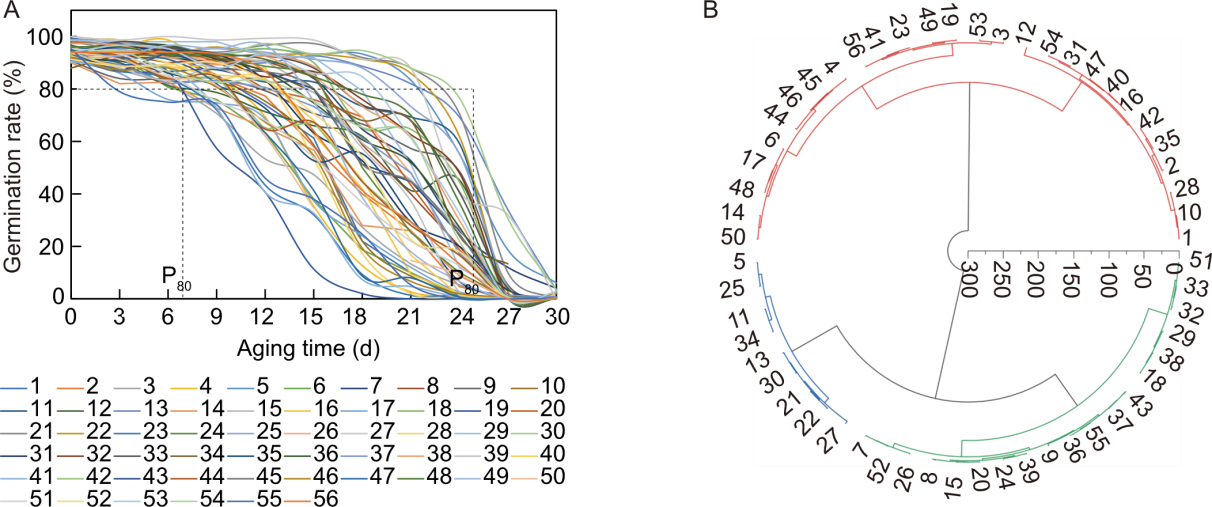
Fig. 1. Seed viability loss curves and storability classification of 56 japonica rice seeds. A, Seed viability loss curves of 56 japonica rice seeds. Changes in seed germination rate of 56 japonica rice seeds subjected to accelerated aging at 40 ºC and 75% relative humidity for 30 d. B, Storability classification of 56 japonica rice seeds. The 56 japonica rice seeds were classified into three categories: blue represents storage-tolerant seeds, green represents intermediate seeds, and red represents storage-sensitive seeds. The numbers outside the circle are the rice germplasm accession numbers (e.g., 1, 2, 3), and the radial scale inside the circle (0, 50, 100, 150, 200, 250, and 300) denotes the magnitude of the corresponding trait value.
| Grain trait | Maximum | Minimum | Mean | Range | Standard deviation |
|---|---|---|---|---|---|
| 1000-grain weight (g) | 31.64 | 20.35 | 24.80 | 11.29 | 2.63 |
| Length (mm) | 9.16 | 6.71 | 7.69 | 2.45 | 0.52 |
| Width (mm) | 4.00 | 2.89 | 3.47 | 1.11 | 0.18 |
| Length-to-width ratio | 2.82 | 1.86 | 2.23 | 0.96 | 0.20 |
| Area (mm2) | 21.90 | 15.36 | 17.92 | 6.54 | 1.49 |
| Perimeter (mm) | 24.36 | 17.62 | 20.05 | 6.74 | 1.32 |
| Roundness | 0.66 | 0.45 | 0.58 | 0.21 | 0.05 |
Table 1. Variation in phenotypic traits of 56 japonica rice seeds.
| Grain trait | Maximum | Minimum | Mean | Range | Standard deviation |
|---|---|---|---|---|---|
| 1000-grain weight (g) | 31.64 | 20.35 | 24.80 | 11.29 | 2.63 |
| Length (mm) | 9.16 | 6.71 | 7.69 | 2.45 | 0.52 |
| Width (mm) | 4.00 | 2.89 | 3.47 | 1.11 | 0.18 |
| Length-to-width ratio | 2.82 | 1.86 | 2.23 | 0.96 | 0.20 |
| Area (mm2) | 21.90 | 15.36 | 17.92 | 6.54 | 1.49 |
| Perimeter (mm) | 24.36 | 17.62 | 20.05 | 6.74 | 1.32 |
| Roundness | 0.66 | 0.45 | 0.58 | 0.21 | 0.05 |
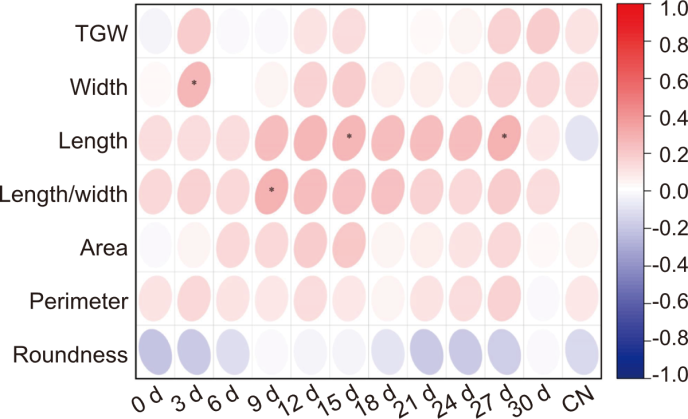
Fig. 2. Correlation between grain phenotypic traits and germination rate after japonica rice seeds accelerated aging for 30 d. TGW, 1000-grain weight; CN, Critical node. 0‒30 d refer to aging times. Correlation analysis method is ellipse. Data are mean ± SD (n = 3) according to Student’s t-test (*, P ˂ 0.05).
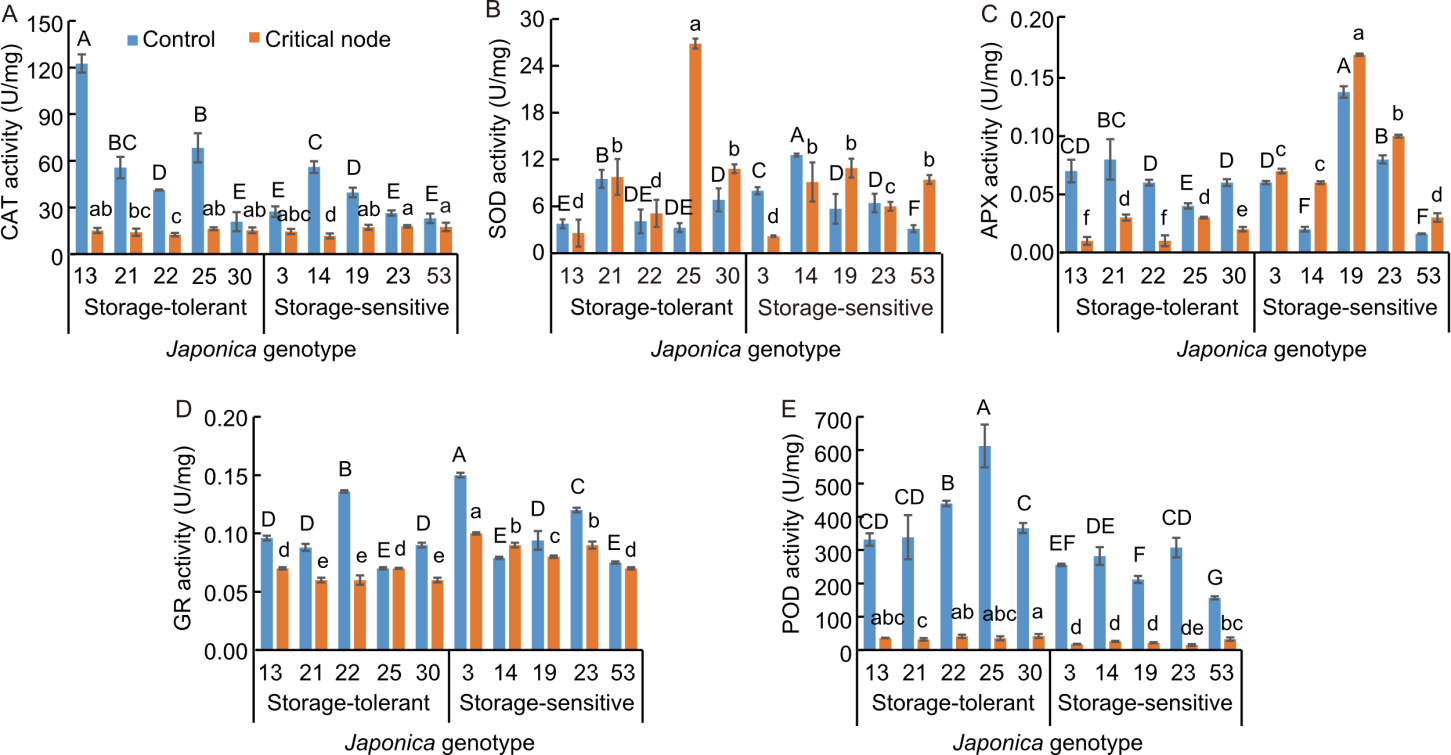
Fig. 3. Comparison of activities of catalase (CAT, A), superoxide dismutase (SOD, B), ascorbate peroxidase (APX, C), glutathione reductase (GR, D), and peroxidase (POD, E) in non-imbibed seeds of five storage-tolerant and five storage-sensitive japonica rice both non-aged (control) and aged to critical node of viability. Data are mean ± SD (n = 3). All analyses were conducted separately for the control and critical node treatments. Bars marked with different uppercase letters differ significantly among accessions under the control treatment; bars marked with different lowercase letters differ significantly among accessions under the critical-node treatment. Bars sharing the same letter (same case) show no significant difference (P < 0.05, Duncan’s multiple-range test).
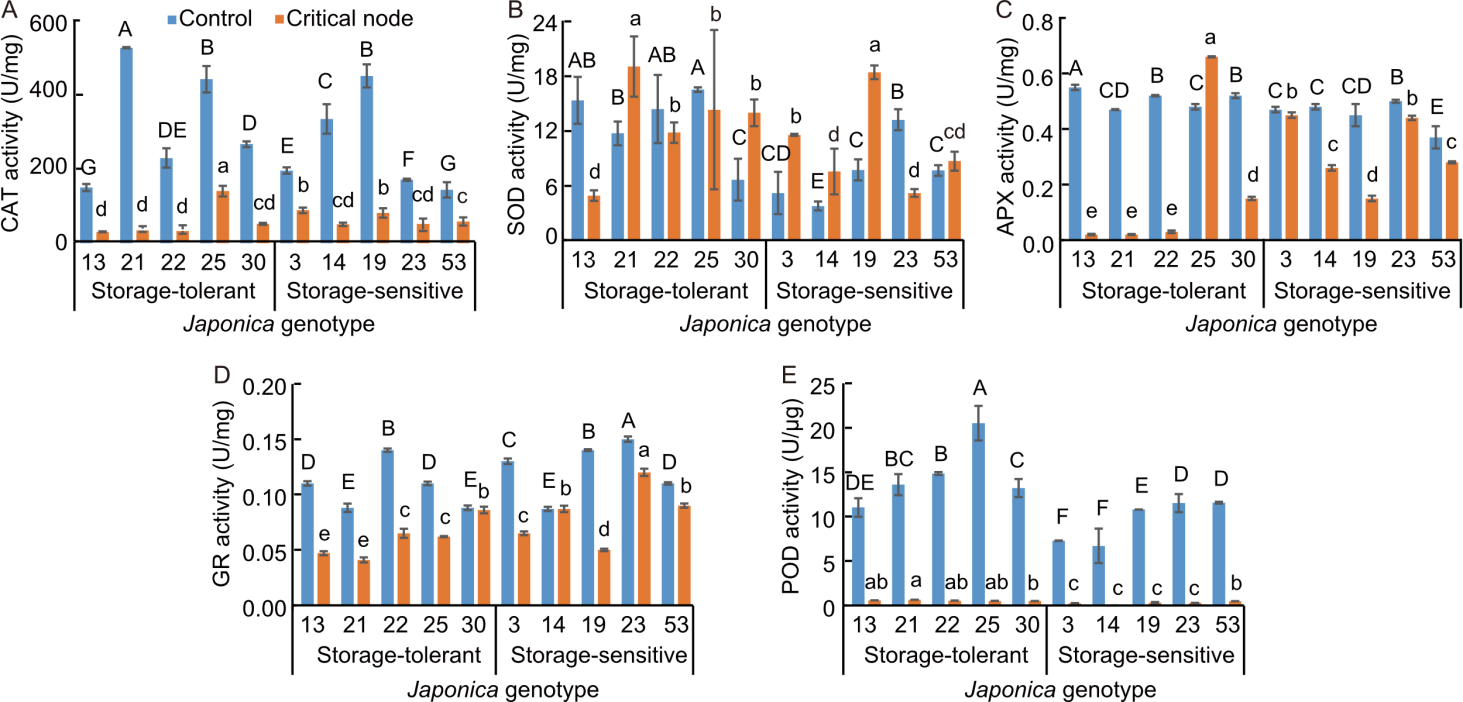
Fig. 4. Comparison of activities of catalase (CAT, A), superoxide dismutase (SOD, B), ascorbate peroxidase (APX, C), glutathione reductase (GR, D), and peroxidase (POD, E) in 48-h-imbibed seeds of five storage-tolerant and five storage-sensitive japonica rice both non-aged (control) and aged to critical node of viability. Data are mean ± SD (n = 3). All analyses were conducted separately for the control and critical node treatments. Bars marked with different uppercase letters differ significantly among accessions under the control treatment; bars marked with different lowercase letters differ significantly among accessions under the critical-node treatment. Bars sharing the same letter (same case) show no significant difference (P < 0.05, Duncan’s multiple-range test).
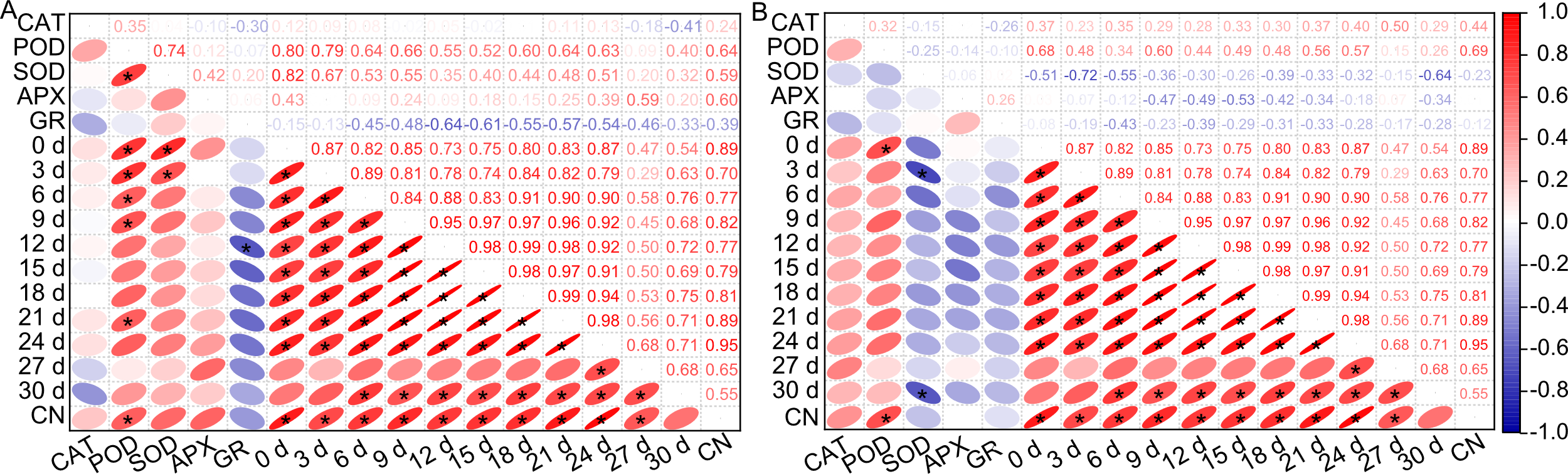
Fig. 5. Correlation analysis between antioxidant enzyme activities [catalase (CAT), superoxide dismutase (SOD), ascorbate peroxidase (APX), glutathione reductase (GR), peroxidase (POD)] and germination rate in japonica rice seeds after accelerated aging for 30 d. A, Seeds imbibed for 48 h. B, Non-imbibed seeds. CN, Critical node. 0‒30 d refer to aging times. Correlation analysis method is ellipse. Data are mean ± SD (n = 3) according to Student’s t-test (*, P ˂ 0.05).
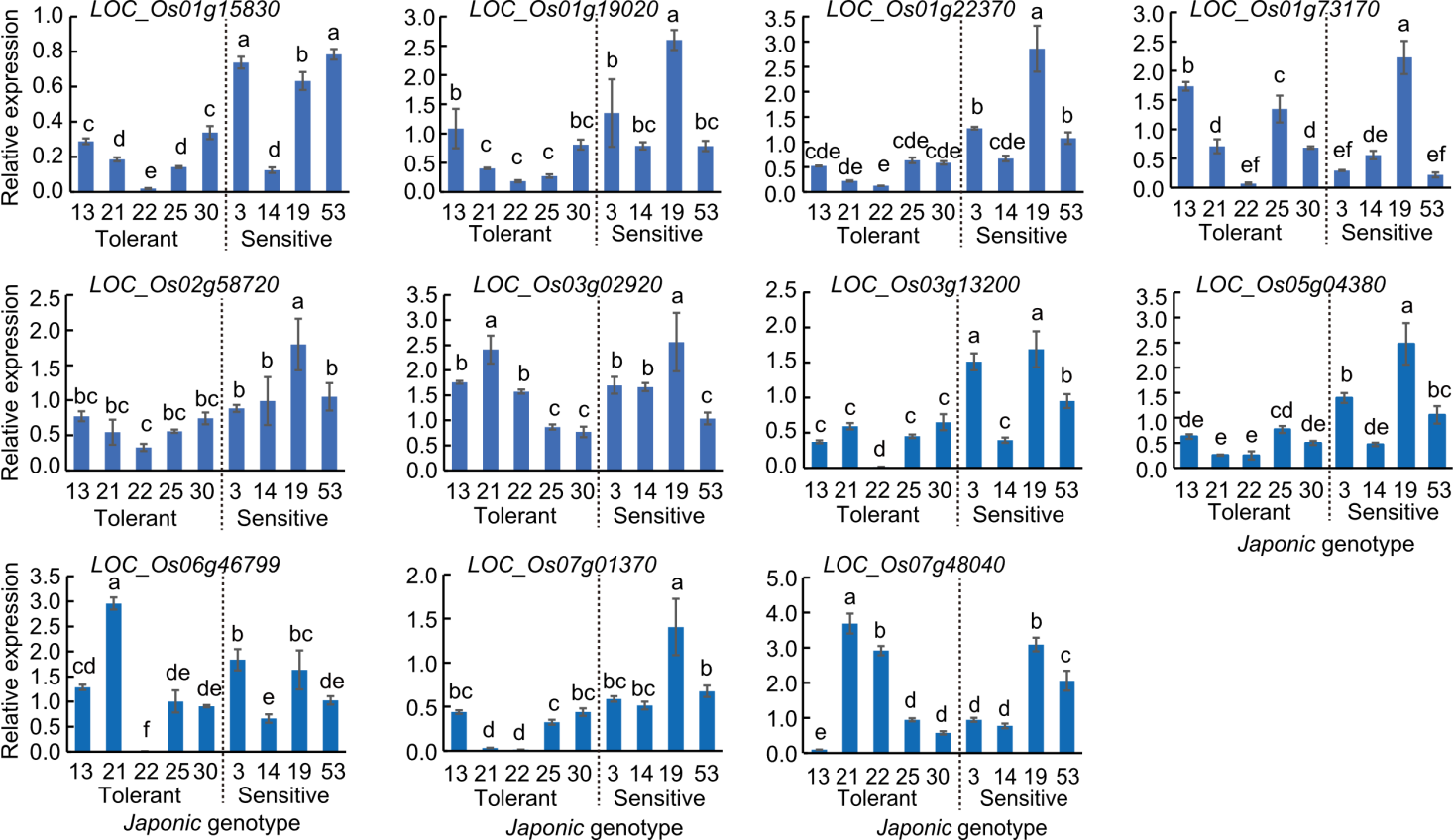
Fig. 6. Relative expression levels of 11 POD genes in 5 storage-tolerant and 4 storage-sensitive japonica rice seeds at the critical node of viability compared with non-aged seeds after imbibition for 48 h. Relative expression = -2-[ΔCN(gene ‒ ubq5) ‒ ΔCK(gene ‒ ubq5)]. Samples were collected from seed embryos in non-aged seeds and seeds aged to the critical node of viability. qRT-PCR was performed with Ubq5 as the internal reference gene. Data are mean ± SD (n = 3). Lowercase letters above bars indicate significant differences according to Duncan’s multiple range test at P < 0.05.
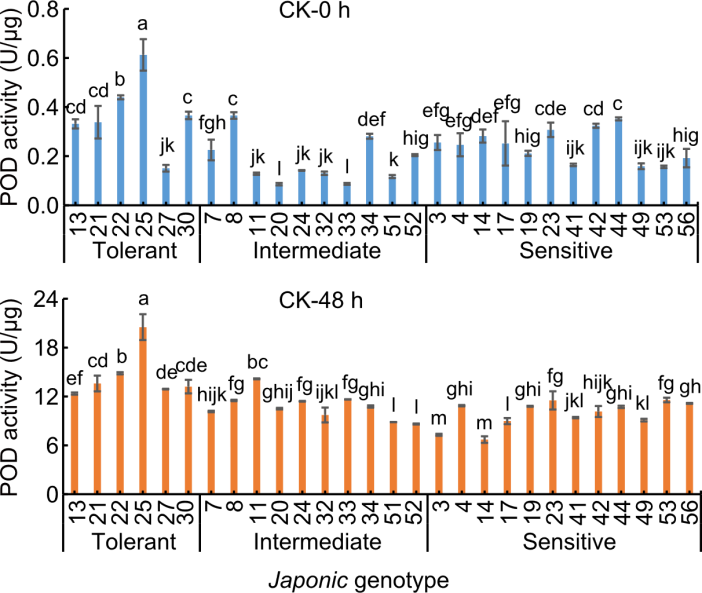
Fig. 7. Comparison of peroxidase activity of 28 japonica rice accessions under non-aging treatment between non-imbibed and 48-h-imbibed seeds. Data are mean ± SD (n = 3). According to Duncan’s multiple range test at P < 0.05, different lowercase letters above bars indicate statistically significant differences among different germplasms.
| Variable | R2 | Equation |
|---|---|---|
| POD activity at 0 and 48 h after imbibition, germination rate | 0.423 | Y = 0.345X1 ‒ 0.058X2 + 0.422X3 |
| POD activity at 0 h after imbibition, germination rate | 0.340 | Y = 0.541X1 + 0.153X2 |
| POD activity at 48 h after imbibition, germination rate | 0.421 | Y = 0.358X2 + 0.382X3 |
| POD activity of storage-tolerant seeds at 48 h after imbibition, germination rate | 0.919 | Y = 0.899X2 ‒ 0.326X3 |
| POD activity of storage-intermediate seeds at 48 h after imbibition, germination rate | 0.103 | Y = 0.247X2 + 0.164X3 |
| POD activity of storage-sensitive seeds at 48 h after imbibition, germination rate | 0.228 | Y = -0.471X2 + 0.008X3 |
Table 2. Regression equation for peroxidase (POD) activity-based storability evaluation in japonica rice seeds.
| Variable | R2 | Equation |
|---|---|---|
| POD activity at 0 and 48 h after imbibition, germination rate | 0.423 | Y = 0.345X1 ‒ 0.058X2 + 0.422X3 |
| POD activity at 0 h after imbibition, germination rate | 0.340 | Y = 0.541X1 + 0.153X2 |
| POD activity at 48 h after imbibition, germination rate | 0.421 | Y = 0.358X2 + 0.382X3 |
| POD activity of storage-tolerant seeds at 48 h after imbibition, germination rate | 0.919 | Y = 0.899X2 ‒ 0.326X3 |
| POD activity of storage-intermediate seeds at 48 h after imbibition, germination rate | 0.103 | Y = 0.247X2 + 0.164X3 |
| POD activity of storage-sensitive seeds at 48 h after imbibition, germination rate | 0.228 | Y = -0.471X2 + 0.008X3 |
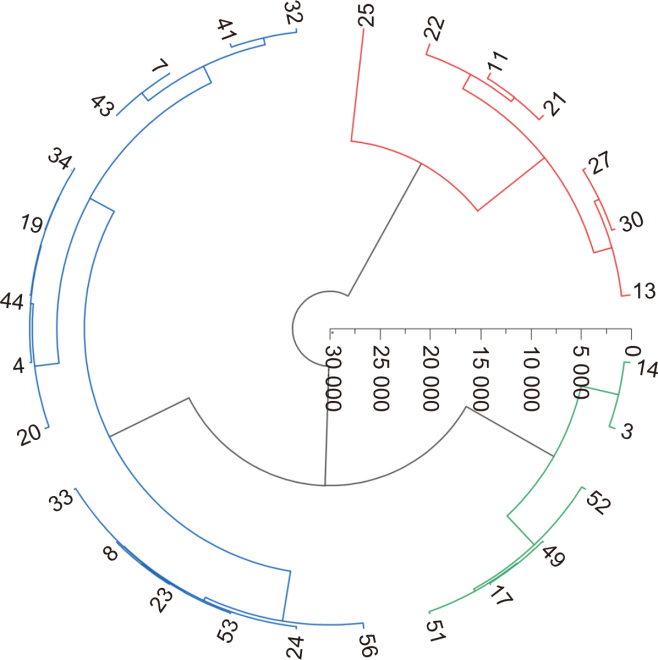
Fig. 8. Hierarchical clustering based on initial germination rate and peroxidase activity after 48 h of imbibition. The clustering analysis divides the samples into three categories: red represents storage-tolerant seeds, green represents intermediate seeds, and blue represents storage-sensitive seeds. The scale values represent how different the samples are from each other (the distance), the bigger the number, the greater the difference between the two samples in terms of the ‘storability’ metric; the smaller the number, the more similar they are.
| [1] | Aleem M, Riaz A, Raza Q, et al. 2022. Genome-wide characterization and functional analysis of class III peroxidase gene family in soybean reveal regulatory roles of GsPOD40 in drought tolerance. Genomics, 114(1): 45-60. |
| [2] | Ali F, Qanmber G, Li F G, et al. 2022. Updated role of ABA in seed maturation, dormancy, and germination. J Adv Res, 35: 199-214. |
| [3] | Artimo P, Jonnalagedda M, Arnold K, et al. 2012. ExPASy: SIB bioinformatics resource portal. Nucleic Acids Res, 40(W1): W597-W603. |
| [4] | Chen B Y, Yin G K, Whelan J, et al. 2019. Composition of mitochondrial complex I during the critical node of seed aging in Oryza sativa. J Plant Physiol, 236: 7-14. |
| [5] | Chen C, Begcy K, Liu K, et al. 2016. Heat stress yields a unique MADS box transcription factor in determining seed size and thermal sensitivity. Plant Physiol, 171(1): 606-622. |
| [6] | Chen C J, Wu Y, Li J W, et al. 2023. TBtools-II: A ‘one for all, all for one’ bioinformatics platform for biological big-data mining. Mol Plant, 16(11): 1733-1742. |
| [7] | Chen G A, Han J Y, Sun Z Y, et al. 2025. The G311E mutant gene of MATE family protein DTX6 confers diquat and paraquat resistance in rice without yield or nutritional penalties. Int J Mol Sci, 26(13): 6204. |
| [8] | Chen X L, Yin G K, Börner A, et al. 2018. Comparative physiology and proteomics of two wheat genotypes differing in seed storage tolerance. Plant Physiol Biochem, 130: 455-463. |
| [9] | Cheng L T, Ma L X, Meng L J, et al. 2022. Genome-wide identification and analysis of the class III peroxidase gene family in tobacco (Nicotiana tabacum). Front Genet, 13: 916867. |
| [10] | de Oliveira Araújo J, dos Santos Dias D C F, Nascimento W M, et al. 2021. Accelerated aging test and antioxidant enzyme activity to assess chickpea seed vigor. J Seed Sci, 43: e202143038. |
| [11] | Demiral T, Türkan İ. 2005. Comparative lipid peroxidation, antioxidant defense systems and proline content in roots of two rice cultivars differing in salt tolerance. Environ Exp Bot, 53(3): 247-257. |
| [12] | Doerge D R, Divi R L, Churchwell M I. 1997. Identification of the colored guaiacol oxidation product produced by peroxidases. Anal Biochem, 250(1): 10-17. |
| [13] | Duan P F, Wang G, Chao M N, et al. 2019. Genome-wide identification and analysis of class III peroxidases in allotetraploid cotton (Gossypium hirsutum L.) and their responses to PK deficiency. Genes, 10(6): 473. |
| [14] | Feng P, Liu Y, Yang J, et al. 2024. The class Ⅲ peroxidase gene IPH1 regulates plant height in rice. J Southwest Univ: Nat Sci Ed, 46(2): 24-33. (in Chinese with English abstract) |
| [15] | Foyer C H, Noctor G. 2005. Redox homeostasis and antioxidant signaling: A metabolic interface between stress perception and physiological responses. Plant Cell, 17(7): 1866-1875. |
| [16] | Garcia-Hernandez M, Berardini T Z, Chen G H, et al. 2002. TAIR: A resource for integrated Arabidopsis data. Funct Integr Genomics, 2(6): 239-253. |
| [17] | Gasperl A, Zellnig G, Kocsy G, et al. 2022. Organelle-specific localization of glutathione in plants grown under different light intensities and spectra. Histochem Cell Biol, 158(3): 213-227. |
| [18] | Gupta R, Min C W, Cho J H, et al. 2024. Integrated “-omics” analysis highlights the role of brassinosteroid signaling and antioxidant machinery underlying improved rice seed longevity during artificial aging treatment. Plant Physiol Biochem, 206: 108308. |
| [19] | Guzmán-Hernández D A, Barbosa-Martínez C, Villa-Hernández J M, et al. 2024. Redox imbalance accompanies loss of viability in seeds of two cacti species buried in situ. Seed Sci Res, 34(1): 1-9. |
| [20] | He Y Q, Cheng J P, He Y, et al. 2019. Influence of isopropylmalate synthase OsIPMS1 on seed vigour associated with amino acid and energy metabolism in rice. Plant Biotechnol J, 17(2): 322-337. |
| [21] | He Y Q, Zhao J, Yang B, et al. 2020. Indole-3-acetate beta-glucosyltransferase OsIAGLU regulates seed vigour through mediating crosstalk between auxin and abscisic acid in rice. Plant Biotechnol J, 18(9): 1933-1945. |
| [22] | He Z Q, Shang X, Wang X K, et al. 2024. The contribution of Ca and Mg to the accumulation of amino acids in maize: From the response of physiological and biochemical processes. BMC Plant Biol, 24(1): 579. |
| [23] | Horton P, Park K J, Obayashi T, et al. 2007. WoLF PSORT: Protein localization predictor. Nucleic Acids Res, 35: W585-W587. |
| [24] | Huang C W, Ji Z J, Huang Q Q, et al. 2024. Natural variation in the cytochrome c oxidase subunit 5B OsCOX5B regulates seed vigor by altering energy production in rice. J Integr Agric, 23(9): 2898-2910. |
| [25] | Johansson L H, Borg L A H. 1988. A spectrophotometric method for determination of catalase activity in small tissue samples. Anal Biochem, 174(1): 331-336. |
| [26] | Lee Y P, Baek K H, Lee H S, et al. 2010. Tobacco seeds simultaneously over-expressing Cu/Zn-superoxide dismutase and ascorbate peroxidase display enhanced seed longevity and germination rates under stress conditions. J Exp Bot, 61(9): 2499-2506. |
| [27] | Letunic I, Khedkar S, Bork P. 2021. SMART: Recent updates, new developments and status in 2020. Nucleic Acids Res, 49(D1): D458-D460. |
| [28] | Li B B, Zhang S B, Lv Y Y, et al. 2022. Reactive oxygen species-induced protein carbonylation promotes deterioration of physiological activity of wheat seeds. PLoS One, 17(3): e0263553. |
| [29] | Li H L, Yu K D, Zhang Z L, et al. 2024. Targeted mutagenesis of flavonoid biosynthesis pathway genes reveals functional divergence in seed coat colour, oil content and fatty acid composition in Brassica napus L. Plant Biotechnol J, 22(2): 445-459. |
| [30] | Liao Y X, Jiang P F, Zhang M M, et al. 2025. Overexpression of the ABA synthesis gene OsABA2 enhances seed storability in rice. Rice, 18(1): 61. |
| [31] | Mao C L, Zhu Y Q, Cheng H, et al. 2018. Nitric oxide regulates seedling growth and mitochondrial responses in aged oat seeds. Int J Mol Sci, 19(4): 1052. |
| [32] | Małecka A, Ciszewska L, Staszak A, et al. 2021. Relationship between mitochondrial changes and seed aging as a limitation of viability for the storage of beech seed (Fagus sylvatica L.). PeerJ, 9: e10569. |
| [33] | Mehra P, Pandey B K, Verma L, et al. 2022. OsJAZ11 regulates spikelet and seed development in rice. Plant Direct, 6(5): e401. |
| [34] | Melo-Sabogal D V, Guevara-Gonzalez R G, Torres-Pacheco I, et al. 2024. β values obtained by linear regression models of morpho-physiological and biochemical variables as novel drought stress estimators in Capsicum annuum varieties. Plant Stress, 14: 100588. |
| [35] | Mistry J, Chuguransky S, Williams L, et al. 2021. Pfam:The protein families database in 2021. Nucleic Acids Res, 49(D1): D412-D419. |
| [36] | Naghisharifi H, Kolahi M, Javaheriyan M, et al. 2024. Oxidative stress is the active pathway in canola seed aging, the role of oxidative stress in the development of seedlings grown from aged canola seed. Plant Stress, 11: 100313. |
| [37] | Nakano Y, Asada K. 1981. Hydrogen peroxide is scavenged by ascorbate-specific peroxidase in spinach chloroplasts. Plant Cell Physiol, 22(5): 867-880. |
| [38] | Nickas J, N’Danikou S, Shango A J, et al. 2025. Physio-biochemical response of vegetable seeds to ageing: A systematic review. Plant Physiol Biochem, 228: 110223. |
| [39] | Ouzouline M, Jdaini K, Bouchentouf H, et al. 2025. Impact of accelerated ageing on seed germination capacity and antioxidant in Moroccan durum wheat. Aust J Crop Sci, 19(2): 161-167. |
| [40] | Passardi F, Cosio C, Penel C, et al. 2005. Peroxidases have more functions than a Swiss army knife. Plant Cell Rep, 24(5): 255-265. |
| [41] | Rajjou L, Debeaujon I. 2008. Seed longevity: Survival and maintenance of high germination ability of dry seeds. C R Biol, 331(10): 796-805. |
| [42] | Reuveni R, Shimoni M, Karchi Z, et al. 1992. Peroxidase activity as a biochemical marker for resistance of muskmelon (Cucumis melo) to Pseudoperonospora cubensis. Phytopathology, 82(7): 749-753. |
| [43] | Spitz D R, Oberley L W. 1989. An assay for superoxide dismutase activity in mammalian tissue homogenates. Anal Biochem, 179(1): 8-18. |
| [44] | Strauss T, von Maltitz M J. 2017. Generalising ward’s method for use with Manhattan distances. PLoS One, 12(1): e0168288. |
| [45] | Tian J H, Liu Y, Yin M Q, et al. 2025. Rice OsWAK16 regulates seed anti-aging ability by modulating antioxidant enzyme activity. Acta Bot Sin, 60(01): 17-32. (in Chinese with English abstract) |
| [46] | Tu K L, Wu W F, Cheng Y, et al. 2023. AIseed: An automated image analysis software for high-throughput phenotyping and quality non-destructive testing of individual plant seeds. Comput Electron Agric, 207: 107740. |
| [47] | Verma V, Boora N, Nayar S, et al. 2023. Ca2+-Calmodulin regulates nuclear translocation of the rice seed-specific MADS-box transcription factor OsMADS29. FEBS J, 290(14): 3595-3613. |
| [48] | Wang W Q, Xu D Y, Sui Y P, et al. 2022. A multiomic study uncovers a bZIP23-PER1A-mediated detoxification pathway to enhance seed vigor in rice. Proc Natl Acad Sci USA, 119(9): e2026355119. |
| [49] | Weng Y H, Wang Y W, Wang K W, et al. 2025. OsLOX1 positively regulates seed vigor and drought tolerance in rice. Plant Mol Biol, 115(1): 16. |
| [50] | Wu C L, Ding X P, Ding Z H, et al. 2019. The class III peroxidase (POD) gene family in cassava: Identification, phylogeny, duplication, and expression. Int J Mol Sci, 20(11): 2730. |
| [51] | Wu D, Cao X H, Jia P Z, et al. 2020. Excellent thermoelectric performance in weak-coupling molecular junctions with electrode doping and electrochemical gating. Sci China: Phys Mech Astron, 63(7): 276811. |
| [52] | Wu Q B, Chen Y L, Zou W H, et al. 2023. Genome-wide characterization of sugarcane catalase gene family identifies a ScCAT1 gene associated disease resistance. Int J Biol Macromol, 232: 123398. |
| [53] | Xiao H L, Wang C P, Khan N, et al. 2020. Genome-wide identification of the class III POD gene family and their expression profiling in grapevine (Vitis vinifera L). BMC Genom, 21(1): 444. |
| [54] | Xin X, Chen X L, Zhang J M, et al. 2011. Seed viability and field emergence rate monitoring of seeds stored in national gene banks for over 20 years. Plant Genet Resour, 12: 934-940. (in Chinese with English abstract) |
| [55] | Xing L N, Zhang Y F, Ge M R, et al. 2024. Identification of WRKY gene family in Dioscorea opposita Thunb. reveals that DoWRKY71 enhanced the tolerance to cold and ABA stress. PeerJ, 12: e17016. |
| [56] | Yan J, Su P S, Li W, et al. 2019. Genome-wide and evolutionary analysis of the class III peroxidase gene family in wheat and Aegilops tauschii reveals that some members are involved in stress responses. BMC Genom, 20(1): 666. |
| [57] | Yang X L, Wu F, Lin X L, et al. 2012. Live and let die: The Bsister MADS-box gene OsMADS29 controls the degeneration of cells in maternal tissues during seed development of rice (Oryza sativa). PLoS One, 7(12): e51435. |
| [58] | Yin G K, Xin X, Song C, et al. 2014. Activity levels and expression of antioxidant enzymes in the ascorbate-glutathione cycle in artificially aged rice seed. Plant Physiol Biochem, 80: 1-9. |
| [59] | Yin G K, Whelan J, Wu S H, et al. 2016. Comprehensive mitochondrial metabolic shift during the critical node of seed ageing in rice. PLoS One, 11(4): e0148013. |
| [60] | Yin G K, Xin X, Fu S Z, et al. 2017. Proteomic and carbonylation profile analysis at the critical node of seed ageing in Oryza sativa. Sci Rep, 7: 40611. |
| [61] | Yin G K, Xin X, Zhang J M, et al. 2022. The progress and prospects of the theoretical research on the safe conservation of germplasm resources in genebank. Sci Agric Sin, 55(7): 1263-1270. (in Chinese with English abstract) |
| [62] | Zhang Y M, Song X B, Zhang W L, et al. 2023. Maize PIMT2 repairs damaged 3-METHYLCROTONYL COA CARBOXYLASE in mitochondria, affecting seed vigor. Plant J, 115: 220-235. |
| [63] | Zhang Y Q, Liu H, Ma X Y, et al. 2025. Genome-wide identification and expression analysis of the class III peroxidase gene (PRXIII) family in Medicago sativa L. and its function in the abiotic stress response. BMC Plant Biol, 25(1): 443. |
| [64] | Zheng X H, Yuan Z Y, Yu Y Y, et al. 2024. OsCSD2 and OsCSD3 enhance seed storability by modulating antioxidant enzymes and abscisic acid in rice. Plants, 13(2): 310. |
| [65] | Zheng Z Y, Yang J W, Wang X F, et al. 2023. Potato stu-miR398b-3p negatively regulates Cu/Zn-SOD response to drought tolerance. Int J Mol Sci, 24(3): 2525. |
| [1] | Zhou Tianshun, Yu Dong, Wu Liubing, Xu Yusheng, Duan Meijuan, Yuan Dingyang. Seed Storability in Rice: Physiological Foundations, Molecular Mechanisms, and Applications in Breeding [J]. Rice Science, 2024, 31(4): 401-416. |
| [2] | Yanjie Xu, Yining Ying, Shuhong Ouyang, Xiaoliang Duan, Hui Sun, Shukun Jiang, Shichen Sun, Jinsong Bao. Factors Affecting Sensory Quality of Cooked japonica Rice [J]. Rice Science, 2018, 25(6): 330-339. |
| [3] | Kaizhuan Xiao, Xiaohui Mao, Yingheng Wang, Jinlan Wang, Yidong Wei, Qiuhua Cai, Hua’an Xie, Jianfu Zhang. Transcript Profiling Reveals Abscisic Acid, Salicylic Acid and Jasmonic-Isoleucine Pathways Involved in High Regenerative Capacities of Immature Embryos Compared with Mature Seeds in japonica Rice [J]. Rice Science, 2018, 25(4): 227-234. |
| [4] | Md. Nasim ALI, Bhaswati GHOSH, Saikat GANTAIT, Somsubhra CHAKRABORTY. Selection of Rice Genotypes for Salinity Tolerance Through Morpho-Biochemical Assessment [J]. RICE SCIENCE, 2014, 21(5): 288-298. |
| [5] | Khongsak SRIKAEO, Uttaphon PANYA. Efficiencies of Chemical Techniques for Rice Grain Freshness Analysis [J]. RICE SCIENCE, 2013, 20(4): 292-297. |
| Viewed | ||||||
|
Full text |
|
|||||
|
Abstract |
|
|||||
