
Rice Science ›› 2025, Vol. 32 ›› Issue (6): 868-884.DOI: 10.1016/j.rsci.2025.08.005
• Experimental Technique • Previous Articles
Hong Chen1, Luo Ju2, Feng Zelin3, Ling Heping4, Li Lingyi1, Wu Jian1, Yao Qing1( ), Liu Shuhua2()
Received:2025-04-16
Accepted:2025-06-30
Online:2025-11-28
Published:2025-12-04
Contact:
Yao Qing (Hong Chen, Luo Ju, Feng Zelin, Ling Heping, Li Lingyi, Wu Jian, Yao Qing, Liu Shuhua. Intelligent Survey Method for Tiny Rice Pests and Their Natural Predators in Paddy Fields Using Augmented Reality (AR) Glasses[J]. Rice Science, 2025, 32(6): 868-884.
Add to citation manager EndNote|Ris|BibTeX
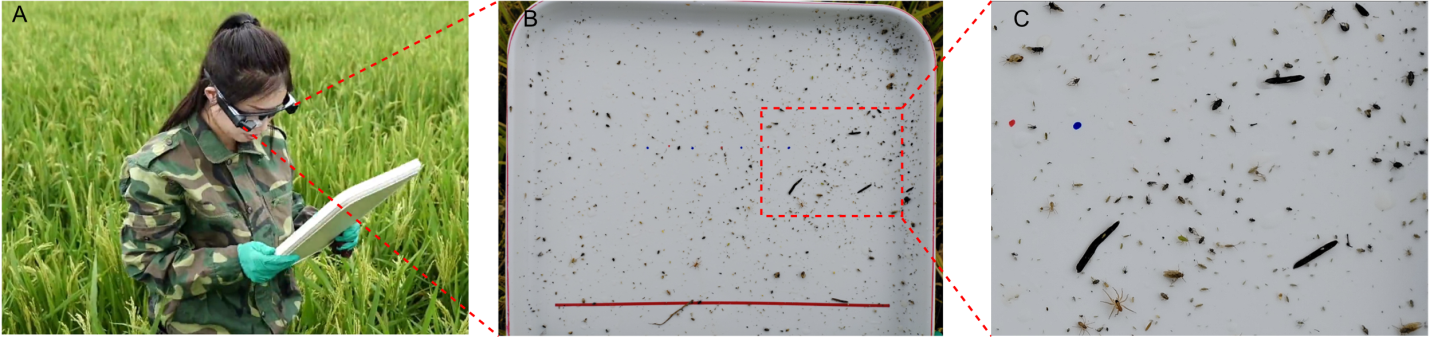
Fig. 1. Images of rice insects captured using augmented reality (AR) glasses for disk photography method: field image acquisition (A), overall view of white flat plate (B), and localized enlargment (C). The solid red line in B is used to split the white porcelain plate into upper and lower parts for independent shooting.
| Species | Morphological type | Labeled name | Number of training sets | Number of testing sets |
|---|---|---|---|---|
| Nilaparvata lugens | Macropterous female | M-BPH-female | 2 115 | 413 |
| Macropterous male | M-BPH-male | 704 | 217 | |
| Brachypterous female | B-BPH-female | 1 934 | 454 | |
| Brachypterous male | B-BPH-male | 421 | 112 | |
| Senior-instar nymph | S-BPH-nymph | 6 814 | 1 831 | |
| Third-instar nymph | BPH 3-nymph | 3 195 | 1 113 | |
| Sogatella furcifera | Macropterous female | M-WBPH-female | 3 404 | 784 |
| Macropterous male | M-WBPH-male | 2 216 | 548 | |
| Brachypterous adult | B-WBPH-adult | 961 | 247 | |
| Senior-instar nymph | S-WBPH-nymph | 7 105 | 1 561 | |
| Third-instar nymph | WBPH 3-nymph | 9 785 | 2 250 | |
| Laodelphax striatellus | Macropterous female | M-SBPH-female | 507 | 131 |
| Macropterous male | M-SBPH-male | 527 | 133 | |
| Brachypterous adult | B-SBPH-adult | 564 | 134 | |
| Senior-instar nymph | S-SBPH-nymph | 3 006 | 761 | |
| Third-instar nymph | SBPH 3-nymph | 833 | 204 | |
| Early-instar nymph of rice planthopper | Early-instar nymph | RPH 1‒2 nymph | 102 410 | 23 458 |
| Cicadellidae | Leafhopper nymph | RLH-nymph | 508 | 111 |
| Leafhopper adult | RLH-adult | 11 352 | 2 740 | |
| Cyrtorhinus lividipennis Reuter | Miridae | Miridae | 8 266 | 2 178 |
| Araneae | Wolf spider | Spider-Langzhu | 4 094 | 1 061 |
| Micryphantid spider | Spier-Weizhu | 3 716 | 960 | |
| Tetragnathidae | Spider-Xiaoxiao | 572 | 164 | |
| Others | Spider-Others | 11 590 | 2 840 | |
| Staphylinidae Latreille | Rove beetle | Rove-beetle | 318 | 85 |
Table 1. Annotation information of pests and their natural predators in dataset.
| Species | Morphological type | Labeled name | Number of training sets | Number of testing sets |
|---|---|---|---|---|
| Nilaparvata lugens | Macropterous female | M-BPH-female | 2 115 | 413 |
| Macropterous male | M-BPH-male | 704 | 217 | |
| Brachypterous female | B-BPH-female | 1 934 | 454 | |
| Brachypterous male | B-BPH-male | 421 | 112 | |
| Senior-instar nymph | S-BPH-nymph | 6 814 | 1 831 | |
| Third-instar nymph | BPH 3-nymph | 3 195 | 1 113 | |
| Sogatella furcifera | Macropterous female | M-WBPH-female | 3 404 | 784 |
| Macropterous male | M-WBPH-male | 2 216 | 548 | |
| Brachypterous adult | B-WBPH-adult | 961 | 247 | |
| Senior-instar nymph | S-WBPH-nymph | 7 105 | 1 561 | |
| Third-instar nymph | WBPH 3-nymph | 9 785 | 2 250 | |
| Laodelphax striatellus | Macropterous female | M-SBPH-female | 507 | 131 |
| Macropterous male | M-SBPH-male | 527 | 133 | |
| Brachypterous adult | B-SBPH-adult | 564 | 134 | |
| Senior-instar nymph | S-SBPH-nymph | 3 006 | 761 | |
| Third-instar nymph | SBPH 3-nymph | 833 | 204 | |
| Early-instar nymph of rice planthopper | Early-instar nymph | RPH 1‒2 nymph | 102 410 | 23 458 |
| Cicadellidae | Leafhopper nymph | RLH-nymph | 508 | 111 |
| Leafhopper adult | RLH-adult | 11 352 | 2 740 | |
| Cyrtorhinus lividipennis Reuter | Miridae | Miridae | 8 266 | 2 178 |
| Araneae | Wolf spider | Spider-Langzhu | 4 094 | 1 061 |
| Micryphantid spider | Spier-Weizhu | 3 716 | 960 | |
| Tetragnathidae | Spider-Xiaoxiao | 572 | 164 | |
| Others | Spider-Others | 11 590 | 2 840 | |
| Staphylinidae Latreille | Rove beetle | Rove-beetle | 318 | 85 |

Fig. 2. Diagrammatic representation of the two-stage cascaded detection method RiceInsectID. BCM, Balanced classification mosaic; TTA, Test-time augmentation; NMS, Non-maximum suppression; BN, Batch normalization; ReLU, Rectified linear unit; FC, Fully connected.
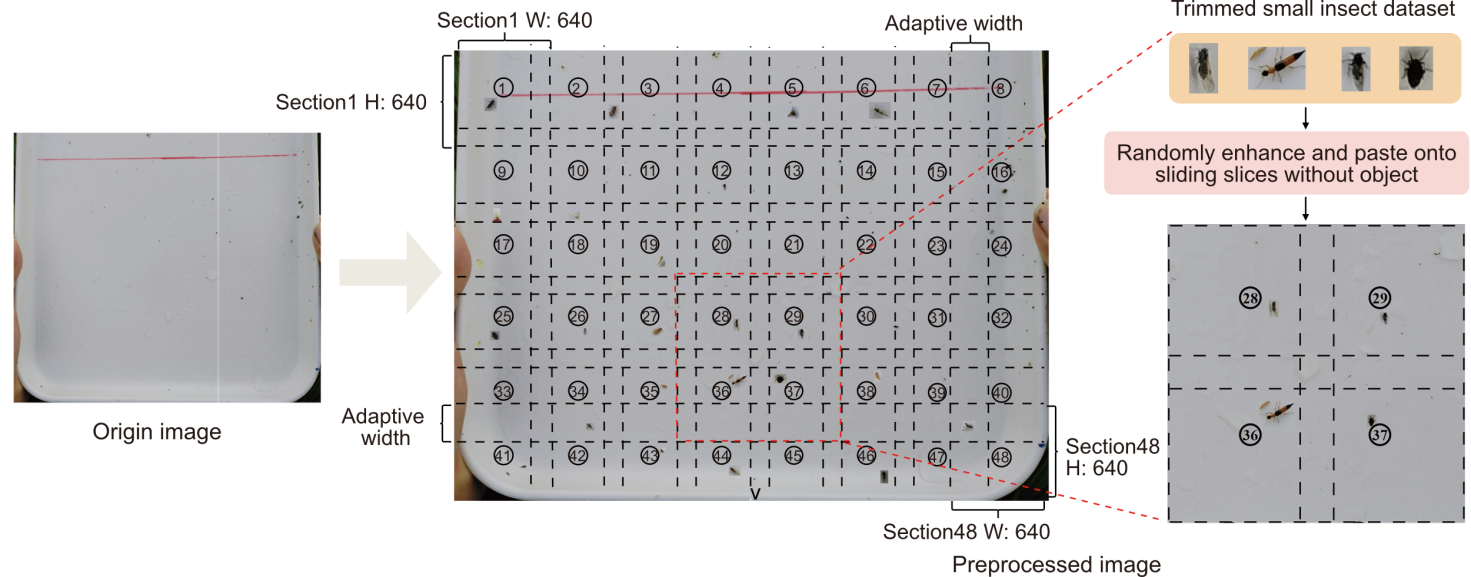
Fig. 3. Full-region overlapping sliding slices and target pasting algorithm visualization.
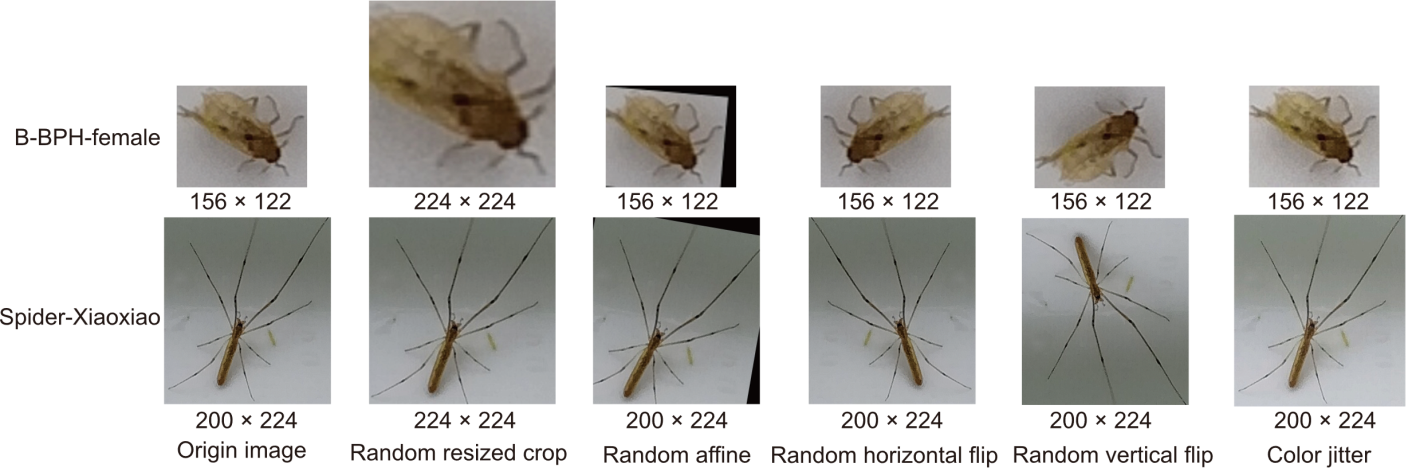
Fig. 4. Illustration of multiple online data augmentation strategies.
| Class | Recall50 (%) | Precision50 (%) | AP50 (%) |
|---|---|---|---|
| M-BPH-female | 96.4 | 71.9 | 92.8 |
| M-BPH-male | 54.7 | 92.6 | 52.4 |
| B-BPH-female | 88.9 | 79.9 | 87.2 |
| B-BPH-male | 84.8 | 81.1 | 80.4 |
| S-BPH-nymph | 91.1 | 73.6 | 85.7 |
| BPH 3-nymph | 53.8 | 72.2 | 46.0 |
| M-WBPH-female | 94.6 | 73.9 | 90.1 |
| M-WBPH-male | 72.7 | 81.5 | 66.8 |
| B-WBPH-adult | 78.8 | 69.7 | 72.5 |
| S-WBPH-nymph | 93.1 | 72.7 | 88.8 |
| WBPH 3-nymph | 47.8 | 85.7 | 43.9 |
| M-SBPH-female | 61.5 | 73.4 | 51.3 |
| M-SBPH-male | 72.6 | 87.7 | 70.2 |
| B-SBPH-adult | 77.7 | 72.7 | 68.7 |
| S-SBPH-nymph | 76.0 | 62.0 | 70.2 |
| SBPH 3-nymph | 41.5 | 52.0 | 26.2 |
| RPH 1‒2 nymph | 91.2 | 80.7 | 86.8 |
| RLH-nymph | 90.5 | 85.9 | 87.8 |
| RLH-adult | 85.6 | 73.8 | 80.2 |
| Miridae | 93.0 | 83.7 | 91.5 |
| Spider-Langzhu | 93.6 | 91.2 | 92.2 |
| Spier-Weizhu | 82.5 | 73.3 | 74.8 |
| Spider-Xiaoxiao | 86.4 | 73.9 | 81.1 |
| Spider-Others | 78.3 | 77.3 | 68.7 |
| Rove beetle | 82.6 | 78.3 | 79.9 |
Table 2. Detection results of YOLOv6_s on 25 classes of rice insect datasets.
| Class | Recall50 (%) | Precision50 (%) | AP50 (%) |
|---|---|---|---|
| M-BPH-female | 96.4 | 71.9 | 92.8 |
| M-BPH-male | 54.7 | 92.6 | 52.4 |
| B-BPH-female | 88.9 | 79.9 | 87.2 |
| B-BPH-male | 84.8 | 81.1 | 80.4 |
| S-BPH-nymph | 91.1 | 73.6 | 85.7 |
| BPH 3-nymph | 53.8 | 72.2 | 46.0 |
| M-WBPH-female | 94.6 | 73.9 | 90.1 |
| M-WBPH-male | 72.7 | 81.5 | 66.8 |
| B-WBPH-adult | 78.8 | 69.7 | 72.5 |
| S-WBPH-nymph | 93.1 | 72.7 | 88.8 |
| WBPH 3-nymph | 47.8 | 85.7 | 43.9 |
| M-SBPH-female | 61.5 | 73.4 | 51.3 |
| M-SBPH-male | 72.6 | 87.7 | 70.2 |
| B-SBPH-adult | 77.7 | 72.7 | 68.7 |
| S-SBPH-nymph | 76.0 | 62.0 | 70.2 |
| SBPH 3-nymph | 41.5 | 52.0 | 26.2 |
| RPH 1‒2 nymph | 91.2 | 80.7 | 86.8 |
| RLH-nymph | 90.5 | 85.9 | 87.8 |
| RLH-adult | 85.6 | 73.8 | 80.2 |
| Miridae | 93.0 | 83.7 | 91.5 |
| Spider-Langzhu | 93.6 | 91.2 | 92.2 |
| Spier-Weizhu | 82.5 | 73.3 | 74.8 |
| Spider-Xiaoxiao | 86.4 | 73.9 | 81.1 |
| Spider-Others | 78.3 | 77.3 | 68.7 |
| Rove beetle | 82.6 | 78.3 | 79.9 |

Fig. 5. The first layer of coarse-grained object detection model based on improved YOLOv6. FOSTP, Full-region overlapping sliding slices and targe pasting; BCM, Balanced classification mosaic; ECA-PAFPN&ASFF, Efficient channel attention path aggregation feature pyramid network & adaptive structure feature fusion; NMS, Non-maximum suppression; TTA, Test-time augmentation.
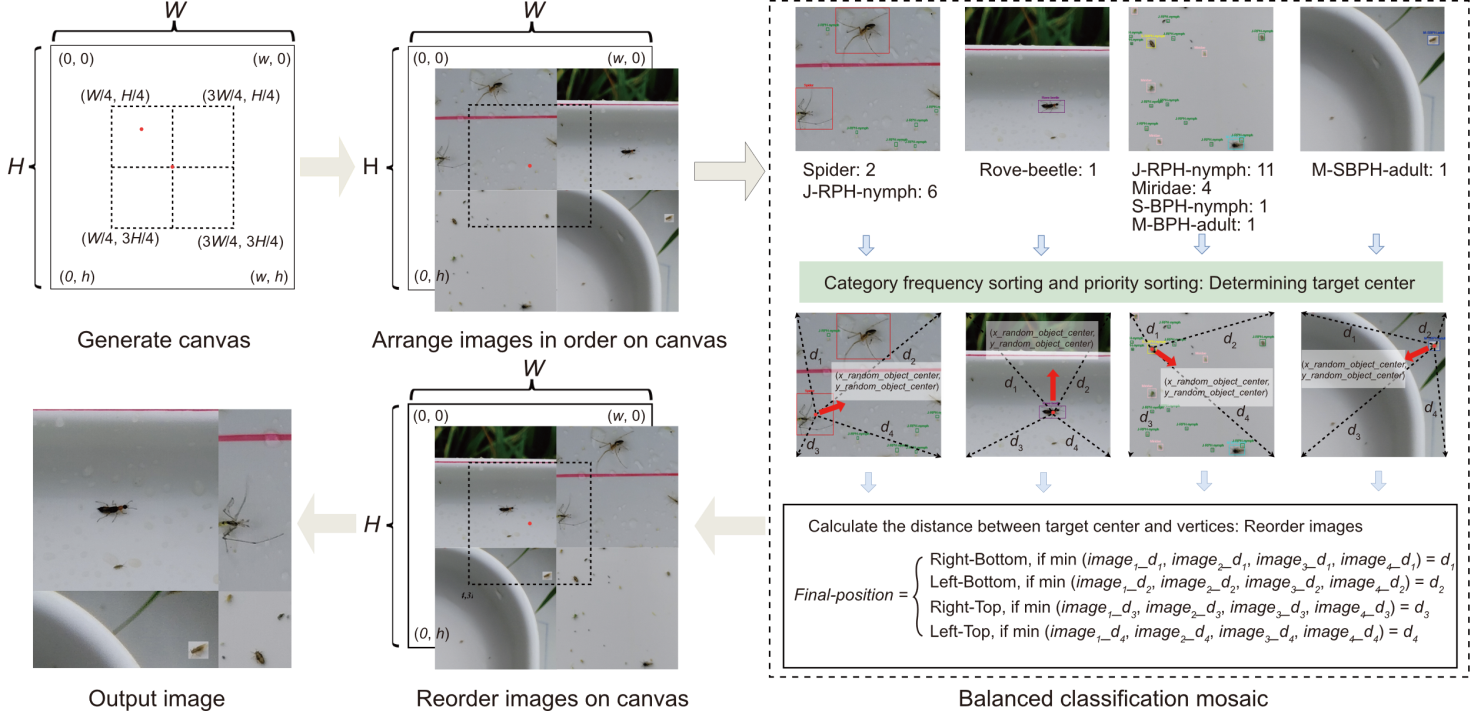
Fig. 6. Balanced classification mosaic method flow.
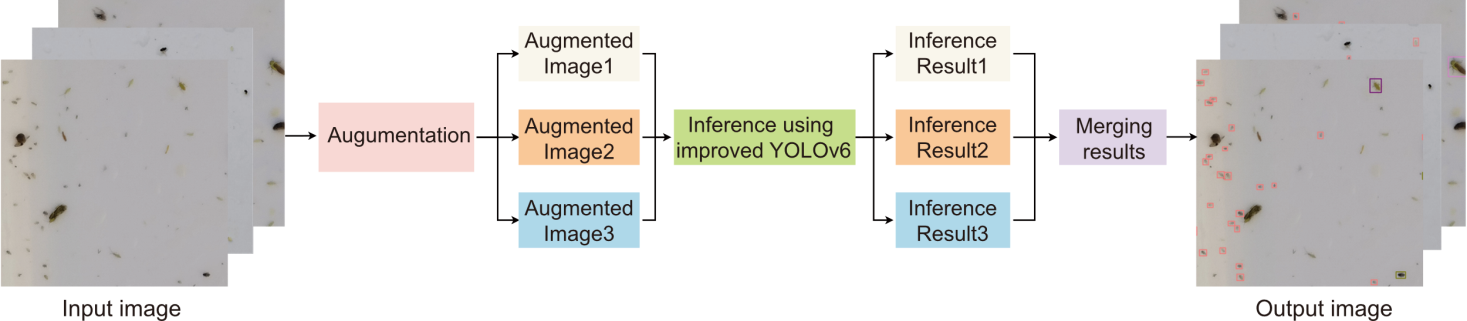
Fig. 7. Test-time augmentation execution process.
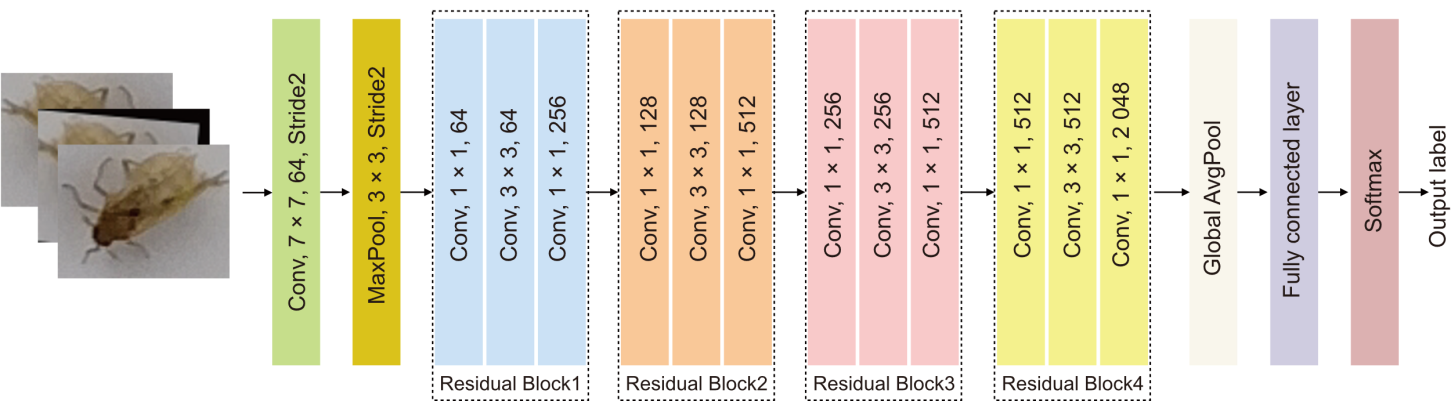
Fig. 8. ResNet50 network structure.
| Model | Recall | Precision | F1-score | Accuracy |
|---|---|---|---|---|
| VGG16 | 79.90 | 82.88 | 81.36 | 92.76 |
| Mobile-v3-large | 72.62 | 76.24 | 74.39 | 82.42 |
| ResNet18 | 82.61 | 84.58 | 83.58 | 93.57 |
| ResNet34 | 82.69 | 84.75 | 83.71 | 93.74 |
| ResNet50 | 82.95 | 85.46 | 84.19 | 93.95 |
| ResNet101 | 82.67 | 85.32 | 83.97 | 93.79 |
| Efficient_v1-b0 | 73.70 | 81.87 | 77.57 | 91.82 |
| Efficient_v2-b0 | 76.31 | 68.20 | 72.03 | 88.96 |
| Swin-Transformer | 69.46 | 56.25 | 62.16 | 82.71 |
| Poolformer-S12 | 76.93 | 84.69 | 80.62 | 92.80 |
| Convnext-base | 62.73 | 50.22 | 55.78 | 82.84 |
Table 3. Recognition results of different classification models on 16 dataset classes. %
| Model | Recall | Precision | F1-score | Accuracy |
|---|---|---|---|---|
| VGG16 | 79.90 | 82.88 | 81.36 | 92.76 |
| Mobile-v3-large | 72.62 | 76.24 | 74.39 | 82.42 |
| ResNet18 | 82.61 | 84.58 | 83.58 | 93.57 |
| ResNet34 | 82.69 | 84.75 | 83.71 | 93.74 |
| ResNet50 | 82.95 | 85.46 | 84.19 | 93.95 |
| ResNet101 | 82.67 | 85.32 | 83.97 | 93.79 |
| Efficient_v1-b0 | 73.70 | 81.87 | 77.57 | 91.82 |
| Efficient_v2-b0 | 76.31 | 68.20 | 72.03 | 88.96 |
| Swin-Transformer | 69.46 | 56.25 | 62.16 | 82.71 |
| Poolformer-S12 | 76.93 | 84.69 | 80.62 | 92.80 |
| Convnext-base | 62.73 | 50.22 | 55.78 | 82.84 |
| Model | Recall50 | Precision50 | mAP50 |
|---|---|---|---|
| YOLOv6_s | 78.79 | 76.83 | 73.45 |
| YOLOv8_s | 64.77 | 86.59 | 61.95 |
| YOLOv11_s | 76.21 | 76.46 | 71.01 |
| RTMDet_s | 47.52 | 75.51 | 45.36 |
| Faster R-CNN | 73.42 | 79.28 | 68.48 |
| Cascade R-CNN | 73.63 | 79.34 | 68.55 |
| ATSS-DyHead | 71.30 | 75.66 | 66.21 |
| Swin Transformer | 57.44 | 67.15 | 51.26 |
Table 4. Experimental results of different models on 25 classes of rice insect dataset. %
| Model | Recall50 | Precision50 | mAP50 |
|---|---|---|---|
| YOLOv6_s | 78.79 | 76.83 | 73.45 |
| YOLOv8_s | 64.77 | 86.59 | 61.95 |
| YOLOv11_s | 76.21 | 76.46 | 71.01 |
| RTMDet_s | 47.52 | 75.51 | 45.36 |
| Faster R-CNN | 73.42 | 79.28 | 68.48 |
| Cascade R-CNN | 73.63 | 79.34 | 68.55 |
| ATSS-DyHead | 71.30 | 75.66 | 66.21 |
| Swin Transformer | 57.44 | 67.15 | 51.26 |
| Model | Recall50 | Precision50 | mAP50 |
|---|---|---|---|
| YOLOv6_s | 85.06 | 83.10 | 82.65 |
| YOLOv8_s | 80.07 | 88.01 | 77.59 |
| YOLOv11_s | 83.89 | 82.97 | 81.42 |
| RTMDet_s | 63.49 | 88.61 | 61.25 |
| Faster R-CNN | 81.52 | 82.46 | 78.05 |
| Cascade R-CNN | 82.75 | 83.66 | 79.50 |
| ATSS-DyHead | 78.44 | 79.98 | 78.32 |
| Swin Transformer | 71.41 | 67.55 | 64.69 |
Table 5. Experimental results of various target detection models across 15 dataset classes. %
| Model | Recall50 | Precision50 | mAP50 |
|---|---|---|---|
| YOLOv6_s | 85.06 | 83.10 | 82.65 |
| YOLOv8_s | 80.07 | 88.01 | 77.59 |
| YOLOv11_s | 83.89 | 82.97 | 81.42 |
| RTMDet_s | 63.49 | 88.61 | 61.25 |
| Faster R-CNN | 81.52 | 82.46 | 78.05 |
| Cascade R-CNN | 82.75 | 83.66 | 79.50 |
| ATSS-DyHead | 78.44 | 79.98 | 78.32 |
| Swin Transformer | 71.41 | 67.55 | 64.69 |
| Class | Recall50 | Precision50 | AP50 |
|---|---|---|---|
| M-BPH-adult | 94.5 | 91.6 | 95.3 |
| B-BPH-adult | 88.8 | 84.7 | 88.5 |
| S-BPH-nymph | 87.4 | 76.9 | 84.3 |
| M-WBPH-adult | 95.1 | 95.8 | 96.5 |
| B-WBPH-adult | 75.6 | 79.6 | 70.9 |
| S-WBPH-nymph | 90.2 | 76.6 | 87.8 |
| M-SBPH-adult | 69.8 | 82.1 | 62.7 |
| B-SBPH-adult | 73.4 | 77.8 | 67.1 |
| S-SBPH-nymph | 74.7 | 68.5 | 69.7 |
| J-RPH-nymph | 88.2 | 86.7 | 87.0 |
| RLH-nymph | 90.2 | 86.9 | 87.1 |
| RLH-adult | 80.9 | 77.2 | 76.9 |
| Miridae | 90.7 | 87.6 | 91.0 |
| Spider | 89.3 | 87.7 | 88.7 |
| Rove beetle | 87.1 | 86.8 | 86.3 |
Table 6. Detection results of YOLOv6_s across 15-class dataset. %
| Class | Recall50 | Precision50 | AP50 |
|---|---|---|---|
| M-BPH-adult | 94.5 | 91.6 | 95.3 |
| B-BPH-adult | 88.8 | 84.7 | 88.5 |
| S-BPH-nymph | 87.4 | 76.9 | 84.3 |
| M-WBPH-adult | 95.1 | 95.8 | 96.5 |
| B-WBPH-adult | 75.6 | 79.6 | 70.9 |
| S-WBPH-nymph | 90.2 | 76.6 | 87.8 |
| M-SBPH-adult | 69.8 | 82.1 | 62.7 |
| B-SBPH-adult | 73.4 | 77.8 | 67.1 |
| S-SBPH-nymph | 74.7 | 68.5 | 69.7 |
| J-RPH-nymph | 88.2 | 86.7 | 87.0 |
| RLH-nymph | 90.2 | 86.9 | 87.1 |
| RLH-adult | 80.9 | 77.2 | 76.9 |
| Miridae | 90.7 | 87.6 | 91.0 |
| Spider | 89.3 | 87.7 | 88.7 |
| Rove beetle | 87.1 | 86.8 | 86.3 |
| FOSTP | ECA-PAFPN | ASFF | BCM | TTA | mAP50 (%) |
|---|---|---|---|---|---|
| 49.25 | |||||
| √ | 82.65 | ||||
| √ | √ | 83.12 | |||
| √ | √ | √ | 83.47 | ||
| √ | √ | √ | √ | 84.10 | |
| √ | √ | √ | √ | √ | 84.71 |
Table 7. Impact of five improvement strategies on coarse-grained detection model performance.
| FOSTP | ECA-PAFPN | ASFF | BCM | TTA | mAP50 (%) |
|---|---|---|---|---|---|
| 49.25 | |||||
| √ | 82.65 | ||||
| √ | √ | 83.12 | |||
| √ | √ | √ | 83.47 | ||
| √ | √ | √ | √ | 84.10 | |
| √ | √ | √ | √ | √ | 84.71 |
| Model | Online data augmentation strategy | Transfer learning | Recall (%) | Precision (%) | F1-score (%) | Accuracy (%) | ||||
|---|---|---|---|---|---|---|---|---|---|---|
| RRC | RA | RHF | RVF | CJ | ||||||
| B-BPH-adult_ResNet50 | √ | √ | √ | 97.78 | 96.25 | 97.01 | 98.06 | |||
| M-BPH-adult_ResNet50 | √ | √ | √ | √ | √ | 91.36 | 91.27 | 91.31 | 91.32 | |
| M-WBPH-adult_ResNet50 | √ | √ | √ | √ | 91.24 | 90.46 | 90.85 | 91.96 | ||
| M-SBPH-adult_ResNet50 | √ | √ | √ | √ | √ | 99.09 | 99.09 | 99.09 | 99.09 | |
| J-RPH-nymph_ResNet50 | √ | √ | √ | 86.84 | 88.43 | 87.63 | 96.62 | |||
| Spider_ResNet50 | √ | √ | √ | √ | 90.69 | 86.60 | 88.60 | 91.18 | ||
Table 8. Experimental results of six classification models under optimal strategy combinations.
| Model | Online data augmentation strategy | Transfer learning | Recall (%) | Precision (%) | F1-score (%) | Accuracy (%) | ||||
|---|---|---|---|---|---|---|---|---|---|---|
| RRC | RA | RHF | RVF | CJ | ||||||
| B-BPH-adult_ResNet50 | √ | √ | √ | 97.78 | 96.25 | 97.01 | 98.06 | |||
| M-BPH-adult_ResNet50 | √ | √ | √ | √ | √ | 91.36 | 91.27 | 91.31 | 91.32 | |
| M-WBPH-adult_ResNet50 | √ | √ | √ | √ | 91.24 | 90.46 | 90.85 | 91.96 | ||
| M-SBPH-adult_ResNet50 | √ | √ | √ | √ | √ | 99.09 | 99.09 | 99.09 | 99.09 | |
| J-RPH-nymph_ResNet50 | √ | √ | √ | 86.84 | 88.43 | 87.63 | 96.62 | |||
| Spider_ResNet50 | √ | √ | √ | √ | 90.69 | 86.60 | 88.60 | 91.18 | ||
| Model | Recall50 (%) | Precision50 (%) | F1-score (%) | Detection speed per frame (s) |
|---|---|---|---|---|
| YOLOv6_s | 78.79 | 76.83 | 77.80 | 1.82 |
| YOLOv6_R50 | 79.81 | 77.24 | 78.50 | 2.84 |
| RiceInsectID | 82.85 | 80.62 | 81.72 | 2.87 |
Table 9. Results of RiceInsectID and other models on pests and their natural predators.
| Model | Recall50 (%) | Precision50 (%) | F1-score (%) | Detection speed per frame (s) |
|---|---|---|---|---|
| YOLOv6_s | 78.79 | 76.83 | 77.80 | 1.82 |
| YOLOv6_R50 | 79.81 | 77.24 | 78.50 | 2.84 |
| RiceInsectID | 82.85 | 80.62 | 81.72 | 2.87 |

Fig. 9. Detection results of 25 target classes by different models.
| [1] | Bochkovskiy A, Wang C Y, Liao H Y M. 2020. YOLOv4: Optimal speed and accuracy of object detection. arXiv preprint arXiv: 2004.10934. |
| [2] | Cai Z W, Vasconcelos N. 2018. Cascade R-CNN: Delving into high quality object detection. In: 2018 IEEE Conference on Computer Vision and Pattern Recognition (CVPR). June 18-23, 2018. Salt Lake City, UT, USA: IEEE: 6154-6162. |
| [3] | Chen H R, Wen C J, Zhang L, et al. 2025. Pest-PVT: A model for multi-class and dense pest detection and counting in field-scale environments. Comput Electron Agric, 230: 109864. |
| [4] | Dai X Y, Chen Y P, Xiao B, et al. 2021. Dynamic head: Unifying object detection heads with attentions. In: 2021 IEEE/CVF Conference on Computer Vision and Pattern Recognition (CVPR). June 19-25, 2021. Nashville, TN, USA: IEEE: 7369-7378. |
| [5] | Ding J H, Hu C L, Fu Q, et al. 2012. A Colour Atlas of Commonly Encountered Delphacids in China Rice Regions. Hangzhou, China: Zhejiang Science and Technology Publishing House. (in Chinese) |
| [6] | Dong S F, Teng Y, Jiao L, et al. 2024. ESA-Net: An efficient scale-aware network for small crop pest detection. Expert Syst Appl, 236: 121308. |
| [7] | Du C Q, Wang Y L, Song S J, et al. 2024. Probabilistic contrastive learning for long-tailed visual recognition. IEEE Trans Pattern Anal Mach Intell, 46(9): 5890-5904. |
| [8] | Fujita D, Kohli A, Horgan F G. 2013. Rice resistance to planthoppers and leafhoppers. Crit Rev Plant Sci, 32(3): 162-191. |
| [9] | General Administration of Quality Supervision, Inspection and Quarantine of the People’s Republic of China, Standardization Administration of China. 2009. Rules of investigation and forecast for the rice planthopper: GB/T 15794-2009. 2009-12-30 [2025-04-15]. (in Chinese) |
| [10] | General Administration of Quality Supervision, Inspection and Quarantine of the People’s Republic of China, Standardization Administration of China. 2011. Rules for monitoring and forecast of the cotton aphid: GB/T 15799-2011. 2011-12-30 [2025-04-15]. (in Chinese) |
| [11] | Grijalva I, Clark N, Hamilton E, et al. 2024. Comprehensive wheat coccinellid detection dataset: Essential resource for digital entomology. Data Brief, 55: 110585. |
| [12] | Hajjar M J, Ahmed N, Alhudaib K A, et al. 2023. Integrated insect pest management techniques for rice. Sustainability, 15(5): 4499. |
| [13] | He K M, Zhang X Y, Ren S Q, et al. 2016. Deep residual learning for image recognition. In: 2016 IEEE Conference on Computer Vision and Pattern Recognition (CVPR). June 27-30, 2016. Las Vegas, NV, USA: IEEE: 770-778. |
| [14] | He X Q, Qiao Y H, Sigsgaard L, et al. 2020. The spider diversity and plant hopper control potential in the long-term organic paddy fields in sub-tropical area, China. Agric Ecosyst Environ, 295: 106921. |
| [15] | Horgan F G. 2024. Virulence adaptation by rice planthoppers and leafhoppers to resistance genes and loci: A review. Insects, 15(9): 652. |
| [16] | Howard A, Sandler M, Chu G, et al. 2019. Searching for MobileNetV3. In: 2019 IEEE/CVF International Conference on Computer Vision (ICCV). October 27-November 2, 2019. Seoul, Korea (South): IEEE: 1314-1324. |
| [17] | Hu G W, Zhu M H. 1981. Observation of short-winged male of the white-backed planthopper. Chin J Appl Entomol, 4: 154-156. (in Chinese with English abstract) |
| [18] | Hu J, Shen L, Sun G. 2018. Squeeze-and-excitation networks. In: 2018 IEEE Conference on Computer Vision and Pattern Recognition (CVPR). June 18-23, 2018. Salt Lake City, UT, USA: IEEE: 7132-7141. |
| [19] | Khairunniza-Bejo S, Ibrahim M F, Hanafi M, et al. 2024. Automatic paddy planthopper detection and counting using faster R-CNN. Agriculture, 14(9): 1567. |
| [20] | Li C Y, Li L L, Jiang H L, et al. 2022. YOLOv6: A single-stage object detection framework for industrial applications. arXiv preprint arXiv: 2209.02976. |
| [21] | Liu K, Fu Z H, Jin S, et al. 2025. ESOD: Efficient small object detection on high-resolution images. IEEE Trans Image Process, 34: 183-195. |
| [22] | Liu S X, Liu S T, Qu H X, et al. 2023. Multi-scale rice planthopper image recognition and classification based on lightweight MS-YOLO v7. Trans Chin Soc Agric Mach, 54(S1): 212-221. (in Chinese with English abstract) |
| [23] | Liu T, Zhao H Y. 2010. Recognition methods of natural enemies of aphis Gossypii Glover based on extraction of local features. Comput Eng Des, 31(16): 3712-3714. (in Chinese with English abstract) |
| [24] | Liu Z, Lin Y T, Cao Y, et al. 2021. Swin Transformer: Hierarchical vision transformer using shifted windows. In: 2021 IEEE International Conference on Computer Vision (ICCV). October 11-17, 2021. Montreal, QC, Canada: IEEE: 10012-10022. |
| [25] | Liu Z, Mao H Z, Wu C Y, et al. 2022. A ConvNet for the 2020s. In: 2022 IEEE/CVF Conference on Computer Vision and Pattern Recognition (CVPR). June 19-24, 2022. New Orleans, LA, USA: IEEE: 11976-11986. |
| [26] | Lyu C Q, Zhang W W, Huang H A, et al. 2022. RTMDet: An empirical study of designing real-time object detectors. arXiv preprint arXiv: 2212.07784. |
| [27] | Neubeck A, van Gool L. 2006. Efficient non-maximum suppression. In: 2006 IEEE 18th International Conference on Pattern Recognition (ICPR). August 20-24, 2006, Hong Kong, China: IEEE: 850-855. |
| [28] | Nie L L, Li B G, Jiao F, et al. 2024. EVIT-YOLOv8: Construction and research on African Swine Fever facial expression recognition. Comput Electron Agric, 227: 109575. |
| [29] | Qiao Y L, Guo Y Y, He D J. 2023. Cattle body detection based on YOLOv5-ASFF for precision livestock farming. Comput Electron Agric, 204: 107579. |
| [30] | Ren S Q, He K M, Girshick R, et al. 2017. Faster R-CNN: Towards real-time object detection with region proposal networks. IEEE Trans Pattern Anal Mach Intell, 39(6): 1137-1149. |
| [31] | Ruder S. 2016. An overview of gradient descent optimization algorithms. arXiv preprint arXiv: 1609.04747. |
| [32] | Shanmugam D, Blalock D, Balakrishnan G, et al. 2021. Better aggregation in test-time augmentation. In: 2021 IEEE/CVF International Conference on Computer Vision (ICCV). October 11-17, 2021. Montreal, QC, Canada: IEEE: 1214-1223. |
| [33] | Sheng H Y, Yao Q, Luo J, et al. 2024. Automatic detection and counting of planthoppers on white flat plate images captured by AR glasses for planthopper field survey. Comput Electron Agric, 218: 108639. |
| [34] | Simonyan K, Zisserman A. 2015. Very deep convolutional networks for large-scale image recognition. In: 2015 International Conference on Learning Representations (ICLR). May 7-9, 2015, San Diego, CA, USA: ICLR: 1-14. |
| [35] | Sorgog K, Tanaka K, Baba Y G. 2023. Macro-scale perspectives in conservation biological control: Latitudinal differences in the effects of organic farming on insect pests and natural enemies in rice paddy ecosystems. Agric Ecosyst Environ, 357: 108689. |
| [36] | Sun G J, Liu S H, Luo H L, et al. 2022. Intelligent monitoring system of migratory pests based on searchlight trap and machine vision. Front Plant Sci, 13: 897739. |
| [37] | Tan M, Le Q. 2019. EfficientNet: Rethinking model scaling for convolutional neural networks. In: 2019 International Conference on Machine Learning (ICML) June 10-15, 2019, Long Beach, CA, USA: PMLR: 6105-6114. |
| [38] | Vijayakumar A, Vairavasundaram S. 2024. YOLO-based object detection models: A review and its applications. Multimed Tools Appl, 83: 83535-83574. |
| [39] | Wang C X, Grijalva I, Caragea D, et al. 2023. Detecting common coccinellids found in sorghum using deep learning models. Sci Rep, 13(1): 9748. |
| [40] | Wang D R, Tan J S, Wang H, et al. 2025. SDS-YOLO: An improved vibratory position detection algorithm based on YOLOv11. Measurement, 244: 116518. |
| [41] | Wang Q L, Wu B G, Zhu P F, et al. 2020. ECA-Net: Efficient channel attention for deep convolutional neural networks. In: 2020 IEEE/ CVF Conference on Computer Vision and Pattern Recognition (CVPR). June 14-19, 2020. Seattle, WA, USA: IEEE: 11534-11542. |
| [42] | Wei M, Zhan W. 2024. YOLO_MRC: A fast and lightweight model for real-time detection and individual counting of Tephritidae pests. Ecol Inform, 79: 102445. |
| [43] | Wong S C, Gatt A, Stamatescu V, et al. 2016. Understanding data augmentation for classification: when to warp? In: 2016 International Conference on Digital Image Computing: Techniques and Applications (DICTA). November 30-December 2, 2016. Gold Coast, QLD, Australia: IEEE: 1-6. |
| [44] | Xiang Q C, Huang X N, Huang Z X, et al. 2023. Yolo-pest: An insect pest object detection algorithm via CAC3 module. Sensors, 23(6): 3221. |
| [45] | Xuan S Y, Zhang S L. 2024. Decoupled contrastive learning for long-tailed recognition. Proc AAAI Conf Artif Intell, 38(6): 6396-6403. |
| [46] | Yao Q, Xian D X, Liu Q J, et al 2014. Automated counting of rice planthoppers in paddy fields based on image processing. J Integr Agric, 13(8): 1736-1745. |
| [47] | Yao Q, Wu S Z, Kuai N Y, et al. 2021. Automatic detection of rice planthoppers through light-trap insect images using improved CornerNet. Trans Chin Soc Agric Eng, 37(7): 183-189. (in Chinese with English abstract) |
| [48] | Yu P S, Guo L J, Yao Q, et al. 2019. A survey method based on mobile terminal for rice planthoppers in paddy fields. Acta Entomol Sin, 62(5): 615-623. (in Chinese with English abstract) |
| [49] | Yu W H, Luo M, Zhou P, et al. 2022. MetaFormer is actually what you need for vision. In: 2022 IEEE/CVF Conference on Computer Vision and Pattern Recognition (CVPR). June 19-24, 2022. New Orleans, LA, USA: IEEE: 10819-10829. |
| [50] | Zhang X H, Li Z Y, Ren L L, et al. 2024. Detection and recognition of the invasive species, Hylurgus ligniperda, in traps, based on a cascaded convolution neural network. Pest Manag Sci, 80(9): 4223-4230. |
| [51] | Zhang Y T, Huang D Q, Wang D W, et al. 2023. Review on research and application of deep learning-based target detection algorithms. Comput Eng Appl, 59(18): 1-13. (in Chinese with English abstract) |
| [52] | Zhang Z L, Zhan W, Sun K L, et al. 2024. RPH-Counter: Field detection and counting of rice planthoppers using a fully convolutional network with object-level supervision. Comput Electron Agric, 225: 109242. |
| No related articles found! |
| Viewed | ||||||
|
Full text |
|
|||||
|
Abstract |
|
|||||
