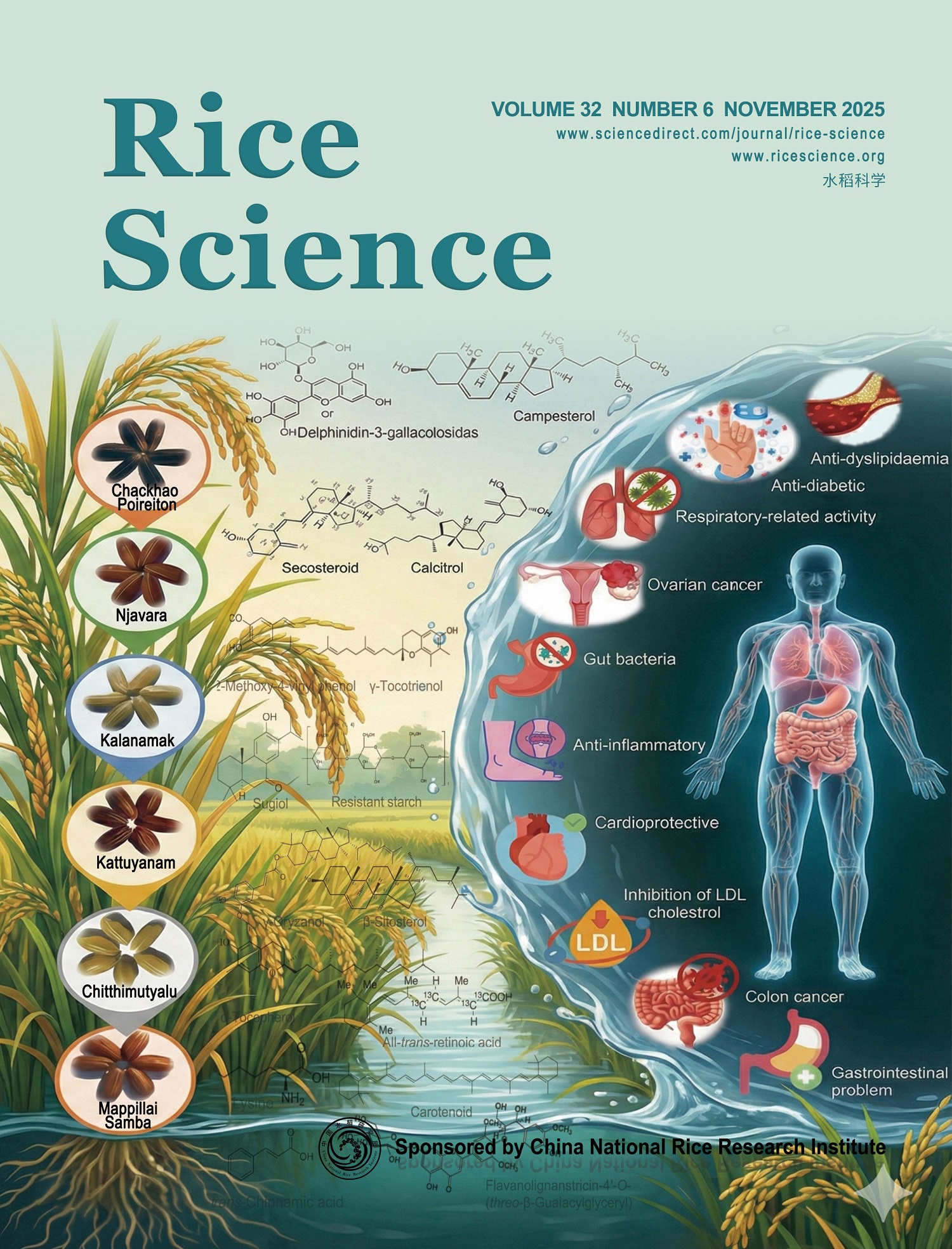
In recent years, traditional rice landraces have gained increasing attention among consumers, scientists, and nutritionists because of their nutritional and therapeutic value. The diverse rice gene pool of the Indian subcontinent is bestowed with indigenous rice types augmented with nutrients and phytochemicals. Landraces high in resistant starch and dietary fiber contribute to gut health and help prevent gastrointestinal disorders, whereas those with high-quality protein contents, such as glutelin and lysine, all-trans retinoic acid, as well as iron and zinc contents (even in polished rice), play a vital role in the alleviation of malnutrition and hidden hunger. Metabolomic studies have revealed the presence of novel bioactive molecules, including tocols (e.g., gamma-tocotrienol and alpha-tocopherol), phytosterols (e.g., campestrol, beta-sitosterol, and stigmasterol), phenolic acids (e.g., 2-methoxy-4-vinylphenol, 4-vinylphenol, 3,5-di-tert-butylphenol, 2,4-di-tert-butylphenol, ionol, and 2,6-di-tert-butylphenol), flavonoids [e.g., flavonolignans tricin 4′-O-(threo-β-guaiacylglyceryl) ether and tricin 4′-O-(erythro-β-guaiacylglyceryl) ether], anthocyanins (e.g., delphinidin and cyanidin), carotenoids (e.g., 7,7′,8,8′-tetrahydrolycopene and 1-hydroxylycopene), diterpenoids (e.g., sugiol), vitamin D3 (a secosteroid), and bioactive vitamin D (e.g., calcitriol). These bioactive phytochemicals endow Indian rice landraces, rich in antioxidants, with antiphlogistic, antineoplastic, cardiac risk preventive, antiviral, and antitubercular activities, confirming their use in traditional Indian medicine. Furthermore, Indian landraces with a low glycemic index may benefit the Asian Indian phenotype, which is characterized by clinical anomalies such as insulin resistance, dyslipidemia (reduced high-density lipoprotein levels), and high dietary glycemic load. Therefore, the conservation of India’s traditional rice varieties is vital for both sustainable agriculture and improving global health.