
Rice Science ›› 2026, Vol. 33 ›› Issue (6): 845-858.DOI: 10.1016/j.rsci.2026.06.003
• Research Papers • Previous Articles
Liu Yan1,#, Zhang Yuhan1,#, Bai Yijie1, Li Shan1, Wang Songyuan1, Yao Yuanyuan1( ), Yang Yuechao1,2()
Received:2026-04-01
Accepted:2026-06-11
Online:2026-11-28
Published:2026-11-17
Contact:
Yang Yuechao (yangyuechao2010@163.com); Yao Yuanyuan (yaoyuanyuanzq@163.com)
About author:#These authors contributed equally to this work
Liu Yan, Zhang Yuhan, Bai Yijie, Li Shan, Wang Songyuan, Yao Yuanyuan, Yang Yuechao. Enhancing Rice Salinity Tolerance with Lignite Fulvic Acid: Structural Determinants of Molecular Weight Fractionations and Regulation Mechanisms of Plasma Membrane H+-ATPase/SOS1[J]. Rice Science, 2026, 33(6): 845-858.
Add to citation manager EndNote|Ris|BibTeX
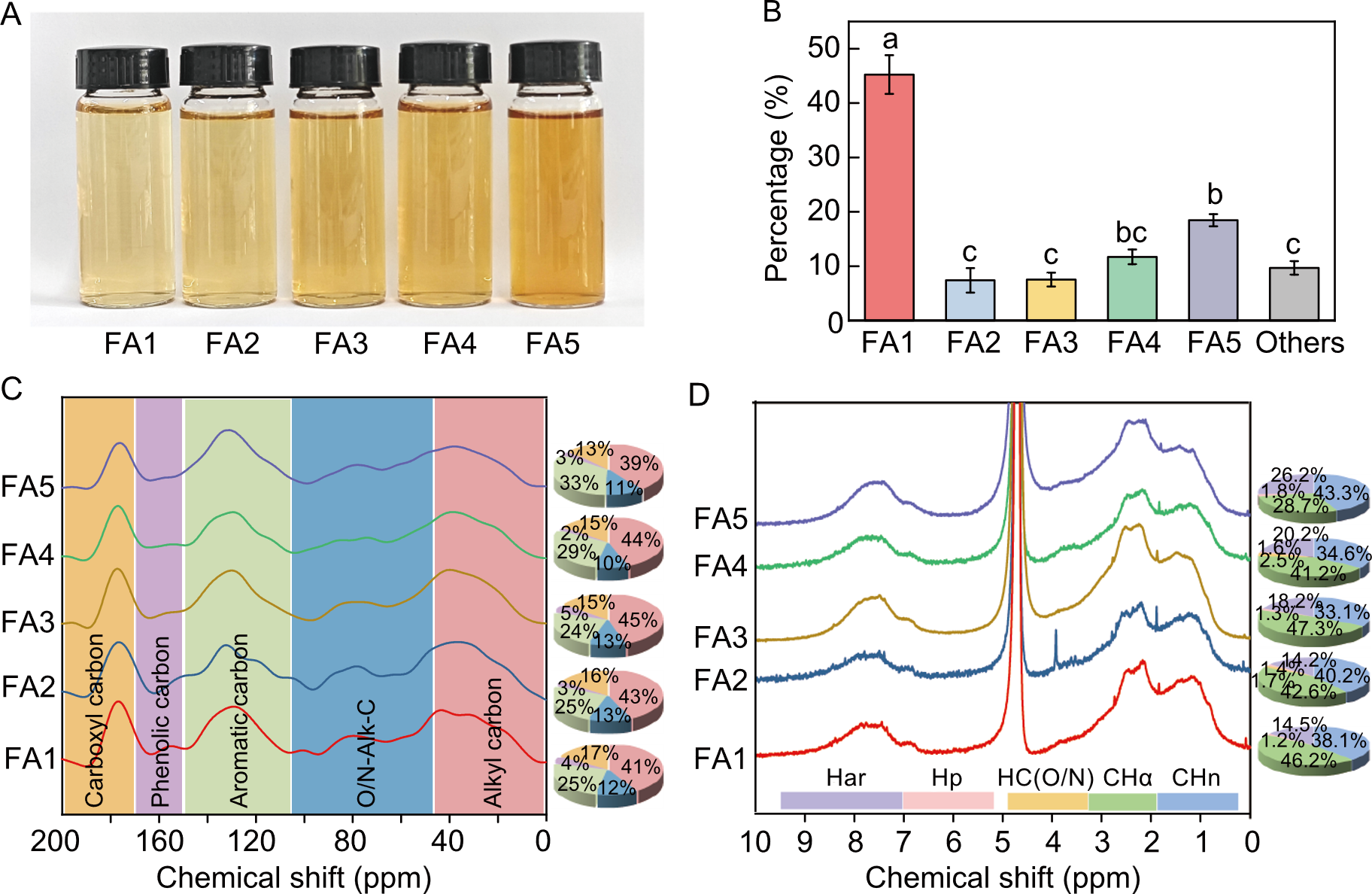
Fig. 1. Yield and nuclear magnetic resonance spectroscopy (NMR) of FA1‒FA5. A, Fulvic acid (FA) with different molecular weight (MW) classes at a concentration of 100 mg /L as carbon. B, Yield of FA in different MW classes. Data are mean ± SE (n = 3). Different lowercase letters above bars represent significant differences at P < 0.05 by Duncan’s multiple range test. C and D, Solid-13C NMR (C) and 1H NMR (D) of FA in different MW classes. O/N-Alk-C, Aliphatic carbons bound to oxygen or nitrogen; Har, Aromatic protons; Hp, Phenolic-type protons; HC(O/N), Protons on carbons bonded to oxygen or nitrogen heteroatoms; CHα, Protons on aliphatic carbons α to electron-withdrawing/unsaturated centers; CHn, Aliphatic protons attached to sp3 carbons bearing n hydrogens. FA1‒FA5 means FA with MW of < 1, 1‒3, 3‒5, 5‒10, and > 10 kDa, respectively.

Fig. 2. Fourier transform ion cyclotron resonance-mass spectrometry (FT-ICR MS) analysis of FA1-FA5. A, Van Krevelen diagram of FA1-FA5. B, Van Krevelen diagrams show common (light blue) and unique molecules between FA and FA1-FA5 (based on FA1-FA5, respectively). The numbers above in the legend represent the number of unique molecules in FA1-FA5, while the numbers below represent the number of molecules similar between FA and FA1-FA5. C, Van Krevelen diagrams show common and unique molecules (light blue) between FA and FA1-FA5 (based on FA). The numbers above in the legend represent the unique molecular quantities in FA, while the numbers below represent the similar molecular quantities in FA and FA1-FA5. FA1-FA5 mean fulvic acid (FA) with molecular weights of < 1, 1‒3, 3‒5, 5‒10, and > 10 kDa, respectively. O/C means oxygen-to-carbon ratio and H/C means hydrogen-to-carbon ratio. Molecular formulas assigned to each FA fraction were classified into four compositional groups based on heteroatom content: CHO (C~H~O only), CHNO (C~H~N~O), CHOS (C~H~O~S), and CHNOS (C~H~N~O~S).
| Treatment | FA treatment (mg/L as carbon) | Root length (cm) | Total root length (cm) | Surface area (cm2) | Average diameter (mm) | Na+ content (mg/g) |
|---|---|---|---|---|---|---|
| Control | 0 | 2.44 f | 3.59 g | 0.25 h | 0.35 abc | 81.08 a |
| FA1-1 | 1 | 4.11 bc | 5.16 e | 0.59 d | 0.35 abc | 33.85 ef |
| FA1-2 | 2 | 4.51 b | 6.73 b | 0.71 c | 0.34 cde | 26.82 g |
| FA1-3 | 5 | 4.05 c | 5.85 cd | 0.60 d | 0.33 e | 34.59 ef |
| FA2-1 | 1 | 4.23 bc | 6.58 b | 0.67 cd | 0.33 de | 35.18 de |
| FA2-2 | 2 | 4.98 a | 8.05 a | 0.95 a | 0.37 ab | 29.92 fg |
| FA2-3 | 5 | 4.33 bc | 5.54 d | 0.60 d | 0.34 cd | 36.89 de |
| FA3-1 | 1 | 3.99 c | 5.37de | 0.60 d | 0.35 bcd | 37.42 cde |
| FA3-2 | 2 | 4.16 bc | 6.82 b | 0.75 b | 0.34 bcd | 35.71 de |
| FA3-3 | 5 | 3.57 d | 4.21 f | 0.52 ef | 0.37 a | 40.10 cd |
| FA4-1 | 1 | 3.73 d | 5.64 d | 0.58 d | 0.32 e | 37.74 cde |
| FA4-2 | 2 | 4.27 bc | 6.15 c | 0.63 d | 0.33 de | 37.23 de |
| FA4-3 | 5 | 3.93 cd | 4.98 e | 0.60 d | 0.37 ab | 42.51 bc |
| FA5-1 | 1 | 3.09 e | 3.99 f | 0.51 f | 0.38 a | 37.67 cde |
| FA5-2 | 2 | 3.95 c | 5.04 e | 0.62 d | 0.33 de | 37.99 cde |
| FA5-3 | 5 | 2.27 f | 2.34 h | 0.31 g | 0.38 a | 45.25 b |
Table 1. Root growth of rice seedlings under different fulvic acid (FA) treatment conditions.
| Treatment | FA treatment (mg/L as carbon) | Root length (cm) | Total root length (cm) | Surface area (cm2) | Average diameter (mm) | Na+ content (mg/g) |
|---|---|---|---|---|---|---|
| Control | 0 | 2.44 f | 3.59 g | 0.25 h | 0.35 abc | 81.08 a |
| FA1-1 | 1 | 4.11 bc | 5.16 e | 0.59 d | 0.35 abc | 33.85 ef |
| FA1-2 | 2 | 4.51 b | 6.73 b | 0.71 c | 0.34 cde | 26.82 g |
| FA1-3 | 5 | 4.05 c | 5.85 cd | 0.60 d | 0.33 e | 34.59 ef |
| FA2-1 | 1 | 4.23 bc | 6.58 b | 0.67 cd | 0.33 de | 35.18 de |
| FA2-2 | 2 | 4.98 a | 8.05 a | 0.95 a | 0.37 ab | 29.92 fg |
| FA2-3 | 5 | 4.33 bc | 5.54 d | 0.60 d | 0.34 cd | 36.89 de |
| FA3-1 | 1 | 3.99 c | 5.37de | 0.60 d | 0.35 bcd | 37.42 cde |
| FA3-2 | 2 | 4.16 bc | 6.82 b | 0.75 b | 0.34 bcd | 35.71 de |
| FA3-3 | 5 | 3.57 d | 4.21 f | 0.52 ef | 0.37 a | 40.10 cd |
| FA4-1 | 1 | 3.73 d | 5.64 d | 0.58 d | 0.32 e | 37.74 cde |
| FA4-2 | 2 | 4.27 bc | 6.15 c | 0.63 d | 0.33 de | 37.23 de |
| FA4-3 | 5 | 3.93 cd | 4.98 e | 0.60 d | 0.37 ab | 42.51 bc |
| FA5-1 | 1 | 3.09 e | 3.99 f | 0.51 f | 0.38 a | 37.67 cde |
| FA5-2 | 2 | 3.95 c | 5.04 e | 0.62 d | 0.33 de | 37.99 cde |
| FA5-3 | 5 | 2.27 f | 2.34 h | 0.31 g | 0.38 a | 45.25 b |
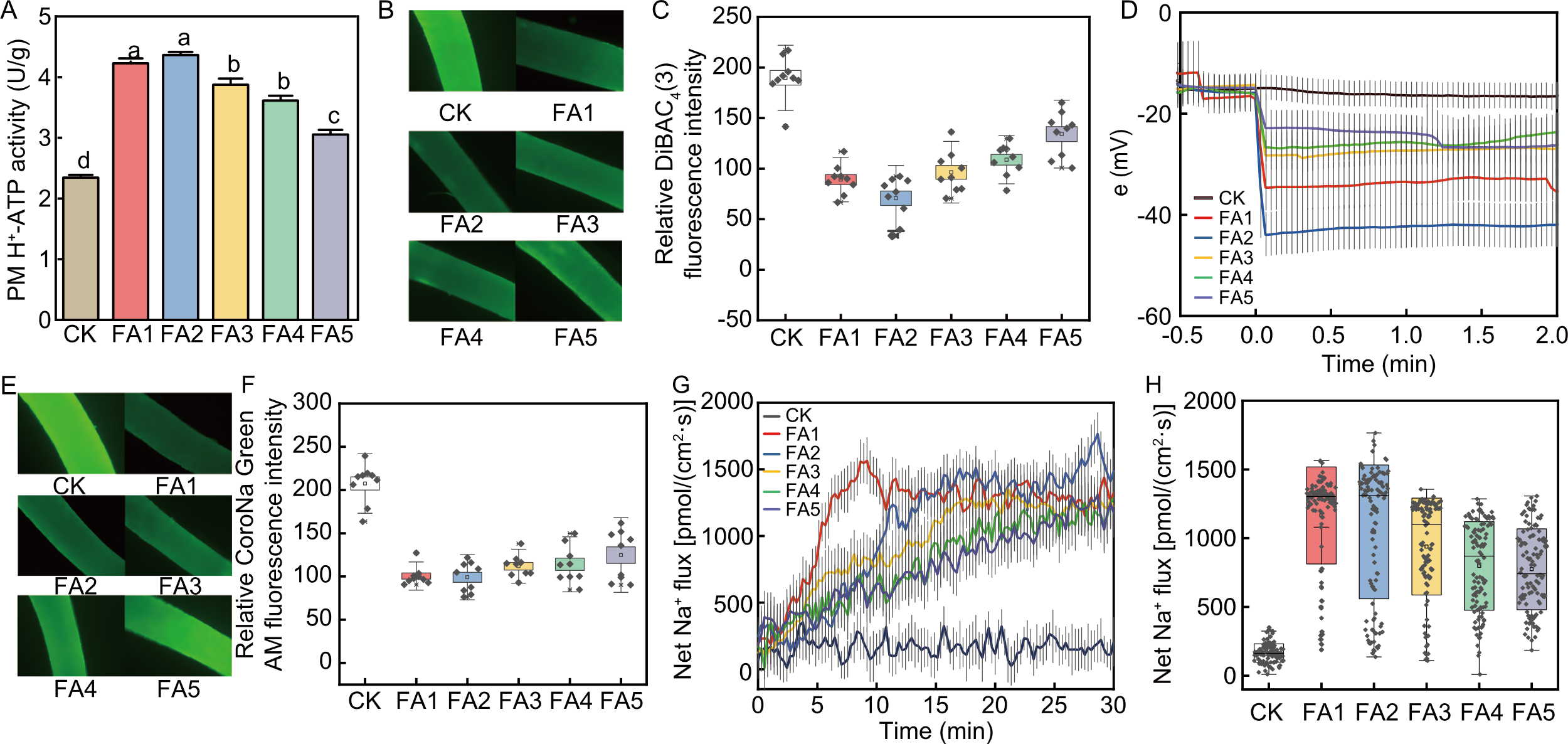
Fig. 3. Effects of different fulvic acid (FA) molecular weight fractions (FA1-FA5) on plasma membrane (PM) H+-ATPase activity, membrane potential (MP), and Na+ dynamics in rice seedling roots. A, PM H+-ATPase activity of rice seedlings treated with FA1-FA5 at a concentration of 2 mg/L as carbon. Data are mean ± SE (n = 3). Different lowercase letters above bars represent significant differences at P < 0.05 by Duncan’s multiple range test. B, Representative images showing MP alteration after 30 min of FA1-FA5 treatments in rice seedling roots. C, Relative bis-(1,3-dibutylbarbituric acid) trimethine oxonol [DiBAC4(3)] fluorescence intensity in panel B (n = 9). D, MP of rice seedling roots after FA1-FA5 treatments (n = 3). E, Representative images showing Na+ alteration before and after 30 min of FA1-FA5 treatments in rice seedling roots. F, Relative CoroNa Green AM fluorescence intensity of rice seedling roots after FA1-FA5 treatments in panel E (n = 9). G, Na+ flux kinetics measured in rice seedling roots after FA1-FA5 treatments (n = 3). H, Net Na+ flux of rice seedling roots after FA1-FA5 treatments in G (n = 3). CK, Control group of rice seedling roots; FA1-FA5, Rice seedling roots treated with FA molecular weights of < 1, 1‒3, 3‒5, 5‒10, and > 10 kDa at a concentration of 2 mg/L as carbon, respectively.
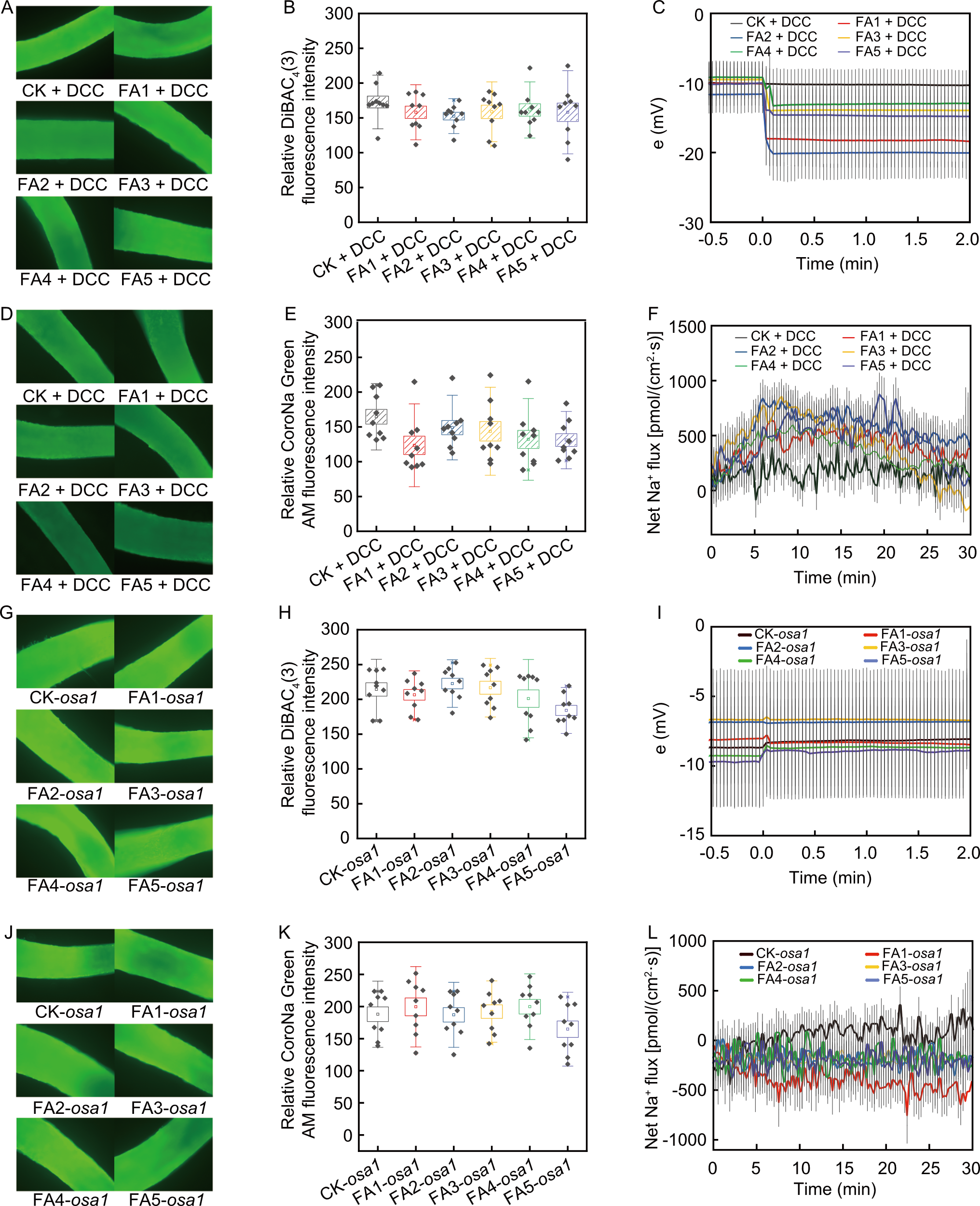
Fig. 4. Accumulation of membrane potential (MP) and Na+ flux in rice roots treated with N,Nʹ-dicyclohexylcarbodiimide (DCC) and in osa1 knockout systems. A and D, Representative images showing MP (A) and Na+ (D) alterations in rice seedling roots after 30 min of treatment with various FA1-FA5 and DCC. B and E, Relative bis-(1,3-dibutylbarbituric acid) trimethine oxonol [DiBAC4(3)] fluorescence intensity in panel A (B) (n = 9) and relative CoroNa Green AM fluorescence intensity in panel D (E) (n = 9). C, MP of rice seedling roots after FA1-FA5 and DCC treatments (n = 3). F, Na+ flux kinetics measured in rice seedling roots after FA1-FA5 and DCC treatments (n = 3). G and J, Representative images showing MP (G) and Na+ (J) alterations in rice seedling roots of osa1 mutants after 30 min of FA1-FA5 treatments. H and K, Relative DiBAC4(3) fluorescence intensity in panel G (H) (n = 9) and relative CoroNa Green AM fluorescence intensity in panel J (K) (n = 9). I, MP of osa1 mutant rice seedling roots (n = 3). L, Na+ flux kinetics of osa1 mutant seedling roots after FA1-FA5 treatments (n = 3). CK, Control group of rice seedling roots; FA1-FA5, Rice seedling roots treated with FA molecular weights of < 1, 1‒3, 3‒5, 5‒10, and > 10 kDa at a concentration of 2 mg/L as carbon, respectively.
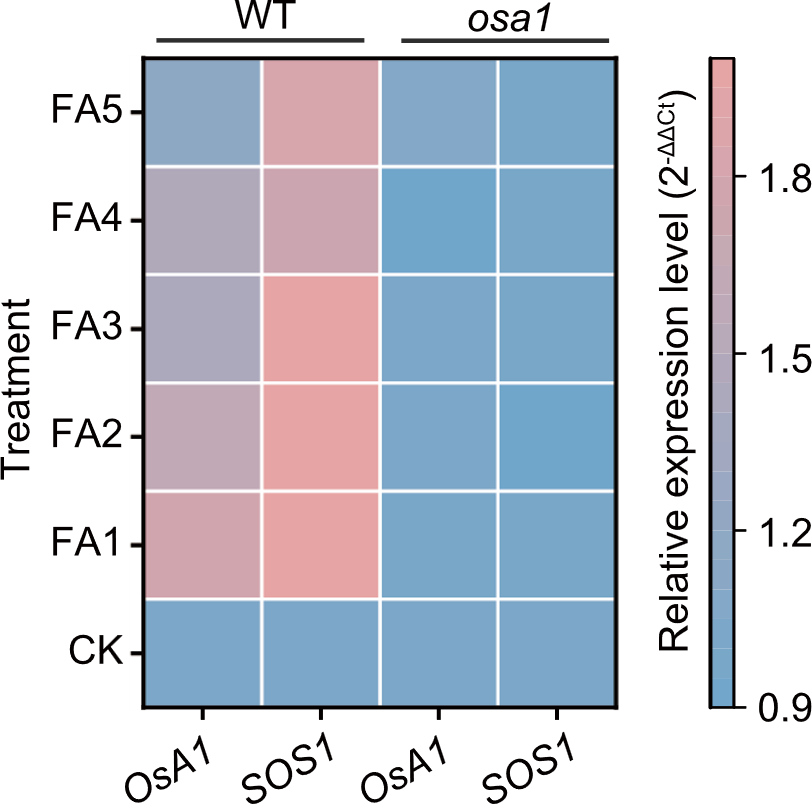
Fig. 5. qRT-PCR of OsA1 (LOC4333770) and SOS1 (LOC4352928) in wild-type (WT) and osa1 mutants (n = 3) under FA1‒FA5 treatment. CK, Control group of rice seedling roots; FA1-FA5, Rice seedling roots treated with FA molecular weights of < 1, 1‒3, 3‒5, 5‒10, and > 10 kDa at a concentration of 2 mg/L as carbon, respectively. Total RNA was extracted from rice seedling roots after 30 min of treatment, and OsActin was used as the reference gene.
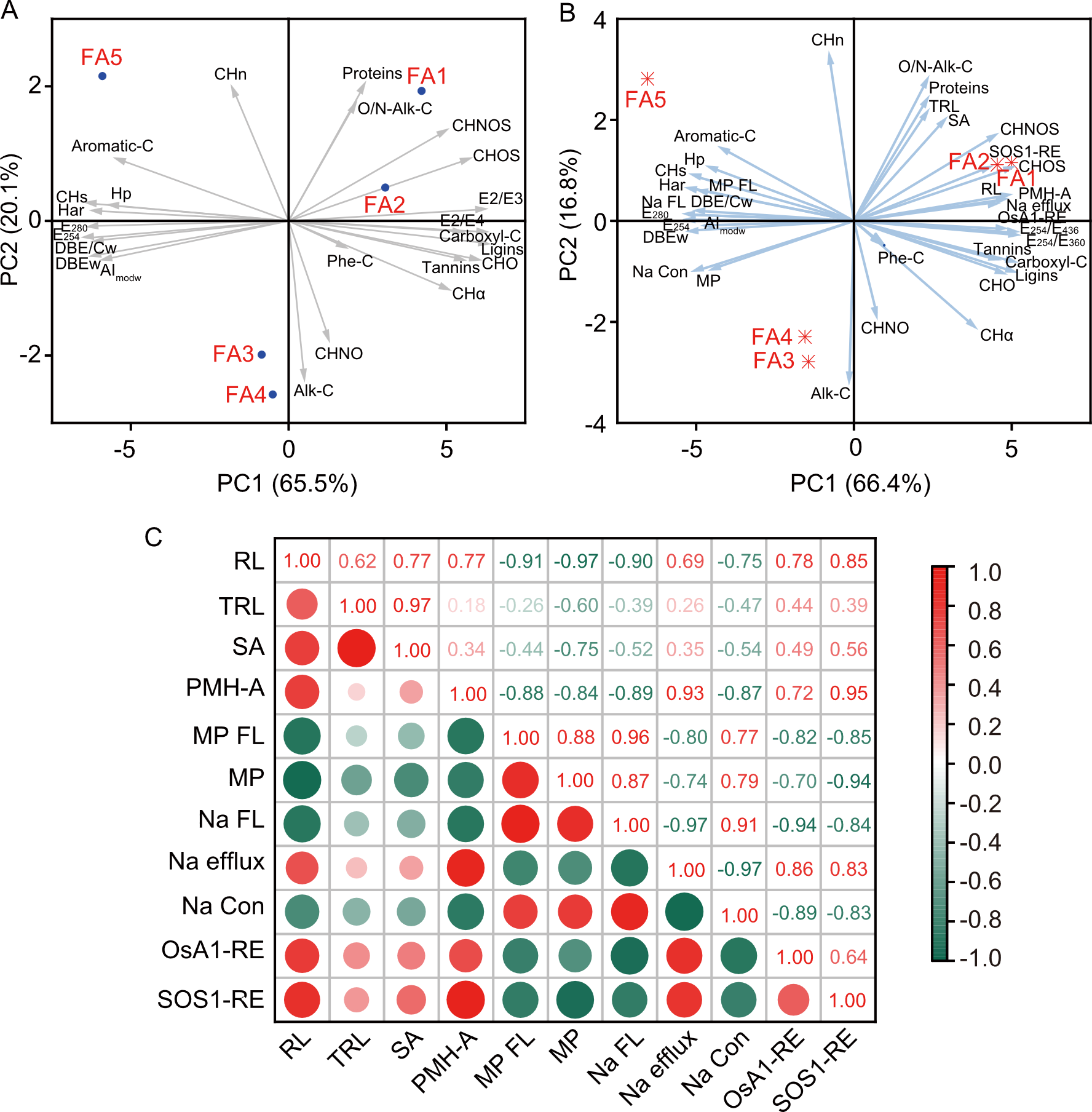
Fig. 6. Multivariate analysis of fulvic acid (FA) molecular weight fractions (FA1-FA5). A, Principal component analysis (PCA) of the data with the main chemical structures of FA1-FA5. B, PCA of the main chemical structures in FA1-FA5, and the growth and salt tolerance index in rice seedlings. C, Correlation analysis of salt tolerance indices in rice seedling roots. FA1-FA5 mean fulvic acid (FA) with molecular weights of < 1, 1‒3, 3‒5, 5‒10, and > 10 kDa, respectively. PC, Principal component; Alk-C, Alkyl carbon; O/N-Alk-C, Aliphatic carbons bound to oxygen or nitrogen; Aromatic-C, Aromatic carbon; Phe-C, Phenolic carbon; Carboxyl-C, Carboxyl carbon; AImodW, Intensity-weighted average of the modified aromaticity index; DBEw, Double bond equivalent weighted by carbon number; DBE/Cw, Abundance-weighted mean of DBE per carbon; E254, Specific ultraviolet absorbance at 254 nm; E280, Specific ultraviolet absorbance at 280 nm; E254/E360, Ratio of specific ultraviolet absorbance at 254 nm to that at 360 nm; E254/E436, Ratio of specific ultraviolet absorbance at 254 nm to that of 436 nm; CHs, CH adjacent to aromatic ring; CHn, Aliphatic protons attached to sp3 carbons bearing n hydrogens; CHα, Protons on aliphatic carbons α to electron-withdrawing/unsaturated centers; Hp, Phenolic-type protons; Har, Aromatic protons; RL, Root length; TRL, Total root length; SA, Root surface area; PMH-A, Plasma membrane H+-ATPase activity; MP, Membrane potential; FL, Flux; Na Con, Na concentration; OsA1-RE, Relative expression level of OsA1; SOS1-RE, Relative expression level of SOS1. CHNO, CHO, CHOS, and CHNOS, Molecular formulas assigned to each FA fraction were classified into four compositional groups based on heteroatom content: CHO (C~H~O only), CHNO (C~H~N~O), CHOS (C~H~O~S), and CHNOS (C~H~N~O~S).
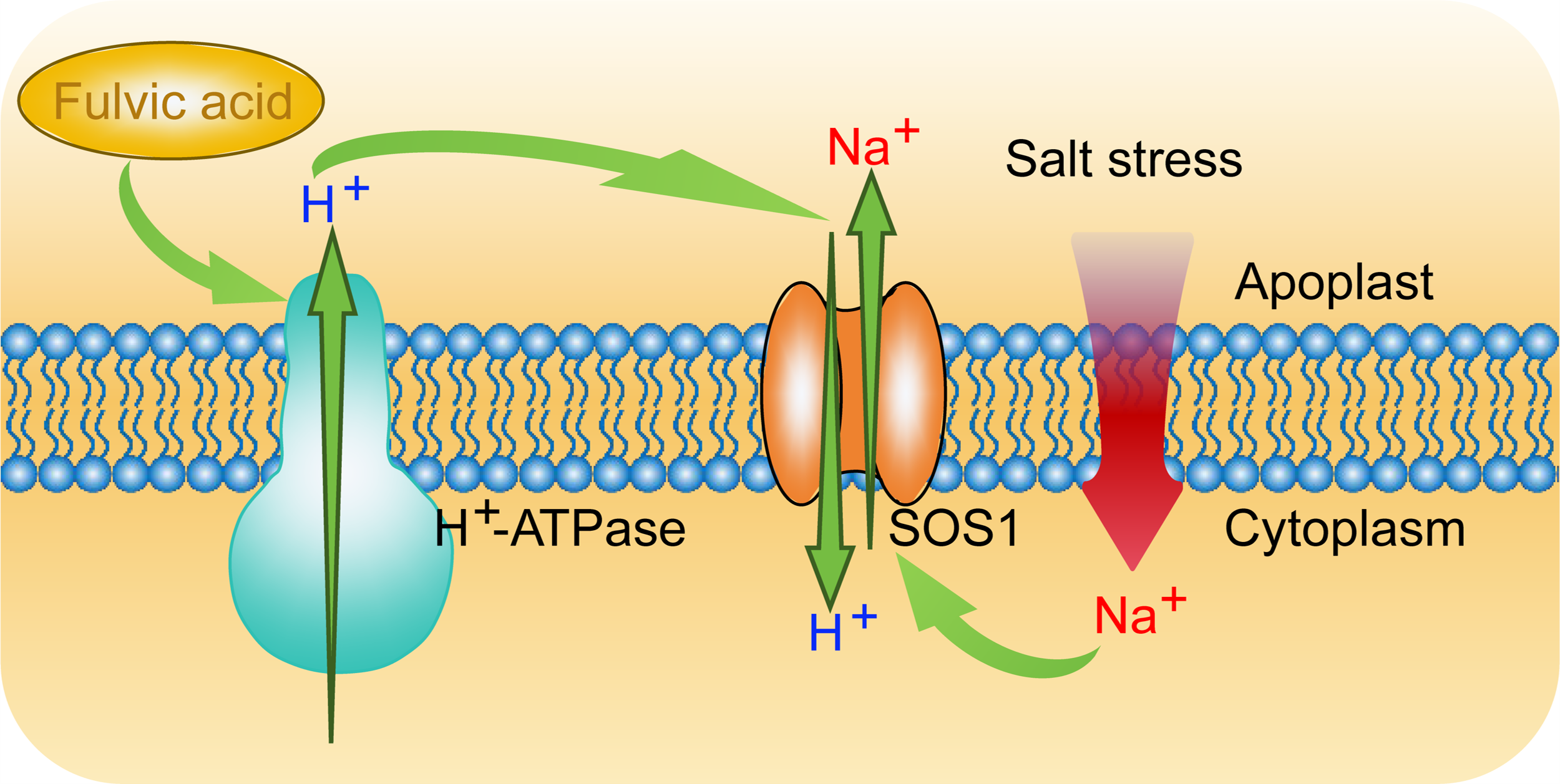
Fig. 7. Fulvic acid regulates plant salt tolerance by acting on plasma membrane H+-ATPase-SOS1 pathway.
| [1] | Aguiar N O, Novotny E H, Oliveira A L, et al. 2013. Prediction of humic acids bioactivity using spectroscopy and multivariate analysis. J Geochem Explor, 129: 95-102. |
| [2] | Alemán F, Nieves-Cordones M, Martínez V, et al. 2011. Root K+ acquisition in plants: The Arabidopsis thaliana model. Plant Cell Physiol, 52(9): 1603-1612. |
| [3] | Amir S, Jouraiphy A, Meddich A, et al. 2010. Structural study of humic acids during composting of activated sludge-green waste: Elemental analysis, FTIR and 13C NMR. J Hazard Mater, 177(1/3): 524-529. |
| [4] | Atiyeh R M, Lee S, Edwards C A, et al. 2002. The influence of humic acids derived from earthworm-processed organic wastes on plant growth. Bioresour Technol, 84(1): 7-14. |
| [5] | Bai Y J, Zhang Y P, Wang X Q, et al. 2024. Laccase modified fulvic acid-like substance from paper spent cooking liquor: Chemical structure optimization, functional group reconstruction and bioactivity improvement. Environ Technol Innov, 36: 103910. |
| [6] | Bao S D. 2000. Agrochemical Analysis of Soils. 3rd edn. Beijing, China: China Agriculture Press. (in Chinese) |
| [7] | Barbez E, Dünser K, Gaidora A, et al. 2017. Auxin steers root cell expansion via apoplastic pH regulation in Arabidopsis thaliana. Proc Natl Acad Sci USA, 114(24): E4884-E4893. |
| [8] | Canellas L P, Olivares F L, Okorokova-Façanha A L, et al. 2002. Humic acids isolated from earthworm compost enhance root elongation, lateral root emergence, and plasma membrane H+-ATPase activity in maize roots. Plant Physiol, 130(4): 1951-1957. |
| [9] | Chen Q, Cao X F, Li Y Y, et al. 2022. Functional carbon nanodots improve soil quality and tomato tolerance in saline-alkali soils. Sci Total Environ, 830: 154817. |
| [10] | de Moura O V T, Berbara R L L, de Oliveira Torchia D F, et al. 2023. Humic foliar application as sustainable technology for improving the growth, yield, and abiotic stress protection of agricultural crops: A review. J Saudi Soc Agric Sci, 22(8): 493-513. |
| [11] | Ding M, Zhang M X, Zeng H Q, et al. 2021. Molecular basis of plasma membrane H+-ATPase function and potential application in the agricultural production. Plant Physiol Biochem, 168: 10-16. |
| [12] | Dinler B S, Gunduzer E, Tekinay T. 2016. Pre-treatment of fulvic acid plays a stimulant role in protection of soybean (Glycine max L.) leaves against heat and salt stress. Acta Biol Crac Ser Bot, 58(1): 29-41. |
| [13] | Feng L, Xu J Z, Kang S C, et al. 2016. Chemical composition of microbe-derived dissolved organic matter in cryoconite in Tibetan Plateau glaciers: Insights from Fourier transform ion cyclotron resonance mass spectrometry analysis. Environ Sci Technol, 50(24): 13215-13223. |
| [14] | Fernandes A R, Sá-Correia I. 2003. Transcription patterns of PMA1 and PMA2 genes and activity of plasma membrane H+-ATPase in Saccharomyces cerevisiae during diauxic growth and stationary phase. Yeast, 20(3): 207-219. |
| [15] | Frías I, Caldeira M T, Pérez-Castiñeira J R, et al. 1996. A major isoform of the maize plasma membrane H+-ATPase: characterization and induction by auxin in coleoptiles. Plant Cell, 8(9): 1533-1544. |
| [16] | Fuglsang A T, Guo Y, Cuin T A, et al. 2007. Arabidopsis protein kinase PKS5 inhibits the plasma membrane H+-ATPase by preventing interaction with 14-3-3 protein. Plant Cell, 19(5): 1617-1634. |
| [17] | García A C, de Souza L G A, Pereira M G, et al. 2016. Structure-property-function relationship in humic substances to explain the biological activity in plants. Sci Rep, 6: 20798. |
| [18] | Gradmann D, Hansen U P, Long W S, et al. 1978. Current-voltage relationships for the plasma membrane and its principal electrogenic pump in Neurospora crassa: I. Steady-state conditions. J Membr Biol, 39(4): 333-367. |
| [19] | Gupta A, Shaw B P, Sahu B B. 2021. Post-translational regulation of the membrane transporters contributing to salt tolerance in plants. Funct Plant Biol, 48(12): 1199-1212. |
| [20] | Haruta M, Sussman M R. 2012. The effect of a genetically reduced plasma membrane protonmotive force on vegetative growth of Arabidopsis. Plant Physiol, 158(3): 1158-1171. |
| [21] | Havshøi N W, Nielsen J, Fuglsang A T. 2024. The mechanism behind tenuazonic acid-mediated inhibition of plant plasma membrane H+-ATPase and plant growth. J Biol Chem, 300(4): 107167. |
| [22] | Ismail A M, Horie T. 2017. Genomics, physiology, and molecular breeding approaches for improving salt tolerance. Annu Rev Plant Biol, 68: 405-434. |
| [23] | Jiang Z H, Zhou X P, Tao M, et al. 2019. Plant cell-surface GIPC sphingolipids sense salt to trigger Ca2+ influx. Nature, 572: 341-346. |
| [24] | Khan M S, Ahmad D, Khan M A. 2015. Trends in genetic engineering of plants with (Na+/H+) antiporters for salt stress tolerance. Biotechnol Biotechnol Equip, 29(5): 815-825. |
| [25] | Kim H S, Lee J E, Jang H Y, et al. 2016. CsRCI2A and CsRCI2E genes show opposite salt sensitivity reaction due to membrane potential control. Acta Physiol Plant, 38(2): 50. |
| [26] | Li J, Guo Y, Yang Y Q. 2022. The molecular mechanism of plasma membrane H+-ATPases in plant responses to abiotic stress. J Genet Genom, 49(8): 715-725. |
| [27] | Li K M, Shahab A, Li J Y, et al. 2023. Compost-derived humic and fulvic acid coupling with Shewanella oneidensis MR-1 for the bioreduction of Cr(Ⅵ). J Environ Manag, 345: 118596. |
| [28] | Li L X, Verstraeten I, Roosjen M, et al. 2021. Cell surface and intracellular auxin signalling for H+ fluxes in root growth. Nature, 599: 273-277. |
| [29] | Li N, Ma H, Wang G D, et al. 2024. Efficient extraction and formation mechanism of fulvic acid from lignite: Experimental and DFT studies. J Environ Manag, 365: 121650. |
| [30] | Li Y J, Tang Z H, Pan Z Y, et al. 2022. Calcium-mobilizing properties of Salvia miltiorrhiza-derived carbon dots confer enhanced environmental adaptability in plants. ACS Nano, 16(3): 4357-4370. |
| [31] | Liu F J, Wei X Y, Fan M H, et al. 2016. Separation and structural characterization of the value-added chemicals from mild degradation of lignites: A review. Appl Energy, 170(C): 415-436. |
| [32] | Liu J B, Wang N, Fujii M, et al. 2023. Insights into the roles of DOM in humification during sludge composting: Comprehensive chemoinformatic analysis using FT-ICR mass spectrometry. Chem Eng J, 475: 146024. |
| [33] | Liu Y, Yao Y Y, Yang Y C, et al. 2023. Small molecular organic acid potassium promotes rice (Oryza sativa L.) photosynthesis by regulating CBC and TCA cycle. Plant Growth Regul, 101(2): 569-584. |
| [34] | Livak K J, Schmittgen T D. 2001. Analysis of relative gene expression data using real-time quantitative PCR and the 2-ΔΔCT method. Methods, 25(4): 402-408. |
| [35] | Lu M M, Zhang Y B, Su Z J, et al. 2020. The NMR and spectral study on the structure of molecular size-fractionated lignite humic acid. Resour Environ Sustain, 2: 100004. |
| [36] | Monda H, McKenna A M, Fountain R, et al. 2021. Bioactivity of humic acids extracted from shale ore: Molecular characterization and structure-activity relationship with tomato plant yield under nutritional stress. Front Plant Sci, 12: 660224. |
| [37] | Morth J P, Pedersen B P, Buch-Pedersen M J, et al. 2011. A structural overview of the plasma membrane Na+, K+-ATPase and H+-ATPase ion pumps. Nat Rev Mol Cell Biol, 12(1): 60-70. |
| [38] | Munns R, Tester M. 2008. Mechanisms of salinity tolerance. Annu Rev Plant Biol, 59: 651-681. |
| [39] | Muscolo A, Sidari M, Nardi S. 2013. Humic substance: Relationship between structure and activity. Deeper information suggests univocal findings. J Geochem Explor, 129: 57-63. |
| [40] | Nelson N, Harvey W R. 1999. Vacuolar and plasma membrane proton-adenosinetriphosphatases. Physiol Rev, 79(2): 361-385. |
| [41] | Olaetxea M, de Hita D, Garcia C A, et al. 2018. Hypothetical framework integrating the main mechanisms involved in the promoting action of rhizospheric humic substances on plant root- and shoot-growth. Appl Soil Ecol, 123: 521-537. |
| [42] | Perlin D S, San Francisco M J D, Slayman C W, et al. 1986. H+ATP stoichiometry of proton pumps from Neurospora crassa and Escherichia coli. Arch Biochem Biophys, 248(1): 53-61. |
| [43] | Perminova I V, Shirshin E A, Konstantinov A I, et al. 2018. The structural arrangement and relative abundance of aliphatic units may effect long-wave absorbance of natural organic matter as revealed by 1H NMR spectroscopy. Environ Sci Technol, 52(21): 12526-12537. |
| [44] | Pinton R, Cesco S, Iacolettig G, et al. 1999. Modulation of NO3- uptake by water-extractable humic substances: Involvement of root plasma membrane H+ATPase. Plant Soil, 215(2): 155-161. |
| [45] | Qin Y, Zhu H, Zhang M, et al. 2016. GC-MS analysis of membrane-graded fulvic acid and its activity on promoting wheat seed germination. Molecules, 21(10): 1363. |
| [46] | Qiu Q S, Guo Y, Dietrich M A, et al. 2002. Regulation of SOS1, a plasma membrane Na+/H+exchanger in Arabidopsis thaliana, by SOS2 and SOS3. Proc Natl Acad Sci USA, 99(12): 8436-8441. |
| [47] | Quaggiotti S, Ruperti B, Pizzeghello D, et al. 2004. Effect of low molecular size humic substances on nitrate uptake and expression of genes involved in nitrate transport in maize (Zea mays L.). J Exp Bot, 55: 803-813. |
| [48] | Ray D K, Ramankutty N, Mueller N D, et al. 2012. Recent patterns of crop yield growth and stagnation. Nat Commun, 3: 1293. |
| [49] | Shen P, Wang R, Jing W, et al. 2011. Rice phospholipase Dα is involved in salt tolerance by the mediation of H+-ATPase activity and transcription. J Integr Plant Biol, 53(4): 289-299. |
| [50] | Shi H, Ishitani M, Kim C, et al. 2000. The Arabidopsis thaliana salt tolerance gene SOS1 encodes a putative Na+/H+ antiporter. Proc Natl Acad Sci USA, 97(12): 6896-6901. |
| [51] | Song K, Yang J W. 2023. Molecular characterization of humic acid fractions and their effect on the adsorption of Cr(VI) by goethite. Water Air Soil Pollut, 234(6): 373. |
| [52] | Sun B, Li Y S, Song M J, et al. 2022. Molecular characterization of the composition and transformation of dissolved organic matter during the semi-permeable membrane covered hyperthermophilic composting. J Hazard Mater, 425: 127496. |
| [53] | Sun J, Chen S L, Dai S X, et al. 2009. NaCl-induced alternations of cellular and tissue ion fluxes in roots of salt-resistant and salt-sensitive poplar species. Plant Physiol, 149(2): 1141-1153. |
| [54] | Sun J, Wang M J, Ding M Q, et al. 2010. H2O2 and cytosolic Ca2+ signals triggered by the PM H+-coupled transport system mediate K+/Na+ homeostasis in NaCl-stressed Populus euphratica cells. Plant Cell Environ, 33(6): 943-958. |
| [55] | Tahiri A, Destain J, Thonart P, et al. 2015. In vitro model to study the biological properties of humic fractions from landfill leachate and leonardite during root elongation of Alnus glutinosa L. Gaertn and Betula pendula Roth. Plant Cell Tissue Organ Cult, 122(3): 739-749. |
| [56] | Tang Y F, Yang Y C, Cheng D D, et al. 2017. Value-added humic acid derived from lignite using novel solid-phase activation process with Pd/CeO2 nanocatalyst: A physiochemical study. ACS Sustainable Chem Eng, 5(11): 10099-10110. |
| [57] | van Zelm E, Zhang Y X, Testerink C. 2020. Salt tolerance mechanisms of plants. Annu Rev Plant Biol, 71: 403-433. |
| [58] | Ware S A, Hartman B E, Waggoner D C, et al. 2022. Molecular evidence for the export of terrigenous organic matter to the north Gulf of Mexico by solid-state 13C NMR and Fourier transform ion cyclotron resonance mass spectrometry of humic acids. Geochim Cosmochim Acta, 317: 39-52. |
| [59] | Xue B P, Duan W, Gong L P, et al. 2024. The OsDIR55 gene increases salt tolerance by altering the root diffusion barrier. Plant J, 118(5): 1550-1568. |
| [60] | Yang Y Q, Guo Y. 2018a. Elucidating the molecular mechanisms mediating plant salt-stress responses. New Phytol, 217(2): 523-539. |
| [61] | Yang Y Q, Guo Y. 2018b. Unraveling salt stress signaling in plants. J Integr Plant Biol, 60(9): 796-804. |
| [62] | Yang Z J, Wang C W, Xue Y, et al. 2019. Calcium-activated 14-3-3 proteins as a molecular switch in salt stress tolerance. Nat Commun, 10: 1199. |
| [63] | Yao Y Y, Wang X Q, Yang Y C, et al. 2019a. Molecular composition of size-fractionated fulvic acid-like substances extracted from spent cooking liquor and its relationship with biological activity. Environ Sci Technol, 53(24): 14752-14760. |
| [64] | Yao Y Y, Wang C, Wang X Q, et al. 2019b. Activation of fulvic acid-like in paper mill effluents using H2O2/TiO2 catalytic oxidation: Characterization and salt stress bioassays. J Hazard Mater, 378: 120702. |
| [65] | Yu B, Zheng W N, Xing L, et al. 2022. Root twisting drives halotropism via stress-induced microtubule reorientation. Dev Cell, 57(20): 2412-2425.e6. |
| [66] | Yu Y C, Xu T, Li X, et al. 2016. NaCl-induced changes of ion homeostasis and nitrogen metabolism in two sweet potato (Ipomoea batatas L.) cultivars exhibit different salt tolerance at adventitious root stage. Environ Exp Bot, 129: 23-36. |
| [67] | Yu Z, Liu X M, Chen C Y, et al. 2019. Molecular insights into the transformation of dissolved organic matter during hyper-thermophilic composting using ESI FT-ICR MS. Bioresour Technol, 292: 122007. |
| [68] | Zandonadi D B, Canellas L P, Façanha A R. 2007. Indolacetic and humic acids induce lateral root development through a concerted plasmalemma and tonoplast H+ pumps activation. Planta, 225(6): 1583-1595. |
| [69] | Zandonadi D B, Santos M P, Dobbss L B, et al. 2010. Nitric oxide mediates humic acids-induced root development and plasma membrane H+-ATPase activation. Planta, 231(5): 1025-1036. |
| [70] | Zhang M X, Wang Y, Chen X, et al. 2021. Plasma membrane H+-ATPase overexpression increases rice yield via simultaneous enhancement of nutrient uptake and photosynthesis. Nat Commun, 12: 735. |
| [71] | Zhao N, Yang X X, Huang G C, et al. 2021. Chemical and spectroscopic characteristics of humic acid from a clay loam soil in Ontario after 52 years of consistent fertilization and crop rotation. Pedosphere, 31(1): 204-213. |
| [1] | Wang Yanyan, Hao Yunfei, Wang Shihong, Ji Hongting, Zhao Hejuan, Qiao Weihua. Overview of Genes Governing Rice Grain Size [J]. Rice Science, 2026, 33(6): 759-777. |
| [2] | Wang Tianye, Zhang Lei, Venuprasad Ramaiah, Michael Dos Santos Brito, Pan Xiaowu, Zheng Xiaoming, Pang Hongbo. Advances in Cold Tolerance Mechanisms of Rice: Physiological, Molecular, and Breeding Insights [J]. Rice Science, 2026, 33(6): 778-798. |
| [3] | Tilak Raj Sharma, B. N. Devanna, Rajeev Rathour, Maganti Sheshu Madhav, Alok Das, Soham Ray, Pankaj Kumar Singh, Joshitha Vijayan, Shallu Thakur, Santosh Kumar Gupta, Mandeep Kumari, Kirti Arora, Ritu Kapoor, Jyoti Singh, Banita Kumari Saklani, Amit Kumar Rai, Priyanka Jain, Amolkumar U. Solanke, Humira Sonah, Rupesh Deshmukh. Twenty-Five Years of Pi54: Discovery, Deployment, and Its Role in Silent Revolution in Rice Breeding [J]. Rice Science, 2026, 33(6): 799-814. |
| [4] | Ekta Kharche, Nitika Sandhu, Om Prakash Raigar, Neha Kumari, Gaurav Augustine, Gursewak Singh, Jasneet Singh, Jaismeen Kaur, Gomsie Pruthi, Rupinder Kaur, Renu Khanna, Arvind Kumar, Anu Kalia, Poonam Choudhary, Sandeep Mann. Regulatory Integration of Anatomical, Hormonal, and Genetic Mechanisms Governing Mesocotyl Elongation and Early Seedling Vigor under Deep-Sown Direct-Seeded Rice Conditions [J]. Rice Science, 2026, 33(5): 654-668. |
| [5] | Aishwarya Saravanan, Kalaimagal Thiyagarajan, Manonmani Swaminathan, Anita Bellie, Thiyageshwari Subramanium, Senthilkumar Govindan. Cytoplasmic Male Sterility Diversification: A Key Strategy for Sustainable Hybrid Rice Breeding [J]. Rice Science, 2026, 33(5): 603-621. |
| [6] | Tushar K. Dutta, Voodikala S. Akhil, Utkarsh Chauhan, Prolay K. Bhowmick, Soham Ray, Viswanathan Chinnusamy, Simon C. Groen. Knockout of OsHIPP19 Reduces Rice Susceptibility to Root-Knot Nematode Meloidogyne graminicola [J]. Rice Science, 2026, 33(5): 669-686. |
| [7] | Wonjae Hwang, Sunok Moon, Ki-Hong Jung. RE3DB: A Multi-Omics Phylogenomics Platform for Rice E3 Ubiquitin-Ligase-System Genes and Candidate F-Box Genes Associated with Pollen Germination [J]. Rice Science, 2026, 33(5): 715-734. |
| [8] | Zhao Yunxia, Gao Yanfeng, Gao Cheng, Li Yang, Hu Mingyu, Li Ming, Zhang Jinmei, Xin Xia, Yin Guangkun. Peroxidase Activity as Reliable Indicator for Evaluating Storability of Japonica Rice Seeds [J]. Rice Science, 2026, 33(5): 701-714. |
| [9] | Pratap Kalita, Mrinal Kashyap Sarma, Debabrata Nath, Saikat Sen, Raja Chakraborty. Recent Trends in Rice Bran Oil Extraction, Active Edible Oil and Emerging Applications: A Narrative Review [J]. Rice Science, 2026, 33(5): 622-640. |
| [10] | Yehyun Yim, Kiyoon Kang, Suyeon Ko, Hee-Jin You, Sichul Lee, Nam-Chon Paek, Choon-Tak Kwon. Rice ONAC039 Drives Leaf Senescence Through Direct Transcriptional Activation of Multiple Senescence-Associated Genes [J]. Rice Science, 2026, 33(5): 687-700. |
| [11] | Li Guohui, Hu Qiuqian, Huo Zhongyang, Dai Qigen, Wang Depeng, Xu Ke. Recent Advances in Synthesis Regulation, Quality Effect, and Genetic Improvement Strategies of Rice Grain Lipids [J]. Rice Science, 2026, 33(4): 449-464. |
| [12] | Li Haifeng, Qin Hua. Molecular Mechanism in Regulation of Rice Tiller Development [J]. Rice Science, 2026, 33(4): 485-498. |
| [13] | Jiwoong Jung, Deok Hyun Seo, Youngdae Yoon, Geupil Jang. Chloroplast-Derived Reactive Oxygen Species Dynamics Mediate Jasmonic Acid-Induced Drought Tolerance in Rice [J]. Rice Science, 2026, 33(4): 531-544. |
| [14] | Gong Junyi, Zhang Xiaobo, Zhang Jianfu, Zeng Bo, Zhang Xiaoqing, Xu Xia, Cheng Benyi, Hou Yuxuan, Xia Junhui, Wu Jianli, Yang Shihua, Cheng Shihua, Han Bin, Xie Huaan. Three-Line Hybrid Rice in China: Fifty Years of Sustained Improvement in Yield, Quality, and Stress Resistance [J]. Rice Science, 2026, 33(4): 499-513. |
| [15] | Werner Nader, Deblina Sarkar, Melas Adoko, Saskia de Pee, Elise Ivarsen, Vitalii Shkliar, Sabine Meng Jensen, Johannes Hein. Stability of Vitamins and Minerals in Coated and Extruded Fortified Rice Kernels Stored under Real-Life Conditions over Two Years and Implications for Standards [J]. Rice Science, 2026, 33(4): 559-570. |
| Viewed | ||||||
|
Full text |
|
|||||
|
Abstract |
|
|||||
