
Rice Science ›› 2026, Vol. 33 ›› Issue (6): 799-814.DOI: 10.1016/j.rsci.2026.04.007
• Reviews • Previous Articles Next Articles
Tilak Raj Sharma1( ), B. N. Devanna1,2, Rajeev Rathour3, Maganti Sheshu Madhav1,4, Alok Das1,5, Soham Ray1, Pankaj Kumar Singh1, Joshitha Vijayan1, Shallu Thakur1, Santosh Kumar Gupta1, Mandeep Kumari1, Kirti Arora1, Ritu Kapoor1, Jyoti Singh1, Banita Kumari Saklani1, Amit Kumar Rai1, Priyanka Jain1, Amolkumar U. Solanke1, Humira Sonah1,6, Rupesh Deshmukh1,6
Received:2026-01-30
Accepted:2026-04-10
Online:2026-11-28
Published:2026-11-17
Contact:
Tilak Raj Sharma (trsharma1965@gmail.com)
Tilak Raj Sharma, B. N. Devanna, Rajeev Rathour, Maganti Sheshu Madhav, Alok Das, Soham Ray, Pankaj Kumar Singh, Joshitha Vijayan, Shallu Thakur, Santosh Kumar Gupta, Mandeep Kumari, Kirti Arora, Ritu Kapoor, Jyoti Singh, Banita Kumari Saklani, Amit Kumar Rai, Priyanka Jain, Amolkumar U. Solanke, Humira Sonah, Rupesh Deshmukh. Twenty-Five Years of Pi54: Discovery, Deployment, and Its Role in Silent Revolution in Rice Breeding[J]. Rice Science, 2026, 33(6): 799-814.
Add to citation manager EndNote|Ris|BibTeX
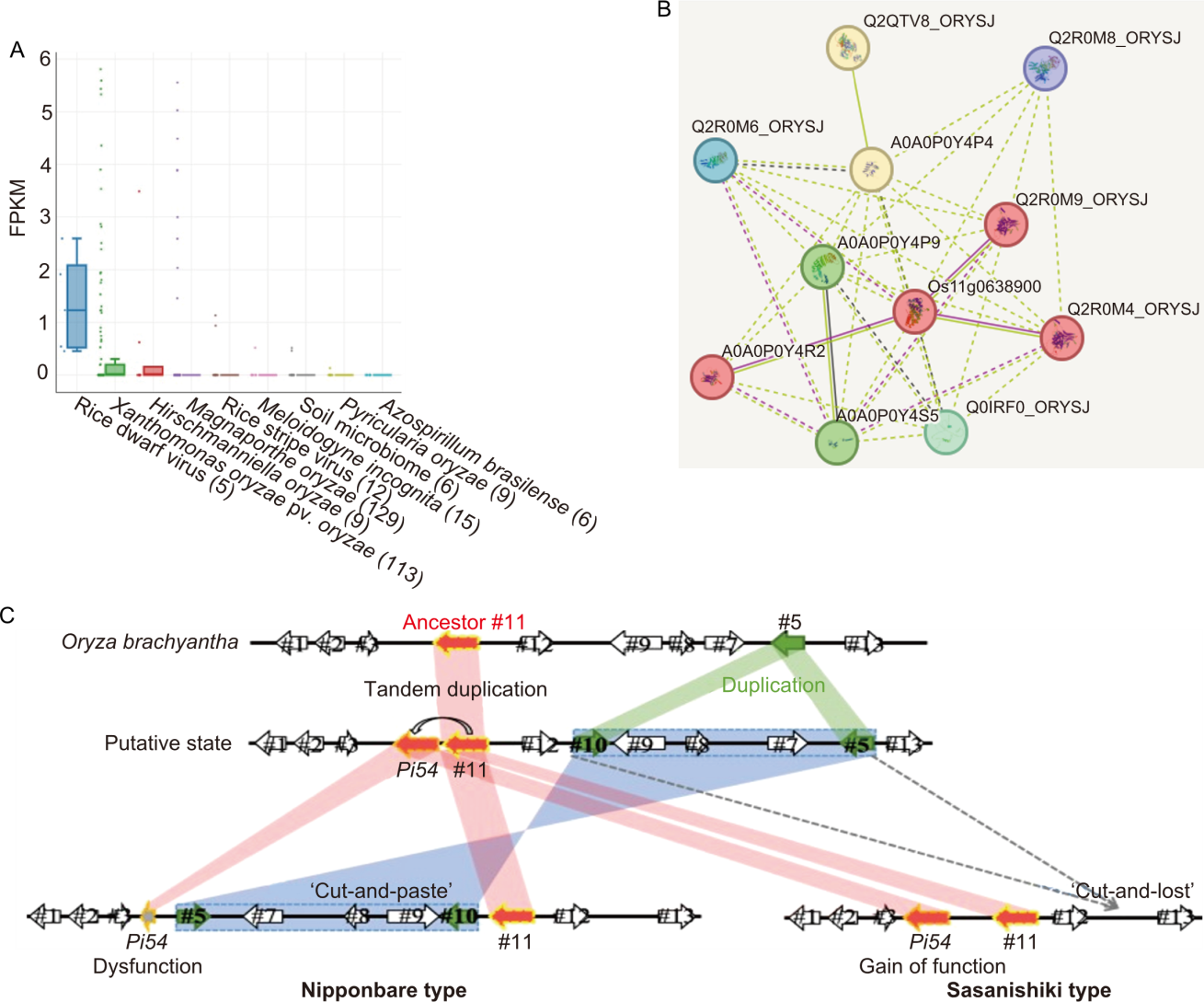
Fig. 1. Transcriptomic, genomic, and structural overview of blast resistance gene Pi54 in rice. A, Expression profile of Pi54 across different diseases in rice obtained from RNA-seq data available at http://ipf.sustech.edu.cn/pub/ricerna/. Numbers in parenthesis represent number of studies. FPKM, Fragments per kilobase of transcript per million mapped reads. B, Interactome analysis through STRING showing network of proteins linked to Pi54. Solid lines indicate direct evidence or strong associations between proteins, and dashed lines represent indirect, predicted, or lower-confidence interactions. The figure is reproduced from https://string-db.org/cgi/network?taskId=bIIox92xp4tw&sessionId=bMUnz01Q8bMl. C, Evolution of Pi54 locus in two types of gene arrangement japonica cv. Nipponbare and Sasanishiki type. The figure is reproduced from Zhang et al (2018), which is available with CC-BY 4.0.
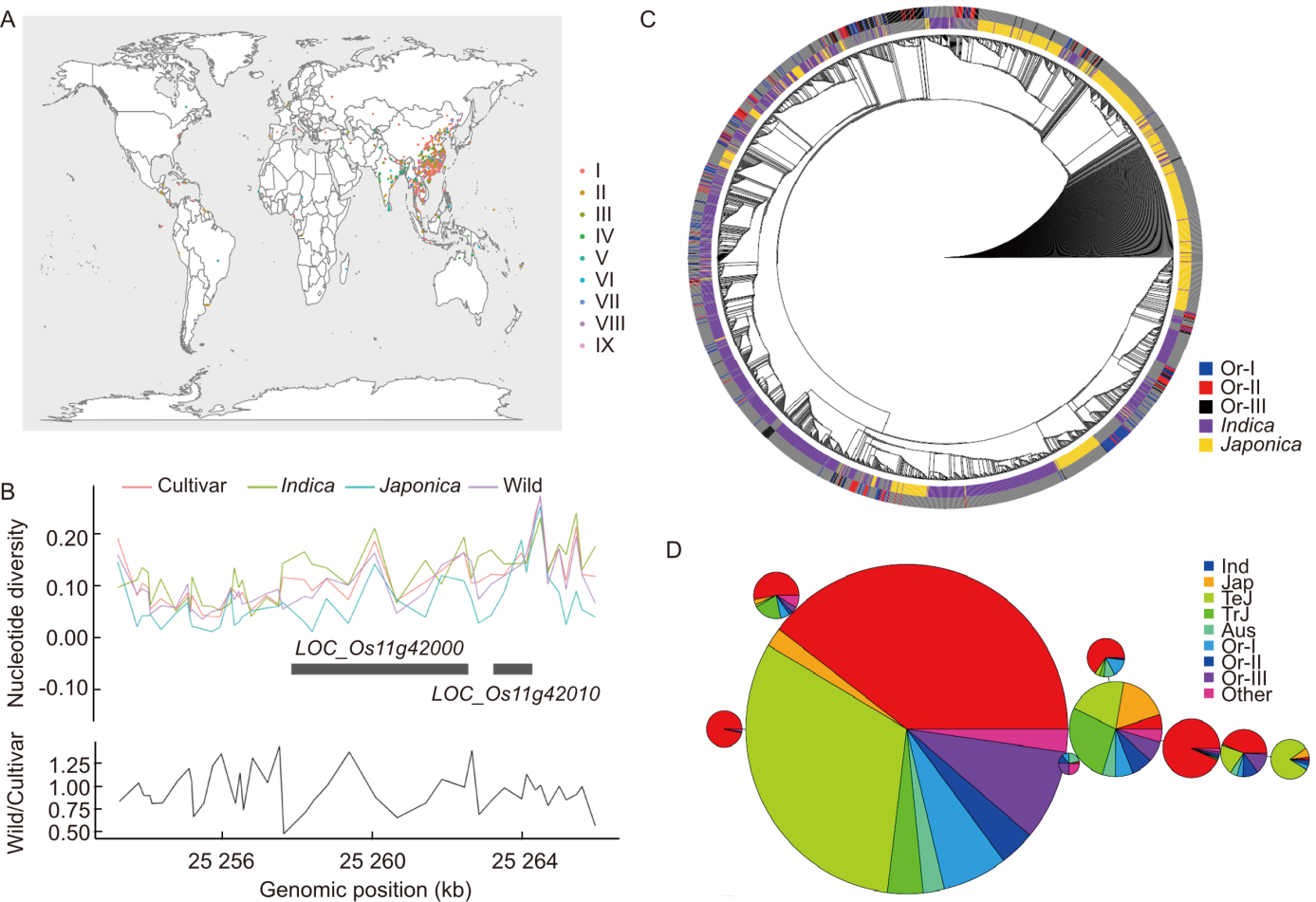
Fig. 2. Genomic diversity and evolutionary patterns of blast resistance gene Pi54 locus in global rice germplasm. A, Geographical distribution of rice accessions representing distinct Pi54 haplotypes. I‒IX refer to different rice sub populations. B, Nucleotide diversity analysis across Pi54 genomic region. The top panel illustrates nucleotide diversity (π) in wild and cultivated rice subgroups, while the bottom panel shows the ratio of nucleotide diversity in wild accessions relative to cultivars. Annotated genes within this region are indicated as black boxes. C, Phylogenetic relationships of 2 058 rice accessions inferred from single nucleotide polymorphism (SNP) variation within a 40-kb region surrounding Pi54. Colors represent different ecotypes. Or-I, Oryza rufipogon group I; Or-II, O. rufipogon group II; Or-III, O. rufipogon group III. D, Haplotype network of Pi54 gene. Each circle (pie chart) represents a unique haplotype, with size proportional to the number of accessions. Colors indicate subgroup identity: Ind, Indica; Jap, Japonica; TeJ, Temperate japonica; TrJ, Tropical japonica; Or-I, O. rufipogon group I; Or-II, O. rufipogon group II; Or-III, O. rufipogon group III.
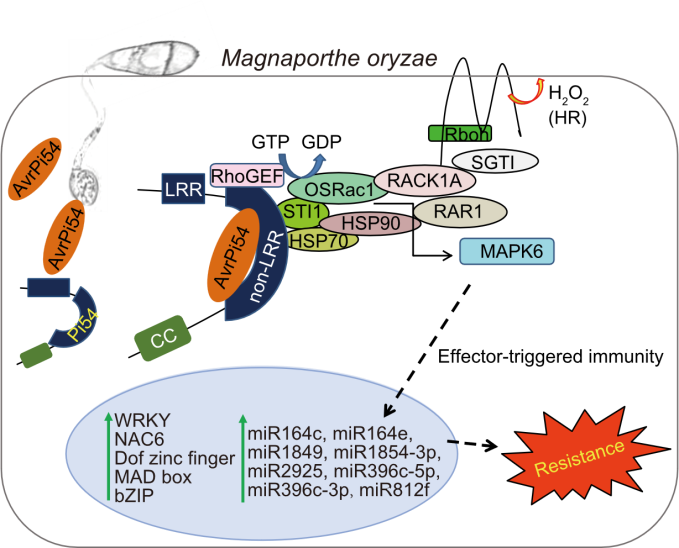
Fig. 3. Schematic presentation of Pi54-mediated blast disease resistance in rice. The AvrPi54 effector binds to constitutively present Pi54 and its orthologs (blue) mainly at the non-LRR region, upstream to the LRR domain. The Pi54 loci perceive Magnaporthe oryzae signals through STI1, an anchor for defensome complex involving multiple proteins like RhoGEF (rho guanine nucleotide exchange factors), HSP70 (heat shock protein 70 kilodalton), OsRac1 (Rac/Rop GTPase), RACK1A (receptor of activated C kinase), RAR1 (required for mla12 resistance), SGT1 (suppressor of the G2 allele of skp1), MAPK6 (a rice mitogen-activated protein kinase), and Rboh (NADPH oxidases). MAPK6 mediated downstream signalling pathways might induce various defence response genes. Besides, a set of miRNAs induced by the Pi54 loci are playing roles in disease resistance response. This figure is partially adapted and modified from Devanna et al (2014, 2022). CC, Coiled coil; HR, Hypersensitive response; LRR, Leucine rich repeat region; GTP, Guanosine triphosphate; GDP, Guanosine diphosphate.
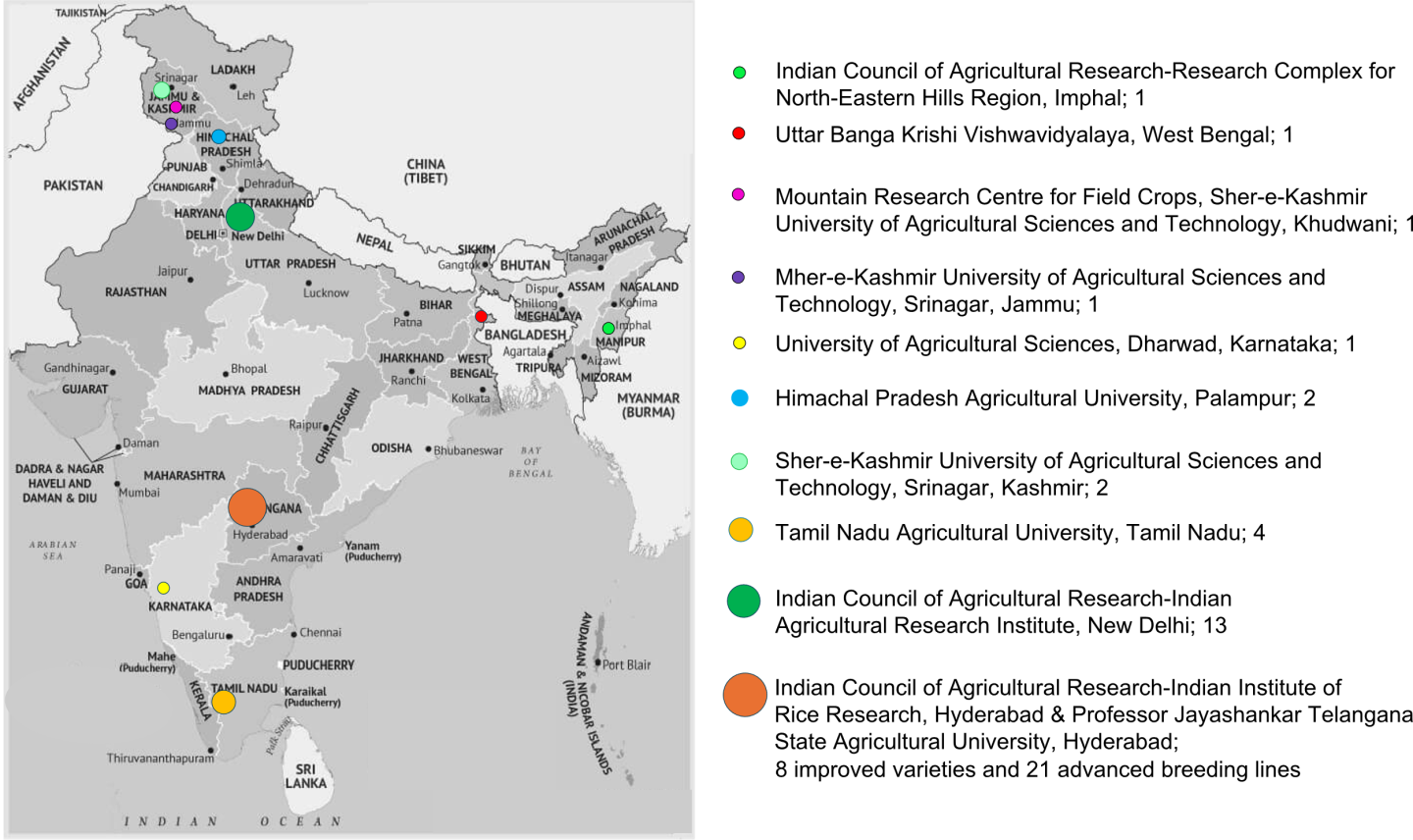
Fig. 4. Introgression of Pi54 gene in Indian mega rice varieties using marker-assisted selection for blast resistance over a period of 25 years. The numbers shown on the right represent the number of rice varieties carrying the Pi54 gene (information is based on the published reports and personal communication). Size of the circle represents the number of varieties and location showed on the map are the developer institutes in India.
| Organization | Gene | Trait targeted | Approach | Cultivar/Germplasm developed | Reference |
|---|---|---|---|---|---|
| ICAR-Indian Agricultural Research Institute, New Delhi, India | Pi54, xa13, Xa21, Qsbr11-1-ShB | Blast, bacterial blight, and sheath blight resistance | MABB-gene pyramiding | Improved Pusa Basmati 1 | Singh et al, |
| ICAR-Indian Institute of Rice Research, Hyderabad, India | Pi54, Xa2 | Blast and bacterial blight resistance | MABB-gene pyramiding | Improved maintainer line IR58025B | Hari et al, |
| ICAR-Indian Agricultural Research Institute, New Delhi, India | Pi54, Piz | Blast resistance | MABB-gene pyramiding | Improved restorer line PRR78 | Singh et al, |
| ICAR-Indian Institute of Rice Research, Hyderabad, India | Pi54, Xa2 | Blast and bacterial blight resistance | MABB-gene pyramiding | Improved maintainer line DRR17B | Balachiranjeevi et al, |
| ICAR-Indian Agricultural Research Institute, New Delhi, India | Pi54, Pi1, Pita, Pi2, Pi9 | Blast resistance | MABB-gene pyramiding | NILs and pyramided lines of Pusa Basmati 1 | Khanna et al, |
| University of Putra, Serdang, Malaysia | Pi54 (Pi-kh), Pi-b | Blast resistance | MABB | Improved MR219 | Tanweer et al, |
| ICAR-Indian Institute of Rice Research, Hyderabad, India | Pi54, Xa21, xa13 | Blast and bacterial blight resistance | MABB-gene pyramiding | Pyramided MTU1010 | Arunakumari et al, |
| ICAR-Indian Agricultural Research Institute, New Delhi, India | Pi54, Pi2 | Blast resistance | MABB-gene pyramiding | Pyramided PB1121 and PB6 | Ellur et al, |
| ICAR-Indian Institute of Rice Research, Hyderabad, India | Pi54, Pi2 | Blast resistance | MABB-gene pyramiding | Improved Samba Mahsuri | Madhavi et al, |
| ICAR-Indian Institute of Rice Research, Hyderabad, India | Pi54 | Blast resistance | MABB | NILs of variety Swarna | Rambabu et al, |
| Lixiahe Agricultural Research Institute of Jiangsu Province, Yangzhou, China | Pi54, Pi9, Pizt | Blast resistance | MABB-gene pyramiding | NILs and pyramided lines of japonica rice variety 07GY31 | Xiao et al, |
| KUAST, Kashmir, India | Pi54, Pi1, Pita | Blast resistance | MABB-gene pyramiding | Improved Mushk Budji | Khan et al, |
| ICAR-Indian Institute of Rice Research, Hyderabad, India | Pi54 | Blast resistance | MABB | NILs | Kumar et al, |
| ICAR-Indian Institute of Rice Research, Hyderabad, India | Pi54, Pi1, Pi2, Pi33 | Blast resistance | MAS-gene pyramiding | Pyramided ADT43 | Pandian et al, |
| ICAR-Indian Institute of Rice Research, Hyderabad, India | Pi54, Pi2, Xa21, xa13, xa5 | Blast and bacterial blight resistance | MABB-gene pyramiding | Improved Samba Mahsuri | Rekha et al, |
| Huazhong Agricultural University, Wuhan, China | Pi54, Pi37, Pit, Pid3, Pigm, Pi36, Pi5, Pikm, Pb1 | Blast resistance | MAS-gene pyramiding | Improved male sterile lines Y58S, Guangzhan 63S, C815S, and HD9802S | Jiang et al, |
| ICAR-Indian Institute of Rice Research, Hyderabad, India | Pi54, Pi1, Pi2 | Blast and bacterial blight resistance | MABB-gene pyramiding | Improved Swarna-Sub1 | Patroti et al, |
| ICAR-Indian Institute of Rice Research, Hyderabad, India | Pi54, Xa21, xa13 | Blast and bacterial blight resistance | MABB-gene pyramiding | Improved JGL1798 | Swathi et al, |
| Lixiahe Agricultural Research Institute of Jiangsu Province, Yangzhou, China | Pi54, Pi1, Pi33, Piz | Blast resistance | MABB-gene pyramiding | Pyramided lines | Wu et al, |
| University of Agricultural Sciences, Dharwad, India | Pi54, Pi1 | Blast resistance | MAS | Pyramided lines in the background of rice genotype Intan | Chaithra and Prashanthi, |
| ICAR-Indian Institute of Rice Research, Hyderabad, India | Pi54, Pi1, Xa21, xa13 | Blast and bacterial blight resistance | MABB-gene pyramiding | Pyramided lines | Jamaloddin et al, |
| Tamil Nadu Agricultural University, Coimbatore, India | Pi54 | Blast resistance | MABB | Improved lines of CB87R and CB174R | Ramalingam et al, |
| Shanghai Agrobiological Gene Center, Shanghai, China | Pi54, Pi9, Pi5 | Blast resistance | MAS-gene pyramiding | Improved PTGMS line Huhan 1S | Liu et al, |
| ICAR-Indian Institute of Rice Research, Hyderabad, India | Pi54, Pi9, Bph20, Bph21, Qdty1.1, Qdty2.1, Qdty3.1, Qdty12.1 | Blast, brown plant hopper, and drought resistance | MAS-gene pyramiding | Multiple stress-tolerant introgression lines | Badri et al, |
| Himachal Pradesh Agricultural University, Palampur, India | Pi54, Pi9 | Blast resistance | MABB-gene pyramiding | Improved Ranbir Basmati | Pote et al, |
| Tamil Nadu Agricultural University, Coimbatore | Pi54, Pi9 | Blast resistance | MAS-gene pyramiding | Improved CO51 | Samuthirapandi et al, |
| KUAST, Jammu, India | Pi54 | Blast resistance | MAS | Improved K343 | Hangloo et al, |
| Bangladesh Agricultural University, Mymensingh, Bangladesh, India | Pi54, Pi1, Xa21, xa13 | Blast and bacterial blight resistance | MABB-gene pyramiding | Improved BRRIdhan 28 | Goswami et al, |
| ICAR Research Complex for North Eastern, Hill Region Manipur Centre, Imphal, Manipur, India | Pi54 | Blast resistance | MAS-gene pyramiding | Improved Chakhao | Nameirakpam et al, |
| Professor Jayashankar Telangana Agricultural University, Hyderabad, India | Pi54 | Blast resistance | Marker-assisted pedigree breeding | RNR15048-based advanced breeding lines | Sai Akhila et al, |
| Uttar Banga Krishi Vishwavidyalaya, Cooch Behar, India | Pi54 | Blast resistance | MAS | Improved Gontra Bidhan 1 | Barai et al, |
| Mountain Research Centre for Field Crops, SKUAST, Kashmir, India | Pi54, Pi1, Pita | Blast resistance | MABB | Pyramided Zag | Gull et al, |
| Tamil Nadu Agricultural University, Coimbatore, India | Pi54 | Blast resistance | MAS | Improved CO51 | Senthilvel et al, |
| KUAST, Kashmir, India | Pi54, Pi9 | Blast resistance | MABB | Improved Mushk Budji | Shikari et al, |
Table 1. Examples of marker-assisted transfer of Pi54 gene in breeding rice for blast resistance.
| Organization | Gene | Trait targeted | Approach | Cultivar/Germplasm developed | Reference |
|---|---|---|---|---|---|
| ICAR-Indian Agricultural Research Institute, New Delhi, India | Pi54, xa13, Xa21, Qsbr11-1-ShB | Blast, bacterial blight, and sheath blight resistance | MABB-gene pyramiding | Improved Pusa Basmati 1 | Singh et al, |
| ICAR-Indian Institute of Rice Research, Hyderabad, India | Pi54, Xa2 | Blast and bacterial blight resistance | MABB-gene pyramiding | Improved maintainer line IR58025B | Hari et al, |
| ICAR-Indian Agricultural Research Institute, New Delhi, India | Pi54, Piz | Blast resistance | MABB-gene pyramiding | Improved restorer line PRR78 | Singh et al, |
| ICAR-Indian Institute of Rice Research, Hyderabad, India | Pi54, Xa2 | Blast and bacterial blight resistance | MABB-gene pyramiding | Improved maintainer line DRR17B | Balachiranjeevi et al, |
| ICAR-Indian Agricultural Research Institute, New Delhi, India | Pi54, Pi1, Pita, Pi2, Pi9 | Blast resistance | MABB-gene pyramiding | NILs and pyramided lines of Pusa Basmati 1 | Khanna et al, |
| University of Putra, Serdang, Malaysia | Pi54 (Pi-kh), Pi-b | Blast resistance | MABB | Improved MR219 | Tanweer et al, |
| ICAR-Indian Institute of Rice Research, Hyderabad, India | Pi54, Xa21, xa13 | Blast and bacterial blight resistance | MABB-gene pyramiding | Pyramided MTU1010 | Arunakumari et al, |
| ICAR-Indian Agricultural Research Institute, New Delhi, India | Pi54, Pi2 | Blast resistance | MABB-gene pyramiding | Pyramided PB1121 and PB6 | Ellur et al, |
| ICAR-Indian Institute of Rice Research, Hyderabad, India | Pi54, Pi2 | Blast resistance | MABB-gene pyramiding | Improved Samba Mahsuri | Madhavi et al, |
| ICAR-Indian Institute of Rice Research, Hyderabad, India | Pi54 | Blast resistance | MABB | NILs of variety Swarna | Rambabu et al, |
| Lixiahe Agricultural Research Institute of Jiangsu Province, Yangzhou, China | Pi54, Pi9, Pizt | Blast resistance | MABB-gene pyramiding | NILs and pyramided lines of japonica rice variety 07GY31 | Xiao et al, |
| KUAST, Kashmir, India | Pi54, Pi1, Pita | Blast resistance | MABB-gene pyramiding | Improved Mushk Budji | Khan et al, |
| ICAR-Indian Institute of Rice Research, Hyderabad, India | Pi54 | Blast resistance | MABB | NILs | Kumar et al, |
| ICAR-Indian Institute of Rice Research, Hyderabad, India | Pi54, Pi1, Pi2, Pi33 | Blast resistance | MAS-gene pyramiding | Pyramided ADT43 | Pandian et al, |
| ICAR-Indian Institute of Rice Research, Hyderabad, India | Pi54, Pi2, Xa21, xa13, xa5 | Blast and bacterial blight resistance | MABB-gene pyramiding | Improved Samba Mahsuri | Rekha et al, |
| Huazhong Agricultural University, Wuhan, China | Pi54, Pi37, Pit, Pid3, Pigm, Pi36, Pi5, Pikm, Pb1 | Blast resistance | MAS-gene pyramiding | Improved male sterile lines Y58S, Guangzhan 63S, C815S, and HD9802S | Jiang et al, |
| ICAR-Indian Institute of Rice Research, Hyderabad, India | Pi54, Pi1, Pi2 | Blast and bacterial blight resistance | MABB-gene pyramiding | Improved Swarna-Sub1 | Patroti et al, |
| ICAR-Indian Institute of Rice Research, Hyderabad, India | Pi54, Xa21, xa13 | Blast and bacterial blight resistance | MABB-gene pyramiding | Improved JGL1798 | Swathi et al, |
| Lixiahe Agricultural Research Institute of Jiangsu Province, Yangzhou, China | Pi54, Pi1, Pi33, Piz | Blast resistance | MABB-gene pyramiding | Pyramided lines | Wu et al, |
| University of Agricultural Sciences, Dharwad, India | Pi54, Pi1 | Blast resistance | MAS | Pyramided lines in the background of rice genotype Intan | Chaithra and Prashanthi, |
| ICAR-Indian Institute of Rice Research, Hyderabad, India | Pi54, Pi1, Xa21, xa13 | Blast and bacterial blight resistance | MABB-gene pyramiding | Pyramided lines | Jamaloddin et al, |
| Tamil Nadu Agricultural University, Coimbatore, India | Pi54 | Blast resistance | MABB | Improved lines of CB87R and CB174R | Ramalingam et al, |
| Shanghai Agrobiological Gene Center, Shanghai, China | Pi54, Pi9, Pi5 | Blast resistance | MAS-gene pyramiding | Improved PTGMS line Huhan 1S | Liu et al, |
| ICAR-Indian Institute of Rice Research, Hyderabad, India | Pi54, Pi9, Bph20, Bph21, Qdty1.1, Qdty2.1, Qdty3.1, Qdty12.1 | Blast, brown plant hopper, and drought resistance | MAS-gene pyramiding | Multiple stress-tolerant introgression lines | Badri et al, |
| Himachal Pradesh Agricultural University, Palampur, India | Pi54, Pi9 | Blast resistance | MABB-gene pyramiding | Improved Ranbir Basmati | Pote et al, |
| Tamil Nadu Agricultural University, Coimbatore | Pi54, Pi9 | Blast resistance | MAS-gene pyramiding | Improved CO51 | Samuthirapandi et al, |
| KUAST, Jammu, India | Pi54 | Blast resistance | MAS | Improved K343 | Hangloo et al, |
| Bangladesh Agricultural University, Mymensingh, Bangladesh, India | Pi54, Pi1, Xa21, xa13 | Blast and bacterial blight resistance | MABB-gene pyramiding | Improved BRRIdhan 28 | Goswami et al, |
| ICAR Research Complex for North Eastern, Hill Region Manipur Centre, Imphal, Manipur, India | Pi54 | Blast resistance | MAS-gene pyramiding | Improved Chakhao | Nameirakpam et al, |
| Professor Jayashankar Telangana Agricultural University, Hyderabad, India | Pi54 | Blast resistance | Marker-assisted pedigree breeding | RNR15048-based advanced breeding lines | Sai Akhila et al, |
| Uttar Banga Krishi Vishwavidyalaya, Cooch Behar, India | Pi54 | Blast resistance | MAS | Improved Gontra Bidhan 1 | Barai et al, |
| Mountain Research Centre for Field Crops, SKUAST, Kashmir, India | Pi54, Pi1, Pita | Blast resistance | MABB | Pyramided Zag | Gull et al, |
| Tamil Nadu Agricultural University, Coimbatore, India | Pi54 | Blast resistance | MAS | Improved CO51 | Senthilvel et al, |
| KUAST, Kashmir, India | Pi54, Pi9 | Blast resistance | MABB | Improved Mushk Budji | Shikari et al, |
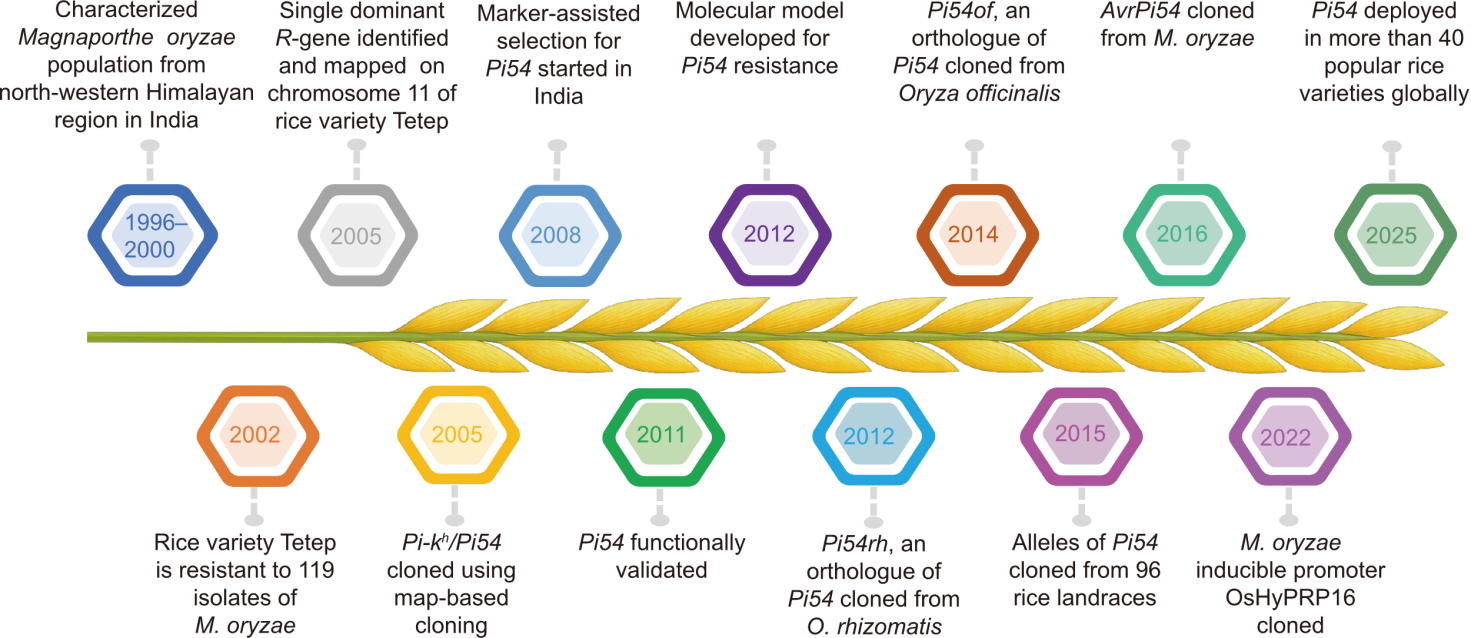
Fig. 5. Major milestones in identification, discovery, cloning, molecular biology, and deployment of rice blast resistance gene Pi54 over a 25-year period.
| [1] | Arora K, Rai A K, Gupta S K, et al. 2015. Phenotypic expression of blast resistance gene Pi54 is not affected by its chromosomal position. Plant Cell Rep, 34(1): 63-70. |
| [2] | Arora K, Rai A K, Devanna B N, et al. 2018. Functional validation of the Pi54 gene by knocking down its expression in a blast-resistant rice line using RNA interference and its effects on other traits. Funct Plant Biol, 45(12): 1241-1250. |
| [3] | Arora K, Rai A K, Devanna B N, et al. 2021. Deciphering the role of microRNAs during Pi54 gene mediated Magnaporthe oryzae resistance response in rice. Physiol Mol Biol Plants, 27(3): 633-647. |
| [4] | Arunakumari K, Durgarani C V, Satturu V, et al. 2016. Marker-assisted pyramiding of genes conferring resistance against bacterial blight and blast diseases into Indian rice variety MTU1010. Rice Sci, 23(6): 306-316. |
| [5] | Badri J, Lakshmidevi G, JaiVidhya L R K, et al. 2022. Multiparent-derived, marker-assisted introgression lines of the elite Indian rice cultivar, ‘Krishna hamsa’ show resistance against bacterial blight and blast and tolerance to drought. Plants, 11(5): 622. |
| [6] | Balachiranjeevi C H, Bhaskar N S, Abhilash V, et al. 2015. Marker-assisted introgression of bacterial blight and blast resistance into DRR17B, an elite, fine-grain type maintainer line of rice. Mol Breed, 35(7): 151. |
| [7] | Barai R, Hijam L, Mandal R, et al. 2025. Introgression of blast resistance gene in rice through marker assisted breeding in Terai region of West Bengal, India. J Adv Biol Biotechnol, 28(4): 216-224. |
| [8] | Breckels L M, Hutchings C, Ingole K D, et al. 2024. Advances in spatial proteomics: Mapping proteome architecture from protein complexes to subcellular localizations. Cell Chem Biol, 31(9): 1665-1687. |
| [9] | Callaway E. 2016. Devastating wheat fungus appears in Asia for first time. Nature, 532: 421-422. |
| [10] | Chaithra K R, Prashanthi S K. 2020. Field evaluation of marker-assisted backcross families introgressed with Pi1 and Pi54 in Intan rice variety. J Farm Sci, 33(2): 183-187. |
| [11] | Dangl J L, Jones J D G. 2001. Plant pathogens and integrated defence responses to infection. Nature, 411: 826-833. |
| [12] | Das A, Soubam D, Singh P K, et al. 2012. A novel blast resistance gene, Pi54rh cloned from wild species of rice, Oryza rhizomatis confers broad spectrum resistance to Magnaporthe oryzae. Funct Integr Genomics, 12(2): 215-228. |
| [13] | Devanna B N, Sharma T R. 2018. Wheat blast disease management: Cues from the advancements in molecular biology of rice-Magnaporthe pathosystem. J Plant Biochem Biotechnol, 27(3): 249-259. |
| [14] | Devanna B N, Jain P, Solanke A U, et al. 2022. Understanding the dynamics of blast resistance in rice-Magnaporthe oryzae interactions. J Fungi, 8(6): 584. |
| [15] | Devanna N B, Vijayan J, Sharma T R. 2014. The blast resistance gene Pi54of cloned from Oryza officinalis interacts with Avr-Pi54 through its novel non-LRR domains. PLoS One, 9(8): e104840. |
| [16] | Dixit R, Bhargava A, Dalal V, et al. 2009. Accumulation of defence response-related and unique expressed sequence tags during the incompatible interaction in the Oryza sativa-Magnaporthe oryzae pathosystem. J Phytopathol, 157(7/8): 483-489. |
| [17] | Ellur R K, Khanna A, Yadav A, et al. 2016. Improvement of Basmati rice varieties for resistance to blast and bacterial blight diseases using marker assisted backcross breeding. Plant Sci, 242: 330-341. |
| [18] | Flor H H. 1971. Current status of the gene-for-gene concept. Annu Rev Phytopathol, 9: 275-296. |
| [19] | Gnanamanickam S S. 2009. Rice and its importance to human life. In: Biological Control of Rice Diseases. Dordrecht, the Netherlands: Springer: 1-11. |
| [20] | Gong Z W, Ning N, Li Z Q, et al. 2022. Two Magnaporthe appressoria-specific (MAS) proteins, MoMas3 and MoMas5, are required for suppressing host innate immunity and promoting biotrophic growth in rice cells. Mol Plant Pathol, 23(9): 1290-1302. |
| [21] | Goswami G, Biswas P L, Sarker P, et al. 2024. Marker-assisted introgression of bacterial blight and blast resistance genes into mega rice cultivar BRRI dhan28. Int J Agric Environ Sci, 11(4): 47-55. |
| [22] | Gull M, Shikari A B, Khan G H, et al. 2025. Marker assisted introgression of blast resistance genes into Heritage Red Rice Landrace “Zag” of Western Himalayan Kashmir. Physiol Mol Plant Pathol, 139: 102820. |
| [23] | Gupta S K, Rai A K, Kanwar S S, et al. 2012a. Comparative analysis of zinc finger proteins involved in plant disease resistance. PLoS One, 7(8): e42578. |
| [24] | Gupta S K, Rai A K, Kanwar S S, et al. 2012b. The single functional blast resistance gene Pi54 activates a complex defence mechanism in rice. J Exp Bot, 63(2): 757-772. |
| [25] | Hammond-Kosack K E, Jones J D G. 1997. Plant disease resistance genes. Annu Rev Plant Physiol Plant Mol Biol, 48: 575-607. |
| [26] | Hangloo S, Mahdi G M A, Sharma M, et al. 2023. Blast resistance (Pi54) introgression in temperate rice (Oryza sativa L.) K343 using marker assisted backcrossing. Arch Agric Environ Sci, 8(1): 55-61. |
| [27] | Hari Y, Srinivasarao K, Viraktamath B C, et al. 2013. Marker-assisted introgression of bacterial blight and blast resistance into IR 58025B, an elite maintainer line of rice. Plant Breed, 132(6): 586-594. |
| [28] | Hermans T. 2016. Modelling grain surplus and deficit in Cameroon for 2030. Lund, Sweden: Lund University: 393. |
| [29] | Hu Z J, Huang Y Y, Lin X Y, et al. 2022. Loss and natural variations of blast fungal avirulence genes breakdown rice resistance genes in the Sichuan Basin of China. Front Plant Sci, 13: 788876. |
| [30] | IRGSP (International Rice Genome Sequencing Project). 2005. The map-based sequence of the rice genome. Nature, 436: 793-800. |
| [31] | Jain P, Dubey H, Singh P K, et al. 2019. Deciphering signalling network in broad spectrum Near Isogenic Lines of rice resistant to Magnaporthe oryzae. Sci Rep, 9: 16939. |
| [32] | Jamaloddin M, Durga Rani C V, Swathi G, et al. 2020. Marker Assisted Gene Pyramiding (MAGP) for bacterial blight and blast resistance into mega rice variety “Tellahamsa”. PLoS One, 15(6): e0234088. |
| [33] | Jiang H C, Li Z, Liu J, et al. 2019. Development and evaluation of improved lines with broad-spectrum resistance to rice blast using nine resistance genes. Rice, 12(1): 29. |
| [34] | Jones J D G, Dangl J L. 2006. The plant immune system. Nature, 444: 323-329. |
| [35] | Kapoor R, Kumar G, Arya P, et al. 2019. Genome-wide analysis and expression profiling of rice hybrid proline-rich proteins in response to biotic and abiotic stresses and hormone treatment. Plants, 8(9): 343. |
| [36] | Kapoor R, Kumar G, Pawar L, et al. 2022. Stress responsive OsHyPRP16 promoter driven early expression of resistance gene Pi54 potentiates the resistance against Magnaporthe oryzae in transgenic rice. Plant Sci, 324: 111413. |
| [37] | Khan G H, Najeeb S, Bhat Z A, et al. 2017. Molecular marker-based validation of blast resistance gene Pi54 and identification of potential donors in temperate high altitude rice (Oryza sativa L.). Indian J Genet Plant Breed, 77(2): 266-270. |
| [38] | Khan G H, Shikari A B, Vaishnavi R, et al. 2018. Marker-assisted introgression of three dominant blast resistance genes into an aromatic rice cultivar Mushk Budji. Sci Rep, 8: 4091. |
| [39] | Khang C H, Berruyer R, Giraldo M C, et al. 2010. Translocation of Magnaporthe oryzae effectors into rice cells and their subsequent cell-to-cell movement. Plant Cell, 22(4): 1388-1403. |
| [40] | Khanna A, Sharma V, Ellur R K, et al. 2015. Development and evaluation of near-isogenic lines for major blast resistance gene(s) in Basmati rice. Theor Appl Genet, 128(7): 1243-1259. |
| [41] | Kiyosawa S. 1989. Breakdown of blast resistance in relation to general strategies of resistance gene deployment to prolong effectiveness of resistance in plants. Plant Dis Epidemiol, 2: 251-283. |
| [42] | Kohli M M, Mehta Y R, Guzman E, et al. 2011. Pyricularia blast: A threat to wheat cultivation. Czech J Genet Plant Breed, 47: S130-S134. |
| [43] | Kou Y J, Shi H B, Qiu J H, et al. 2024. Effectors and environment modulating rice blast disease: From understanding to effective control. Trends Microbiol, 32(10): 1007-1020. |
| [44] | Kumar S P, Dalal V, Singh N K, et al. 2007. Comparative analysis of the 100 kb region containing the Pi-kh locus between indica and japonica rice lines. Genom Proteom Bioinform, 5(1): 35-44. |
| [45] | Kumar S V, Rambabu R, Bhaskar B, et al. 2018. Introgression of durable blast resistance gene Pi-54 into indica rice cv. Samba Mahsuri, through Marker Assisted Backcross Breeding. Electron J Plan Breed, 9(2): 705-715. |
| [46] | Kumari A, Das A, Devanna B N, et al. 2013. Mining of rice blast resistance gene Pi54 shows effect of single nucleotide polymorphisms on phenotypic expression of the alleles. Eur J Plant Pathol, 137(1): 55-65. |
| [47] | Kumari M, Kapoor R, Devanna B N, et al. 2023. iTRAQ based proteomic analysis of rice lines having single or stacked blast resistance genes: Pi54/Pi54rh during incompatible interaction with Magnaporthe oryzae. Physiol Mol Biol Plants, 29(6): 871-887. |
| [48] | Li J B, He C X, Dong C, et al. 2024. Diversity and evolution of the avirulence gene AvrPi54 in Yunnan rice fields. Agronomy, 14(3): 454. |
| [49] | Li W T, Chern M, Yin J J, et al. 2019. Recent advances in broad-spectrum resistance to the rice blast disease. Curr Opin Plant Biol, 50: 114-120. |
| [50] | Liang Y, Yi Z F, Zhuang W, et al. 2025. Optimizing hybrid with improved resistance to rice blast and superior ratooning ability. Rice Sci, 32(3): 292-297. |
| [51] | Liu X, Hu X C, Tu Z Y, et al. 2024. The roles of Magnaporthe oryzae avirulence effectors involved in blast resistance/susceptibility. Front Plant Sci, 15: 1478159. |
| [52] | Liu Y, Zhang F Y, Luo X X, et al. 2021. Molecular breeding of a novel PTGMS line of WDR for broad-spectrum resistance to blast using Pi9, Pi5, and Pi54 genes. Rice, 14(1): 96. |
| [53] | Madhav M S, Plaha P, Singh N K, et al. 2009. Molecular characterization of a genomic fragment containing pi-kh gene from the genomic library of indica rice line Tetep. J Phytopathol, 157(5): 322-324. |
| [54] | Madhavi K R, Rambabu R, Kumar V A, et al. 2016. Marker assisted introgression of blast (Pi-2 and Pi-54) genes in to the genetic background of elite, bacterial blight resistant indica rice variety, Improved Samba Mahsuri. Euphytica, 212(2): 331-342. |
| [55] | Mehta A, Brasileiro A C M, Souza D S L, et al. 2008. Plant-pathogen interactions: What is proteomics telling us? FEBS J, 275(15): 3731-3746. |
| [56] | Nameirakpam M, Ngangkham U, Singh T B, et al. 2024. Genetic improvement of Chakhao rice by gene stacking of high-yielding and durable blast-resistant traits. Crop Breed Appl Biotechnol, 24: e47772437. |
| [57] | Okada A, Shimizu T, Okada K, et al. 2007. Elicitor induced activation of the methylerythritol phosphate pathway toward phytoalexins biosynthesis in rice. Plant Mol Biol, 65(1/2): 177-187. |
| [58] | Pandian B A, Joel J, Nachimuthu V V, et al. 2018. Marker-aided selection and validation of various Pi gene combinations for rice blast resistance in elite rice variety ADT 43. J Genet, 97(4): 945-952. |
| [59] | Patroti P, Vishalakshi B, Umakanth B, et al. 2019. Marker-assisted pyramiding of major blast resistance genes in Swarna-Sub1, an elite rice variety (Oryza sativa L.). Euphytica, 215(11): 179. |
| [60] | Pote T D, Sharma K D, Salgotra R K, et al. 2021. Development and validation of gene-derived cleaved amplified polymorphic sequences (CAPS) marker for blast resistance gene Pi54. Himachal J Agric Res, 47(2): 138-142. |
| [61] | Pote T D, Kaachra A, Thakur K, et al. 2022. Genetic improvement of traditional Basmati rice Ranbir Basmati for semi-dwarfism and blast resistance through molecular breeding. Plant Gene, 32: 100386. |
| [62] | Rafael E S, Yeo F K S, Dumin W, et al. 2025. New haplotypes of AvrPi-54 gene detected in Pyricularia oryzae from Malaysia, India and China. Gene Rep, 40: 102242. |
| [63] | Rai A K, Kumar S P, Gupta S K, et al. 2011. Functional complementation of rice blast resistance gene Pi-kh (Pi54) conferring resistance to diverse strains of Magnaporthe oryzae. J Plant Biochem Biotechnol, 20(1): 55-65. |
| [64] | Ramalingam J, Palanisamy S, Alagarasan G, et al. 2020. Improvement of stable restorer lines for blast resistance through functional marker in rice (Oryza sativa L.). Genes, 11(11): 1266. |
| [65] | Rambabu R, Vijay Kumar S, Abhilash Kumar V, et al. 2016. Enhancement of leaf blast resistance in rice cultivar ‘Swarna’ by marker-assisted backcross breeding. Int J Dev Res, 6(8): 9194-9198. |
| [66] | Ramkumar G, Srinivasarao K, Mohan K M, et al. 2011. Development and validation of functional marker targeting an InDel in the major rice blast disease resistance gene Pi54 (Pikh). Mol Breed, 27(1): 129-135. |
| [67] | Ramkumar G, Madhav M S, Rama Devi S J S, et al. 2016. Identification and validation of novel alleles of rice blast resistant gene Pi54, and analysis of their nucleotide diversity in landraces and wild Oryza species. Euphytica, 209(3): 725-737. |
| [68] | Rathour R, Singh B M, Sharma T R, et al. 2004. Population structure of Magnaporthe grisea from north-western Himalayas and its implications for blast resistance breeding of rice. J Phytopathol, 152(5): 304-312. |
| [69] | Rathour R, Singh B M, Plaha P. 2006. Virulence structure of the Magnaporthe grisea rice population from the northwestern Himalayas. Phytoparasitica, 34(3): 281-291. |
| [70] | Ray S, Singh P K, Gupta D K, et al. 2016. Analysis of Magnaporthe oryzae genome reveals a fungal effector, which is able to induce resistance response in transgenic rice line containing resistance gene, Pi54. Front Plant Sci, 7: 1140. |
| [71] | Rekha G, Abhilash Kumar V, Viraktamath B C, et al. 2018. Improvement of blast resistance of the popular high-yielding, medium slender-grain type, bacterial blight resistant rice variety, Improved Samba Mahsuri by marker-assisted breeding. J Plant Biochem Biotechnol, 27(4): 463-472. |
| [72] | Sai Akhila J, Laxmi Prasanna B, Pushpavalli S N C V L, et al. 2025. Genetic improvement of RNR 15048 for blast resistance by using UBN phenotypic screening method. Int J Adv Biochem Res, 9(7): 1794-1796. |
| [73] | Saklani B K, Ray S, Arora K, et al. 2023. Magnaporthe oryzae encoded effector protein AvrPi54 interacts in vivo with rice encoded cognate resistance protein Pi54 at the host plasma membrane. J Plant Biochem Biotechnol, 32(2): 274-283. |
| [74] | Samuthirapandi S, Thiyagarajan T, Viswabharathy S, et al. 2023. Improving rice blast resistance by stacking two broad-spectrum resistance genes Pi9 and Pi54 in cultivar CO51 through marker-assisted selection. Electron J Plant Breed, 14(2): 695-706. |
| [75] | Sarkar C, Saklani B K, Singh P K, et al. 2019. Variation in the LRR region of Pi 54 protein alters its interaction with the AvrPi54 protein revealed by in silico analysis. PLoS One, 14(11): e0224088. |
| [76] | Selisana S M, Yanoria M J, Quime B, et al. 2017. Avirulence (AVR) gene-based diagnosis complements existing pathogen surveillance tools for effective deployment of resistance (R) genes against rice blast disease. Phytopathology, 107(6): 711-720. |
| [77] | Senthilvel V, Pelhania G, Moorthy G, et al. 2025. Stacking of elite indica rice genotype with bacterial blight, blast, and brown plant hopper resistance genes through marker assisted selection. Physiol Mol Plant Pathol, 138: 102730. |
| [78] | Sharma T R, Chauhan R S, Singh B M, et al. 2002. RAPD and pathotype analyses of Magnaporthe grisea populations from the north-western Himalayan region of India. J Phytopathol, 150(11/12): 649-656. |
| [79] | Sharma T R, Chauhan R S, Rana M K, et al. 2003. RAPD analysis and field evaluation of doubled haploids of rice resistant to Magnaporthe grisea. Indian Phytopathol, 56(1): 72-74. |
| [80] | Sharma T R, Madhav M S, Singh B K, et al. 2005a. High-resolution mapping, cloning and molecular characterization of the Pi-kh gene of rice, which confers resistance to Magnaporthe grisea. Mol Genet Genomics, 274(6): 569-578. |
| [81] | Sharma T R, Shanker P, Singh B K, et al. 2005b. Molecular mapping of rice blast resistance gene Pi-kh in the rice variety Tetep. J Plant Biochem Biotechnol, 14(2): 127-133. |
| [82] | Sharma T R, Rai A K, Gupta S K, et al. 2010. Broad-spectrum blast resistance gene Pi-kh cloned from rice line Tetep designated as Pi54. J Plant Biochem Biotechnol, 19(1): 87-89. |
| [83] | Sharma T R, Rai A K, Gupta S K, et al. 2012. Rice blast management through host-plant resistance: Retrospect and prospects. Agric Res, 1(1): 37-52. |
| [84] | Shikari A B, Khan R S, Ain N U, et al. 2026. Genomics-informed elucidation of trait-phenotype relationships and MABB approaches deliver major gene blast resistance in the aromatic rice landrace Mushk Budji. Front Genet, 16: 1699333. |
| [85] | Singh A, Singh V K, Singh S P, et al. 2012. Molecular breeding for the development of multiple disease resistance in Basmati rice. AoB Plants, 2012: pls029. |
| [86] | Singh J, Gupta S K, Devanna B N, et al. 2020. Blast resistance gene Pi54 over-expressed in rice to understand its cellular and sub-cellular localization and response to different pathogens. Sci Rep, 10(1): 5243. |
| [87] | Singh P K, Thakur S, Rathour R, et al. 2014. Transposon-based high sequence diversity in Avr-Pita alleles increases the potential for pathogenicity of Magnaporthe oryzae populations. Funct Integr Genomics, 14(2): 419-429. |
| [88] | Singh P K, Nag A, Arya P, et al. 2018a. Prospects of understanding the molecular biology of disease resistance in rice. Int J Mol Sci, 19(4): 1141. |
| [89] | Singh P K, Ray S, Thakur S, et al. 2018b. Co-evolutionary interactions between host resistance and pathogen avirulence genes in rice-Magnaporthe oryzae pathosystem. Fungal Genet Biol, 115: 9-19. |
| [90] | Singh V K, Singh A, Singh S P, et al. 2013. Marker-assisted simultaneous but stepwise backcross breeding for pyramiding blast resistance genes Piz5 and Pi54 into an elite Basmati rice restorer line ‘PRR78’. Plant Breed, 132(5): 486-495. |
| [91] | Swaminathan S, Morrone D, Wang Q, et al. 2009. CYP76M7 is an ent-cassadiene C11α-hydroxylase defining a second multifunctional diterpenoid biosynthetic gene cluster in rice. Plant Cell, 21(10): 3315-3325. |
| [92] | Swathi G, Durga Rani C V, Md J, et al. 2019. Marker-assisted introgression of the major bacterial blight resistance genes, Xa21 and xa13, and blast resistance gene, Pi54, into the popular rice variety, JGL1798. Mol Breed, 39(4): 58. |
| [93] | Tanweer F A, Rafii M Y, Sijam K, et al. 2015. Introgression of blast resistance genes (putative Pi-b and Pi-kh) into elite rice cultivar MR219 through marker-assisted selection. Front Plant Sci, 6: 1002. |
| [94] | Thakur S, Singh P K, Rathour R, et al. 2014. Genotyping and development of single-nucleotide polymorphism (SNP) markers associated with blast resistance genes in rice using GoldenGate assay. Mol Breed, 34(3): 1449-1463. |
| [95] | Thakur S, Singh P K, Das A, et al. 2015. Extensive sequence variation in rice blast resistance gene Pi54 makes it broad spectrum in nature. Front Plant Sci, 6: 345. |
| [96] | Tian D G, Deng Y, Yang X S, et al. 2022. Association analysis of rice resistance genes and blast fungal avirulence genes for effective breeding resistance cultivars. Front Microbiol, 13: 1007492. |
| [97] | Valent B. 2025. Dynamic gene-for-gene interactions undermine durable resistance. Mol Plant Microbe Interact, 38(2): 104-117. |
| [98] | van der Biezen E A, Jones J D G. 1998. Plant disease-resistance proteins and the gene-for-gene concept. Trends Biochem Sci, 23(12): 454-456. |
| [99] | Vasudevan K, Gruissem W, Bhullar N K. 2015. Identification of novel alleles of the rice blast resistance gene Pi54. Sci Rep, 5: 15678. |
| [100] | Vijayan J, Devanna B N, Singh N K, et al. 2015. Cloning and functional validation of an early inducible Magnaporthe oryzae responsive CYP76M7 promoter from rice. Front Plant Sci, 6: 371. |
| [101] | Vijayan J, Ray S, Jain S K, et al. 2025. Identification of potential genes for susceptibility in rice-Magnaporthe oryzae interaction. J Plant Biochem Biotechnol, 34(4): 1030-1041. |
| [102] | Wang X, Wang J Y, Zhang Y L, et al. 2025. How to select favorable and promising alleles and genotypes for breeding: A case study of rice blast resistance genes in Southern and Northeastern China. Crop J, 13(1): 104-114. |
| [103] | Wang Y M, Kim S G, Kim S T, et al. 2011. Biotic stress-responsive rice proteome: An overview. J Plant Biol, 54(4): 219-226. |
| [104] | Wu Y Y, Xiao N, Chen Y, et al. 2019. Comprehensive evaluation of resistance effects of pyramiding lines with different broad-spectrum resistance genes against Magnaporthe oryzae in rice (Oryza sativa L.). Rice, 12(1): 11. |
| [105] | Xiao N, Wu Y Y, Pan C H, et al. 2017. Improving of rice blast resistances in japonica by pyramiding major R genes. Front Plant Sci, 7: 1918. |
| [106] | Yan S J, Bhawal R, Yin Z B, et al. 2022. Recent advances in proteomics and metabolomics in plants. Mol Hortic, 2(1): 17. |
| [107] | Yoshimura S, Yamanouchi U, Katayose Y, et al. 1998. Expression of Xa1, a bacterial blight-resistance gene in rice, is induced by bacterial inoculation. Proc Natl Acad Sci USA, 95(4): 1663-1668. |
| [108] | Zhang L, Nakagomi Y, Endo T, et al. 2018. Divergent evolution of rice blast resistance Pi54 locus in the genus Rice. Rice, 11(1): 63. |
| [109] | Zhong Z H, Chen M L, Lin L Y, et al. 2018. Population genomic analysis of the rice blast fungus reveals specific events associated with expansion of three main clades. ISME J, 12(8): 1867-1878. |
| [110] | Zhou E X, Jia Y L, Singh P, et al. 2007. Instability of the Magnaporthe oryzae avirulence gene AVR-Pita alters virulence. Fungal Genet Biol, 44(10): 1024-1034. |
| [111] | Zhou J M, Chai J J. 2008. Plant pathogenic bacterial type III effectors subdue host responses. Curr Opin Microbiol, 11(2): 179-185. |
| [112] | Zipfel C, Rathjen J P. 2008. Plant immunity: AvrPto targets the frontline. Curr Biol, 18(5): R218-R220. |
| [1] | Zhang Ying, Shi Huanbin, Meng Shuai, Wen Hui, Chen Ya, Liu Li, Kou Yanjun. MoWhi2 Participates in Mitophagy and Pathogenesis by Modulating MoAti1 Protein Level in Magnaporthe Oryzae [J]. Rice Science, 2026, 33(4): 545-558. |
| [2] | Mareyam Mukhtar, Amresh Kumar, Ashfak S. Mujawar, Bhuvnesh Sareen, Suhas G. Karkute, Rohini Sreevathsa, Amitha Mithra Sevanthi, Amolkumar U. Solanke. Genome-Wide Identification of Dopamine β-Monooxygenase N-Terminal Gene Family in Rice and Its Role in Response to Blast Disease and Abiotic Stress [J]. Rice Science, 2025, 32(5): 685-703. |
| [3] | Li Haifeng, Fan Jiayi. Functions of Rice E3 Ubiquitin Ligases in Response to Environmental Stress and in Regulating Grain Size [J]. Rice Science, 2025, 32(5): 649-657. |
| [4] | Pan Pan, Guo Wenlong, Li Hengbo, Shao Yifan, Guo Zhihao, Jin Ye, Cheng Yanrong, Yu Guoping, Fu Zhenshi, Hu Lin, Zheng Xiaoming, Zhou Guomin, Zhang Jianhua. Accelerating Wild Rice Disease-Resistant Germplasm Exploration: Artificial Intelligence (AI)-Powered Wild Rice Blast Disease Level Evaluation and Disease-Resistance Identification [J]. Rice Science, 2025, 32(5): 727-746. |
| [5] | Li Xinyan, Weng Lüshui, Xiao Youlun, Li Jinjiang, Deng Lihua, Liu Qing, Kang Weiwei, Duan Yaping, Yang Daji, Xiao Guoying. Characteristic Analysis of Penta-Resistance Restorer Line for Hybrid Rice [J]. Rice Science, 2025, 32(4): 512-524. |
| [6] | Chen Ya, Liu Zhiquan, Yang Linyin, Wu Fujie, Cao Zijian, Shi Huanbin, Qiu Jiehua, Kou Yanjun. OsCERK1 Interacts with OsHPP08 to Regulate Copper Uptake and Blast Resistance in Rice [J]. Rice Science, 2025, 32(2): 203-216. |
| [7] | Li Wei, Zhang Mengchen, Yang Yaolong, Weng Lin, Hu Peisong, Wei Xinghua. Molecular Evolution of Rice Blast Resistance Gene bsr-d1 [J]. Rice Science, 2024, 31(6): 700-711. |
| [8] | Lin Shaodan, Yao Yue, Li Jiayi, Li Xiaobin, Ma Jie, Weng Haiyong, Cheng Zuxin, Ye Dapeng. Application of UAV-Based Imaging and Deep Learning in Assessment of Rice Blast Resistance [J]. Rice Science, 2023, 30(6): 652-660. |
| [9] | Wu Zhongling, Qiu Jiehua, Shi Huanbin, Lin Chuyu, Yue Jiangnan, Liu Zhiquan, Xie Wei, Naweed I. Naqvi, Kou Yanjun, Tao Zeng. Polycomb Repressive Complex 2-Mediated H3K27 Trimethylation Is Required for Pathogenicity in Magnaporthe oryzae [J]. Rice Science, 2022, 29(4): 363-374. |
| [10] | Suhas Gorakh Karkute, Vishesh Kumar, Mohd Tasleem, Dwijesh Chandra Mishra, Krishna Kumar Chaturvedi, Anil Rai, Amitha Mithra Sevanthi, Kishor Gaikwad, Tilak Raj Sharma, Amolkumar U. Solanke. Genome-Wide Analysis of von Willebrand Factor A Gene Family in Rice for Its Role in Imparting Biotic Stress Resistance with Emphasis on Rice Blast Disease [J]. Rice Science, 2022, 29(4): 375-384. |
| [11] | Zhou Ying, Wan Tao, Yuan Bin, Lei Fang, Chen Meijuan, Wang Qiong, Huang Ping, Kou Shuyan, Qiu Wenxiu, Liu Li. Improving Rice Blast Resistance by Mining Broad-Spectrum Resistance Genes at Pik Locus [J]. Rice Science, 2022, 29(2): 133-142. |
| [12] | Junhua Lu, Xuemei Yang, Jinfeng Chen, Tingting Li, Zijin Hu, Ying Xie, Jinlu Li, Jiqun Zhao, Mei Pu, Hui Feng, Jing Fan, Yanyan Huang, Jiwei Zhang, Wenming Wang, Yan Li. Osa-miR439 Negatively Regulates Rice Immunity Against Magnaporthe oryzae [J]. Rice Science, 2021, 28(2): 156-165. |
| [13] | Yanchang Luo, Tingchen Ma, Teo Joanne, Zhixiang Luo, Zefu Li, Jianbo Yang, Zhongchao Yin. Marker-Assisted Breeding of Thermo-Sensitive Genic Male Sterile Line 1892S for Disease Resistance and Submergence Tolerance [J]. Rice Science, 2021, 28(1): 89-98. |
| [14] | Fei Shang, Wenbin Mou, Hao Wu, Furong Xu, Chunyan Xiang, Jianfei Wang. New Allele of HL6 Regulates Trichome Elongation in Rice [J]. Rice Science, 2020, 27(6): 480-492. |
| [15] | Ning Xiao, Yunyu Wu, Aihong Li. Strategy for Use of Rice Blast Resistance Genes in Rice Molecular Breeding [J]. Rice Science, 2020, 27(4): 263-277. |
| Viewed | ||||||
|
Full text |
|
|||||
|
Abstract |
|
|||||
