
Rice Science ›› 2026, Vol. 33 ›› Issue (4): 545-558.DOI: 10.1016/j.rsci.2026.03.009
• Research Papers • Previous Articles Next Articles
Zhang Ying1,#, Shi Huanbin2,#( ), Meng Shuai3, Wen Hui2, Chen Ya2, Liu Li1(), Kou Yanjun2()
Received:2025-12-03
Accepted:2026-03-26
Online:2026-07-28
Published:2026-08-06
Contact:
KOU Yanjun (kouyanjun@caas.cn);
LIU Li (liuli2020@hubu.edu.cn);
SHI Huanbin (shihuanbin@caas.cn)
About author:#These authors contributed equally to this work
Zhang Ying, Shi Huanbin, Meng Shuai, Wen Hui, Chen Ya, Liu Li, Kou Yanjun. MoWhi2 Participates in Mitophagy and Pathogenesis by Modulating MoAti1 Protein Level in Magnaporthe Oryzae[J]. Rice Science, 2026, 33(4): 545-558.
Add to citation manager EndNote|Ris|BibTeX
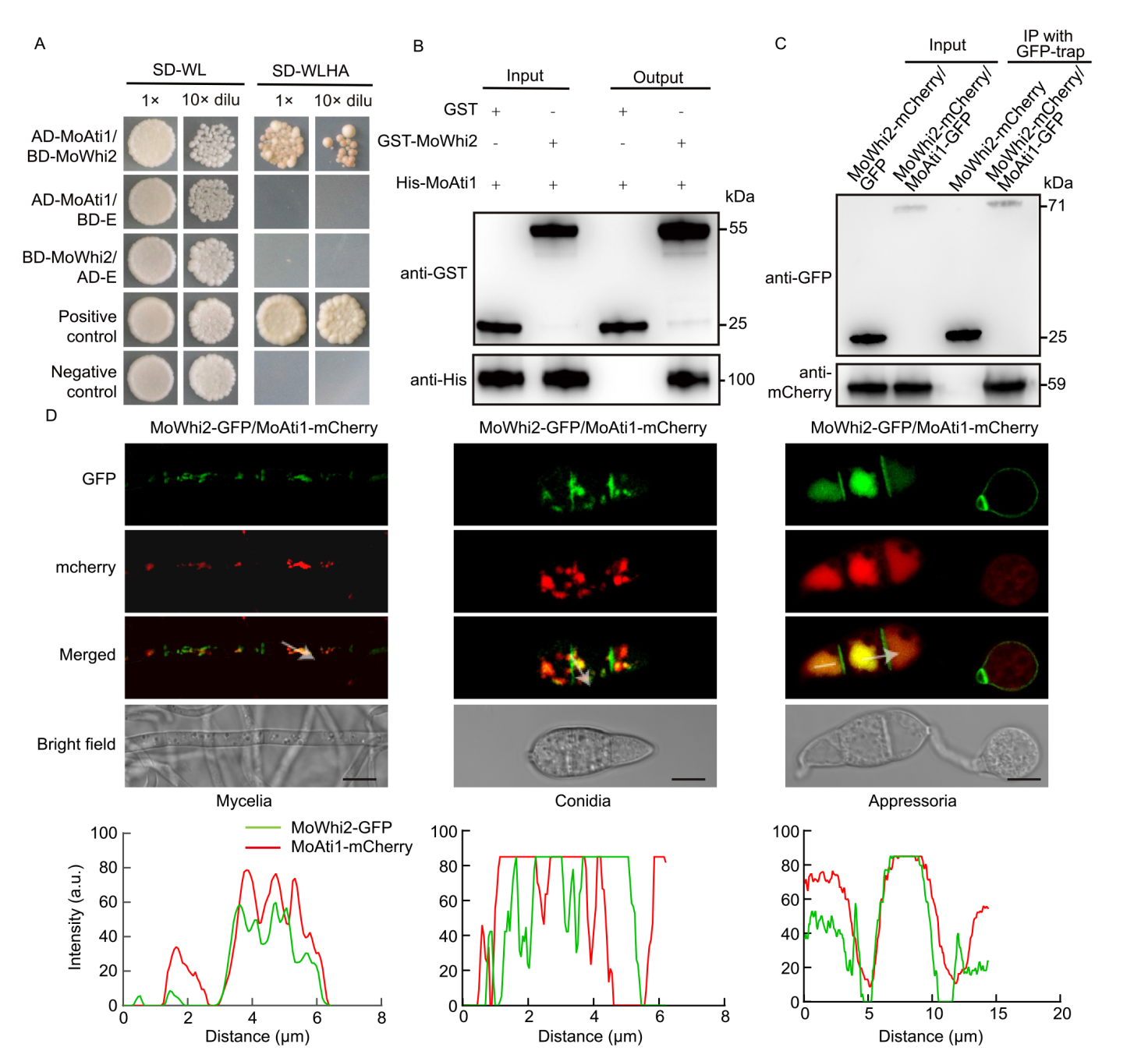
Fig. 1. Interaction and co-localization of MoWhi2 and MoAti1. A, DUAL membrane yeast two-hybrid system assay confirming the MoWhi2-MoAti1 interaction. The paired plasmids of pTSUC2-APP and NubG-Fe65 were used as the positive control, while pTSUC2-APP and pPR3-N served as the negative control. SD-WLHA, SD-Leu/-Trp/-His/-Ade; SD-WL, SD-Leu/-Trp; dilu, Dilution. BD-E, Empty pGBKT7; AD-E, Empty pGADT7. B, Pull-down assay detecting the interaction between MoWhi2 and MoAti1. The GST-MoWhi2 and His-MoAti1 co-incubated mixture served as the experimental sample, while the GST and His-MoAti1 co-incubated mixture served as the negative control. C, Validation of MoWhi2-MoAti1 interaction via a Co-IP (Co-immunoprecipitation) assay. The protein MoWhi2-mCherry (59 kDa) was co-precipitated with MoAti1-GFP (71 kDa). The MoWhi2-mCherry/GFP strain served as a negative control, and the MoWhi2-mCherry/MoAti1-GFP strain served as the experimental sample. D, Subcellular localization of MoWhi2 and MoAti1 at different developmental stages of MoWhi2-GFP/MoAti1-mCherry co-expression strain. Scale bars, 5 μm; line-scan fluorescence intensity profile is shown. Arrows indicate the analyzed regions. The intensity is given in arbitrary units (a.u.).
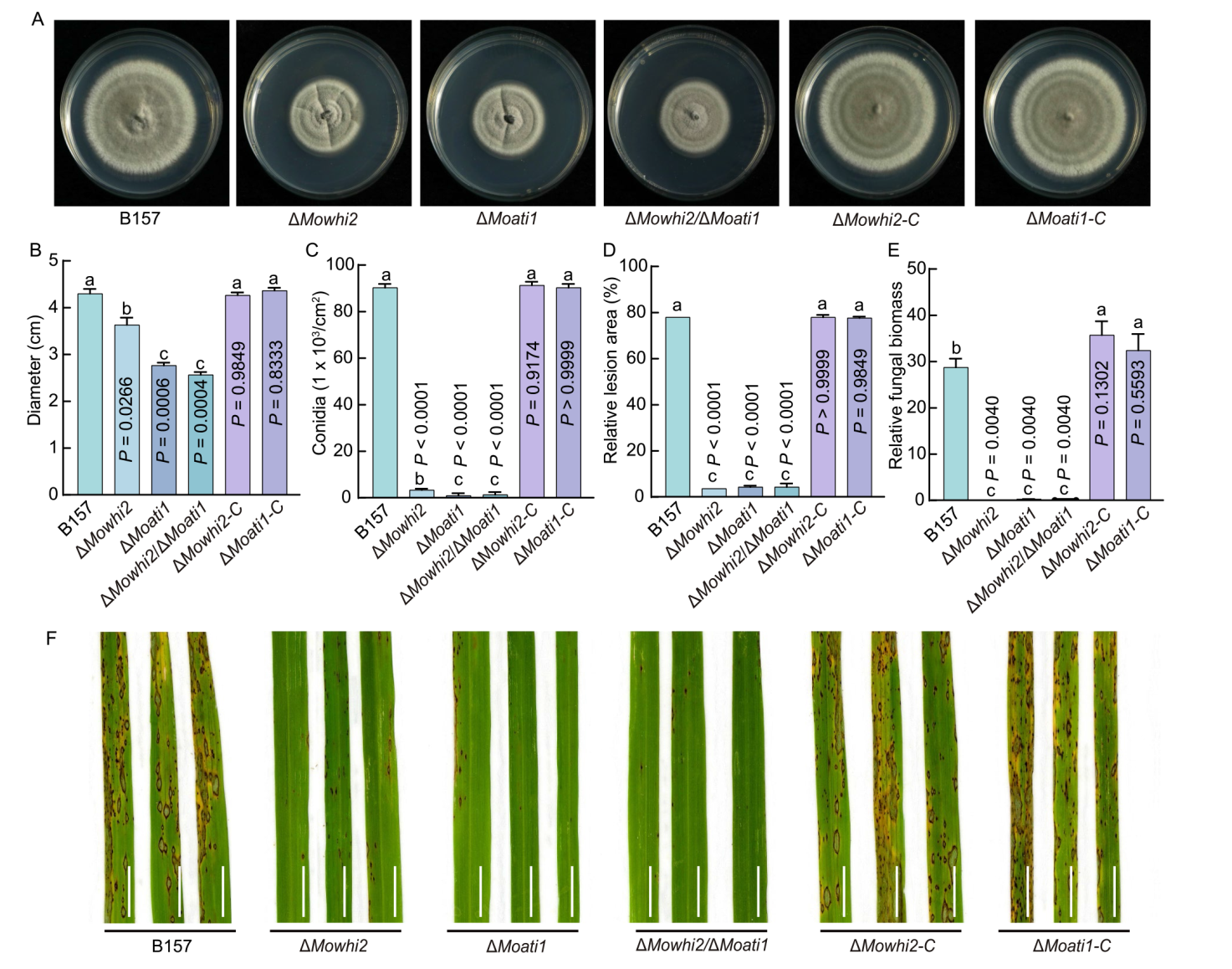
Fig. 2. MoWhi2 and MoAti1 regulate growth, conidiation, and virulence in Magnaporthe oryzae. A-C, Colony morphology of wild-type strain B157, mutant strains (ΔMowhi2, ΔMoati1, and ΔMowhi2/ΔMoati1), and complemented strains (ΔMowhi2-C and ΔMoati1-C) grown on complete medium (CM) for 7 d. The lesion diameter (B) and conidia production (C) of the mutants were lower than those of the wild-type and complemented strains. D and E, Relative lesion area (D) and fungal biomass (E) measurements of wild-type strain B157, mutant strains (ΔMowhi2, ΔMoati1, and ΔMowhi2/ΔMoati1), and complemented strains (ΔMowhi2-C and ΔMoati1-C) after 7 d of inoculation. The statistical analysis was conducted with Photoshop 2021 and Prism 7.0. Lesion number, area, and fungal biomass were lower in the mutants than in the wild-type and complemented strains. F, Rice seedling infection assay of the wild-type strain B157, mutant strains (ΔMowhi2, ΔMoati1, and ΔMowhi2/ΔMoati1), and complemented strains (ΔMowhi2-C and ΔMoati1-C). Rice seedlings were spraying inoculated with conidial suspensions and photographed at 5 dpi. Scale bars, 1cm. Data are presented as mean ± SD (n = 3). Statistically significant differences between wild-type strain B157, ΔMowhi2, ΔMoati1, ΔMowhi2/ΔMoati1, and complemented strains (ΔMowhi2-C and ΔMoati1-C) were determined by one-way ANOVA tests (P < 0.05). Post-hoc pairwise comparisons were conducted using Tukey’s Honestly Significant Difference (HSD) test (P < 0.05). In the figures, different lowercase letters above bars indicate significant differences among groups.
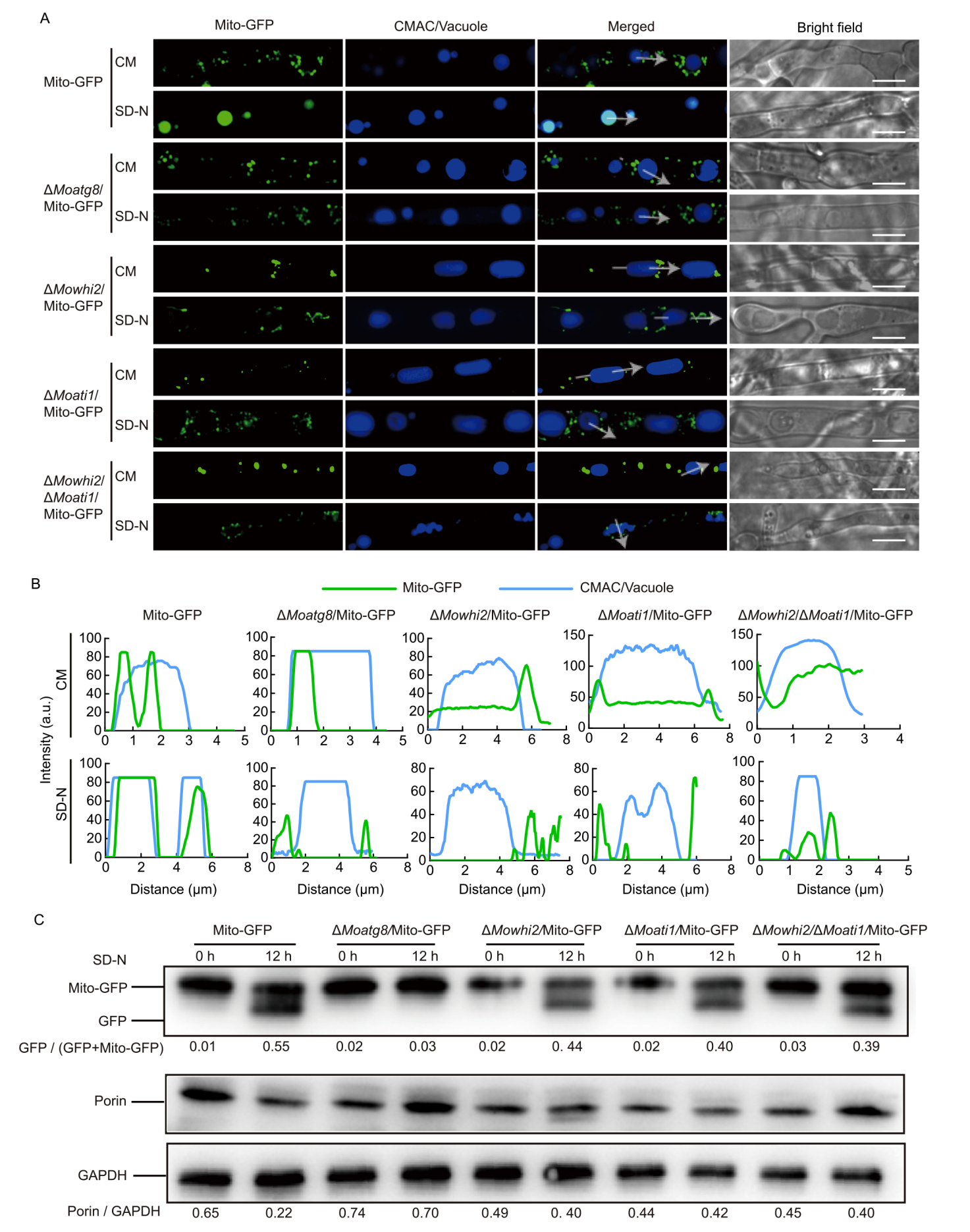
Fig. 3. MoWhi2 and MoAti1 regulate mitophagy in Magnaporthe oryzae. A, Impaired Mito-GFP degradation in ΔMoatg8/Mito-GFP, ΔMowhi2/Mito-GFP, ΔMoati1/Mito-GFP, and ΔMowhi2/ΔMoati1/Mito-GFP strains. Hyphae were cultured in liquid complete medium (CM) for 24 h, transferred to glycerol-supplemented basal medium (BM)-G for another 30 h, then to nitrogen-starvation (SD-N) medium for 6-8 h, and stained with 7-amino-4-chloromethylcoumarin (CMAC) before imaging. Arrows indicate the analyzed regions. Scale bars, 5 μm. B, Linescan analysis of the arrow-indicated region in A. The intensity is given in arbitrary units (a.u.).
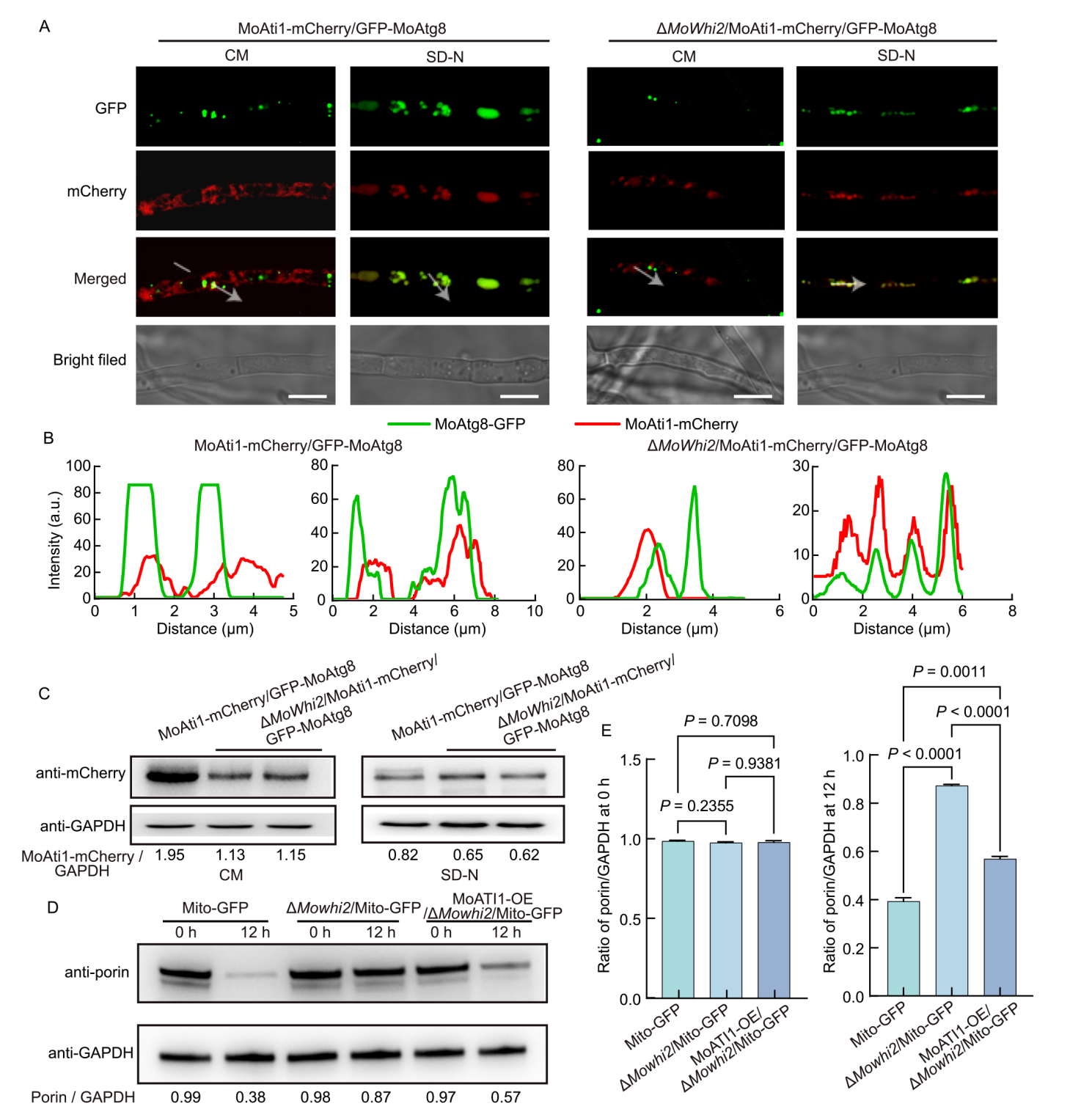
Fig. 4. MoWhi2 may be essential for maintaining MoAti1 protein levels. A, Fluorescence microscopy showing reduced fluorescence intensity of MoAti1-mCherry in the ΔMowhi2 mutant compared with the MoAti1-mCherry/GFP-MoAtg8 strain. Hyphae were stained with 7-amino-4-chloromethylcoumarin (CMAC). Arrows indicate the analyzed regions. Scale bars, 5 μm. CM, Complete medium; SD-N, Nitrogen-starvation medium. B, Line-scan analysis of fluorescence intensity across the region marked by the arrow in A. The intensity is given in arbitrary units (a.u.). C, Knockout of MoWHI2 reduced MoAti1 protein level. Western blot analysis was performed to examine the protein level of MoAti1-mCherry in response to nitrogen starvation. Protein extracts from the indicated strains were western-blotted with anti-mCherry and anti-glyceraldehyde-3-phosphate dehydrogenase (GAPDH) (loading control) antibodies.
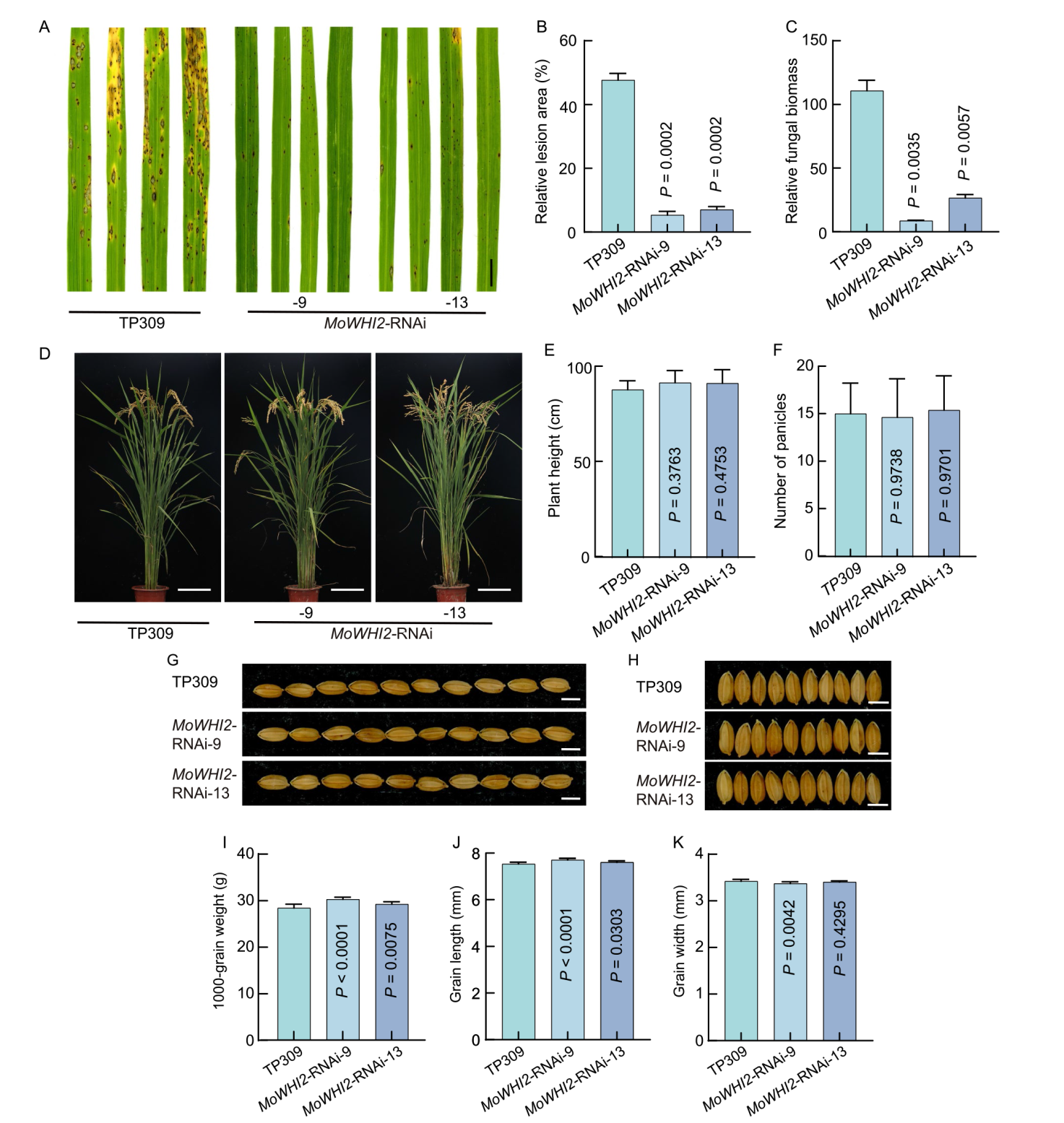
Fig. 5. Growth phenotype and agronomic traits of MoWHI2-RNAi transgenic plants. A, Disease symptoms on rice leaves of wild type TP309 and MoWHI2-RNAi plants at 7 d post-inoculation with Magnaporthe oryzae (strain RB22). Scale bar, 1 cm. B and C, Statistical analysis of lesion area on infected rice leaves (B) and quantification of relative fungal biomass in infected rice leaves (C), as determined by qPCR. Data are presented as mean ± SD (n = 3). D, Phenotypic comparison between wild type TP309 and MoWHI2-RNAi transgenic plants at the maturity stage. Scale bars, 15 cm. E and F, Plant height (E) and the number of panicles (F) of RNAi plants show no significant difference compared with wild type TP309. Data are presented as mean ± SD (n = 8). G and H, Grain length (G) and grain width (H) of TP309 and MoWHI2-RNAi plants. Scale bars, 5 mm. I-K, Statistical analysis of 1000-grain weight (I), grain length (J), and grain width (K) of wild-type TP309 and MoWHI2-RNAi plants. Data are presented as mean ± SD (n = 15). Statistically significant differences between TP309 and MoWHI2-RNAi plants were determined by one-way ANOVA tests (P < 0.05).
| [1] | Asibi A E, Chai Q, Coulter J A. 2019. Rice blast: A disease with implications for global food security. Agronomy, 9(8): 451. |
| [2] | Bhatia-Kissova I, Camougrand N. 2021. Mitophagy in yeast: Decades of research. Cells, 10(12): 3541. |
| [3] | Cai Y C, Liu X Y, Shen L B, et al. 2022. Homeostasis of cell wall integrity pathway phosphorylation is required for the growth and pathogenicity of Magnaporthe oryzae. Mol Plant Pathol, 23(8): 1214-1225. |
| [4] | Chen X H, Wang G Q, Zhang Y, et al. 2018. Whi2 is a conserved negative regulator of TORC1 in response to low amino acids. PLoS Genet, 14(8): e1007592. |
| [5] | Chen X Y, Pei Z X, Liu H, et al. 2022. Host-induced gene silencing of fungal-specific genes of Ustilaginoidea virens confers effective resistance to rice false smut. Plant Biotechnol J, 20(2): 253-255. |
| [6] | Deng Y Z, Ramos-Pamplona M, Naqvi N I. 2009. Autophagy-assisted glycogen catabolism regulates asexual differentiation in Magnaporthe oryzae. Autophagy, 5(1): 33-43. |
| [7] | Di Pietro A, Talbot N J. 2017. Fungal pathogenesis: Combatting the oxidative burst. Nat Microbiol, 2: 17095. |
| [8] | Dou T X, Shao X H, Hu C H, et al. 2020. Host-induced gene silencing of Foc TR4 ERG6/11 genes exhibits superior resistance to Fusarium wilt of banana. Plant Biotechnol J, 18(1): 11-13. |
| [9] | He Y L, Deng Y Z, Naqvi N I. 2013. Atg24-assisted mitophagy in the foot cells is necessary for proper asexual differentiation in Magnaporthe oryzae. Autophagy, 9(11): 1818-1827. |
| [10] | Hou Y H, Zhang T X, Chen Y L. 2025. Host-induced gene silencing targeting the calcineurin of Fusarium fujikuroi to enhance resistance against rice bakanae disease. Front Plant Sci, 16: 1366158. |
| [11] | Jagernath J S, Meng S, Qiu J H, et al. 2021. Selective degradation of mitochondria by mitophagy in pathogenic fungi. Am J Mol Biol, 11(1): 15-27. |
| [12] | Karimi H Z, Innes R W. 2022. Molecular mechanisms underlying host-induced gene silencing. Plant Cell, 34(9): 3183-3199. |
| [13] | Klionsky D J, Abdel-Aziz A K, Abdelfatah S, et al. 2021. Guidelines for the use and interpretation of assays for monitoring autophagy. 4th ed. Autophagy, 17(1): 1-382. |
| [14] | Koch A, Wassenegger M. 2021. Host-induced gene silencing-mechanisms and applications. New Phytol, 231(1): 54-59. |
| [15] | Kou Y J, He Y L, Qiu J H, et al. 2019. Mitochondrial dynamics and mitophagy are necessary for proper invasive growth in rice blast. Mol Plant Pathol, 20(8): 1147-1162. |
| [16] | Kou Y J, Shi H B, Qiu J H, et al. 2024. Effectors and environment modulating rice blast disease: From understanding to effective control. Trends Microbiol, 32(10): 1007-1020. |
| [17] | Leadsham J E, Miller K, Ayscough K R, et al. 2009. Whi2p links nutritional sensing to actin-dependent Ras-cAMP-PKA regulation and apoptosis in yeast. J Cell Sci, 122(5): 706-715. |
| [18] | Li Z Y, Wei X J, Tong X H, et al. 2022. The OsNAC23-Tre6P-SnRK1a feed-forward loop regulates sugar homeostasis and grain yield in rice. Mol Plant, 15(4): 706-722. |
| [19] | Liu L, Sakakibara K, Chen Q, et al. 2014. Receptor-mediated mitophagy in yeast and mammalian systems. Cell Res, 24(7): 787-795. |
| [20] | Maršíková J, Pavlíčková M, Wilkinson D, et al. 2020. The Whi2p-Psr1p/Psr2p complex regulates interference competition and expansion of cells with competitive advantage in yeast colonies. Proc Natl Acad Sci USA, 117(26): 15123-15131. |
| [21] | Mendl N, Occhipinti A, Müller M, et al. 2011. Mitophagy in yeast is independent of mitochondrial fission and requires the stress response gene WHI2. J Cell Sci, 124(Pt 8): 1339-1350. |
| [22] | Meng S, Jagernath J S, Luo C X, et al. 2022. MoWhi2 mediates mitophagy to regulate conidiation and pathogenesis in Magnaporthe oryzae. Int J Mol Sci, 23(10): 5311. |
| [23] | Meng S, Xiong M, Cheng L J, et al. 2025. CaEch1-mediated mitophagy regulates vegetative growth, conidiation, appressorium formation, and pathogenicity in Colletotrichum camelliae. Phytopathol Res, 7(1): 20. |
| [24] | Nowara D, Gay A, Lacomme C, et al. 2010. HIGS host-induced gene silencing in the obligate biotrophic fungal pathogen Blumeria graminis. Plant Cell, 22(9): 3130-3141. |
| [25] | Probst C, Hallas-Møller M, Ipsen J Ø, et al. 2023. A fungal lytic polysaccharide monooxygenase is required for cell wall integrity, thermotolerance, and virulence of the fungal human pathogen Cryptococcus neoformans. PLoS Pathog, 19(4): e1010946. |
| [26] | Ramos-Pamplona M, Naqvi N I. 2006. Host invasion during rice-blast disease requires carnitine-dependent transport of peroxisomal acetyl-CoA. Mol Microbiol, 61(1): 61-75. |
| [27] | Sarkar A, Roy-Barman S. 2021. Spray-induced silencing of pathogenicity gene MoDES1 via exogenous double-stranded RNA can confer partial resistance against fungal blast in rice. Front Plant Sci, 12: 733129. |
| [28] | Shen Q, Shihabdeen M N S, Yang F, et al. 2025. A novel mitochondrial regulon for ferroptosis during fungal pathogenesis. Autophagy, 21(12): 2903-2915. |
| [29] | Shen Z F, Li L, Zhu X M, et al. 2023. Current opinions on mitophagy in fungi. Autophagy, 19(3): 747-757. |
| [30] | Shi H B, Meng S, Qiu J H, et al. 2021. MoWhi2 regulates appressorium formation and pathogenicity via the MoTor signalling pathway in Magnaporthe oryzae. Mol Plant Pathol, 22(8): 969-983. |
| [31] | Shi H B, Meng S, Qiu J H, et al. 2024. MoAti1 mediates mitophagy by facilitating recruitment of MoAtg8 to promote invasive growth in Magnaporthe oryzae. Mol Plant Pathol, 25(3): e13439. |
| [32] | Song J Z, Li H, Yang H Y, et al. 2025. Recruitment of Atg1 to the phagophore by Atg8 orchestrates autophagy machineries. Nat Struct Mol Biol, 32(9): 1606-1621. |
| [33] | Teng X C, Hardwick J M. 2019. Whi2: A new player in amino acid sensing. Curr Genet, 65(3): 701-709. |
| [34] | van Zutphen T, Veenhuis M, van der Klei I J. 2008. Pex14 is the sole component of the peroxisomal translocon that is required for pexophagy. Autophagy, 4(1): 63-66. |
| [35] | Veneault-Fourrey C, Barooah M, Egan M, et al. 2006. Autophagic fungal cell death is necessary for infection by the rice blast fungus. Science, 312: 580-583. |
| [36] | Wang M H, Wu L, Mei Y Z, et al. 2020. Host-induced gene silencing of multiple genes of Fusarium graminearum enhances resistance to Fusarium head blight in wheat. Plant Biotechnol J, 18(12): 2373-2375. |
| [37] | Wang M Y, Dean R A. 2022. Host induced gene silencing of Magnaporthe oryzae by targeting pathogenicity and development genes to control rice blast disease. Front Plant Sci, 13: 959641. |
| [38] | Wang Y T, Ping Y, Zhou R, et al. 2025. The Whi2-Psr1-Psr2 complex selectively regulates TORC1 and autophagy under low leucine conditions but not nitrogen depletion. Autophagy, 21(8): 1700-1716. |
| [39] | Wei Y J, Chiang W C, Sumpter R, et al. 2017. Prohibitin 2 is an inner mitochondrial membrane mitophagy receptor. Cell, 168(1/2): 224-238.e10. |
| [40] | Wesch N, Kirkin V, Rogov V V. 2020. Atg8-family proteins: Structural features and molecular interactions in autophagy and beyond. Cells, 9(9): 2008. |
| [41] | Xiao Y H, Liu L P, Zhang T, et al. 2021. Transcription factor MoMsn2 targets the putative 3-methylglutaconyl-CoA hydratase-encoding gene MoAUH1 to govern infectious growth via mitochondrial fusion/fission balance in Magnaporthe oryzae. Environ Microbiol, 23(2): 774-790. |
| [42] | Yin L Y, Huang Z, Zhou Y M, et al. 2025. Enhanced resistance to pokkah boeng disease in sugarcane through host-induced gene silencing targeting FsCYP51 in Fusarium sacchari. Plant Cell Environ, 48(6): 3861-3874. |
| [43] | Youle R J, Narendra D P. 2011. Mechanisms of mitophagy. Nat Rev Mol Cell Biol, 12(1): 9-14. |
| [44] | Zhong K L, Li X, Le X Y, et al. 2016. MoDnm1 dynamin mediating peroxisomal and mitochondrial fission in complex with MoFis1 and MoMdv1 is important for development of functional appressorium in Magnaporthe oryzae. PLoS Pathog, 12(8): e1005823. |
| [45] | Zhu L, Zhu J, Liu Z X, et al. 2017. Host-induced gene silencing of rice blast fungus Magnaporthe oryzae pathogenicity genes mediated by the brome mosaic virus. Genes, 8(10): 241. |
| [1] | Li Haifeng, Fan Jiayi. Functions of Rice E3 Ubiquitin Ligases in Response to Environmental Stress and in Regulating Grain Size [J]. Rice Science, 2025, 32(5): 649-657. |
| [2] | Pan Pan, Guo Wenlong, Li Hengbo, Shao Yifan, Guo Zhihao, Jin Ye, Cheng Yanrong, Yu Guoping, Fu Zhenshi, Hu Lin, Zheng Xiaoming, Zhou Guomin, Zhang Jianhua. Accelerating Wild Rice Disease-Resistant Germplasm Exploration: Artificial Intelligence (AI)-Powered Wild Rice Blast Disease Level Evaluation and Disease-Resistance Identification [J]. Rice Science, 2025, 32(5): 727-746. |
| [3] | Li Xinyan, Weng Lüshui, Xiao Youlun, Li Jinjiang, Deng Lihua, Liu Qing, Kang Weiwei, Duan Yaping, Yang Daji, Xiao Guoying. Characteristic Analysis of Penta-Resistance Restorer Line for Hybrid Rice [J]. Rice Science, 2025, 32(4): 512-524. |
| [4] | Zhao Mei, Liu Xiaoxue, Wan Jun, Zhou Erxun, Shu Canwei. Host-Induced Gene Silencing of Effector AGLIP1 Enhanced Resistance of Rice to Rhizoctonia solani AG1-IA [J]. Rice Science, 2024, 31(4): 463-474. |
| [5] | Lin Shaodan, Yao Yue, Li Jiayi, Li Xiaobin, Ma Jie, Weng Haiyong, Cheng Zuxin, Ye Dapeng. Application of UAV-Based Imaging and Deep Learning in Assessment of Rice Blast Resistance [J]. Rice Science, 2023, 30(6): 652-660. |
| [6] | Wu Zhongling, Qiu Jiehua, Shi Huanbin, Lin Chuyu, Yue Jiangnan, Liu Zhiquan, Xie Wei, Naweed I. Naqvi, Kou Yanjun, Tao Zeng. Polycomb Repressive Complex 2-Mediated H3K27 Trimethylation Is Required for Pathogenicity in Magnaporthe oryzae [J]. Rice Science, 2022, 29(4): 363-374. |
| [7] | Suhas Gorakh Karkute, Vishesh Kumar, Mohd Tasleem, Dwijesh Chandra Mishra, Krishna Kumar Chaturvedi, Anil Rai, Amitha Mithra Sevanthi, Kishor Gaikwad, Tilak Raj Sharma, Amolkumar U. Solanke. Genome-Wide Analysis of von Willebrand Factor A Gene Family in Rice for Its Role in Imparting Biotic Stress Resistance with Emphasis on Rice Blast Disease [J]. Rice Science, 2022, 29(4): 375-384. |
| [8] | Zhou Ying, Wan Tao, Yuan Bin, Lei Fang, Chen Meijuan, Wang Qiong, Huang Ping, Kou Shuyan, Qiu Wenxiu, Liu Li. Improving Rice Blast Resistance by Mining Broad-Spectrum Resistance Genes at Pik Locus [J]. Rice Science, 2022, 29(2): 133-142. |
| [9] | Meng Shuai, Qiu Jiehua, Xiong Meng, Liu Zhiquan, Jane Sadhna Jagernath, Lin Fucheng, Shi Huanbin, Kou Yanjun. UvWhi2 Is Required for Stress Response and Pathogenicity in Ustilaginoidea virens [J]. Rice Science, 2022, 29(1): 47-54. |
| [10] | Yong Yang, Qiujun Lin, Xinyu Chen, Weifang Liang, Yuwen Fu, Zhengjin Xu, Yuanhua Wu, Xuming Wang, Jie Zhou, Chulang Yu, Chengqi Yan, Qiong Mei, Jianping Chen. Characterization and Proteomic Analysis of Novel Rice Lesion Mimic Mutant with Enhanced Disease Resistance [J]. Rice Science, 2021, 28(5): 466-478. |
| [11] | Junhua Lu, Xuemei Yang, Jinfeng Chen, Tingting Li, Zijin Hu, Ying Xie, Jinlu Li, Jiqun Zhao, Mei Pu, Hui Feng, Jing Fan, Yanyan Huang, Jiwei Zhang, Wenming Wang, Yan Li. Osa-miR439 Negatively Regulates Rice Immunity Against Magnaporthe oryzae [J]. Rice Science, 2021, 28(2): 156-165. |
| [12] | Yanchang Luo, Tingchen Ma, Teo Joanne, Zhixiang Luo, Zefu Li, Jianbo Yang, Zhongchao Yin. Marker-Assisted Breeding of Thermo-Sensitive Genic Male Sterile Line 1892S for Disease Resistance and Submergence Tolerance [J]. Rice Science, 2021, 28(1): 89-98. |
| [13] | Ning Xiao, Yunyu Wu, Aihong Li. Strategy for Use of Rice Blast Resistance Genes in Rice Molecular Breeding [J]. Rice Science, 2020, 27(4): 263-277. |
| [14] | B. ANGELES-SHIM Rosalyn, P. REYES Vincent, M. del VALLE Marilyn, S. LAPIS Ruby, SHIM Junghyun, SUNOHARA Hidehiko, K. JENA Kshirod, ASHIKARI Motoyuki, DOI Kazuyuki. Marker-Assisted Introgression of Quantitative Resistance Gene pi21 Confers Broad Spectrum Resistance to Rice Blast [J]. Rice Science, 2020, 27(2): 113-123. |
| [15] | Jiehua Qiu, Shuai Meng, Yizhen Deng, Shiwen Huang, Yanjun Kou. Ustilaginoidea virens: A Fungus Infects Rice Flower and Threats World Rice Production [J]. Rice Science, 2019, 26(4): 199-206. |
| Viewed | ||||||
|
Full text |
|
|||||
|
Abstract |
|
|||||
