
Rice Science ›› 2026, Vol. 33 ›› Issue (3): 351-366.DOI: 10.1016/j.rsci.2026.02.009
• Research Papers • Previous Articles Next Articles
Koushik Chakraborty1,#( ), Subhankar Mondal1,2,#, Biswaranjan Das1,3, Priyanka Jena1,4, Sagar Banerjee1, Mridul Chakraborti1, Krishnendu Chattopadhyay1, Ramani Kumar Sarkar1
Received:2025-10-08
Accepted:2026-02-03
Online:2026-05-28
Published:2026-06-02
Contact:
Koushik Chakraborty (koushikiari@gmail.com; Koushik.Chakraborty@icar.org.in)
About author:#These authors contributed equally to this work
Koushik Chakraborty, Subhankar Mondal, Biswaranjan Das, Priyanka Jena, Sagar Banerjee, Mridul Chakraborti, Krishnendu Chattopadhyay, Ramani Kumar Sarkar. Enigma of Prolonged Submergence Tolerance in Rice: Rediscovering Critical Factors Beyond SUB1A[J]. Rice Science, 2026, 33(3): 351-366.
Add to citation manager EndNote|Ris|BibTeX
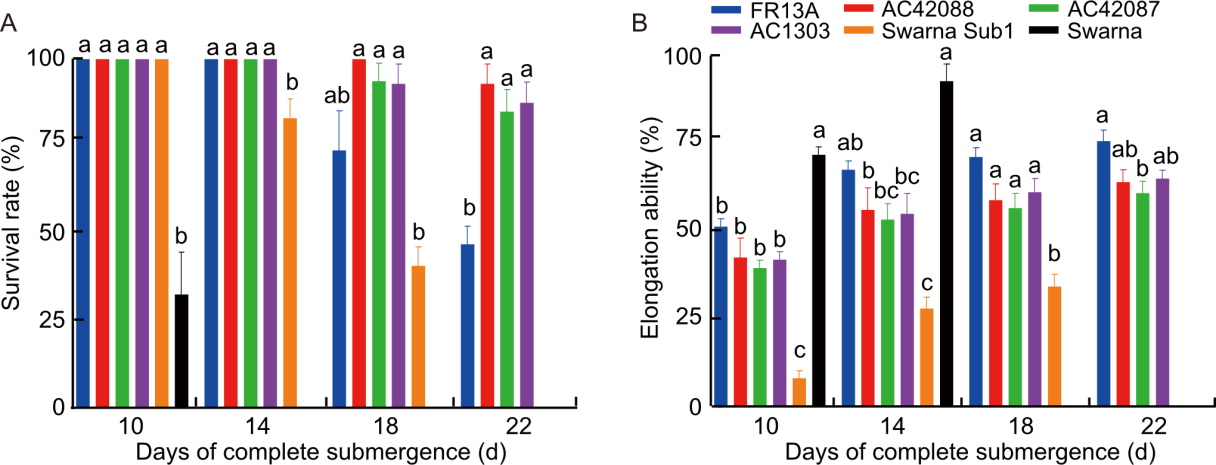
Fig. 1. Survival rate (A) and elongation ability (B) of six different rice genotypes under 10, 14, 18, and 22 d of complete submergence. Data are mean ± SE (n = 6). Statistical analysis was conducted in rice genotypes at particular time points. Different lowercase letters above the bars represent significant differences at the 0.05 level using two-way analysis of variance by Tukey’s multiple comparison test.
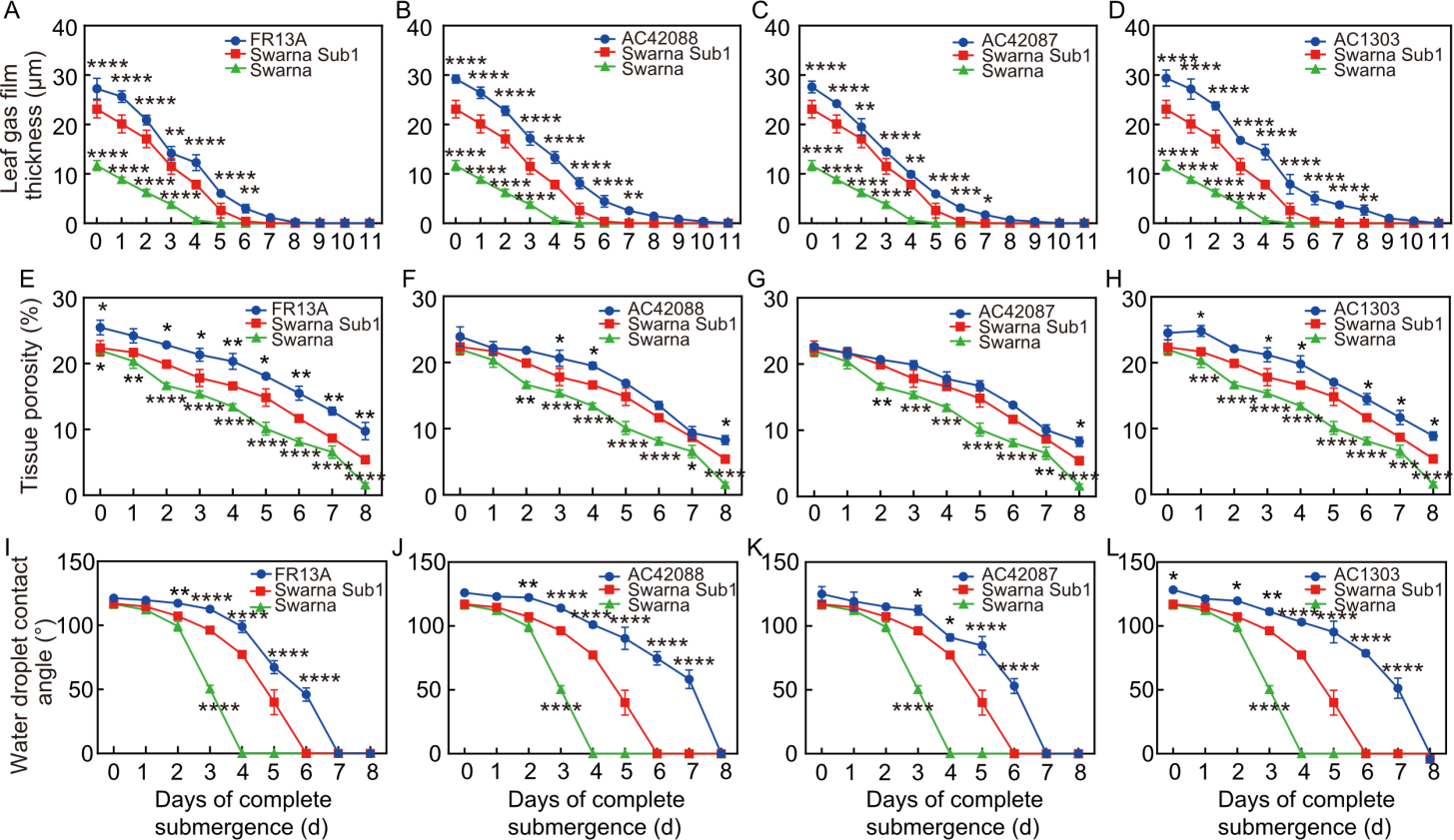
Fig. 2. Leaf gas film thickness, tissue porosity, and leaf hydrophobicity for six different rice genotypes under complete submergence. A-D, Leaf gas film thickness for FR13A (A), AC42088 (B), AC42087 (C), and AC1303 (D) rice genotypes under complete submergence. E-H, Tissue porosity for FR13A (E), AC42088 (F), AC42087 (G), and AC1303 (H) rice genotypes under complete submergence. I-L, Leaf hydrophobicity is represented in terms of contact angles for FR13A (I), AC42088 (J), AC42087 (K), and AC1303 (L) rice genotypes under complete submergence. Data are mean ± SE (n = 3). *, **, ***, and **** represent significant differences at P < 0.05, P < 0.01, P < 0.001, and P < 0.0001 compared with Swarna Sub1 using two-way analysis of variance followed by Tukey’s multiple comparison test. Values not marked with asterisk ‘*’ represent no significant difference.
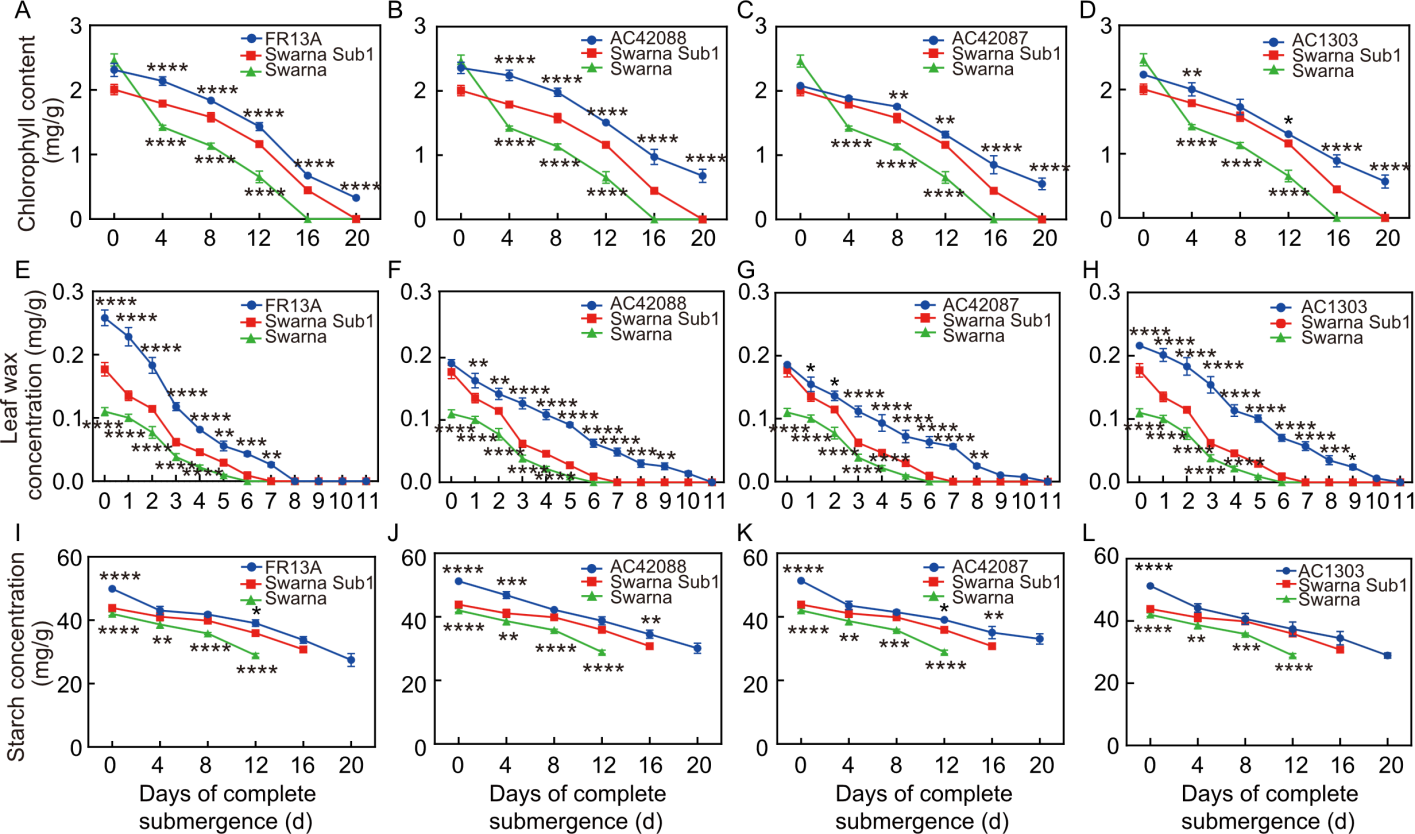
Fig. 3. Gradual depletion of chlorophyll content, wax concentration, and starch concentration under complete submergence for six different rice genotypes. A-D, Gradual depletion of chlorophyll content under complete submergence for FR13A (A), AC42088 (B), AC42087 (C), and AC1303 (D) rice genotypes. E-H, Gradual depletion of wax concentration under complete submergence for FR13A (E), AC42088 (F), AC42087 (G), and AC1303 (H) rice genotypes. I-L, Gradual depletion of starch concentration under complete submergence for FR13A (I), AC42088 (J), AC42087 (K), and AC1303 (L) rice genotypes. Data are mean ± SE (n = 3). *, **, ***, and **** represent significant difference at P < 0.05, P < 0.01, P < 0.001, and P < 0.0001 compared with Swarna Sub1 using two-way analysis of variance followed by Tukey’s multiple comparison test. Values not marked with asterisk ‘*’ represent no significant difference.
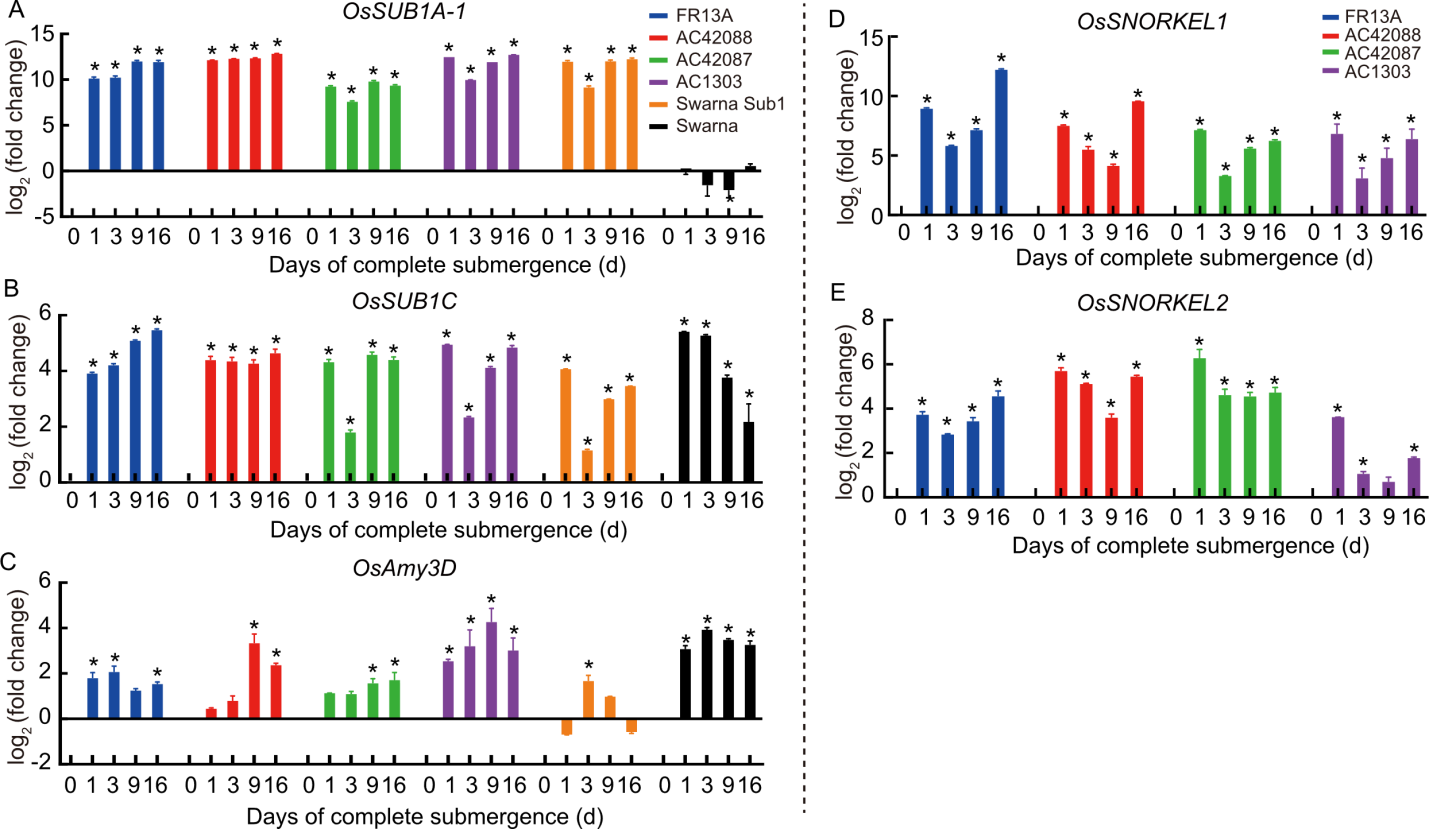
Fig. 4. Gene expression profiles of submergence-specific genes under 0, 1, 3, 9, and 16 d of complete submergence. A-C, qRT-PCR-based gene expression profiles of OsSUB1A-1 (A), OsSUB1C (B), and OsAmy3D (C) from leaves in six different rice genotypes. Os18S_rRNA is used as an internal control. D and E, qRT-PCR-based gene expression profiles of four different rice genotypes for OsSNORKEL1 (D) and OsSNORKEL2 (E) from leaves in four different rice genotypes. Os18S_rRNA is used as internal control. Data are mean ± SE (n = 3). * represents significant diiference at P < 0.05 compared with control.
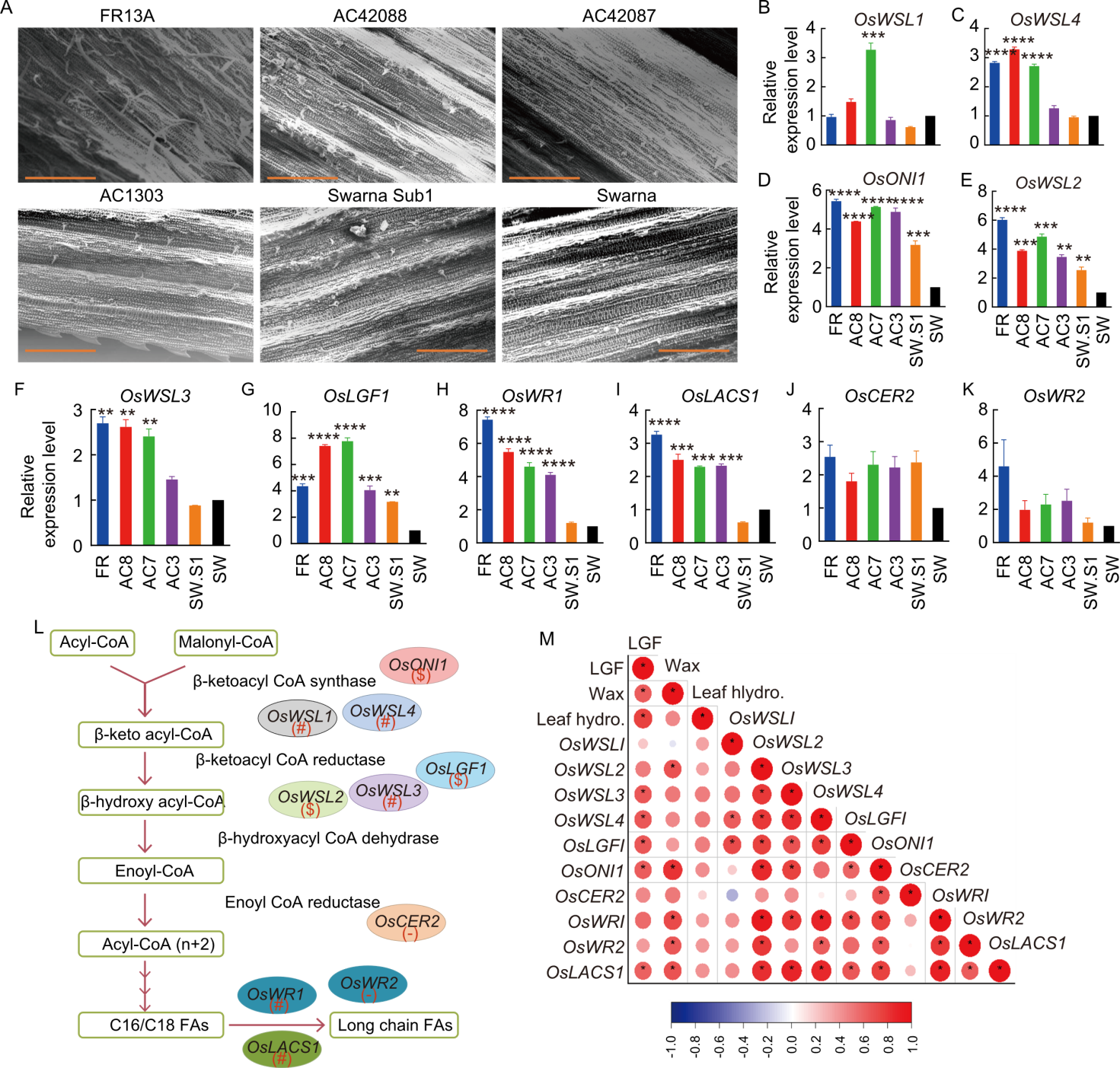
Fig. 5. Scanning electron microscopy images of leaves and expression profiles of fatty acid biosynthesis-related genes under non-stressed conditions. A, Scanning electron microscopy images of leaves for the six rice genotypes. Scale bars, 100 µm. B–K, qRT-PCR-based gene expression profiles of OsWSL1 (B), OsWSL4 (C), OsONI1 (D), OsWSL2 (E), OsWSL3 (F), OsLGF1 (G), OsWR1 (H), OsLACS1 (I), OsCER2 (J), and OsWR2 (K) from the leaves of six different rice genotypes. Os18S_rRNA was used as an internal reference. Data are mean ± SE (n = 3). **, ***, and **** represent significant difference at P < 0.01, P < 0.001, and P < 0.0001 as compared with Swarna using one-way analysis of variance by Tukey’s multiple comparison tests. Values not marked with asterisk ‘*’ represents no significant difference. FR, FR13A; AC8, AC42088; AC7, AC4287; AC3, AC1303; SW.S1, Swarna Sub1; SW, Swarna. L, A presentation of fatty acid elongation, showing expression of fatty acid biosynthesis pathway genes represented through ‘#’, ‘\$’, and ‘-’ signs. ‘#’ denotes high gene expression only in rice landraces like FR13A, AC42088, AC42087, and AC1303. ‘$’ denotes high gene expression in SUB1A containing rice genotypes like FR13A, AC42088, AC42087, AC1303, and Swarna Sub1. ‘-’ denotes high gene expression in all studied rice genotypes. FA, Fatty acid. M, Pearson correlation matrix of fatty acid biosynthesis genes was performed with leaf gas film (LGF), wax concentration (wax), and leaf hydrophobicity (Leaf hydro.). * represents significant difference at P < 0.01.
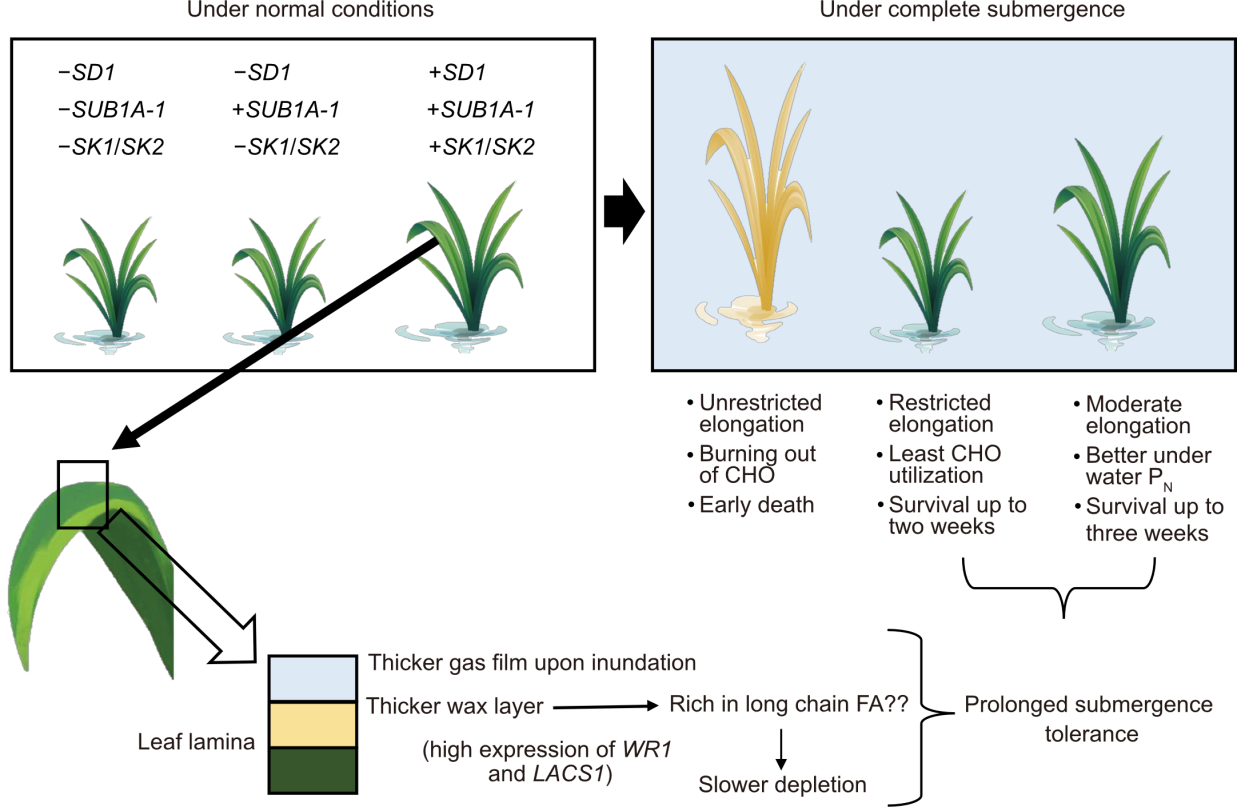
Fig. 6. A theoretical model outlines the differential responses of rice genotypes under prolonged submergence stress. The presence of SUB1A-1, along with SK1, SK2, and SD1 in the genetic backbone facilitates moderate shoot elongation during prolonged submergence, and thick waxy leaf surface rich in very-long-chain fatty acids (FAs) due to induced expression of OsWR1 and OsLACS1 genes which might be associated with the maximal survivability in rice landraces under prolonged submergence stress of three weeks or more. Contrastingly, the presence of only SUB1A-1 in rice genotype strictly follows restricted shoot elongation, i.e., quiescence under submergence. Absence of SUB1A-1, SK1, SK2, and SD1 in rice genotype facilitates unrestricted shoot elongation under submergence. ‘-’, Absence; ‘+’, Presence.
| [1] | Almeida A M, Vriezen W H, van der Straeten D. 2003. Molecular and physiological mechanisms of flooding avoidance and tolerance in rice. Russ J Plant Physiol, 50(6): 743-751. |
| [2] | Anumalla M, Khanna A, Catolos M, et al. 2025. Future flooding tolerant rice germplasm: Resilience afforded beyond Sub1A gene. Plant Genome, 18(2): e70040. |
| [3] | Armstrong W. 1980. Aeration in higher plants. Adv Bot Res, 7: 225-332. |
| [4] | Armstrong W, Drew M C. 2002. Root growth and metabolism under oxygen deficiency.In: Waisel Y, Eshel A, Kafkafi U. Plant Roots: The Hidden Half. New York, USA: Marcel Dekker: 1139-1187. |
| [5] | Arnon D I. 1949. Copper enzymes in isolated chloroplasts. polyphenoloxidase in Beta Vulgaris. Plant Physiol, 24(1): 1-15. |
| [6] | Bailey-Serres J, Fukao T, Ronald P, et al. 2010. Submergence tolerant rice: SUB1’s journey from landrace to modern cultivar. Rice, 3(2/3): 138-147. |
| [7] | Barik J, Panda D, Mohanty S K, et al. 2019. Leaf photosynthesis and antioxidant response in selected traditional rice landraces of Jeypore tract of Odisha, India to submergence. Physiol Mol Biol Plants, 25(4): 847-863. |
| [8] | Chakraborty K, Guru A, Jena P, et al. 2021. Rice with SUB1 QTL possesses greater initial leaf gas film thickness leading to delayed perception of submergence stress. Ann Bot, 127(2): 251-265. |
| [9] | Chakraborty K, Mondal S, Jena P, et al. 2022. Tolerance mechanism of rice in submergence and stagnant flooding stress. In: Bhattacharya P, Chakraborty K, Molla K A, et al. Climate Resilient Technology for Rice-based Production System in Eastern India. Cuttack, India: NRRI: 1-17. |
| [10] | Chakraborty K, Mondal S, Tripathy S, et al. 2025. Energy conservation or expense? A possible dilemma under combined stresses of salinity and submergence in rice. J Exp Bot, 76(17): 4961-4979. |
| [11] | Colmer T D, Pedersen O. 2007. Underwater photosynthesis and respiration in leaves of submerged wetland plants: Gas films improve CO2 and O2 exchange. New Phytol, 177(4): 918-926. |
| [12] | Colmer T D, Pedersen O. 2008. Oxygen dynamics in submerged rice (Oryza sativa). New Phytol, 178(2): 326-334. |
| [13] | Colmer T D, Voesenek L A C J. 2009. Flooding tolerance: Suites of plant traits in variable environments. Funct Plant Biol, 36(8): 665-681. |
| [14] | Colmer T D, Winkel A, Pedersen O. 2011. A perspective on underwater photosynthesis in submerged terrestrial wetland plants. AoB Plants, 2011: plr030. |
| [15] | Das K K, Sarkar R K, Ismail A M. 2005. Elongation ability and non-structural carbohydrate levels in relation to submergence tolerance in rice. Plant Sci, 168(1): 131-136. |
| [16] | Ebercon A, Blum A, Jordan W R. 1977. A rapid colorimetric method for epicuticular wax contest of sorghum leaves. Crop Sci, 17(1): 179-180. |
| [17] | Ella E S, Kawano N, Ito O. 2003. Importance of active oxygen-scavenging system in the recovery of rice seedlings after submergence. Plant Sci, 165(1): 85-93. |
| [18] | Fukao T, Bailey-Serres J. 2008. Ethylene: A key regulator of submergence responses in rice. Plant Sci, 175(1/2): 43-51. |
| [19] | Fukao T, Xu K N, Ronald P C, et al. 2006. A variable cluster of ethylene response factor-like genes regulates metabolic and developmental acclimation responses to submergence in rice. Plant Cell, 18(8): 2021-2034. |
| [20] | Gan L, Wang X L, Cheng Z J, et al. 2016. Wax crystal-sparse leaf 3 encoding a β-ketoacyl-CoA reductase is involved in cuticular wax biosynthesis in rice. Plant Cell Rep, 35(8): 1687-1698. |
| [21] | Gaur V S, Channappa G, Chakraborti M, et al. 2020. ‘Green revolution’ dwarf gene sd1 of rice has gigantic impact. Brief Funct Genomics, 19(5/6): 390-409. |
| [22] | Hattori Y, Nagai K, Furukawa S, et al. 2009. The ethylene response factors SNORKEL1 and SNORKEL2 allow rice to adapt to deep water. Nature, 460: 1026-1030. |
| [23] | Herzog M, Konnerup D, Pedersen O, et al. 2018. Leaf gas films contribute to rice (Oryza sativa) submergence tolerance during saline floods. Plant Cell Environ, 41(5): 885-897. |
| [24] | Ito Y, Kimura F, Hirakata K, et al. 2011. Fatty acid elongase is required for shoot development in rice. Plant J, 66(4): 680-688. |
| [25] | Jiao S L, Li Q Y, Zhang F, et al. 2024. Artificial selection of the Green Revolution gene Semidwarf1 is implicated in upland rice breeding. J IntegrAgric, 23(3): 769-780. |
| [26] | Koch K, Bhushan B, Barthlott W. 2009. Multifunctional surface structures of plants: An inspiration for biomimetics. Prog Mater Sci, 54(2): 137-178. |
| [27] | Kurokawa Y, Nagai K, Huan P D, et al. 2018. Rice leaf hydrophobicity and gas films are conferred by a wax synthesis gene (LGF1) and contribute to flood tolerance. New Phytol, 218(4): 1558-1569. |
| [28] | Livak K J, Schmittgen T D. 2001. Analysis of relative gene expression data using real-time quantitative PCR and the 2-ΔΔCT method. Methods, 25(4): 402-408. |
| [29] | Mackill D J, Amante M M, Vergara B S, et al. 1993. Improved semidwarf rice lines with tolerance to submergence of seedlings. Crop Sci, 33(4): 749-753. |
| [30] | Mao B G, Cheng Z J, Lei C L, et al. 2012. Wax crystal-sparse leaf2, a rice homologue of WAX2/GL1, is involved in synthesis of leaf cuticular wax. Planta, 235(1): 39-52. |
| [31] | McCready R M, Guggolz J, Silviera V, et al. 1950. Determination of starch and amylose in vegetables. Anal Chem, 22(9): 1156-1158. |
| [32] | Oe S, Sasayama D, Luo Q S, et al. 2022. Growth responses of seedlings under complete submergence in rice cultivars carrying both the submergence-tolerance gene SUB1A-1 and the floating genes SNORKELs. Plant Prod Sci, 25(1): 70-77. |
| [33] | Okishio T, Sasayama D, Hirano T, et al. 2014. Growth promotion and inhibition of the Amazonian wild rice species Oryza grandiglumis to survive flooding. Planta, 240(3): 459-469. |
| [34] | Pal S, Pal D, Kar R K, et al. 2025. Coetaneous activity of Sub1a and SK for maintenance of underwater growth in rice genotypes. Plant Gene, 42: 100502. |
| [35] | Pedersen O, Rich S M, Colmer T D. 2009. Surviving floods: Leaf gas films improve O2 and CO2 exchange, root aeration, and growth of completely submerged rice. Plant J, 58(1): 147-156. |
| [36] | Qin B X, Tang D, Huang J, et al. 2011. Rice OsGL1-1 is involved in leaf cuticular wax and cuticle membrane. Mol Plant, 4(6): 985-995. |
| [37] | Raskin I, Kende H. 1983. How does deep water rice solve its aeration problem. Plant Physiol, 72(2): 447-454. |
| [38] | Sarkar R K, Bhattacharjee B. 2011. Rice genotypes with SUB1 QTL differ in submergence tolerance, elongation ability during submergence and re-generation growth at re-emergence. Rice, 5(1): 7. |
| [39] | Sarkar R K, Ray A. 2016. Submergence-tolerant rice withstands complete submergence even in saline water: Probing through chlorophyll a fluorescence induction O-J-I-P transients. Photosynthetica, 54(2): 275-287. |
| [40] | Sarkar R K, Chakraborty K, Chattopadhyay K, et al. 2019. Responses of rice to individual and combined stresses of flooding and salinity. In: Hasanuzzaman M, Fujita M, Nahar K, et al. Advances in Rice Research for Abiotic Stress Tolerance. Amsterdam, the Netherlands: Elsevier: 281-297. |
| [41] | Sasidharan R, Bailey-Serres J, Ashikari M, et al. 2017. Community recommendations on terminology and procedures used in flooding and low oxygen stress research. New Phytol, 214(4): 1403-1407. |
| [42] | Septiningsih E M, Pamplona A M, Sanchez D L, et al. 2009. Development of submergence-tolerant rice cultivars: The Sub1 locus and beyond. Ann Bot, 103(2): 151-160. |
| [43] | Sha H J, Liu H L, Zhao G X, et al. 2022. Elite sd1 alleles in japonica rice and their breeding applications in Northeast China. Crop J, 10(1): 224-233. |
| [44] | Teakle N L, Colmer T D, Pedersen O. 2014. Leaf gas films delay salt entry and enhance underwater photosynthesis and internal aeration of Melilotussiculus submerged in saline water. Plant Cell Environ, 37(10): 2339-2349. |
| [45] | Thomson C J, Armstrong W, Waters I, et al. 1990. Aerenchyma formation and associated oxygen movement in seminal and nodal roots of wheat. Plant Cell Environ, 13(4): 395-403. |
| [46] | Untergasser A, Cutcutache I, Koressaar T, et al. 2012. Primer3: New capabilities and interfaces. Nucleic Acids Res, 40(15): e115. |
| [47] | Voesenek L A C J, Colmer T D, Pierik R, et al. 2006. How plants cope with complete submergence. New Phytol, 170(2): 213-226. |
| [48] | Wang X C, Guan Y Y, Zhang D, et al. 2017. A β-ketoacyl-CoA synthase is involved in rice leaf cuticular wax synthesis and requires a CER2-LIKE protein as a cofactor. Plant Physiol, 173(2): 944-955. |
| [49] | Wang Y H, Wan L Y, Zhang L X, et al. 2012. An ethylene response factor OsWR1 responsive to drought stress transcriptionally activates wax synthesis related genes and increases wax production in rice. Plant Mol Biol, 78(3): 275-288. |
| [50] | Winkel A, Colmer T D, Pedersen O. 2011. Leaf gas films of Spartina anglica enhance rhizome and root oxygen during tidal submergence. Plant Cell Environ, 34(12): 2083-2092. |
| [51] | Winkel A, Colmer T D, Ismail A M, et al. 2013. Internal aeration of paddy field rice (Oryza sativa) during complete submergence-importance of light and floodwater O2. New Phytol, 197(4): 1193-1203. |
| [52] | Winkel A, Pedersen O, Ella E, et al. 2014. Gas film retention and underwater photosynthesis during field submergence of four contrasting rice genotypes. J Exp Bot, 65(12): 3225-3233. |
| [53] | Xu K N, Mackill D J. 1996. A major locus for submergence tolerance mapped on rice chromosome 9. Mol Breed, 2(3): 219-224. |
| [54] | Xu K N, Xu X, Fukao T, et al. 2006. Sub1A is an ethylene-response-factor-like gene that confers submergence tolerance to rice. Nature, 442: 705-708. |
| [55] | Yu D M, Ranathunge K, Huang H S, et al. 2008. Wax Crystal-Sparse Leaf1 encodes a β-Ketoacyl CoA synthase involved in biosynthesis of cuticular waxes on rice leaf. Planta, 228(4): 675-685. |
| [56] | Yu Y L, Hu X J, Zhu Y X, et al. 2020. Re-evaluation of the rice ‘Green Revolution’ gene: The weak allele SD1-EQ from japonica rice may be beneficial for super indica rice breeding in the post-Green Revolution era. Mol Breed, 40(9): 84. |
| [57] | Zhang Z, Cheng Z J, Gan L, et al. 2016. OsHSD1, a hydroxysteroid dehydrogenase, is involved in cuticle formation and lipid homeostasis in rice. Plant Sci, 249: 35-45. |
| [58] | Zhou X Y, Jenks M A, Liu J, et al. 2014. Overexpression of transcription factor OsWR2 regulates wax and cutin biosynthesis in rice and enhances its tolerance to water deficit. Plant MolBiol Report, 32(3): 719-731. |
| [1] | Zhu Junlin, Zheng Guangjie, Tao Yi, Liao Wenli, Ye Chang, Xu Ya’nan, Xiao Deshun, Chu Guang, Xu Chunmei, Wang Danying. Wood Vinegar Enhances Seedling Rate of Rice Seeds under Flooding Stress by Mitigating Oxidative Damage and Maintaining Energy Homeostasis [J]. Rice Science, 2026, 33(1): 129-140. |
| [2] | Fazli Hameed, Shah Fahad Rahim, Anis Ur Rehman Khalil, Ram L. Ray, Xu Junzeng, Alhaj Yousef Hamoud, Akhtar Ali, Ning Tangyuan. Comparing Genotype and Climate Change Effects on Simulated Historical Rice Yields Using AquaCrop [J]. Rice Science, 2025, 32(6): 845-856. |
| [3] | Sanchika Snehi, Ravi Kiran Kt, Sanket Rathi, Sameer Upadhyay, Suneetha Kota, Satish Kumar Sanwal, Lokeshkumar Bm, Arun Balasubramaniam, Nitish Ranjan Prakash, Pawan Kumar Singh. Discerning Genes to Deliver Varieties: Enhancing Vegetative- and Reproductive-Stage Flooding Tolerance in Rice [J]. Rice Science, 2025, 32(2): 160-176. |
| [4] | Panda Debabrata, Barik Jijnasa. Flooding Tolerance in Rice: Focus on Mechanisms and Approaches [J]. Rice Science, 2021, 28(1): 43-57. |
| [5] | Mondal Satyen, Jamil Hasan M., Ahmed Tofayel, Giashuddin Miah M., C. Sta Cruz Pompe, M. Ismail Abdel. Effects of AG1 and AG2 QTLs on Nonstructural Carbohydrate and Seed Management Options for Rice Seedling Growth and Establishment under Flooding Stress [J]. Rice Science, 2020, 27(6): 515-528. |
| [6] | R. Kuanar Sandhya, Ray Anuprita, K. Sethi Santosh, Chattopadhyay Krishnendu, K. Sarkar Ramani. Physiological Basis of Stagnant Flooding Tolerance in Rice [J]. Rice Science, 2017, 24(2): 73-84. |
| [7] | Ramni Kumar SARKAR. Seed Priming Improves Agronomic Trait Performance under Flooding and Non-flooding Conditions in Rice with QTL SUB1 [J]. RICE SCIENCE, 2012, 19(4): 286-294. |
| Viewed | ||||||
|
Full text |
|
|||||
|
Abstract |
|
|||||
