
Rice Science ›› 2026, Vol. 33 ›› Issue (4): 531-544.DOI: 10.1016/j.rsci.2026.03.005
• Research Papers • Previous Articles Next Articles
Jiwoong Jung1,#, Deok Hyun Seo1,#, Youngdae Yoon2( ), Geupil Jang1,3()
Received:2026-01-13
Accepted:2026-03-11
Online:2026-07-28
Published:2026-08-06
Contact:
Geupil JANG (yk3@jnu.ac.kr);
Youngdae YOON (shim0924@konkuk.ac.kr)About author:#These authors contributed equally to this work
Jiwoong Jung, Deok Hyun Seo, Youngdae Yoon, Geupil Jang. Chloroplast-Derived Reactive Oxygen Species Dynamics Mediate Jasmonic Acid-Induced Drought Tolerance in Rice[J]. Rice Science, 2026, 33(4): 531-544.
Add to citation manager EndNote|Ris|BibTeX
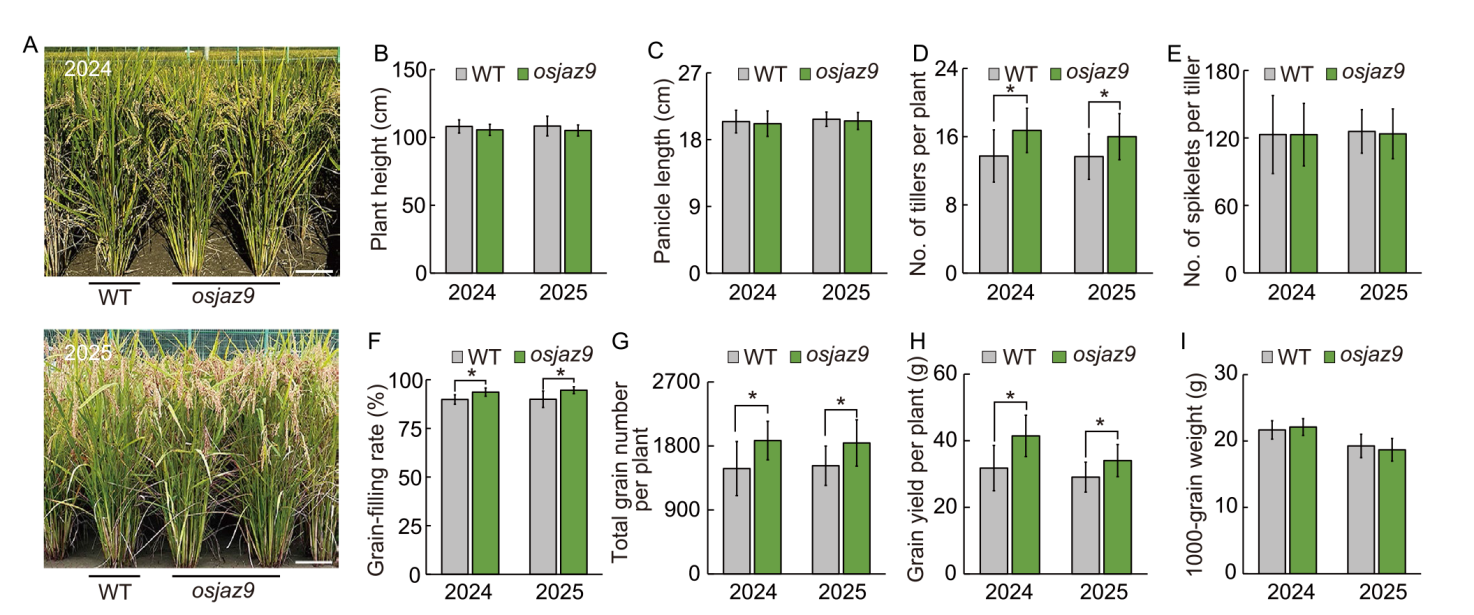
Fig. 1. osjaz9 knockout mutants exhibit improved grain yield under field conditions. A, Morphology of field-grown wild-type (WT) and osjaz9 knockout rice at the ripening stage in 2024 and 2025. Scale bars, 20 cm. B‒I, Quantification of growth and yield traits in WT and osjaz9 knockout plants in 2024 and 2025: plant height (B), panicle length (C), number of tillers per plant (D), number of spikelets per tiller (E), grain-filling rate (F), total grain number per plant (G), grain yield per plant (H), and 1000-grain weight (I). Data are mean ± SD (n > 30). Asterisks indicate statistically significant differences between WT and osjaz9 plants (*, P < 0.01, two-tailed t-test).
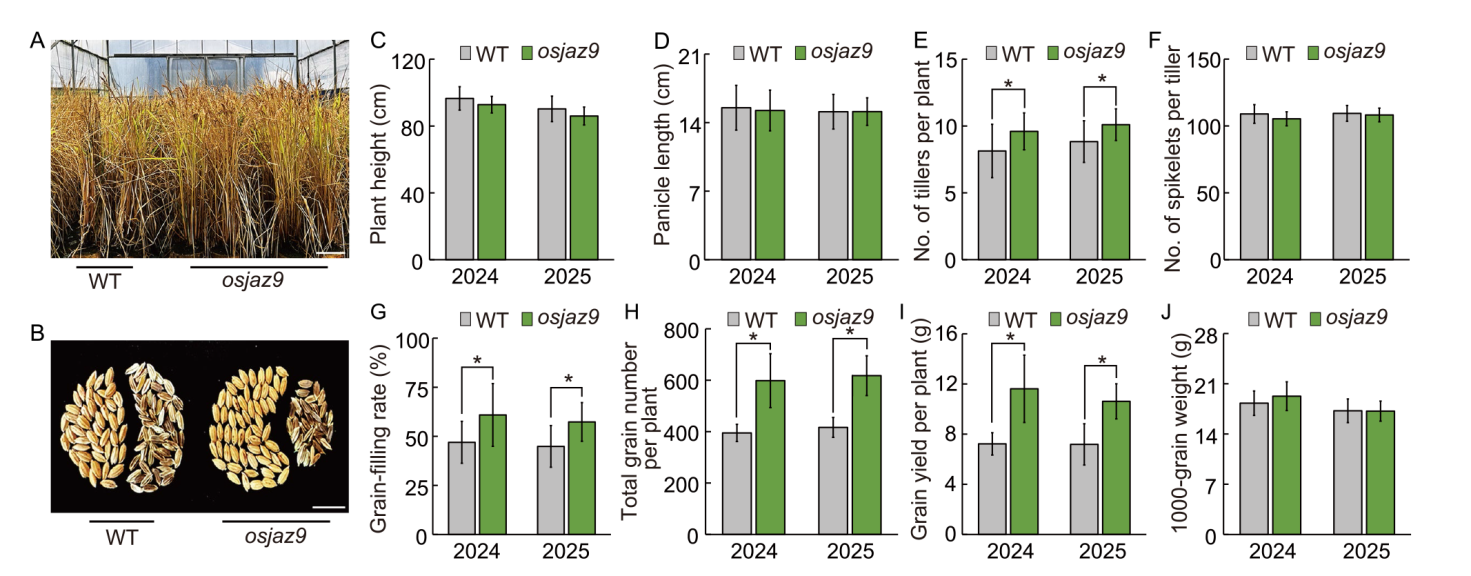
Fig. 2. Knockout mutation of OsJAZ9 enhances grain yield under drought stress conditions. A, Whole-plant images of wild-type (WT) and osjaz9 knockout rice at the harvest stage under drought stress. Scale bar, 20 cm. B, Grain images showing clear differences in grain-filling rates between WT and osjaz9 rice. Scale bar, 1 cm. C‒J, Analysis of agronomic traits in WT and osjaz9 knockout plants: plant height (C), panicle length (D), number of tillers per plant (E), number of spikelets per tiller (F), grain-filling rate (G), total grain number per plant (H), grain yield per plant (I), and 1000-grain weight (J) in 2024 and 2025. Data are mean ± SD (n > 30). Asterisks indicate statistically significant differences between WT and osjaz9 plants (*, P < 0.01, two-tailed t-test).
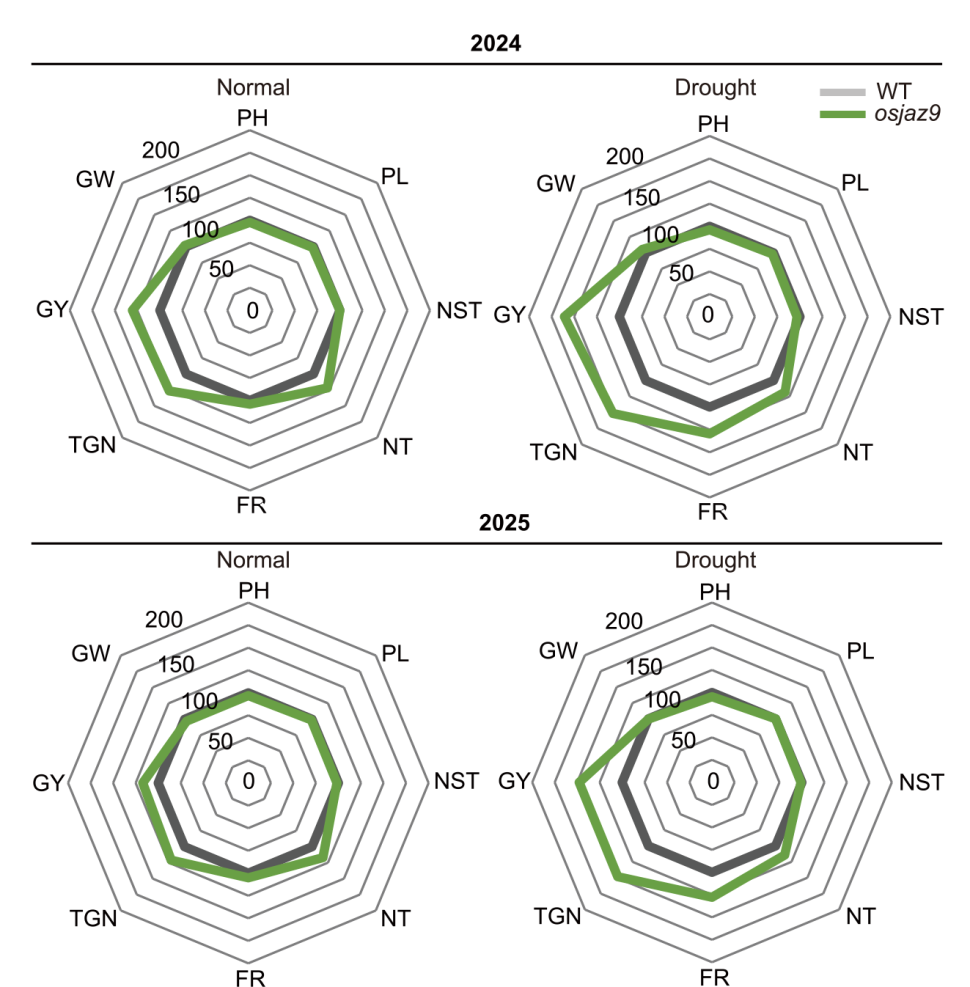
Fig. 3. Yield advantage of osjaz9 rice under drought conditions is largely due to improved grain-filling rate. Spider plots summarizing differences in agronomic traits between wild-type (WT) and osjaz9 knockout rice plants grown under normal and drought stress conditions over two consecutive years (2024 and 2025; n > 30 for each year). Values are expressed as percentages relative to the WT mean (set to 100%).
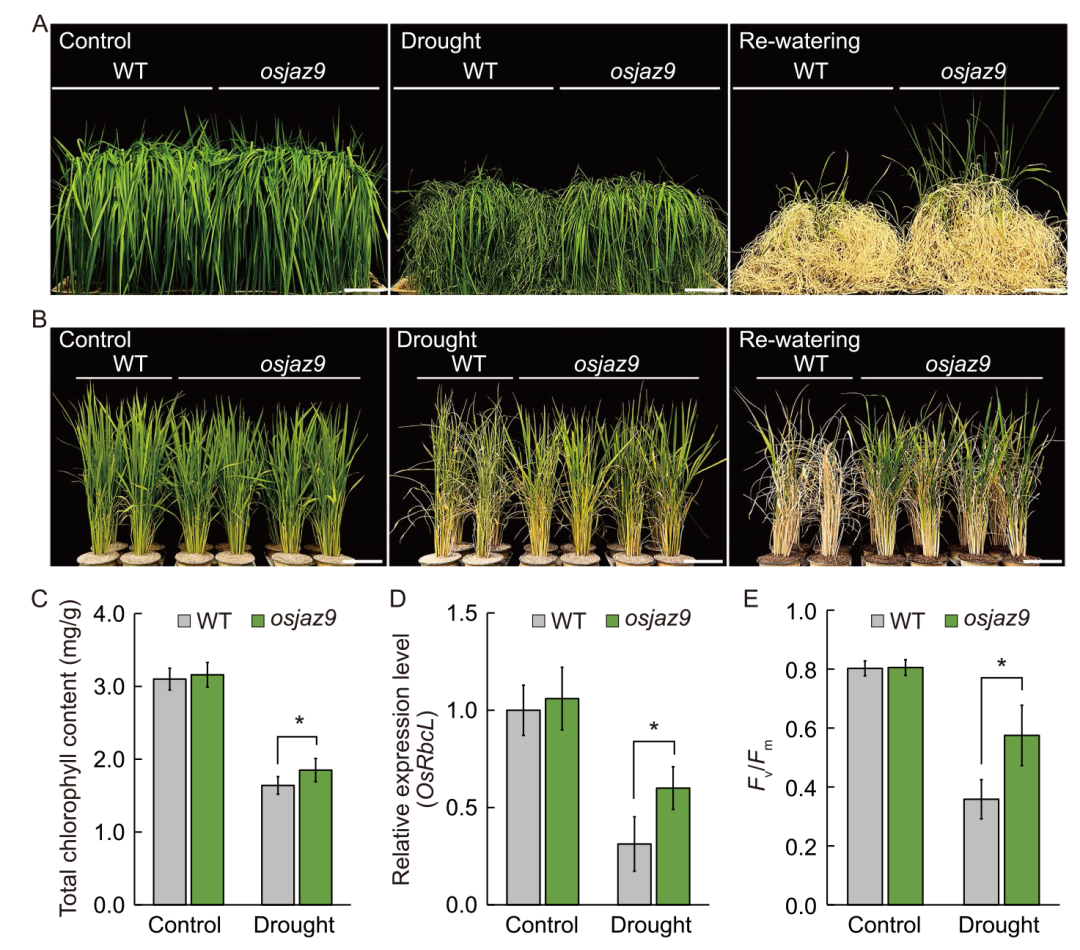
Fig. 4. Suppression of photosynthetic performance under drought stress is attenuated in OsJAZ9 knockout mutants. A and B, Drought tolerance assay of wild-type (WT) and osjaz9 knockout plants at the early vegetative stage (A) and the booting stage (B). Three-week-old (A) and 10-week-old (B) WT and osjaz9 plants grown under normal conditions (control) were subjected to drought stress (drought) for 3 d. Following drought treatment, the plants were re-watered and allowed to recover (re-watering) under normal growth conditions for 10 d. Scale bars, 5 cm in A and 20 cm in B. C‒E, Quantification of photosynthetic parameters in drought-tested WT and osjaz9 plants at the booting stage: total chlorophyll content (C), transcript levels of OsRbcL (D) in leaves, and maximum quantum yield of PSII (Fv/Fm, n > 60) (E). Chlorophyll content and Fv/Fm data represent means of three biological replicates, and qRT-PCR data represent means of nine replicates (three biological × three technical). OsTUB2 was used as an internal control to normalize qRT-PCR results. Error bars indicate SD. Asterisks indicate statistically significant differences between WT and osjaz9 plants (*, P < 0.01, two-tailed t-test).
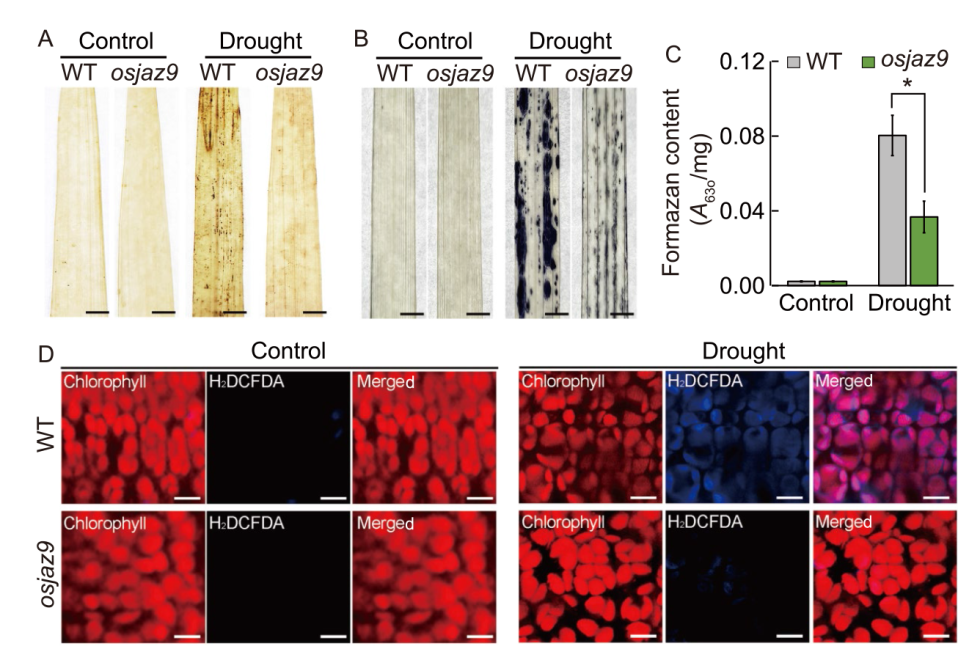
Fig. 5. Cellular reactive oxygen species (ROS) accumulation is reduced by OsJAZ9 knockout mutation. A and B, 3,3ʹ-Diaminobenzidine (DAB, A) and nitroblue tetrazolium (NBT, B) staining of wild-type (WT) and osjaz9 plants under normal and drought conditions. Three-week-old plants were subjected to drought stress for 3 d. Scale bars, 0.5 cm. C, Quantification of NBT staining in WT and osjaz9 plants by measuring formazan content. Formazan levels were determined at A630 and normalized to fresh weight. Data are mean ± SD (n = 3). Asterisks indicate statistically significant differences between WT and osjaz9 plants under drought conditions (*, P < 0.01, two-tailed t-test). D, 2ʹ,7ʹ-Dichlorodihydrofluorescein diacetate (H2DCFDA) staining and confocal microscopic observation in WT and osjaz9 plants. Blue and red fluorescence correspond to H2DCFDA and chlorophyll autofluorescence signals, respectively. Scale bars, 10 µm.
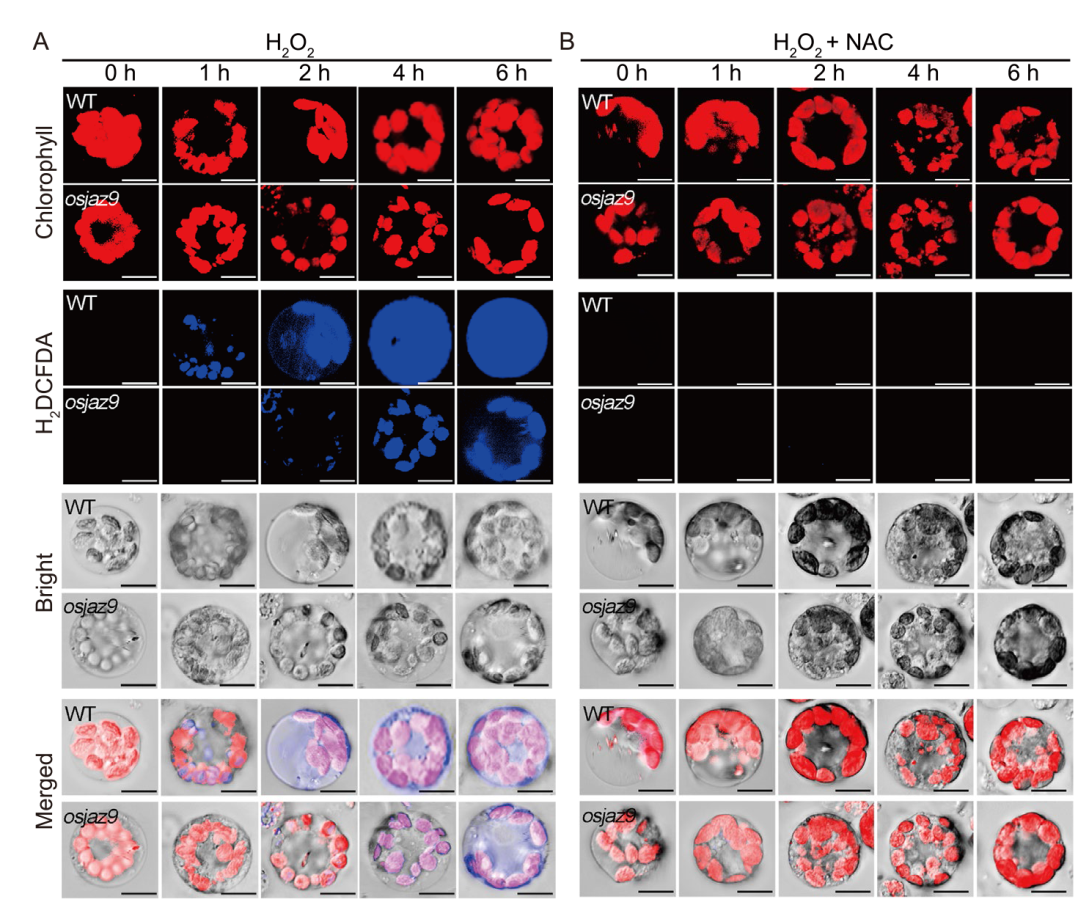
Fig. 6. Knockout mutation of OsJAZ9 suppresses chloroplastic reactive oxygen species accumulation under stress conditions. A and B, Time-lapse monitoring of 2ʹ,7ʹ-dichlorodihydrofluorescein diacetate (H2DCFDA) fluorescence in protoplasts isolated from 1-week-old wild-type (WT) and osjaz9 plants. Protoplasts were treated with 1.5 mmol/L H2O2 (A) or co-treated with 1.5 mmol/L H2O2 and 1.0 mmol/L N-acetyl-L-cysteine (NAC) (B) and incubated for the indicated times (0, 1, 2, 4, and 6 h). Blue and red fluorescence indicate H2DCFDA and chlorophyll autofluorescence signals, respectively. Scale bars, 10 µm.
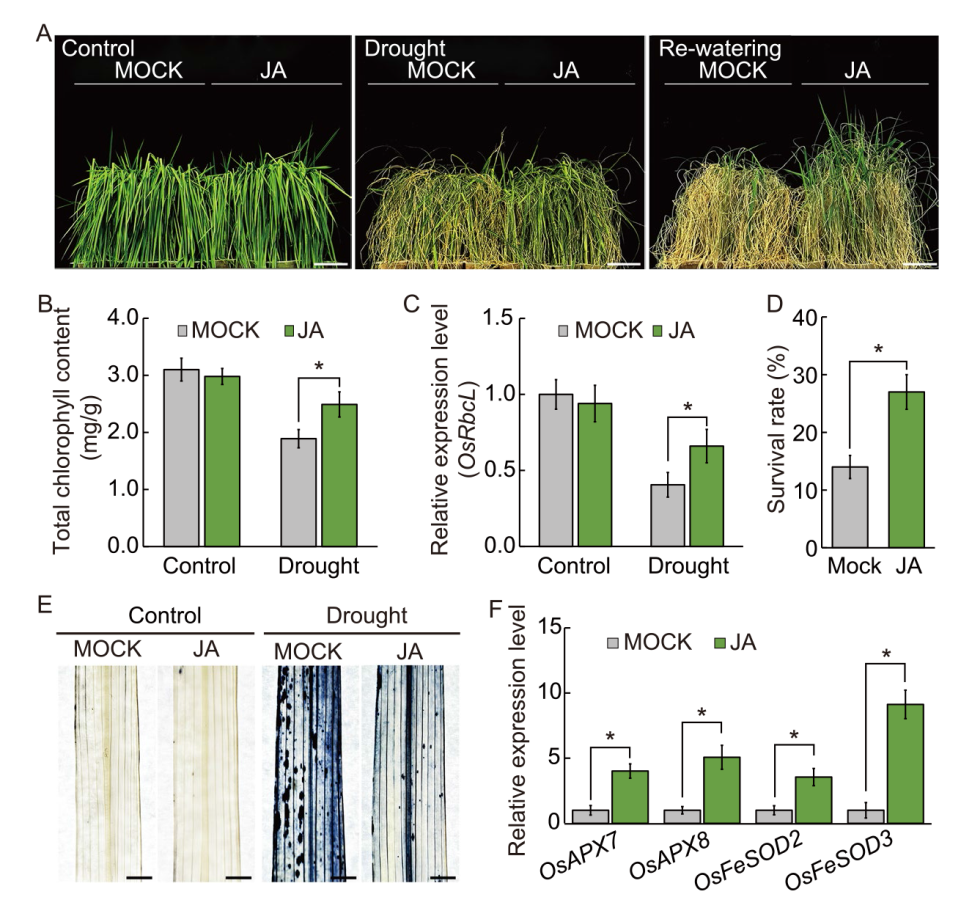
Fig. 7. Jasmonic acid (JA) enhances drought tolerance by reducing cellular reactive oxygen species (ROS) levels. A, Drought stress tolerance of 3-week-old rice plants treated or untreated with JA. Plants were treated with mock (MOCK) or 100 μmol/L JA for 12 h and subjected to drought stress for 3 d. Plants were then re-watered and grown under normal conditions for 10 d to assess recovery. Scale bars, 5 cm. B and C, Quantification of photosynthetic parameters in MOCK and JA rice plants under drought stress: total chlorophyll content (B) and transcript levels of OsRbcL (C). D, Survival rates of MOCK and JA rice plants after re-watering. Survival rate was calculated as the number of plants surviving after re-watering divided by the total number of plants tested (n > 128). E, Nitroblue tetrazolium (NBT) staining showing ROS accumulation in MOCK and JA rice plants under normal (control) and drought stress conditions. Scale bars, 0.5 cm. F, Expression patterns of chloroplastic ROS-scavenging genes (OsAPX7, OsAPX8, OsFeSOD2, and OsFeSOD3) in MOCK and JA rice leaves. Chlorophyll content data represent means of three biological replicates, and qRT-PCR data represent means of nine replicates (three biological × three technical). OsTUB2 was used as an internal control to normalize qRT-PCR results. Error bars indicate SD. Asterisks indicate statistically significant differences compared with the corresponding controls (*, P < 0.01, two-tailed t-test).
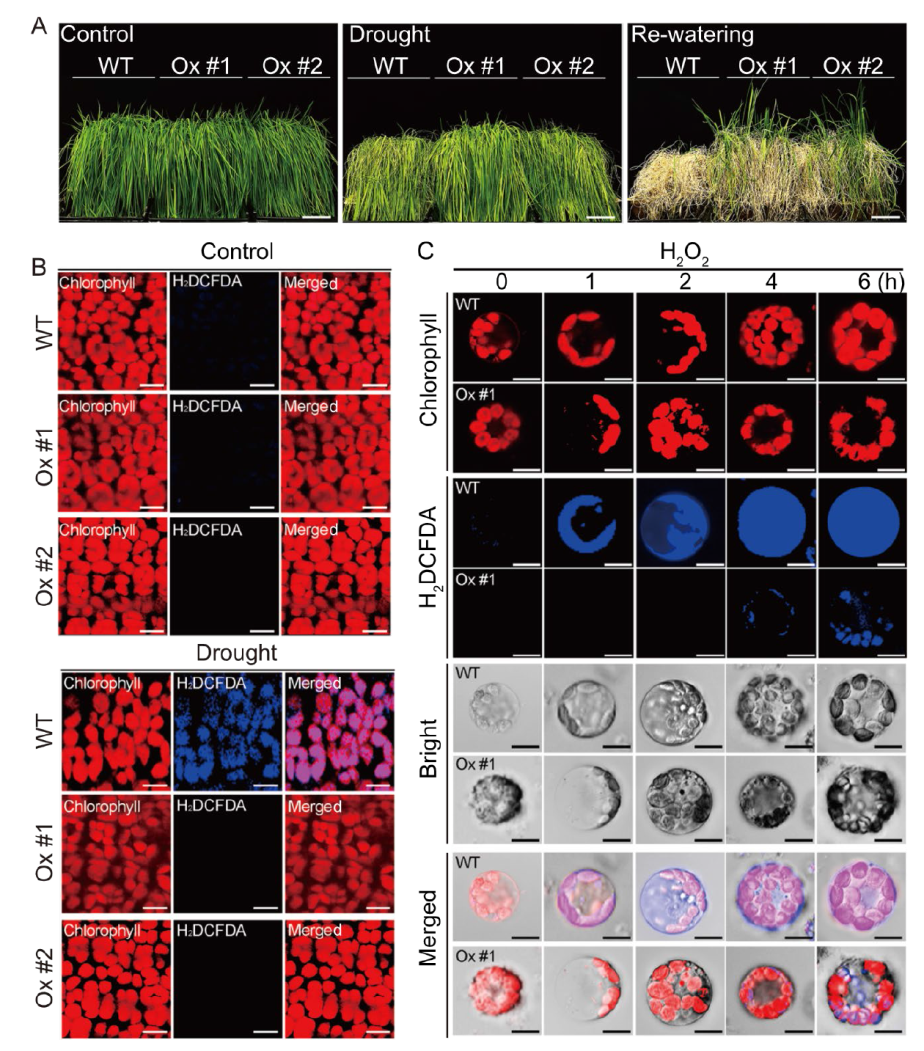
Fig. 8. Overexpression of jasmonic acid (JA)-responsive OsFeSOD3 enhances drought tolerance by attenuating chloroplastic reactive oxygen species (ROS) accumulation. A, Phenotypes of wild-type (WT) and two independent OsFeSOD3-overexpressing transgenic lines (Ox #1 and #2) under drought stress. Plants were grown under normal conditions for 3 weeks, and then exposed to drought stress for 3 d. Following drought treatment, these plants were re-watered and allowed to recover under normal growth conditions for 10 d. Scale bars, 5 cm. B, Chloroplastic ROS accumulation visualized by 2ʹ,7ʹ-dichlorodihydrofluorescein diacetate (H2DCFDA) staining in WT and OsFeSOD3-overexpressing plants under drought- untreated (control) and -treated (drought) conditions. Blue and red fluorescence indicate H2DCFDA and chlorophyll autofluorescence, respectively. Scale bars, 5 µm. C, Time-course H2DCFDA imaging of cellular and chloroplastic ROS dynamics in WT and OsFeSOD3-overexpressing rice plants under stress. Protoplasts isolated from 1-week-old WT and OsFeSOD3-overexpressing plants were treated with 1.5 mmol/L H2O2 and incubated for indicated times (0, 1, 2, 4, and 6 h). Chloroplastic and cellular ROS were visualized by H2DCFDA fluorescence (blue), and chlorophyll autofluorescence is shown in red. Scale bars, 10 µm.
| [1] | Apel K, Hirt H. 2004. Reactive oxygen species: Metabolism, oxidative stress, and signal transduction. Annu Rev Plant Biol, 55: 373-399. |
| [2] | Aslam M M, Rashid M A R, Siddiqui M A, et al. 2022. Recent insights into signaling responses to cope drought stress in rice. Rice Sci, 29(2): 105-117. |
| [3] | Awan S A, Khan I, Rizwan M, et al. 2021. Exogenous abscisic acid and jasmonic acid restrain polyethylene glycol-induced drought by improving the growth and antioxidative enzyme activities in pearl millet. Physiol Plant, 172(2): 809-819. |
| [4] | Benitez-Alfonso Y, Soanes B K, Zimba S, et al. 2023. Enhancing climate change resilience in agricultural crops. Curr Biol, 33(23): R1246-R1261. |
| [5] | Bonifacio A, Martins M O, Ribeiro C W, et al. 2011. Role of peroxidases in the compensation of cytosolic ascorbate peroxidase knockdown in rice plants under abiotic stress. Plant Cell Environ, 34(10): 1705-1722. |
| [6] | Bournonville C F G, Díaz-Ricci J C. 2011. Quantitative determination of superoxide in plant leaves using a mondified NBT staining method. Phytochem Anal, 22(3): 268-271. |
| [7] | Chen L G, Song Y, Li S J, et al. 2012. The role of WRKY transcription factors in plant abiotic stresses. Biochim Biophys Acta: Gene Regul Mech, 1819(2): 120-128. |
| [8] | Chini A, Fonseca S, Fernández G, et al. 2007. The JAZ family of repressors is the missing link in jasmonate signalling. Nature, 448: 666-671. |
| [9] | Cordeiro A M, Figueiredo D D, Tepperman J, et al. 2016. Rice phytochrome-interacting factor protein OsPIF14 represses OsDREB1B gene expression through an extended N-box and interacts preferentially with the active form of phytochrome B. Biochim Biophys Acta: Gene Regul Mech, 1859(2): 393-404. |
| [10] | de Vos K, Janssens C, Jacobs L, et al. 2023. Rice availability and stability in Africa under future socio-economic development and climatic change. Nat Food, 4(6): 518-527. |
| [11] | Del Río L A. 2015. ROS and RNS in plant physiology: An overview. J Exp Bot, 66(10): 2827-2837. |
| [12] | Deng H Y, Li Q, Cao R Z, et al. 2023. Overexpression of SmMYC2 enhances salt resistance in Arabidopsis thaliana and Salvia miltiorrhiza hairy roots. J Plant Physiol, 280: 153862. |
| [13] | Ekanayake I J, de Datta S K, Steponkus P L. 1989. Spikelet sterility and flowering response of rice to water stress at anthesis. Ann Bot, 63(2): 257-264. |
| [14] | Finkel T, Holbrook N J. 2000. Oxidants, oxidative stress and the biology of ageing. Nature, 408: 239-247. |
| [15] | Gebrechorkos S H, Sheffield J, Vicente-Serrano S M, et al. 2025. Warming accelerates global drought severity. Nature, 642: 628-635. |
| [16] | Ghosh S, Kanwar P, Jha G. 2017. Alterations in rice chloroplast integrity, photosynthesis and metabolome associated with pathogenesis of Rhizoctonia solani. Sci Rep, 7: 41610. |
| [17] | Guan Q J, Liao X, He M L, et al. 2017. Tolerance analysis of chloroplast OsCu/Zn-SOD overexpressing rice under NaCl and NaHCO3 stress. PLoS One, 12(10): e0186052. |
| [18] | Gupta A S, Heinen J L, Holaday A S, et al. 1993a. Increased resistance to oxidative stress in transgenic plants that overexpress chloroplastic Cu/Zn superoxide dismutase. Proc Natl Acad Sci USA, 90(4): 1629-1633. |
| [19] | Gupta A S, Webb R P, Holaday A S, et al. 1993b. Overexpression of superoxide dismutase protects plants from oxidative stress (induction of ascorbate peroxidase in superoxide dismutase-overexpressing plants). Plant Physiol, 103(4): 1067-1073. |
| [20] | Hou X L, Lee L Y C, Xia K F, et al. 2010. DELLAs modulate jasmonate signaling via competitive binding to JAZs. Dev Cell, 19(6): 884-894. |
| [21] | Ikeda A, Ueguchi-Tanaka M, Sonoda Y, et al. 2001. slender rice, a constitutive gibberellin response mutant, is caused by a null mutation of the SLR1 gene, an ortholog of the height-regulating gene GAI/RGA/RHT/D8. Plant Cell, 13(5): 999-1010. |
| [22] | Jang G, Lee S, Um T Y, et al. 2016. Genetic chimerism of CRISPR/ Cas9-mediated rice mutants. Plant Biotechnol Rep, 10(6): 425-435. |
| [23] | Jang G, Yoon Y, Choi Y D. 2020. Crosstalk with jasmonic acid integrates multiple responses in plant development. Int J Mol Sci, 21(1): 305. |
| [24] | Jeong J S, Kim Y S, Redillas M C F R, et al. 2013. OsNAC5 overexpression enlarges root diameter in rice plants leading to enhanced drought tolerance and increased grain yield in the field. Plant Biotechnol J, 11(1): 101-114. |
| [25] | Jin G C, Qi J F, Zu H Y, et al. 2023. Jasmonate-mediated gibberellin catabolism constrains growth during herbivore attack in rice. Plant Cell, 35(10): 3828-3844. |
| [26] | Khan M I R, Kumari S, Nazir F, et al. 2023. Defensive role of plant hormones in advancing abiotic stress-resistant rice plants. Rice Sci, 30(1): 15-35. |
| [27] | Kim H, Seomun S, Yoon Y, et al. 2021. Jasmonic acid in plant abiotic stress tolerance and interaction with abscisic acid. Agronomy, 11(9): 1886. |
| [28] | Kim J, Jang G. 2025. ALB7 regulates chloroplast development by controlling the PEP-dependent expression of chloroplast genes. Plant Biotechnol Rep, 19(4): 363-372. |
| [29] | Li L L, Zhang H H, Yang Z H, et al. 2022. Independently evolved viral effectors convergently suppress DELLA protein SLR1-mediated broad-spectrum antiviral immunity in rice. Nat Commun, 13(1): 6920. |
| [30] | Li P, Li X W, Jiang M. 2021. CRISPR/Cas9-mediated mutagenesis of WRKY3 and WRKY4 function decreases salt and Me-JA stress tolerance in Arabidopsis thaliana. Mol Biol Rep, 48(8): 5821-5832. |
| [31] | Li Z, Rosa L, Gorelick S. 2025. Severe floods significantly reduce global rice yields. Sci Adv, 11(46): eadx7799. |
| [32] | Liao Z G, Yu H, Duan J B, et al. 2019. SLR1 inhibits MOC1 degradation to coordinate tiller number and plant height in rice. Nat Commun, 10(1): 2738. |
| [33] | Lim C W, Han S W, Hwang I S, et al. 2015. The pepper lipoxygenase CaLOX1 plays a role in osmotic, drought and high salinity stress response. Plant Cell Physiol, 56(5): 930-942. |
| [34] | Llorente B, Segretin M E, Giannini E, et al. 2021. Homecoming: Rewinding the reductive evolution of the chloroplast genome for increasing crop yields. Nat Commun, 12(1): 6734. |
| [35] | Lu Y Z, Feng Z, Bian L Y, et al. 2010. miR398 regulation in rice of the responses to abiotic and biotic stresses depends on CSD1 and CSD2 expression. Funct Plant Biol, 38(1): 44-53. |
| [36] | Maruta T, Tanouchi A, Tamoi M, et al. 2010. Arabidopsis chloroplastic ascorbate peroxidase isoenzymes play a dual role in photoprotection and gene regulation under photooxidative stress. Plant Cell Physiol, 51(2): 190-200. |
| [37] | Miller G, Suzuki N, Ciftci-Yilmaz S, et al. 2010. Reactive oxygen species homeostasis and signalling during drought and salinity stresses. Plant Cell Environ, 33(4): 453-467. |
| [38] | Mittler R. 2017. ROS are good. Trends Plant Sci, 22(1): 11-19. |
| [39] | Mittler R, Zandalinas S I, Fichman Y, et al. 2022. Reactive oxygen species signalling in plant stress responses. Nat Rev Mol Cell Biol, 23(10): 663-679. |
| [40] | Mur L A J, Kenton P, Draper J. 2005. In planta measurements of oxidative bursts elicited by avirulent and virulent bacterial pathogens suggests that H2O2 is insufficient to elicit cell death in tobacco. Plant Cell Environ, 28(4): 548-561. |
| [41] | Myouga F, Hosoda C, Umezawa T, et al. 2008. A hetero complex of iron superoxide dismutases defends chloroplast nucleoids against oxidative stress and is essential for chloroplast development in Arabidopsis. Plant Cell, 20(11): 3148-3162. |
| [42] | Panda D, Mishra S S, Behera P K. 2021. Drought tolerance in rice: Focus on recent mechanisms and approaches. Rice Sci, 28(2): 119-132. |
| [43] | Park D, Jang J, Seo D H, et al. 2024. Bacillus velezensis GH1-13 enhances drought tolerance in rice by reducing the accumulation of reactive oxygen species. Front Plant Sci, 15: 1432494. |
| [44] | Pnueli L, Liang H J, Rozenberg M, et al. 2003. Growth suppression, altered stomatal responses, and augmented induction of heat shock proteins in cytosolic ascorbate peroxidase (Apx1)-deficient Arabidopsis plants. Plant J, 34(2): 187-203. |
| [45] | Queval G, Issakidis-Bourguet E, Hoeberichts F A, et al. 2007. Conditional oxidative stress responses in the Arabidopsis photorespiratory mutant cat2 demonstrate that redox state is a key modulator of daylength-dependent gene expression, and define photoperiod as a crucial factor in the regulation of H2O2-induced cell death. Plant J, 52(4): 640-657. |
| [46] | Rao M V, Lee H, Creelman R A, et al. 2000. Jasmonic acid signaling modulates ozone-induced hypersensitive cell death. Plant Cell, 12(9): 1633-1646. |
| [47] | Seo D H, Jang J, Park D, et al. 2024. PEP-ASSOCIATED PROTEIN 3 regulates rice tiller formation and grain yield by controlling chloroplast biogenesis. Plant Physiol, 194(2): 805-818. |
| [48] | Seo D H, Jung J, Jang G. 2026. OsFeSOD3 functions as an enzymatic component of the PEP complex, bifunctionally regulating chloroplastic ROS metabolism and chloroplast biogenesis in rice. Plant Biotechnol J, 24(4): 2475-2491. |
| [49] | Seo J S, Joo J, Kim M J, et al. 2011. OsbHLH148, a basic helix-loop-helix protein, interacts with OsJAZ proteins in a jasmonate signaling pathway leading to drought tolerance in rice. Plant J, 65(6): 907-921. |
| [50] | Sheard L B, Tan X, Mao H B, et al. 2010. Jasmonate perception by inositol-phosphate-potentiated COI1-JAZ co-receptor. Nature, 468: 400-405. |
| [51] | Shim J S, Park S H, Lee D K, et al. 2021. The rice GLYCINE-RICH PROTEIN 3 confers drought tolerance by regulating mRNA stability of ROS scavenging-related genes. Rice, 14(1): 31. |
| [52] | Singh P, Pokharia C, Shah K. 2021. Exogenous peroxidase mitigates cadmium toxicity, enhances rhizobial population and lowers root knot formation in rice seedlings. Rice Sci, 28(2): 166-177. |
| [53] | Surendran U, Raja P, Jayakumar M, et al. 2021. Use of efficient water saving techniques for production of rice in India under climate change scenario: A critical review. J Clean Prod, 309: 127272. |
| [54] | Thines B, Katsir L, Melotto M, et al. 2007. JAZ repressor proteins are targets of the SCFCOI1 complex during jasmonate signalling. Nature, 448: 661-665. |
| [55] | Tran B L, Tseng W C, Chen C C. 2025. Climate change impacts on crop yields across temperature rise thresholds and climate zones. Sci Rep, 15(1): 23424. |
| [56] | Wang G L, Long Y F, Jin X Y, et al. 2024. SbMYC2 mediates jasmonic acid signaling to improve drought tolerance via directly activating SbGR1 in sorghum. Theor Appl Genet, 137(3): 72. |
| [57] | Wang P T, Liu W C, Han C, et al. 2024. Reactive oxygen species: Multidimensional regulators of plant adaptation to abiotic stress and development. J Integr Plant Biol, 66(3): 330-367. |
| [58] | Wang W M, Xie Z Z, Wu Y Y, et al. 2024. The JA-OsJAZ6-DELLA module controls the tillering and drought stress response in rice. Environ Exp Bot, 222: 105776. |
| [59] | Wasternack C, Song S S. 2017. Jasmonates: Biosynthesis, metabolism, and signaling by proteins activating and repressing transcription. J Exp Bot, 68(6): 1303-1321. |
| [60] | Wellburn A R. 1994. The spectral determination of chlorophylls a and b, as well as total carotenoids, using various solvents with spectrophotometers of different resolution. J Plant Physiol, 144(3): 307-313. |
| [61] | Yoon Y, Seo D H, Shin H, et al. 2020. The role of stress-responsive transcription factors in modulating abiotic stress tolerance in plants. Agronomy, 10(6): 788. |
| [62] | Zhang H M, Zhu J H, Gong Z Z, et al. 2022. Abiotic stress responses in plants. Nat Rev Genet, 23(2): 104-119. |
| [63] | Zhang Y, Su J B, Duan S, et al. 2011. A highly efficient rice green tissue protoplast system for transient gene expression and studying light/chloroplast-related processes. Plant Methods, 7(1): 30. |
| [64] | Zhuang Y, Wei M, Ling C C, et al. 2021. EGY3 mediates chloroplastic ROS homeostasis and promotes retrograde signaling in response to salt stress in Arabidopsis. Cell Rep, 36(2): 109384. |
| [1] | Li Guohui, Hu Qiuqian, Huo Zhongyang, Dai Qigen, Wang Depeng, Xu Ke. Recent Advances in Synthesis Regulation, Quality Effect, and Genetic Improvement Strategies of Rice Grain Lipids [J]. Rice Science, 2026, 33(4): 449-464. |
| [2] | Li Haifeng, Qin Hua. Molecular Mechanism in Regulation of Rice Tiller Development [J]. Rice Science, 2026, 33(4): 485-498. |
| [3] | Gong Junyi, Zhang Xiaobo, Zhang Jianfu, Zeng Bo, Zhang Xiaoqing, Xu Xia, Cheng Benyi, Hou Yuxuan, Xia Junhui, Wu Jianli, Yang Shihua, Cheng Shihua, Han Bin, Xie Huaan. Three-Line Hybrid Rice in China: Fifty Years of Sustained Improvement in Yield, Quality, and Stress Resistance [J]. Rice Science, 2026, 33(4): 499-513. |
| [4] | Werner Nader, Deblina Sarkar, Melas Adoko, Saskia de Pee, Elise Ivarsen, Vitalii Shkliar, Sabine Meng Jensen, Johannes Hein. Stability of Vitamins and Minerals in Coated and Extruded Fortified Rice Kernels Stored under Real-Life Conditions over Two Years and Implications for Standards [J]. Rice Science, 2026, 33(4): 559-570. |
| [5] | Deng Bowen, Ying Yining, Pan Jianming, Zhang Tongrui, Xu Feifei, Bao Jinsong. Pyruvate Orthophosphate Dikinase B (PPDKB) Deficiency Impairs Starch Biosynthesis and Redirects Carbon Flux to Lipid and Amino Acid Synthesis in Rice [J]. Rice Science, 2026, 33(4): 514-530. |
| [6] | Zhang Ying, Shi Huanbin, Meng Shuai, Wen Hui, Chen Ya, Liu Li, Kou Yanjun. MoWhi2 Participates in Mitophagy and Pathogenesis by Modulating MoAti1 Protein Level in Magnaporthe Oryzae [J]. Rice Science, 2026, 33(4): 545-558. |
| [7] | Kieu Anh Thi Phan, Juho Lee, Cong Danh Nguyen, Sang-Kyu Lee. Molecular and Functional Insights into Sugar Transporters in Rice [J]. Rice Science, 2026, 33(3): 309-326. |
| [8] | Fan Honghuan, Song Jian, Tang Liqun, Wang Junmin, Sheng Zhonghua, Jiao Guiai, Tang Shaoqing, Hu Shikai, Hu Peisong. Advances in Rice Coleoptile Elongation: Implications for Direct-Seeded Rice Adaptation [J]. Rice Science, 2026, 33(3): 327-339. |
| [9] | Zakirullah Khan, Rahmatullah Jan, Saleem Asif, Hayati Aulia Maharani, Muhammad Farooq, Kyung-Min Kim. Advancing Rice Resilience to Heat Stress: Insights from CRISPR/Cas9 Genome Editing [J]. Rice Science, 2026, 33(3): 340-350. |
| [10] | Li Wei, Zhang Mengchen, Chen Xiaoyang, Li Yan, Xu Qun, Wang Shan, Feng Yue, Wei Xinghua, Yang Yaolong. Genetic Variation and Population Structure of Asian Cultivated Rice [J]. Rice Science, 2026, 33(3): 367-380. |
| [11] | Cai Xingjing, Cao Xi, Chen Xu, Yang Haidong, Jiang Wen, Jin Lei, Wang Zhiying, Jia Xiuqi, Zhou Yong, Gong Zhiyun. Function and Progress of Non-Histone Acetylation in Rice [J]. Rice Science, 2026, 33(2): 173-185. |
| [12] | Zhan Chengfang, Lu Xueli, Chen Yingtong, Li Shunyuan, Zhang Xiaoyan, Chen Siqi, Xie Huan, Jin Lei, Ding Lin, Ge Yi, Yang Ting, Dai Liping, Cao Junfeng, Wang Mengcen, Tang Zhengbin, Zeng Dali. Identification and Functional Characterization of TPL/TPR Genes in Rice Disease Resistance [J]. Rice Science, 2026, 33(2): 232-244. |
| [13] | Ye Miao, Mao Yuxin, Yuan Rong, Zhang Dehai, Zhang Zujian. Optimized Leaf Morphology and Delayed Senescence Boost Rice Yield via Enhanced Leaf and Canopy Photosynthesis [J]. Rice Science, 2026, 33(2): 245-259. |
| [14] | Zhang Xiaoli, Tao Wei, Tang Maoyan, Gao Guoqing, Chen Lei, Zhong Xiaoyuan, Lü Ronghua, Qin Dongming, Liang Tianfeng, Guo Hui. Regulatory Strategies for Alleviating Anaerobic and Submergence Stress in Rice [J]. Rice Science, 2026, 33(2): 186-202. |
| [15] | Ma Yangming, Wen Yanfang, Tie Xiana, Liu Ning, Shi Yuanqing, Liu Tao, Wang Zhonglin, Liu Ruhongji, Wang Cheng, Chen Zongkui, Yang Zhiyuan, Sun Yongjian, Ma Jun. Dynamic Changes in Ion Accumulation and Gene Expression Reveal Root-Specific Iron Uptake Strategies in Iron-Deficient Rice after Iron Supplementation [J]. Rice Science, 2026, 33(2): 260-276. |
| Viewed | ||||||
|
Full text |
|
|||||
|
Abstract |
|
|||||
