
Rice Science ›› 2025, Vol. 32 ›› Issue (6): 777-796.DOI: 10.1016/j.rsci.2025.08.009
• Reviews • Previous Articles Next Articles
D. Priyanga1, K. Amudha2( ), N. Sakthivel3, P. Sivasakthivelan4, S. Utharasu2, D. Uma5, M. Sudha6
Received:2025-05-14
Accepted:2025-08-04
Online:2025-11-28
Published:2025-12-04
Contact:
K. Amudha (D. Priyanga, K. Amudha, N. Sakthivel, P. Sivasakthivelan, S. Utharasu, D. Uma, M. Sudha. Functional and Nutraceutical Potential of Indian Rice Landraces: A Comprehensive Scientific Review[J]. Rice Science, 2025, 32(6): 777-796.
Add to citation manager EndNote|Ris|BibTeX
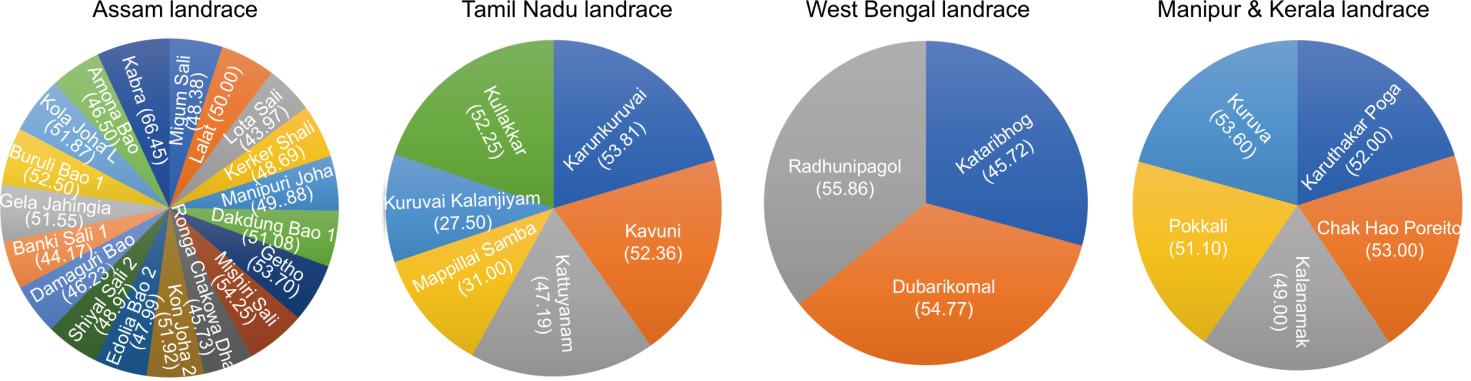
Fig. 1. Region-wise distribution of indigenous low-glycemic index (GI) rice landraces in India. Data in parentheses represent mean GI.
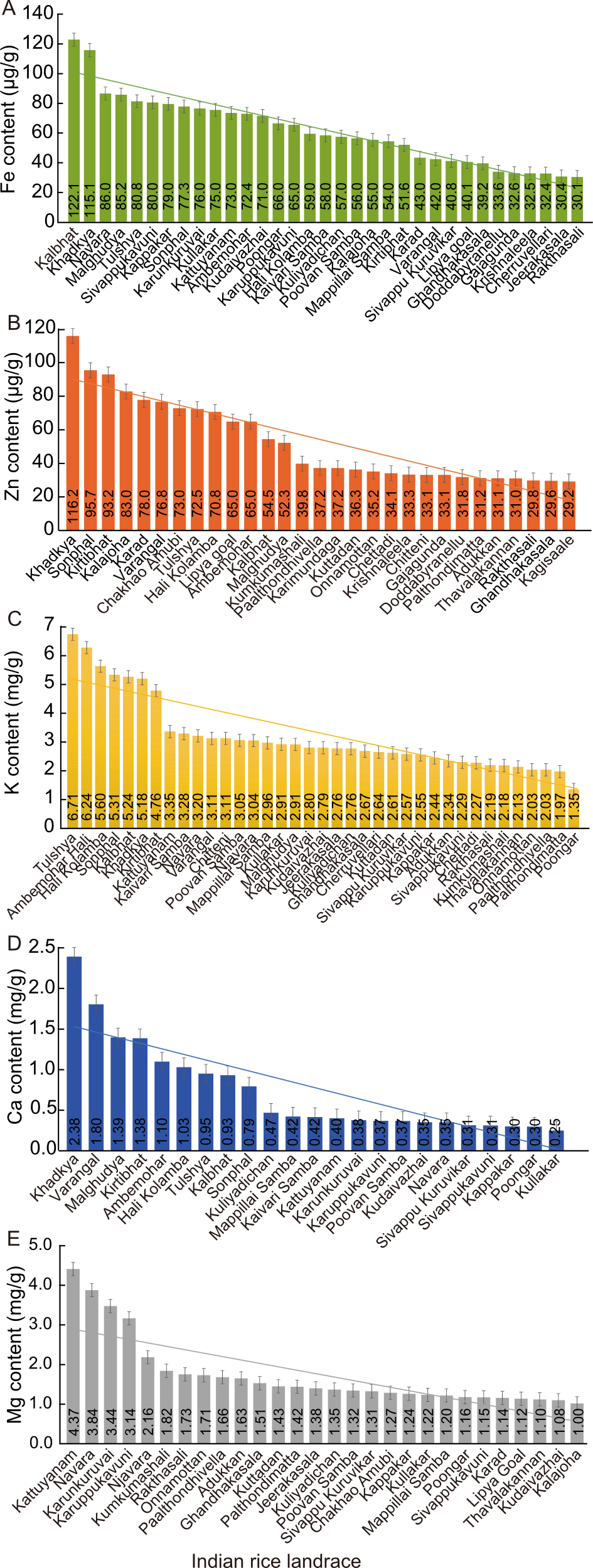
Fig. 2. Indian landraces enriched with minerals. The variation in Fe, Zn, K, Ca, and Mg contents among Indian rice landraces was analyzed, with all data representing mineral content in brown rice as reported in the cited studies.
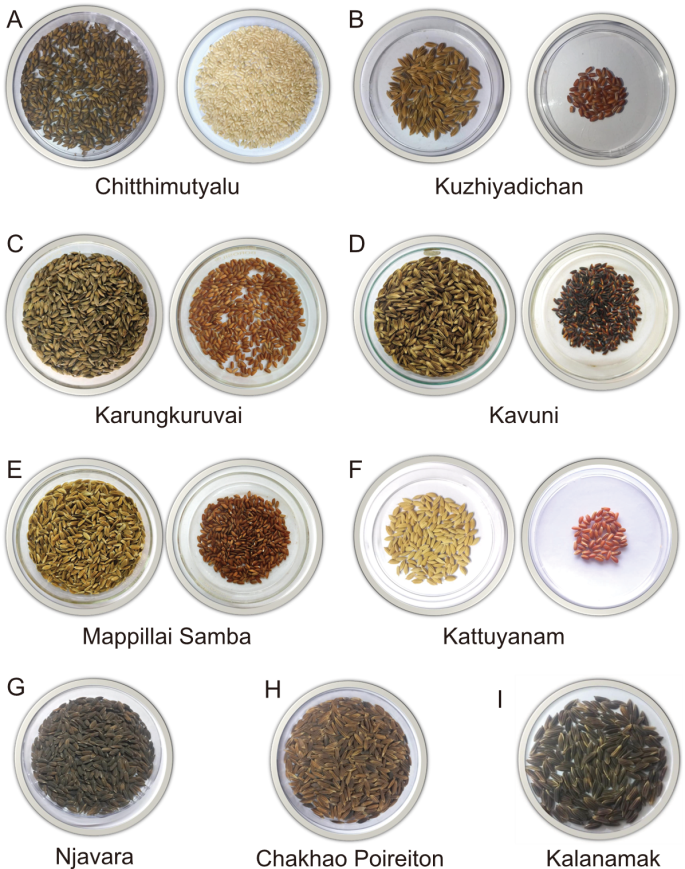
Fig. 3. View of Indian rice landraces. A, Chitthimutyalu; B, Kuzhiyadichan; C, Karungkuruvai; D, Kavuni; E, Mappillai Samba; F, Kattuyanam; G, Njavara; H, Chakhao Poireiton; I, Kalanamak.
| Landrace | Total phenolic content | Total flavonoid content | Total anthocyanin content | Reference |
|---|---|---|---|---|
| Karungkuruwai | 8.75 mg/g (GAE) | 1.70 mg/g (QE) | 337.9 μg/g | Krishnanunni et al, |
| Mappillai Samba | 395.6 ± 5.0 to 458.0 ± 1.9 μg/g | 2.88 ± 0.01 mg/g | 452.0 ± 1.6 to 483.7 ± 2.3 μg/g | Rajendran et al, |
| Kalanamak | 431.9 ± 5.4 μg/g | 71.8 ± 5.2 μg/g | 340.1 ± 4.5 μg/g | |
| Illupaipoo Samba | 354.5 ± 5.6 μg/g | 78.1 ± 5.5 μg/g | 291.5 ± 5.8 μg/g | |
| Chuhartu | 1.9 ± 0.1 mg/g | ‒ | 4.67 ± 0.02 mg g | Gayacharan et al, |
| Mirzag | 2.4 ± 0.1 mg/g | ‒ | 3.70 ± 0.11 mg/g | |
| Sukara | 2.6 ± 0.4 mg/g | ‒ | 3.72 ± 0.27 mg/g | |
| Begumi | 3.3 ± 0.2 mg/g | ‒ | 3.44 ± 0.11 mg/g | |
| Chakhao Amubi | 5.79 mg/g (GAE) | 2.01 mg/g (QE) | 1.97‒2.32 mg/g | Bhuvaneswari et al, |
| Chakhao Poireiton | 6.63 mg/g (GAE) | 2.12 ± 0.00 mg/g (QE) | 2.31‒2.59 mg/g | |
| Ching Chakhao | ‒ | ‒ | 2.69 ± 0.04 mg/g | |
| Chakhao | ‒ | ‒ | 2.76 ± 0.05 mg/g | |
| Chathao Pungdol Angouba | ‒ | ‒ | 2.34 ± 0.09 mg/g | |
| Muthuvellai | 8.85 mg/g (GAE) | 1.22 mg/g (QE) | 1.30 mg/g | Mondal et al, |
| Chitthan Samba | 9.91 mg/g (GAE) | 1.59 mg/g (QE) | 1.58 mg/g | |
| Karuppu Kavuni | 6.46 mg/g (GAE) | 1.03 mg/g (QE) | 0.74 mg/g | |
| Kavuni | 6.06 mg/g (GAE) | 2.92 mg/g (QE) | 0.38 mg/g | |
| Burma Black | 13.37 mg/g (GAE) | 2.59 mg/g (QE) | 1.30 mg/g | |
| Kullakar | 8.30 mg/g (GAE) | ‒ | 0.38 mg/g | |
| Black Navara | 3.98 ± 0.01 mg/g (GAE) | 13.08 ± 0.00 mg/g (QE) | 133.6 ± 0.1 μg/g | Nayeem et al, |
| Chakhao Angangba | 5.68 mg/g (GAE) | 2.18 mg/g (QE) | 359.0 μg/g | Nath et al, |
| Kawnglawng | 7.85 ± 0.05 mg/g (GAE) | 2.78 ± 0.01 mg/g (QE) | 0.33 ± 0.02 mg/g | Singh et al, |
| Lumre | 9.01 ± 0.02 mg/g (GAE) | 2.14 ± 0.01 mg/g (QE) | 0.13 ± 0.04 mg/g | |
| Chakhao Akupi | 4.63 ± 0.10 mg/g (GAE) | 1.33 ± 0.01 mg/g (QE) | 0.47 ± 0.02 mg/g | |
| Phul Pakri | 11.5 mg/g (GAE) | ‒ | ‒ | John et al, |
| Shiyal Suli | 10.07 mg/g (GAE) | ‒ | ‒ | |
| Bam Kokowa Bao | 9.87 mg/g (GAE) | ‒ | ‒ | |
| Kalachudi | 9.0 mg/g | 6.0 μg/g | ‒ | Panda et al, |
| Bedagurumuki | 5.65 mg/g | 9.5 μg/g | ‒ | |
| Kajoli Chokuva | 2.53 mg/g | ‒ | 1.40 µg/g | Gogoi et al, |
| Jensoni | 3.09 mg/g | ‒ | 1.27 µg/g | |
| Tulashi Bora | 5.54 mg/g | ‒ | 1.52 µg/g | |
| Tai Sanghas | 9.78 ± 0.02 mg/g (GAE) | 1.05 ± 0.02 mg/g (QE) | 0.24 ± 0.02 mg/g | Lalremliani et al, |
| Kongkuai | 9.71 ± 0.03 mg/g (GAE) | 1.71 ± 0.02 mg/g (QE) | 0.24 ± 0.01 mg/g | |
| Bumandum | 9.80 ± 0.02 mg/g (GAE) | 1.49 ± 0.02 mg/g (QE) | 1.34 ± 0.03 mg/g | |
| Wari Chakhao | 3.09 ± 0.03 mg/g (GAE) | 1.07 ± 0.02 mg/g (QE) | 0.49 ± 0.04 mg/g |
Table 1. Phytochemical composition (phenolics, flavonoids, anthocyanins) of Indian rice landraces.
| Landrace | Total phenolic content | Total flavonoid content | Total anthocyanin content | Reference |
|---|---|---|---|---|
| Karungkuruwai | 8.75 mg/g (GAE) | 1.70 mg/g (QE) | 337.9 μg/g | Krishnanunni et al, |
| Mappillai Samba | 395.6 ± 5.0 to 458.0 ± 1.9 μg/g | 2.88 ± 0.01 mg/g | 452.0 ± 1.6 to 483.7 ± 2.3 μg/g | Rajendran et al, |
| Kalanamak | 431.9 ± 5.4 μg/g | 71.8 ± 5.2 μg/g | 340.1 ± 4.5 μg/g | |
| Illupaipoo Samba | 354.5 ± 5.6 μg/g | 78.1 ± 5.5 μg/g | 291.5 ± 5.8 μg/g | |
| Chuhartu | 1.9 ± 0.1 mg/g | ‒ | 4.67 ± 0.02 mg g | Gayacharan et al, |
| Mirzag | 2.4 ± 0.1 mg/g | ‒ | 3.70 ± 0.11 mg/g | |
| Sukara | 2.6 ± 0.4 mg/g | ‒ | 3.72 ± 0.27 mg/g | |
| Begumi | 3.3 ± 0.2 mg/g | ‒ | 3.44 ± 0.11 mg/g | |
| Chakhao Amubi | 5.79 mg/g (GAE) | 2.01 mg/g (QE) | 1.97‒2.32 mg/g | Bhuvaneswari et al, |
| Chakhao Poireiton | 6.63 mg/g (GAE) | 2.12 ± 0.00 mg/g (QE) | 2.31‒2.59 mg/g | |
| Ching Chakhao | ‒ | ‒ | 2.69 ± 0.04 mg/g | |
| Chakhao | ‒ | ‒ | 2.76 ± 0.05 mg/g | |
| Chathao Pungdol Angouba | ‒ | ‒ | 2.34 ± 0.09 mg/g | |
| Muthuvellai | 8.85 mg/g (GAE) | 1.22 mg/g (QE) | 1.30 mg/g | Mondal et al, |
| Chitthan Samba | 9.91 mg/g (GAE) | 1.59 mg/g (QE) | 1.58 mg/g | |
| Karuppu Kavuni | 6.46 mg/g (GAE) | 1.03 mg/g (QE) | 0.74 mg/g | |
| Kavuni | 6.06 mg/g (GAE) | 2.92 mg/g (QE) | 0.38 mg/g | |
| Burma Black | 13.37 mg/g (GAE) | 2.59 mg/g (QE) | 1.30 mg/g | |
| Kullakar | 8.30 mg/g (GAE) | ‒ | 0.38 mg/g | |
| Black Navara | 3.98 ± 0.01 mg/g (GAE) | 13.08 ± 0.00 mg/g (QE) | 133.6 ± 0.1 μg/g | Nayeem et al, |
| Chakhao Angangba | 5.68 mg/g (GAE) | 2.18 mg/g (QE) | 359.0 μg/g | Nath et al, |
| Kawnglawng | 7.85 ± 0.05 mg/g (GAE) | 2.78 ± 0.01 mg/g (QE) | 0.33 ± 0.02 mg/g | Singh et al, |
| Lumre | 9.01 ± 0.02 mg/g (GAE) | 2.14 ± 0.01 mg/g (QE) | 0.13 ± 0.04 mg/g | |
| Chakhao Akupi | 4.63 ± 0.10 mg/g (GAE) | 1.33 ± 0.01 mg/g (QE) | 0.47 ± 0.02 mg/g | |
| Phul Pakri | 11.5 mg/g (GAE) | ‒ | ‒ | John et al, |
| Shiyal Suli | 10.07 mg/g (GAE) | ‒ | ‒ | |
| Bam Kokowa Bao | 9.87 mg/g (GAE) | ‒ | ‒ | |
| Kalachudi | 9.0 mg/g | 6.0 μg/g | ‒ | Panda et al, |
| Bedagurumuki | 5.65 mg/g | 9.5 μg/g | ‒ | |
| Kajoli Chokuva | 2.53 mg/g | ‒ | 1.40 µg/g | Gogoi et al, |
| Jensoni | 3.09 mg/g | ‒ | 1.27 µg/g | |
| Tulashi Bora | 5.54 mg/g | ‒ | 1.52 µg/g | |
| Tai Sanghas | 9.78 ± 0.02 mg/g (GAE) | 1.05 ± 0.02 mg/g (QE) | 0.24 ± 0.02 mg/g | Lalremliani et al, |
| Kongkuai | 9.71 ± 0.03 mg/g (GAE) | 1.71 ± 0.02 mg/g (QE) | 0.24 ± 0.01 mg/g | |
| Bumandum | 9.80 ± 0.02 mg/g (GAE) | 1.49 ± 0.02 mg/g (QE) | 1.34 ± 0.03 mg/g | |
| Wari Chakhao | 3.09 ± 0.03 mg/g (GAE) | 1.07 ± 0.02 mg/g (QE) | 0.49 ± 0.04 mg/g |
| Landrace | Kernal colour | Percentage of inhibition / IC50 / EC50 | Reference | |||
|---|---|---|---|---|---|---|
| DPPH | FRAP | TAC | ABTS | |||
| Kavuni | Brownish black | 1.9‒3.4 µg/mL | ‒ | ‒ | ‒ | Valarmathi et al, |
| Karung Kuruvai | Black | 91.08 ± 0.82 µg/mL | 3 181.0 ± 16.5 µmol/mg b | ‒ | ‒ | Krishnanunni et al, |
| Mappillai Samba | Red | 359.43 ± 24.16 µg/mL | 483.0 ± 11.8 µmol/mg b | ‒ | ‒ | |
| Tai Sanghar | Red | 90.14% ± 3.41% | ‒ | ‒ | 97.41% ± 3.00% | Lalremliani et al, |
| Mantlep | Red | 82.26% ± 2.13% | ‒ | ‒ | 90.82% ± 3.16% | |
| Kongkuai | Red | 91.93% ± 2.64% | ‒ | ‒ | 92.50% ± 3.01% | |
| Bumandum | Black | 96.35% ± 4.01% | ‒ | ‒ | 84.71% ± 2.26% | |
| Mappillai Samba | Red | 51.80% ± 0.09% | ‒ | 7.56‒7.64 µmol/g (AAE) c | ‒ | Rajendran et al, |
| Kuruvai Kalanjiam | Red | 49.10% ± 0.01% | ‒ | ‒ | ‒ | |
| Karimundaga | Black | ‒ | ‒ | 8.00 µmol/g c | ‒ | Muttagi and Ravindra, |
| Doddabyranellu | Red | ‒ | ‒ | 7.50 µmol/g c | ‒ | |
| Gajagunda | Reddish brown | ‒ | ‒ | 6.54 µmol/g c | ‒ | |
| Kandulakathi | Brown | ‒ | ‒ | 40.2% c | ‒ | Panda et al, |
| Kalachudi | Black | ‒ | ‒ | 20.1%c | ‒ | |
| Jengoni | Red | 89.40% | ‒ | ‒ | ‒ | Gogoi et al, |
| Tulasibora | Purple | 89.05% | ‒ | ‒ | ‒ | |
| Chakhao Amubi | Black | 47.10%‒96.13% | 54.5 µmol/mg | ‒ | ‒ | Saikia et al, |
| Chakhao Poireiton | Black | 59.30%‒94.19% | 25.9 µmol/mg | ‒ | ‒ | |
| Ching Chakhao | Black | 52.9% | ‒ | ‒ | ‒ | Bhuvaneswari et al, |
| Chakhao | Black | 65.7% | ‒ | ‒ | ‒ | |
| Chakhao Pungdol Angouba | Black | 51.5% | ‒ | ‒ | ‒ | Singh et al, |
| Chakho Akupi | Black | 94.0% | ‒ | 492.7 μg/g (AAE) c | ‒ | |
| Kawnglawng | Red | 97.69% ± 0.49% | ‒ | 608.8 ± 18.5 μg/g (AAE) c | ‒ | |
| Fazu | Red | 95.73% ± 1.25% | ‒ | 582.9 ± 8.9 μg/g (AAE) c | ‒ | |
| Menilmilbabaret | Red | 87.60% ± 1.17% | ‒ | 633.5 ± 10.1 μg/g (AAE) c | ‒ | |
| Illupaipoo Samba | White | ‒ | 678.32 ± 0.78 | 6.54 ± 0.25 µmol/g (AAE) c | ‒ | Nandhini et al, |
| Seeraga Samba | White | ‒ | ‒ | 4.53 ± 0.21 µmol/g (AAE) | ‒ | Rajendran et al, |
| Kalanamak | Black | ‒ | ‒ | 8.97 ± 0.01 µmol/g (AAE) | ‒ | |
| Black Navara | Black | ‒ | ‒ | 3.16 ± 0.00 µmol/g (AAE) c | ‒ | Nayeem et al, |
| Purple Puttu | Purple | ‒ | 3 202.90 µg/g a | ‒ | ‒ | Mondal et al, |
| Muthuvellai | White | ‒ | 2 884.96 µg/g a | ‒ | ‒ | |
| Chitthan Samba | Black | ‒ | 3 699.35 µg/g a | ‒ | ‒ | |
| Thillainayagam | Red | ‒ | 2 944.19 µg/g a | ‒ | ‒ | |
| Burma Black | Black | ‒ | 2 833.01 µg/g a | ‒ | ‒ | |
| Karuppu Kavuni | Black | ‒ | 2 179.63 µg/g a | ‒ | ‒ | |
Table 2. Antioxidant profiling (DPPH, FRAP, TAC, ABTS) of Indian landraces.
| Landrace | Kernal colour | Percentage of inhibition / IC50 / EC50 | Reference | |||
|---|---|---|---|---|---|---|
| DPPH | FRAP | TAC | ABTS | |||
| Kavuni | Brownish black | 1.9‒3.4 µg/mL | ‒ | ‒ | ‒ | Valarmathi et al, |
| Karung Kuruvai | Black | 91.08 ± 0.82 µg/mL | 3 181.0 ± 16.5 µmol/mg b | ‒ | ‒ | Krishnanunni et al, |
| Mappillai Samba | Red | 359.43 ± 24.16 µg/mL | 483.0 ± 11.8 µmol/mg b | ‒ | ‒ | |
| Tai Sanghar | Red | 90.14% ± 3.41% | ‒ | ‒ | 97.41% ± 3.00% | Lalremliani et al, |
| Mantlep | Red | 82.26% ± 2.13% | ‒ | ‒ | 90.82% ± 3.16% | |
| Kongkuai | Red | 91.93% ± 2.64% | ‒ | ‒ | 92.50% ± 3.01% | |
| Bumandum | Black | 96.35% ± 4.01% | ‒ | ‒ | 84.71% ± 2.26% | |
| Mappillai Samba | Red | 51.80% ± 0.09% | ‒ | 7.56‒7.64 µmol/g (AAE) c | ‒ | Rajendran et al, |
| Kuruvai Kalanjiam | Red | 49.10% ± 0.01% | ‒ | ‒ | ‒ | |
| Karimundaga | Black | ‒ | ‒ | 8.00 µmol/g c | ‒ | Muttagi and Ravindra, |
| Doddabyranellu | Red | ‒ | ‒ | 7.50 µmol/g c | ‒ | |
| Gajagunda | Reddish brown | ‒ | ‒ | 6.54 µmol/g c | ‒ | |
| Kandulakathi | Brown | ‒ | ‒ | 40.2% c | ‒ | Panda et al, |
| Kalachudi | Black | ‒ | ‒ | 20.1%c | ‒ | |
| Jengoni | Red | 89.40% | ‒ | ‒ | ‒ | Gogoi et al, |
| Tulasibora | Purple | 89.05% | ‒ | ‒ | ‒ | |
| Chakhao Amubi | Black | 47.10%‒96.13% | 54.5 µmol/mg | ‒ | ‒ | Saikia et al, |
| Chakhao Poireiton | Black | 59.30%‒94.19% | 25.9 µmol/mg | ‒ | ‒ | |
| Ching Chakhao | Black | 52.9% | ‒ | ‒ | ‒ | Bhuvaneswari et al, |
| Chakhao | Black | 65.7% | ‒ | ‒ | ‒ | |
| Chakhao Pungdol Angouba | Black | 51.5% | ‒ | ‒ | ‒ | Singh et al, |
| Chakho Akupi | Black | 94.0% | ‒ | 492.7 μg/g (AAE) c | ‒ | |
| Kawnglawng | Red | 97.69% ± 0.49% | ‒ | 608.8 ± 18.5 μg/g (AAE) c | ‒ | |
| Fazu | Red | 95.73% ± 1.25% | ‒ | 582.9 ± 8.9 μg/g (AAE) c | ‒ | |
| Menilmilbabaret | Red | 87.60% ± 1.17% | ‒ | 633.5 ± 10.1 μg/g (AAE) c | ‒ | |
| Illupaipoo Samba | White | ‒ | 678.32 ± 0.78 | 6.54 ± 0.25 µmol/g (AAE) c | ‒ | Nandhini et al, |
| Seeraga Samba | White | ‒ | ‒ | 4.53 ± 0.21 µmol/g (AAE) | ‒ | Rajendran et al, |
| Kalanamak | Black | ‒ | ‒ | 8.97 ± 0.01 µmol/g (AAE) | ‒ | |
| Black Navara | Black | ‒ | ‒ | 3.16 ± 0.00 µmol/g (AAE) c | ‒ | Nayeem et al, |
| Purple Puttu | Purple | ‒ | 3 202.90 µg/g a | ‒ | ‒ | Mondal et al, |
| Muthuvellai | White | ‒ | 2 884.96 µg/g a | ‒ | ‒ | |
| Chitthan Samba | Black | ‒ | 3 699.35 µg/g a | ‒ | ‒ | |
| Thillainayagam | Red | ‒ | 2 944.19 µg/g a | ‒ | ‒ | |
| Burma Black | Black | ‒ | 2 833.01 µg/g a | ‒ | ‒ | |
| Karuppu Kavuni | Black | ‒ | 2 179.63 µg/g a | ‒ | ‒ | |
| [1] | Agustin A T, Safitri A, Fatchiyah F. 2021. Java red rice (Oryza sativa L.) nutritional value and anthocyanin profiles and its potential role as antioxidant and anti-diabetic. Indones J Chem, 21(4): 968-978. |
| [2] | Ahmed T, Hossain M, Sanin K I. 2012. Global burden of maternal and child undernutrition and micronutrient deficiencies. Ann Nutr Metab, 61(Suppl 1): 8-17. |
| [3] | Al-Naseem A, Sallam A, Choudhury S, et al. 2021. Iron deficiency without anaemia: A diagnosis that matters. Clin Med, 21(2): 107-113. |
| [4] | Amirtham D, Radha P. 2023. Comparative nutritional analysis of selected traditional and TNAU released rice varieties to identify nutritionally potent landraces for enhancing food security. Madras Agric J, 110: 114-121. |
| [5] | Arya B, Lovely B, Seeja G, et al. 2024. Unravelling the biochemical traits of traditional rice landraces of Kerala. Electron J Plant Breed, 15(2): 435-442. |
| [6] | Aryal S, Baniya M K, Danekhu K, et al. 2019. Total phenolic content, flavonoid content and antioxidant potential of wild vegetables from Western Nepal. Plants, 8(4): 96. |
| [7] | Asem I D, Imotomba R K, Mazumder P B, et al. 2015. Anthocyanin content in the black scented rice (Chakhao): Its impact on human health and plant defense. Symbiosis, 66(1): 47-54. |
| [8] | Ashokkumar K, Govindaraj M, Vellaikumar S, et al. 2020. Comparative profiling of volatile compounds in popular South Indian traditional and modern rice varieties by gas chromatography-mass spectrometry analysis. Front Nutr, 7: 599119. |
| [9] | Avinash G, Sharma N, Prasad K R, et al. 2024. Unveiling the distribution of free and bound phenolic acids, flavonoids, anthocyanins, and proanthocyanidins in pigmented and non-pigmented rice genotypes. Front Plant Sci, 15: 1324825. |
| [10] | Azam M M, Jahan A, Maheshwari K U, et al. 2020. Glycemic index of selected Indian rice varieties. Int Res J Pure Appl Chem, 21(24): 137-146. |
| [11] | Babu V R. 2013. Importance and advantages of rice biofortification with iron and zinc. J SAT Agric Res, 11: 1-6. |
| [12] | Baek J A, Chung N J, Choi K C, et al. 2015. Hull extracts from pigmented rice exert antioxidant effects associated with total flavonoid contents and induce apoptosis in human cancer cells. Food Sci Biotechnol, 24(1): 241-247. |
| [13] | Balakrishnan J, Thamilarasan S K, Ravi M S, et al. 2019. Comparison of phytochemicals, antioxidant and hypoglycemic activity of four different Brown rice varieties. Biocatal Agric Biotechnol, 21: 101351. |
| [14] | Balasubramanian A, Vijayalakshmi K, Parimala K, et al. 2019. Traditional Rice Varieties of Tamil Nadu: A Source Book. Chennai, India: Centre for Indian Knowledge Systems. |
| [15] | Bao J S, Zhou X, Xu F F, et al. 2017. Genome-wide association study of the resistant starch content in rice grains. Starch Stärke, 69(7/8): 1600343. |
| [16] | Berger A, Rein D, Schäfer A, et al. 2005. Similar cholesterol-lowering properties of rice bran oil, with varied γ-oryzanol, in mildly hypercholesterolemic men. Eur J Nutr, 44(3): 163-173. |
| [17] | Bhat F M, Riar C S. 2017. Characterizing the pigmented traditional rice cultivars grown in temperate regions of Kashmir (India) for free and bound phenolics compounds and in vitro antioxidant properties. J Cereal Sci, 76: 253-262. |
| [18] | Bhuvaneswari S, Gopala Krishnan S, Bollinedi H, et al. 2020. Genetic architecture and anthocyanin profiling of aromatic rice from Manipur reveals divergence of Chakhao landraces. Front Genet, 11: 570731. |
| [19] | Bird A R, Conlon M A, Christophersen C T, et al. 2010. Resistant starch, large bowel fermentation and a broader perspective of prebiotics and probiotics. Benef Microbes, 1(4): 423-431. |
| [20] | Birt D F, Phillips G J. 2014. Diet, genes, and microbes: Complexities of colon cancer prevention. Toxicol Pathol, 42(1): 182-188. |
| [21] | Biselli C, Volante A, Desiderio F, et al. 2019. GWAS for starch-related parameters in japonica rice (Oryza sativa L.). Plants, 8(8): 292. |
| [22] | Blakeney M, Krishnankutty J, Raju R K, et al. 2020. Agricultural innovation and the protection of traditional rice varieties: Kerala a case study. Front Sustain Food Syst, 3: 116. |
| [23] | Bose D, Chakrabarti A.2019. Chaperone potential of erythroid spectrin: Effects of hemoglobin interaction, macromolecular crowders, phosphorylation and glycation. BBA: Proteins Proteomics, 1867(11): 140267. |
| [24] | Brand-Miller J C. 2003. Glycemic load and chronic disease. Nutr Rev, 61(suppl_5): S49-S55. |
| [25] | Chakraborty R, Kalita P, Sen S. 2023. Phenolic profile, antioxidant, antihyperlipidemic and cardiac risk preventive effect of pigmented black rice variety Chakhao Poireiton in high-fat high-sugar induced rats. Rice Sci, 30(6): 641-651. |
| [26] | Chattopadhyay K, Behera L, Bagchi T B, et al. 2019. Detection of stable QTLs for grain protein content in rice (Oryza sativa L.) employing high throughput phenotyping and genotyping platforms. Sci Rep, 9(1): 3196. |
| [27] | Chaudhary R C, Sahani A, Mishra S B. 2022. Improvement of local germplasm of Kalanamak rice to benefit environment, health and wealth. Sci Res J Agric Life Sci, 2(1): 1-8. |
| [28] | Chen C, Cao Z, Lei H H, et al. 2024. Microbial tryptophan metabolites ameliorate ovariectomy-induced bone loss by repairing intestinal AhR-mediated gut-bone signaling pathway. Adv Sci, 11(36): 2404545. |
| [29] | Chu Z, Ouyang Y, Zhang J, et al. 2004. Genome-wide analysis of defense-responsive genes in bacterial blight resistance of rice mediated by the recessive R gene xa13. Mol Genet Genomics, 271(1): 111-120. |
| [30] | Das A, Kesari V, Rangan L. 2010. Aromatic Joha rice of Assam: A review. Agric Rev, 31(1): 1-10. |
| [31] | Das G K, Qudhia P. 2001. Rice as medicinal plant in Ghhatiisgarh (India): A survey. Agric Sci Digest, 21(3): 204-205. |
| [32] | Deb D. 2017. Folk rice varieties, traditional knowledge and nutritional security in South Asia. In: Poyyamoli G. Agroecology, Ecosystems, and Sustainability in the Tropics. New Delhi, India: Studera Press: 117-134. |
| [33] | Deepa G, Singh V, Naidu K A. 2008. Nutrient composition and physicochemical properties of Indian medicinal rice: Njavara. Food Chem, 106(1): 165-171. |
| [34] | Deepa G, Singh V, Naidu K A. 2012. Characterization of antioxidant compounds and antioxidant activity of Indian rice varieties. J Herbs Spices Med Plants, 18(1): 18-33. |
| [35] | Devi G A S, Shijagurumayum S, Singh C B. 2021. Chakhao: Scented traditional rice of Manipur (India). J Adv Sci Res, 12(Suppl. 1): 1-9. |
| [36] | Devi S, Kumar V, Singh S K, et al. 2021. Flavonoids: Potential candidates for the treatment of neurodegenerative disorders. Biomedicines, 9(2): 99. |
| [37] | Dewan M F, Ahiduzzaman M, Islam M N, et al. 2023. Potential benefits of bioactive compounds of traditional rice grown in South and Southeast Asia: A review. Rice Sci, 30(6): 537-551. |
| [38] | Dharshini K C P, Umamaheswari S. 2024. Revealing the nutritional, antioxidant and antidiabetic potentials of Kattuyanam: An indigenous rice variety of Tamil Nadu. Redvet, 25(2): 568-579. |
| [39] | Dharshini K C P, Raj D S, Sankaran U. 2021. Rice and diabetes: A comprehensive review. Rom J Diabetes Nutr Metab Dis, 28(4): 437-446. |
| [40] | Disket J, Lukhmana N, Gupta R K. 2013. Significance of Njavara, a rice cultivar indigenous to Kerala (India): An ethnomedicinal perspective. Significance, 4(1): 14-19. |
| [41] | Eslami S, Esa N M, Marandi S M, et al. 2014. Effects of gamma oryzanol supplementation on anthropometric measurements & muscular strength in healthy males following chronic resistance training. Indian J Med Res, 139(6): 857-863. |
| [42] | Fatima M, Saleem A, Akhtar M F, et al. 2025. Esculin-loaded nanoparticles ameliorate adjuvant-induced polyarthritis via subduing inflammatory and oxidative stress biomarkers in Wistar rats. Inflammopharmacology, 33(1): 291-309. |
| [43] | Fongfon S, Prom-U-Thai C, Pusadee T, et al. 2021. Responses of purple rice genotypes to nitrogen and zinc fertilizer application on grain yield, nitrogen, zinc, and anthocyanin concentration. Plants, 10(8): 1717. |
| [44] | Frei M, Becker K. 2004. On rice, biodiversity & nutrients. Stuttgart, Germany: University of Hohenheim. [2025-03-02]. http://www.greenpeaceweb.org/gmo/nutrients.pdf. |
| [45] | Gangopadhyay N, Hossain M B, Rai D K, et al. 2015. A review of extraction and analysis of bioactives in oat and barley and scope for use of novel food processing technologies. Molecules, 20(6): 10884-10909. |
| [46] | García-Monge A, Rodríguez-Navarro H, Bores-García D, et al. 2022. Comparison of children’s inhibitory control, attention and working memory in three different throwing games: EEG exploratory study. Retos, 45: 502-513. |
| [47] | Gayacharan, Bisht I S, Pandey A, et al. 2018. Population structure of some indigenous aromatic rice (Oryza sativa L.) landraces of India. Indian J Biotechnol, 17(1): 110-117. |
| [48] | Gayacharan, Bisht I S, Bhardwaj R, et al. 2019. Nutritional diversity of elite rice landrace from subsistence-oriented farming systems. Indian J Plant Genet Resour, 32(1): 18-27. |
| [49] | Ghosh S, Bollinedi H, Krishnan S G, et al. 2023. Grain γ-oryzanol and its constituent compounds show high genetic variability, diversity and significant site × genotype interactions in rice (Oryza sativa L.). Indian J Genet Plant Breed, 83(2): 157-167. |
| [50] | Gogoi S, Singh S, Swamy B P M, et al. 2024. Grain iron and zinc content is independent of anthocyanin accumulation in pigmented rice genotypes of northeast region of India. Sci Rep, 14(1): 4128. |
| [51] | Goufo P, Trindade H. 2014. Rice antioxidants: Phenolic acids, flavonoids, anthocyanins, proanthocyanidins, tocopherols, tocotrienols, γ-oryzanol, and phytic acid. Food Sci Nutr, 2(2): 75-104. |
| [52] | Grote Beverborg N, van Veldhuisen D J, van der Meer P. 2018. Anemia in heart failure: still relevant. JACC Heart Fail, 6(3): 201-208. |
| [53] | Hacisalihoglu G. 2020. Zinc (Zn): The last nutrient in the alphabet and shedding light on Zn efficiency for the future of crop production under suboptimal Zn. Plants, 9(11): 1471. |
| [54] | Harakotr B, Prompoh K, Suriharn K, et al. 2021. Genotype by environment interaction effects on nutraceutical lipid compounds of pigmented rice (Oryza sativa L. ssp.indica). Int J Agron, 2021(1): 8880487. |
| [55] | Haritha V, Gowri S, Janarthanan B, et al. 2022. Biogenic synthesis of nickel oxide nanoparticles using Averrhoa bilimbi and investigation of its antibacterial, antidiabetic and cytotoxic properties. Inorg Chem Commun, 144: 109930. |
| [56] | Idrishi R, Singha S, Rangan L. 2024. Nutritional quality, phytochemistry and health benefits of pigmented rice. In: Singh A, Sharma S, Dar B N. Pigmented Grains: Nutritional Properties, Bioactive Potential, and Food Application. Amsterdam, the Netherland: Elsevier: 71-92. |
| [57] | Imran M, Aslam Gondal T, Atif M, et al. 2020. Apigenin as an anticancer agent. Phytother Res, 34(8): 1812-1828. |
| [58] | Jagadeesh B R, Krishnamurthy R, Surekha K, et al. 2013. Studies on high accumulation of iron and zinc contents in some selected rice genotypes. Global J Biosci Biotechnol, 2(4): 539-541. |
| [59] | Jayaprakash G, Bains A, Chawla P, et al. 2022. A narrative review on rice proteins: Current scenario and food industrial application. Polymers, 14(15): 3003. |
| [60] | John R, Bollinedi H, Jeyaseelan C, et al. 2023. Mining nutri-dense accessions from rice landraces of Assam, India. Heliyon, 9(7): e17524. |
| [61] | Jukanti A K, Karapati D, Bharali V, et al. 2025. From gene to plate: Molecular insights into and health implications of rice (Oryza sativa L.) grain protein. Int J Mol Sci, 26(7): 3163. |
| [62] | Juliano B O. 1985. Factors affecting nutritional properties of rice protein. Trans Natl Acad Sci Technol, 7: 205-216. |
| [63] | Juliano B O. 1993. Rice in Human Nutrition. Manila, the Philippines: International Rice Research Institute. |
| [64] | Kalaivani R, Bakiyalakshmi S V, Nandhini R. 2020. An integrated approach on study of nutritional and in vitro anti cancerous properties of traditional pigmented rices against MCF7 cell line. J Nat Remed, 21(1): 205-215. |
| [65] | Kasote D, Sreenivasulu N, Acuin C, et al. 2022. Enhancing health benefits of milled rice: Current status and future perspectives. Crit Rev Food Sci Nutr, 62(29): 8099-8119. |
| [66] | Kaur J, Gupta S. 2019. Rice production in Punjab: Diversification of some rice area essential for sustainable agriculture. Indian J Econ Develop, 15(3): 435-442. |
| [67] | Keenan M M, Chi J T. 2015. Alternative fuels for cancer cells. Cancer J, 21(2): 49-55. |
| [68] | Kennedy G, Burlingame B. 2003. Analysis of food composition data on rice from a plant genetic resources perspective. Food Chem, 80(4): 589-596. |
| [69] | Khatoon S, Gopalakrishna A G. 2004. Fat-soluble nutraceuticals and fatty acid composition of selected Indian rice varieties. J Am Oil Chem Soc, 81(10): 939-943. |
| [70] | Kim M, Ahn S, Jeong Y. 2013. Rice (Oryza sativa L.): Seed-size comparison and cultivation in ancient Korea. Econ Bot, 67: 378-386. |
| [71] | Kowsalya P, Sharanyakanth P S, Mahendran R. 2022. Traditional rice varieties: A comprehensive review on its nutritional, medicinal, therapeutic and health benefit potential. J Food Compos Anal, 114: 104742. |
| [72] | Krishnanunni K, Senthilvel P, Ramaiah S, et al. 2015. Study of chemical composition and volatile compounds along with in-vitro assay of antioxidant activity of two medicinal rice varieties: Karungkuravai and Mappilai Samba. J Food Sci Technol, 52(5): 2572-2584. |
| [73] | Kumar M S, Dahuja A, Rai R D, et al. 2014. Role of γ-oryzanol in drought-tolerant and susceptible cultivars of rice (Oryza sativa L.). Indian J Biochem Biophys, 51(1): 75-80. |
| [74] | Kumar M S S, Ali K, Dahuja A, et al. 2015. Role of phytosterols in drought stress tolerance in rice. Plant Physiol Biochem, 96: 83-89. |
| [75] | Lalremliani, Malsawmthanga, Sailo H, et al. 2025. Grain quality and physicochemical evaluation coupled with untargeted metabolic identification provide new insight into the upland pigmented rice of Manipur, India. LWT, 216: 117236. |
| [76] | Levy A P, Blum S. 2007. Pharmacogenomics in prevention of diabetic cardiovascular disease: Utilization of the haptoglobin genotype in determining benefit from vitamin E. Expert Rev Cardiovasc Ther, 5(6): 1105-1111. |
| [77] | Liang J F, Han B Z, Han L Z, et al. 2007. Iron, zinc and phytic acid content of selected rice varieties from China. J Sci Food Agric, 87(3): 504-510. |
| [78] | Lichanporn I, Nantachai N, Tunganurat P, et al. 2020. Vitamin and mineral content of six native varieties of rice in Thailand. Int J GEOMATE, 18(67): 51-56. |
| [79] | Lin P Y, Lai H M. 2011. Bioactive compounds in rice during grain development. Food Chem, 127(1): 86-93. |
| [80] | Liu Z G, Liu X X, Ma Z, et al. 2023. Phytosterols in rice bran and their health benefits. Front Nutr, 10: 1287405. |
| [81] | Longvah T, Prasad V S S. 2020. Nutritional variability and milling losses of rice landraces from Arunachal Pradesh, Northeast India. Food Chem, 318: 126385. |
| [82] | Mbanjo E G N, Kretzschmar T, Jones H, et al. 2020. The genetic basis and nutritional benefits of pigmented rice grain. Front Genet, 11: 229. |
| [83] | Meera K, Smita M, Haripriya S, et al. 2019. Varietal influence on antioxidant properties and glycemic index of pigmented and non-pigmented rice. J Cereal Sci, 87: 202-208. |
| [84] | Miller A, Engel K H. 2006. Content of γ-oryzanol and composition of steryl ferulates in brown rice (Oryza sativa L.) of European origin. J Agric Food Chem, 54(21): 8127-8133. |
| [85] | Mohammadi H, Talebi S, Ghavami A, et al. 2021. Effects of zinc supplementation on inflammatory biomarkers and oxidative stress in adults: A systematic review and meta-analysis of randomized controlled trials. J Trace Elem Med Biol, 68: 126857. |
| [86] | Mohanlal S, Parvathy R, Shalini V, et al. 2011. Isolation, characterization and quantification of tricin and flavonolignans in the medicinal rice Njavara (Oryza sativa L.), as compared to staple varieties. Plant Foods Hum Nutr, 66(1): 91-96. |
| [87] | Mohanlal S, Parvathy R, Shalini V, et al. 2013a. Chemical indices, antioxidant activity and anti-inflammatory effect of extracts of the medicinal rice ‘Njavara’ and staple varieties: A comparative study. J Food Biochem, 37(3): 369-380. |
| [88] | Mohanlal S, Maney S K, Santhoshkumar T R, et al. 2013b. Tricin 4ʹ-O-(erythro-β-guaiacylglyceryl) ether and tricin 4ʹ-O-(threo-β-guaiacylglyceryl) ether isolated from Njavara (Oryza sativa L. var. Njavara), induce apoptosis in multiple tumor cells by mitochondrial pathway. J Nat Med, 67(3): 528-533. |
| [89] | Mohapatra S S, Bagchi T B, Mahanty A, et al. 2025. Development of prediction models for high throughput phenotyping of protein and essential amino acids content in rice grain using the near infrared reflectance spectroscopy. J Food Compos Anal, 142: 107453. |
| [90] | Mondal D, Kantamraju P, Jha S, et al. 2021. Evaluation of indigenous aromatic rice cultivars from sub-Himalayan Terai region of India for nutritional attributes and blast resistance. Sci Rep, 11(1): 4786. |
| [91] | Morris A, Boeneke C, Prinyawiwatkul W, et al. 2024. Use of rice flour to produce plant-based yogurt alternatives. J Food Sci, 89(11): 7095-7114. |
| [92] | Murthy P K, Sarin S, Mukherjee P K, et al. 2001. Filarial infection in chest disease patients from Wuchereria bancrofti-endemic areas of Uttar Pradesh, India. Curr Sci, 81(1): 83-87. |
| [93] | Muttagi G C, Ravindra U. 2020. Chemical and nutritional composition of traditional rice varieties of Karnataka. J Pharmacogn Phytochem, 9(5): 2300-2309. |
| [94] | Nandhini D U, Anbarasu M, Somasundaram E. 2023a. Evaluation of different traditional rice landraces for its bioactive compounds. Indian J Tradit Knowl, 22(3): 483-490. |
| [95] | Nandhini D U, Venkatesan S, Senthilraja K, et al. 2023b. Metabolomic analysis for disclosing nutritional and therapeutic prospective of traditional rice cultivars of Cauvery deltaic region, India. Front Nutr, 10: 1254624. |
| [96] | Nath S, Bhattacharjee P, Bhattacharjee S, et al. 2022. Grain characteristics, proximate composition, phytochemical capacity, and mineral content of selected aromatic and non-aromatic rice accessions commonly cultivated in the North-East Indian plain belt. Appl Food Res, 2(1): 100067. |
| [97] | Nayeem S, Sundararajan S, Ashok A K, et al. 2021. Effects of cooking on phytochemical and antioxidant properties of pigmented and non-pigmented rare Indian rice landraces. Biocatal Agric Biotechnol, 32: 101928. |
| [98] | Neeraja C N, Kulkarni K S, Babu P M, et al. 2018. Transporter genes identified in landraces associated with high zinc in polished rice through panicle transcriptome for biofortification. PLoS One, 13(2): e0192362. |
| [99] | Oki T, Masuda M, Nagai S, et al. 2005. Radical-scavenging activity of red and black rice. In: Toriyama K, Heong K L, Hardy B. Rice is Life:Scientific Perspectives for the 21st Century. Proceedings of the World Rice Research Conference held in Tsukuba. Japan, 4-7 November 2004. Manila, the Philippines: IRRI. |
| [100] | Palaniswamy R, Kambale R, Mohanavel V, et al. 2024. Identifying molecular targets for modulating carotenoid accumulation in rice grains. Biochem Biophys Rep, 40: 101815. |
| [101] | Panda D, Rani K, Behera P K, et al. 2023. Nutritional diversity and food potential of indigenous pigmented rice landraces from Koraput regions of eastern Ghats. Discover Food, 3(1): 16. |
| [102] | Parida S, Dash G K, Samal K C, et al. 2022. Reactive oxygen species (ROS) and response of antioxidants as ROS-scavengers in contrasting rice (Oryza sativa L.) genotypes under drought stress. Oryza, 59(1): 39-50. |
| [103] | Park K E, Jang T Y. 2024. Utterance-final lengthening in Thai: A preliminary report. Linguist Res, 41(3): 635-659. |
| [104] | Park S K, Oh C M, Kim E, et al. 2024. Dietary intake of antioxidant vitamins and its relation to the progression of chronic kidney disease in adults with preserved renal function. J Ren Nutr, 34(5): 438-446. |
| [105] | Peehl D M, Feldman D. 2003. The role of vitamin D and retinoids in controlling prostate cancer progression. Endocr Relat Cancer, 10(2): 131-140. |
| [106] | Pengkumsri N, Chaiyasut C, Saenjum C, et al. 2015. Physicochemical and antioxidative properties of black, brown and red rice varieties of northern Thailand. Food Sci Technol, 35(2): 331-338. |
| [107] | Pereira-Caro G, Watanabe S, Crozier A, et al. 2013. Phytochemical profile of a Japanese black-purple rice. Food Chem, 141(3): 2821-2827. |
| [108] | Pereira C, Lourenço V M, Menezes R, et al. 2021. Rice compounds with impact on diabetes control. Foods, 10(9): 1992. |
| [109] | Philp H A. 2003. Hot flashes: A review of the literature on alternative and complementary treatment approaches. Altern Med Rev, 8(3): 284-302. |
| [110] | Pillai C, Faseela K V, Thampi H, et al. 2020. Nutritional composition of selected traditional rice varieties of Kerala. J Trop Agric, 58(1): 33-43. |
| [111] | Praphasanobol P, Purnama P R, Junbuathong S, et al. 2023. Genome-wide association study of starch properties in local Thai rice. Plants, 12(18): 3290. |
| [112] | Prasad T, Banumathy S, Sassikumar D, et al. 2021. Grain nutritional traits analysis in native rice landraces of Tamil Nadu. Biol Forum, 13(1): 572-577. |
| [113] | Pushpam D, Bakhshi S. 2019. Paediatric chronic myeloid leukaemia: Is it really a different disease. Indian J Med Res, 149(5): 600-609. |
| [114] | Pushpan C K, Shalini V, Sindhu G, et al. 2016. Attenuation of atherosclerotic complications by modulating inflammatory responses in hypercholesterolemic rats with dietary Njavara rice bran oil. Biomed Pharmacother, 83: 1387-1397. |
| [115] | Rahman H, Eswaraiah M C, Dutta A M. 2015. Joha Rice: An aromatic indigenous rice of Assam, India contains flavanoids and phenolic substances and shows good antioxidant activities. Der Pharm Lettre, 7(1): 212-217. |
| [116] | Rahman M A, Thomson M J, de Ocampo M, et al. 2019. Assessing trait contribution and mapping novel QTL for salinity tolerance using the Bangladeshi rice landrace Capsule. Rice, 12(1): 63. |
| [117] | Rajagopalan V R, Manickam S, Muthurajan R. 2022. A comparative metabolomic analysis reveals the nutritional and therapeutic potential of grains of the traditional rice variety Mappillai Samba. Plants, 11(4): 543. |
| [118] | Rajendran M, Chandran K R. 2020. Grain dimension, nutrition and nutraceutical properties of black and red varieties of rice in India. Curr Res Nutr Food Sci, 8(3): 903-923. |
| [119] | Rajendran V, Sivakumar H P, Marichamy I, et al. 2018. Phytonutrients analysis in ten popular traditional Indian rice landraces (Oryza sativa L.). J Food Meas Charact, 12(4): 2598-2606. |
| [120] | Rathna Priya T S, Eliazer Nelson A R L, Ravichandran K, et al. 2019. Nutritional and functional properties of coloured rice varieties of South India: A review. J Ethn Foods, 6(1): 1-11. |
| [121] | Ravichanthiran K, Ma Z F, Zhang H X, et al. 2018. Phytochemical profile of brown rice and its nutrigenomic implications. Antioxidants, 7(6): 71. |
| [122] | Ray S, Deb D, Sarkar M P. 2021. Colour based nutraceutical potential of some traditional rice (Oryza sativa L. ssp. indica) varieties of India. Indian J Nat Prod Res, 12(1): 153-157. |
| [123] | Reena M B, Krishnakantha T P, Lokesh B R. 2010. Lowering of platelet aggregation and serum eicosanoid levels in rats fed with a diet containing coconut oil blends with rice bran oil or sesame oil. Prostaglandins Leukot Essent Fatty Acids, 83(3): 151-160. |
| [124] | Roy P, Deb D, Pradeep T, et al. 2021. Comparative analyses of the nutraceutical potentialities of selected Indian traditional black rice (Oryza sativa L.) landraces. Oryza, 58(2): 295-309. |
| [125] | Roy P, Deb D, Suganya A, et al. 2023. Endangered indigenous rice varieties as a source of B vitamins for the undernourished population. Cereal Chem, 100(4): 887-894. |
| [126] | Saikia S, Dutta H, Saikia D, et al. 2012. Quality characterisation and estimation of phytochemicals content and antioxidant capacity of aromatic pigmented and non-pigmented rice varieties. Food Res Int, 46(1): 334-340. |
| [127] | Sakamoto Y, Kitamura K, Yoshimura K, et al. 1987. Complete amino acid sequence of PO protein in bovine peripheral nerve myelin. J Biol Chem, 262(9): 4208-4214. |
| [128] | Sathyaseelan L P S, Sabu V, Helen A. 2022. Njavara rice (Oryza sativa Linn.) bran oil exerts anti-inflammatory effects through regulation of notch-mediated T-cell receptor (TCR) activation in experimentally induced atherosclerosis. Cell Mol Biol, 68(10): 21-29. |
| [129] | Schmidt R J, Tancredi D J, Krakowiak P, et al. 2014. Maternal intake of supplemental iron and risk of autism spectrum disorder. Am J Epidemiol, 180(9): 890-900. |
| [130] | Sekar G C, Bhagavathy S. 2023. Comparative hypoglycaemic index of South Indian pigmented and non-pigmented rice varieties. Int J Multidiscip Res, 5(6): 1-17. |
| [131] | Semmarath W, Mapoung S, Umsumarng S, et al. 2022. Cyanidin-3-O-glucoside and peonidin-3-O-glucoside-rich fraction of black rice germ and bran suppresses inflammatory responses from SARS-CoV-2 spike glycoprotein S1-induction in vitro in A549 lung cells and THP-1 macrophages via inhibition of the NLRP3 inflammasome pathway. Nutrients, 14(13): 2738. |
| [132] | Sen A, Puthur J T. 2020. Influence of different seed priming techniques on oxidative and antioxidative responses during the germination of Oryza sativa varieties. Physiol Mol Biol Plants, 26(3): 551-565. |
| [133] | Sen S, Kalita P, Chakraborty R. 2023. Profiling of polyphenolic compounds, antioxidant, antidyslipidemic and cardiac risk preventive effect of Keteki Joha and Kola Joha rice cultivars grown in Assam, India: A comparative study. Curr Top Med Chem, 23(24): 2332-2341. |
| [134] | Senguttuvel P, Padmavathi G, Jasmine C, et al. 2023. Rice biofortification: Breeding and genomic approaches for genetic enhancement of grain zinc and iron contents. Front Plant Sci, 14: 1138408. |
| [135] | Shalini T, Govintharaj P, Ameenal M, et al. 2016. Improving blast resistance in parental line of rice hybrid through marker assisted selection. Int J Agric, 6(5): 339-346. |
| [136] | Shalini V, Bhaskar S, Kumar K S, et al. 2012. Molecular mechanisms of anti-inflammatory action of the flavonoid, tricin from Njavara rice (Oryza sativa L.) in human peripheral blood mononuclear cells: Possible role in the inflammatory signaling. Int Immunopharmacol, 14(1): 32-38. |
| [137] | Shalini V, Jayalekshmi A, Helen A. 2015. Mechanism of anti-inflammatory effect of tricin, a flavonoid isolated from Njavara rice bran in LPS-induced hPBMCs and carrageenan-induced rats. Mol Immun, 66: 229-239. |
| [138] | Shammugasamy B, Ramakrishnan Y, Ghazali H M, et al. 2015. Tocopherol and tocotrienol contents of different varieties of rice in Malaysia. J Sci Food Agric, 95(4): 672-678. |
| [139] | Shao Y F, Hu Z Q, Yu Y H, et al. 2018. Phenolic acids, anthocyanins, proanthocyanidins, antioxidant activity, minerals and their correlations in non-pigmented, red, and black rice. Food Chem, 239: 733-741. |
| [140] | Shashidhara N, Hittalmani S. 2019. High protein rice: A source to protein energy malnutrition (PEM) in India. J Pharmacogn Phytochem, 8(3): 4823-4833. |
| [141] | Singh S P, Vanlalsanga, Mehta S K, et al. 2022. New insight into the pigmented rice of Northeast India revealed high antioxidant and mineral compositions for better human health. Heliyon, 8(8): e10464. |
| [142] | Srinivasa D, Raman A, Meena P, et al. 2013. Glycaemic index (GI) of an Indian branded thermally treated basmati rice variety: A multi centric study. J Assoc Phys India, 61(10): 716-720. |
| [143] | Subramanian V, Dhandayuthapani U N, Kandasamy S, et al. 2024. Unravelling the metabolomic diversity of pigmented and non-pigmented traditional rice from Tamil Nadu, India. BMC Plant Biol, 24(1): 402. |
| [144] | Sulochana S, Singaravadivel K. 2015. A study on phytochemical evaluation of traditional rice variety of Tamil Nadu-Maappillai Samba by GC-MS. Int J Pharm Biol Sci, 6(3): 606-611. |
| [145] | Sung H, Ferlay J, Siegel R L, et al. 2021. Global cancer statistics 2020: GLOBOCAN estimates of incidence and mortality worldwide for 36 cancers in 185 countries. CA-Cancer J Clin, 71(3): 209-249. |
| [146] | Taratima W, Maneerattanarungroj P, Rattana K, et al. 2019. Nutritional composition and genetic diversity of Thai Aromatic Rice landraces. J Appl Bot Food Qual, 92: 281-287. |
| [147] | Thennakoon T P A U, Ekanayake S. 2021. Does antioxidant potential of traditional rice varieties vary with processing. Int J Multidiscip Stud, 8(2): 117-130. |
| [148] | Thongtang N, Sukmawan R, Llanes E J B, et al. 2022. Dyslipidemia management for primary prevention of cardiovascular events: Best in-clinic practices. Prev Med Rep, 27: 101819. |
| [149] | Tiwari U, Cummins E. 2009. Nutritional importance and effect of processing on tocols in cereals. Trends Food Sci Technol, 20(11/12): 511-520. |
| [150] | Toxqui L, Vaquero M P. 2015. Chronic iron deficiency as an emerging risk factor for osteoporosis: A hypothesis. Nutrients, 7(4): 2324-2344. |
| [151] | Tripathy S K. 2020. Genetic variation for micronutrients and study of genetic diversity in diverse germplasm of rice. J Crop Weed, 16(1): 101-109. |
| [152] | Valarmathi R, Raveendran M, Robin S, et al. 2015. Unraveling the nutritional and therapeutic properties of ‘Kavuni’a traditional rice variety of Tamil Nadu. J Plant Biochem Biot, 24(3): 305-315. |
| [153] | Vardi M, Levy A P. 2012. Is it time to screen for the haptoglobin genotype to assess the cardiovascular risk profile and vitamin E therapy responsiveness in patients with diabetes. Curr Diab Rep, 12(3): 274-279. |
| [154] | Veena M, Puthur J T, Stępień P, et al. 2023. Minerals profile and nutraceutical factors in landraces and hybrid varieties of rice: A comparison. Food Biosci, 53: 102779. |
| [155] | Verma D K, Srivastav P P. 2017. Proximate composition, mineral content and fatty acids analyses of aromatic and non-aromatic Indian rice. Rice Sci, 24(1): 21-31. |
| [156] | Verma D K, Srivastav P P. 2020. Bioactive compounds of rice (Oryza sativa L.): Review on paradigm and its potential benefit in human health. Trends Food Sci Technol, 97: 355-365. |
| [157] | Wairich A, Ricachenevsky F K, Lee S. 2022. A tale of two metals: Biofortification of rice grains with iron and zinc. Front Plant Sci, 13: 944624. |
| [158] | Wang T T, Nestel F P, Bourdeau V, et al. 2004. Cutting edge: 1, 25-Dihydroxyvitamin D3 is a direct inducer of antimicrobial peptide gene expression. J Immunol, 173(5): 2909-2912. |
| [159] | Wattanavanitchakorn S, Wansuksri R, Chaichoompu E, et al. 2023. Dietary fibre impacts the texture of cooked whole grain rice. Foods, 12(4): 899. |
| [160] | Weaver C M. 2013. Potassium and health. Adv Nutr, 4(3): 368S-377S. |
| [161] | Xu Z M, Godber J S. 1999. Purification and identification of components of γ-oryzanol in rice bran oil. J Agric Food Chem, 47(7): 2724-2728. |
| [162] | Yamuangmorn S, Prom-U-Thai C. 2021. The potential of high-anthocyanin purple rice as a functional ingredient in human health. Antioxidants, 10(6): 833. |
| [163] | Yoon S W, Pyo Y G, Lee J, et al. 2014. Concentrations of tocols and γ-oryzanol compounds in rice bran oil obtained by fractional extraction with supercritical carbon dioxide. J Oleo Sci, 63(1): 47-53. |
| [164] | Zeng H L, Huang C C, Lin S, et al. 2017. Lotus seed resistant starch regulates gut microbiota and increases short-chain fatty acids production and mineral absorption in mice. J Agric Food Chem, 65(42): 9217-9225. |
| [165] | Zhang Y J, Gan R Y, Li S, et al. 2015. Antioxidant phytochemicals for the prevention and treatment of chronic diseases. Molecules, 20(12): 21138-21156. |
| [1] | Sheetal Bhadwal, Sucheta Sharma. Selenium Alleviates Carbohydrate Metabolism and Nutrient Composition in Arsenic Stressed Rice Plants [J]. Rice Science, 2022, 29(4): 385-396. |
| [2] | Ma Jiaying, Chen Tingting, Lin Jie, Fu Weimeng, Feng Baohua, Li Guangyan, Li Hubo, Li Juncai, Wu Zhihai, Tao Longxing, Fu Guanfu. Functions of Nitrogen, Phosphorus and Potassium in Energy Status and Their Influences on Rice Growth and Development [J]. Rice Science, 2022, 29(2): 166-178. |
| [3] | Nadeem Faisal, Farooq Muhammad. Application of Micronutrients in Rice-Wheat Cropping System of South Asia [J]. Rice Science, 2019, 26(6): 356-371. |
| [4] | P. M. Swamy B., Kaladhar K., Anuradha K., K. Batchu Anil, Longvah T., Sarla N.. QTL Analysis for Grain Iron and Zinc Concentrations in Two O. nivara Derived Backcross Populations [J]. Rice Science, 2018, 25(4): 197-207. |
| [5] | Xuan Cuong Tran, Ullah Hayat, Datta Avishek, Cong Hanh Tran. Effects of Silicon-Based Fertilizer on Growth, Yield and Nutrient Uptake of Rice in Tropical Zone of Vietnam [J]. Rice Science, 2017, 24(5): 283-290. |
| [6] | Mamunur Rashid Md, Jahan Mahbuba, Shariful Islam Khandakar. Impact of Nitrogen, Phosphorus and Potassium on Brown Planthopper and Tolerance of Its Host Rice Plants [J]. Rice Science, 2016, 23(3): 119-131. |
| [7] | A. K. SINGH, M. CHAKRABORTI, M. DATTA. Improving Rice-Based Cropping Pattern Through Soil Moisture and Integrated Nutrient Management in Mid-Tropical Plain Zone of Tripura, India [J]. RICE SCIENCE, 2014, 21(5): 299-304. |
| [8] | LIN Zhao-miao#, NING Hui-feng#, BI Jun-guo, QIAO Jiang-fang, LIU Zheng-hui, LI Gang-hua, WANG Qiang-sheng, WANG Shao-hua, DING Yan-feng. Effects of Nitrogen Fertilization and Genotype on Rice Grain Macronutrients and Micronutrients [J]. RICE SCIENCE, 2014, 21(4): 233-242. |
| [9] | YU Qiao-gang, YE Jing, YANG Shao-na, FU Jian-rong, MA Jun-wei, SUN Wan-chun, JIANG Li-na, WANG Qiang, WANG Jian-mei. Effects of Nitrogen Application Level on Rice Nutrient Uptake and Ammonia Volatilization [J]. RICE SCIENCE, 2013, 20(2): 139-147. |
| [10] | ZHU Yi-yong, LIAN Juan, ZENG Hou-qing, Liou GAN, DI Ting-jun, SHEN Qi-rong, XU Guo-hua. Involvement of Plasma Membrane H+ ATPase in Adaption of Rice to Ammonium Nutrient [J]. RICE SCIENCE, 2011, 18(4): 335-342. |
| [11] | Cheng Wang-da, Yao Hai-gen, Zhang Hong-mei, Tao Xian-guo. Influences of Cadmium on Grain Mineral Nutrient Contents of Two Rice Genotypes Differing in Grain Cadmium Accumulation [J]. RICE SCIENCE, 2009, 16(2): 151-156 . |
| [12] | HAO Hu-lin, WEI You-zhang, YANG Xiao-e, FENG Ying, WU Chun-yong. Effects of Different Nitrogen Fertilizer Levels on Fe, Mn, Cu and Zn Concentrations in Shoot and Grain Quality in Rice (Oryza sativa) [J]. RICE SCIENCE, 2007, 14(4): 289-294 . |
| [13] | REN Xue-liang, LIU Qing-long, WU Dian-xing, SHU Qing-yao . Variations in Concentration and Distribution of Health-Related Elements Affected by Environmental and Genotypic Differences in Rice Grains [J]. RICE SCIENCE, 2006, 13(3): 170-178 . |
| [14] | MENG Fan-hua, WEI You-zhang, YANG Xiao-e, LIN Jian-jun, LIU Jian-xiang. Effects of Bicarbonate and High pH Conditions on Zinc and Other Nutrients Absorption in Rice [J]. RICE SCIENCE, 2004, 11(5-6): 290-296 . |
| [15] |
XIE Xiao-mei, LIAO Min, LIU Wei-ping, Susanne KLOSE.
Combined Effects of Nutrient and Pesticide Management on Soil Microbial Activity in Hybrid Rice Double Annual Cropping System [J]. RICE SCIENCE, 2004, 11(3): 140-146 . |
| Viewed | ||||||
|
Full text |
|
|||||
|
Abstract |
|
|||||
