
Rice Science ›› 2025, Vol. 32 ›› Issue (6): 813-830.DOI: 10.1016/j.rsci.2025.08.003
• Reviews • Previous Articles Next Articles
Kossi Lorimpo Adjah1, Vimal Kumar Semwal2, Nana Kofi Abaka Amoah1, Isaac Tawiah1, Negussie Zenna3, Raafat Elnamaky4, Koichi Futakuchi5, Elliott Ronald Dossou-Yovo5, Shailesh Yadav1( )
)
Received:2025-03-29
Accepted:2025-08-28
Online:2025-11-28
Published:2025-12-04
Contact:
Shailesh Yadav (Kossi Lorimpo Adjah, Vimal Kumar Semwal, Nana Kofi Abaka Amoah, Isaac Tawiah, Negussie Zenna, Raafat Elnamaky, Koichi Futakuchi, Elliott Ronald Dossou-Yovo, Shailesh Yadav. Designing Climate-Resilient Rice Production Systems: Leveraging Genomics for Low-Emission Rice Varieties[J]. Rice Science, 2025, 32(6): 813-830.
Add to citation manager EndNote|Ris|BibTeX
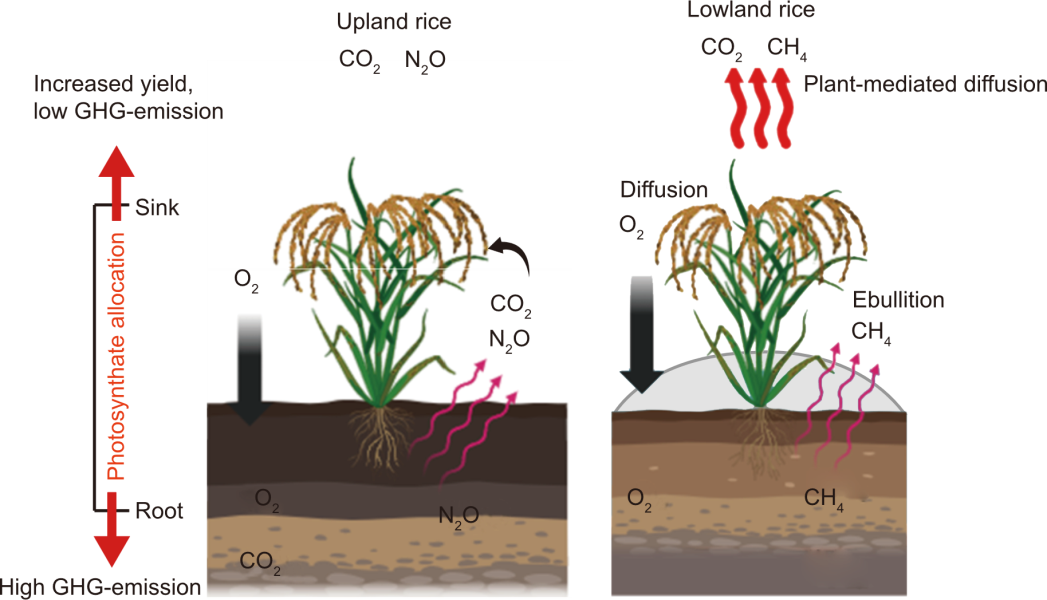
Fig. 1. Different emitted greenhouse gases (CH4, N2O, and CO2) from both lowland and upland rice production ecosystems and photosynthate or sucrose allocation to sink (panicles and grains) and roots. Greenhouse gases (GHGs) are vented to the atmosphere via plant-mediated diffusion and ebullition through soil. The high accumulation of photosynthate or sucrose in the panicles or grains leads to increased yield and low GHG emissions, while that in the roots leads to high GHG emissions (Jiménez and Pedersen, 2023; Kwon et al, 2023).
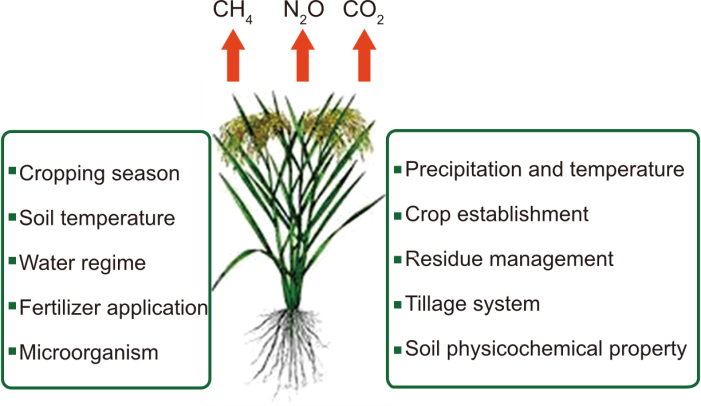
Fig. 2. Factors influencing greenhouse gas emissions from rice fields.
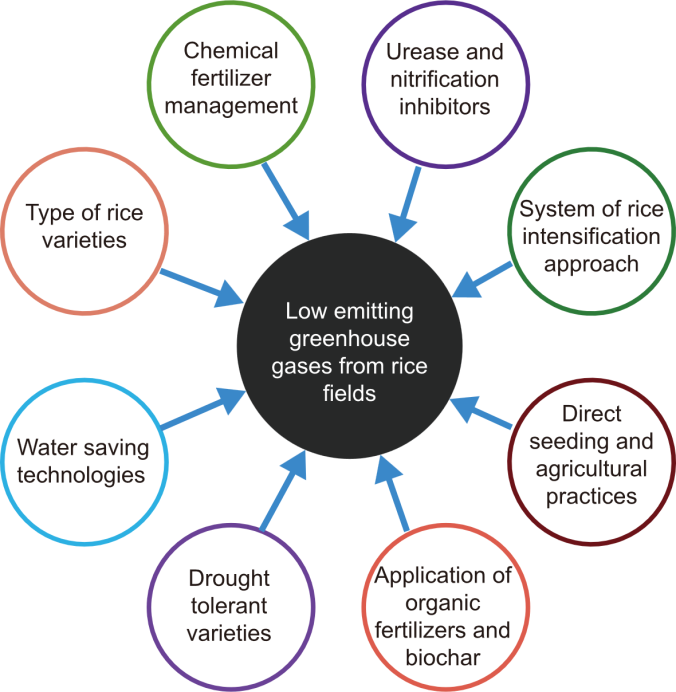
Fig. 3. Low greenhouse gas emission technologies and practices for rice fields.
| Rice variety | CH4 emission | N2O emission | Global warming potential | Reference |
|---|---|---|---|---|
| Hanyou 3 | Decreased by 60%-83% | Increased by 9%-11% | Decreased by 25% | Xu et al, |
| Hanyou 73 | Decreased to zero | Increased by 7.6% | Decreased by 95% | Zhang et al, |
| Hanyou 73 | Decreased by 8.2%-21.64% | Decreased by 20.69%-76.56% | Reduced by 11.48%-20.83% | Zhang et al, |
| 7Y88 and 7Y370 | Decreased by 8.5%-10.51% | Decreased by 11.17%-13.76% | Reduced by 10.66%-13.13% | Feng et al, |
Table 1. Drought-tolerant rice variety and water-saving effects on greenhouse gase-emission.
| Rice variety | CH4 emission | N2O emission | Global warming potential | Reference |
|---|---|---|---|---|
| Hanyou 3 | Decreased by 60%-83% | Increased by 9%-11% | Decreased by 25% | Xu et al, |
| Hanyou 73 | Decreased to zero | Increased by 7.6% | Decreased by 95% | Zhang et al, |
| Hanyou 73 | Decreased by 8.2%-21.64% | Decreased by 20.69%-76.56% | Reduced by 11.48%-20.83% | Zhang et al, |
| 7Y88 and 7Y370 | Decreased by 8.5%-10.51% | Decreased by 11.17%-13.76% | Reduced by 10.66%-13.13% | Feng et al, |
| Management strategya | CH4-emission change | N2O-emission change | Global warming potential change | Location | Reference |
|---|---|---|---|---|---|
| AWD | Decreased by 51%-65% | Increased by 70% | Decreased by 47% | China and Vietnam | Xu et al, |
| AWD-FWI | Decreased by 60% | Increased by 9% | Decreased by 20%-30% | China | Xu et al, |
| AWD-FDI | Decreased by 83% | Increased by 11% | Decreased by 30%-35% | China | Xu et al, |
| MSD | Decreased by 52% | Increased by 242% | Decreased by 47% | China and Southeast Asia | Liu et al, |
| SRI | Decreased by 61% | Increased by 49% | Decreased by 27% | India | Jain et al, |
| Dry DSR | Decreased by 80% | Increased by 114% | Decreased by 76% | China | Tao et al, |
| Wet DSR | Decreased by 62% | Increased by 49% | Decreased by 57% | China | Tao et al, |
Table 2. Effects of management strategies on CH4, N2O emissions, and global warming potential across multiple study locations.
| Management strategya | CH4-emission change | N2O-emission change | Global warming potential change | Location | Reference |
|---|---|---|---|---|---|
| AWD | Decreased by 51%-65% | Increased by 70% | Decreased by 47% | China and Vietnam | Xu et al, |
| AWD-FWI | Decreased by 60% | Increased by 9% | Decreased by 20%-30% | China | Xu et al, |
| AWD-FDI | Decreased by 83% | Increased by 11% | Decreased by 30%-35% | China | Xu et al, |
| MSD | Decreased by 52% | Increased by 242% | Decreased by 47% | China and Southeast Asia | Liu et al, |
| SRI | Decreased by 61% | Increased by 49% | Decreased by 27% | India | Jain et al, |
| Dry DSR | Decreased by 80% | Increased by 114% | Decreased by 76% | China | Tao et al, |
| Wet DSR | Decreased by 62% | Increased by 49% | Decreased by 57% | China | Tao et al, |
| Breeding approach | Target trait | Mechanism | GHG impact | Reduction (%) | Reference |
|---|---|---|---|---|---|
| Transgenic | Reduced root exudates (insertion of SUSIBA2) | Reduce root exudates and suppress methanogenesis (allocation of photosynthates to aboveground biomass over roots) | Decreased CH4 | 50-90 | Su et al, |
| Transgenic | Root exudate modification (H2 oxidation) via overexpressing gene plant peptides containing sulfated tyrosine | Reduction of H2 (available for hydrogenotrophic methanogenesis) | Decreased CH4 | 38-58 | Shi et al, |
| Gene/QTL pyramiding and multi-omics | Multi-trait improvement (Nitrogen-use efficiency, drought, low-input, etc.) | Combine high yield with low-input demand and enhanced soil-microbe balance | Decreased CH4 | 37 | Taghavi et al, |
| Mutagenesis via knockdown | Reduced aerenchyma formation (insertion of Tos17 and T-DNA in OsLSD1.1 mutant) | Limit CH4 transport via aerenchyma in roots | Decreased CH4 | 27-36 | Iqbal et al, |
| Gene/QTL discovery | qTN1-2, qTN3-1, qTN3-2, qTN3-3, qTN4-1, qRB3-1, and qRB5-1 | Associated with high tillering and root biomass during the maximum tillering stage at the peak of emissions | - | - | Barnaby et al, |
| Metabolomic and transcriptomic | Loss-of-function gs3 mutant allele and root exudate transporter genes (OsALMT1, OsSWEET11, OsSWEET14, and OsMFS1) | Alter carbon exudates (allocation of photosynthates to aboveground biomass over roots) and reduces methanogens activities | Decreased CH4 | 16-37 | Kwon et al, |
| Conventional breeding | Fumarate and ethanol production | Fumarate promotes CH4 production and ethanol mitigates CH4 emissions by inhibiting fumarate synthesis in the root | Decreased CH4 | 70 | Jin et al, |
| Hybrid breeding | High biomass, high yield, short duration, and elevated carbon sequestration capacity | Carbon substrates allocation to the grain and biomass over the roots | Decreased CH4 | 52 | Khatibi et al, |
Table 3. Rice breeding strategies for mitigating greenhouse gas emissions.
| Breeding approach | Target trait | Mechanism | GHG impact | Reduction (%) | Reference |
|---|---|---|---|---|---|
| Transgenic | Reduced root exudates (insertion of SUSIBA2) | Reduce root exudates and suppress methanogenesis (allocation of photosynthates to aboveground biomass over roots) | Decreased CH4 | 50-90 | Su et al, |
| Transgenic | Root exudate modification (H2 oxidation) via overexpressing gene plant peptides containing sulfated tyrosine | Reduction of H2 (available for hydrogenotrophic methanogenesis) | Decreased CH4 | 38-58 | Shi et al, |
| Gene/QTL pyramiding and multi-omics | Multi-trait improvement (Nitrogen-use efficiency, drought, low-input, etc.) | Combine high yield with low-input demand and enhanced soil-microbe balance | Decreased CH4 | 37 | Taghavi et al, |
| Mutagenesis via knockdown | Reduced aerenchyma formation (insertion of Tos17 and T-DNA in OsLSD1.1 mutant) | Limit CH4 transport via aerenchyma in roots | Decreased CH4 | 27-36 | Iqbal et al, |
| Gene/QTL discovery | qTN1-2, qTN3-1, qTN3-2, qTN3-3, qTN4-1, qRB3-1, and qRB5-1 | Associated with high tillering and root biomass during the maximum tillering stage at the peak of emissions | - | - | Barnaby et al, |
| Metabolomic and transcriptomic | Loss-of-function gs3 mutant allele and root exudate transporter genes (OsALMT1, OsSWEET11, OsSWEET14, and OsMFS1) | Alter carbon exudates (allocation of photosynthates to aboveground biomass over roots) and reduces methanogens activities | Decreased CH4 | 16-37 | Kwon et al, |
| Conventional breeding | Fumarate and ethanol production | Fumarate promotes CH4 production and ethanol mitigates CH4 emissions by inhibiting fumarate synthesis in the root | Decreased CH4 | 70 | Jin et al, |
| Hybrid breeding | High biomass, high yield, short duration, and elevated carbon sequestration capacity | Carbon substrates allocation to the grain and biomass over the roots | Decreased CH4 | 52 | Khatibi et al, |
| Selection stage | Trait profile for progeny screening |
|---|---|
| Pre-breeding stage | Deep rooting and expanded root distributions, along with the formation of porous roots and enlarged aerenchyma, contribute to reduced or eliminated non-productive tillers, increased aboveground biomass, and higher grain yields. Additionally, there are implications for CH4, N2O, and CO2 emissions, as well as variations in methanogen abundance across the rhizospheres of different cultivars. Observations include reduced levels of glucose and carbohydrates in the roots, alongside a high abundance of sugar transporter genes in the panicles and grains |
| Early stage (BCnF1 to BCnF4 generations) | Deep rooting and expanded root distributions, the development of porous roots with enlarged aerenchyma, reduced or eliminated non-productive tillers, increased aboveground biomass, and enhanced grain yields |
| Late stage (BCnF5 and BCnF6 generations) | Methanogen abundance varies across the rhizospheres of each cultivar, alongside reduced levels of glucose and carbohydrates in the roots. Notably, there is a high abundance of sugar transporter genes, such as SUT-C, SWEET, OsSUT1, OsSUT5, and OsDOF11, in the panicles and grains. Conversely, there is a lower abundance of carbohydrate and root exudate transporter genes (including OsALMT1, OsSWEET11, OsSWEET14, and OsMFS) in the roots. These factors are associated with emissions of CH4, N2O, and CO2 |
Table 4. Stratified traits profile to consider when developing low greenhouse gas emission rice varieties.
| Selection stage | Trait profile for progeny screening |
|---|---|
| Pre-breeding stage | Deep rooting and expanded root distributions, along with the formation of porous roots and enlarged aerenchyma, contribute to reduced or eliminated non-productive tillers, increased aboveground biomass, and higher grain yields. Additionally, there are implications for CH4, N2O, and CO2 emissions, as well as variations in methanogen abundance across the rhizospheres of different cultivars. Observations include reduced levels of glucose and carbohydrates in the roots, alongside a high abundance of sugar transporter genes in the panicles and grains |
| Early stage (BCnF1 to BCnF4 generations) | Deep rooting and expanded root distributions, the development of porous roots with enlarged aerenchyma, reduced or eliminated non-productive tillers, increased aboveground biomass, and enhanced grain yields |
| Late stage (BCnF5 and BCnF6 generations) | Methanogen abundance varies across the rhizospheres of each cultivar, alongside reduced levels of glucose and carbohydrates in the roots. Notably, there is a high abundance of sugar transporter genes, such as SUT-C, SWEET, OsSUT1, OsSUT5, and OsDOF11, in the panicles and grains. Conversely, there is a lower abundance of carbohydrate and root exudate transporter genes (including OsALMT1, OsSWEET11, OsSWEET14, and OsMFS) in the roots. These factors are associated with emissions of CH4, N2O, and CO2 |
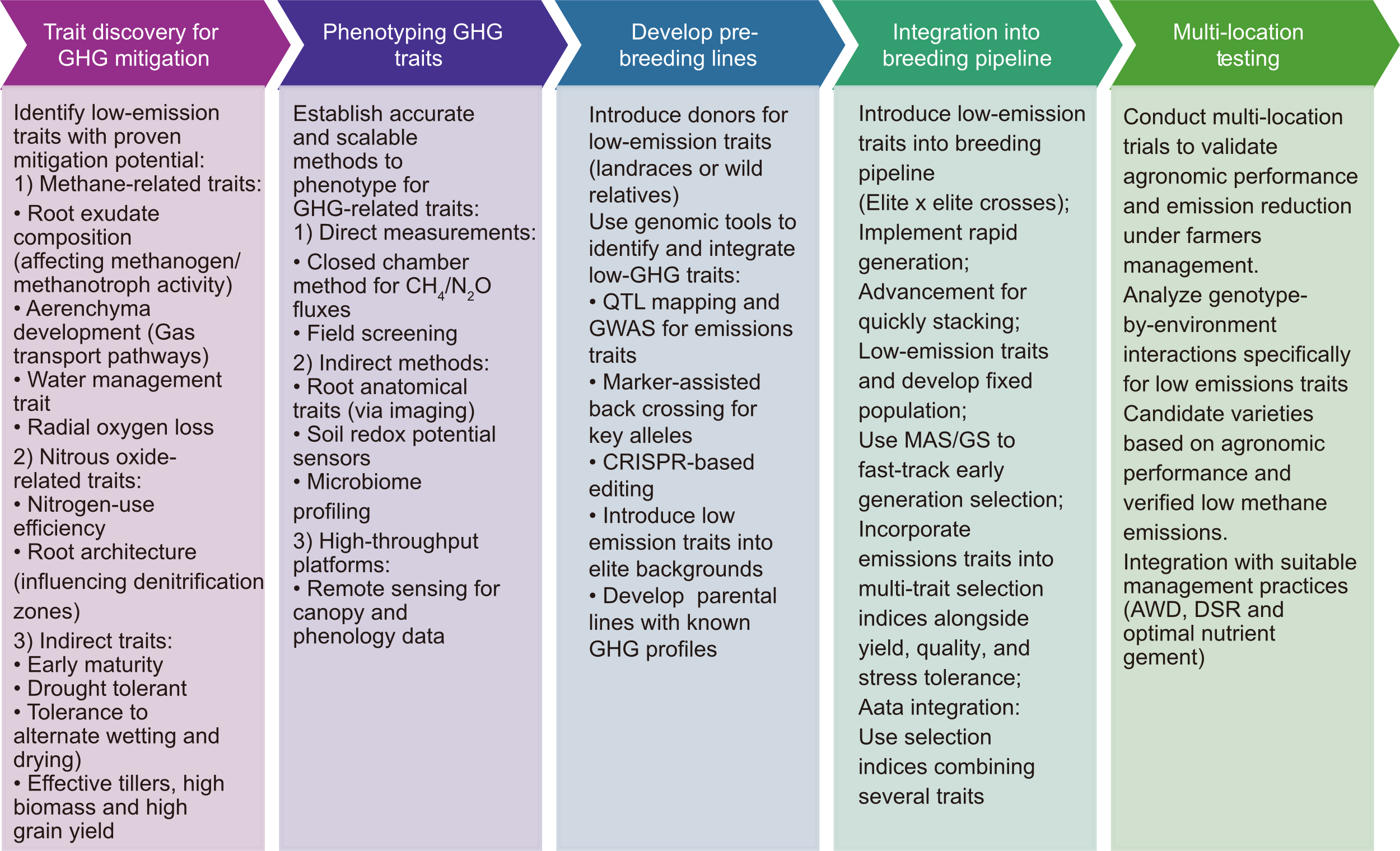
Fig. 4. Integration of low greenhouse gas (GHG) emission traits into elite rice breeding pipeline. MAS, Marker-assisted selection; GS, Genomic selection; GWAS, Genome-wide association study; CRISPR, Clustered regularly interspaced short palindromic repeats; AWD, Alternative wetting and drying; DSR, Direct-seeded rice.
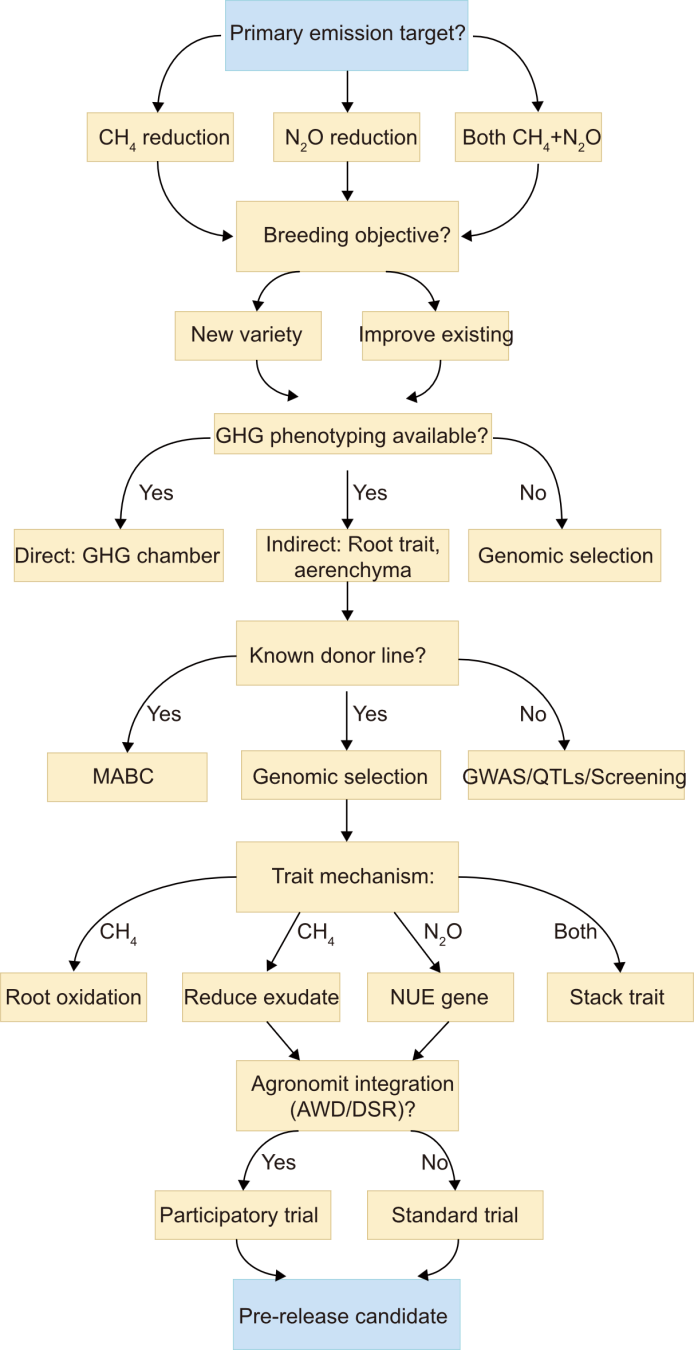
Fig. 5. Decision tree for selecting breeding strategies for low greenhouse gas emission rice. MABC, Marker-assisted backcrossing; NUE, Nitrogen use efficiency; GWAS, Genome-wide association study; CRISPR, Clustered regularly interspaced short palindromic repeats; AWD, Alternative Wetting and Drying; DSR, Direct-seeded rice.
| [1] | Abiko T, Obara M. 2014. Enhancement of porosity and aerenchyma formation in nitrogen-deficient rice roots. Plant Sci, 215: 76-83. |
| [2] | Abkallo H M, Arbuthnot P, Auer T O, et al. 2024. Making genome editing a success story in Africa. Nat Biotechnol, 42(4): 551-554. |
| [3] | Ahmed Z, Gui D W, Qi Z M, et al. 2022. Greenhouse gas emissions and mitigation strategies in rice production systems. In: Ahmed M. Global Agricultural Production: Resilience to Climate Change. Cham, Swiss: Springer International Publishing: 237-265. |
| [4] | Ali J, Jewel Z A, Mahender A, et al. 2018. Molecular genetics and breeding for nutrient use efficiency in rice. Int J Mol Sci, 19(6): 1762. |
| [5] | Arunrat N, Sereenonchai S, Pumijumnong N. 2018. On-farm evaluation of the potential use of greenhouse gas mitigation techniques for rice cultivation: A case study in Thailand. Climate, 6(2): 36. |
| [6] | Aulakh M S, Wassmann R, Rennenberg H, et al. 2000. Pattern and amount of aerenchyma relate to variable methane transport capacity of different rice cultivars. Plant Biol, 2(2): 182-194. |
| [7] | Barnaby J Y, McClung A M, Edwards J D, et al. 2022. Identification of quantitative trait loci for tillering, root, and shoot biomass at the maximum tillering stage in rice. Sci Rep, 12: 13304. |
| [8] | Butterbach-Bahl K, Baggs E M, Dannenmann M, et al. 2013. Nitrous oxide emissions from soils: How well do we understand the processes and their controls. Philos Trans R Soc Lond B Biol Sci, 368: 20130122. |
| [9] | Chen K L, Wang Y P, Zhang R, et al. 2019. CRISPR/Cas genome editing and precision plant breeding in agriculture. Annu Rev Plant Biol, 70: 667-697. |
| [10] | Chen Y, Li G M, Zhao B H, et al. 2021. Longitudinal pattern of aerenchyma formation using the Ti-gompertz model in rice adventitious roots. Front Plant Sci, 12: 776971. |
| [11] | Chen Y, Guo W S, Ngo H H, et al. 2024. Ways to mitigate greenhouse gas production from rice cultivation. J Environ Manag, 368: 122139. |
| [12] | Colmer T D, Pedersen O. 2008. Oxygen dynamics in submerged rice (Oryza sativa). New Phytol, 178(2): 326-334. |
| [13] | Das S, Kim P J. 2024. Rice breeding for low methane and high yields. Plant Commun, 5(5): 100924. |
| [14] | Demeke B, Dejene T, Abebe D. 2023. Genetic variability, heritability, and genetic advance of morphological, yield related and quality traits in upland rice (Oryza Sativa L.) genotypes at pawe, northwestern Ethiopia. Cogent Food Agric, 9(1): 2157099. |
| [15] | Diagne A, Demont M. 2007. Taking a new look at empirical models of adoption: Average treatment effect estimation of adoption rates and their determinants. Agric Econ, 37(2/3): 201-210. |
| [16] | Diagne A, Sogbossi M J, Diawara S, et al. 2008. Assessment of the dissemination and adoption of NERICA rice varieties in Guinea. AAAE: 47-51. |
| [17] | Diagne A, Amovin-Assagba E, Futakuchi K, et al. 2013. Estimation of cultivated area, number of farming households and yield for major rice-growing environments in Africa. In: Wopereis M C S, Johnson D E, Eric Tollens N A, et al. Realizing Africa’s Rice Promise. UK: CABI: 35-45. |
| [18] | Ding H N, Jiang Y, Cao C G. 2021. Deep rice root systems reduce methane emissions in rice paddies. Plant Soil, 468(1/2): 337-352. |
| [19] | Dong N M, Brandt K K, Sørensen J, et al. 2012. Effects of alternating wetting and drying versus continuous flooding on fertilizer nitrogen fate in rice fields in the Mekong Delta, Vietnam. Soil Biol Biochem, 47: 166-174. |
| [20] | Dossou-Yovo E R, Saito K. 2021. Impact of management practices on weed infestation, water productivity, rice yield and grain quality in irrigated systems in Côte d’Ivoire. Field Crops Res, 270: 108209. |
| [21] | Dossou-Yovo E R, Kouadio S A K, Saito K. 2023. Effects of mid-season drainage on iron toxicity, rice yield, and water productivity in irrigated systems in the derived savannah agroecological zone of West Africa. Field Crops Res, 296: 108901. |
| [22] | Dossou-Yovo E R, Arouna A, Benfica R, et al. 2024. A participatory framework for prioritizing climate-smart agriculture innovations in rice-based systems: A case study of Mali. Smart Agric Technol, 7: 100392. |
| [23] | Du L, Wang Y F, Shan Z, et al. 2021. Comprehensive analysis of SUSIBA2 rice: The low-methane trait and associated changes in soil carbon and microbial communities. Sci Total Environ, 764: 144508. |
| [24] | Enriquez Y, Yadav S, Evangelista G K, et al. 2021. Disentangling challenges to scaling alternate wetting and drying technology for rice cultivation: Distilling lessons from 20 years of experience in the Philippines. Front Sustain Food Syst, 5: 675818. |
| [25] | Fangueiro D, Becerra D, Albarrán Á, et al. 2017. Effect of tillage and water management on GHG emissions from Mediterranean rice growing ecosystems. Atmos Environ, 150: 303-312. |
| [26] | Feng B, Chen K, Cui Y R, et al. 2018. Genetic dissection and simultaneous improvement of drought and low nitrogen tolerances by designed QTL pyramiding in rice. Front Plant Sci, 9: 306. |
| [27] | Feng Z Y, Qin T, Du X Z, et al. 2021. Effects of irrigation regime and rice variety on greenhouse gas emissions and grain yields from paddy fields in Central China. Agric Water Manag, 250: 106830. |
| [28] | Gbadegesin L A, Ayeni E A, Tettey C K, et al. 2022. GMOs in Africa: Status, adoption and public acceptance. Food Control, 141: 109193. |
| [29] | Gutierrez J, Kim S Y, Kim P J. 2013. Effect of rice cultivar on CH4 emissions and productivity in Korean paddy soil. Field Crops Res, 146: 16-24. |
| [30] | Hamrani A, Akbarzadeh A, Madramootoo C A. 2020. Machine learning for predicting greenhouse gas emissions from agricultural soils. Sci Total Environ, 741: 140338. |
| [31] | Hatfield J L, Dold C. 2019. Water-use efficiency: Advances and challenges in a changing climate. Front Plant Sci, 10: 103. |
| [32] | Hossein-Zadeh N G. 2022. Estimates of the genetic contribution to methane emission in dairy cows: A meta-analysis. Sci Rep, 12: 12352. |
| [33] | Hu B, Wang W, Chen J J, et al. 2023. Genetic improvement toward nitrogen-use efficiency in rice: Lessons and perspectives. Mol Plant, 16(1): 64-74. |
| [34] | Hu J, Bettembourg M, Moreno S, et al. 2023. Characterisation of a low methane emission rice cultivar suitable for cultivation in high latitude light and temperature conditions. Environ Sci Pollut Res Int, 30: 92950-92962. |
| [35] | Hu J, Bettembourg M, Xue L H, et al. 2024. A low-methane rice with high-yield potential realized via optimized carbon partitioning. Sci Total Environ, 920: 170980. |
| [36] | Huan S H, Liu X L. 2025. Machine learning-driven analysis of greenhouse gas emissions from rice production in major Chinese provinces: Identifying key factors and developing reduction strategies. Eur J Agron, 164: 127536. |
| [37] | Huang N R, Liang K M, Zhong X H, et al. 2018. Screening for and evaluation of rice (Oryza sativa) varieties with low methane emission and high yield in South China. J Agror Environ Sci, 37(12): 2854-2863. (in Chinese with English abstract) |
| [38] | Iqbal M F, Liu S H, Zhu J W, et al. 2021. Limited aerenchyma reduces oxygen diffusion and methane emission in paddy. J Environ Manag, 279: 111583. |
| [39] | Ishfaq M, Akbar N, Anjum S A, et al. 2020a. Growth, yield and water productivity of dry direct seeded rice and transplanted aromatic rice under different irrigation management regimes. J Integr Agric, 19(11): 2656-2673. |
| [40] | Ishfaq M, Farooq M, Zulfiqar U, et al. 2020b. Alternate wetting and drying: A water-saving and ecofriendly rice production system. Agric Water Manag, 241: 106363. |
| [41] | Ishfaq M, Akbar N, Zulfiqar U, et al. 2022. Economic assessment of water-saving irrigation management techniques and continuous flooded irrigation in different rice production systems. Paddy Water Environ, 20(1): 37-50. |
| [42] | Islam S M M, Gaihre Y K, Islam M R, et al. 2020. Effects of water management on greenhouse gas emissions from farmers’ rice fields in Bangladesh. Sci Total Environ, 734: 139382. |
| [43] | Jain N, Dubey R, Dubey D S, et al. 2014. Mitigation of greenhouse gas emission with system of rice intensification in the Indo-Gangetic Plains. Paddy Water Environ, 12(3): 355-363. |
| [44] | Janz B, Weller S, Kraus D, et al. 2019. Greenhouse gas footprint of diversifying rice cropping systems: Impacts of water regime and organic amendments. Agric Ecosyst Environ, 270: 41-54. |
| [45] | Jat R K, Meena V S, Durgude S, et al. 2025. Bridging the gap: Challenges and adoption of climate-resilient agriculture technologies in agricultural landscapes across agro-climatic zones of Bihar, India. Front Sustain Food Syst, 8: 1504388. |
| [46] | Jiang Y, van Groenigen K J, Huang S, et al. 2017. Higher yields and lower methane emissions with new rice cultivars. Glob Chang Biol, 23(11): 4728-4738. |
| [47] | Jiménez J C, Pedersen O. 2023. Mitigation of greenhouse gas emissions from rice via manipulation of key root traits. Rice, 16(1): 24. |
| [48] | Jin Y K, Liu T, Hu J, et al. 2025. Reducing methane emissions by developing low-fumarate high-ethanol eco-friendly rice. Mol Plant, 18(2): 333-349. |
| [49] | Khatibi S M H, Adviento-Borbe M A, Dimaano N G, et al. 2025. Advanced technologies for reducing greenhouse gas emissions from rice fields: Is hybrid rice the game changer. Plant Commun, 6(2): 101224. |
| [50] | Kim G W, Gutierrez-Suson J, Kim P J. 2019. Optimum N rate for grain yield coincides with minimum greenhouse gas intensity in flooded rice fields. Field Crops Res, 237: 23-31. |
| [51] | Kim W J, Bui L T, Chun J B, et al. 2018. Correlation between methane (CH4) emissions and root aerenchyma of rice varieties. Plant Breed Biotechnol, 6(4): 381-390. |
| [52] | Kirk G J D, Boghi A, Affholder M C, et al. 2019. Soil carbon dioxide venting through rice roots. Plant Cell Environ, 42(12): 3197-3207. |
| [53] | Ku H H, Hayashi K, Agbisit R, et al. 2017. Evaluation of fertilizer and water management effect on rice performance and greenhouse gas intensity in different seasonal weather of tropical climate. Sci Total Environ, 601/602: 1254-1262. |
| [54] | Kumar T, Kundu M S, Jha R K. 2024. Impact of crop rotation and tillage operations on mitigating greenhouse gas emissions and evaluation of sustainability index in rice-wheat-green gram cropping system of north Bihar. J Environ Manag, 366: 121689. |
| [55] | Kumar V, Ladha J K. 2011. Direct seeding of rice: Recent developments and future research needs. Adv Agron, 111: 297-413. |
| [56] | Kwon Y, Lee J Y, Choi J, et al. 2023. Loss-of-function gs3 allele decreases methane emissions and increases grain yield in rice. Nat Clim Change, 13(12): 1329-1333. |
| [57] | Lagomarsino A, Agnelli A E, Linquist B, et al. 2016. Alternate wetting and drying of rice reduced CH4 emissions but triggered N2O peaks in a clayey soil of central Italy. Pedosphere, 26(4): 533-548. |
| [58] | Lampayan R M, Rejesus R M, Singleton G R, et al. 2015. Adoption and economics of alternate wetting and drying water management for irrigated lowland rice. Field Crops Res, 170: 95-108. |
| [59] | Le L T. 2020. Alternate wetting and drying technique in paddy production in the Mekong Delta, Vietnam: Economic evaluation and adoption determinants. J Agribus Dev Emerg Econ, 11(1): 42-59. |
| [60] | Li J L, Li Y E, Wan Y F, et al. 2018. Combination of modified nitrogen fertilizers and water saving irrigation can reduce greenhouse gas emissions and increase rice yield. Geoderma, 315: 1-10. |
| [61] | Linquist B A, Adviento-Borbe M A, Pittelkow C M, et al. 2012. Fertilizer management practices and greenhouse gas emissions from rice systems: A quantitative review and analysis. Field Crops Res, 135: 10-21. |
| [62] | Liu B, Guo C Y, Xu J, et al. 2024. Co-benefits for net carbon emissions and rice yields through improved management of organic nitrogen and water. Nat Food, 5(3): 241-250. |
| [63] | Liu X Y, Zhou T, Liu Y, et al. 2019. Effect of mid-season drainage on CH4 and N2O emission and grain yield in rice ecosystem: A meta-analysis. Agric Water Manag, 213: 1028-1035. |
| [64] | Luo W B, Li Y L, Yang Z R, et al. 2023. Water and nitrogen balance under various water and fertilizer regulation modes. Agronomy, 13(12): 2870. |
| [65] | Matloob A, Khaliq A, Chauhan B S. 2015. Weeds of direct-seeded rice in Asia: Problems and opportunities. Adv Agron, 130: 291-336. |
| [66] | Mboyerwa P A, Kibret K, Mtakwa P, et al. 2022. Greenhouse gas emissions in irrigated paddy rice as influenced by crop management practices and nitrogen fertilization rates in eastern Tanzania. Front Sustain Food Syst, 6: 868479. |
| [67] | Minamikawa K, Tokid T, Sudo S, et al. 2015. Guidelines for Measuring CH4 and N2O Emissions from Rice Paddies by a Manually Operated Closed Chamber Method. Tsukuba, Japan: National Institute for Agro-Environmental Sciences. |
| [68] | Montesinos-López A, Montesinos-López O A, Ramos-Pulido S, et al. 2025. Artificial intelligence meets genomic selection: Comparing deep learning and GBLUP across diverse plant datasets. Front Genet, 16: 1568705. |
| [69] | Padhi P P, Bhattacharyya P, Padhy S R, et al. 2024. Judicious use of agricultural and industrial waste to rice is a green technology having GHGs mitigation potential. Int J Environ Sci Technol, 21(9): 6759-6772. |
| [70] | Palis F G, Lampayan R M, Flor R J, et al. 2017. A multi-stakeholder partnership for the dissemination of alternate wetting and drying water-saving technology for rice farmers in the Philippines. AIMS Agric Food, 2(3): 290-309. |
| [71] | Parlanti S, Kudahettige N P, Lombardi L, et al. 2011. Distinct mechanisms for aerenchyma formation in leaf sheaths of rice genotypes displaying a quiescence or escape strategy for flooding tolerance. Ann Bot, 107(8): 1335-1343. |
| [72] | Pathak H, Sankhyan S, Dubey D S, et al. 2013. Dry direct-seeding of rice for mitigating greenhouse gas emission: Field experimentation and simulation. Paddy Water Environ, 11(1): 593-601. |
| [73] | Pearson K A, Millar G M, Norton G J, et al. 2018. Alternate wetting and drying in Bangladesh: Water-saving farming practice and the socioeconomic barriers to its adoption. Food Energy Secur, 7(4): e00149. |
| [74] | Perez-Coronel E, Beman J M. 2022. Multiple sources of aerobic methane production in aquatic ecosystems include bacterial photosynthesis. Nat Commun, 13: 6454. |
| [75] | Pihlatie M K, Christiansen J R, Aaltonen H, et al. 2013. Comparison of static chambers to measure CH4 emissions from soils. Agric For Meteor, 171: 124-136. |
| [76] | Pumpanen J, Longdoz B, Kutsch W L. 2010. Field measurements of soil respiration:Principles and constraints, potentials and limitations of different methods. In: Kutsch W L, Bahn M, Heinemeyer A. Soil Carbon Dynamics: An Integrated Methodology. Cambridge, UK: Cambridge University Press: 16-33. |
| [77] | Qian H Y, Zhu X C, Huang S, et al. 2023. Greenhouse gas emissions and mitigation in rice agriculture. Nat Rev Earth Environ, 4(10): 716-732. |
| [78] | Rejesus R M, Martin A M, Gypmantasiri P. 2014. Enhancing the impact of natural resource management research: Lessons from a meta-impact assessment of the Irrigated Rice Research Consortium. Glob Food Secur, 3(1): 41-48. |
| [79] | Sander B O, Schneider P, Romasanta R, et al. 2020. Potential of alternate wetting and drying irrigation practices for the mitigation of GHG emissions from rice fields: Two cases in central Luzon (Philippines). Agriculture, 10(8): 350. |
| [80] | Sengupta A, Ismail F N. 2024. Modelling methane emissions from rice paddies using machine learning. In: 39th International Conference on Image and Vision Computing New Zealand. December 4-6, 2024. Christchurch, New Zealand: IEEE: 1-6. |
| [81] | Setyanto P, Rosenani A B, Boer R, et al. 2004. The effect of rice cultivars on methane emission from irrigated rice field. Indones J Agric Sci, 5(1): 20-31. |
| [82] | Shen Y Y, Zhang C, Peng Y X, et al. 2024. Effects of warming on rice production and metabolism process associated with greenhouse gas emissions. Sci Total Environ, 926: 172133. |
| [83] | Shi L D, Ercoli M F, Kim J, et al. 2024. Reduced methane emissions in transgenic rice genotypes are associated with altered rhizosphere microbial hydrogen cycling. BioRxiv, https://doi.org/10.1101/2024.10.07.617079. |
| [84] | Shimono H, Okada M. 2013. Plasticity of rice tiller production is related to genotypic variation in the biomass response to elevated atmospheric CO2 concentration and low temperatures during vegetative growth. Environ Exp Bot, 87: 227-234. |
| [85] | Singh A K, Mall A K, Singh P, et al. 2010. Interrelationship of genetics parameters for quantitative and physiological traits in rice under irrigated and drought conditions. Oryza, 47: 142-147. |
| [86] | Singh N K, Patel D B, Khalekar G D. 2018. Methanogenesis and methane emission in rice/paddy fields. In: Sustainable Agriculture Reviews 33. Cham, Swiss: Springer International Publishing: 135-170. |
| [87] | Singh P K, Devanna B N, Dubey H, et al. 2024. The potential of genome editing to create novel alleles of resistance genes in rice. Front Genome Edit, 6: 1415244. |
| [88] | Steffens B, Geske T, Sauter M. 2011. Aerenchyma formation in the rice stem and its promotion by H2O2. New Phytol, 190(2): 369-378. |
| [89] | Su J, Hu C, Yan X, et al. 2015. Expression of barley SUSIBA2 transcription factor yields high-starch low-methane rice. Nature, 523: 602-606. |
| [90] | Susilawati H L, Setyanto P, Kartikawati R, et al. 2019. The opportunity of direct seeding to mitigate greenhouse gas emission from paddy rice field. IOP Conf Ser Earth Environ Sci, 393(1): 012042. |
| [91] | Taghavi S M, Mendoza T C, Acero B, et al. 2017. Carbon dioxide equivalent emissions of newly developed rice varieties. J Agric Sci, 9(5): 107. |
| [92] | Takahashi H, Yamauchi T, Colmer T D, et al. 2014. Aerenchyma formation in plants. In: Van Dgen JT, Licansi F. Plant Cell Monographs: Low-Oxygen Stress in Plant: Oxygen Sensing Adaptive Responses to Hypoxia. Vienna, Austria: Springer: 247-265. |
| [93] | Tao Y, Chen Q, Peng S B, et al. 2016. Lower global warming potential and higher yield of wet direct-seeded rice in Central China. Agron Sustain Dev, 36(2): 24. |
| [94] | Tesfaye K, Takele R, Sapkota T B, et al. 2021. Model comparison and quantification of nitrous oxide emission and mitigation potential from maize and wheat fields at a global scale. Sci Total Environ, 782: 146696. |
| [95] | Tripathi L, Dhugga K S, Ntui V O, et al. 2022. Genome editing for sustainable agriculture in Africa. Front Genome Edit, 4: 876697. |
| [96] | Uga Y, Yamamoto E, Kanno N, et al. 2013. A major QTL controlling deep rooting on rice chromosome 4. Sci Rep, 3: 3040. |
| [97] | Upadhyaya S R, Danilevicz M F, Dolatabadian A, et al. 2024. Genomics-based plant disease resistance prediction using machine learning. Plant Pathol, 73(9): 2298-2309. |
| [98] | Valdivia C M D, Sumalde Z M, Palis F G, et al. 2016. Effects of alternate wetting and drying on rice farming in Bohol, Philippines. Philip J Crop Sci, 41: 50-56. |
| [99] | van Beek C L, Meerburg B G, Schils R L M, et al. 2010. Feeding the world’s increasing population while limiting climate change impacts: Linking N2O and CH4 emissions from agriculture to population growth. Environ Sci Policy, 13(2): 89-96. |
| [100] | van Groenigen K J, van Kessel C, Hungate B A. 2012. Increased greenhouse-gas intensity of rice production under future atmospheric conditions. Nat Clim Change, 3(3): 288-291. |
| [101] | Wassmann R, Neue H U, Lantin R S, et al. 2000. Characterization of methane emissions from rice fields in Asia. II. Differences among irrigated, rainfed, and deepwater rice. Nutr Cycl Agroecosyst, 58: 13-22. |
| [102] | Weller S, Wassmann R, Romasanta R R, et al. 2018. Plant traits influencing greenhouse gas emission potential and assessment of technical options for emission screening with large number of rice varieties. CCAFS Working Paper, 226: 46. |
| [103] | Win E P, Win K K, Bellingrath-Kimura S D, et al. 2020. Greenhouse gas emissions, grain yield and water productivity: A paddy rice field case study based in Myanmar. Greenh Gases Sci Technol, 10(5): 884-897. |
| [104] | Wu Q G, Wang J, He Y, et al. 2023. Quantitative assessment and mitigation strategies of greenhouse gas emissions from rice fields in China: A data-driven approach based on machine learning and statistical modeling. Comput Electron Agric, 210: 107929. |
| [105] | Xu Y, Ge J Z, Tian S Y, et al. 2015. Effects of water-saving irrigation practices and drought resistant rice variety on greenhouse gas emissions from a no-till paddy in the central lowlands of China. Sci Total Environ, 505: 1043-1052. |
| [106] | Yamauchi T, Nakazono M. 2022. Mechanisms of lysigenous aerenchyma formation under abiotic stress. Trends Plant Sci, 27(1): 13-15. |
| [107] | Yamauchi T, Tanaka A, Inahashi H, et al. 2019. Fine control of aerenchyma and lateral root development through AUX/IAA- and ARF-dependent auxin signaling. Proc Natl Acad Sci USA, 116: 20770-20775. |
| [108] | Yang S S, Liu C M, Lai C M, et al. 2003. Estimation of methane and nitrous oxide emission from paddy fields and uplands during 1990-2000 in Taiwan. Chemosphere, 52(8): 1295-1305. |
| [109] | Yu S, Ali J, Zhang C, et al. 2020. Genomic breeding of green super rice varieties and their deployment in Asia and Africa. Theor Appl Genet, 133(5): 1427-1442. |
| [110] | Zhang G B, Yang Y T, Wei Z J, et al. 2023. The low greenhouse gas emission intensity in water-saving and drought-resistance rice in a rainfed paddy field in Southwest China. Field Crops Res, 302: 109045. |
| [111] | Zhang X X, Sun H F, Bi J G, et al. 2022. Estimate greenhouse gas emissions from water-saving and drought-resistance rice paddies by deNitrification-deComposition model. Clean Technol Environ Policy, 24(1): 161-171. |
| [112] | Zhang Z S, Guo L J, Liu T Q, et al. 2015. Effects of tillage practices and straw returning methods on greenhouse gas emissions and net ecosystem economic budget in rice-wheat cropping systems in central China. Atmos Environ, 122: 636-644. |
| [113] | Zou J W, Huang Y, Zheng X H, et al. 2007. Quantifying direct N2O emissions in paddy fields during rice growing season in mainland China: Dependence on water regime. Atmos Environ, 41: 8030-8042. |
| [1] | Lakshmi V. G. Ishwarya, S. Vanisri, P. S. Basavaraj, M. Sreedhar, Lakshmi V. Jhansi, M. Muntazir, C. Gireesh, S. N. C. V. L. Pushpavalli. Harnessing Advanced Genomic Approaches to Unveil and Enhance Brown Planthopper Resistance in Rice [J]. Rice Science, 2025, 32(3): 339-352. |
| [2] | Ravindran Lalithambika Visakh, Sreekumar Anand, Sukumaran Nair Arya, Behera Sasmita, Uday Chand Jha, Rameswar Prasad Sah, Radha Beena. Rice Heat Tolerance Breeding: A Comprehensive Review and Forward Gaze [J]. Rice Science, 2024, 31(4): 375-400. |
| [3] | Xu Chunchun, Chen Zhongdu, Ji Long, Lu Jianfei. Carbon and Nitrogen Footprints of Major Cereal Crop Production in China: A Study Based on Farm Management Surveys [J]. Rice Science, 2022, 29(3): 288-298. |
| [4] | Zhou-qi Cui, Bo Zhu, Guan-lin Xie, Bin Li, Shi-wen Huang. Research Status and Prospect of Burkholderia glumae, the Pathogen Causing Bacterial Panicle Blight [J]. Rice Science, 2016, 23(3): 111-118. |
| Viewed | ||||||
|
Full text |
|
|||||
|
Abstract |
|
|||||
