
Rice Science ›› 2026, Vol. 33 ›› Issue (6): 778-798.DOI: 10.1016/j.rsci.2026.08.002
• Reviews • Previous Articles Next Articles
Wang Tianye1, Zhang Lei1, Venuprasad Ramaiah4, Michael Dos Santos Brito6, Pan Xiaowu5, Zheng Xiaoming2,3,4, Pang Hongbo1( )
Received:2026-01-31
Accepted:2026-04-22
Online:2026-11-28
Published:2026-11-17
Contact:
Pang Hongbo (panghb@synu.edu.cn)
Wang Tianye, Zhang Lei, Venuprasad Ramaiah, Michael Dos Santos Brito, Pan Xiaowu, Zheng Xiaoming, Pang Hongbo. Advances in Cold Tolerance Mechanisms of Rice: Physiological, Molecular, and Breeding Insights[J]. Rice Science, 2026, 33(6): 778-798.
Add to citation manager EndNote|Ris|BibTeX
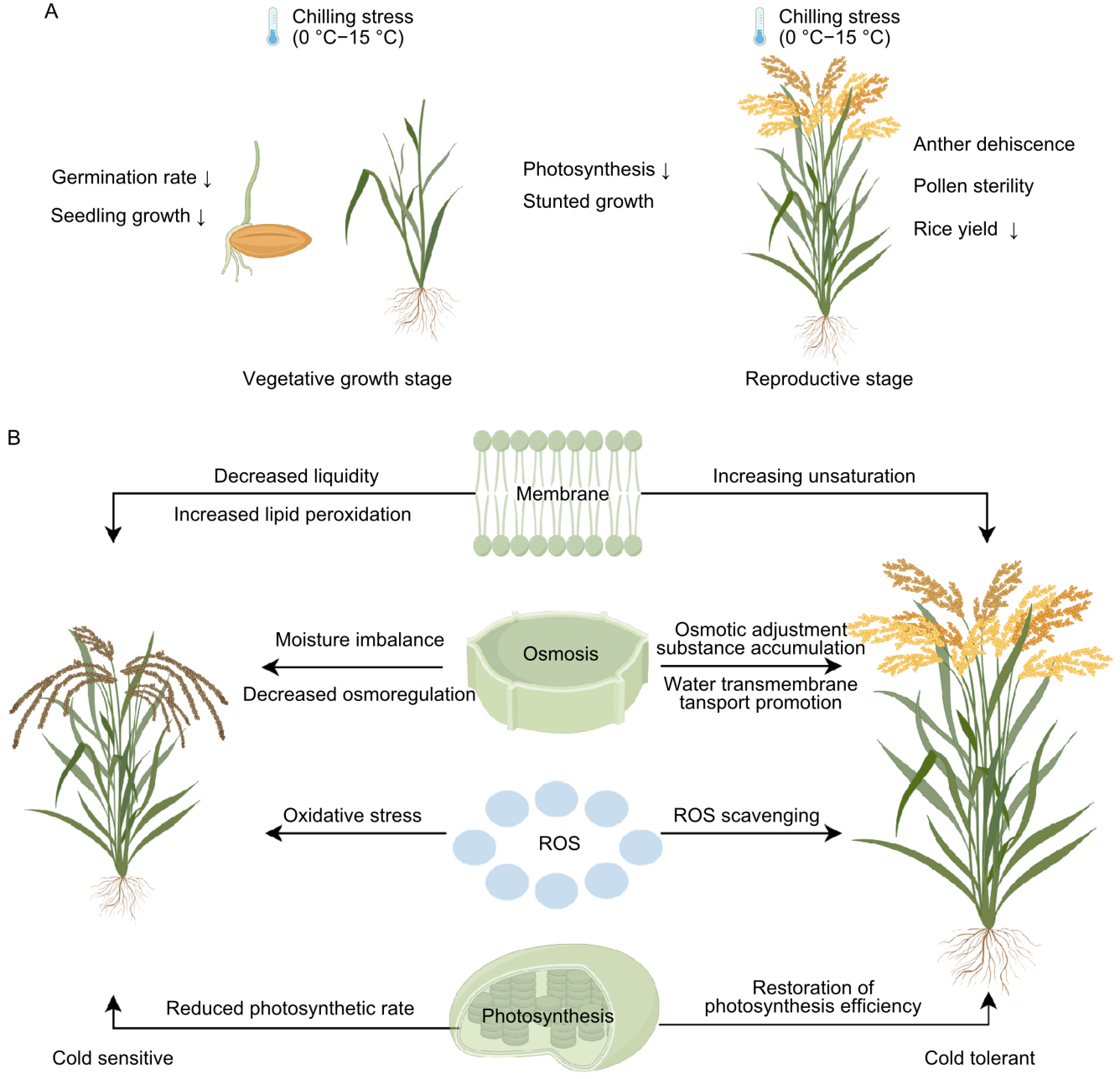
Fig. 1. Chilling stress effects and physiological mechanisms under chilling stress during rice development. A, Stage-specific impacts of chilling stress on rice growth and yield. During the vegetative stage, chilling impairs seed germination rates, retards seedling growth, and suppresses photosynthetic activity. At the reproductive stage, it disrupts anther dehiscence processes, induces elevated pollen sterility, and ultimately leads to significant yield loss. B, Multilayered physiological mechanisms in rice under chilling stress. Decreased membrane lipid fluidity coupled with exacerbated peroxidation triggers compensatory membrane stabilization strategies. Rapid accumulation of osmolytes coordinates with aquaporin regulation to preserve osmotic homeostasis. Antioxidant defense systems, including reactive oxygen species (ROS) scavenging pathways, are activated to mitigate oxidative damage. Furthermore, chloroplasts implement dynamic repair mechanisms enabling progressive restoration of photosynthetic efficiency.
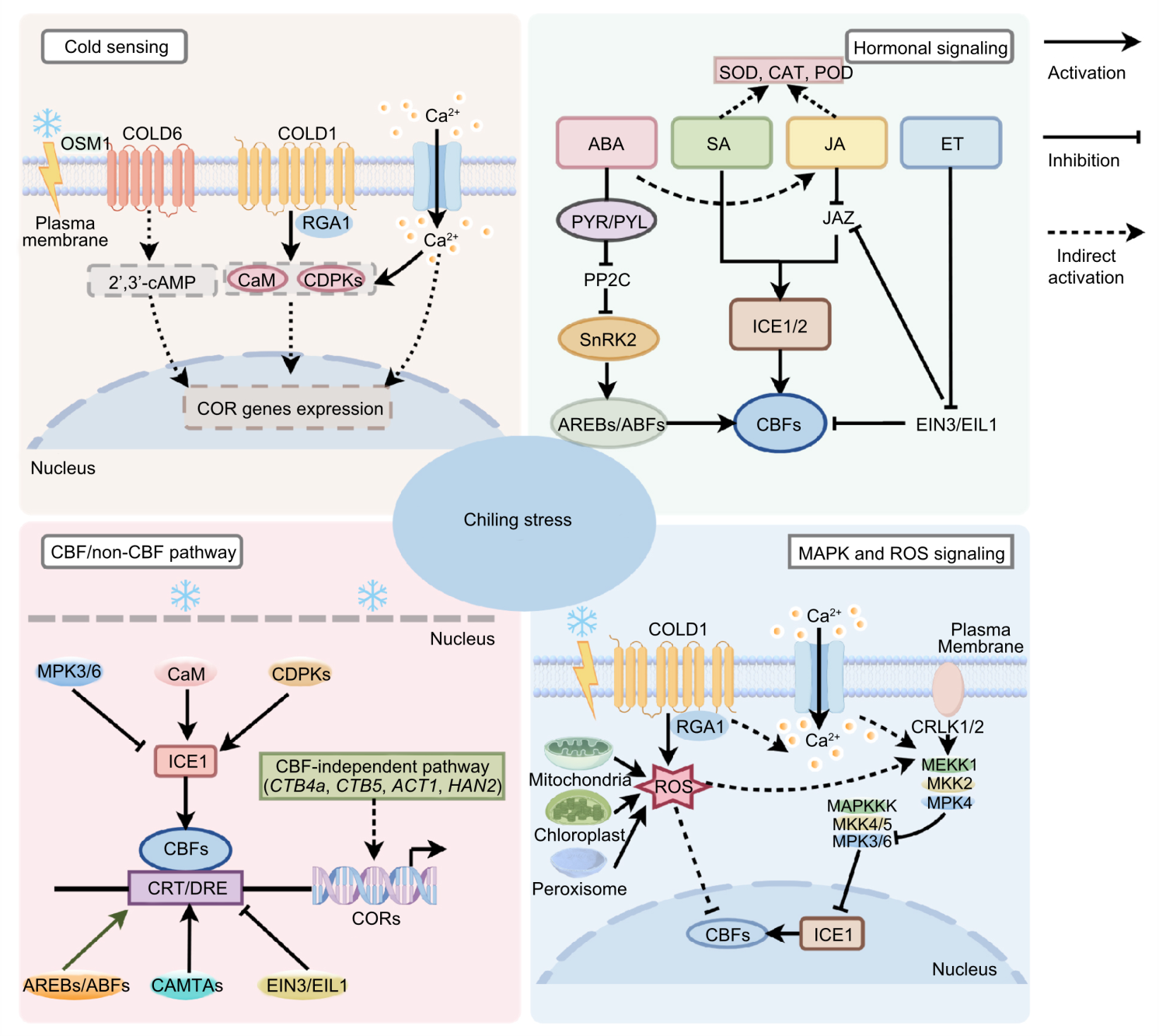
Fig. 2. Integrated molecular regulatory networks of cold tolerance in rice.
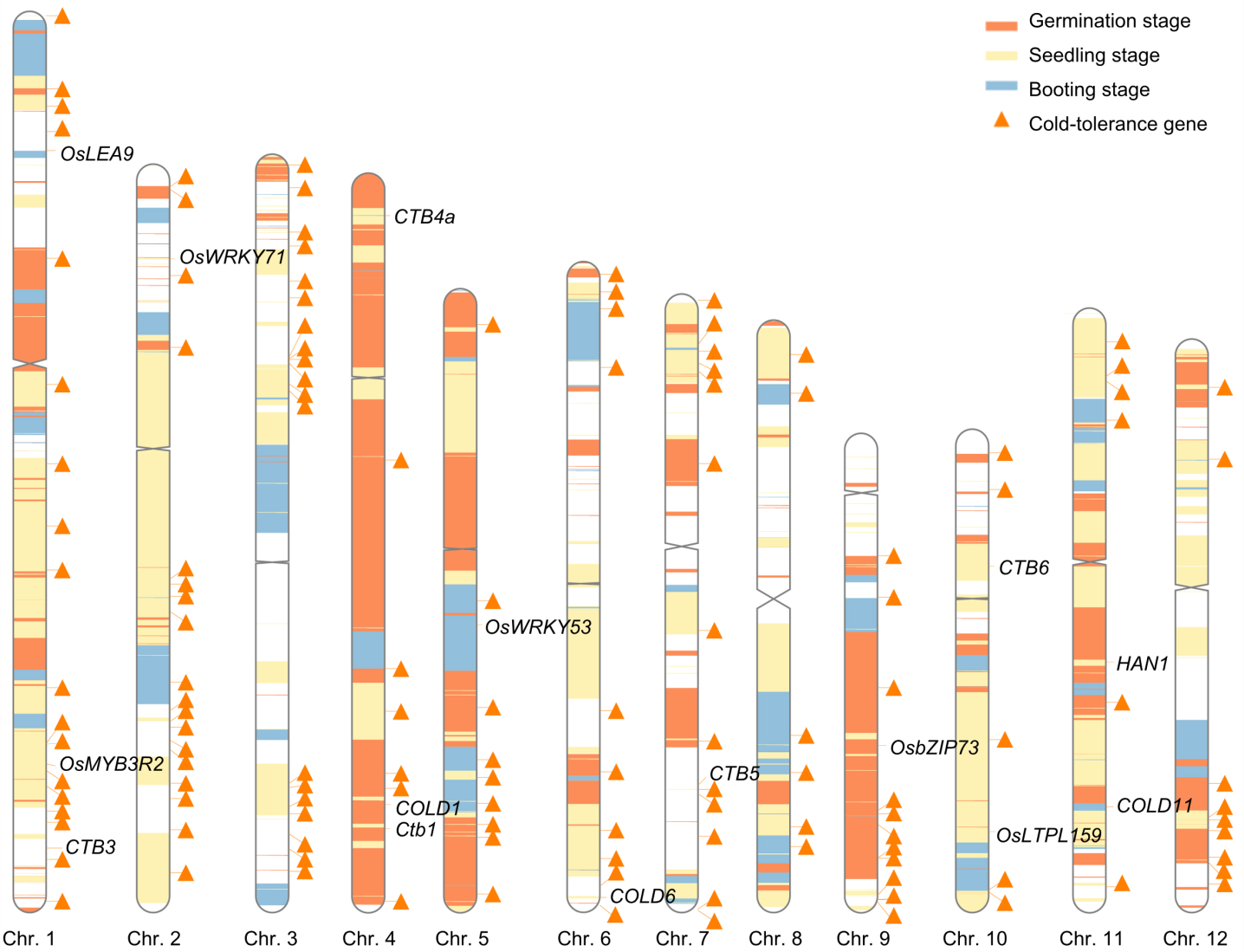
Fig. 3. Identified cold-tolerant QTLs and genes at different developmental stages in rice. Cold-tolerant QTLs identified at the germination, seedling, and booting stages are shown by orange, light yellow, and pale blue lines, respectively. The colors are in cross-over and overlap, while there is a color contradiction due to the use of only a single color. The figure summarizes reported loci from different developmental stages rather than indicating direct overlap among studies listed in the reference (Ma et al, 2009; Mao et al, 2019; Zhao et al, 2020; Lou et al, 2022; Tang et al, 2022; Bataller et al, 2024;). Because these QTLs were identified using different mapping populations and evaluation methods, positional comparisons across stages should be interpreted with caution. Orange triangles mark mapped cold-tolerant genes reported previously. Chr., Choromosome.
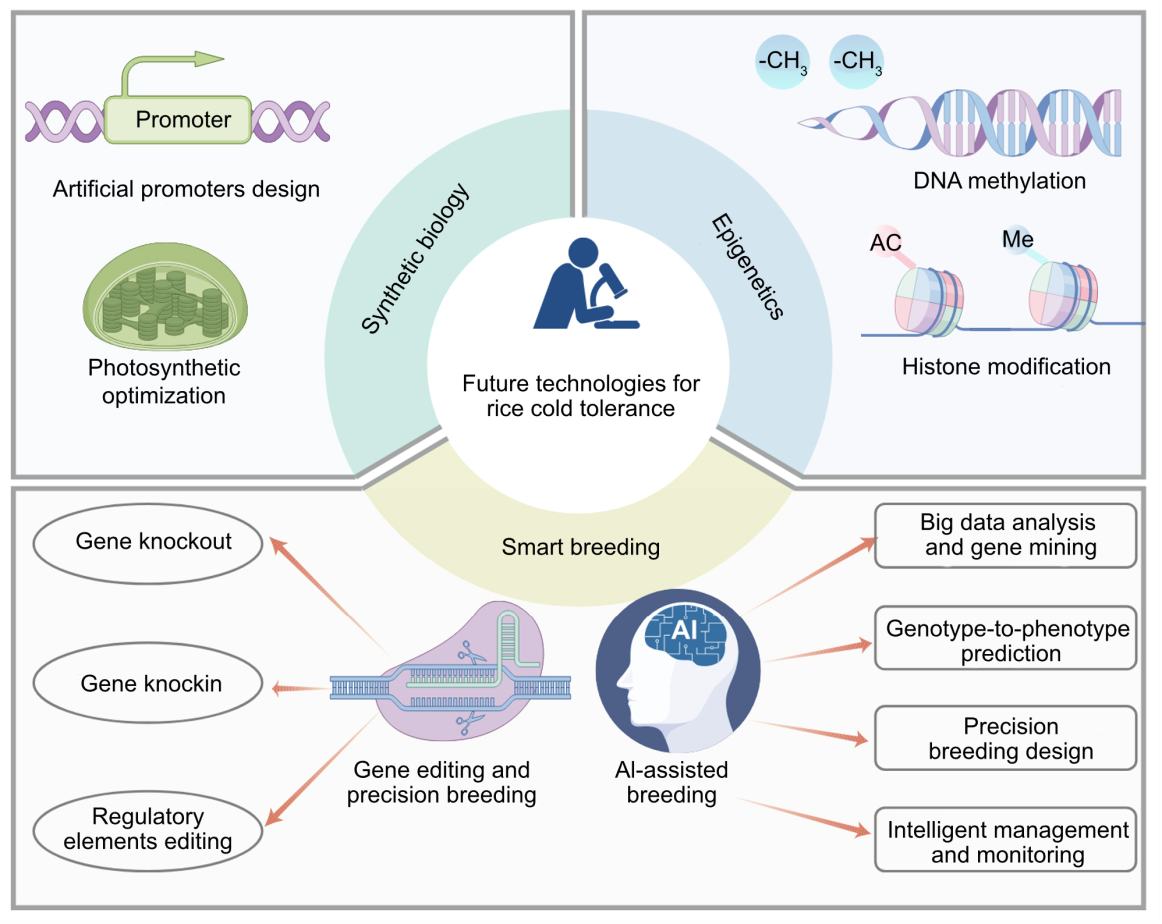
Fig. 4. Future technological directions for rice cold-tolerance improvement. AI, Artificial intelligence; AC, Acyl; ME, Methyl.
| [1] | Ahamed A, Murai-Hatano M, Ishikawa-Sakurai J, et al. 2012. Cold stress-induced acclimation in rice is mediated by root-specific aquaporins. Plant Cell Physiol, 53(8): 1445-1456. |
| [2] | Almadanim M C, Alexandre B M, Rosa M T G, et al. 2017. Rice calcium-dependent protein kinase OsCPK17 targets plasma membrane intrinsic protein and sucrose-phosphate synthase and is required for a proper cold stress response. Plant Cell Environ, 40(7): 1197-1213. |
| [3] | An Z X, Yang Z H, Zhou Y, et al. 2024. OsJRL negatively regulates rice cold tolerance via interfering phenylalanine metabolism and flavonoid biosynthesis. Plant Cell Environ, 47(11): 4071-4085. |
| [4] | Apel K, Hirt H. 2004. REACTIVE OXYGEN SPECIES: Metabolism, oxidative stress, and signal transduction. Annu Rev Plant Biol, 55: 373-399. |
| [5] | Arshad M S, Farooq M, Asch F, et al. 2017. Thermal stress impacts reproductive development and grain yield in rice. Plant Physiol Biochem, 115: 57-72. |
| [6] | Basallo O, Perez L, Lucido A, et al. 2023. Changing biosynthesis of terpenoid percursors in rice through synthetic biology. Front Plant Sci, 14: 1133299. |
| [7] | Bataller S, Davis J A, Gu L, et al. 2024. Disruption of the OsWRKY71 transcription factor gene results in early rice seed germination under normal and cold stress conditions. BMC Plant Biol, 24: 1090. |
| [8] | Behnam B, Kikuchi A, Celebi-Toprak F, et al. 2007. Arabidopsis rd29A::DREB1A enhances freezing tolerance in transgenic potato. Plant Cell Rep, 26(8): 1275-1282. |
| [9] | Bouba I, Kang Q, Luan Y S, et al. 2019. Predicting miRNA-lncRNA interactions and recognizing their regulatory roles in stress response of plants. Math Biosci, 312: 67-76. |
| [10] | Buti M, Baldoni E, Formentin E, et al. 2019. A meta-analysis of comparative transcriptomic data reveals a set of key genes involved in the tolerance to abiotic stresses in rice. Int J Mol Sci, 20(22): 5662. |
| [11] | Cui Y C, Huang L F, Liu P, et al. 2025. Suppressing an auxin efflux transporter enhances rice adaptation to temperate habitats. Nat Commun, 16: 4100. |
| [12] | Das K, Roychoudhury A. 2014. Reactive oxygen species (ROS) and response of antioxidants as ROS-scavengers during environmental stress in plants. Front Environ Sci, 2: 53. |
| [13] | Deng D, Guo Y X, Guo L Y, et al. 2024. Functional divergence in orthologous transcription factors: Insights from AtCBF2/3/1 and OsDREB1C. Mol Biol Evol, 41(5): msae089. |
| [14] | Ding Y L, Shi Y T, Yang S H. 2024. Regulatory networks underlying plant responses and adaptation to cold stress. Annu Rev Genet, 58: 43-65. |
| [15] | Duan J Z, Zhang M H, Zhang H L, et al. 2012. OsMIOX, a myo-inositol oxygenase gene, improves drought tolerance through scavenging of reactive oxygen species in rice (Oryza sativa L.). Plant Sci, 196: 143-151. |
| [16] | Dubouzet J G, Sakuma Y, Ito Y, et al. 2003. OsDREB genes in rice, Oryza sativa L., encode transcription activators that function in drought-, high-salt- and cold-responsive gene expression. Plant J, 33(4): 751-763. |
| [17] | Feng Y, Li Z Q, Kong X J, et al. 2025. Plant coping with cold stress: Molecular and physiological adaptive mechanisms with future perspectives. Cells, 14(2): 110. |
| [18] | Fujino K, Matsuda Y. 2010. Genome-wide analysis of genes targeted by qLTG3-1 controlling low-temperature germinability in rice. Plant Mol Biol, 72(1): 137-152. |
| [19] | Gan P, Luo X L, Wei H X, et al. 2024. Identification of hub genes that variate the qCSS12-mediated cold tolerance between indica and japonica rice using WGCNA. Plant Cell Rep, 43(1): 24. |
| [20] | Gao S L, Li J, Zeng Y W, et al. 2025. CTB6 confers cold tolerance at the booting stage by maintaining tapetum development in rice. Adv Sci, 12(10): 2411357. |
| [21] | Goff S A, Ricke D, Lan T H, et al. 2002. A draft sequence of the rice genome (Oryza sativa L. ssp. japonica). Science, 296: 92-100. |
| [22] | Gu S, Zhang Z, Li J Q, et al. 2023. Natural variation in OsSEC13 HOMOLOG 1 modulates redox homeostasis to confer cold tolerance in rice. Plant Physiol, 193(3): 2180-2196. |
| [23] | Gu Y S, Guo H F, Li H H, et al. 2024. QTL mapping by GWAS and functional analysis of OsbZIP72 for cold tolerance at rice seedling stage. Crop J, 12(6): 1697-1708. |
| [24] | Gu Z L, Han B. 2024. Unlocking the mystery of heterosis opens the era of intelligent rice breeding. Plant Physiol, 196(2): 735-744. |
| [25] | Guo H F, Zeng Y W, Li J L, et al. 2020. Differentiation, evolution and utilization of natural alleles for cold adaptability at the reproductive stage in rice. Plant Biotechnol J, 18(12): 2491-2503. |
| [26] | Guo H F, Gao S L, Li H H, et al. 2025. Natural variation of CTB5 confers cold adaptation in plateau japonica rice. Nat Commun, 16: 1032. |
| [27] | Guo H F, Li J, Gao S L, et al. 2026. Cold tolerance in rice: Insights into genetic basis, molecular mechanisms, and adaptive strategies. J Integr Plant Biol, 68(6): 1616-1634. |
| [28] | Guo X Y, Liu D F, Chong K. 2018. Cold signaling in plants: Insights into mechanisms and regulation. J Integr Plant Biol, 60(9): 745-756. |
| [29] | Gusain S, Joshi S, Joshi R. 2023. Sensing, signalling, and regulatory mechanism of cold-stress tolerance in plants. Plant Physiol Biochem, 197: 107646. |
| [30] | Hasanuzzaman M, Alam M M, Rahman A, et al. 2014. Exogenous proline and glycine betaine mediated upregulation of antioxidant defense and glyoxalase systems provides better protection against salt-induced oxidative stress in two rice (Oryza sativa L.) varieties. BioMed Res Int, 2014: 757219. |
| [31] | He K X, Cao X F, Deng X. 2021. Histone methylation in epigenetic regulation and temperature responses. Curr Opin Plant Biol, 61: 102001. |
| [32] | He Y N, Li Y P, Cui L X, et al. 2016. Phytochrome B negatively affects cold tolerance by regulating OsDREB1 gene expression through phytochrome interacting factor-like protein OsPIL16 in rice. Front Plant Sci, 7: 1963. |
| [33] | Hu D, Yao Y L, Lv Y, et al. 2024. The OsSRO1c-OsDREB2B complex undergoes protein phase transition to enhance cold tolerance in rice. Mol Plant, 17(10): 1520-1538. |
| [34] | Hu H F, Zhao J L, Thomas W J W, et al. 2025. The role of pangenomics in orphan crop improvement. Nat Commun, 16(1): 118. |
| [35] | Hu H H, You J, Fang Y J, et al. 2008. Characterization of transcription factor gene SNAC2 conferring cold and salt tolerance in rice. Plant Mol Biol, 67(1): 169-181. |
| [36] | Hu Y H, Xiong L, Chen B W, et al. 2026. Enhancing rice breeding efficiency through semi-supervised detection and segmentation of panicles and leaves. Vis Comput, 42(1): 112. |
| [37] | Hu Y R, Jiang L Q, Wang F, et al. 2013. Jasmonate regulates the INDUCER OF CBF EXPRESSION-C-REPEAT BINDING FACTOR/DRE BINDING FACTOR1 cascade and freezing tolerance in Arabidopsis. Plant Cell, 25(8): 2907-2924. |
| [38] | Huang J, Sun S J, Xu D Q, et al. 2009. Increased tolerance of rice to cold, drought and oxidative stresses mediated by the overexpression of a gene that encodes the zinc finger protein ZFP245. Biochem Biophys Res Commun, 389(3): 556-561. |
| [39] | Huang J F, Zhang Y L, Li Y P, et al. 2024. Haplotype-resolved gapless genome and chromosome segment substitution lines facilitate gene identification in wild rice. Nat Commun, 15: 4573. |
| [40] | Huo Z X, Li H, Tian L J, et al. 2021. Construction of a potentially functional circRNA-miRNA-mRNA network in intervertebral disc degeneration by bioinformatics analysis. BioMed Res Int, 2021(1): 8352683. |
| [41] | Hussain S, Khan F, Hussain H A, et al. 2016. Physiological and biochemical mechanisms of seed priming-induced chilling tolerance in rice cultivars. Front Plant Sci, 7: 116. |
| [42] | Iqbal Z, Iqbal M S, Khan M I R, et al. 2021. Toward integrated multi-omics intervention: Rice trait improvement and stress management. Front Plant Sci, 12: 741419. |
| [43] | Ito Y, Katsura K, Maruyama K, et al. 2006. Functional analysis of rice DREB1/CBF-type transcription factors involved in cold-responsive gene expression in transgenic rice. Plant Cell Physiol, 47(1): 141-153. |
| [44] | Izawa T. 2012. Physiological significance of the plant circadian clock in natural field conditions. Plant Cell Environ, 35(10): 1729-1741. |
| [45] | Ji L X, Zhang Z F, Liu S, et al. 2024. The OsTIL1 lipocalin protects cell membranes from reactive oxygen species damage and maintains the 18:3-containing glycerolipid biosynthesis under cold stress in rice. Plant J, 117(1): 72-91. |
| [46] | Jing C Y, Zhang F M, Wang X H, et al. 2023. Multiple domestications of Asian rice. Nat Plants, 9(8): 1221-1235. |
| [47] | Jones M A. 2019. Retrograde signalling as an informant of circadian timing. New Phytol, 221(4): 1749-1753. |
| [48] | Kang M, Liu G R, Zeng Y W, et al. 2022. Extreme low-temperature stress affects nutritional quality of amino acids in rice. Front Plant Sci, 13: 905348. |
| [49] | Karavolias N G, Patel-Tupper D, Gallegos Cruz A, et al. 2024. Engineering quantitative stomatal trait variation and local adaptation potential by cis-regulatory editing. Plant Biotechnol J, 22(12): 3442-3452. |
| [50] | Keunen E, Peshev D, Vangronsveld J, et al. 2013. Plant sugars are crucial players in the oxidative challenge during abiotic stress: Extending the traditional concept. Plant Cell Environ, 36(7): 1242-1255. |
| [51] | Kidokoro S, Shinozaki K, Yamaguchi-Shinozaki K. 2022. Transcriptional regulatory network of plant cold-stress responses. Trends Plant Sci, 27(9): 922-935. |
| [52] | Krasensky J, Jonak C. 2012. Drought, salt, and temperature stress-induced metabolic rearrangements and regulatory networks. J Exp Bot, 63(4): 1593-1608. |
| [53] | Kusumi K, Iba K. 2014. Establishment of the chloroplast genetic system in rice during early leaf development and at low temperatures. Front Plant Sci, 5: 386. |
| [54] | Li B S, Sun C, Li J Y, et al. 2024. Targeted genome-modification tools and their advanced applications in crop breeding. Nat Rev Genet, 25(9): 603-622. |
| [55] | Li C J, Liu J D, Bian J X, et al. 2021. Identification of cold tolerance QTLs at the bud burst stage in 211 rice landraces by GWAS. BMC Plant Biol, 21(1): 542. |
| [56] | Li H H, Li X, Zhang P, et al. 2024. Smart breeding platform: A web-based tool for high-throughput population genetics, phenomics, and genomic selection. Mol Plant, 17(5): 677-681. |
| [57] | Li J, Guo H F, Lou Q J, et al. 2025. Natural variation of indels in the CTB3 promoter confers cold tolerance in japonica rice. Nat Commun, 16: 1613. |
| [58] | Li J L, Zeng Y W, Pan Y H, et al. 2021. Stepwise selection of natural variations at CTB2 and CTB4a improves cold adaptation during domestication of japonica rice. New Phytol, 231(3): 1056-1072. |
| [59] | Li Z T, Wang B, Luo W, et al. 2023. Natural variation of codon repeats in COLD11 endows rice with chilling resilience. Sci Adv, 9: eabq5506. |
| [60] | Liang H, Hu K L, Batchelor W D, et al. 2016. An integrated soil-crop system model for water and nitrogen management in North China. Sci Rep, 6: 25755. |
| [61] | Lin D, Zhang L, Mei J, et al. 2019. Mutation of the rice TCM12 gene encoding 2,3-bisphosphoglycerate-independent phosphoglycerate mutase affects chlorophyll synthesis, photosynthesis and chloroplast development at seedling stage at low temperatures. Plant Biol, 21(4): 585-594. |
| [62] | Liu C T, Ou S J, Mao B G, et al. 2018a. Early selection of bZIP73 facilitated adaptation of japonica rice to cold climates. Nat Commun, 9(1): 3302. |
| [63] | Liu C T, Wei W, Mao B G, et al. 2018b. Cold stress tolerance in rice: Physiological changes, molecular mechanism, and future prospects. Hereditas, 40(3): 171-185. (in Chinese with English abstract) |
| [64] | Liu C T, Schläppi M R, Mao B G, et al. 2019. The bZIP73 transcription factor controls rice cold tolerance at the reproductive stage. Plant Biotechnol J, 17(9): 1834-1849. |
| [65] | Liu H L, Xin W, Wang Y L, et al. 2022. An integrated analysis of the rice transcriptome and lipidome reveals lipid metabolism plays a central role in rice cold tolerance. BMC Plant Biol, 22(1): 91. |
| [66] | Liu J L, Liu J X, He M L, et al. 2023. OsMAPK6 positively regulates rice cold tolerance at seedling stage via phosphorylating and stabilizing OsICE1 and OsIPA1. Theor Appl Genet, 137(1): 10. |
| [67] | Liu X Y, Zhang X C, Cao R J, et al. 2021. CDE4 encodes a pentatricopeptide repeat protein involved in chloroplast RNA splicing and affects chloroplast development under low-temperature conditions in rice. J Integr Plant Biol, 63(10): 1724-1739. |
| [68] | Long W X, He Q, Wang Y T, et al. 2024. Genome evolution and diversity of wild and cultivated rice species. Nat Commun, 15: 9994. |
| [69] | Lou Q J, Guo H F, Li J, et al. 2022. Cold-adaptive evolution at the reproductive stage in Geng/japonica subspecies reveals the role of OsMAPK3 and OsLEA9. Plant J, 111: 1032-1051. |
| [70] | Lu C A, Huang C K, Huang W S, et al. 2020. DEAD-box RNA helicase 42 plays a critical role in pre-mRNA splicing under cold stress. Plant Physiol, 182(1): 255-271. |
| [71] | Luo W, Xu Y Y, Cao J, et al. 2024. COLD6-OSM1 module senses chilling for cold tolerance via 2′,3′-cAMP signaling in rice. Mol Cell, 84(21): 4224-4238.e9. |
| [72] | Luo X D, Liu J, Zhao J, et al. 2018. Rapid mapping of candidate genes for cold tolerance in Oryza rufipogon Griff. by QTL-seq of seedlings. J Integr Agric, 17(2): 265-275. |
| [73] | Lv Y, Guo Z L, Li X K, et al. 2016. New insights into the genetic basis of natural chilling and cold shock tolerance in rice by genome-wide association analysis. Plant Cell Environ, 39(3): 556-570. |
| [74] | Ma H Y, Zhu X, Cao T H, et al. 2023. Responses of rice cultivars with different cold tolerance to chilling in booting and flowering stages: An experiment in Northeast China. J Agron Crop Sci, 209(6): 864-875. |
| [75] | Ma N N, Song P Z, Liu Z Y, et al. 2025. Regulation of m6A RNA reader protein OsECT 3 activity by lysine acetylation in the cold stress response in rice. Nat Plants, 11(6): 1165-1180. |
| [76] | Ma Q B, Dai X Y, Xu Y Y, et al. 2009. Enhanced tolerance to chilling stress in OsMYB3R-2 transgenic rice is mediated by alteration in cell cycle and ectopic expression of stress genes. Plant Physiol, 150(1): 244-256. |
| [77] | Ma Y, Dai X Y, Xu Y Y, et al. 2015. COLD1 confers chilling tolerance in rice. Cell, 160(6): 1209-1221. |
| [78] | Mao D H, Yu L, Chen D Z, et al. 2015. Multiple cold resistance loci confer the high cold tolerance adaptation of Dongxiang wild rice (Oryza rufipogon) to its high-latitude habitat. Theor Appl Genet, 128(7): 1359-1371. |
| [79] | Mao D H, Xin Y Y, Tan Y J, et al. 2019. Natural variation in the HAN1 gene confers chilling tolerance in rice and allowed adaptation to a temperate climate. Proc Natl Acad Sci USA, 116(9):3494-3501. |
| [80] | Mittler R, Zandalinas S I, Fichman Y, et al. 2022. Reactive oxygen species signalling in plant stress responses. Nat Rev Mol Cell Biol, 23(10): 663-679. |
| [81] | Moon S J, Min M K, Kim J A, et al. 2019. Ectopic expression of OsDREB1G, a member of the OsDREB1 subfamily, confers cold stress tolerance in rice. Front Plant Sci, 10: 297. |
| [82] | Murakami M, Ashikari M, Miura K, et al. 2003. The evolutionarily conserved OsPRR quintet: Rice pseudo-response regulators implicated in circadian rhythm. Plant Cell Physiol, 44(11): 1229-1236. |
| [83] | Najeeb S, Ali J, Mahender A, et al. 2020. Identification of main-effect quantitative trait loci (QTLs) for low-temperature stress tolerance germination- and early seedling vigor-related traits in rice (Oryza sativa L.). Mol Breed, 40(1): 10. |
| [84] | Najeeb S, Mahender A, Anandan A, et al. 2021. Genetics and breeding of low-temperature stress tolerance in rice. In: AliJ, Wani SH. Rice Improvement. Cham, Switzerland: Springer: 221-280. |
| [85] | Nawaz G, Han Y, Usman B, et al. 2019. Knockout of OsPRP1, a gene encoding proline-rich protein, confers enhanced cold sensitivity in rice (Oryza sativa L.) at the seedling stage. 3 Biotech, 9(7): 254. |
| [86] | Norén L, Kindgren P, Stachula P, et al. 2016. Circadian and plastid signaling pathways are integrated to ensure correct expression of the CBF and COR genes during photoperiodic growth. Plant Physiol, 171(2): 1392-1406. |
| [87] | Nouman W, Basra S M A, Yasmeen A, et al. 2014. Seed priming improves the emergence potential, growth and antioxidant system of Moringa oleifera under saline conditions. Plant Growth Regul, 73(3): 267-278. |
| [88] | Park M R, Yun K Y, Mohanty B, et al. 2010. Supra-optimal expression of the cold-regulated OsMyb4 transcription factor in transgenic rice changes the complexity of transcriptional network with major effects on stress tolerance and panicle development. Plant Cell Environ, 33(12): 2209-2230. |
| [89] | Peng C, Hua W, Liu J. 2025. Unraveling the signaling pathways of plant cold stress: Current insights and future directions. Front Plant Sci, 16: 1666852. |
| [90] | Pinu F R, Beale D J, Paten A M, et al. 2019. Systems biology and multi-omics integration: Viewpoints from the metabolomics research community. Metabolites, 9(4): 76. |
| [91] | Pitzschke A, Schikora A, Hirt H. 2009. MAPK cascade signalling networks in plant defence. Curr Opin Plant Biol, 12(4): 421-426. |
| [92] | Poolman M G, Kundu S, Shaw R, et al. 2013. Responses to light intensity in a genome-scale model of rice metabolism. Plant Physiol, 162(2): 1060-1072. |
| [93] | Qi Y B, Summat P, Panyawut N, et al. 2023. Identification of rice accessions having cold tolerance at the seedling stage and development of novel genotypic assays for predicting cold tolerance. Plants, 12(1): 215. |
| [94] | Qian Y Q, Zhou Z W, Ouyang T M, et al. 2025. Pangenome analysis of transposable element insertion polymorphisms reveals features underlying cold tolerance in rice. Nat Commun, 16: 7634. |
| [95] | Que Z Q, Lu Q N, Shen C X. 2022. Chromosome-level genome assembly of Dongxiang wild rice (Oryza rufipogon) provides insights into resistance to disease and freezing. Front Genet, 13: 1029879. |
| [96] | Rehman A, Azhar M T, Hinze L, et al. 2021. Insight into abscisic acid perception and signaling to increase plant tolerance to abiotic stress. J Plant Interact, 16(1): 222-237. |
| [97] | Rihan H Z, Al-Issawi M, Fuller M P. 2017. Advances in physiological and molecular aspects of plant cold tolerance. J Plant Interact, 12(1): 143-157. |
| [98] | Roy D, Paul A, Roy A, et al. 2014. Differential acetylation of histone H3 at the regulatory region of OsDREB1b promoter facilitates chromatin remodelling and transcription activation during cold stress. PLoS One, 9(6): e100343. |
| [99] | Roychowdhury R, Das S P, Gupta A, et al. 2023. Multi-omics pipeline and omics-integration approach to decipher plant’s abiotic stress tolerance responses. Genes, 14(6): 1281. |
| [100] | Saijo Y, Kinoshita N, Ishiyama K, et al. 2001. A Ca2+-dependent protein kinase that endows rice plants with cold- and salt-stress tolerance functions in vascular bundles. Plant Cell Physiol, 42(11): 1228-1233. |
| [101] | Saito K, Hayano-Saito Y, Kuroki M, et al. 2010. Map-based cloning of the rice cold tolerance gene Ctb1. Plant Sci, 179(1/2): 97-102. |
| [102] | Satoh R, Teshima R, Kitta K, et al. 2016. Inter-laboratory optimization of protein extraction, separation, and fluorescent detection of endogenous rice allergens. Biosci Biotechnol Biochem, 80(11): 2198-2207. |
| [103] | Shahzad N, Nabi H G, Qiao L, et al. 2024. The molecular mechanism of cold-stress tolerance: Cold responsive genes and their mechanisms in rice (Oryza sativa L.). Biology, 13(6): 442. |
| [104] | Shang L G, Li X X, He H Y, et al. 2022. A super pan-genomic landscape of rice. Cell Res, 32(10): 878-896. |
| [105] | Shang L G, He W C, Wang T Y, et al. 2023. A complete assembly of the rice Nipponbare reference genome. Mol Plant, 16(8): 1232-1236. |
| [106] | Sharma S, Sharma R K. 2026. Trade-off between rice epigenome and cold adaptation. Trends Plant Sci, 31(2): 123-125. |
| [107] | Shi Y T, Ding Y L, Yang S H. 2018. Molecular regulation of CBF signaling in cold acclimation. Trends Plant Sci, 23(7): 623-637. |
| [108] | Shimono H, Abe A, Aoki N, et al. 2016. Combining mapping of physiological quantitative trait loci and transcriptome for cold tolerance for counteracting male sterility induced by low temperatures during reproductive stage in rice. Physiol Plant, 157(2): 175-192. |
| [109] | Shu P, Li Y J, Xiang L T, et al. 2022. Ethylene enhances tolerance to chilling stress in tomato fruit partially through the synergistic regulation between antioxidant enzymes and ATP synthases. Postharvest Biol Technol, 193: 112065. |
| [110] | Song X W, Tang S J, Liu H, et al. 2025. Inheritance of acquired adaptive cold tolerance in rice through DNA methylation. Cell, 188(16): 4213-4224.e12. |
| [111] | Sun S L, Liu D F, Luo W, et al. 2024. Domestication-selected COG4-OsbZIP23 module regulates chilling tolerance in rice. Cell Rep, 43(11): 114965. |
| [112] | Tang J Q, Tian X J, Mei E Y, et al. 2022. WRKY53 negatively regulates rice cold tolerance at the booting stage by fine-tuning anther gibberellin levels. Plant Cell, 34(11):4495-4515. |
| [113] | Thines B, Katsir L, Melotto M, et al. 2007. JAZ repressor proteins are targets of the SCFCOI 1 complex during jasmonate signalling. Nature, 448(7154): 661-665. |
| [114] | Thorpe G W, Reodica M, Davies M J, et al. 2013. Superoxide radicals have a protective role during H2O2 stress. Mol Bio Cell, 24(18): 2876-2884. |
| [115] | Tovuu A, Zulfugarov I S, Wu G X, et al. 2016. Rice mutants deficient in ω-3 fatty acid desaturase (FAD8) fail to acclimate to cold temperatures. Plant Physiol Biochem, 109: 525-535. |
| [116] | Viana V E, Carlos da Maia L, Busanello C, et al. 2021. When rice gets the chills: Comparative transcriptome profiling at germination shows WRKY transcription factor responses. Plant Biol, 23(S1): 100-112. |
| [117] | Wang D, Liu J L, Li C G, et al. 2016. Genome-wide association mapping of cold tolerance genes at the seedling stage in rice. Rice, 9(1): 61. |
| [118] | Wang F, Han T W, Song Q X, et al. 2020. The rice circadian clock regulates tiller growth and panicle development through strigolactone signaling and sugar sensing. Plant Cell, 32(10): 3124-3138. |
| [119] | Wang J C, Ren Y L, Liu X, et al. 2021. Transcriptional activation and phosphorylation of OsCNGC9 confer enhanced chilling tolerance in rice. Mol Plant, 14(2): 315-329. |
| [120] | Wang X, Miao J M, Kang W J, et al. 2023. Exogenous application of salicylic acid improves freezing stress tolerance in alfalfa. Front Plant Sci, 14: 1091077. |
| [121] | Wang Y, Hua J. 2009. A moderate decrease in temperature induces COR15a expression through the CBF signaling cascade and enhances freezing tolerance. Plant J, 60(2): 340-349. |
| [122] | Wang Y P, Wu F Q, Lin Q B, et al. 2023. A regulatory loop establishes the link between the circadian clock and abscisic acid signaling in rice. Plant Physiol, 191(3): 1857-1870. |
| [123] | Wei M J, Liu X Y, Wang Y W, et al. 2026. Molecular mechanisms of plant freezing tolerance: from cold signal perception to adaptive responses. Front Plant Sci, 17:1850456. |
| [124] | Wei X, Qiu J, Yong K C, et al. 2021. A quantitative genomics map of rice provides genetic insights and guides breeding. Nat Genet, 53(2): 243-253. |
| [125] | Wei X, Chen M J, Zhang Q, et al. 2024. Genomic investigation of 18,421 lines reveals the genetic architecture of rice. Science, 385(6704): eadm8762. |
| [126] | Wu B, Fu M H, Du J H, et al. 2024. Identification of the cold-related genes COLD11 and OsCTS11 via BSA-seq and fine mapping at the rice seedling stage. Rice, 17(1): 72. |
| [127] | Wu D Y, Xie L J, Sun Y Q, et al. 2023. A syntelog-based pan-genome provides insights into rice domestication and de-domestication. Genome Biol, 24(1): 179. |
| [128] | Xia X J, Zhou Y H, Shi K, et al. 2015. Interplay between reactive oxygen species and hormones in the control of plant development and stress tolerance. J Exp Bot, 66(10): 2839-2856. |
| [129] | Xie G S, Kato H, Imai R. 2012. Biochemical identification of the OsMKK6-OsMPK3 signalling pathway for chilling stress tolerance in rice. Biochem J, 443(1): 95-102. |
| [130] | Xin X, Wang S, Pan Y J, et al. 2025. MYB transcription factor CDC5 activates CBF3 expression to positively regulate freezing tolerance via cooperating with ICE1 and histone modification in Arabidopsis. Plant Cell Environ, 48(1): 97-108. |
| [131] | Xu L, Yang L J, Li A P, et al. 2024. An AP2/ERF transcription factor confers chilling tolerance in rice. Sci Adv, 10(35): eado4788. |
| [132] | Xu Q S, Yan Y L, Wei Q Q, et al. 2025. Salicylic acid alleviates cold stress in rice via regulating nutrient absorption, osmotic material content, antioxidation system, and expression of cold tolerance genes. J Plant Growth Regul, 44(6): 3260-3272. |
| [133] | Xu Y, Yang W Y, Qiu J, et al. 2025. Metabolic marker-assisted genomic prediction improves hybrid breeding. Plant Commun, 6(3): 101199. |
| [134] | Yan S P, Zhang Q Y, Tang Z C, et al. 2006. Comparative proteomic analysis provides new insights into chilling stress responses in rice. Mol Cell Proteomics, 5(3): 484-496. |
| [135] | Yang A, Dai X Y, Zhang W H. 2012. A R2R3-type MYB gene, OsMYB2, is involved in salt, cold, and dehydration tolerance in rice. J Exp Bot, 63(7): 2541-2556. |
| [136] | Yang C H, Li D Y, Mao D H, et al. 2013. Overexpression of microRNA319 impacts leaf morphogenesis and leads to enhanced cold tolerance in rice (Oryza sativa L.). Plant Cell Environ, 36(12): 2207-2218. |
| [137] | Yang F, Kong H J, Ying J, et al. 2025. SeedLLM·Rice: A large language model integrated with rice biological knowledge graph. Mol Plant, 18(7): 1118-1129. |
| [138] | Yang S H. 2022. Cold responses in rice: From physiology to molecular biology. J Plant Physiol, 269: 153602. |
| [139] | Yang S H, Qi Y J. 2025. Cold tolerance acquired through inheritable cold-induced epigenetic variation. J Integr Plant Biol, 67(9): 2253-2255. |
| [140] | Yang W Q, Zhang W, Wang X X. 2017. Post-translational control of ABA signalling: The roles of protein phosphorylation and ubiquitination. Plant Biotechnol J, 15(1): 4-14. |
| [141] | Yang Y D, Saand M A, Huang L Y, et al. 2021. Applications of multi-omics technologies for crop improvement. Front Plant Sci, 12: 563953. |
| [142] | Yang Y W, Chen H C, Jen W F, et al. 2015. Comparative transcriptome analysis of shoots and roots of TNG67 and TCN1 rice seedlings under cold stress and following subsequent recovery: Insights into metabolic pathways, phytohormones, and transcription factors. PLoS One, 10(7): e0131391. |
| [143] | Yin X M, Huang L F, Zhang X, et al. 2015. OsCML4 improves drought tolerance through scavenging of reactive oxygen species in rice. J Plant Biol, 58(1): 68-73. |
| [144] | Yu H, Bai S W, Li J Y. 2024. Towards Breeding 5.0: Smart variety by intelligent breeding. Chin Sci Bull, 69(32): 4687-4690. (in Chinese with English abstract) |
| [145] | Yu H, Xu Y X, Gu Z L, et al. 2026. Rice2035: A decadal vision for rice research and breeding. Mol Plant, 19(3): 456-469. |
| [146] | Yuan Y X, Bayer P E, Batley J, et al. 2021. Current status of structural variation studies in plants. Plant Biotechnol J, 19(11): 2153-2163. |
| [147] | Zeng Z C, Zhang S C, Li W Y, et al. 2022. Gene-coexpression network analysis identifies specific modules and hub genes related to cold stress in rice. BMC Genomics, 23(1): 251. |
| [148] | Zhang C P, Liang Q Q, Yu Y Y, et al. 2025. MFMGP: An integrated machine learning fusion model for genomic prediction. Plant Biotechnol J, 23(3): 712-714. |
| [149] | Zhang F, Ma X F, Gao Y M, et al. 2014. Genome-wide response to selection and genetic basis of cold tolerance in rice (Oryza sativa L.). BMC Genet, 15(1): 55. |
| [150] | Zhang H, Zhang X L, Gao G Q, et al. 2023. Effects of various seed priming on morphological, physiological, and biochemical traits of rice under chilling stress. Front Plant Sci, 14: 1146285. |
| [151] | Zhang J Y, Luo W, Zhao Y, et al. 2016. Comparative metabolomic analysis reveals a reactive oxygen species-dominated dynamic model underlying chilling environment adaptation and tolerance in rice. New Phytol, 211(4): 1295-1310. |
| [152] | Zhang P X, Huang S W. 2025. Transgenerational epigenetic inheritance of cold adaptation in rice: Evidence for neo-Lamarckian concepts. Mol Plant, 18(8): 1268-1269. |
| [153] | Zhang Z G, Zhang Q, Wu J X, et al. 2013. Gene knockout study reveals that cytosolic ascorbate peroxidase 2(OsAPX2) plays a critical role in growth and reproduction in rice under drought, salt and cold stresses. PLoS One, 8(2): e57472. |
| [154] | Zhang Z Y, Li J H, Li F, et al. 2017a. OsMAPK3 phosphorylates OsbHLH002/OsICE1 and inhibits its ubiquitination to activate OsTPP1 and enhances rice chilling tolerance. Dev Cell, 43(6): 731-743.e5. |
| [155] | Zhang Z Y, Li J J, Pan Y H, et al. 2017b. Natural variation in CTB4a enhances rice adaptation to cold habitats. Nat Commun, 8: 14788. |
| [156] | Zhao C Z, Lang Z B, Zhu J K. 2015. Cold responsive gene transcription becomes more complex. Trends Plant Sci, 20(8): 466-468. |
| [157] | Zhao C Z, Wang P C, Si T, et al. 2017. MAP kinase cascades regulate the cold response by modulating ICE1 protein stability. Dev Cell, 43(5): 618-629.e5. |
| [158] | Zhao J, Wang S S, Qin J J, et al. 2020. The lipid transfer protein OsLTPL159 is involved in cold tolerance at the early seedling stage in rice. Plant Biotechnol J, 18(3): 756-769. |
| [159] | Zheng X M, Peng Y L, Qiao J Y, et al. 2024. Wild rice: Unlocking the future of rice breeding. Plant Biotechnol J, 22(11): 3218-3226. |
| [160] | Zhou S Q, Wu T, Li X, et al. 2024. Identification of candidate genes controlling cold tolerance at the early seedling stage from Dongxiang wild rice by QTL mapping, BSA-Seq and RNA-Seq. BMC Plant Biol, 24(1): 649. |
| [161] | Zhou Y, Yu Z C, Chebotarov D, et al. 2023. Pan-genome inversion index reveals evolutionary insights into the subpopulation structure of Asian rice. Nat Commun, 14(1): 1567. |
| [162] | Zou J P, Meng X B, Hong Z Y, et al. 2025. Cas9-PE: A robust multiplex gene editing tool for simultaneous precise editing and site-specific random mutation in rice. Trends Biotechnol, 43(2): 433-446. |
| [163] | Zu X F, Luo L L, Wang Z, et al. 2023. A mitochondrial pentatricopeptide repeat protein enhances cold tolerance by modulating mitochondrial superoxide in rice. Nat Commun, 14: 6789. |
| [1] | Wang Yanyan, Hao Yunfei, Wang Shihong, Ji Hongting, Zhao Hejuan, Qiao Weihua. Overview of Genes Governing Rice Grain Size [J]. Rice Science, 2026, 33(6): 759-777. |
| [2] | Tilak Raj Sharma, B. N. Devanna, Rajeev Rathour, Maganti Sheshu Madhav, Alok Das, Soham Ray, Pankaj Kumar Singh, Joshitha Vijayan, Shallu Thakur, Santosh Kumar Gupta, Mandeep Kumari, Kirti Arora, Ritu Kapoor, Jyoti Singh, Banita Kumari Saklani, Amit Kumar Rai, Priyanka Jain, Amolkumar U. Solanke, Humira Sonah, Rupesh Deshmukh. Twenty-Five Years of Pi54: Discovery, Deployment, and Its Role in Silent Revolution in Rice Breeding [J]. Rice Science, 2026, 33(6): 799-814. |
| [3] | Liu Yan, Zhang Yuhan, Bai Yijie, Li Shan, Wang Songyuan, Yao Yuanyuan, Yang Yuechao. Enhancing Rice Salinity Tolerance with Lignite Fulvic Acid: Structural Determinants of Molecular Weight Fractionations and Regulation Mechanisms of Plasma Membrane H+-ATPase/SOS1 [J]. Rice Science, 2026, 33(6): 845-858. |
| [4] | Ekta Kharche, Nitika Sandhu, Om Prakash Raigar, Neha Kumari, Gaurav Augustine, Gursewak Singh, Jasneet Singh, Jaismeen Kaur, Gomsie Pruthi, Rupinder Kaur, Renu Khanna, Arvind Kumar, Anu Kalia, Poonam Choudhary, Sandeep Mann. Regulatory Integration of Anatomical, Hormonal, and Genetic Mechanisms Governing Mesocotyl Elongation and Early Seedling Vigor under Deep-Sown Direct-Seeded Rice Conditions [J]. Rice Science, 2026, 33(5): 654-668. |
| [5] | Aishwarya Saravanan, Kalaimagal Thiyagarajan, Manonmani Swaminathan, Anita Bellie, Thiyageshwari Subramanium, Senthilkumar Govindan. Cytoplasmic Male Sterility Diversification: A Key Strategy for Sustainable Hybrid Rice Breeding [J]. Rice Science, 2026, 33(5): 603-621. |
| [6] | Tushar K. Dutta, Voodikala S. Akhil, Utkarsh Chauhan, Prolay K. Bhowmick, Soham Ray, Viswanathan Chinnusamy, Simon C. Groen. Knockout of OsHIPP19 Reduces Rice Susceptibility to Root-Knot Nematode Meloidogyne graminicola [J]. Rice Science, 2026, 33(5): 669-686. |
| [7] | Wonjae Hwang, Sunok Moon, Ki-Hong Jung. RE3DB: A Multi-Omics Phylogenomics Platform for Rice E3 Ubiquitin-Ligase-System Genes and Candidate F-Box Genes Associated with Pollen Germination [J]. Rice Science, 2026, 33(5): 715-734. |
| [8] | Zhao Yunxia, Gao Yanfeng, Gao Cheng, Li Yang, Hu Mingyu, Li Ming, Zhang Jinmei, Xin Xia, Yin Guangkun. Peroxidase Activity as Reliable Indicator for Evaluating Storability of Japonica Rice Seeds [J]. Rice Science, 2026, 33(5): 701-714. |
| [9] | Pratap Kalita, Mrinal Kashyap Sarma, Debabrata Nath, Saikat Sen, Raja Chakraborty. Recent Trends in Rice Bran Oil Extraction, Active Edible Oil and Emerging Applications: A Narrative Review [J]. Rice Science, 2026, 33(5): 622-640. |
| [10] | Yehyun Yim, Kiyoon Kang, Suyeon Ko, Hee-Jin You, Sichul Lee, Nam-Chon Paek, Choon-Tak Kwon. Rice ONAC039 Drives Leaf Senescence Through Direct Transcriptional Activation of Multiple Senescence-Associated Genes [J]. Rice Science, 2026, 33(5): 687-700. |
| [11] | Li Guohui, Hu Qiuqian, Huo Zhongyang, Dai Qigen, Wang Depeng, Xu Ke. Recent Advances in Synthesis Regulation, Quality Effect, and Genetic Improvement Strategies of Rice Grain Lipids [J]. Rice Science, 2026, 33(4): 449-464. |
| [12] | Li Haifeng, Qin Hua. Molecular Mechanism in Regulation of Rice Tiller Development [J]. Rice Science, 2026, 33(4): 485-498. |
| [13] | Jiwoong Jung, Deok Hyun Seo, Youngdae Yoon, Geupil Jang. Chloroplast-Derived Reactive Oxygen Species Dynamics Mediate Jasmonic Acid-Induced Drought Tolerance in Rice [J]. Rice Science, 2026, 33(4): 531-544. |
| [14] | Gong Junyi, Zhang Xiaobo, Zhang Jianfu, Zeng Bo, Zhang Xiaoqing, Xu Xia, Cheng Benyi, Hou Yuxuan, Xia Junhui, Wu Jianli, Yang Shihua, Cheng Shihua, Han Bin, Xie Huaan. Three-Line Hybrid Rice in China: Fifty Years of Sustained Improvement in Yield, Quality, and Stress Resistance [J]. Rice Science, 2026, 33(4): 499-513. |
| [15] | Werner Nader, Deblina Sarkar, Melas Adoko, Saskia de Pee, Elise Ivarsen, Vitalii Shkliar, Sabine Meng Jensen, Johannes Hein. Stability of Vitamins and Minerals in Coated and Extruded Fortified Rice Kernels Stored under Real-Life Conditions over Two Years and Implications for Standards [J]. Rice Science, 2026, 33(4): 559-570. |
| Viewed | ||||||
|
Full text |
|
|||||
|
Abstract |
|
|||||
