
Rice Science ›› 2026, Vol. 33 ›› Issue (4): 449-464.DOI: 10.1016/j.rsci.2026.02.007
• Reviews • Previous Articles Next Articles
Li Guohui1,2,3( ), Hu Qiuqian1,4, Huo Zhongyang1,2,3, Dai Qigen1,2,3, Wang Depeng5,6,7(), Xu Ke1,2,3()
Received:2025-12-02
Accepted:2026-02-10
Online:2026-07-28
Published:2026-08-06
Contact:
LI Guohui (lgh@yzu.edu.cn);
XU Ke (xuke@yzu.edu.cn);
WANG Depeng (dwyandywang@163.com)
Li Guohui, Hu Qiuqian, Huo Zhongyang, Dai Qigen, Wang Depeng, Xu Ke. Recent Advances in Synthesis Regulation, Quality Effect, and Genetic Improvement Strategies of Rice Grain Lipids[J]. Rice Science, 2026, 33(4): 449-464.
Add to citation manager EndNote|Ris|BibTeX
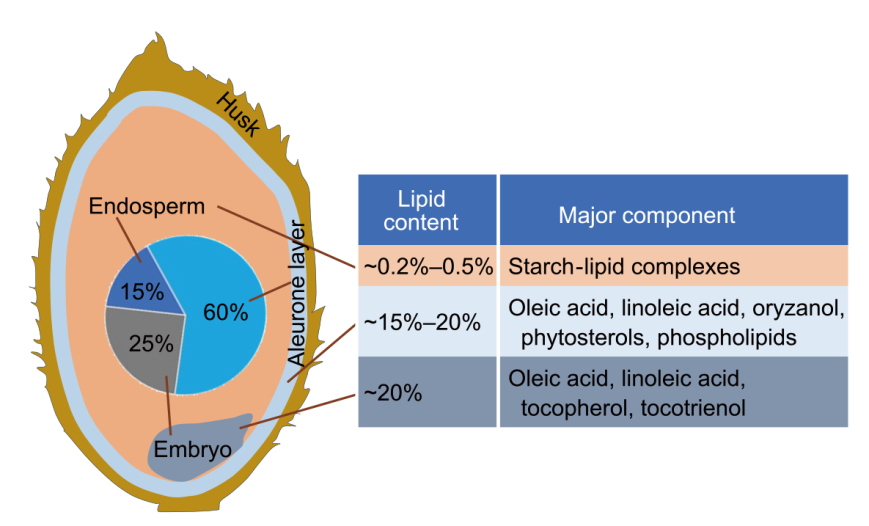
Fig. 1. Distribution and components of lipid in rice grains (Yoshida et al, 2010; Harakotr et al, 2019; Lee et al, 2020).
| Fatty acid/Nutraceutical lipid | Approximate content | Notable function | Reference |
|---|---|---|---|
| Palmitic acid (C16:0) | 20% | Main saturated fat in rice, influences cooking texture | Lee et al, |
| Stearic acid (C18:0) | 2%‒3% | Minor component, saturation level affects stability | Yoshida et al, |
| Oleic acid (C18:1) | 35%‒45% | Contributes to oxidative stability | Mai et al, |
| Linoleic acid (C18:2) | 30%‒40% | Essential fatty acid | Lee et al, |
| Linolenic acid (C18:3) | 1% | Omega-3 fatty acid in trace amounts that is prone to oxidation | Yoshida et al, |
| Tocopherol and tocotrienol | 5‒50 μg/g | Antioxidant activity; vitamin E potency | Zhang et al, |
| γ-Oryzanol | 50‒80 μg/g in pigmented rice; 8 μg/g in white rice | Antioxidant; cholesterol-lowering; contributes to bran oil stability | Lee et al, |
| Phytosterol | 100‒300 μg/g | Cholesterol-lowering effects; membrane components | Harakotr et al, |
| Squalene | 8‒78 μg/g | Antioxidant triterpene; precursor of sterols; contributes to oil nutraceutical value | Lee et al, |
Table 1. Composition of typical fatty acid and nutraceutical lipid in rice grains.
| Fatty acid/Nutraceutical lipid | Approximate content | Notable function | Reference |
|---|---|---|---|
| Palmitic acid (C16:0) | 20% | Main saturated fat in rice, influences cooking texture | Lee et al, |
| Stearic acid (C18:0) | 2%‒3% | Minor component, saturation level affects stability | Yoshida et al, |
| Oleic acid (C18:1) | 35%‒45% | Contributes to oxidative stability | Mai et al, |
| Linoleic acid (C18:2) | 30%‒40% | Essential fatty acid | Lee et al, |
| Linolenic acid (C18:3) | 1% | Omega-3 fatty acid in trace amounts that is prone to oxidation | Yoshida et al, |
| Tocopherol and tocotrienol | 5‒50 μg/g | Antioxidant activity; vitamin E potency | Zhang et al, |
| γ-Oryzanol | 50‒80 μg/g in pigmented rice; 8 μg/g in white rice | Antioxidant; cholesterol-lowering; contributes to bran oil stability | Lee et al, |
| Phytosterol | 100‒300 μg/g | Cholesterol-lowering effects; membrane components | Harakotr et al, |
| Squalene | 8‒78 μg/g | Antioxidant triterpene; precursor of sterols; contributes to oil nutraceutical value | Lee et al, |
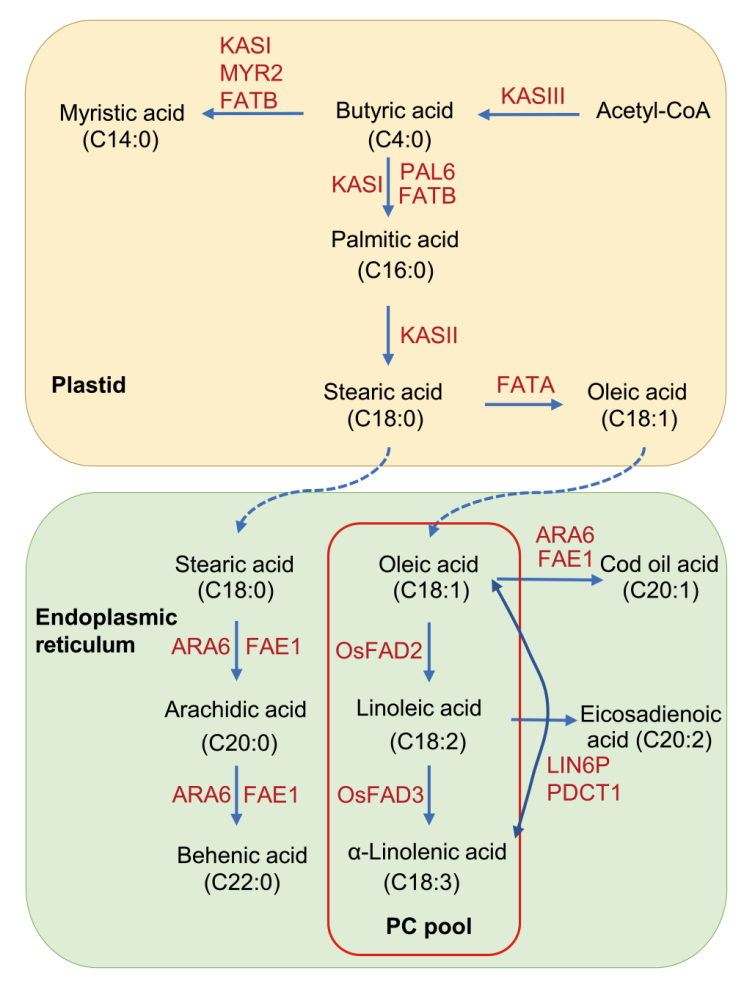
Fig. 2. Simplified oil synthesis pathway in rice grains (Zhou et al, 2021). KASI/II/III, Ketoacyl-ACP (acyl carrier protein) synthase I/II/III; MYR2, Myristoyl-ACP thioesterase 2; FATA/B, Fatty acyl-ACP thioesterase type A/B; PAL6, Fatty acyl-ACP thioesterase 6; ARA6, 3-Ketoacyl-CoA synthase 6; FAE1, Fatty acid elongase 1; FAD2/3, Fatty acid desaturase 2/3; PC, Phosphatidylcholine; PDCT1, Phosphatidyl-choline:diacylglycerol cholinephosphotransferase 1; LIN6, a PDCT.
| Gene | Function | Effect on grain quality | Reference |
|---|---|---|---|
| OsFAD2-1 | Fatty acid desaturase/oleoyl-CoA desaturase | Suppression produces high-oleic grains with improved oxidative stability | Zaplin et al, |
| OsLTPL36 | Lipid transport protein in developing seeds | Knockdown causes chalky endosperm, low grain oil, and reduced fat acid content | Wang et al, |
| OsLOX1/OsLOX3 | Lipoxygenase (oxidizing polyunsaturated fatty acids) | Knockouts eliminate lipoxygenase activity, greatly extending shelf life and preventing off-flavors in stored rice | Xu et al, |
| OsPLDα1 | Phospholipase D (membrane phospholipid breakdown) | Knockout accumulates lysophospholipids, resulting in softer, glossier cooked rice texture, and improved eating quality | Khan et al, |
| THICK ALEURONE 1 | Encodes a mitochondrion-targeted single- stranded DNA-binding protein | Increases number of aleurone cell layers and contents of nutritional factors (proteins, lipids, vitamins, dietary fibers, and micronutrients) | Li et al, |
| OsPAL6, OsMYR2, OsARA6 | OsPAL6 encodes fatty acyl-ACP thioesterase; OsMYR2 encodes myristoyl-ACP thioesterase; OsARA6 encodes 3-ketoacyl-CoA synthase | Contributes to natural variation in oil composition | Zhou et al, |
| OsLIN6 | Encodes phosphatidylcholine diacylglycerol cholinephosphotransferase | Knockout significantly increases oleic acid content and decreases linoleic acid content | Zhou et al, |
| OsWRI1 | Transcription factor regulating fatty acid synthesis | Overexpression doubles grain oil content but causes growth/yield penalty | Liu et al, |
| OsFAD3 | ω-3 Fatty acid desaturase (converts linoleic to α-linolenic) | Overexpression increases α-linolenic acid content in seeds | Chang et al, |
| OsDGAT1 | Diacylglycerol acyltransferase | Overexpression increases triacylglycerol content in seeds | Chang et al, |
| OsKASI-2 (KASII) | β-Ketoacyl-ACP synthase for fatty acid elongation | Mutation reduces unsaturated fatty acids and causes chilling sensitivity | Zhang et al, |
| OsACS6 | Encodes acyl-CoA synthetase | Enhances lysophospholipid content | Li et al, |
| OsMYB73 | MYB family transcription factor | Knockout leads to increased grain amylose and protein content, and decreased lipid content | Liu S et al, |
Table 2. Key genes affecting rice grain lipid metabolism and quality.
| Gene | Function | Effect on grain quality | Reference |
|---|---|---|---|
| OsFAD2-1 | Fatty acid desaturase/oleoyl-CoA desaturase | Suppression produces high-oleic grains with improved oxidative stability | Zaplin et al, |
| OsLTPL36 | Lipid transport protein in developing seeds | Knockdown causes chalky endosperm, low grain oil, and reduced fat acid content | Wang et al, |
| OsLOX1/OsLOX3 | Lipoxygenase (oxidizing polyunsaturated fatty acids) | Knockouts eliminate lipoxygenase activity, greatly extending shelf life and preventing off-flavors in stored rice | Xu et al, |
| OsPLDα1 | Phospholipase D (membrane phospholipid breakdown) | Knockout accumulates lysophospholipids, resulting in softer, glossier cooked rice texture, and improved eating quality | Khan et al, |
| THICK ALEURONE 1 | Encodes a mitochondrion-targeted single- stranded DNA-binding protein | Increases number of aleurone cell layers and contents of nutritional factors (proteins, lipids, vitamins, dietary fibers, and micronutrients) | Li et al, |
| OsPAL6, OsMYR2, OsARA6 | OsPAL6 encodes fatty acyl-ACP thioesterase; OsMYR2 encodes myristoyl-ACP thioesterase; OsARA6 encodes 3-ketoacyl-CoA synthase | Contributes to natural variation in oil composition | Zhou et al, |
| OsLIN6 | Encodes phosphatidylcholine diacylglycerol cholinephosphotransferase | Knockout significantly increases oleic acid content and decreases linoleic acid content | Zhou et al, |
| OsWRI1 | Transcription factor regulating fatty acid synthesis | Overexpression doubles grain oil content but causes growth/yield penalty | Liu et al, |
| OsFAD3 | ω-3 Fatty acid desaturase (converts linoleic to α-linolenic) | Overexpression increases α-linolenic acid content in seeds | Chang et al, |
| OsDGAT1 | Diacylglycerol acyltransferase | Overexpression increases triacylglycerol content in seeds | Chang et al, |
| OsKASI-2 (KASII) | β-Ketoacyl-ACP synthase for fatty acid elongation | Mutation reduces unsaturated fatty acids and causes chilling sensitivity | Zhang et al, |
| OsACS6 | Encodes acyl-CoA synthetase | Enhances lysophospholipid content | Li et al, |
| OsMYB73 | MYB family transcription factor | Knockout leads to increased grain amylose and protein content, and decreased lipid content | Liu S et al, |
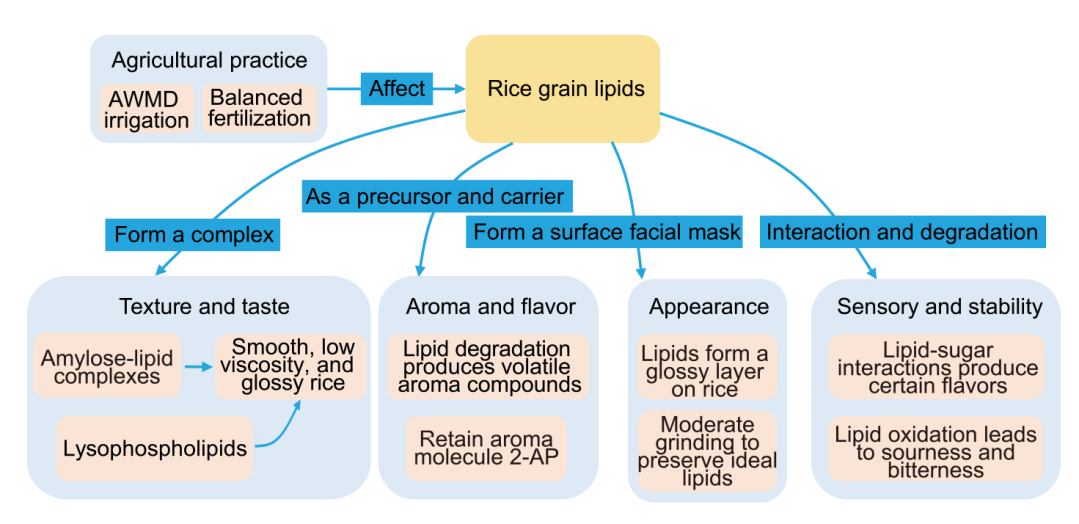
Fig. 3. Multifaceted roles of lipids in rice eating and cooking quality. AWMD, Alternate wetting and moderate drying; 2-AP, 2-Acetyl-1-pyrroline.
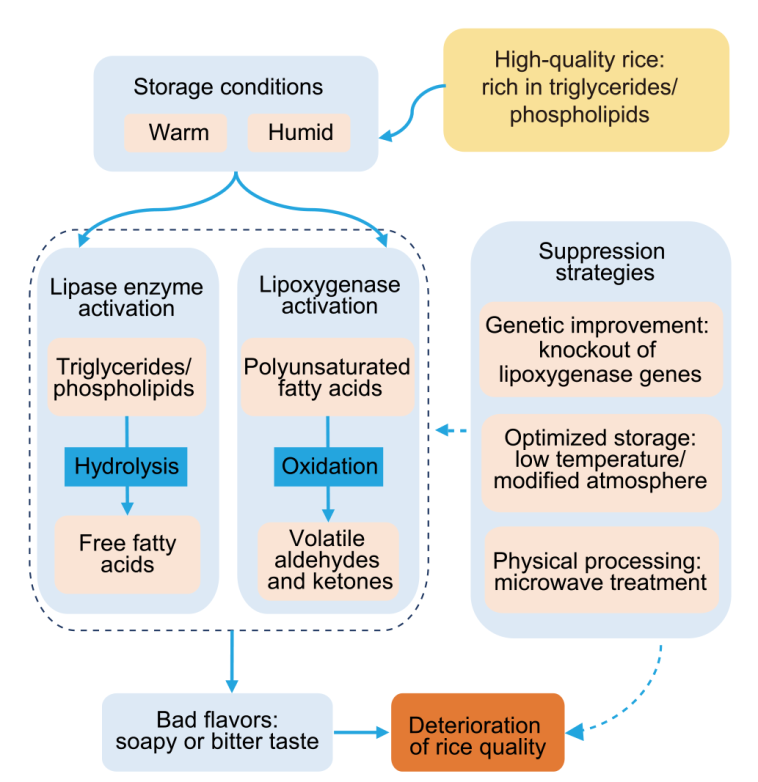
Fig. 4. Lipid metabolism drives rice quality deterioration during storage.
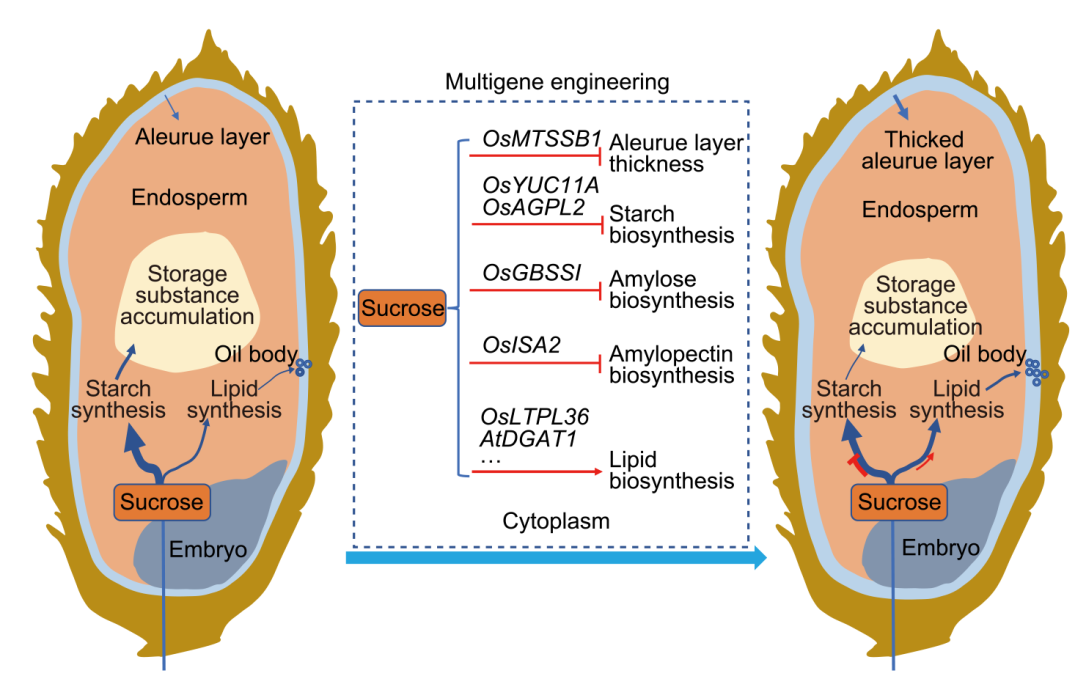
Fig. 5. Strategy to improve lipid content in rice grains.
| [1] | Bates P D, Stymne S, Ohlrogge J. 2013. Biochemical pathways in seed oil synthesis. Curr Opin Plant Biol, 16(3): 358-364. |
| [2] | Baud S, Lepiniec L. 2010. Physiological and developmental regulation of seed oil production. Prog Lipid Res, 49(3): 235-249. |
| [3] | Cai C X, Zhao Z S, Zhang Y Y, et al. 2022. Molecular hydrogen improves rice storage quality via alleviating lipid deterioration and maintaining nutritional values. Plants, 11(19): 2588. |
| [4] | Cai Y, Chen Z C, Liu J J, et al. 2025. Genetic improvement of eating and cooking quality of rice cultivars in southern China. Plant Biotechnol J, 23(2): 518-531. |
| [5] | Cai Y P, Pan X, Zhang D H, et al. 2024. The kinetic study of 2-acetyl-1-pyrroline accumulation in the model system: An insight into enhancing rice flavor through the Maillard reaction. Food Res Int, 191: 114591. |
| [6] | Cao R G, Wu X H D, Huang W. 2024. Effect of microwave treatment on the changes in lipids of rice during storage. Food Sci Nutr, 45(4): 247-256. |
| [7] | Chang L X, Liu Z C, Ying X P, et al. 2024. Molecular basis of lipid metabolism in Oryza sativa L. Plants, 13(23): 3263. |
| [8] | Chen G Y, Peng L G, Li C M, et al. 2023. Effects of the potassium application rate on lipid synthesis and eating quality of two rice cultivars. J Integr Agric, 22(7): 2025-2040. |
| [9] | Chen J, Cai H L, Zhang M N, et al. 2023. Effects of rice protein on the formation and structural properties of starch-lipid complexes in instant rice noodles incorporated with different fatty acids. Food Biosci, 54: 102851. |
| [10] | Chen T, Li H Y, Huang G W, et al. 2025. Study on stage quality discrimination during the rice mildew process based on multi-source flavor information fusion. Food Control, 175: 111294. |
| [11] | de Azevedo P A, de Lima Costa I H, da Fonseca Antunes B, et al. 2025. Artificial aging of rice (Oryza sativa L.): A review of emerging technologies to enhance and monitor the aging process. J Stored Prod Res, 113: 102676. |
| [12] | Dong X, Shao J, Wu X Y, et al. 2025a. Lipidomic profiling reveals the protective mechanism of nitrogen-controlled atmosphere on brown rice quality during storage. Food Chem, 473: 143081. |
| [13] | Dong X, Dong J L, Chen M Q, et al. 2025b. Dormancy-induced inhibition of lipid degradation enhances rice storage stability. Food Chem, 495: 146547. |
| [14] | Gao Y X, Zhang Y, Jin T. 2022. Effect of high-pressure CO2 injection on the physicochemical properties and lipoxygenase activity of extruded rice bran. Cereal Chem, 99(4): 947-957. |
| [15] | Grechkin A. 1998. Recent developments in biochemistry of the plant lipoxygenase pathway. Prog Lipid Res, 37(5): 317-352. |
| [16] | Gu Y, Tong C, Hu Y Q, et al. 2025. Starch lysophospholipids contents affect storage quality of paddy rice. Carbohydr Polym, 348: 122818. |
| [17] | Guan L N, Zhang M. 2022. Formation and release of cooked rice aroma. J Cereal Sci, 107: 103523. |
| [18] | Guo J, Zhou X Q, Chen D G, et al. 2024. Effect of fat content on rice taste quality through transcriptome analysis. Genes, 15(1): 81. |
| [19] | Harakotr B, Prompoh K, Boonyuen S, et al. 2019. Variability in nutraceutical lipid content of selected rice (Oryza sativa L. spp. indica) germplasms. Agronomy, 9(12): 823. |
| [20] | He X D, Yang F Y, Liu C N, et al. 2023. Influence mechanism of tempering for storage quality of dried rice based on the evaluation of physicochemical and sensory characteristics and mitochondrial function and structure. J Cereal Sci, 111: 103676. |
| [21] | He Y Y, Chen F L, Shi Y G, et al. 2021. Physico-chemical properties and structure of rice cultivars grown in Heilongjiang Province of China. Food Sci Hum Wellness, 10(1): 45-53. |
| [22] | Hu X Q, Fang C Y, Lu L, et al. 2023. Dynamic changes in volatiles, soluble sugars, and fatty acids in glutinous rice during cooking. Foods, 12(8): 1700. |
| [23] | Hu Z L, Li P, Zhou M Q, et al. 2004. Mapping of quantitative trait loci (QTLs) for rice protein and fat content using doubled haploid lines. Euphytica, 135(1): 47-54. |
| [24] | Huang J X, Cai M H, Long Q Z, et al. 2014. OsLOX2, a rice type I lipoxygenase, confers opposite effects on seed germination and longevity. Transgenic Res, 23(4): 643-655. |
| [25] | Jiang G, Lei X B, Lan Y, et al. 2016. Effect of lipid content on major qualities of japonica rice grains. J South China Agric Univ, 37(6): 98-104. (in Chinese with English abstract) |
| [26] | Khan M S S, Basnet R, Ahmed S, et al. 2020. Mutations of OsPLDa1 increase lysophospholipid content and enhance cooking and eating quality in rice. Plants, 9(3): 390. |
| [27] | Lee Y S, Kim K W, Park Y J. 2020. Genetic diversity of fatty acids, tocols, squalene, and phytosterols in grains of 157 rice cultivars bred in Korea. Plant Breed Biotechnol, 8(4): 341-353. |
| [28] | Li D Q, Wu X B, Wang H F, et al. 2021. Defective mitochondrial function by mutation in THICK ALEURONE 1 encoding a mitochondrion-targeted single-stranded DNA-binding protein leads to increased aleurone cell layers and improved nutrition in rice. Mol Plant, 14(8): 1343-1361. |
| [29] | Li K, Cheng Y, Yu J Y, et al. 2025. A long terminal repeat retrotransposon in the OsACS6 promoter enhances the epigenetic regulation of lysophospholipid contents in rice grains. Plant Commun, 6(8): 101375. |
| [30] | Li Y, Cao H W, Dong T T, et al. 2023. Phosphorylation of the LCB1 subunit of Arabidopsis serine palmitoyltransferase stimulates its activity and modulates sphingolipid biosynthesis. J Integr Plant Biol, 65(6): 1585-1601. |
| [31] | Liu H, Zhang H H, Yu Y T, et al. 2025. Protein aggregation behavior and structural characteristics in a lipoxygenase-linoleic acid-wheat gluten model system. Int J Biol Macromol, 294: 139524. |
| [32] | Liu J, Guo J, Ye C J, et al. 2025. Low temperature storage alleviates aging of paddy by reducing lipid degradation and peroxidation. Food Chem, 465: 142140. |
| [33] | Liu K Q, Tang Y H, Tang Y Y, et al. 2022. Ectopic expression of WRINKLED1 in rice improves lipid biosynthesis but retards plant growth and development. PLoS One, 17(8): e0267684. |
| [34] | Liu S, Wu J M, Mawia A M, et al. 2025. A novel transcription factor OsMYB73 affects grain size and chalkiness by regulating endosperm storage substances’ accumulation-mediated auxin biosynthesis signalling pathway in rice. Plant Biotechnol J, 23(4): 1021-1038. |
| [35] | Liu W J, Zeng J, Jiang G H, et al. 2009. QTLs identification of crude fat content in brown rice and its genetic basis analysis using DH and two backcross populations. Euphytica, 169(2): 197-205. |
| [36] | Liu X, Wang W F, Li Z, et al. 2024. Lipidomics analysis unveils the dynamic alterations of lipid degradation in rice bran during storage. Food Res Int, 184: 114243. |
| [37] | Liu X X, Li Z Y, Ying J Z, et al. 2024. Multi-gene engineering boosts oil content in rice grains. Plant Commun, 5(2): 100736. |
| [38] | Long Q Z, Zhang W W, Wang P, et al. 2013. Molecular genetic characterization of rice seed lipoxygenase 3 and assessment of its effects on seed longevity. J Plant Biol, 56(4): 232-242. |
| [39] | Long W H, Wang Y L, Zhu S S, et al. 2018. FLOURY SHRUNKEN ENDOSPERM1 connects phospholipid metabolism and amyloplast development in rice. Plant Physiol, 177(2): 698-712. |
| [40] | Mai T P N, Nguyen T T L, Tran T A N, et al. 2023. Natural variation in fatty acid composition of diverse Vietnamese rice germplasm. Vietnam J Biotechnol, 21: 141-153. |
| [41] | Mou C L, Chen Y P, Zhang P, et al. 2024. Prolongation of seed viability and grain quality in rice by editing OsLOX1 using CRISPR/Cas9. Mol Breed, 44(10): 72. |
| [42] | Nath L R, B Gowda S G, Gowda D, et al. 2026. Lipidomic profiling of 56 japonica rice cultivars and identification of novel fatty acid esters of hydroxy fatty acids. Food Res Int, 223: 117895. |
| [43] | Naveed A, Zubair M, Baig A, et al. 2023. Effect of storage on the nutritional and antioxidant properties of brown Basmati rice. Food Sci Nutr, 11(5): 2086-2098. |
| [44] | Peng L G, Chen G Y, Tu Y B, et al. 2022. Effects of phosphorus application rate on lipid synthesis and eating quality of two rice grains. Agriculture, 12(5): 667. |
| [45] | Photinam R, Moongngarm A. 2023. Effect of adding vegetable oils to starches from different botanical origins on physicochemical and digestive properties and amylose-lipid complex formation. J Food Sci Technol, 60(1): 393-403. |
| [46] | Priyanga D, Amudha K, Sakthivel N, et al. 2025. Functional and nutraceutical potential of Indian rice landraces: A comprehensive scientific review. Rice Sci, 32(6): 777-796. |
| [47] | Shen Y, An Z X, Huyan Z, et al. 2023. Lipid complexation reduces rice starch digestibility and boosts short-chain fatty acid production via gut microbiota. NPJ Sci Food, 7(1): 56. |
| [48] | Shen Y Y, Liu L L, Jiang L, et al. 2010. Identification of quantitative trait loci affecting grain fat content in rice (Oryza sativa L.). Cereal Chem, 87(2): 118-124. |
| [49] | Shi T, Dai T H, Zhang T, et al. 2025. NMR spectroscopy combined with chemometrics for quality assessment of common vegetable oils: A review. Trends Food Sci Technol, 157: 104889. |
| [50] | Shu J, Guo W D, Ren K Z, et al. 2025. Identification of rice taste quality markers using metabolomics techniques. Food Chem, 492: 145567. |
| [51] | Siloto R M P, Findlay K, Lopez-Villalobos A, et al. 2006. The accumulation of oleosins determines the size of seed oilbodies in Arabidopsis. Plant Cell, 18(8): 1961-1974. |
| [52] | Sinha K, Kaur R, Singh N, et al. 2020. Mobilization of storage lipid reserve and expression analysis of lipase and lipoxygenase genes in rice (Oryza sativa var. Pusa Basmati 1) bran during germination. Phytochemistry, 180: 112538. |
| [53] | Suh M C, Kim H U, Nakamura Y. 2022. Plant lipids: Trends and beyond. J Exp Bot, 73(9): 2715-2720. |
| [54] | Tan X Y, Wu F B, Guo Z B, et al. 2025. Amylose content controls the structures and digestibility of starch-lipid complexes during microwave postprocessing. Carbohydr Polym, 358: 123530. |
| [55] | Tian H R, Wang R X, Li J L, et al. 2024. Regulation of rice grain weight by fatty acid composition: Unveiling the mechanistic roles of OsLIN6 by OsARF12. J Agric Food Chem, 72(44): 24655-24667. |
| [56] | Tiozon R N, Lenaerts B, Kor S, et al. 2025. Low glycemic index rice: A healthier diet for countering diabetes epidemic in Asia. Trends Plant Sci, 30(6): 603-614. |
| [57] | Wang F X, Xu H B, Zhang L, et al. 2023. The lipoxygenase OsLOX10 affects seed longevity and resistance to saline-alkaline stress during rice seedlings. Plant Mol Biol, 111(4/5): 415-428. |
| [58] | Wang H L, Wan X Y, Bi J C, et al. 2006. Quantitative analysis of fat content in rice by near-infrared spectroscopy technique. Cereal Chem, 83(4): 402-406. |
| [59] | Wang L L, Chen Y M, Deng F, et al. 2025. A lipoxygenase gene modulates jasmonate biosynthesis to enhance blast resistance in rice. J Exp Bot, 76(17): 4999-5010. |
| [60] | Wang Q, Zhang D, Zhao L Y, et al. 2022. Metabolomic analysis reveals insights into deterioration of rice quality during storage. Foods, 11(12): 1729. |
| [61] | Wang S Y, Liu X X, Jin L, et al. 2024. Research progress on rice oil genetic improvement. J Zhejiang Univ: Agric Life Sci, 50(3): 329-338. (in Chinese with English abstract) |
| [62] | Wang X, Zhou W, Lu Z H, et al. 2015. A lipid transfer protein, OsLTPL36, is essential for seed development and seed quality in rice. Plant Sci, 239: 200-208. |
| [63] | Wang Y H, Wu C S, Liu G D, et al. 2025. Comparison of component and quality changes between soft rice and common rice during aging. Front Nutr, 12: 1656432. |
| [64] | Weng Y H, Wang Y W, Wang K W, et al. 2025. OsLOX1 positively regulates seed vigor and drought tolerance in rice. Plant Mol Biol, 115(1): 16. |
| [65] | Weselake R J, Taylor D C, Rahman M H, et al. 2009. Increasing the flow of carbon into seed oil. Biotechnol Adv, 27(6): 866-878. |
| [66] | Wu Y, Yuan J Q, Zhang C, et al. 2021. Effect of lipid content in japonica rice on starch thermodynamic properties and taste quality. J Chin Cereals Oils Assoc, 36(4): 1-7/29. (in Chinese with English abstract) |
| [67] | Wu Y Y, Chen Z H, Wang C, et al. 2025. Efficient breeding of high oleic rice cultivar by editing OsFAD2-1 via CRISPR/Cas9. J Integr Agric, 24(12): 4810-4814. |
| [68] | Xia D, Zhou H, Wang Y P, et al. 2022. qFC6, a major gene for crude fat content and quality in rice. Theor Appl Genet, 135(8): 2675-2685. |
| [69] | Xu F, Yoshida H, Chu C C, et al. 2025. Seed dormancy and germination in rice: Molecular regulatory mechanisms and breeding. Mol Plant, 18(6): 960-977. |
| [70] | Xu H B, Wei Y D, Zhu Y S, et al. 2015. Antisense suppression of LOX3 gene expression in rice endosperm enhances seed longevity. Plant Biotechnol J, 13(4): 526-539. |
| [71] | Xu Y J, Huang Y, Weng X L, et al. 2025a. Cooking and eating quality of rice as affected by nitrogen fertilizers and alternate wetting and moderate drying irrigation at panicle stage. Agric Water Manag, 318: 109715. |
| [72] | Xu Y J, Weng X L, Tang S P, et al. 2025b. Untargeted lipidomic analysis of milled rice under different alternate wetting and soil drying irrigation regimes. J Integr Agric, 24(9): 3351-3367. |
| [73] | Ying J Z, Shan J X, Gao J P, et al. 2012. Identification of quantitative trait loci for lipid metabolism in rice seeds. Mol Plant, 5(4): 865-875. |
| [74] | Yoon M R, Lee S C, Kang M Y. 2012. The lipid composition of rice cultivars with different eating qualities. J Korean Soc Appl Biol Chem, 55(2): 291-295. |
| [75] | Yoshida H, Tomiyama Y, Mizushina Y. 2010. Lipid components, fatty acids and triacylglycerol molecular species of black and red rices. Food Chem, 123(2): 210-215. |
| [76] | Yoshida H, Kuriyama I, Tomiyama-Sakamoto Y, et al. 2012. Profiles of lipid components, fatty acids and triacylglycerol molecular species in lipids of rice bran cultivars. Food Sci Technol Res, 18(2): 219-226. |
| [77] | Yoshihashi T, Huong N T T, Surojanametakul V, et al. 2005. Effect of storage conditions on 2-acetyl-1-pyrroline content in aromatic rice variety, Khao Dawk Mali 105. J Food Sci, 70(1): S34-S37. |
| [78] | Yoshimura Y, Zaima N. 2020. Application of mass spectrometry imaging for visualizing food components. Foods, 9(5): 575. |
| [79] | Yu P, Gao J D, Jia J T, et al. 2025. CRISPR/Cas9 editing of the OsLOX3 gene enhances rice grain weight and seed vigor. Agronomy, 15(9): 2112. |
| [80] | Yu Y H, Li G, Fan Y Y, et al. 2009. Genetic relationship between grain yield and the contents of protein and fat in a recombinant inbred population of rice. J Cereal Sci, 50(1): 121-125. |
| [81] | Zaplin E S, Liu Q, Li Z Y, et al. 2013. Production of high oleic rice grains by suppressing the expression of the OsFAD2-1 gene. Funct Plant Biol, 40(10): 996-1004. |
| [82] | Zhang C N, Xue W, Li T, et al. 2023. Understanding the relationship between the molecular structure and physicochemical properties of soft rice starch. Foods, 12(19): 3611. |
| [83] | Zhang D, Zhao L Y, Wang W J, et al. 2022. Lipidomics reveals the changes in non-starch and starch lipids of rice (Oryza sativa L.) during storage. J Food Compos Anal, 105: 104205. |
| [84] | Zhang L, Wang S Y, Bai B, et al. 2024. OsKASI-2 is required for the regulation of unsaturation levels of membrane lipids and chilling tolerance in rice. Plant Biotechnol J, 22(8): 2157-2172. |
| [85] | Zhao Q Y, Guo H, Hou D Z, et al. 2021. Influence of temperature on storage characteristics of different rice varieties. Cereal Chem, 98(4): 935-945. |
| [86] | Zhao Y N, Li L L, Li Y F, et al. 2025. Effect of low temperature and nitrogen modified atmosphere treatments on the storage of high moisture indica rice: Quality, microstructure, and metabolome characteristics. Foods, 14(7): 1262. |
| [87] | Zhou C G, Hu Y Q, Zhou Y J, et al. 2024. Air and argon cold plasma effects on lipolytic enzymes inactivation, physicochemical properties and volatile profiles of lightly-milled rice. Food Chem, 445: 138699. |
| [88] | Zhou H, Xia D, Li P B, et al. 2021. Genetic architecture and key genes controlling the diversity of oil composition in rice grains. Mol Plant, 14(3): 456-469. |
| [89] | Zhou T S, Yu D, Wu L B, et al. 2024. Seed storability in rice: Physiological foundations, molecular mechanisms, and applications in breeding. Rice Sci, 31(4): 401-416. |
| [90] | Zhou Z K, Wang X F, Si X, et al. 2015. The ageing mechanism of stored rice: A concept model from the past to the present. J Stored Prod Res, 64: 80-87. |
| [91] | Zhu L, Tian Y, Ling J G, et al. 2022. Effects of storage temperature on indica-Japonica hybrid rice metabolites, analyzed using liquid chromatography and mass spectrometry. Int J Mol Sci, 23(13): 7421. |
| [1] | Li Haifeng, Qin Hua. Molecular Mechanism in Regulation of Rice Tiller Development [J]. Rice Science, 2026, 33(4): 485-498. |
| [2] | Jiwoong Jung, Deok Hyun Seo, Youngdae Yoon, Geupil Jang. Chloroplast-Derived Reactive Oxygen Species Dynamics Mediate Jasmonic Acid-Induced Drought Tolerance in Rice [J]. Rice Science, 2026, 33(4): 531-544. |
| [3] | Gong Junyi, Zhang Xiaobo, Zhang Jianfu, Zeng Bo, Zhang Xiaoqing, Xu Xia, Cheng Benyi, Hou Yuxuan, Xia Junhui, Wu Jianli, Yang Shihua, Cheng Shihua, Han Bin, Xie Huaan. Three-Line Hybrid Rice in China: Fifty Years of Sustained Improvement in Yield, Quality, and Stress Resistance [J]. Rice Science, 2026, 33(4): 499-513. |
| [4] | Werner Nader, Deblina Sarkar, Melas Adoko, Saskia de Pee, Elise Ivarsen, Vitalii Shkliar, Sabine Meng Jensen, Johannes Hein. Stability of Vitamins and Minerals in Coated and Extruded Fortified Rice Kernels Stored under Real-Life Conditions over Two Years and Implications for Standards [J]. Rice Science, 2026, 33(4): 559-570. |
| [5] | Deng Bowen, Ying Yining, Pan Jianming, Zhang Tongrui, Xu Feifei, Bao Jinsong. Pyruvate Orthophosphate Dikinase B (PPDKB) Deficiency Impairs Starch Biosynthesis and Redirects Carbon Flux to Lipid and Amino Acid Synthesis in Rice [J]. Rice Science, 2026, 33(4): 514-530. |
| [6] | Zhang Ying, Shi Huanbin, Meng Shuai, Wen Hui, Chen Ya, Liu Li, Kou Yanjun. MoWhi2 Participates in Mitophagy and Pathogenesis by Modulating MoAti1 Protein Level in Magnaporthe Oryzae [J]. Rice Science, 2026, 33(4): 545-558. |
| [7] | Kieu Anh Thi Phan, Juho Lee, Cong Danh Nguyen, Sang-Kyu Lee. Molecular and Functional Insights into Sugar Transporters in Rice [J]. Rice Science, 2026, 33(3): 309-326. |
| [8] | Fan Honghuan, Song Jian, Tang Liqun, Wang Junmin, Sheng Zhonghua, Jiao Guiai, Tang Shaoqing, Hu Shikai, Hu Peisong. Advances in Rice Coleoptile Elongation: Implications for Direct-Seeded Rice Adaptation [J]. Rice Science, 2026, 33(3): 327-339. |
| [9] | Zakirullah Khan, Rahmatullah Jan, Saleem Asif, Hayati Aulia Maharani, Muhammad Farooq, Kyung-Min Kim. Advancing Rice Resilience to Heat Stress: Insights from CRISPR/Cas9 Genome Editing [J]. Rice Science, 2026, 33(3): 340-350. |
| [10] | Li Wei, Zhang Mengchen, Chen Xiaoyang, Li Yan, Xu Qun, Wang Shan, Feng Yue, Wei Xinghua, Yang Yaolong. Genetic Variation and Population Structure of Asian Cultivated Rice [J]. Rice Science, 2026, 33(3): 367-380. |
| [11] | Cai Xingjing, Cao Xi, Chen Xu, Yang Haidong, Jiang Wen, Jin Lei, Wang Zhiying, Jia Xiuqi, Zhou Yong, Gong Zhiyun. Function and Progress of Non-Histone Acetylation in Rice [J]. Rice Science, 2026, 33(2): 173-185. |
| [12] | Zhan Chengfang, Lu Xueli, Chen Yingtong, Li Shunyuan, Zhang Xiaoyan, Chen Siqi, Xie Huan, Jin Lei, Ding Lin, Ge Yi, Yang Ting, Dai Liping, Cao Junfeng, Wang Mengcen, Tang Zhengbin, Zeng Dali. Identification and Functional Characterization of TPL/TPR Genes in Rice Disease Resistance [J]. Rice Science, 2026, 33(2): 232-244. |
| [13] | Ye Miao, Mao Yuxin, Yuan Rong, Zhang Dehai, Zhang Zujian. Optimized Leaf Morphology and Delayed Senescence Boost Rice Yield via Enhanced Leaf and Canopy Photosynthesis [J]. Rice Science, 2026, 33(2): 245-259. |
| [14] | Zhang Xiaoli, Tao Wei, Tang Maoyan, Gao Guoqing, Chen Lei, Zhong Xiaoyuan, Lü Ronghua, Qin Dongming, Liang Tianfeng, Guo Hui. Regulatory Strategies for Alleviating Anaerobic and Submergence Stress in Rice [J]. Rice Science, 2026, 33(2): 186-202. |
| [15] | Ma Yangming, Wen Yanfang, Tie Xiana, Liu Ning, Shi Yuanqing, Liu Tao, Wang Zhonglin, Liu Ruhongji, Wang Cheng, Chen Zongkui, Yang Zhiyuan, Sun Yongjian, Ma Jun. Dynamic Changes in Ion Accumulation and Gene Expression Reveal Root-Specific Iron Uptake Strategies in Iron-Deficient Rice after Iron Supplementation [J]. Rice Science, 2026, 33(2): 260-276. |
| Viewed | ||||||
|
Full text |
|
|||||
|
Abstract |
|
|||||
