
Rice Science ›› 2026, Vol. 33 ›› Issue (4): 465-484.DOI: 10.1016/j.rsci.2026.04.005
• Reviews • Previous Articles Next Articles
Chu Qingnan1,2,#, Li Detian1,3,#, Feng Zhihang4, Wang Mengcen5, Sha Zhimin1( )
)
Received:2025-12-16
Accepted:2026-04-03
Online:2026-07-28
Published:2026-08-06
Contact:
SHA Zhimin (zhiminsha@sjtu.edu.cn)About author:#These authors contribute equally to this work
Chu Qingnan, Li Detian, Feng Zhihang, Wang Mengcen, Sha Zhimin. Breeding Rice to Recruit Diazotrophs: Plant Genetic Levers for Rhizosphere Nitrogen Fixation[J]. Rice Science, 2026, 33(4): 465-484.
Add to citation manager EndNote|Ris|BibTeX
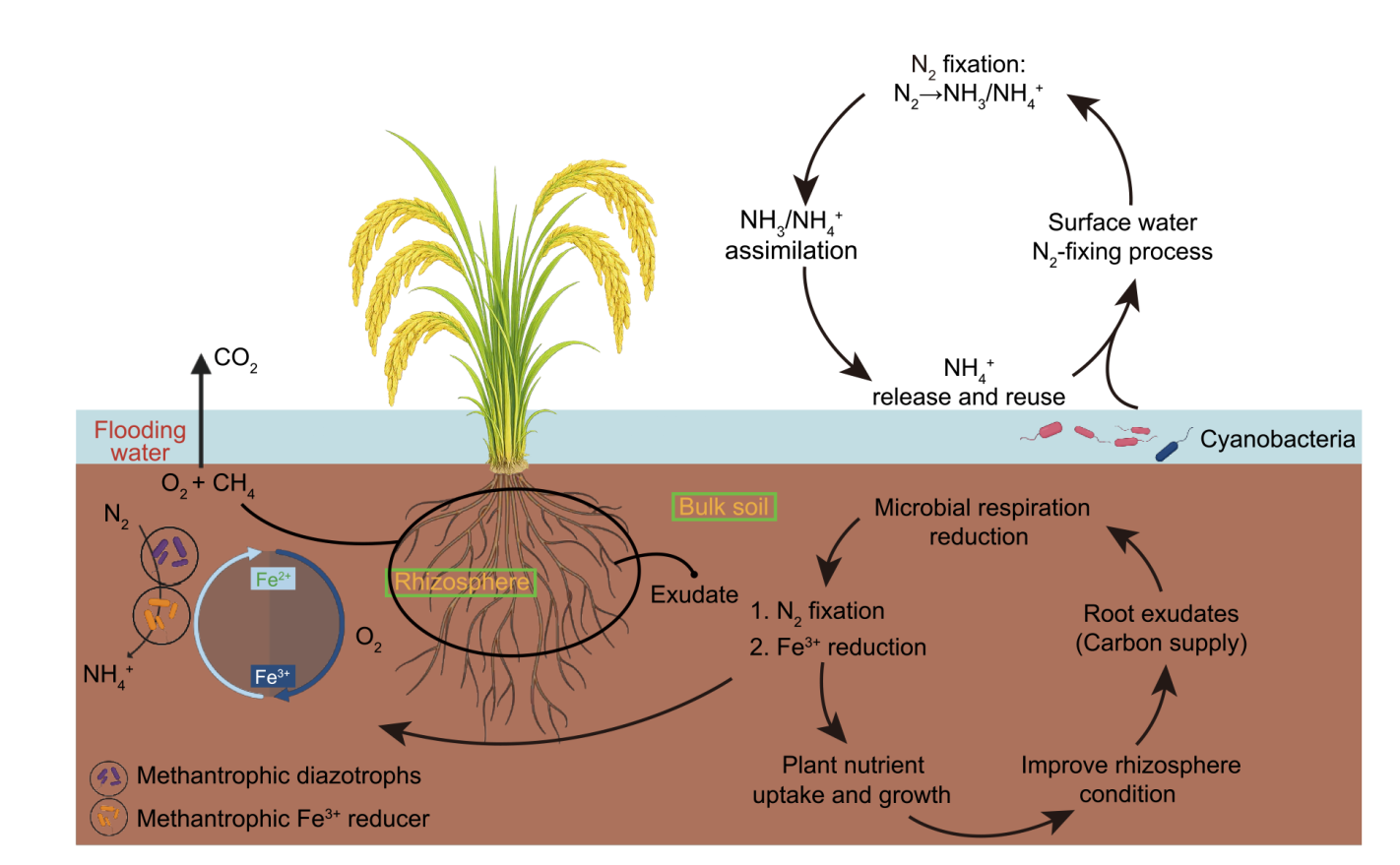
Fig. 1. Conceptual diagram illustrating structure and microbial processes of flooded rice paddy ecosystem. The figure shows the rice plant with axial and lateral roots extending through distinct soil layers, surface water, rhizosphere soil, and bulk anaerobic soil. Cyanobacteria in the surface water and diazotrophic iron (Fe)-reducing bacteria (IRB, e.g., Anaeromyxobacter, Geobacter) in the bulk soil fix atmospheric N2, contributing to biological nitrogen fixation under contrasting redox conditions. O2 released through root aerenchyma and carbon-rich exudates (e.g., sugars, flavonoids) shape rhizosphere microhabitats and drive coupled processes of N2 fixation and Fe3+ reduction. This schematic summarizes the spatial coupling of plant traits, soil microenvironments, and microbial functions that underpin associative N2 fixation in rice-paddy ecosystems.
| Class | Genus | Presumed importance | Distribution in paddy soil | Environmental preference | Reference |
|---|---|---|---|---|---|
| Cyanobacteria | Nostoc | High | Surface water and oxic topsoil layer (~5 cm) | Phototrophic, prefers oxic conditions, light availability, low nitrogen (N) input and enhanced by organic amendment | Wang et al, |
| Alphaproteobacteria | Bradyrhizobium | High | Rhizosphere and endosphere, occasionally in iron plaque (IP) | Associative, microaerophilic to anaerobic, labile carbon (C) from exudates; tolerance of low N but suppressed by high N | Saini et al, |
| Azospirillum | High | Rhizosphere hotspots, endophytic in roots | Microaerophilic, labile C from exudates, flooding, low N input and enhanced by organic amendment | Thomas et al, | |
| Gluconacetobacter | High | Rhizosphere and endosphere, microaerophilic | Labile C from root exudates, low N input, endophytic BNF, promotes biofilm formation and plant growth | Saini et al, | |
| Betaproteobacteria | Herbaspirillum | High | Rhizosphere and endosphere, root exudation hotspots | Anaerobic, labile C from exudates, flooding, low N input, immune-tolerant hosts enhance endophytic entry | Brusamarello-Santos et al, |
| Azoarcus | Medium | Endosphere and rhizosphere | Associative/endophytic, anaerobic microaerophilic, flooding, enhanced by plant geotope with high exudation | Dos Santos et al, | |
| Paraburkholderia/Burkholderia | Medium | Rhizosphere and bulk soil, occasionally in IP | Versatile, microaerophilic, high C, flooding, low-moderate N, some strains associative with roots | Dos Santos et al, | |
| Deltaproteobacteria | Geobacter | High | IP and anoxic bulk soil, plaque-associated biofilms | Anaerobic, organic C electron donors, competes with methanogens, boosted by iron additions and low N | Ding et al, |
| Myxococcia | Anaeromyxobacter | Medium | Strict anaerobic, requires Fe3+ (e.g., ferrihydrite) | IP interfaces and anoxic rhizosphere, enriched in deeper soil layers and plaque microsites | Ding et al, |
| Firmicutes | Clostridium | Medium | Strict anaerobic, suppressed by high N or O2 | Anoxic bulk soil and deeper layers, less in rhizosphere or surface, occasionally in reduced microsites | Ahmed et al, |
Table 1. Key diazotroph genera, distribution, and environmental preferences in rice paddy soils.
| Class | Genus | Presumed importance | Distribution in paddy soil | Environmental preference | Reference |
|---|---|---|---|---|---|
| Cyanobacteria | Nostoc | High | Surface water and oxic topsoil layer (~5 cm) | Phototrophic, prefers oxic conditions, light availability, low nitrogen (N) input and enhanced by organic amendment | Wang et al, |
| Alphaproteobacteria | Bradyrhizobium | High | Rhizosphere and endosphere, occasionally in iron plaque (IP) | Associative, microaerophilic to anaerobic, labile carbon (C) from exudates; tolerance of low N but suppressed by high N | Saini et al, |
| Azospirillum | High | Rhizosphere hotspots, endophytic in roots | Microaerophilic, labile C from exudates, flooding, low N input and enhanced by organic amendment | Thomas et al, | |
| Gluconacetobacter | High | Rhizosphere and endosphere, microaerophilic | Labile C from root exudates, low N input, endophytic BNF, promotes biofilm formation and plant growth | Saini et al, | |
| Betaproteobacteria | Herbaspirillum | High | Rhizosphere and endosphere, root exudation hotspots | Anaerobic, labile C from exudates, flooding, low N input, immune-tolerant hosts enhance endophytic entry | Brusamarello-Santos et al, |
| Azoarcus | Medium | Endosphere and rhizosphere | Associative/endophytic, anaerobic microaerophilic, flooding, enhanced by plant geotope with high exudation | Dos Santos et al, | |
| Paraburkholderia/Burkholderia | Medium | Rhizosphere and bulk soil, occasionally in IP | Versatile, microaerophilic, high C, flooding, low-moderate N, some strains associative with roots | Dos Santos et al, | |
| Deltaproteobacteria | Geobacter | High | IP and anoxic bulk soil, plaque-associated biofilms | Anaerobic, organic C electron donors, competes with methanogens, boosted by iron additions and low N | Ding et al, |
| Myxococcia | Anaeromyxobacter | Medium | Strict anaerobic, requires Fe3+ (e.g., ferrihydrite) | IP interfaces and anoxic rhizosphere, enriched in deeper soil layers and plaque microsites | Ding et al, |
| Firmicutes | Clostridium | Medium | Strict anaerobic, suppressed by high N or O2 | Anoxic bulk soil and deeper layers, less in rhizosphere or surface, occasionally in reduced microsites | Ahmed et al, |
| Method | Directly measure item | Strength | Main limitation/bias | Best use-case |
|---|---|---|---|---|
| 15N (nitrogen) isotope dilution | Estimated fraction of plant/soil N derived from fixation under labelled-fertilizer conditions | Field-relevant, links to plant N pools | Requires suitable non-fixing reference and assumptions about comparable N uptake and label uniformity | Quantifying N contribution across treatments/sites |
| 15N2 incorporation | Direct incorporation of labelled N2 into biomass (microbial and/or plant pools) | Strong evidence for fixation, can be paired with stable isotope probing to identify active taxa | Low-throughput, enclosure artifacts, technical complexity/cost | Mechanistic confirmation, benchmarking key genotypes |
| Natural-abundance 15N | Integrated isotopic signal over time (often subtle in cereal systems) | Non-invasive, field-friendly | Low sensitivity, baseline and fractionation uncertainty | Long-term/large-scale surveys with strong controls |
| Acetylene reduction assay | Nitrogenase activity potential under assay conditions | Fast, inexpensive, scalable | Conversion to N fixed uncertain, sensitive to assay conditions, does not directly quantify plant N gain | Screening and treatment comparisons within a standardized protocol |
| nifH qPCR/nifH amplicon sequencing | Diazotroph abundance/ composition (potential) | High-throughput, sensitive, community tracking | Potential ≠ flux, primer/gene-copy biases, presence does not guarantee activity | Community shifts, early-stage ranking of genotypes/treatments |
| Metagenomics | Functional gene repertoire (capacity) | Broad functional context, hypothesis generation | Cost, capacity not rate, bioinformatic complexity | Trait-microbiome links, candidate pathway discovery |
| Metatranscriptomics/ nifH expression | Functional activity proxy (transcriptional engagement) | Captures responses to genotype/ environment | Expression not always proportional to flux, sampling time sensitivity, cost | Mechanistic studies paired with isotope/activity validation |
| Stable isotope probing (DNA/RNA-stable isotope probing with 15N2) | Identifies taxa actively incorporating labelled N during fixation | Links function to specific organisms in situ | Technical complexity, low-throughput, enclosure artifacts possible | Attribution of active diazotrophs and niches, validating mechanistic hypotheses |
Table 2. Comparative summary of methods used in quantifying rice biological nitrogen fixation and diazotroph studies.
| Method | Directly measure item | Strength | Main limitation/bias | Best use-case |
|---|---|---|---|---|
| 15N (nitrogen) isotope dilution | Estimated fraction of plant/soil N derived from fixation under labelled-fertilizer conditions | Field-relevant, links to plant N pools | Requires suitable non-fixing reference and assumptions about comparable N uptake and label uniformity | Quantifying N contribution across treatments/sites |
| 15N2 incorporation | Direct incorporation of labelled N2 into biomass (microbial and/or plant pools) | Strong evidence for fixation, can be paired with stable isotope probing to identify active taxa | Low-throughput, enclosure artifacts, technical complexity/cost | Mechanistic confirmation, benchmarking key genotypes |
| Natural-abundance 15N | Integrated isotopic signal over time (often subtle in cereal systems) | Non-invasive, field-friendly | Low sensitivity, baseline and fractionation uncertainty | Long-term/large-scale surveys with strong controls |
| Acetylene reduction assay | Nitrogenase activity potential under assay conditions | Fast, inexpensive, scalable | Conversion to N fixed uncertain, sensitive to assay conditions, does not directly quantify plant N gain | Screening and treatment comparisons within a standardized protocol |
| nifH qPCR/nifH amplicon sequencing | Diazotroph abundance/ composition (potential) | High-throughput, sensitive, community tracking | Potential ≠ flux, primer/gene-copy biases, presence does not guarantee activity | Community shifts, early-stage ranking of genotypes/treatments |
| Metagenomics | Functional gene repertoire (capacity) | Broad functional context, hypothesis generation | Cost, capacity not rate, bioinformatic complexity | Trait-microbiome links, candidate pathway discovery |
| Metatranscriptomics/ nifH expression | Functional activity proxy (transcriptional engagement) | Captures responses to genotype/ environment | Expression not always proportional to flux, sampling time sensitivity, cost | Mechanistic studies paired with isotope/activity validation |
| Stable isotope probing (DNA/RNA-stable isotope probing with 15N2) | Identifies taxa actively incorporating labelled N during fixation | Links function to specific organisms in situ | Technical complexity, low-throughput, enclosure artifacts possible | Attribution of active diazotrophs and niches, validating mechanistic hypotheses |
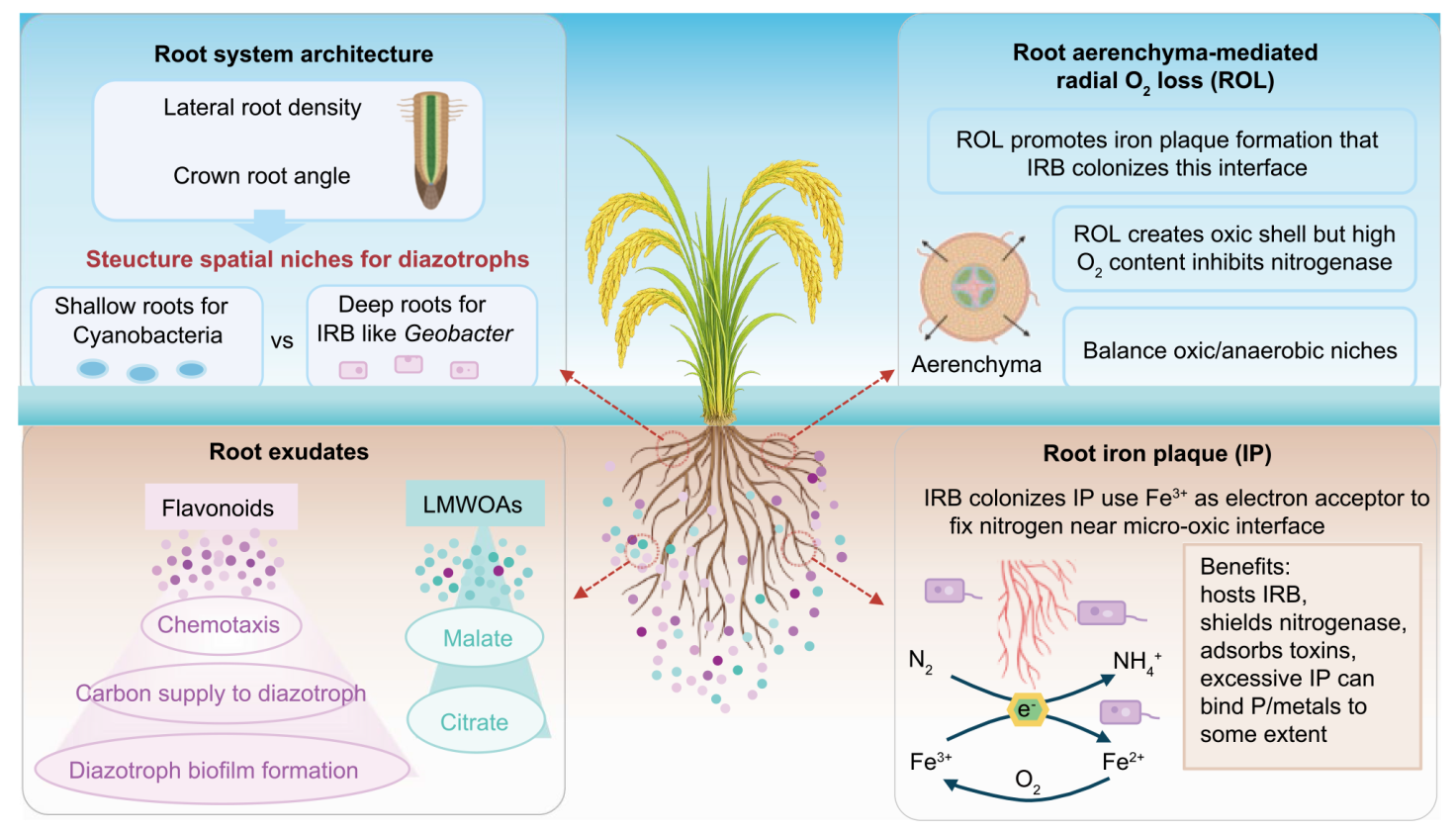
Fig. 2. Four genetic ‘levers’ of plants that help rice recruit diazotrophs, shaping activity of N2-fixers in flooded paddies. Root system architecture (depth, angle, lateral density) that places carbon where microbes forage. Root exudates (e.g., flavonoids, sugars, LMWOAs) that attract and feed diazotrophs. Aerenchyma-mediated radial O2 loss that sculpts oxic-anoxic microsites along roots. Iron plaque on root surfaces that provides Fe3+ for IRB and a catalytic oxic-anoxic interface supporting biological nitrogen fixation. Together, these levers determine where and which diazotrophs thrive around rice roots. IRB, Iron-reducing bacterium; LMWOAs, Low-molecular-weight organic acids.
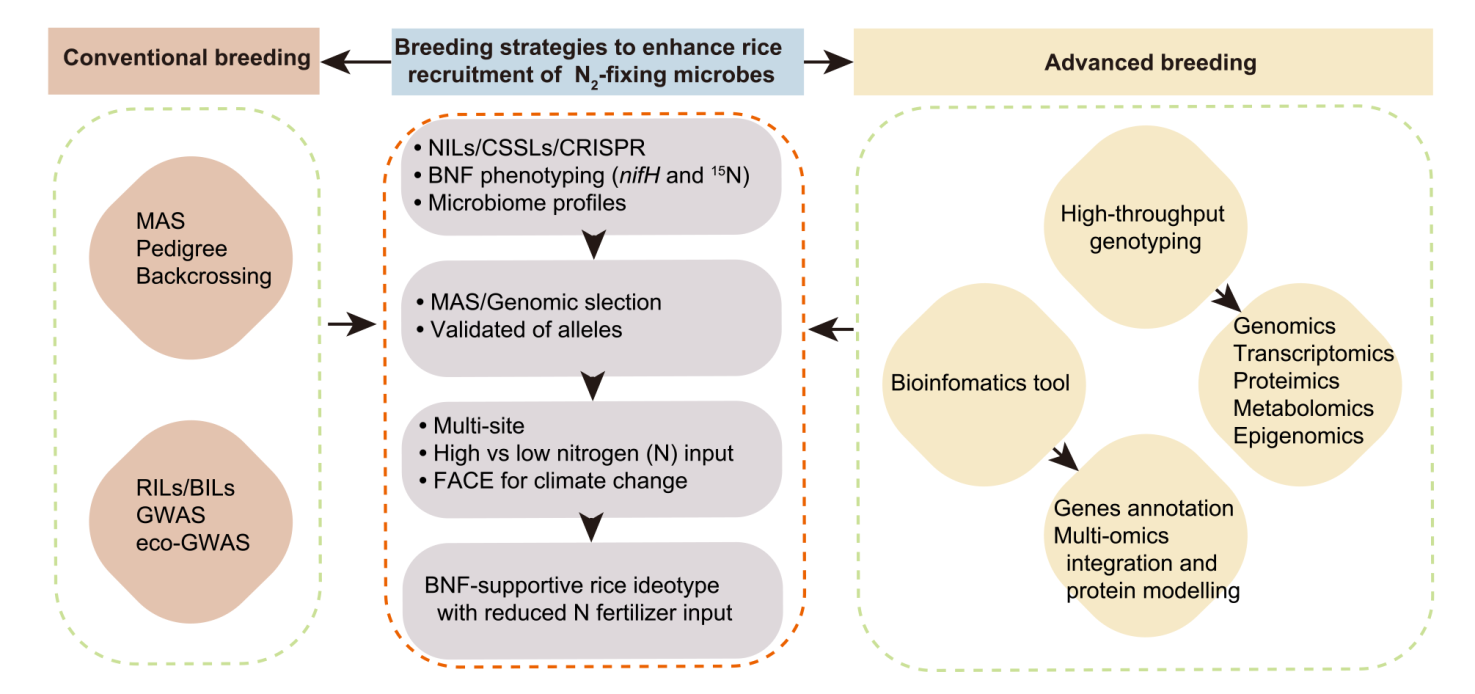
Fig. 3. Workflow for breeding and validating biological nitrogen fixation-supportive rice. The figure summarizes the stepwise pipeline (trait/locus discovery, validation, multi-environment test, and deployment) and is intended as a navigational schematic that visualizes the text rather than a comparison of measurement methods. BILs, Backcross inbred lines; BNF, Biological nitrogen fixation; CSSLs, Chromosome segment substitution lines; GWAS, Genome-wide association study; eco-GWAS, Ecological GWAS; FACE, Free air CO2 enrichment; MAS, Marker-assisted selection; NILs, Near-isogenic lines; RILs, Recombinant inbred lines.
| Gene | Known/proposed function | Effect on diazotroph recruitment | Reference |
|---|---|---|---|
| DRO1 | Influence root gravitropic angle | Promote deeper rooting and extend rhizosphere into anaerobic layers to support anaerobic diazotrophs like iron-reducing bacterium (IRB) | Kitomi et al, |
| OsMADS50 | MADS-box transcription factor | Suppress crown root growth when overexpressed, and may influence root architecture to enhance surface area for IRB interaction and nutrient absorption | Lin et al, |
| ARF16 | Auxin response factor regulating root hair development | Suppress root hair elongation. Reduced activity could increase root hairs, providing more attachment sites for diazotroph biofilms | Gao et al, |
| FLR7 | Receptor-like kinase regulating radial O2 loss | Alter O2 leakage patterns, enrich anaerobic diazotrophs such as Anaeromyxobacter, and improve submergence tolerance and biological nitrogen fixation (BNF) under flooded conditions | Liu et al, |
| FLS | Flavonol synthase involved in flavonoid biosynthesis | Increase flavonoid exudation, attracting and signaling diazotrophs, linked to higher IRB abundance | Lu and Zhu et al, |
| CYP75B3/ CYP75B4 | Flavonoid 3’-hydroxylase genes in flavonoid biosynthesis pathway | Disruption diverts pathway to increase apigenin and luteolin production, enhance biofilm formation and nitrogenase activity in diazotrophs like Gluconacetobacter | Yan et al, |
| GS3 (gs3) | G-protein γ subunit 3; pleiotropic effects on development of roots | Field multi-omics evidence links a gs3 loss-of-function allele to enrichment of BNF genes (nifH, nifD, and nifK) in the rhizosphere microbiome under low-N conditions | Kwon et al, |
| AMT1.1/ AMT1.2 | Ammonium uptake coupling | High-affinity ammonium uptake allows host to capture fixed N and support partnership, and indirectly stabilizes diazotroph association | Li et al, |
| OsFRO2 | Ferric reductase involved in iron homeostasis | Promote iron plaque formation by supplying Fe2+, provide a scaffold for IRB, and enhance BNF at the root-soil interface | Paul et al, |
| NRT1.1B | Nitrate transporter influencing nitrogen (N) uptake and signaling | Natural allelic variation affects N use efficiency and is associated with distinct root microbiome profiles in field-grown rice | Lu and Zhu, |
Table 3. Genes of rice plants identified throughout literature directly or potentially influencing diazotroph enrichment in rice rhizosphere.
| Gene | Known/proposed function | Effect on diazotroph recruitment | Reference |
|---|---|---|---|
| DRO1 | Influence root gravitropic angle | Promote deeper rooting and extend rhizosphere into anaerobic layers to support anaerobic diazotrophs like iron-reducing bacterium (IRB) | Kitomi et al, |
| OsMADS50 | MADS-box transcription factor | Suppress crown root growth when overexpressed, and may influence root architecture to enhance surface area for IRB interaction and nutrient absorption | Lin et al, |
| ARF16 | Auxin response factor regulating root hair development | Suppress root hair elongation. Reduced activity could increase root hairs, providing more attachment sites for diazotroph biofilms | Gao et al, |
| FLR7 | Receptor-like kinase regulating radial O2 loss | Alter O2 leakage patterns, enrich anaerobic diazotrophs such as Anaeromyxobacter, and improve submergence tolerance and biological nitrogen fixation (BNF) under flooded conditions | Liu et al, |
| FLS | Flavonol synthase involved in flavonoid biosynthesis | Increase flavonoid exudation, attracting and signaling diazotrophs, linked to higher IRB abundance | Lu and Zhu et al, |
| CYP75B3/ CYP75B4 | Flavonoid 3’-hydroxylase genes in flavonoid biosynthesis pathway | Disruption diverts pathway to increase apigenin and luteolin production, enhance biofilm formation and nitrogenase activity in diazotrophs like Gluconacetobacter | Yan et al, |
| GS3 (gs3) | G-protein γ subunit 3; pleiotropic effects on development of roots | Field multi-omics evidence links a gs3 loss-of-function allele to enrichment of BNF genes (nifH, nifD, and nifK) in the rhizosphere microbiome under low-N conditions | Kwon et al, |
| AMT1.1/ AMT1.2 | Ammonium uptake coupling | High-affinity ammonium uptake allows host to capture fixed N and support partnership, and indirectly stabilizes diazotroph association | Li et al, |
| OsFRO2 | Ferric reductase involved in iron homeostasis | Promote iron plaque formation by supplying Fe2+, provide a scaffold for IRB, and enhance BNF at the root-soil interface | Paul et al, |
| NRT1.1B | Nitrate transporter influencing nitrogen (N) uptake and signaling | Natural allelic variation affects N use efficiency and is associated with distinct root microbiome profiles in field-grown rice | Lu and Zhu, |
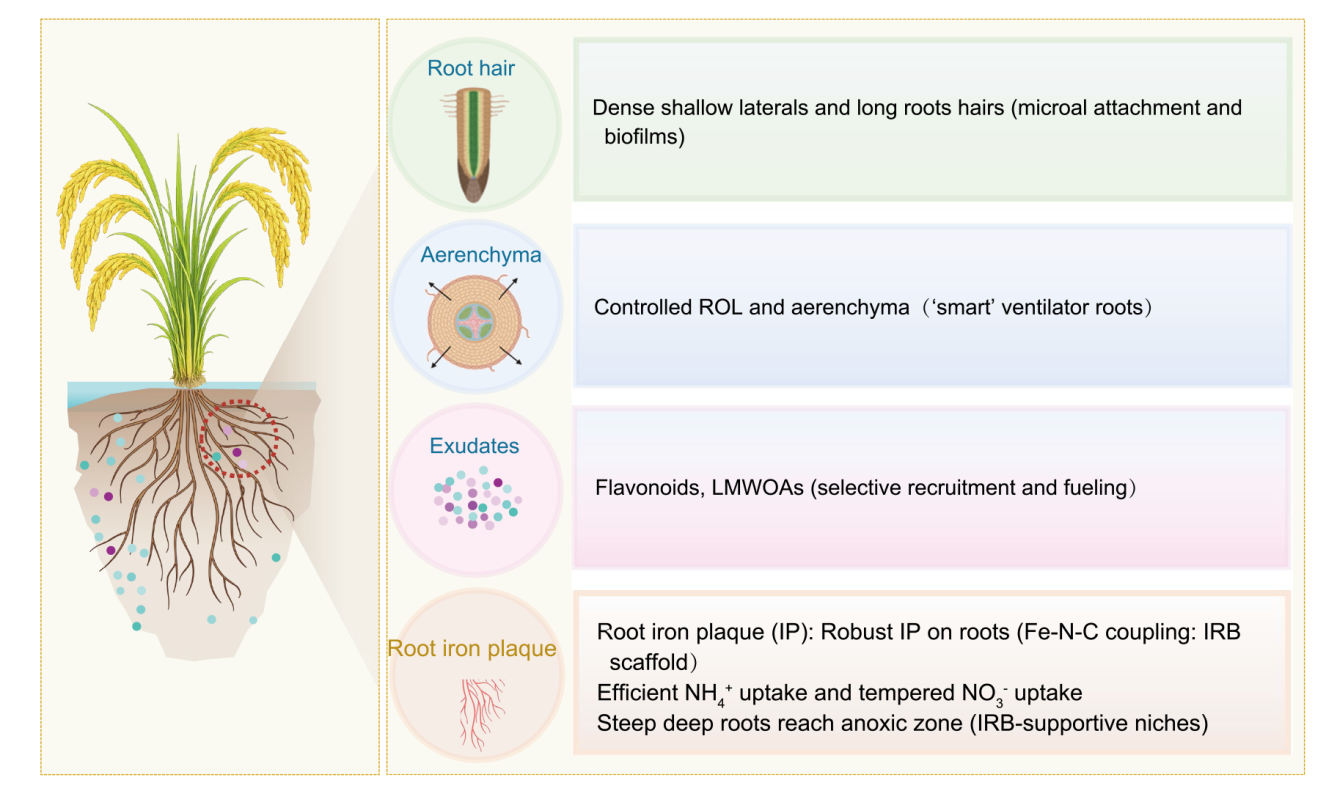
Fig. 4. Ideotype for biological nitrogen fixation (BNF)-supportive rice. A rice plant with dual root architecture, deep, steep roots plus dense shallow laterals and long root hairs, to increase root-soil contact across reduced (generally anoxic) soil volumes below the thin oxic surface layer; controlled aerenchyma/ROL and iron plaque to generate oxic-anoxic interfaces for IRB; exudate signals (flavonoids; measured LMWOAs) to recruit/energize diazotrophs; and root IP to improve the Fe-N-C cycling and provide IRB-supportive niches. IRB, Iron-reducing bacterium; LMWOAs, Low-molecular-weight organic acids; ROL, Radial oxygen loss.
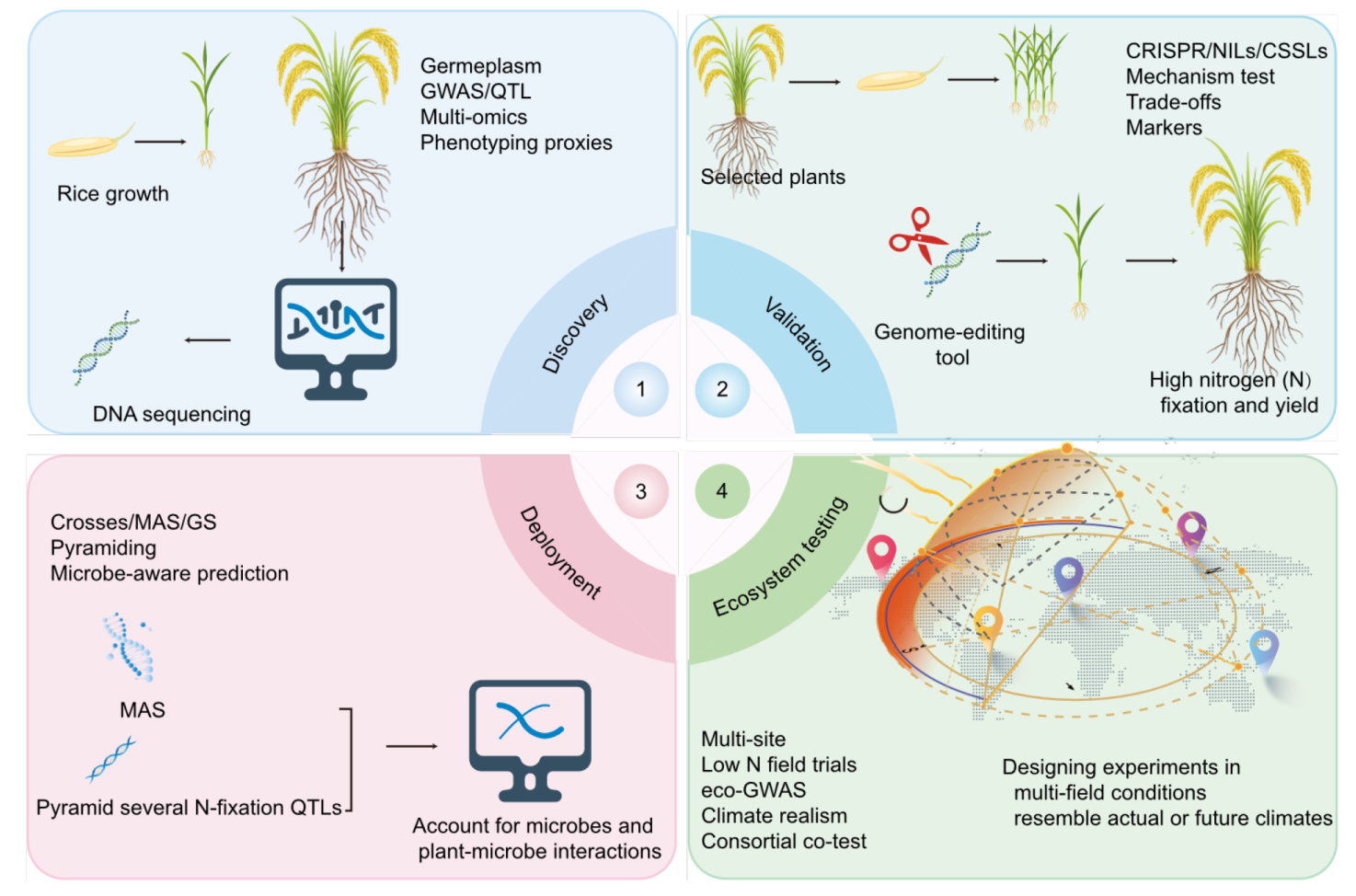
Fig. 5. A tiered breeding pipeline to enhance rice recruitment of N2-fixing microbiome. The pipeline links discovery to deployment: (1) Discovery. GWAS/QTL, wild introgressions, and multi-omics to find loci/alleles associated with diazotroph recruitment and BNF (e.g., flavonoids, root architectures, O2-leakage regulators); (2) Validation. CRISPR/Cas edits, NILs/CSSLs, transcriptomics, and phenotyping (e.g. nifH, 15N2, exudate profiles) across environments to prove causality; (3) Deployment. MAS and GS to pyramid validated alleles into elite backgrounds and hybrids while safeguarding yield/quality; (4) Ecosystem testing. Multi-site, low-N field trials (optionally with inoculants) to quantify fertilizer replacement, stability across soils/climates, and compatibility with agronomy. BNF, Biological nitrogen fixation; CSSLs, Chromosome segment substitution lines; GWAS, Genome-wide association study; eco-GWAS, Ecological GWAS; GS, Genomic selection; MAS, Marker-assisted selection; NILs, Near-isogenic lines.
| [1] | Adeniji A, Fadiji A E, Ofoe S T. 2025. Redefining root exudation with proteins at the forefront of rhizosphere function. J Agric Food Chem, 73(28): 17387-17402. |
| [2] | Ahmed N, Ishfaq M, Ali G. 2023. Genetic engineering for enhanced biological nitrogen fixation in cereal crops. Trends Biotechnol, 41(4): 473-475. |
| [3] | Ajmera I, Henry A, Radanielson A M, et al. 2022. Integrated root phenotypes for improved rice performance under low nitrogen availability. Plant Cell Environ, 45(3): 805-822. |
| [4] | Ali M L, Sanchez P L, Yu S B, et al. 2010. Chromosome segment substitution lines: A powerful tool for the introgression of valuable genes from Oryza wild species into cultivated rice (O. sativa). Rice, 3(4): 218-234. |
| [5] | Armstrong W. 1964. Oxygen diffusion from the roots of some British bog plants. Nature, 204: 801-802. |
| [6] | Bao Z H, Sasaki K, Okubo T, et al. 2013. Impact of Azospirillum sp. B510 inoculation on rice-associated bacterial communities in a paddy field. Microbes Environ, 28(4): 487-490. |
| [7] | Bianco C, Andreozzi A, Romano S, et al. 2021. Endophytes from African rice (Oryza glaberrima L.) efficiently colonize Asian rice (Oryza sativa L.) stimulating the activity of its antioxidant enzymes and increasing the content of nitrogen, carbon, and chlorophyll. Microorganisms, 9(8): 1714. |
| [8] | Boyle J A, Simonsen A K, Frederickson M E, et al. 2021. Priority effects alter interaction outcomes in a legume-rhizobium mutualism. Proc Biol Sci, 288: 20202753. |
| [9] | Brusamarello-Santos L C C, Alberton D, Valdameri G, et al. 2019. Modulation of defence and iron homeostasis genes in rice roots by the diazotrophic endophyte Herbaspirillum seropedicae. Sci Rep, 9(1): 10573. |
| [10] | Cao W W, Cai Y F, Bao Z H, et al. 2022. Methanotrophy alleviates nitrogen constraint of carbon turnover by rice root-associated microbiomes. Front Microbiol, 13: 885087. |
| [11] | Chakraborty D, Ladha J K, Das B, et al. 2025. Global insights into nitrogen losses and efficiency in rice, wheat, and maize cultivation. Field Crops Res, 334: 110138. |
| [12] | Chan S C, Dykes E G, Hoover L R, et al. 2023. Gallionellaceae in rice root plaque: Metabolic roles in iron oxidation, nutrient cycling, and plant interactions. Appl Environ Microbiol, 89: e00570-23. |
| [13] | Chang J J, Costa O Y A, Sun Y, et al. 2025. Domesticated rice alters the rhizosphere microbiome, reducing nitrogen fixation and increasing nitrous oxide emissions. Nat Commun, 16(1): 2038. |
| [14] | Chen K, Li N, Zhang S Y, et al. 2022. Biochar-induced changes in the soil diazotroph community abundance and structure in a peanut field trial. Biochar, 4(1): 26. |
| [15] | Chen M Y, Feng S Z, Lv H, et al. 2024. OsCIPK2 mediated rice root microorganisms and metabolites to improve plant nitrogen uptake. BMC Plant Biol, 24(1): 285. |
| [16] | Chen X, Marszałkowska M, Reinhold-Hurek B. 2020. Jasmonic acid, not salicyclic acid restricts endophytic root colonization of rice. Front Plant Sci, 10: 1758. |
| [17] | Chen Z, Zhu Y G, Liu W J, et al. 2005. Direct evidence showing the effect of root surface iron plaque on arsenite and arsenate uptake into rice (Oryza sativa) roots. New Phytol, 165(1): 91-97. |
| [18] | Choudhury A T M A, Kennedy I R. 2004. Prospects and potentials for systems of biological nitrogen fixation in sustainable rice production. Biol Fertil Soils, 39(4): 219-227. |
| [19] | Chu Q N, Sha Z M, Nakamura T, et al. 2016. Differential responses of soybean and sorghum growth, nitrogen uptake, and microbial metabolism in the rhizosphere to cattle manure application: A rhizobox study. J Agric Food Chem, 64(43): 8084-8094. |
| [20] | Chu Q N, Sha Z M, Maruyama H, et al. 2019. Metabolic reprogramming in nodules, roots, and leaves of symbiotic soybean in response to iron deficiency. Plant Cell Environ, 42(11): 3027-3043. |
| [21] | Chu Q N, Xue L H, Cheng Y Q, et al. 2020. Microalgae-derived hydrochar application on rice paddy soil: Higher rice yield but increased gaseous nitrogen loss. Sci Total Environ, 717: 137127. |
| [22] | Chu Q N, Sha Z M, Li D T, et al. 2023a. Oxygen nanobubble-loaded biochars mitigate copper transfer from copper-contaminated soil to rice and improve rice growth. ACS Sustain Chem Eng, 11(13): 5032-5044. |
| [23] | Chu Q N, Xing Y, He W T, et al. 2023b. Modeling ammonia emissions and abatement potential from the rice-wheat rotation fields using the calibrated DNDC model: A case study in Shanghai, China. Atmos Environ, 305: 119782. |
| [24] | Chu Q N, Liu X Y, Li D T, et al. 2025. Interfacial oxygen nanobubble for mitigating the methane emissions from aquatic ecosystems: A review. Resour Environ Sustain, 22: 100256. |
| [25] | Copeland C, Schulze-Lefert P, Ma K W. 2025. Potential and challenges for application of microbiomes in agriculture. Plant Cell, 37(8): koaf185. |
| [26] | Crossa J, Vitale P, et al. 2025. Expanding genomic prediction in plant breeding: Harnessing big data, machine learning, and advanced software. Trends Plant Sci, 30(7): 756-774. |
| [27] | Ding L J, Su J Q, Xu H J, et al. 2015. Long-term nitrogen fertilization of paddy soil shifts iron-reducing microbial community revealed by RNA-13C-acetate probing coupled with pyrosequencing. ISME J, 9(3): 721-734. |
| [28] | Dos Santos P, Fang Z, Mason W S, et al. 2012. Distribution of nitrogen fixation and nitrogenase-like sequences amongst microbial genomes. BMC Genomics, 13: 162. |
| [29] | Dwivedi S L, Vetukuri R R, Kelbessa B G, et al. 2025. Exploitation of rhizosphere microbiome biodiversity in plant breeding. Trends Plant Sci, 30(9): 1033-1045. |
| [30] | Edwards J, Johnson C, Santos-Medellín C, et al. 2015. Structure, variation, and assembly of the root-associated microbiomes of rice. Proc Natl Acad Sci USA, 112(8): E911-E920. |
| [31] | FAO. 2022. FAOSTAT Statistical Database. Rome, Italy: Food and Agriculture Organization of the United Nations. [2025-10-10]. http://www.fao.org/faostat/. |
| [32] | Farooq M A, Gao S, Hassan M A, et al. 2024. Artificial intelligence in plant breeding. Trends Genet, 40(10): 891-908. |
| [33] | Feng H C, Zhang N, Du W B, et al. 2018. Identification of chemotaxis compounds in root exudates and their sensing chemoreceptors in plant-growth-promoting rhizobacteria Bacillus amyloliquefaciens SQR9. Mol Plant-Microbe Interact, 31(10): 995-1005. |
| [34] | Gaby J C, Rishishwar L, Valderrama-Aguirre L C, et al. 2018. Diazotroph community characterization via a high-throughput nifH amplicon sequencing and analysis pipeline. Appl Environ Microbiol, 84(4): e01512-e01517. |
| [35] | Galindo-Castañeda T, Hartmann M, Lynch J P. 2024. Location: Root architecture structures rhizosphere microbial associations. J Exp Bot, 75(2): 594-604. |
| [36] | Gao S P, Fang J, Xu F, et al. 2014. CYTOKININ OXIDASE/ DEHYDROGENASE4 integrates cytokinin and auxin signaling to control rice crown root formation. Plant Physiol, 165(3): 1035-1046. |
| [37] | Gao X P, Zhang F S, Hoffland E. 2009. Malate exudation by six aerobic rice genotypes varying in zinc uptake efficiency. J Environ Qual, 38(6): 2315-2321. |
| [38] | Gao Y H, Cabrera Serrenho A. 2023. Greenhouse gas emissions from nitrogen fertilizers could be reduced by up to one-fifth of current levels by 2050 with combined interventions. Nat Food, 4: 170-178. |
| [39] | Hasan M M, Rafii M Y, Ismail M R, et al. 2015. Marker-assisted backcrossing: A useful method for rice improvement. Biotechnol Biotechnol Equip, 29(2): 237-254. |
| [40] | Hoffland E, Wei C Z, Wissuwa M. 2006. Organic anion exudation by lowland rice (Oryza sativa L.) at zinc and phosphorus deficiency. Plant Soil, 283(1): 155-162. |
| [41] | Hori T, Müller A, Igarashi Y, et al. 2010. Identification of iron-reducing microorganisms in anoxic rice paddy soil by 13C-acetate probing. ISME J, 4(2): 267-278. |
| [42] | Hu S W, Li T, Wang Y X, et al. 2024. Effects of free air CO2 enrichment (FACE) on grain yield and quality of hybrid rice. Field Crops Res, 306: 109237. |
| [43] | IRRI. 2023. International Rice Research Institute (IRRI): Rice Knowledge and Training Resources. [2025-10-10]. http://knowledgebank.irri.org/index.php. |
| [44] | Jia R, Yu L P, Wang M Y, et al. 2025. Unveiling the crucial role of rice root iron plaque in enhancing biological nitrogen fixation via 15N-labeling DNA-SIP and metagenomics in a model study. Biol Fertil Soils, 61(7): 1183-1196. |
| [45] | Jiang L Q, Ke D, Sun B R, et al. 2024. Root microbiota analysis of Oryza rufipogon and Oryza sativa reveals an orientation selection during the domestication process. Microbiol Spectr, 12(4): e03330-23. |
| [46] | Jiao H W, Xu W H, Hu Y L, et al. 2022. Citric acid in rice root exudates enhanced the colonization and plant growth-promoting ability of Bacillus altitudinis LZP02. Microbiol Spectr, 10(6): e01002-e01022. |
| [47] | Kitomi Y, Hanzawa E, Kuya N, et al. 2020. Root angle modifications by the DRO1 homolog improve rice yields in saline paddy fields. Proc Natl Acad Sci USA, 117(35): 21242-21250. |
| [48] | Kumar U, Panneerselvam P, Govindasamy V, et al. 2017. Long-term aromatic rice cultivation effect on frequency and diversity of diazotrophs in its rhizosphere. Ecol Eng, 101: 227-236. |
| [49] | Kwon Y, Choi J, Kim S H, et al. 2026. Rice gs3 allele and low-nitrogen conditions enrich rhizosphere microbiota that mitigate methane emissions and promote beneficial crop traits. ISME J, 20: wraf284. |
| [50] | Lan Y Y, Chu Q N, Liu X Y, et al. 2025a. Oxygen-nanobubble-loaded biochar increases soil carbon sequestration in rice paddies. Soil Environ Health, 3(4): 100174. |
| [51] | Lan Y Y, Xu S H, Liu X Y, et al 2025b. Mechanistic evaluation of duckwee intervention on reactive nitrogen gas fluxes from paddy soils. Nitrogen Cycl, 1: e008. |
| [52] | Li G G, Wang K X, Qin Q, et al. 2023. Integrated microbiome and metabolomic analysis reveal responses of rhizosphere bacterial communities and root exudate composition to drought and genotype in rice (Oryza sativa L.). Rice, 16(1): 19. |
| [53] | Li L N, Jia R, Qu Z, et al. 2020. Coupling between nitrogen-fixing and iron(III)-reducing bacteria as revealed by the metabolically active bacterial community in flooded paddy soils amended with glucose. Sci Total Environ, 716: 137056. |
| [54] | Li P, Pan Z, Sun J Y, et al. 2025. Anthropogenic climate change may reduce global diazotroph diversity. Nat Commun, 16: 8208. |
| [55] | Li S M, Li B Z, Shi W M. 2012. Expression patterns of nine ammonium transporters in rice in response to N status. Pedosphere, 22(6): 860-869. |
| [56] | Li T T, Li B, Wang Y Y, et al. 2025. WRKY transcription factors in rice: Key regulators orchestrating development and stress resilience. Plant Cell Environ, 48(11): 8388-8406. |
| [57] | Liang S S, Chu Q N, Ashrafi A, et al. 2025. Agricultural practices influence phosphorus transport and ecosystem health in rice-paddy systems: Insights from HYDRUS-1D simulations. Agric Ecosyst Environ, 385: 109581. |
| [58] | Liang S S, He P, Chu Q N, et al. 2026. Multi-objective optimization of rice production and environmental sustainability under climate change in the Yangtze River Delta: A DNDC-random forest framework approach. Field Crops Res, 339: 110357. |
| [59] | Lin L Y, Feng Z H, Asano H, et al. 2025. Genome-wide association study identifies key chromosomal regions in rice promoting the enrichment of diazotrophic iron-reducing bacteria in paddy soil. Plant Soil, 514(1): 269-285. |
| [60] | Liu H B, Sun H X, Du L Q, et al. 2024. Rice receptor kinase FLR7 regulates rhizosphere oxygen levels and enriches the dominant Anaeromyxobacter that improves submergence tolerance in rice. ISME J, 18(1): wrae006. |
| [61] | Liu M X, Huang X, Song Y, et al. 2019. Ammonia emission control in China would mitigate haze pollution and nitrogen deposition, but worsen acid rain. Proc Natl Acad Sci USA, 116(16): 7760-7765. |
| [62] | Liu X R, Yin S, Xu S H, et al. 2024. Role of pyrochar amendment toward carbon neutrality of rice paddy field by mitigating methane emission: A global evaluation by meta-analysis. Field Crops Res, 319: 109659. |
| [63] | Lu C M, Luo J H, Sheng T L, et al. 2025. Diazotrophic communities shift with organic fertilizer substitution and growth stages in tomato field soil. Eur J Soil Biol, 126: 103746. |
| [64] | Lu Y, Zhu J K. 2017. Precise editing of a target base in the rice genome using a modified CIRSPR/Cas 9 system. Mol Plant, 10 (3): 523-525. |
| [65] | Luo Y M, Zhan X D, Zhang Y X, et al. 2025. CRISPR-Cas9-mediated knockup of OsDREB1C enhances rice yield without compromising grain quality. Plant Commun, 6(10): 101433. |
| [66] | Ma J, Bei Q C, Wang X J, et al. 2019. Paddy system with a hybrid rice enhances Cyanobacteria Nostoc and increases N2 fixation. Pedosphere, 29(3): 374-387. |
| [67] | Maisch M, Lueder U, Kappler A, et al. 2019. Iron lung: How rice roots induce iron redox changes in the rhizosphere and create niches for microaerophilic Fe(II)-oxidizing bacteria. Environ Sci Technol Lett, 6(10): 600-605. |
| [68] | Martinez-Feria R, Simmonds M B, Ozaydin B, et al. 2024. Genetic remodeling of soil diazotrophs enables partial replacement of synthetic nitrogen fertilizer with biological nitrogen fixation in maize. Sci Rep, 14: 27754. |
| [69] | Masuda Y, Itoh H, Shiratori Y, et al. 2017. Predominant but previously-overlooked prokaryotic drivers of reductive nitrogen transformation in paddy soils, revealed by metatranscriptomics. Microbes Environ, 32(2): 180-183. |
| [70] | Masuda Y, Shiratori Y, Ohba H, et al. 2021. Enhancement of the nitrogen-fixing activity of paddy soils owing to iron application. Soil Sci Plant Nutr, 67(3): 243-247. |
| [71] | Masuda Y, Satoh S, Miyamoto R, et al. 2023. Biological nitrogen fixation in the long-term nitrogen-fertilized and unfertilized paddy fields, with special reference to diazotrophic iron-reducing bacteria. Arch Microbiol, 205(8): 291. |
| [72] | Masuda Y, Chihara M, Senoo K. 2024a. Ferrihydrite addition activated Geobacteraceae, the most abundant iron-reducing diazotrophs, and suppressed methanogenesis by heterogeneous methanogens in xylan-amended paddy soil microcosms. Microbes Environ, 39(3): ME24028. |
| [73] | Masuda Y, Mise K, Xu Z X, et al. 2024b. Global soil metagenomics reveals distribution and predominance of Deltaproteobacteria in nitrogen-fixing microbiome. Microbiome, 12(1): 95. |
| [74] | Meng F N, Xiang D, Zhu J S, et al. 2019. Molecular mechanisms of root development in rice. Rice, 12(1): 1. |
| [75] | Mishra A, Barik S R, Lenka D, et al. 2025. Transfer of deeper rooting and phosphorus uptake QTL into the popular rice variety ‘maudamani’ via marker-assisted backcross breeding. Sci Rep, 15: 25418. |
| [76] | Mohanavel V, Muthu V, Kambale R, et al. 2024. Marker-assisted breeding accelerates the development of multiple-stress-tolerant rice genotypes adapted to wider environments. Front Plant Sci, 15: 1402368. |
| [77] | Nagata K, Nonoue Y, Matsubara K, et al. 2023. Development of 12 sets of chromosome segment substitution lines that enhance allele mining in Asian cultivated rice. Breed Sci, 73(3): 332-342. |
| [78] | Nieland M A, Carson C M, Floyd V, et al. 2024. Product-inhibition feedbacks, not microbial population level tradeoffs or soil pH, regulate decomposition potential under nutrient eutrophication. Soil Biol Biochem, 189: 109247. |
| [79] | O’Donnell D A, Yang J, Zamora P, et al. 2025. Heritability and QTL mapping of aerial roots and other yield component traits with implications for N2 fixation in Zea Mays. BioRxiv, DOI: 10.1101/2025.09.10.675198. |
| [80] | Okamoto T, Shinjo R, Nishihara A, et al. 2021. Genotypic variation of endophytic nitrogen-fixing activity and bacterial flora in rice stem based on sugar content. Front Plant Sci, 12: 719259. |
| [81] | O’Neal L, Vo L, Alexandre G. 2020. Specific root exudate compounds sensed by dedicated chemoreceptors shape Azospirillum brasilense chemotaxis in the rhizosphere. Appl Environ Microbiol, 86(15): e01026-20. |
| [82] | Pang Z Q, Mao X Y, Zhou S Q, et al. 2023. Microbiota-mediated nitrogen fixation and microhabitat homeostasis in aerial root-mucilage. Microbiome, 11(1): 85. |
| [83] | Paul S, Gayen D, Datta K S, et al. 2017. Analysis of high iron rice lines reveals new miRNAs that target iron transporters in roots. J Exp Bot, 67: 5811-5824. |
| [84] | Phan P D T, Nishimura A, Yamamoto C, et al. 2023. Wild and cultivated allele effects on rice phenotypic traits in reciprocal backcross populations between Oryza rufipogon and two cultivars, O. sativa Nipponbare and IR36. Breed Sci, 73(4): 373-381. |
| [85] | Qian H Y, Zhu X C, Huang S, et al. 2023. Greenhouse gas emissions and mitigation in rice agriculture. Nat Rev Earth Environ, 4(10): 716-732. |
| [86] | Raglin S S, Kent A D. 2025. Navigating nitrogen sustainability with microbiome-associated phenotypes. Trends Plant Sci, 30(5): 471-483. |
| [87] | Saini M R, Chandran L P, Barbadikar K M, et al. 2022. Understanding plant-microbe interaction of rice and soybean with two contrasting diazotrophic bacteria through comparative transcriptome analysis. Front Plant Sci, 13: 939395. |
| [88] | Schwalm H, Staudinger C, Hajirezaei M R, et al. 2024. Root exudation patterns of contrasting rice (Oryza sativa L.) lines in response to P limitation. Planta, 260(6): 123. |
| [89] | Sha Z M, Chen Z, Feng Y F, et al. 2020. Minerals loaded with oxygen nanobubbles mitigate arsenic translocation from paddy soils to rice. J Hazard Mater, 398: 122818. |
| [90] | Shang Y M, Shi H W, Liu M Z, et al. 2025. Using synthetic biology to express nitrogenase biosynthesis pathway in rice and to overcome barriers of nitrogenase instability in plant cytosol. Trends Biotechnol, 43(4): 946-968. |
| [91] | Sharma R, Yang C J, Rossi N, et al. 2025. Integrating molecular genetics with plant breeding to deliver impact. Plant Physiol, 198(3): kiaf087. |
| [92] | Singh N, Wang D, Ali L, et al. 2020. A coordinated suite of wild-introgression lines in indica and japonica elite backgrounds. Front Plant Sci, 11: 564824. |
| [93] | Su P, Kang H X, Peng Q Z, et al. 2025. Host metabolites explain microbiome variation between different rice genotypes. Microbiome, 13(1): 185. |
| [94] | Thomas J, Kim H R, Rahmatallah Y, et al. 2019. RNA-seq reveals differentially expressed genes in rice (Oryza sativa) roots during interactions with plant-growth promoting bacteria, Azospirillum brasilense. PLoS One, 14(5): e0217309. |
| [95] | Valette M, Rey M, Doré J, et al. 2020. Identification of a small set of genes commonly regulated in rice roots in response to beneficial rhizobacteria. Physiol Mol Biol Plants, 26(12): 2537-2551. |
| [96] | Verma P K, Verma S, Pandey N. 2022. Root system architecture in rice: Impacts of genes, phytohormones and root microbiota. 3 Biotech, 12(9): 239. |
| [97] | Wan Y, Ma Z, Lang J P, et al. 2025. Host genotype-driven assembly of bacterial communities in the rice root microdomains. Soil Ecol Lett, 7(3): 250330. |
| [98] | Wang C, Shen Y, Fang X T, et al. 2024. Reducing soil nitrogen losses from fertilizer use in global maize and wheat production. Nat Geosci, 17(10): 1008-1015. |
| [99] | Wang L X, Chen M X, Lam P Y, et al. 2022. Multifaceted roles of flavonoids mediating plant-microbe interactions. Microbiome, 10(1): 233. |
| [100] | Wang X J, Bei Q C, Yang W, et al. 2020. Unveiling of active diazotrophs in a flooded rice soil by combination of NanoSIMS and 15N2-DNA-stable isotope probing. Biol Fertil Soils, 56(8): 1189-1199. |
| [101] | Wang X M, Wu M, Wei Z J, et al. 2024. Investigating drivers of free-living diazotroph activity in paddy soils across China. Soil Biol Biochem, 199: 109601. |
| [102] | Wiggins G, Thomas J, Rahmatallah Y, et al. 2022. Common gene expression patterns are observed in rice roots during associations with plant growth-promoting bacteria, Herbaspirillum seropedicae and Azospirillum brasilense. Sci Rep, 12(1): 8827. |
| [103] | Wu C, Ye Z H, Li H, et al. 2012. Do radial oxygen loss and external aeration affect iron plaque formation and arsenic accumulation and speciation in rice? J Exp Bot, 63(8): 2961-2970. |
| [104] | Wu J D, Liu S J, Zhang H Y, et al. 2025. Flavones enrich rhizosphere Pseudomonas to enhance nitrogen utilization and secondary root growth in Populus. Nat Commun, 16: 1461. |
| [105] | Xiao W D, Ye X Z, Zhu Z Q, et al. 2021. Continuous flooding stimulates root iron plaque formation and reduces chromium accumulation in rice (Oryza sativa L.). Sci Total Environ, 788: 147786. |
| [106] | Xiong C, Singh B K, Zhu Y G, et al. 2024. Microbial species pool-mediated diazotrophic community assembly in crop microbiomes during plant development. mSystems, 9(4): e01055-23. |
| [107] | Xiong J B, Lu J Q, Li X H, et al. 2021. Effect of rice (Oryza sativa L.) genotype on yield: Evidence from recruiting spatially consistent rhizosphere microbiome. Soil Biol Biochem, 161: 108395. |
| [108] | Yan D W, Tajima H, Cline L C, et al. 2022. Genetic modification of flavone biosynthesis in rice enhances biofilm formation of soil diazotrophic bacteria and biological nitrogen fixation. Plant Biotechnol J, 20(11): 2135-2148. |
| [109] | Yang Z K, Zhao T J, Cheng H, et al. 2024. Microbiome-enabled genomic selection improves prediction accuracy for nitrogen-related traits in maize. G3 Genes Genomes Genet, 14(3): jkad286. |
| [110] | Yu L P, Jia R, Liu S Q, et al. 2025. Rice root iron plaque as a mediator to stimulate methanotrophic nitrogen fixation. Environ Sci Technol, 59(38): 20411-20420. |
| [111] | Yu L P, Jia R, Liu S Q, et al. 2024. Ferrihydrite-mediated methanotrophic nitrogen fixation in paddy soil under hypoxia. ISME Commun, 4: ycae030. |
| [112] | Yu S, Feng Y F, Xue L H, et al. 2019. Biowaste to treasure: Application of microbial-aged hydrochar in rice paddy could improve nitrogen use efficiency and rice grain free amino acids. J Clean Prod, 240: 118180. |
| [113] | Yu Y J, Zhang J W, Petropoulos E, et al. 2018. Divergent responses of the diazotrophic microbiome to elevated CO2 in two rice cultivars. Front Microbiol, 9: 1139. |
| [114] | Yuan Z F, Gustave W, Ata-Ul-Karim S T, et al. 2022. Distinct and dynamic distributions of multiple elements and their species in the rice rhizosphere. Plant Soil, 471(1/2): 47-60. |
| [115] | Zhang C M, Chu Q N, Sha Z M, et al. 2026. Trade-off of phosphate mediated iron plaque formation and cell chemical remodeling on cadmium uptake and translocation in rice. Plant Physiol Biochem, 230: 110702. |
| [116] | Zhang J Y, Liu Y X, Zhang N, et al. 2019. NRT1.1B is associated with root microbiota composition and nitrogen use in field-grown rice. Nat Biotechnol, 37(6): 676-684. |
| [117] | Zhang Z C, Masuda Y, Xu Z X, et al. 2023. Active nitrogen fixation by iron-reducing bacteria in rice paddy soil and its further enhancement by iron application. Appl Sci, 13(14): 8156. |
| [118] | Zhao J W, Chen Y T, Tao Q, et al. 2026. Enhanced CO2 coordinates the spatial recruitment of diazotrophs in rice via root development. Plant Cell Environ, 49(7): 3678-3693. |
| [119] | Zhao Y, Hu Y F, Dai M Q, et al. 2009. The WUSCHEL-related homeobox gene WOX11 is required to activate shoot-borne crown root development in rice. Plant Cell, 21(3): 736-748. |
| [120] | Zhou Q, Yuan R, Zhang W Y, et al. 2023. Grain yield, nitrogen use efficiency and physiological performance of indica/Japonica hybrid rice in response to various nitrogen rates. J Integr Agric, 22(1): 63-79. |
| [121] | Zhou Y H, Liu L Z, Guo B Q, et al. 2025. Transformative impact of three decades of nitrogen-based fertilization on diazotrophic communities and co-occurrence patterns in soils of Northeast China. Microbiol Spectr, 13(9): e01443-24. |
| [1] | Ghada Abd Elsattar Mohammed Oraby, Fadillah Putra, M. Halim Natsir, Dian Siswanto, Meshal M. Abdullah, Ammar Abulibdeh. Straw Burning Dilemma in Modern Agriculture: A Systematic Review of Driving Factors, Environmental Impacts, and Sustainable Solutions [J]. Rice Science, 2025, 32(5): 637-648. |
| [2] | Priyanka Negi, Jagadish Rane, Rajendra Sadashiv Wagh, Tukaram Jayaram Bhor, Dipti Digambar Godse, Priyanka Jadhav, C. Anilkumar, Dasari Sreekanth, K. Sammi Reddy, Sharad Ramrao Gadakh, K. M. Boraih, C. B. Harisha, P. S. Basavaraj. Direct-Seeded Rice: Genetic Improvement of Game-Changing Traits for Better Adaption [J]. Rice Science, 2024, 31(4): 417-433. |
| [3] | Konan Jean-Yves N’guessan, Botou Adahi, Arthur-Brice Konan-Waidhet, Satoh Masayoshi, Nogbou Emmanuel Assidjo. Assessment of Climate Change Impact on Water Requirement and Rice Productivity [J]. Rice Science, 2023, 30(4): 276-293. |
| [4] | Mishra Rukmini, Zheng Wei, Kumar Joshi Raj, Kaijun Zhao. Genome Editing Strategies Towards Enhancement of Rice Disease Resistance [J]. Rice Science, 2021, 28(2): 133-145. |
| [5] | Yuyu Chen, Aike Zhu, Pao Xue, Xiaoxia Wen, Yongrun Cao, Beifang Wang, Yue Zhang, Liaqat Shah, Shihua Cheng, Liyong Cao, Yingxin Zhang. Effects of GS3 and GL3.1 for Grain Size Editing by CRISPR/Cas9 in Rice [J]. Rice Science, 2020, 27(5): 405-413. |
| [6] | Danying Wang, Chang Ye, Chunmei Xu, Zaiman Wang, Song Chen, Guang Chu, Xiufu Zhang. Soil Nitrogen Distribution and Plant Nitrogen Utilization in Direct-Seeded Rice in Response to Deep Placement of Basal Fertilizer-Nitrogen [J]. Rice Science, 2019, 26(6): 404-415. |
| [7] | Srivastava Deepti, Shamim Md, Kumar Mahesh, Mishra Anurag, Pandey Pramila, Kumar Deepak, Yadav Prashant, Harrish Siddiqui Mohammed, Narayan Singh Kapildeo. Current Status of Conventional and Molecular Interventions for Blast Resistance in Rice [J]. Rice Science, 2017, 24(6): 299-321. |
| [8] | LONG Ji-rui, MA Guo-hui, WAN Yi-zheng, SONG Chun-fang, SUN Jian, QIN Rui-jun. Effects of Nitrogen Fertilizer Level on Chlorophyll Fluorescence Characteristics in Flag Leaf of Super Hybrid Rice at Late Growth Stage [J]. RICE SCIENCE, 2013, 20(3): 220-228. |
| [9] | Maite MARTíNEZ-EIXARCH 1, *, ZHU De-feng2, CATALà-FORNER Maria del Mar1, PLA-MAYOR Eva1, TOMáS-NAVARRO Nuria1. Water, Nitrogen and Plant Density Affect the Response of Leaf Appearance of Direct Seeded Rice to Thermal Time [J]. RICE SCIENCE, 2013, 20(1): 52-60. |
| [10] | G. CHANDEL, S. BANERJEE, S. SEE, R. MEENA, D. J. SHARMA, S. B. VERULKAR. Effects of Different Nitrogen Fertilizer Levels and Native Soil Properties on Rice Grain Fe, Zn and Protein Contents [J]. RICE SCIENCE, 2010, 17(3): 213-227 . |
| [11] | XIONG Fei, WANG Zhong, GU Yun-jie, CHEN Gang, ZHOU Peng. Effects of Nitrogen Application Time on Caryopsis Development and Grain Quality of Rice Variety Yangdao 6 [J]. RICE SCIENCE, 2008, 15(1): 57-62 . |
| [12] | HAO Hu-lin, WEI You-zhang, YANG Xiao-e, FENG Ying, WU Chun-yong. Effects of Different Nitrogen Fertilizer Levels on Fe, Mn, Cu and Zn Concentrations in Shoot and Grain Quality in Rice (Oryza sativa) [J]. RICE SCIENCE, 2007, 14(4): 289-294 . |
| [13] | LU Zhong-xian, YU Xiao-ping, Kong-luen HEONG , HU Cui. Effect of Nitrogen Fertilizer on Herbivores and Its Stimulation to Major Insect Pests in Rice [J]. RICE SCIENCE, 2007, 14(1): 56-66 . |
| [14] | LU Zhong-xian, S. VILLAREAL , YU Xiao-ping, K. L. HEONG , HU Cui. Biodiversity and Dynamics of Planthoppers and Their Natural Enemies in Rice Fields with Different Nitrogen Regimes [J]. RICE SCIENCE, 2006, 13(3): 218-226 . |
| [15] | CHEN Juan, WANG Zhong, CHEN Gang, MO Yi-wei. Effects of Nitrogen Fertilizer Treatments on Filling and Respiratory Rate of Caryopsis in Rice [J]. RICE SCIENCE, 2006, 13(3): 199-204 . |
| Viewed | ||||||
|
Full text |
|
|||||
|
Abstract |
|
|||||
