
Rice Science ›› 2026, Vol. 33 ›› Issue (3): 392-410.DOI: 10.1016/j.rsci.2026.03.002
• Research Papers • Previous Articles
Li Xinyi1,2,#, Huang Junying1,2,#, Zhou Dahu1,2,#, Cai Yicong1,2, Chen Xiaorong1,2, Hu Lifang1,2, Ouyang Linjuan1,2, Fu Junru1,2, Li Qingshun3, He Haohua1,2( ), Fu Haihui1,2()
Received:2025-12-04
Accepted:2026-03-06
Online:2026-05-28
Published:2026-06-02
Contact:
Fu Haihui (fhh819@163.com);
He Haohua (hhhua64@163.com)
About author:#These authors contributed equally to this work
Li Xinyi, Huang Junying, Zhou Dahu, Cai Yicong, Chen Xiaorong, Hu Lifang, Ouyang Linjuan, Fu Junru, Li Qingshun, He Haohua, Fu Haihui. Global Patterns of Stage-Specific Alternative Polyadenylation in Rice Tillering Revealed by Nanopore Long Read Sequencing and Proteomics[J]. Rice Science, 2026, 33(3): 392-410.
Add to citation manager EndNote|Ris|BibTeX
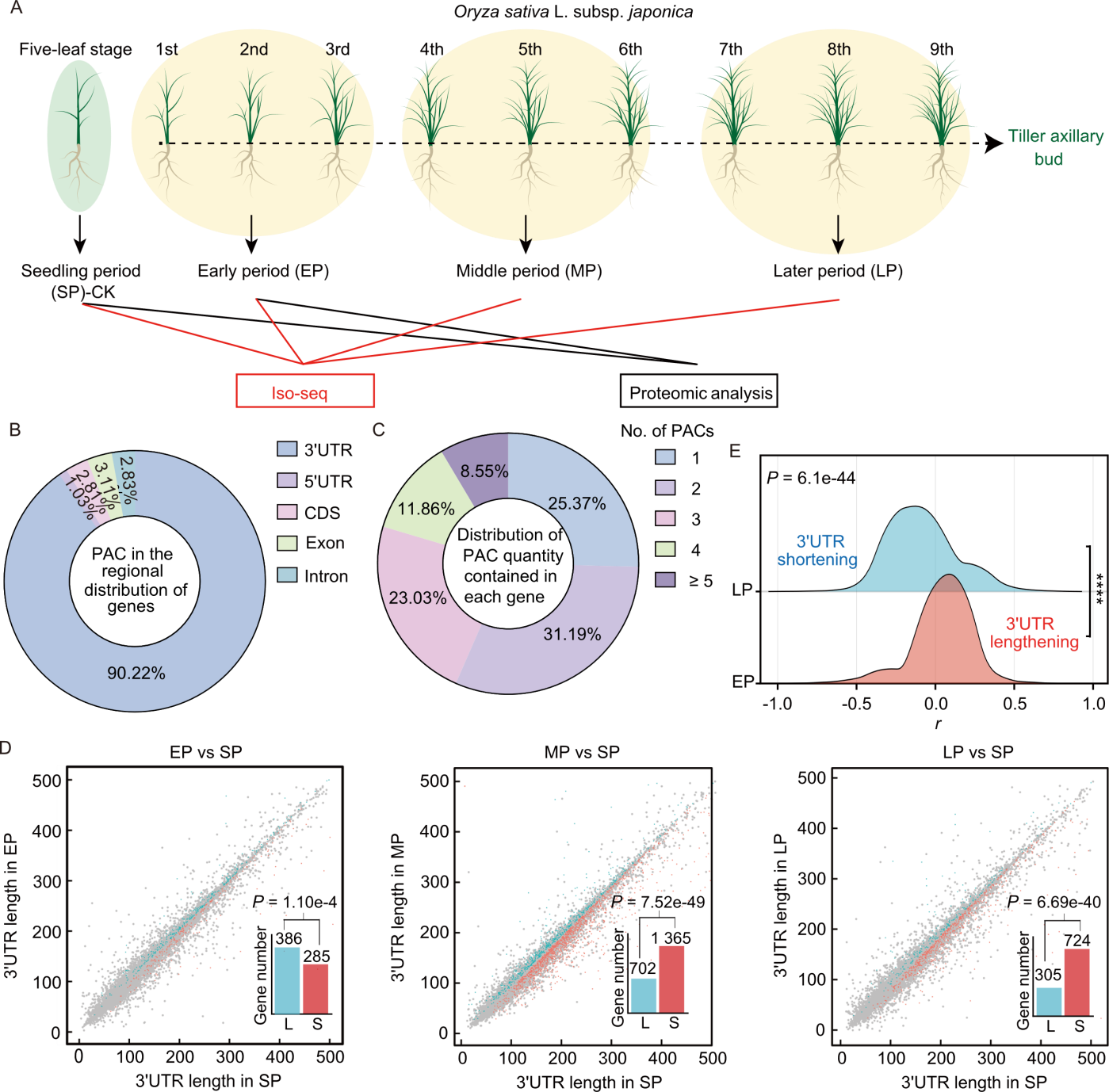
Fig. 1. Dynamic regulation of alternative polyadenylation (APA) during the rice tillering stage. A, Scheme diagram of experimental design. Iso-seq, Isoform sequencing. B, Distribution of poly(A) clusters (PACs) in various genic regions. UTR, Untranslated region; CDS, Coding sequence. C, Distribution of PAC numbers per gene. D, Statistical analysis of 3′UTR length changes. The horizontal axis represents the 3ʹUTR length of the control group (SP), and the vertical axis represents the 3ʹUTR length of the experimental groups (EP, MP, and LP). Significance was evaluated using a two-tailed exact binomial test; P < 0.05 was considered statistically significant, indicating a significant bias toward shortening or lengthening. ‘L’ and blue points refer to APA genes with 3′UTR lengthening; ‘S’ and red points refer to APA genes with 3′UTR shortening; gray dots represent genes with no significant change in 3ʹUTR length. SP, Seedling period as control group; EP, Early period of tillering; MP, Middle period of tillering; LP, Later period of tillering. E, Distribution of r of poly(A) sites during effective (EP) and ineffective (LP) tillering stages. The parameter r represents the Pearson correlation coefficient that reflects changes in the relative usage of distal versus proximal poly(A) sites for each gene between the treatment and control groups. Asterisks indicate significant differences by means of Student’s t-test (****, P < 0.0001).
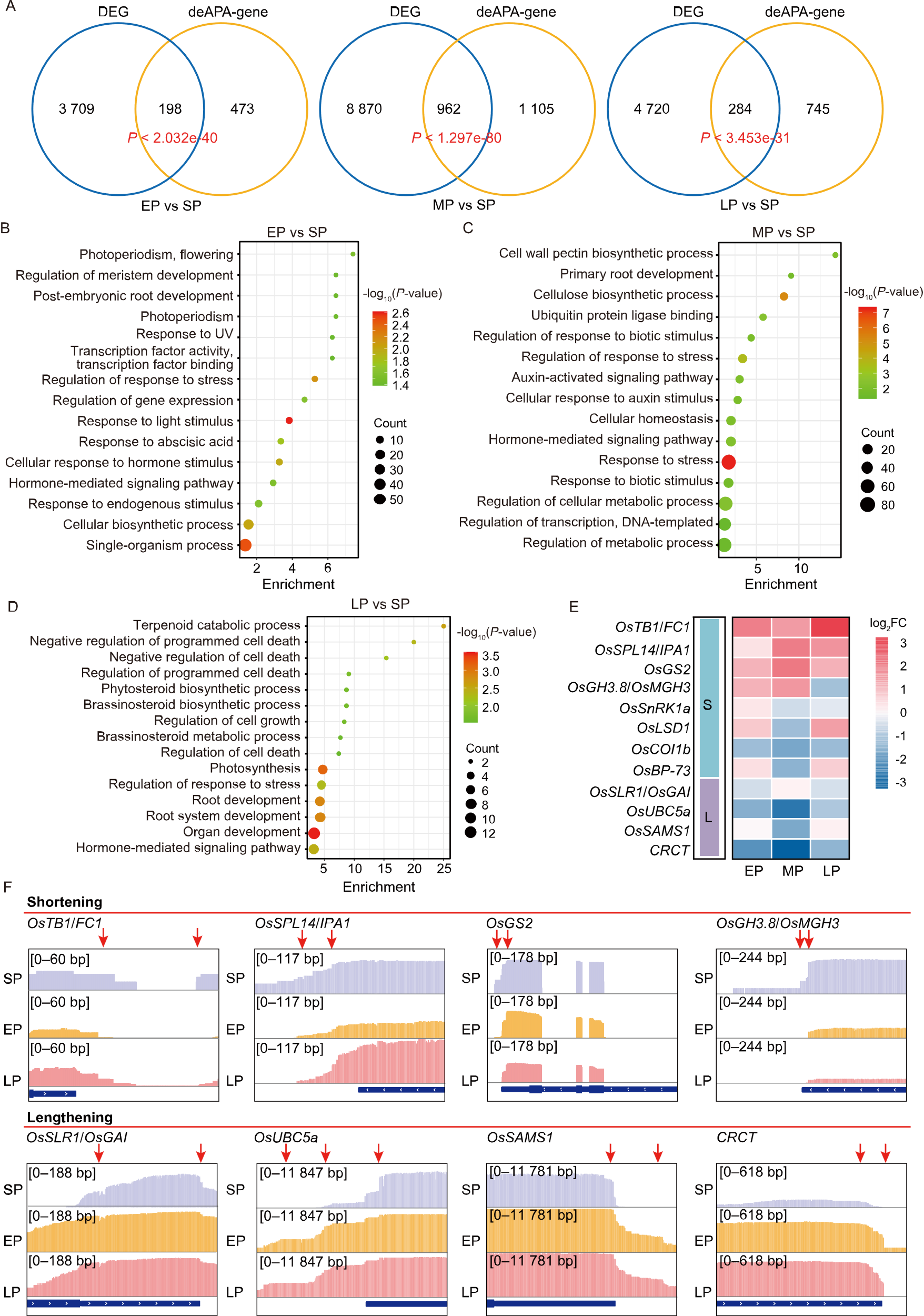
Fig. 2. Role of alternative polyadenylation (APA) genes during the tillering stage of rice. A, Venn diagram showing overlap between differentially expressed genes (DEGs) and genes with differential APA (deAPA-genes). The significance of the overlap was evaluated using a hypergeometric test (equivalent to Fisher’s exact test), with P-values calculated using a normal approximation; P < 0.05 was considered statistically significant. B‒D, Gene Ontology (GO) enrichment analysis during EP (B), MP (C), and LP (D). E, Heatmap showing expression levels of APA genes related to tillering and senescence. Gene identifiers: OsTB1/FC1, Os03g0706500; OsSPL14/IPA1, Os08g0509600; OsGS2, Os04g0659100; OsGH3.8/OsMGH3, Os07g0592600; OsSnRK1a, Os05g0530500; OsLSD1, Os08g0159500; OsCOI1b, Os05g0449500; OsBP-73, Os03g0183100; OsSLR1/OsGAI, Os03g0707600; OsUBC5a, Os01g0658400; OsSAMS1, Os05g0135700; CRCT, Os05g0595300. FC, Fold change; L, APA genes with 3′UTR lengthening; S, APA genes with 3′UTR shortening. F, Visualization of 3ʹ untranslated region (UTR) length variations of APA genes related to tillering and senescence. Red arrows indicate the positions of poly(A) sites. SP, Seedling period as control group; EP, Early period of tillering; MP, Middle period of tillering; LP, Later period of tillering; Shortening, Genes with 3ʹUTR shortening; Lengthening, Genes with 3ʹUTR lengthening.
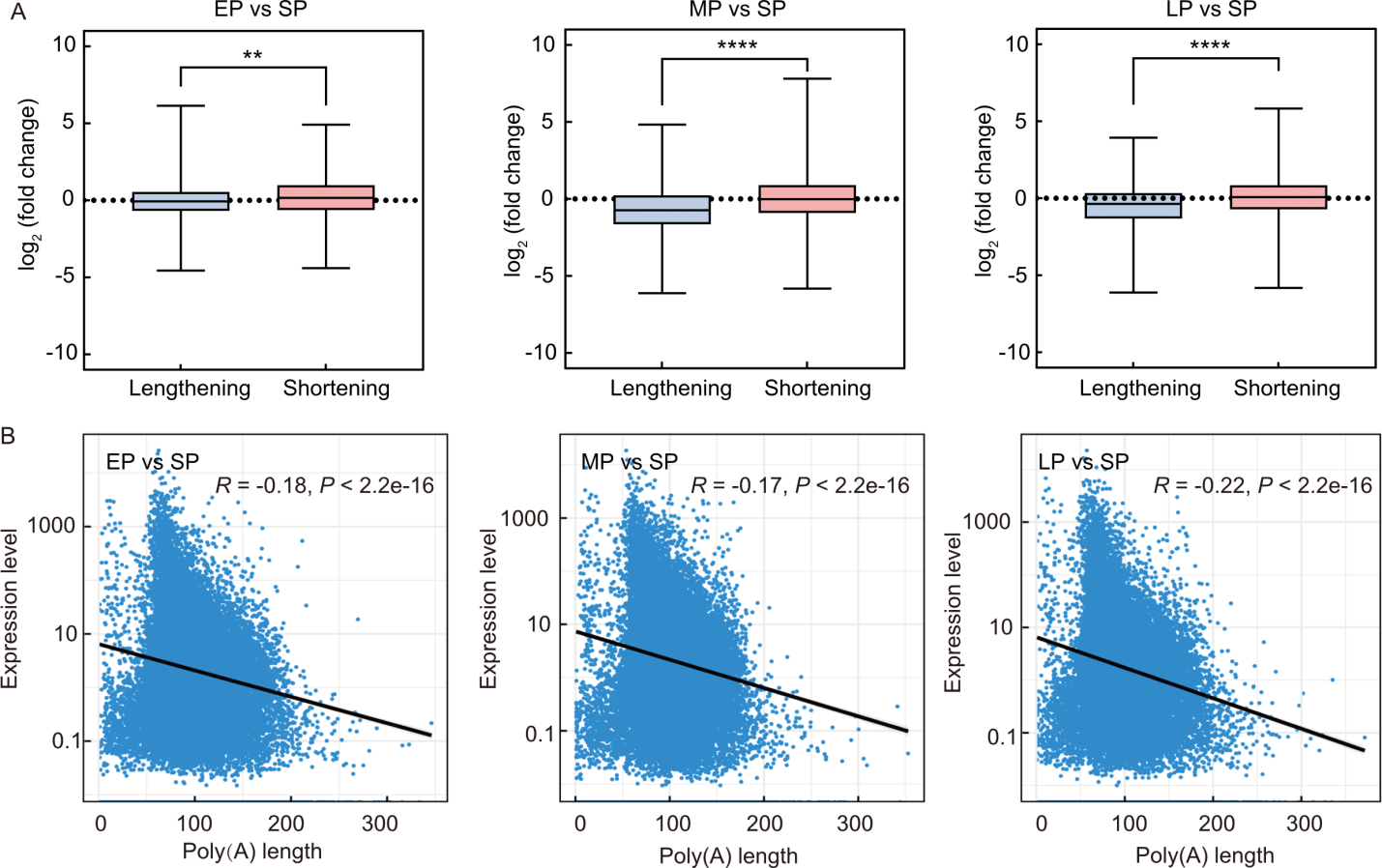
Fig. 3. Regulation of gene expression by alternative polyadenylation (APA). A, Relationship between 3ʹ untranslated region (UTR) length variation and gene expression. The horizontal axis represents experimental groups, and the vertical axis represents the logarithm of gene expression changes. Asterisks indicate significant differences by means of Student’s t-test (**, P < 0.01; ****, P < 0.0001). B, Distribution of poly(A) tail length and expression level. SP, Seedling period as control group; EP, Early period of tillering; MP, Middle period of tillering; LP, Later period of tillering; Lengthening, Genes with 3ʹUTR lengthening; Shortening, Genes with 3ʹUTR shortening.
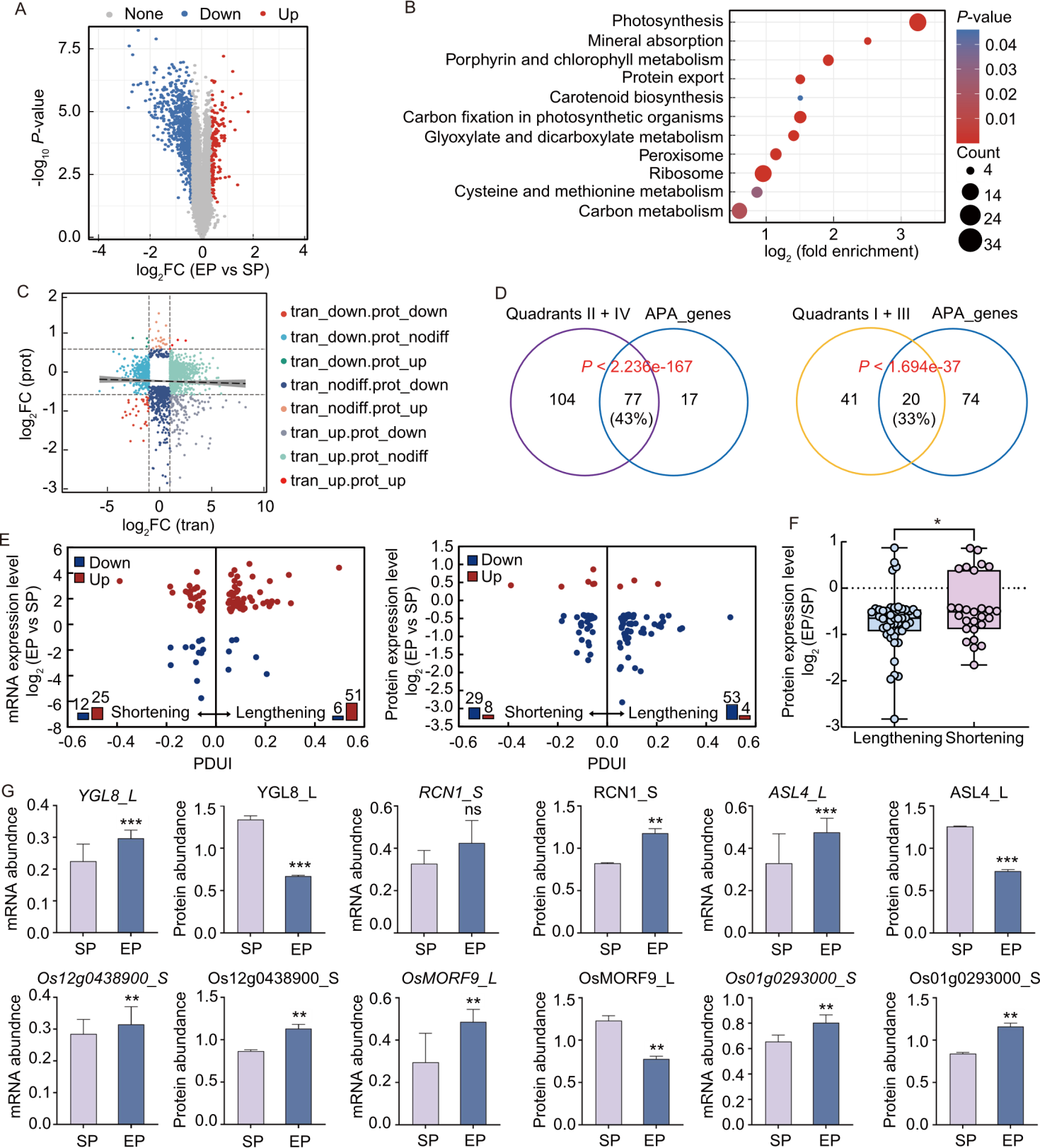
Fig. 4. Combined analysis of transcriptome and proteome. A, Distribution of differentially expressed proteins (DEPs). FC, Fold change. log2 FC > 1 and log2 FC < -1 indicate upregulated and downregulated DEPs, respectively. B, Kyoto Encyclopedia of Genes and Genomes (KEGG) enrichment analysis of DEPs. C, Nine-quadrant plot of transcript-protein integration, which shows combined analysis of differentially expressed genes (DEGs) and DEPs. The x-axis represents the log2 (fold change of transcripts), and the y-axis represents the log2 (fold change of proteins). ‘tran’ denotes transcript-level expression changes derived from transcriptomic data, and ‘prot’ denotes protein-level expression changes derived from proteomic data. Genes and proteins were classified into eight categories according to the direction and significance of expression changes at the transcript and protein levels. Specifically, tran_down.prot_up (dark green) indicates downregulated transcripts but upregulated proteins, tran_up.prot_up (true red) indicates coordinated upregulation at both levels, tran_down.prot_down (dark red) indicates coordinated downregulation at both levels, and tran_up.prot_down (gray) indicates upregulated transcripts but downregulated proteins. The remaining categories represent genes and proteins showing significant changes at only one level or no significant changes at either level. D, Venn diagram showing overlap between proteins with upregulated and downregulated transcript levels and their counterparts of alternative polyadenylation (APA) genes at both mRNA and protein levels. The yellow circle represents the corresponding genes with consistent trends at both mRNA and protein levels; the purple circle represents genes with inconsistent trends at both mRNA and protein levels; and the blue circle represents APA genes. The significance of the overlap was evaluated using a hypergeometric test (equivalent to Fisher’s exact test), with P-values calculated using a normal approximation; P < 0.05 was considered statistically significant. E, Changes in mRNA (left) and protein (right) expression levels of DEG-DEP pairs. DEG, Genes with significant expression changes relative to controls; DEP, Proteins with significant expression changes relative to controls; PDUI, Percentage of distal poly(A) site usage index, which was used to estimate the relative usage of distal poly(A) sites. |PDUI| ≥ 0.05, P ≤ 0.05, and |log2FC| ≥ 1. F, Protein expression levels of APA genes. Asterisk indicates a significant difference by Student’s t-test (*, P < 0.05). G, Variations in mRNA and protein levels of APA genes. Data are mean ± SE (n = 2). Asterisks indicate significant differences compared with SP by ANOVA and Student’s t-test (**, P < 0.01; ***, P < 0.001; ns, Not significant). YGL8, Os01g0279100; ASL4, Os03g0315800; OsMORF9, Os08g0139100; RCN1, Os11g0152500. SP, Seedling period as control group; EP, Early period of tillering; Lengthening/L, Genes with 3ʹUTR lengthening; Shortening/S, Genes with 3ʹUTR shortening.
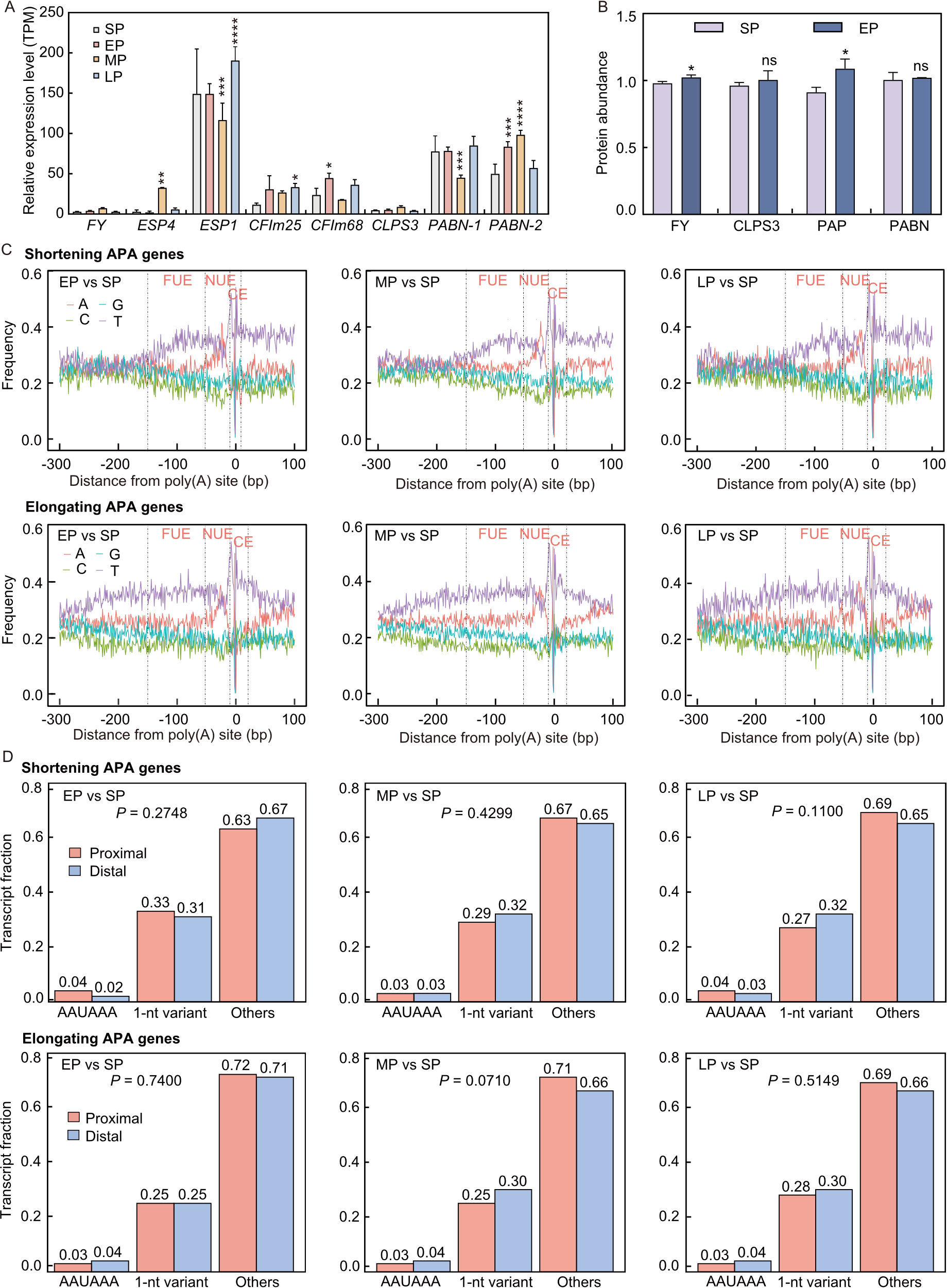
Fig. 5. Transcriptional and protein-level dynamics of core polyadenylation factors and poly(A) signal characteristics. A, Expression changes of core polyadenylation factors during the rice tillering stage. The samples were collected from tiller axillary buds, and Actin (Os03g0718100) gene was used as the internal control. Gene identifiers: FY, Os01g0951000; ESP4, Os01g0694400; ESP1, Os05g0513350; CFIm25, Os04g0683100; CFIm68, Os07g0187300; CLPS3, Os02g0217500; PABN-1, Os02g0757900; PABN-2, Os06g0219600. Data are mean ± SD (n = 3). Asterisks indicate significant differences compared with the control by ANOVA (*, P < 0.05; **, P < 0.01; ***, P < 0.001; ****, P < 0.0001). B, Protein expression changes of core polyadenylation factors. The samples were collected from tiller axillary buds, and Actin (Os03g0718100) was used as the internal control. Asterisks indicate significant differences compared with SP by Student’s t-test (*, P < 0.05; ns, Not significant). C, Single-nucleotide frequency upstream and downstream of poly(A) sites in genes with different 3ʹUTR lengths. Upper panels show poly(A) signals at proximal poly(A) sites of genes with 3′UTR shortening; lower panels show poly(A) signals at proximal poly(A) sites of genes with 3′UTR lengthening. The horizontal axis represents distance from the poly(A) site, and the vertical axis represents single-base proportion. NUE, Near upstream element; CE, Cleavage and polyadenylation element; FUE, Far upstream element. D, Poly(A) signal analysis of genes with different 3ʹUTR lengths. Upper panels show genes with 3′UTR shortening; lower panels show genes with 3′UTR lengthening. P-values for conserved poly(A) signals at proximal and distal poly(A) sites of genes with significantly changed 3ʹUTR lengths were analyzed by chi-square test. SP, Seedling period as control group; EP, Early period of tillering; MP, Middle period of tillering; LP, Later period of tillering.
| [1] | Cai H M, Xiao J H, Zhang Q F, et al. 2010. Co-suppressed glutamine synthetase2 gene modifies nitrogen metabolism and plant growth in rice. Chin Sci Bull, 55(9): 823-833. |
| [2] | Chen J, Tang W H, Hong M M, et al. 2003. OsBP-73, a rice gene, encodes a novel DNA-binding protein with a SAP-like domain and its genetic interference by double-stranded RNA inhibits rice growth. Plant Mol Biol, 52(3): 579-590. |
| [3] | Chen Y, Xu Y Y, Luo W, et al. 2013. The F-box protein OsFBK12 targets OsSAMS1 for degradation and affects pleiotropic phenotypes, including leaf senescence, in rice. Plant Physiol, 163(4): 1673-1685. |
| [4] | Dai Z Y, Wang J, Yang X F, et al. 2018. Modulation of plant architecture by the miR156f-OsSPL7-OsGH3.8 pathway in rice. J Exp Bot, 69(21): 5117-5130. |
| [5] | de Coster W, D’Hert S, Schultz D T, et al. 2018. NanoPack: Visualizing and processing long-read sequencing data. Bioinformatics, 34(15): 2666-2669. |
| [6] | de Klerk E, Venema A, Anvar S Y, et al. 2012. Poly(A) binding protein nuclear 1 levels affect alternative polyadenylation. Nucleic Acids Res, 40(18): 9089-9101. |
| [7] | di Giammartino D C, Manley J L. 2014. New links between mRNA polyadenylation and diverse nuclear pathways. Mol Cells, 37(9): 644-649. |
| [8] | Ding C Q, Shao Z J, Yan Y P, et al. 2024. Carotenoid isomerase regulates rice tillering and grain productivity by its biosynthesis pathway. J Integr Plant Biol, 66(2): 172-175. |
| [9] | Efremov G I, Shchennikova A V, Kochieva E Z. 2021. Characterization of 15-cis-ζ-carotene isomerase Z-ISO in cultivated and wild tomato species differing in ripe fruit pigmentation. Plants, 10(11): 2365. |
| [10] | Elkon R, Ugalde A P, Agami R. 2013. Alternative cleavage and polyadenylation: Extent, regulation and function. Nat Rev Genet, 14(7): 496-506. |
| [11] | Fan Y Y, Chen H M, Wang B F, et al. 2024. DWARF AND LESS TILLERS ON CHROMOSOME 3 promotes tillering in rice by sustaining FLORAL ORGAN NUMBER 1 expression. Plant Physiol, 196(2): 1064-1079. |
| [12] | Fu H H, Yang D W, Su W Y, et al. 2016. Genome-wide dynamics of alternative polyadenylation in rice. Genome Res, 26(12): 1753-1760. |
| [13] | Gruber A J, Zavolan M. 2019. Alternative cleavage and polyadenylation in health and disease. Nat Rev Genet, 20(10): 599-614. |
| [14] | Hafez D, Ni T, Mukherjee S, et al. 2013. Genome-wide identification and predictive modeling of tissue-specific alternative polyadenylation. Bioinformatics, 29(13): i108-i116. |
| [15] | Hong L W, Ye C T, Lin J C, et al. 2018. Alternative polyadenylation is involved in auxin-based plant growth and development. Plant J, 93(2): 246-258. |
| [16] | Huang D B, Wang S G, Zhang B C, et al. 2015. A gibberellin-mediated DELLA-NAC signaling cascade regulates cellulose synthesis in rice. Plant Cell, 27(6): 1681-1696. |
| [17] | Ikeda A, Ueguchi-Tanaka M, Sonoda Y, et al. 2001. Slender rice, a constitutive gibberellin response mutant, is caused by a null mutation of the SLR1 gene, an ortholog of the height-regulating gene GAI/RGA/RHT/D8. Plant Cell, 13(5): 999-1010. |
| [18] | Jia Y X, Tao F Q, Li W Q. 2013. Lipid profiling demonstrates that suppressing Arabidopsis phospholipase Dδ retards ABA-promoted leaf senescence by attenuating lipid degradation. PLoS One, 8(6): e65687. |
| [19] | Kong W Y, Yu X W, Chen H Y, et al. 2016. The catalytic subunit of magnesium-protoporphyrin IX monomethyl ester cyclase forms a chloroplast complex to regulate chlorophyll biosynthesis in rice. Plant Mol Biol, 92(1/2): 177-191. |
| [20] | Krause M, Niazi A M, Labun K, et al. 2019. Tailfindr: Alignment-free poly(A) length measurement for Oxford Nanopore RNA and DNA sequencing. RNA, 25(10): 1229-1241. |
| [21] | Lee S H, Sakuraba Y, Lee T, et al. 2015. Mutation of Oryza sativa CORONATINE INSENSITIVE 1b (OsCOI1b) delays leaf senescence. J Integr Plant Biol, 57(6): 562-576. |
| [22] | Leung S K, Jeffries A R, Castanho I, et al. 2021. Full-length transcript sequencing of human and mouse cerebral cortex identifies widespread isoform diversity and alternative splicing. Cell Rep, 37(7): 110022. |
| [23] | Li H. 2018. Minimap2: Pairwise alignment for nucleotide sequences. Bioinformatics, 34(18): 3094-3100. |
| [24] | Li J J, Zhou D, Li D K, et al. 2024. The dual role of casein kinase 1, DTG1, in regulating tillering and grain size in rice. Crop J, 12(6): 1569-1582. |
| [25] | Li M J, Li H Y, Zhu Q D, et al. 2024. Knockout of the sugar transporter OsSTP15 enhances grain yield by improving tiller number due to increased sugar content in the shoot base of rice (Oryza sativa L.). New Phytol, 241(3): 1250-1265. |
| [26] | Li W C, You B, Hoque M, et al. 2015. Systematic profiling of poly(A)+ transcripts modulated by core 3ʹ end processing and splicing factors reveals regulatory rules of alternative cleavage and polyadenylation. PLoS Genet, 11(4): e1005166. |
| [27] | Li X Q, Du D. 2014. Motif types, motif locations and base composition patterns around the RNA polyadenylation site in microorganisms, plants and animals. BMC Evol Biol, 14: 162. |
| [28] | Li X X, Xie Z Z, Qin T, et al. 2025. The SLR1-OsMADS23-D14 module mediates the crosstalk between strigolactone and gibberellin signaling to control rice tillering. New Phytol, 246(5): 2137-2154. |
| [29] | Li X Y, Qian Q, Fu Z M, et al. 2003. Control of tillering in rice. Nature, 422: 618-621. |
| [30] | Li Z, Ye J H, Yuan Q L, et al. 2024. BTA2 regulates tiller angle and the shoot gravity response through controlling auxin content and distribution in rice. J Integr Plant Biol, 66(9): 1966-1982. |
| [31] | Lin J C, Xu R Q, Wu X H, et al. 2017. Role of cleavage and polyadenylation specificity factor 100: Anchoring poly(A) sites and modulating transcription termination. Plant J, 91(5): 829-839. |
| [32] | Liu C J, Wu X Y, Zhao Q, et al. 2025. Mining genetic variations reveals the differentiation of gene alternative polyadenylation involving in rice panicle architecture regulation. Plant Cell Environ, 48(8): 6339-6355. |
| [33] | Liu J R, Wang X Y, Wang J, et al. 2024. Identification of the BTA8 gene reveals the contribution of natural variation to tiller angle in rice. J Integr Agric, 23(8): 2868-2871. |
| [34] | Liu T Z, Zhang X, Zhang H, et al. 2022. Dwarf and High Tillering1 represses rice tillering through mediating the splicing of D14 pre-mRNA. Plant Cell, 34(9): 3301-3318. |
| [35] | Loke J C, Stahlberg E A, Strenski D G, et al. 2005. Compilation of mRNA polyadenylation signals in Arabidopsis revealed a new signal element and potential secondary structures. Plant Physiol, 138(3): 1457-1468. |
| [36] | Love M I, Huber W, Anders S. 2014. Moderated estimation of fold change and dispersion for RNA-seq data with DESeq2. Genome Biol, 15(12): 550. |
| [37] | Lu Z F, Yu H, Xiong G S, et al. 2013. Genome-wide binding analysis of the transcription activator ideal plant architecture 1 reveals a complex network regulating rice plant architecture. Plant Cell, 25(10): 3743-3759. |
| [38] | Luo L, Li W Q, Miura K, et al. 2012. Control of tiller growth of rice by OsSPL14 and strigolactones, which work in two independent pathways. Plant Cell Physiol, 53(10): 1793-1801. |
| [39] | Ma J, Wang Y F, Ma X D, et al. 2019. Disruption of gene SPL35 encoding a novel CUE domain-containing protein, leads to cell death and enhanced disease response in rice. Plant Biotechnol J, 17(8): 1679-1693. |
| [40] | Ma X Q, Li F M, Zhang Q, et al. 2020. Genetic architecture to cause dynamic change in tiller and panicle numbers revealed by genome-wide association study and transcriptome profile in rice. Plant J, 104(6): 1603-1616. |
| [41] | Mayr C, Bartel D P. 2009. Widespread shortening of 3ʹUTRs by alternative cleavage and polyadenylation activates oncogenes in cancer cells. Cell, 138(4): 673-684. |
| [42] | Miura K, Ikeda M, Matsubara A, et al. 2010. OsSPL14 promotes panicle branching and higher grain productivity in rice. Nat Genet, 42(6): 545-549. |
| [43] | Mo T Y, Wang T H, Sun Y L, et al. 2024. The chloroplast pentatricopeptide repeat protein RCN22 regulates tiller number in rice by affecting sugar levels via the TB1-RCN22-RbcL module. Plant Commun, 5(12): 101073. |
| [44] | Morita R, Sugino M, Hatanaka T, et al. 2015. CO2-responsive CONSTANS, CONSTANS-like, and time of chlorophyll a/b binding protein Expression 1 protein is a positive regulator of starch synthesis in vegetative organs of rice. Plant Physiol, 167(4): 1321-1331. |
| [45] | Nakagawa M, Shimamoto K, Kyozuka J. 2002. Overexpression of RCN1 and RCN2, rice TERMINAL FLOWER 1/CENTRORADIALIS homologs, confers delay of phase transition and altered panicle morphology in rice. Plant J, 29(6): 743-750. |
| [46] | Ni T, Yang Y Q, Hafez D, et al. 2013. Distinct polyadenylation landscapes of diverse human tissues revealed by a modified PA-seq strategy. BMC Genomics, 14: 615. |
| [47] | Patro R, Duggal G, Love M I, et al. 2017. Salmon provides fast and bias-aware quantification of transcript expression. Nat Methods, 14(4): 417-419. |
| [48] | Shen Y J, Ji G L, Haas B J, et al. 2008. Genome level analysis of rice mRNA 3ʹ-end processing signals and alternative polyadenylation. Nucleic Acids Res, 36(9): 3150-3161. |
| [49] | Song X G, Lu Z F, Yu H, et al. 2017. IPA1 functions as a downstream transcription factor repressed by D53 in strigolactone signaling in rice. Cell Res, 27(9): 1128-1141. |
| [50] | Song X G, Meng X B, Guo H Y, et al. 2022. Targeting a gene regulatory element enhances rice grain yield by decoupling panicle number and size. Nat Biotechnol, 40(9): 1403-1411. |
| [51] | Takeda T, Suwa Y, Suzuki M, et al. 2003. The OsTB1 gene negatively regulates lateral branching in rice. Plant J, 33(3): 513-520. |
| [52] | Tian B, Manley J L. 2017. Alternative polyadenylation of mRNA precursors. Nat Rev Mol Cell Biol, 18(1): 18-30. |
| [53] | Wang K, Li M Q, Zhang B, et al. 2023. Sugar starvation activates the OsSnRK1a-OsbHLH111/OsSGI1-OsTPP7 module to mediate growth inhibition of rice. Plant Biotechnol J, 21(10): 2033-2046. |
| [54] | Wang L J, Pei Z Y, Tian Y C, et al. 2005. OsLSD1, a rice zinc finger protein, regulates programmed cell death and callus differentiation. Mol Plant Microbe Interact, 18(5): 375-384. |
| [55] | Wang W G, Huang L Z, Song Y Q, et al. 2024. LAZY4 acts additively with the starch-statolith-dependent gravity-sensing pathway to regulate shoot gravitropism and tiller angle in rice. Plant Commun, 5(10): 100943. |
| [56] | Wang W M, Xie Z Z, Wu Y Y, et al. 2024. The JA-OsJAZ6-DELLA module controls the tillering and drought stress response in rice. Environ Exp Bot, 222: 105776. |
| [57] | Wu G L, Yu S W, Fu J R, et al. 2025. Alternative polyadenylation and metabolic profiling in young panicle development of hybrid rice and its parents. Rice, 18(1): 80. |
| [58] | Wu W, Dong X O, Chen G M, et al. 2024. The elite haplotype OsGATA8-H coordinates nitrogen uptake and productive tiller formation in rice. Nat Genet, 56(7): 1516-1526. |
| [59] | Wu X H, Liu M, Downie B, et al. 2011. Genome-wide landscape of polyadenylation in Arabidopsis provides evidence for extensive alternative polyadenylation. Proc Natl Acad Sci USA, 108(30): 12533-12538. |
| [60] | Xia Z, Donehower L A, Cooper T A, et al. 2014. Dynamic analyses of alternative polyadenylation from RNA-seq reveal a 3ʹ-UTR landscape across seven tumour types. Nat Commun, 5: 5274. |
| [61] | Yadav S R, Khanday I, Majhi B B, et al. 2011. Auxin-responsive OsMGH3, a common downstream target of OsMADS1 and OsMADS6, controls rice floret fertility. Plant Cell Physiol, 52(12): 2123-2135. |
| [62] | Ye C T, Zhao D H, Ye W B, et al. 2021. QuantifyPoly(A): Reshaping alternative polyadenylation landscapes of eukaryotes with weighted density peak clustering. Brief Bioinform, 22(6): bbab268. |
| [63] | Zhang J F, Zhang Y Y, Chen J G, et al. 2024. Sugar transporter modulates nitrogen-determined tillering and yield formation in rice. Nat Commun, 15(1): 9233. |
| [64] | Zhang Q, Xie J Y, Zhu X Y, et al. 2023. Natural variation in Tiller Number 1 affects its interaction with TIF1 to regulate tillering in rice. Plant Biotechnol J, 21(5): 1044-1057. |
| [65] | Zhou J, Li Q Q. 2023. Stress responses of plants through transcriptome plasticity by mRNA alternative polyadenylation. Mol Hortic, 3(1): 19. |
| [66] | Zhou Q, Fu H H, Yang D W, et al. 2019. Differential alternative polyadenylation contributes to the developmental divergence between two rice subspecies, japonica and indica. Plant J, 98(2): 260-276. |
| [1] | Jardel da Silva Souza, Sandra Helena Uneda-Trevisoli, Felipe Dalla Lana, Roberto Fritsche-Neto. A Low-Cost RGB-Based Image Processing Method for High-Throughput Assessment of Rice Grain Chalkiness [J]. Rice Science, 2026, 33(3): 381-391. |
| [2] | Li Chao, Ruan Chengcheng, He Yiqin, Yang Zhenkun, Jiang Zhenyi, Li Xiao, Xu Jianhong. Jumonji C Domain-Containing Protein OsJMJ712 Integrates Epigenetic Regulation and Circadian Clock to Fine-Tune Flowering in Rice [J]. Rice Science, 2026, 33(2): 221-231. |
| [3] | Jia Huichao, Chun Yan, Ashmit Kumar, Mo Tianyu, Wang Haifeng, Guo Shengyuan, Fang Jingjing, Zhao Jinfeng, Sun Wei, Zhang Shiyong, Yuan Shoujiang, Li Xueyong. Suppressors of Cytokinin Receptor Mutant pal1/ohk4 Confer Favorable Alleles of Grain Number 1a (Gn1a) for Improving Grain Yield in japonica Rice [J]. Rice Science, 2026, 33(1): 81-98. |
| [4] | Nairiane dos Santos Bilhalva, Paulo Carteri Coradi, Rosana Santos de Moraes, Dthenifer Cordeiro Santana, Larissa Ribeiro Teodoro, Paulo Eduardo Teodoro, Marisa Menezes Leal. Physical and Physicochemical Classification of Parboiled Rice Using VNIR-SWIR Spectroscopy and Machine Learning [J]. Rice Science, 2025, 32(6): 857-867. |
| [5] | Lai Changkai, Hu Shikai, Jiao Guiai, Wang Ling, Shao Gaoneng, Zhao Fengli, Xie Lihong, Wei Xiangjin, Lü Yusong, Sheng Zhonghua, Tang Shaoqing, Hu Peisong. Enhancing Folate Content in Japonica Rice Through Co-expression of OsADCS and OsGTPCHI Indica Alleles [J]. Rice Science, 2025, 32(3): 353-366. |
| [6] | Sara Cannavò, Chiara Paleni, Alma Costarelli, Maria Cristina Valeri, Martina Cerri, Antonietta Saccomanno, Veronica Gregis, Graziella Chini Zittelli, Petre I. Dobrev, Lara Reale, Martin M. Kater, Francesco Paolocci. Assessing Changes in Root Architecture, Developmental Timing, Transcriptional and Hormonal Profiles in Rice Co-Cultivated with Azolla filiculoides [J]. Rice Science, 2025, 32(3): 426-444. |
| [7] | Wang Jingqing, Wang Yaliang, Chen Yulin, Chen Huizhe, Xiang Jing, Zhang Yikai, Wang Zhigang, Zhang Yuping. Progress on Physiological Mechanisms of Rice Spikelet Degeneration at Different Panicle Positions Caused by Abiotic Stress [J]. Rice Science, 2025, 32(2): 193-202. |
| [8] | Chen Ya, Liu Zhiquan, Yang Linyin, Wu Fujie, Cao Zijian, Shi Huanbin, Qiu Jiehua, Kou Yanjun. OsCERK1 Interacts with OsHPP08 to Regulate Copper Uptake and Blast Resistance in Rice [J]. Rice Science, 2025, 32(2): 203-216. |
| [9] | Jiang Nan, Qiu Jiehua, Tian Dagang, Shi Huanbin, Liu Zhiquan, Wen Hui, Xie Shuwei, Chen Huizhe, Wu Meng, Kou Yanjun. Mixture of Bacillus Amyloliquefaciens and Bacillus Pumilus Modulates Community Structures of Rice Rhizosphere Soil to Suppress Rice Seedling Blight [J]. Rice Science, 2025, 32(1): 118-130. |
| [10] | Yu Shicong, Luo Ruxian, Zheng Shuqin, Ning Jing, Shi Yuanzhu, Guo Daiming, Jia Liangmeng, Wang Sen, Xiao Guizong, Guo Pengwang, Li Yang, Ma Xiaoding. CHOLINE TRANSPORTER-RELATED 4 (CTR4) Is Involved in Drought and Saline Tolerance in Rice [J]. Rice Science, 2025, 32(1): 52-66. |
| [11] | Xue Chao, Zhao Xinru, Chen Xu, Cai Xingjing, Hu Yingying, Li Xiya, Zhou Yong, Gong Zhiyun. Histone Acetyltransferase GCN5 Regulates Rice Growth and Development and Enhances Salt Tolerance [J]. Rice Science, 2024, 31(6): 688-699. |
| [12] | Hu Yunchao, Yan Tiancai, Gao Zhenyu, Wang Tiankang, Lu Xueli, Yang Long, Shen Lan, Zhang Qiang, Hu Jiang, Ren Deyong, Zhang Guangheng, Zhu Li, Li Li, Zeng Dali, Qian Qian, Li Qing. Appropriate Supply of Ammonium Nitrogen and Ammonium Nitrate Reduces Cadmium Content in Rice Seedlings by Inhibiting Cadmium Uptake and Transport [J]. Rice Science, 2024, 31(5): 587-602. |
| [13] | Xie Shuwei, Shi Huanbin, Wen Hui, Liu Zhiquan, Qiu Jiehua, Jiang Nan, Kou Yanjun. Carbon Catabolite Repressor UvCreA is Required for Development and Pathogenicity in Ustilaginoidea virens [J]. Rice Science, 2024, 31(2): 203-214. |
| [14] | Xia Xiaodong, Zhang Xiaobo, Wang Zhonghao, Cheng Benyi, Sun Huifeng, Xu Xia, Gong Junyi, Yang Shihua, Wu Jianli, Shi Yongfeng, Xu Rugen. Mapping and Functional Analysis of LE Gene in a Lethal Etiolated Rice Mutant at Seedling Stage [J]. Rice Science, 2023, 30(6): 567-576. |
| [15] | Md. Dhin Islam, Adam H. Price, Paul D. Hallett. Effects of Root Growth of Deep and Shallow Rooting Rice Cultivars in Compacted Paddy Soils on Subsequent Rice Growth [J]. Rice Science, 2023, 30(5): 459-472. |
| Viewed | ||||||
|
Full text |
|
|||||
|
Abstract |
|
|||||
