
Rice Science ›› 2026, Vol. 33 ›› Issue (6): 815-833.DOI: 10.1016/j.rsci.2026.09.006
• Research Papers • Previous Articles Next Articles
Liu Zhongjiang1,2,#, Zhang Haiyan1,2,#, Shi Lisu1,2,#, Zheng Xinyu1,2, Fu Liya3, Chang Guimei1,2, Wang Ruling1, Zhang Huimin1, Jing Yifen1,2, Zhang Qinjie1,2, Cheng Lu1,2, Xu Peng1( ), Chen Ligang1()
Received:2026-04-03
Accepted:2026-06-30
Online:2026-11-28
Published:2026-11-17
Contact:
Chen Ligang (chenligang@xtbg.ac.cn);
Xu Peng (xupeng@xtbg.ac.cn)
About author:#These authors contributed equally to this work
Liu Zhongjiang, Zhang Haiyan, Shi Lisu, Zheng Xinyu, Fu Liya, Chang Guimei, Wang Ruling, Zhang Huimin, Jing Yifen, Zhang Qinjie, Cheng Lu, Xu Peng, Chen Ligang. OsWRKY24/70-OsUGT85E1 Regulatory Module Improves Rice Seedling Salt Tolerance[J]. Rice Science, 2026, 33(6): 815-833.
Add to citation manager EndNote|Ris|BibTeX

Fig. 1. Expression and subcellular localization of OsWRKY24 and OsWRKY70. A, Protein sequence comparison of OsWRKY24 and OsWRKY70. Amino acids identical in two proteins are blue. The WRKY DNA binding motifs are also indicated with the highly conserved WRKYGQK sequences, and the residues forming the Cys2-His2 zinc fingers are red. B-E, Relative expression levels of OsWRKY24 and OsWRKY70 in shoots (B and D) and roots (C and E) upon salt treatment. RNA was extracted from 2-week-old seedlings at indicated times after treatment with NaCl. Data are mean ± SD of three independent biological replicates. Different lowercase letters indicate significant differences at P < 0.05 (one-way ANOVA with Tukey’s test). F and G, β-Glucuronidase (GUS) staining results of OsWRKY24 and OsWRKY70 seedlings after treatment with NaCl for 12 h. Scale bars, 1 cm. H, Subcellular localization of OsWRKY24 and OsWRKY70. OsWRKY24 and OsWRKY70 were fused to the green fluorescent protein (GFP) to yield OsWRKY24-GFP and OsWRKY70-GFP, respectively. The chimeric proteins were localized to the nucleus of Nicotiana benthamiana leaf cells whereas GFP alone was detected in both the nucleus and the cytoplasm. 4′, 6-Diamidino-2-phenylindole (DAPI) staining marks the nucleus. Scale bars, 20 μm.
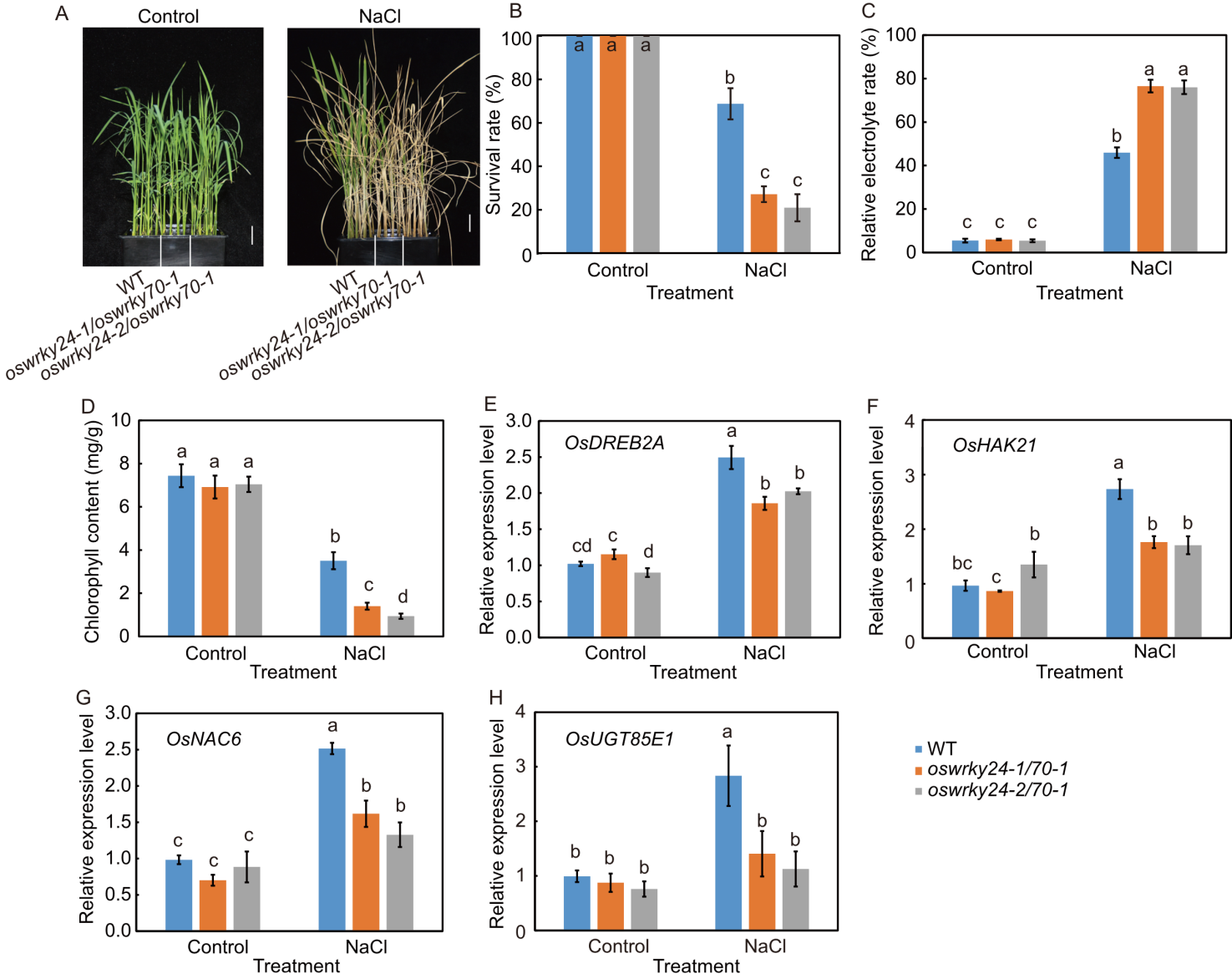
Fig. 2. Loss of OsWRKY24 and OsWRKY70 function reduces rice seedling salt tolerance. A, Phenotype of wild type (WT) and oswrky24/70 double mutant seedlings under control and salt treatment. Two-week-old WT and oswrky24/70 double mutant seedlings were treated with 120 mmol/L NaCl for 6 d and representative seedlings were photographed. Scale bars, 2 cm. B-D, Survival rate (B), relative electrolyte rate (C), and chlorophyll content (D) in the leaves of WT and oswrky24/70 double mutant seedlings after control and salt treatment. E-H, Relative expression levels of abiotic stress-related genes in WT and oswrky24/70 double mutant seedlings after control and salt treatment. RNA was extracted from 2-week-old WT and oswrky24/70 double mutant leaves after salt treatment for 6 h (NaCl) or 0 h (control). Data are mean ± SD of three independent biological replicates. Different lowercase letters above bars indicate significant differences at P < 0.05 (one-way ANOVA with Tukey’s test).
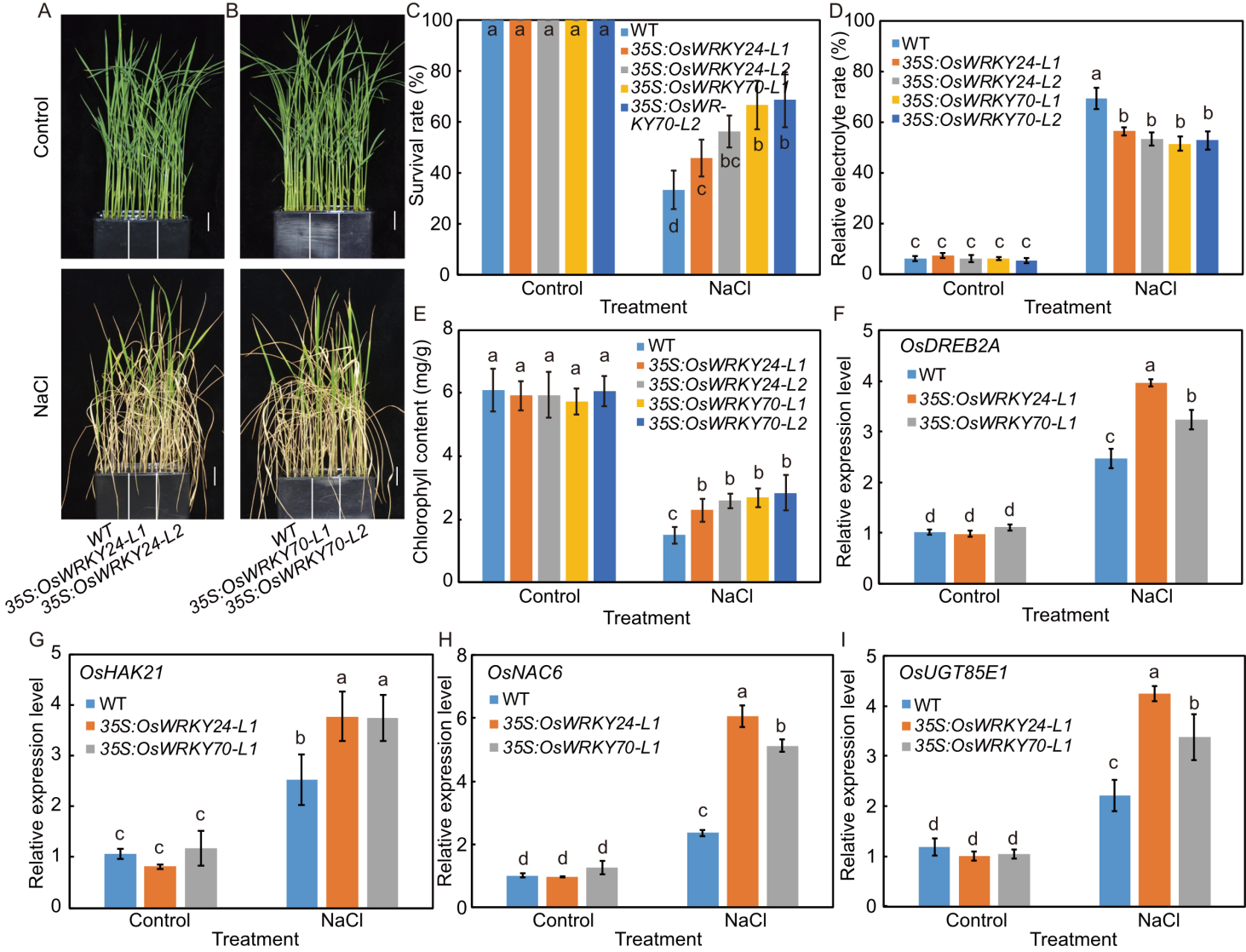
Fig. 3. Overexpression of OsWRKY24 or OsWRKY70 enhanced rice seedling salt tolerance. A and B, Phenotype of wild type (WT) and OsWRKY24 (A) or OsWRKY70 (B) overexpressing seedlings after salt treatment. Two-week-old WT and OsWRKY24- or OsWRKY70-overexpressing seedlings were treated with 120 mmol/L NaCl for 7 d and representative plants were photographed. Scale bars, 2 cm. C-E, Survival rate (C), relative electrolyte rate (D), and chlorophyll content (E) in the leaves of WT, OsWRKY24- and OsWRKY70-overexpressing seedlings after salt treatment. F-I, Relative expression levels of several abiotic stress-related genes in WT, OsWRKY24- and OsWRKY70-overexpressing seedlings after salt treatments. RNA was extracted from 2-week-old WT, OsWRKY24- and OsWRKY70-overexpressing leaves after salt treatment for 6 h (NaCl) or 0 h (control). Data are mean ± SD of three independent biological replicates. Different lowercase letters above bars indicate significant differences at P < 0.05 (one-way ANOVA with Tukey’s test).
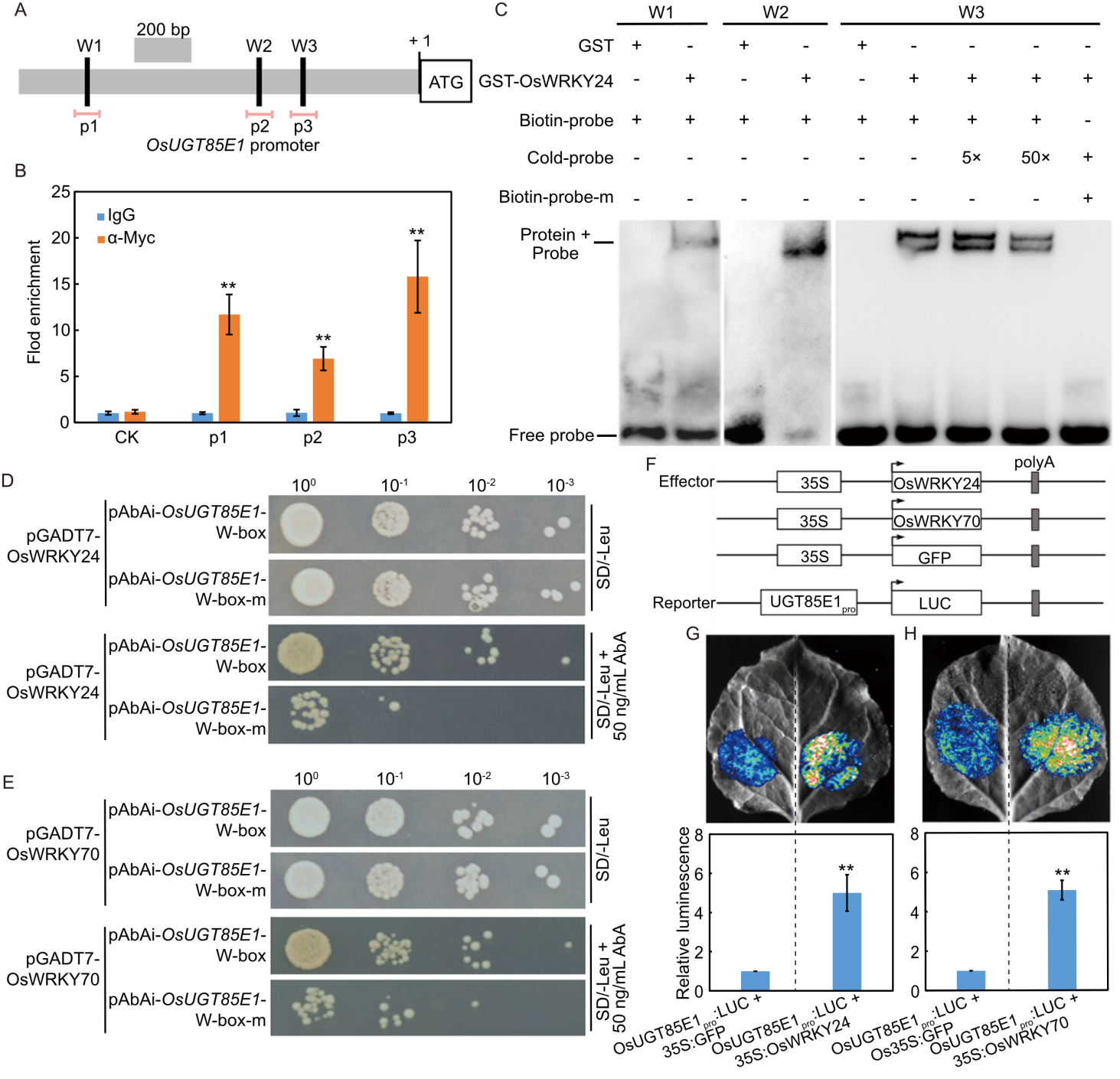
Fig. 4. OsUGT85E1 is a target of OsWRKY24 and OsWRKY70. A, Promoter structure of OsUGT85E1 and fragments used in the chromatin immunoprecipitation (ChIP) assay. The upper panel shows schematic representation of the OsUGT85E1 promoter regions containing W-box clusters. The short red lines (p1, p2, and p3) indicate the PCR-amplified fragments used for the ChIP-qPCR assay, which correspond to the regions containing W1, W2, and W3, respectively. B, ChIP-qPCR analysis of the relative binding affinity of OsWRKY24 to the promoter of OsUGT85E1. ChIP assays were performed with chromatin prepared from Myc-OsWRKY24 plants using an anti-Myc antibody. IgG, Immunoglobulin G serum; α-myc, Anti-Myc antibody; Fold enrichment, Relative enrichment of target DNA fragments calculated by dividing the enrichment value of ChIP with α-myc by that of ChIP with IgG. An upstream region of OsUGT85E1 without a W-box was used as a negative control (CK). Data are mean ± SD of four independent biological replicates. Asterisks indicate significant differences compared with controls; **, P < 0.01 (Student’s t-test). C, Electrophoretic mobility shift assay (EMSA) showing the binding of recombinant OsWRKY24 protein to the promoter of OsUGT85E1. Unlabeled probes served as competitive probes, and ‘m’ indicates mutated competitive probes. GST, GST-OsWRKY24, biotin-probe, unlabeled probe (cold-probe) at a 5× and 50× molar excess, and labeled mutated probe were present (+) or absent (-) in each reaction. D and E, Yeast one-hybrid assay showed that OsWRKY24 and OsWRKY70 bind to the W-box element on the promoter of OsUGT85E1. The experiment was carried out three times and all yielded similar results, with representative results depicted. SD, Synthetic defined medium; AbA, Aureobasidin A. F, Schematic diagrams of the effector and reporter constructs used for the transient dual-luciferase assay. The effectors are driven by the 35S promoter, and the reporter is the OsUGT85E1 promoter fused to the LUC gene. G and H, Transient expression assay in N. benthamiana leaves demonstrating that OsWRKY24 activates the promoter of OsUGT85E1. The upper panel shows the luminescence image, and the lower panel shows the relative LUC activity. Data are mean ± SD of three independent biological replicates; **, P < 0.01 (Student’s t-test). GFP, Green fluorescent protein; LUC, Luciferase.
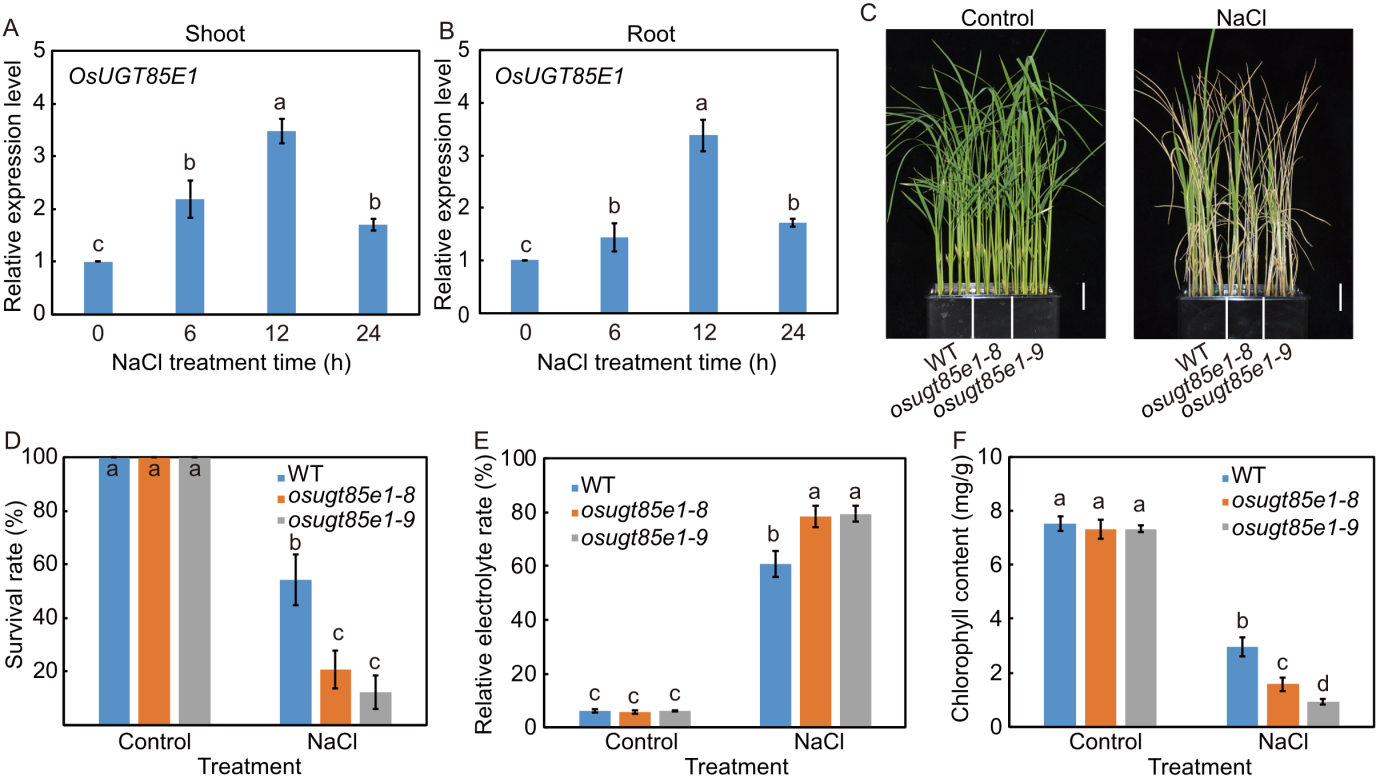
Fig. 5. Loss of OsUGT85E1 function reduces rice seedling salt tolerance. A and B, Relative expression levels of OsUGT85E1 in shoots (A) and roots (B) after salt treatment. RNA was extracted from two-week-old seedlings at indicated times after treatment with NaCl. C, Phenotype of wild type (WT) and osugt85e1 mutant seedlings after salt treatment. Two-week-old WT and osugt85e1 mutant seedlings were treated with 120 mmol/L NaCl for 6 d and representative plants were photographed. Scale bars, 2 cm. D-F, Survival rate (D), relative electrolyte rate (E), and chlorophyll content (F) in the leaves of WT and osugt85e1 mutant seedlings after salt treatment. Data are mean ± SD of three independent biological replicates. Different lowercase letters above bars indicate significant differences at P < 0.05 (one-way ANOVA with Tukey’s test).
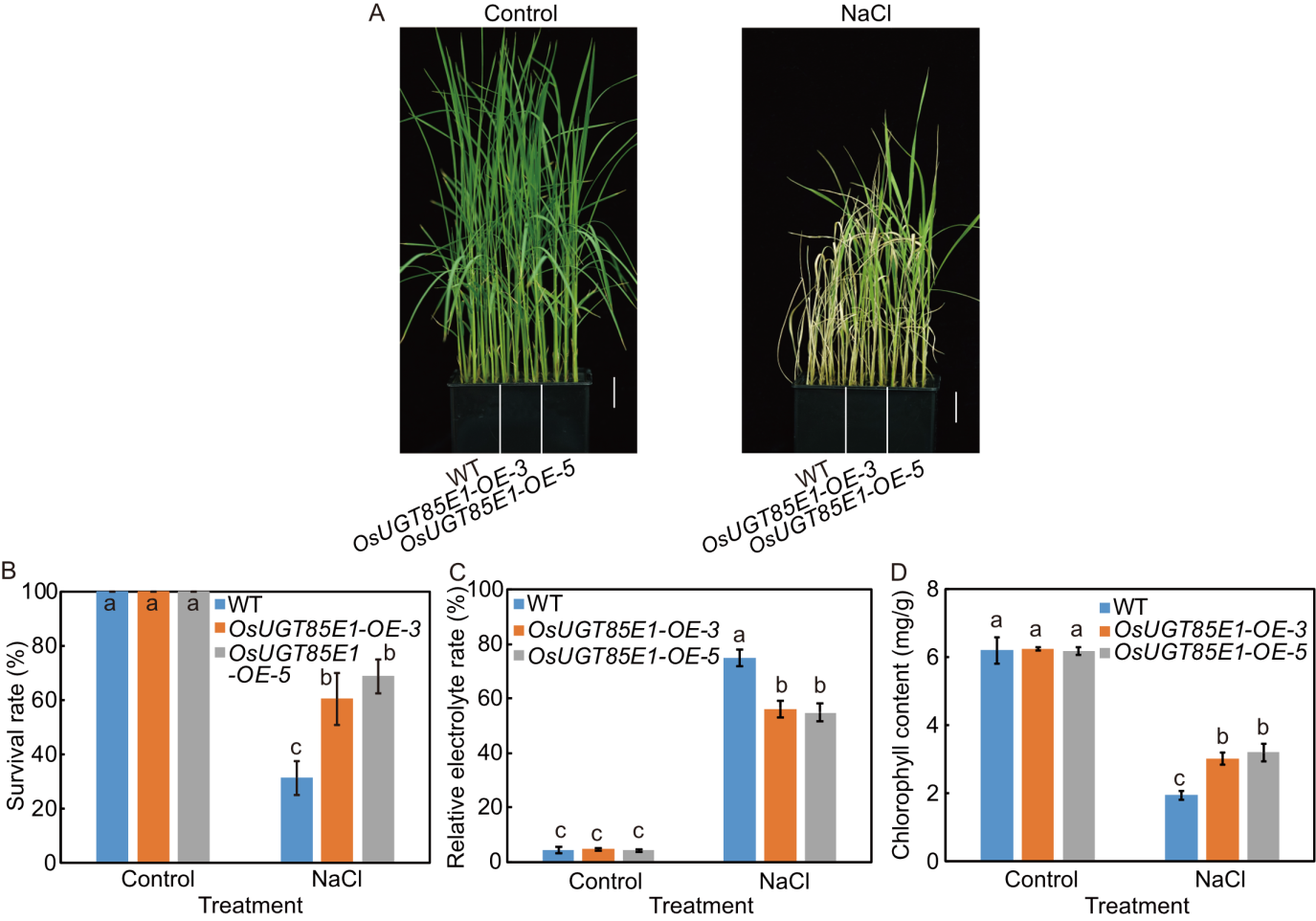
Fig. 6. Overexpression of OsUGT85E1 enhanced rice seedling salt tolerance. A, Phenotype of wild type (WT) and OsUGT85E1-overexpressing seedlings after salt treatment. Two-week-old WT and OsUGT85E1-overexpressing seedlings were treated with 120 mmol/L NaCl for 7 d and representative plants were photographed. Scale bars, 2 cm. B-D, Survival rate (B), relative electrolyte rate (C), and chlorophyll content (D) in the leaves of WT and OsUGT85E1 overexpressing seedlings after salt treatment. Data are mean ± SD of three independent biological replicates. Different letters indicate significant differences at P < 0.05 (one-way ANOVA with Tukey’s test).
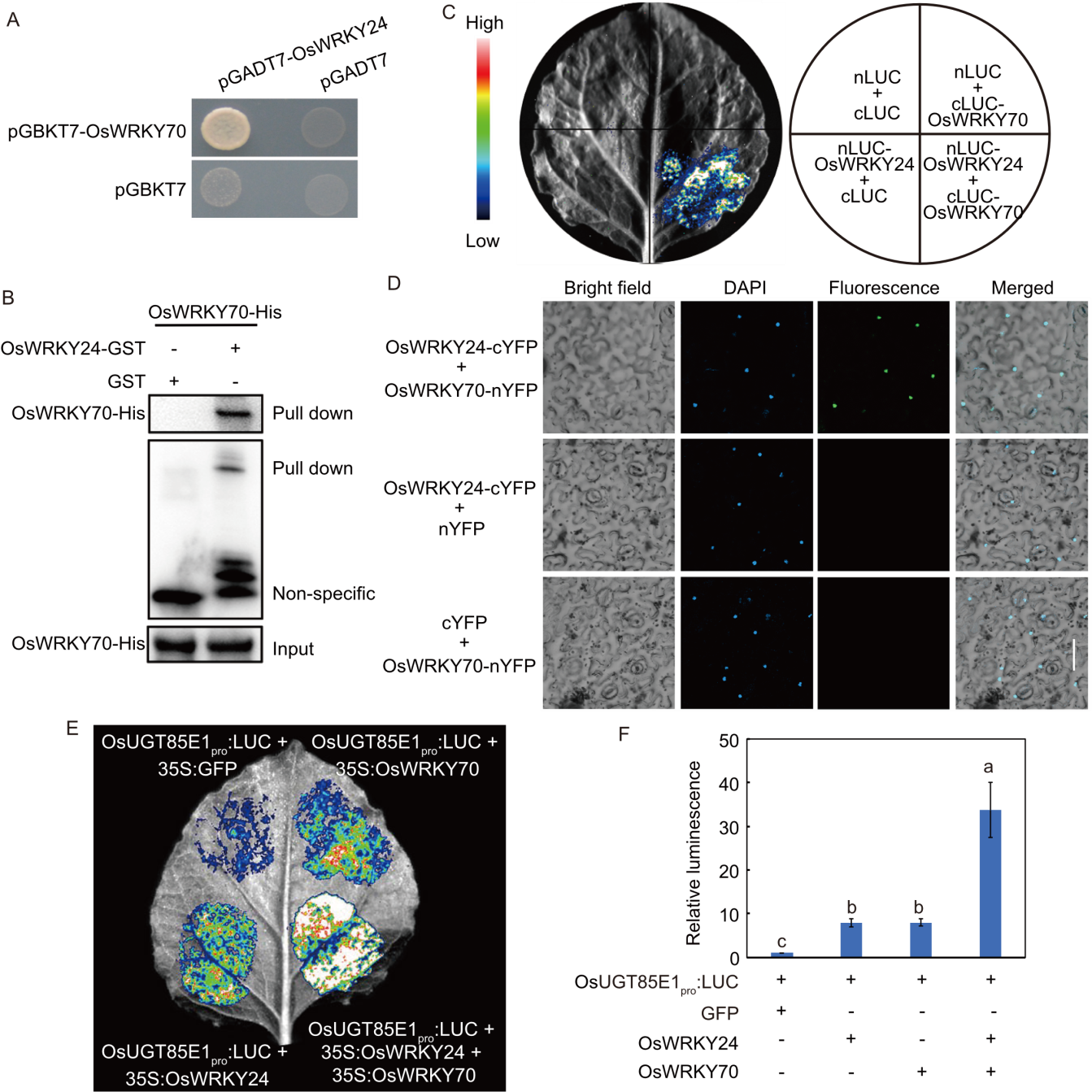
Fig. 7. OsWRKY24 interacts with OsWRKY70 to synergistically activate OsUGT85E1 expression. A, Yeast two-hybrid (Y2H) analysis. Interactions were indicated by the ability of cells to grow on selective media lacking Leu, Trp, His, and Ade. The pGADT7 and pGBKT7 vectors were used as negative controls. B, Pull-down assay. Purified GST and OsWRKY24-GST were incubated with WRKY70-His protein. GST was used as a negative control. C, Split luciferase complementation (split-LUC) assay detecting the interaction between OsWRKY24 and OsWRKY70. Image of Nicotiana benthamiana leaves was displayed 2 d after infiltration. The pseudocolor bar shows the range of luminescence intensity. D, Bimolecular fluorescence complementation analysis. Fluorescence was detected in the nuclear compartments of N. benthamiana leaf epidermal cells, resulting from the complementation of WRKY24-cYFP with WRKY70-nYFP. No signal was observed from negative controls. Scale bar, 50 μm. E and F, Transient expression analysis in N. benthamiana leaves showing that OsWRKY24 and OsWRKY70 can synergistically activate OsUGT85E1 expression. A representative leaf image is shown (E) and the quantification of corresponding relative luminescence intensities was done (F). Data are mean ± SD of three independent biological replicates. Different lowercase letters above bars indicate significant differences at P < 0.05 (one-way ANOVA with Tukey’s test).
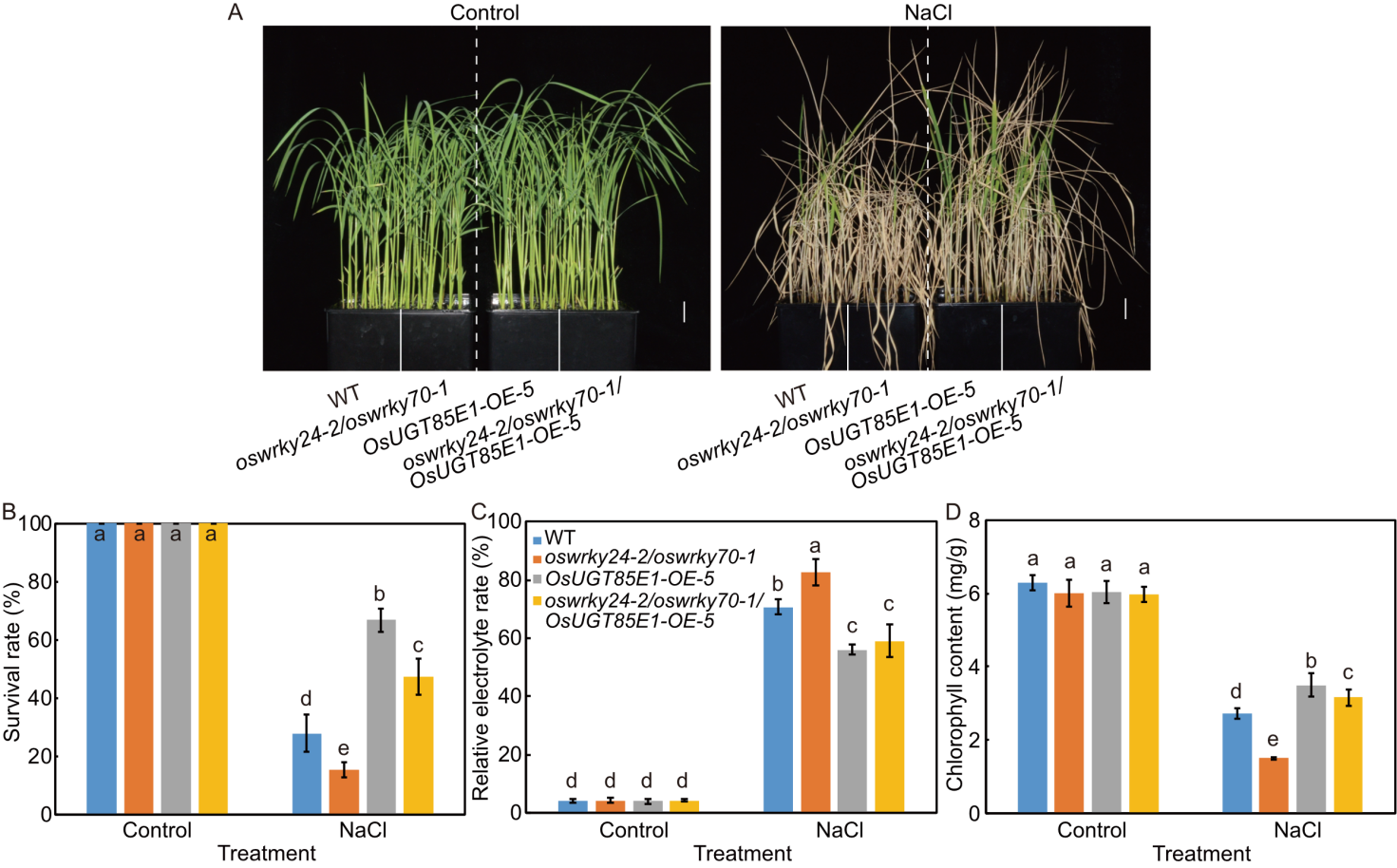
Fig. 8. OsUGT85E1 acts genetically downstream from OsWRKY24/70 to regulate rice seedling salt tolerance. A, Phenotype of wild type (WT), oswrky24-2/oswrky70-1, OsUGT85E1-OE, and oswrky24-2/oswrky70-1/OsUGT85E1-OE seedling after salt treatment. Plants of the indicated genotypes were treated with 120 mmol/L NaCl for 7 d and representative plants were photographed. Scale bars, 2 cm. B-D, Survival rate (B), relative electrolyte rate (C), and chlorophyll content (D) in the leaves of the indicated genotypes after salt treatment. Data are mean ± SD of three independent biological replicates. Different lowercase letters above bars indicate significant differences at P < 0.05 (one-way ANOVA with Tukey’s test).
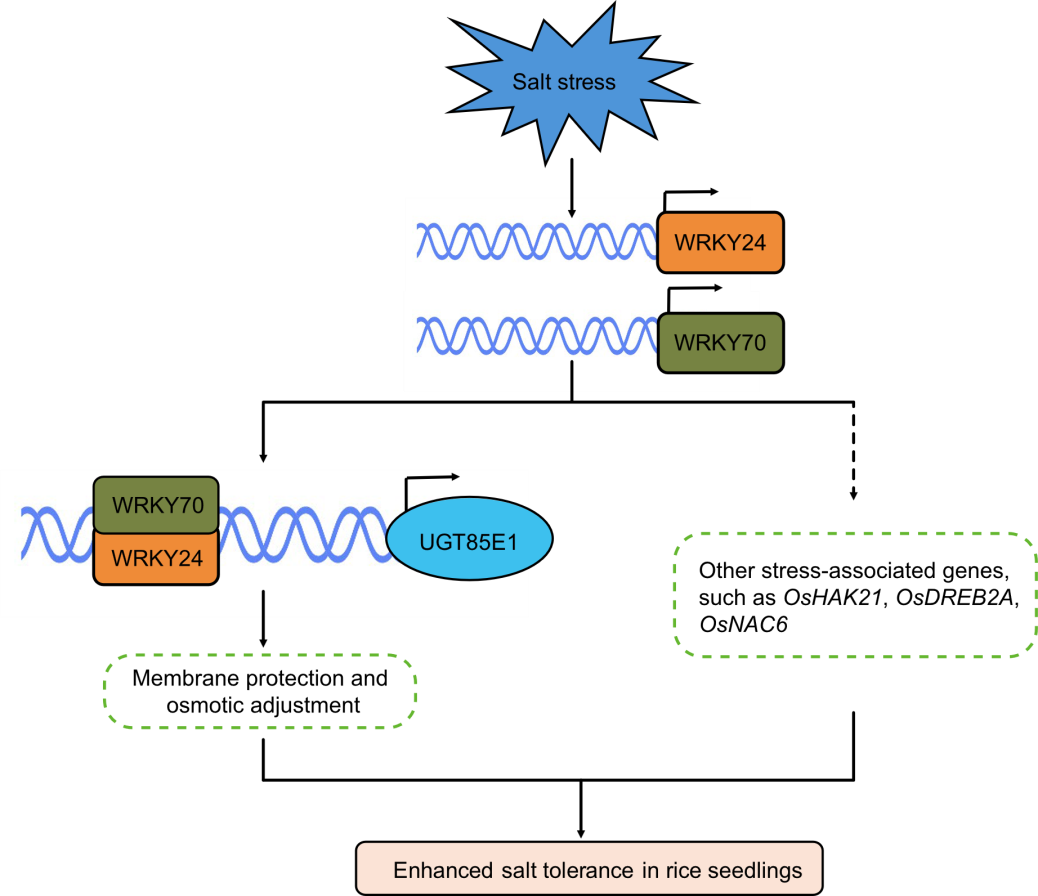
Fig. 9. A proposed working model for OsWRKY24/70-OsUGT85E1 module in rice seedling salt tolerance. Under salt stress, OsWRKY24 and OsWRKY70 interact to form a functional complex to directly activate the transcription of OsUGT85E1, which subsequently improves salt tolerance via membrane protection and osmotic adjustment. In addition, the OsWRKY24/70 complex may also regulate other stress-associated genes during rice seedling salt tolerance. The dashed box indicates a putative regulatory pathway that requires further investigation.
| [1] | Bencke-Malato M, Cabreira C, Wiebke-Strohm B, et al. 2014. Genome-wide annotation of the soybean WRKY family and functional characterization of genes involved in response to Phakopsora pachyrhizi infection. BMC Plant Biol, 14(1): 236. |
| [2] | Bo C, Chen H W, Luo G W, et al. 2020. Maize WRKY114 gene negatively regulates salt-stress tolerance in transgenic rice. Plant Cell Rep, 39(1): 135-148. |
| [3] | Bowles D, Lim E K, Poppenberger B, et al. 2006. Glycosyltransferases of lipophilic small molecules. Annu Rev Plant Biol, 57: 567-597. |
| [4] | Castilhos G, Lazzarotto F, Spagnolo-Fonini L, et al. 2014. Possible roles of basic helix-loop-helix transcription factors in adaptation to drought. Plant Sci, 223: 1-7. |
| [5] | Chen L G, Song Y, Li S J, et al. 2012. The role of WRKY transcription factors in plant abiotic stresses. Biochim Biophys Acta Gene Regul Mech, 1819(2): 120-128. |
| [6] | Chen L G, Zhang L P, Li D B, et al. 2013. WRKY8 transcription factor functions in the TMV-cg defense response by mediating both abscisic acid and ethylene signaling in Arabidopsis. Arabidopsis. Proc Natl Acad Sci USA, 110(21): E1963-E1971. |
| [7] | Chen L G, Xiang S Y, Chen Y L, et al. 2017. Arabidopsis WRKY45 interacts with the DELLA protein RGL1 to positively regulate age-triggered leaf senescence. Mol Plant, 10(9): 1174-1189. |
| [8] | Chen L G, Zhang L P, Xiang S Y, et al. 2021. The transcription factor WRKY75 positively regulates jasmonate-mediated plant defense to necrotrophic fungal pathogens. J Exp Bot, 72(4): 1473-1489. |
| [9] | Chen T T, Liu F F, Xiao D W, et al. 2020. The Arabidopsis UDP-glycosyltransferase75B1, conjugates abscisic acid and affects plant response to abiotic stresses. Plant Mol Biol, 102(4): 389-401. |
| [10] | Cook D, Fowler S, Fiehn O, et al. 2004. A prominent role for the CBF cold response pathway in configuring the low-temperature metabolome of Arabidopsis. Proc Natl Acad Sci USA, 101(42): 15243-15248. |
| [11] | Dong N Q, Sun Y W, Guo T, et al. 2020. UDP-glucosyltransferase regulates grain size and abiotic stress tolerance associated with metabolic flux redirection in rice. Nat Commun, 11: 2629. |
| [12] | Eulgem T, Rushton P J, Robatzek S, et al. 2000. The WRKY superfamily of plant transcription factors. Trends Plant Sci, 5(5): 199-206. |
| [13] | Guo P R, Li Z H, Huang P X, et al. 2017. A tripartite amplification loop involving the transcription factor WRKY75, salicylic acid, and reactive oxygen species accelerates leaf senescence. Plant Cell, 29(11): 2854-2870. |
| [14] | Hanin M, Ebel C, Ngom M, et al. 2016. New insights on plant salt tolerance mechanisms and their potential use for breeding. Front Plant Sci, 7: 1787. |
| [15] | He Y Q, Yang B, He Y, et al. 2019. A quantitative trait locus, qSE3, promotes seed germination and seedling establishment under salinity stress in rice. Plant J, 97(6): 1089-1104. |
| [16] | Hoang X L T, Nhi D N H, Thu N B A, et al. 2017. Transcription factors and their roles in signal transduction in plants under abiotic stresses. Curr Genom, 18(6): 483-497. |
| [17] | Hu H H, You J, Fang Y J, et al. 2008. Characterization of transcription factor gene SNAC2 conferring cold and salt tolerance in rice. Plant Mol Biol, 67(1): 169-181. |
| [18] | Hu Y R, Chen L G, Wang H P, et al. 2013. Arabidopsis transcription factor WRKY8 functions antagonistically with its interacting partner VQ9 to modulate salinity stress tolerance. Plant J, 74(5): 730-745. |
| [19] | Hu Y R, Han X, Yang M L, et al. 2019. The transcription factor INDUCER OF CBF EXPRESSION1 interacts with ABSCISIC ACID INSENSITIVE5 and DELLA proteins to fine-tune abscisic acid signaling during seed germination in Arabidopsis. Plant Cell, 31(7): 1520-1538. |
| [20] | Huang J J, Liu F H, Chao D, et al. 2022. The WRKY transcription factor OsWRKY54 is involved in salt tolerance in rice. Int J Mol Sci, 23(19): 11999. |
| [21] | Huang S Z, Hu L J, Zhang S H, et al. 2021. Rice OsWRKY50 mediates ABA-dependent seed germination and seedling growth, and ABA-independent salt stress tolerance. Int J Mol Sci, 22(16): 8625. |
| [22] | Hussain S, Zhang J H, Zhong C, et al. 2017. Effects of salt stress on rice growth, development characteristics, and the regulating ways: A review. J Integr Agric, 16(11): 2357-2374. |
| [23] | Ishiguro S, Nakamura K. 1994. Characterization of a cDNA encoding a novel DNA-binding protein, SPF1, that recognizes SP8 sequences in the 5′ upstream regions of genes coding for sporamin and beta-amylase from sweet potato. Mol Gen Genet, 244(6): 563-571. |
| [24] | Jacoby R P, Taylor N L, Millar A H. 2011. The role of mitochondrial respiration in salinity tolerance. Trends Plant Sci, 16(11): 614-623. |
| [25] | Jiang J J, Ma S H, Ye N H, et al. 2017. WRKY transcription factors in plant responses to stresses. J Integr Plant Biol, 59(2): 86-101. |
| [26] | Jiang Y J, Liang G, Yang S Z, et al. 2014. Arabidopsis WRKY57 functions as a node of convergence for jasmonic acid-and auxin-mediated signaling in jasmonic acid-induced leaf senescence. Plant Cell, 26(1): 230-245. |
| [27] | Jin J P, Tian F, Yang D C, et al. 2017. PlantTFDB 4.0: Toward a central hub for transcription factors and regulatory interactions in plants. Nucleic Acids Res, 45(D1): D1040-D1045. |
| [28] | Kim K C, Lai Z B, Fan B F, et al. 2008. Arabidopsis WRKY38 and WRKY62 transcription factors interact with histone deacetylase 19 in basal defense. Plant Cell, 20(9): 2357-2371. |
| [29] | Li P, Li Y J, Zhang F J, et al. 2017. The Arabidopsis UDP-glycosyltransferases UGT79B2 and UGT79B3, contribute to cold, salt and drought stress tolerance via modulating anthocyanin accumulation. Plant J, 89(1): 85-103. |
| [30] | Li Y J, Li P, Wang T, et al. 2018. The maize secondary metabolism glycosyltransferase UFGT2 modifies flavonols and contributes to plant acclimation to abiotic stresses. Ann Bot, 122(7): 1203-1217. |
| [31] | Lim E K, Bowles D J. 2004. A class of plant glycosyltransferases involved in cellular homeostasis. EMBO J, 23(15): 2915-2922. |
| [32] | Liu L P, Zhang Z Q, Dong J L, et al. 2016. Overexpression of MtWRKY76 increases both salt and drought tolerance in Medicago truncatula. Environ Exp Bot, 123: 50-58. |
| [33] | Liu Q, Dong G R, Ma Y Q, et al. 2021. Rice glycosyltransferase gene UGT85E1 is involved in drought stress tolerance through enhancing abscisic acid response. Front Plant Sci, 12: 790195. |
| [34] | Liu Z, Yan J P, Li D K, et al. 2015. UDP-glucosyltransferase71C5, a major glucosyltransferase, mediates abscisic acid homeostasis in Arabidopsis. Plant Physiol, 167(4): 1659-1670. |
| [35] | Ma J F, Takahashi E. 1990. Effect of silicon on the growth and phosphorus uptake of rice. Plant Soil, 126(1): 115-119. |
| [36] | Mallikarjuna G, Mallikarjuna K, Reddy M K, et al. 2011. Expression of OsDREB2A transcription factor confers enhanced dehydration and salt stress tolerance in rice (Oryza sativa L.). Biotechnol Lett, 33(8): 1689-1697. |
| [37] | Mizoi J, Shinozaki K, Yamaguchi-Shinozaki K. 2012. AP2/ERF family transcription factors in plant abiotic stress responses. Biochim Biophys Acta-Gene Regul Mech, 1819(2): 86-96. |
| [38] | Munns R, Tester M. 2008. Mechanisms of salinity tolerance. Annu Rev Plant Biol, 59: 651-681. |
| [39] | Nakabayashi R, Mori T, Saito K. 2014. Alternation of flavonoid accumulation under drought stress in Arabidopsis thaliana. Plant Signal Behav, 9(8): e29518. |
| [40] | Nuruzzaman M, Sharoni A M, Kikuchi S. 2013. Roles of NAC transcription factors in the regulation of biotic and abiotic stress responses in plants. Front Microbiol, 4: 248. |
| [41] | Peng L Y, Chao D, Sun X Q, et al. 2025. OsWRKY18, a WRKY transcription factor, is involved in rice salt tolerance. Plant Cell Physiol, 66(8): 1169-1183. |
| [42] | Peng X X, X T, M J, et al. 2020. Differential expression of rice valine-qlutamine gene family in response to nitric oxide and regulatory circuit of OsVQ7 and OsWRKY24. Rice Sci, 27(1): 10-20. |
| [43] | Pillai S E, Kumar C, Patel H K, et al. 2018. Overexpression of a cell wall damage induced transcription factor, OsWRKY42, leads to enhanced callose deposition and tolerance to salt stress but does not enhance tolerance to bacterial infection. BMC Plant Biol, 18(1): 177. |
| [44] | Popescu S C, Popescu G V, Bachan S, et al. 2009. MAPK target networks in Arabidopsis thaliana revealed using functional protein microarrays. Genes Dev, 23(1): 80-92. |
| [45] | Prasad S R, Bagali P G, Hittalmani S, et al. 2000. Molecular mapping of quantitative trait loci associated with seedling tolerance to salt stress in rice (Oryza sativa L.). Curr Sci, 78(2): 162-164. |
| [46] | Ross C A, Liu Y, Shen Q J. 2007. The WRKY gene family in rice (Oryza sativa). J Integr Plant Biol, 49(6): 827-842. |
| [47] | Rushton P J, Somssich I E, Ringler P, et al. 2010. WRKY transcription factors. Trends Plant Sci, 15(5): 247-258. |
| [48] | Sako K, Sunaoshi Y, Tanaka M, et al. 2018. The duration of ethanol-induced high-salinity stress tolerance in Arabidopsis thaliana. Plant Signal Behav, 13(8): e1500065. |
| [49] | Schulz E, Tohge T, Zuther E, et al. 2016. Flavonoids are determinants of freezing tolerance and cold acclimation in Arabidopsis thaliana. Sci Rep, 6: 34027. |
| [50] | Shinozaki K, Yamaguchi-Shinozaki K. 2007. Gene networks involved in drought stress response and tolerance. J Exp Bot, 58(2): 221-227. |
| [51] | Takagi H, Tamiru M, Abe A, et al. 2015. MutMap accelerates breeding of a salt-tolerant rice cultivar. Nat Biotechnol, 33(5): 445-449. |
| [52] | Tang J Q, Mei E Y, He M L, et al. 2022. Functions of OsWRKY24, OsWRKY70 and OsWRKY53 in regulating grain size in rice. Planta, 255(4): 92. |
| [53] | Tognetti V B, Van Aken O, Morreel K, et al. 2010. Perturbation of indole-3-butyric acid homeostasis by the UDP-glucosyltransferase UGT74E2 modulates Arabidopsis architecture and water stress tolerance. Plant Cell, 22(8): 2660-2679. |
| [54] | Tripathi P, Rabara R C, Langum T J, et al. 2012. The WRKY transcription factor family in Brachypodium distachyon. BMC Genomics, 13: 270. |
| [55] | Ülker B, Somssich I E. 2004. WRKY transcription factors: From DNA binding towards biological function. Curr Opin Plant Biol, 7(5): 491-498. |
| [56] | van Zelm E, Zhang Y X, Testerink C. 2020. Salt tolerance mechanisms of plants. Annu Rev Plant Biol, 71: 403-433. |
| [57] | Wang H P, Chen W Q, Xu Z Y, et al. 2023. Functions of WRKYs in plant growth and development. Trends Plant Sci, 28(6): 630-645. |
| [58] | Wang J, Nan N, Li N, et al. 2020. A DNA methylation reader-chaperone regulator-transcription factor complex activates OsHKT1;5 expression during salinity stress. Plant Cell, 32(11): 3535-3558. |
| [59] | Wang X T, Zeng J, Li Y, et al. 2015. Expression of TaWRKY44, a wheat WRKY gene, in transgenic tobacco confers multiple abiotic stress tolerances. Front Plant Sci, 6: 615. |
| [60] | Xie Z, Zhang Z L, Zou X, et al. 2005. Annotations and functional analyses of the rice WRKY gene superfamily reveal positive and negative regulators of abscisic acid signaling in aleurone cells. Plant Physiol, 137(1): 176-189. |
| [61] | Yamaguchi-Shinozaki K, Shinozaki K. 2006. Transcriptional regulatory networks in cellular responses and tolerance to dehydration and cold stresses. Annu Rev Plant Biol, 57: 781-803. |
| [62] | Ye M, Glauser G, Lou Y G, et al. 2019. Molecular dissection of early defense signaling underlying volatile-mediated defense regulation and herbivore resistance in rice. Plant Cell, 31(3): 687-698. |
| [63] | Zhang L P, Chen L G, Yu D Q. 2018. Transcription factor WRKY75 interacts with DELLA proteins to affect flowering. Plant Physiol, 176(1): 790-803. |
| [64] | Zhou Y, Fan X L, Lin Y J, et al. 2018. Determination of chlorophyll content in rice. Bio-101: e1010147. |
| [65] | Zhu J K. 2002. Salt and drought stress signal transduction in plants. Annu Rev Plant Biol, 53: 247-273. |
| [1] | Keiichi Honda, Mao Suganami, Hideki Yoshida, Takashi Akagi, Makoto Matsuoka, Soichi Kojima. Interaction of NAL1-OsSPY Modulated by Nitrogen Availability Controls Panicle Architecture in Rice [J]. Rice Science, 2026, 33(6): 834-844. |
| [2] | Jardel da Silva Souza, Sandra Helena Uneda-Trevisoli, Felipe Dalla Lana, Roberto Fritsche-Neto. A Low-Cost RGB-Based Image Processing Method for High-Throughput Assessment of Rice Grain Chalkiness [J]. Rice Science, 2026, 33(3): 381-391. |
| [3] | Li Xinyi, Huang Junying, Zhou Dahu, Cai Yicong, Chen Xiaorong, Hu Lifang, Ouyang Linjuan, Fu Junru, Li Qingshun, He Haohua, Fu Haihui. Global Patterns of Stage-Specific Alternative Polyadenylation in Rice Tillering Revealed by Nanopore Long Read Sequencing and Proteomics [J]. Rice Science, 2026, 33(3): 392-410. |
| [4] | Li Chao, Ruan Chengcheng, He Yiqin, Yang Zhenkun, Jiang Zhenyi, Li Xiao, Xu Jianhong. Jumonji C Domain-Containing Protein OsJMJ712 Integrates Epigenetic Regulation and Circadian Clock to Fine-Tune Flowering in Rice [J]. Rice Science, 2026, 33(2): 221-231. |
| [5] | Jia Huichao, Chun Yan, Ashmit Kumar, Mo Tianyu, Wang Haifeng, Guo Shengyuan, Fang Jingjing, Zhao Jinfeng, Sun Wei, Zhang Shiyong, Yuan Shoujiang, Li Xueyong. Suppressors of Cytokinin Receptor Mutant pal1/ohk4 Confer Favorable Alleles of Grain Number 1a (Gn1a) for Improving Grain Yield in japonica Rice [J]. Rice Science, 2026, 33(1): 81-98. |
| [6] | Nairiane dos Santos Bilhalva, Paulo Carteri Coradi, Rosana Santos de Moraes, Dthenifer Cordeiro Santana, Larissa Ribeiro Teodoro, Paulo Eduardo Teodoro, Marisa Menezes Leal. Physical and Physicochemical Classification of Parboiled Rice Using VNIR-SWIR Spectroscopy and Machine Learning [J]. Rice Science, 2025, 32(6): 857-867. |
| [7] | Lai Changkai, Hu Shikai, Jiao Guiai, Wang Ling, Shao Gaoneng, Zhao Fengli, Xie Lihong, Wei Xiangjin, Lü Yusong, Sheng Zhonghua, Tang Shaoqing, Hu Peisong. Enhancing Folate Content in Japonica Rice Through Co-expression of OsADCS and OsGTPCHI Indica Alleles [J]. Rice Science, 2025, 32(3): 353-366. |
| [8] | Sara Cannavò, Chiara Paleni, Alma Costarelli, Maria Cristina Valeri, Martina Cerri, Antonietta Saccomanno, Veronica Gregis, Graziella Chini Zittelli, Petre I. Dobrev, Lara Reale, Martin M. Kater, Francesco Paolocci. Assessing Changes in Root Architecture, Developmental Timing, Transcriptional and Hormonal Profiles in Rice Co-Cultivated with Azolla filiculoides [J]. Rice Science, 2025, 32(3): 426-444. |
| [9] | Wang Jingqing, Wang Yaliang, Chen Yulin, Chen Huizhe, Xiang Jing, Zhang Yikai, Wang Zhigang, Zhang Yuping. Progress on Physiological Mechanisms of Rice Spikelet Degeneration at Different Panicle Positions Caused by Abiotic Stress [J]. Rice Science, 2025, 32(2): 193-202. |
| [10] | Chen Ya, Liu Zhiquan, Yang Linyin, Wu Fujie, Cao Zijian, Shi Huanbin, Qiu Jiehua, Kou Yanjun. OsCERK1 Interacts with OsHPP08 to Regulate Copper Uptake and Blast Resistance in Rice [J]. Rice Science, 2025, 32(2): 203-216. |
| [11] | Jiang Nan, Qiu Jiehua, Tian Dagang, Shi Huanbin, Liu Zhiquan, Wen Hui, Xie Shuwei, Chen Huizhe, Wu Meng, Kou Yanjun. Mixture of Bacillus Amyloliquefaciens and Bacillus Pumilus Modulates Community Structures of Rice Rhizosphere Soil to Suppress Rice Seedling Blight [J]. Rice Science, 2025, 32(1): 118-130. |
| [12] | Yu Shicong, Luo Ruxian, Zheng Shuqin, Ning Jing, Shi Yuanzhu, Guo Daiming, Jia Liangmeng, Wang Sen, Xiao Guizong, Guo Pengwang, Li Yang, Ma Xiaoding. CHOLINE TRANSPORTER-RELATED 4 (CTR4) Is Involved in Drought and Saline Tolerance in Rice [J]. Rice Science, 2025, 32(1): 52-66. |
| [13] | Xue Chao, Zhao Xinru, Chen Xu, Cai Xingjing, Hu Yingying, Li Xiya, Zhou Yong, Gong Zhiyun. Histone Acetyltransferase GCN5 Regulates Rice Growth and Development and Enhances Salt Tolerance [J]. Rice Science, 2024, 31(6): 688-699. |
| [14] | Hu Yunchao, Yan Tiancai, Gao Zhenyu, Wang Tiankang, Lu Xueli, Yang Long, Shen Lan, Zhang Qiang, Hu Jiang, Ren Deyong, Zhang Guangheng, Zhu Li, Li Li, Zeng Dali, Qian Qian, Li Qing. Appropriate Supply of Ammonium Nitrogen and Ammonium Nitrate Reduces Cadmium Content in Rice Seedlings by Inhibiting Cadmium Uptake and Transport [J]. Rice Science, 2024, 31(5): 587-602. |
| [15] | Xie Shuwei, Shi Huanbin, Wen Hui, Liu Zhiquan, Qiu Jiehua, Jiang Nan, Kou Yanjun. Carbon Catabolite Repressor UvCreA is Required for Development and Pathogenicity in Ustilaginoidea virens [J]. Rice Science, 2024, 31(2): 203-214. |
| Viewed | ||||||
|
Full text |
|
|||||
|
Abstract |
|
|||||
